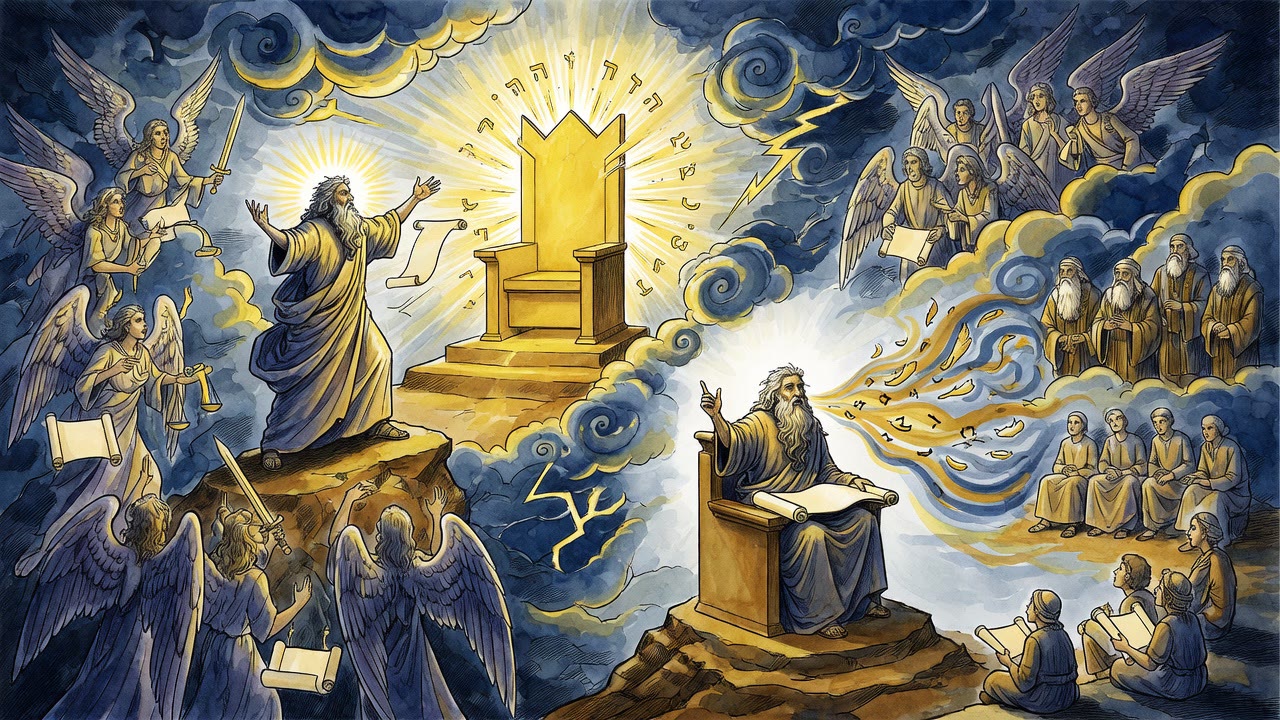
The Elders Fled Pharaoh and Waited Outside Sinai
They had agreed to walk with Moses. At Pharaoh's wall the line behind him went quiet, and the two brothers entered alone.
Table of Contents
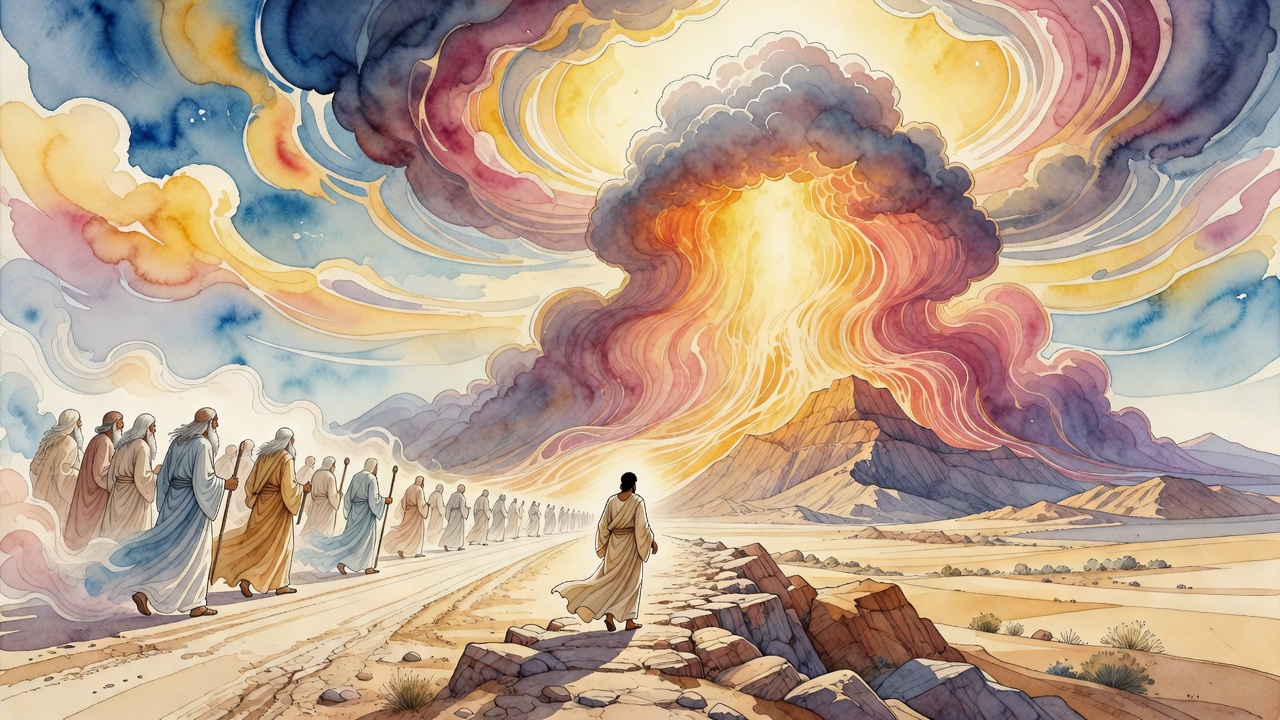
Moses and Aaron set out for the house of Pharaoh, and the elders of Israel walked behind them.
 Click for full size
They had agreed to come. They had watched the staff turn in the dust. They had heard the words of deliverance spoken over the whole company, and they had bowed with everyone else. Now the road ran straight toward the gates of the man who owned them.
The Line Thinned at the Palace Gate
The gates came into view sooner than anyone wanted.
Guards stood in the shade of the wall. Past the guards the outer court opened onto packed ground where men had been beaten to death for smaller errands than the one Moses was carrying. One old man slowed his step. The man beside him slowed to match. They fell back a pace, then two, and when the road bent past a row of storehouses they were no longer on it.
Farther up, a pair turned into a side lane, talking quietly, as though they had business there. Then another pair. One by one and two by two, the line behind the brothers thinned.
Nobody announced that he was leaving. They simply were not there.
Two Men Stood Before the Throne
Moses did not turn around. Neither did Aaron. They gave their business at the gate, and the doors opened for them and shut behind them, and nobody else came through.
Two men stood in front of the throne of Egypt and told the king to let a nation go. Pharaoh looked past their shoulders at a great deal of empty floor. Then he looked back at the two of them and asked who this Lord was that he should listen to his voice. (Exodus 5:1-2)
The elders were in their houses by then, out of the sun, where the noise of that room could not reach.
God Wrote the Debt on the Spot
The Holy One had watched the road empty.
"Do you imagine I will let this pass unpaid?" He said. "By your lives, when Moses and Aaron climb the mountain to receive My Torah, you will climb with them partway. And there I will turn you back."
Nothing came of it for a year. The plagues ran their course. The sea opened and shut. Bread fell in the mornings, and the men who had fled the palace road ate it with everyone else and said nothing about a debt.
Tarry Here
Then the mountain.
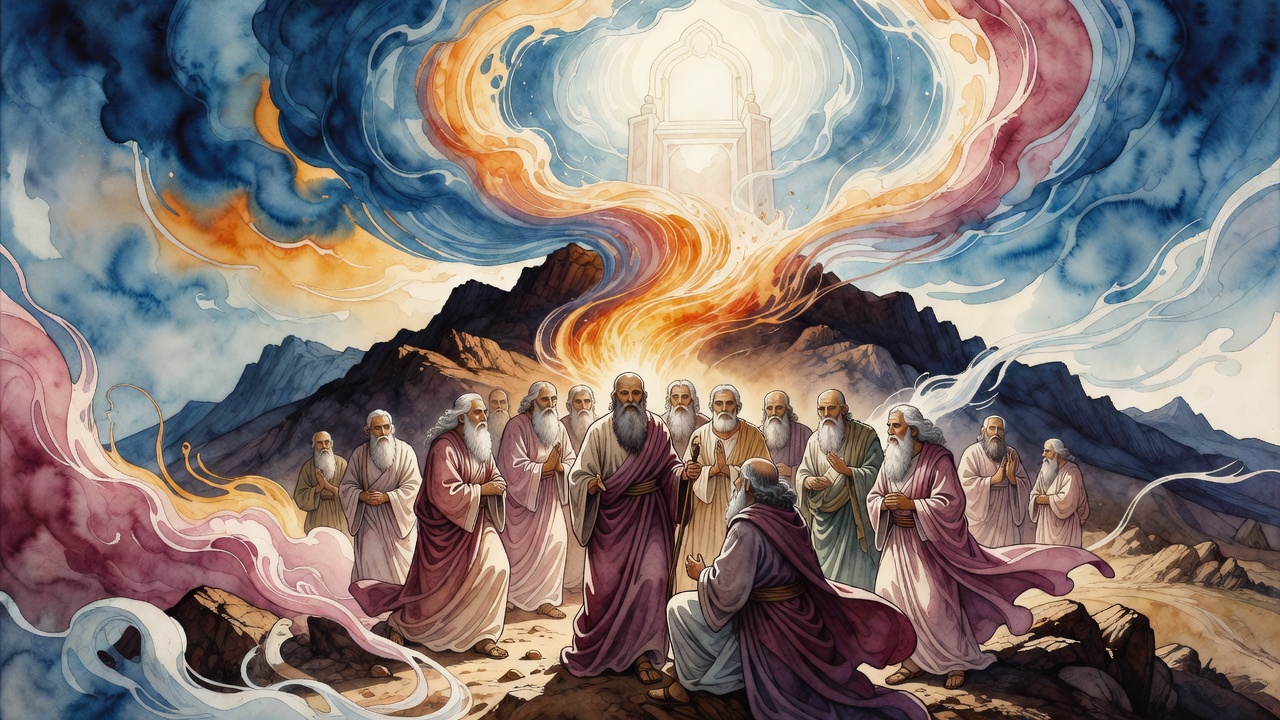
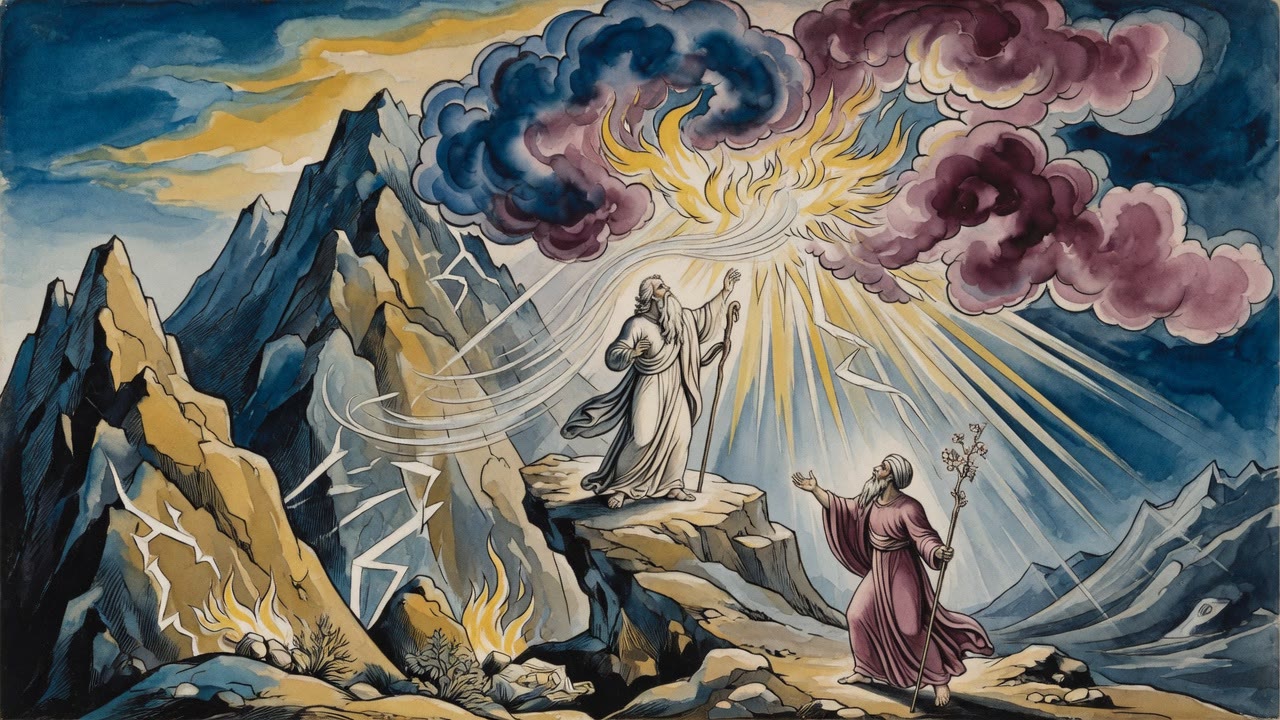
Smoke stood on Sinai like smoke off a furnace. The whole mass of rock shook. A horn sounded and did not stop, but grew louder. The elders climbed. Their sandals slid on the loose stone. Their breath went short. The noise coming off the top was not a noise old men are built to walk toward, and they walked toward it anyway, up past the boundary where the people stood, up to where the cloud began to press on the skin.
Then Moses stopped them.
"Tarry here for us." (Exodus 24:14)
They tarried. That was all of it. No argument was offered and none was invited. The two brothers went on into the cloud, and the elders stood outside it on the slope with their hands on their knees, watching two backs get smaller.
A voice came off the top of the mountain and called Moses by name, and he went up. Nothing he had been told was taken back. Nothing had to be explained to him twice. He had been told he would be called. He was called. He climbed.
The Name Changed in God's Mouth
Farther down the slope, below the place where the elders had been halted, the people took the commandments on themselves.
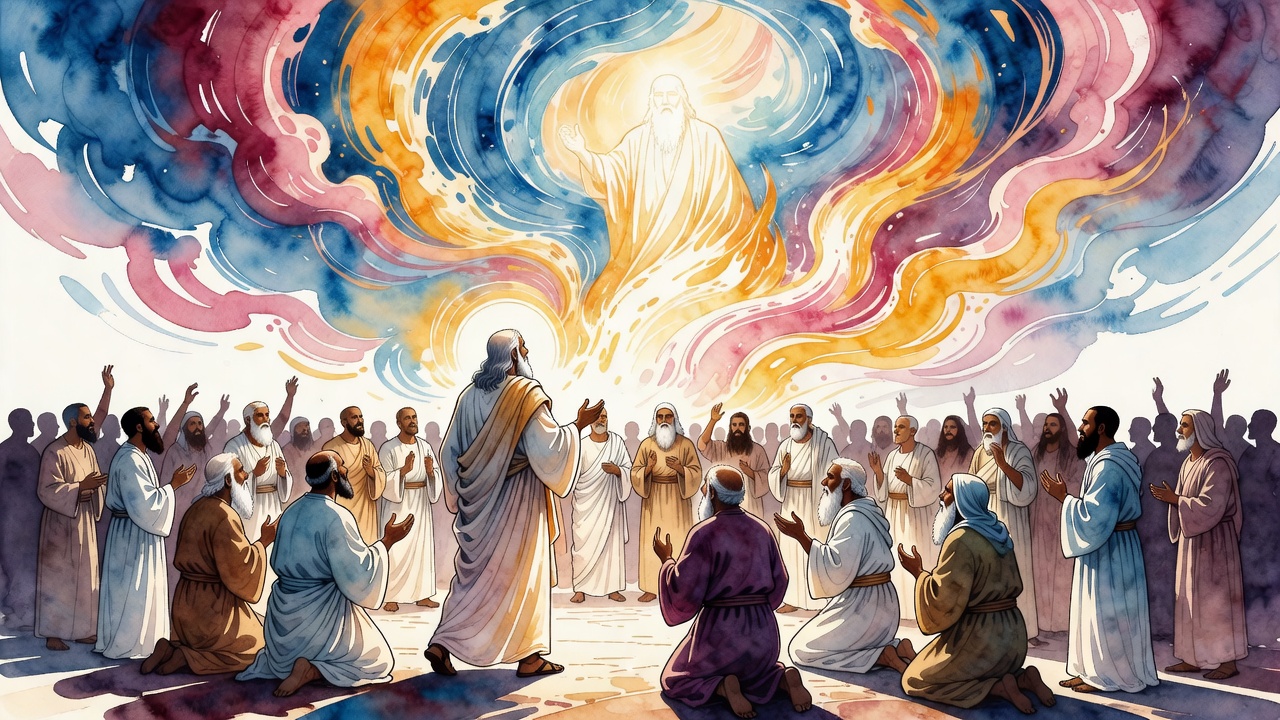
Until that morning they had carried the name Israel. A good name, a father's name, the kind of name every nation on earth carries around. Sabteca had one. Raamah had one. When the Torah was accepted, the word changed in God's own mouth. Hear, My people. Not one people standing among the peoples. His. (Psalms 50:7)
The elders heard it from where they had been told to stand.
Glory Held Back
The rebuke was not the last thing said over them.
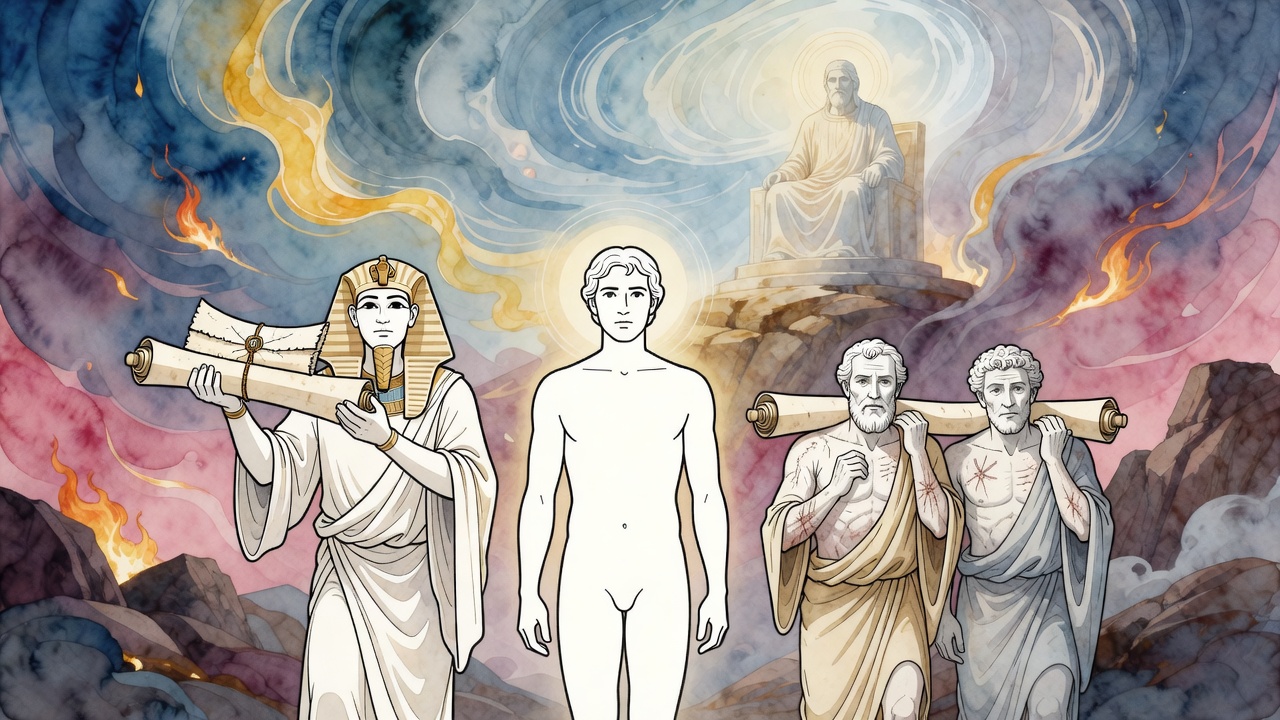
"In this world," God told them, "you did not behold the glory of the Torah. But in the world to come you shall be honored with it."
A day is coming, the unpaid words go, when the moon will be confounded and the sun ashamed, when the Lord of Hosts reigns on Mount Zion, and before His elders, glory. (Isaiah 24:23)
Until that day they wait on the slope. Old men who could see the cloud and could not walk into it, kept a little below the thing they had been invited to, on account of a walk they did not finish.
← All myths