5 min read

Moses Defended the Torah Before the Angels Then Taught It Four Times

The angels challenge God when Moses comes to take the Torah, and Moses argues them down before descending to teach it four times.

Curated by Arthur · Told by Maggid ·
Table of Contents
  1. The Angels Object to Moses at the Gates of Heaven
  2. God Tells Moses to Answer Them
  3. The Angels Concede
  4. Torah Existed Before the World That Would Need It
  5. How Moses Taught It Four Times in One Afternoon

The Angels Object to Moses at the Gates of Heaven

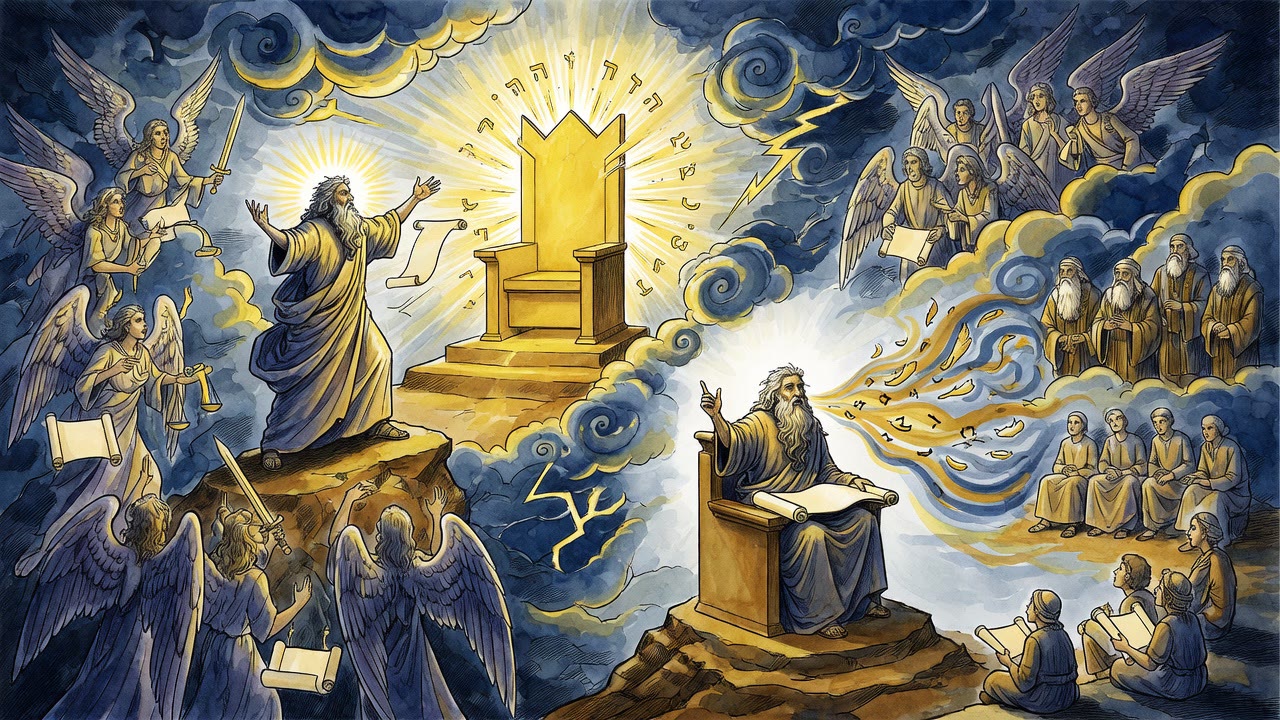
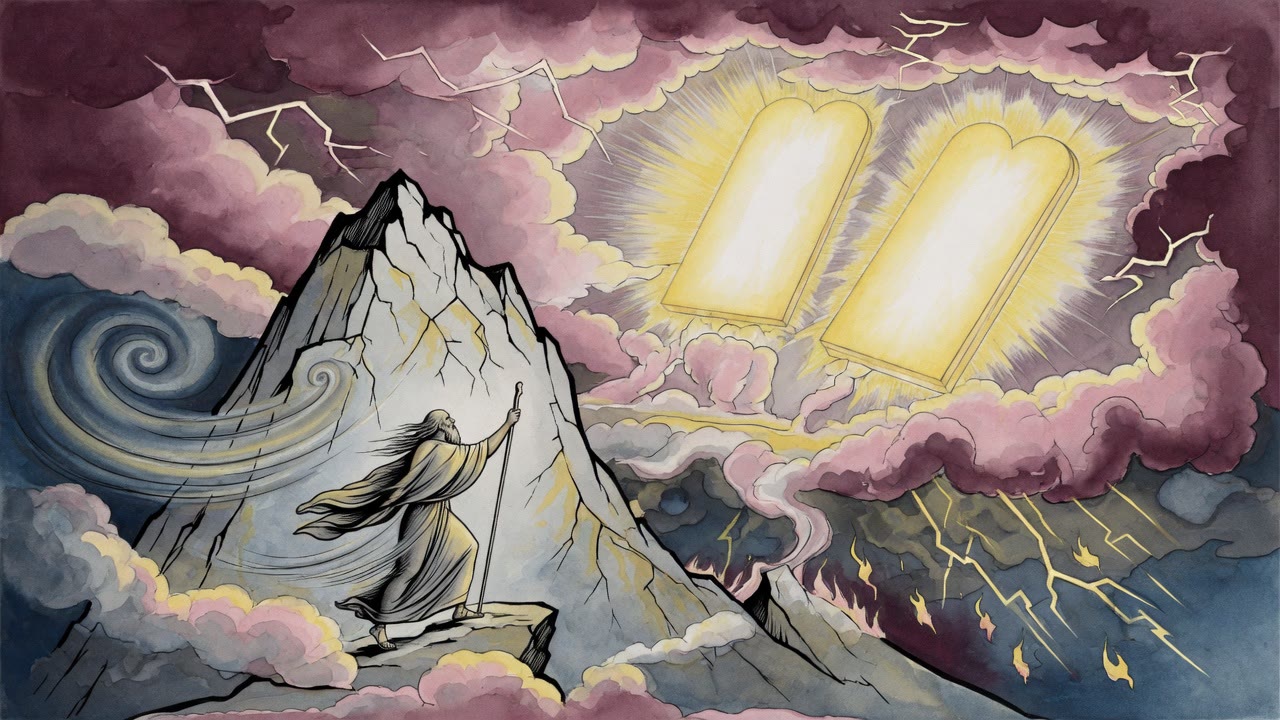
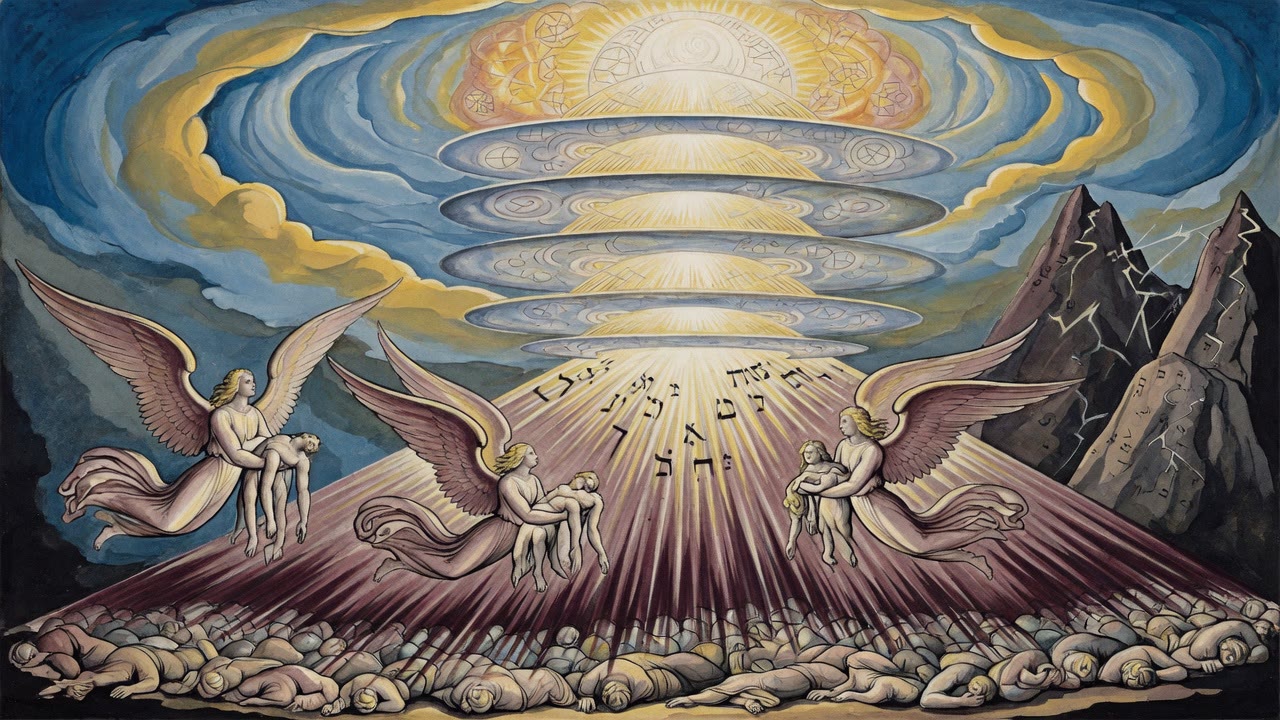
When Moses ascended to receive the Torah, the angels were watching. They saw a human being approach the divine speech, and they objected. Not because they were hostile to Moses personally, but because the Torah was theirs. It had existed before the earth was made, written with black fire on white fire, kept in heaven, studied by the angels since before the first day of creation. It had never been given to a creature of flesh and blood. Why would God do this now?

The question they put to God was pointed: why are you giving Moses permission to write, so that he might write whatever he wants and say it is his own? The danger they named was authorship. Moses would carry the Torah into the world and the world would be unable to distinguish between divine speech and human speech. The Torah would become his, or it would become Israel's, which from the angels' perspective was the same kind of loss.

God Tells Moses to Answer Them

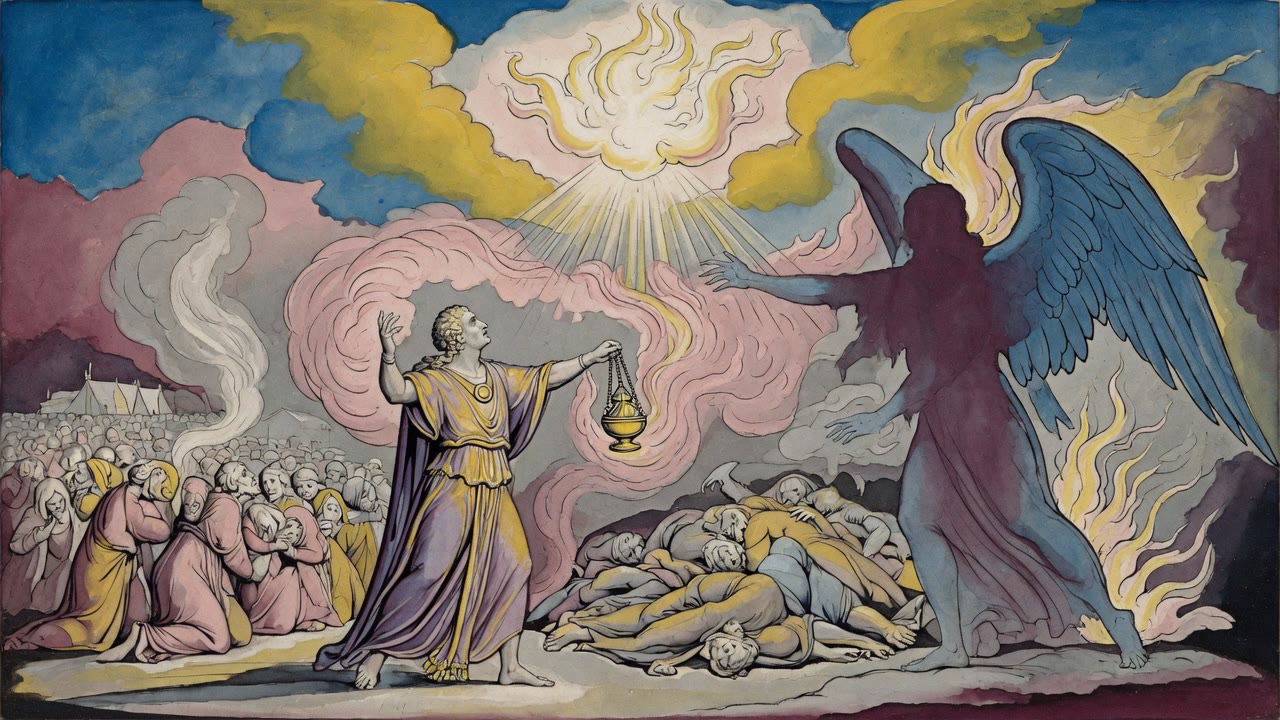
God told Moses to answer the angels himself. Moses hesitated. He was in heaven, and the angels were enormous presences, and he was a man from the desert whose staff smelled of sheep. He asked God: is it safe for me to do this? Will they not destroy me for speaking back to them?

God told him: hold on to my throne for support and answer them.

Moses held on to the throne of God and spoke. He did not argue about the Torah's value or its beauty. He argued that the Torah was not for angels. He asked the angels directly: is your father in Egypt? Is your mother in Egypt? Did you labor under a taskmaster? The commandment that says honor your father and mother, that one does not apply to you. You have no parents.

He went through the commandments one by one. You do not murder. You do not covet. You do not steal. Do you have bodies that can kill? Do you have neighbors whose property tempts you? Does idolatry threaten you, who stand in heaven and see God directly? The Torah addresses creatures who can stumble, who can lie, who can break faith with each other, who can forget. Angels are not those creatures.

The Angels Concede

The angels had no rebuttal for this. They could not claim the commandments applied to them. They could not pretend that a Torah full of ordinances about slavery, property disputes, blood vengeance, and Sabbath rest was written for beings who live outside time and do not plant fields or own livestock.

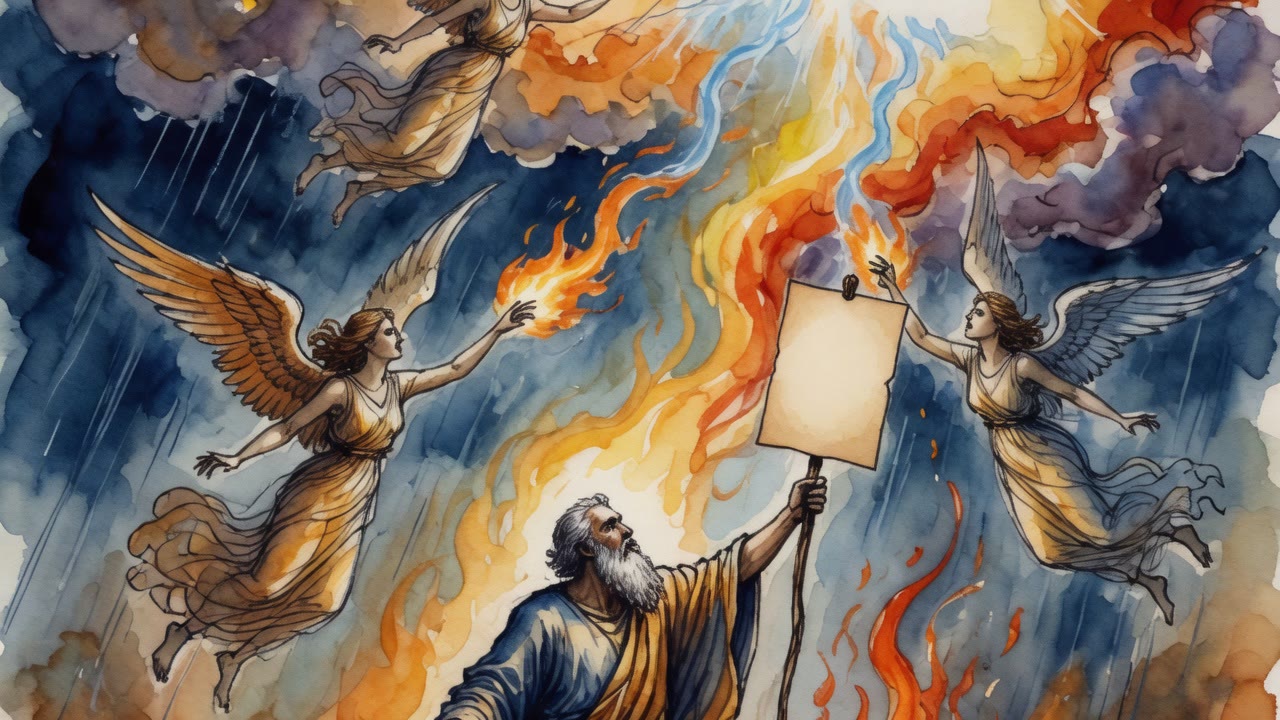
They conceded. They gave Moses gifts as an acknowledgment that he had won the argument fairly. Even the angel of death gave Moses something. The Torah descended with Moses into the world.

Torah Existed Before the World That Would Need It

Before Moses had come to heaven to argue for it, the Torah had already been waiting for two thousand years. That is the number given in the tradition: two thousand years before heaven and earth were created, the Torah already existed, along with six other things that preceded creation. The throne of glory. The Garden of Eden. Gehenna. The celestial Temple. Repentance. The name of the Messiah.

These seven things were not afterthoughts added to creation. They were the preconditions of creation. God looked into the Torah and created the world. The Torah was the blueprint. Everything that would exist, everything that would go wrong and need fixing, everything that would need a structure of law and a path of return, all of it was foreseen in the Torah before the first word was spoken over the void.

How Moses Taught It Four Times in One Afternoon

When Moses came back down with the Torah, he faced a transmission problem. He had received it from God. He needed to get it to the entire people. But more than that, he needed each person to have heard it enough times that they owned it, not just received it.

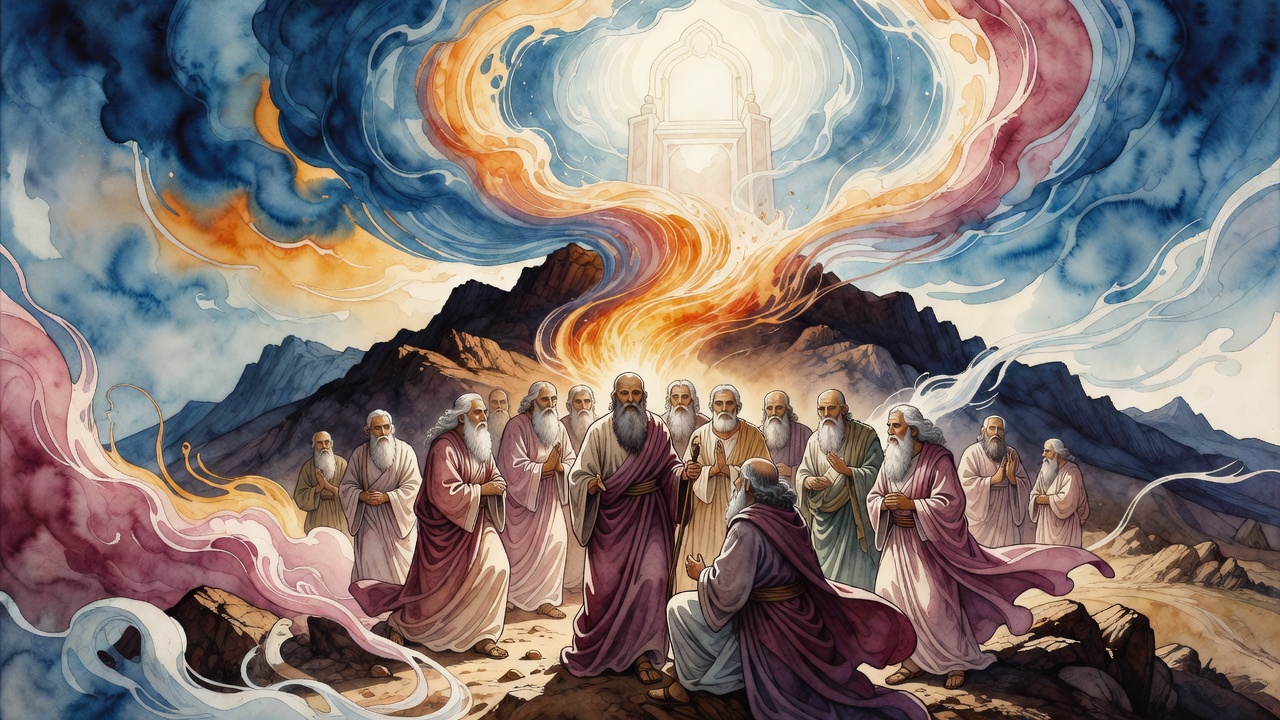
He called Aaron in first. He taught Aaron everything. Then Eleazar and Ithamar, Aaron's sons, came in while Aaron remained. Moses taught them everything, and Aaron heard it again. Then the elders came in while Aaron's sons remained. Moses taught them, and Aaron heard it a third time. Then the whole people came, and Moses taught again, and Aaron heard it a fourth time.

When Moses finished, Aaron sat with Moses. Then Aaron's sons sat with Moses. Then the elders. Each group heard it repeatedly, hearing the same teaching passed through different mouths, until the Torah had been given four times to every person present in that room. Then Moses left, and the groups continued the chain: Aaron taught his sons, his sons taught the elders, the elders taught the people. Each link teaching downward, each teaching a repetition that deepened what the previous one had set in place.


← All myths

From the tradition

Sources

4 sources

The texts this telling draws on, in full. Open a card to read inline, or expand it for a wider, quieter read.

Legends of the Jews 2:134Legends of the Jews

It's a monumental task. Well, the angels apparently had some thoughts.

The story goes that they were a little… skeptical. As we find in Legends of the Jews, a monumental compilation of Jewish folklore by Rabbi Louis Ginzberg, the angels turned to God, their celestial eyebrows raised. "How is it," they asked, "that Thou givest Moses permission to write, so that he may write whatever he will, and say to Israel, 'I gave you the Torah, I myself wrote it, and then gave it to you?'"

It’s a pretty bold question, isn’t it? They’re essentially asking: "Can we really trust Moses with this incredible responsibility? Won't he be tempted to, shall we say, embellish a little?" from their perspective. These are beings of pure spirit, inhabiting the divine realm. The idea that a human, even one as righteous as Moses, could be entrusted with such a task – to literally write down the word of God – must have seemed a bit… unsettling. Were they worried about the potential for human error? Or perhaps the potential for human ego to creep in?

God, in His infinite wisdom, had a ready answer. "Far be it from Moses to do such a thing," He declared. "He is a faithful servant!"

There’s so much packed into that simple statement. It's a powerful affirmation of Moses’ integrity, his humility, and his unwavering devotion to God's will. God isn't just saying that Moses won't mess it up; He’s saying that it’s fundamentally against Moses’ very nature to do so. He is a ne’eman, a trustworthy and loyal servant.

This little anecdote, tucked away in the vastness of Jewish lore, offers a fascinating glimpse into the relationship between the divine and the human, and the immense trust placed in Moses. It reminds us that even the angels, beings of light and knowledge, can have their doubts. And it highlights the extraordinary faith that God has in humanity, and in those chosen to carry out His will.

What does it say about our role in interpreting sacred texts? Does the angels' concern make us think twice about how we understand and transmit Torah today? Food for thought,.

Full source
Legends of the Jews 1:3Legends of the Jews

Imagine, if you will, two thousand years before heaven and earth. A time of pure potential. What was brewing in the cosmic kitchen?

In Legends of the Jews, a monumental work compiled by Louis Ginzberg, seven extraordinary things already existed. Think of them as the blueprints and building blocks of reality.

First, there was the Torah itself. Not just the physical scroll, but the very blueprint of creation, written, amazingly, with black fire on white fire, resting in the lap of God. Mind. Blown.

Then, the Divine Throne, ready for its occupant. It was erected in the highest heaven, the one poised above the Hayyot, those celestial beings who carry God’s chariot, as described in Ezekiel.

And of course, Paradise, situated on God’s right, and its opposite, Hell, on His left. Already, the destinations of souls were prepared, the ultimate reward and consequence laid out before creation even began.

Next, the Celestial Sanctuary, positioned directly in front of God. In this otherworldly space stood an altar adorned with a jewel, upon which was engraved the very Name of the Messiah. And from this sanctuary emanated a powerful Voice, crying out, "Return, ye children of men." A constant invitation, a call to repentance woven into the very fabric of existence. But it gets even more interesting when we consider the role of the Torah in the creation itself.

When God decided to create the world, He didn’t just snap His fingers. He consulted with the Torah! The Torah, personified as wisdom itself, advised Him, "O Lord, a king without an army and without courtiers and attendants hardly deserves the name of king, for none is nigh to express the homage due to him." for a second. The Torah isn’t just a set of rules; it's a guide, a partner in the act of creation. It’s suggesting that creation needs beings to appreciate and acknowledge the Divine. God wants relationship.

God was so pleased with this advice! This detail, according to the tradition, teaches all earthly kings – and, by extension, all of us – to seek counsel before acting. Before making big decisions. Before creating anything new.

It's a profound lesson about humility, collaboration, and the importance of seeking wisdom. As we find in Midrash Rabbah, the ancient rabbis constantly sought guidance from the Torah and from each other.

So, what does all this mean for us today? Perhaps it’s a reminder that even before the universe as we know it existed, the seeds of relationship, wisdom, and purpose were already planted. And maybe, just maybe, those seeds are still waiting to sprout in our own lives. Are we listening to the wisdom around us? Are we consulting with our own inner Torah before we act? Are we creating a world worthy of praise?

Full source
Legends of the Jews 2:136Legends of the Jews

It wasn't just about standing on a mountain and shouting it out. It was far more intricate, more personal.

Moses receives the word directly from God. First in line to hear it is Aaron, his brother and High Priest. Moses imparts the divine message to Aaron, ensuring he grasps every nuance.

It doesn't stop there. According to Ginzberg's retelling in Legends of the Jews, as soon as Moses finishes with Aaron, Aaron’s sons, Eleazar and Ithamar, step forward. Moses then instructs them, while Aaron sits at his right, actively listening, reinforcing his own understanding.

Think of it like a master class, unfolding in layers.

Next up are the elders, the wise men of the community. They come to receive instruction while Eleazar sits to the right of his father, and Ithamar to Moses's left, all ears. Again, the principle of layered learning is applied.

Finally, after Moses has worked his way through these key groups, the people themselves gather to receive the word. Moses then withdraws, his initial work complete.

But the process isn't over! This is where the “echo chamber” effect kicks in.

Aaron, now a teacher in his own right, goes over everything Moses taught. Then his sons, Eleazar and Ithamar, repeat the teaching. The elders follow suit. And finally, the people themselves reiterate what they've learned. The text emphasizes that this process was repeated four times by each group, "from Aaron down to every man out of the people."

Why four times? Because that’s how God commanded Moses to impress the Torah upon Israel. Four times, ensuring deep understanding and internalization.

It's a powerful image, isn't it? A meticulously crafted system of learning, designed to transmit not just information, but understanding, wisdom, and a connection to the divine. It tells us something profound about the importance of repetition, community, and the layered nature of truly effective teaching. What if we all approached learning, and teaching, with this level of dedication and care?

Full source
Pirkei DeRabbi Eliezer 46:5Pirkei DeRabbi Eliezer

It’s a story filled with divine drama, a bit of celestial squabbling, and Moses, our ever-persistent leader, standing his ground.

The scene: Moses is up in the heavenly realms, receiving the Torah from the Holy One, blessed be He. But the ministering angels aren't exactly thrilled. They pipe up, claiming, "Moses! This Torah has been given only for our sakes." Essentially, they’re saying it's meant for angels, not for humans.

Moses, ever the quick thinker, isn’t having any of it. He throws their own words back at them, using the Torah itself. "It is written in the Torah, 'Honour thy father and thy mother' (Exodus 20:12). Have ye then father and mother?" Zing! A direct hit. And he doesn't stop there. "Again, it is written in the Torah, 'When a man dieth in the tent' (Numbers 19:14). Does death happen among you?"

Mic drop.

According to Pirkei DeRabbi Eliezer 46, the angels fell silent. They had no answer. Because, of course, angels don’t have parents, and they don’t experience death. These are distinctly human experiences, the very things the Torah addresses.

And that’s where the wisdom of Moses shines. The text says that Moses "went up to the heavenly regions with his wisdom, and brought down the might of the trust of the ministering angels." He used his understanding, his intellect, to overcome their objections. As it says in (Proverbs 21:22), "A wise man scaleth the city of the mighty, and bringeth down the strength of the confidence thereof." He essentially outsmarted them with their own playbook!

But the story doesn't end with just a celestial debate. The angels, seeing that the Holy One, blessed be He, was determined to give the Torah to Moses, did something quite remarkable. They arose and gave him presents – letters, tablets for healing – for the sons of man. It's as if they finally accepted the decision and wanted to contribute something positive to humanity. This beautiful image is captured in (Psalm 68:19): "Thou hast ascended on high, thou hast led thy captivity captive; thou hast received gifts among men."

It makes you wonder, doesn't it? About the nature of resistance, acceptance, and ultimately, collaboration. The angels initially opposed the Torah being given to humans. But when they realized the Divine will, they contributed to its transmission by offering gifts of healing and wisdom. What does that say about our own resistance to change, to new ideas, to things we don't initially understand? Perhaps, like the angels, we too can find a way to contribute, to offer our own gifts, even when we initially disagree.

Full source