Translation of the source text.OYW · CC0
A prayer for Moses, the man of God. As it is written (Proverbs 15:8), "The sacrifice of the wicked is an abomination to the Lord." This refers to Balaam and Balak. When Balaam said to Balak (Numbers 23:1-29), "Build me seven altars," the Lord said to him, "I do not accept sacrifices from the wicked." (Ecclesiastes 4:6) "Better is a handful of quietness than two hands full of toil and a striving after wind." This means that the handful of fine flour that the Israelites bring before me as a regular offering is better than all the sacrifices you offer me, which are an abomination to me. And why do I desire the prayer of the righteous? As it is written (Proverbs 15:8), "The prayer of the upright is His delight." This refers to Israel. Therefore, let us pray to Moses. The Rabbis and Rabbi Judah ben Simon said that there are four parts to prayer, and they arranged words before the Lord. Jeremiah said (Jeremiah 32:16), "Then I prayed to the Lord," and he said after giving the deed of purchase. By arranging words, what is written above them is elevated (Jeremiah 24:1), "Behold, the baskets of figs came to the city." And Habakkuk arranged a prayer, as it is written (Habakkuk 3:1), "A prayer of Habakkuk the prophet." What is written above this matter? (Habakkuk 1:3) "Why do you make me see iniquity, and why do you idly look at wrong?" David also said, as it is written (Psalm 17:1), "A prayer of David. Hear a just cause, O Lord." What is written above this matter? (Psalm 10:1) "Why, O Lord, do you stand far away? Why do you hide yourself in times of trouble?" And so Moses arranged a prayer, as it is written (Deuteronomy 9:26), "So I prayed to the Lord, and said: 'O Lord God.'" What is written above this matter? (Exodus 32:11) "Why should your anger burn against your people?" Rabbi Judah ben Simon said, "In the middle of their prayer, they should place a cantor's name." Jeremiah said (Jeremiah 32:16), "Then I prayed to the Lord." And what does it mean when it says (Psalm 17:1), "A prayer of David. Hear, O Lord, my righteous plea; listen to my cry. Give ear to my prayer-- it does not rise from deceitful lips."? David also said (Psalm 17:14), "By your hand save me from such people, Lord, from those of this world whose reward is in this life. May what you have stored up for the wicked fill their bellies; may their children gorge themselves on it, and may there be leftovers for their little ones." Moses said (Deuteronomy 9:26), "I prayed to the Lord and said, 'Sovereign Lord, do not destroy your people, your own inheritance that you redeemed by your great power and brought out of Egypt with a mighty hand.'" And what is meant by (Exodus 32:10), "Now leave me alone so that my anger may burn against them and that I may destroy them. Then I will make you into a great nation." But God responded, "I have forgiven them, as you asked" (Numbers 14:20). Rabbi Helbo said that Moses wrote thirteen copies of the Torah on the day he left the world, one for each tribe, and one was placed in the ark, so that if Israel should ever forge one of them, they would not be able to do so. And he did not bless the tribe of Shimon because of what they did in Shittim. Rabbi Yehoshua of Sikhnin said in the name of Rabbi Levi, "Nevertheless, Judah was preferred with them, as it says (Joshua 19:9), 'From the portion of the children of Judah was the inheritance of the children of Simeon.'" Simeon is compared to a bull whose dealings were evil, so they tied a lion to his tail, but he still had strength. Thus, Judah was compared to a lion, as it says (Genesis 49:9), "Judah is a lion's cub." Therefore, they were preferred with him. Rabbi Yudan said, "He did not establish a judge," and similarly it says (Judges 3:31), "After Ehud came Shamgar son of Anath, who struck down six hundred Philistines with an oxgoad. He too saved Israel." He did not establish a king, and similarly it says (1 Kings 16:15), "In the twenty-seventh year of Asa king of Judah, Zimri reigned in Tirzah seven days." And Moses said eleven psalms in response to the eleven tribes.
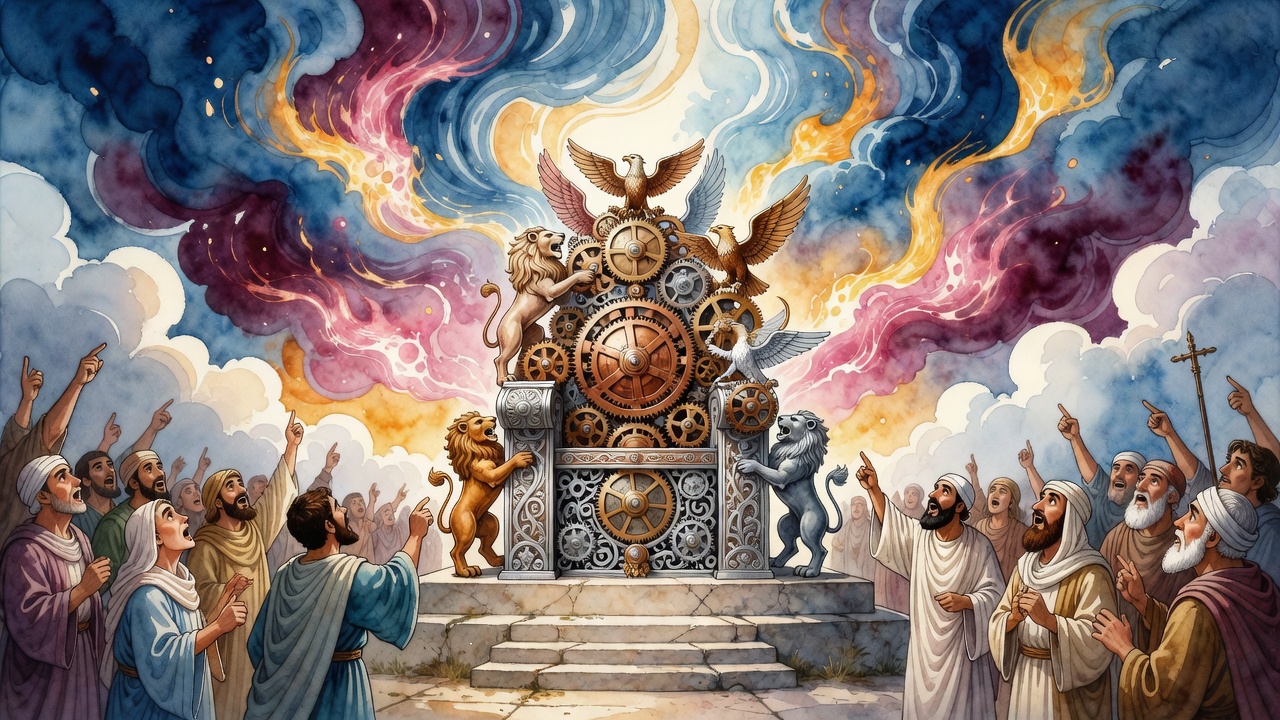
A prayer for Moshe, the man of God. Before the mountains were born, and You gave birth to the earth and the inhabited world, from eternity to eternity You are God. "Let Reuven live and not die" (Devarim 33:6). "He who dwells in the secret place of the Most High shall abide in the shadow of the Almighty" (Tehillim 91:1). This is in contrast to the tribe of Levi, which sat in the shade of the Temple courtyards (Tehillim 68:5). "A song, a psalm for the Sabbath day. It is good to give thanks to the Lord" (Tehillim 92:1). This is in contrast to the tribe of Yehuda, as it says, "This time I will praise the Lord" (Bereishit 29:35). "The Lord reigns, He is clothed in majesty" (Tehillim 93:1). This is in contrast to the tribe of Binyamin, which sat in the shade of God's presence (Tehillim 84:5). "O God of vengeance" (Tehillim 94:1). This is in contrast to the tribe of Gad, for Elijah the prophet stands ready to cut off the idolatrous beverage of the Gentiles (Tehillim 82:1). "Come, let us sing joyfully to the Lord" (Tehillim 95:1). This is in contrast to the tribe of Yissachar, which engaged in the joy of Torah study. Rabbi Yehoshua ben Levi said, "Up until this point, I have related to you what I have heard. From here on out, you must rely on your own understanding." Rabbi Elazar said in the name of Rabbi Yosei ben Zimra, "All the prophets prophesied, but they did not know what they were prophesying, except for Moshe and Yeshayah only. Moshe said, "My teaching shall drop like the rain" (Devarim 32:2), and Yeshayah said, "Here am I and the children whom the Lord has given me" (Yeshayah 8:18). Rabbi Yehoshua the priest said, "Even Eliyahu prophesied, but he did not know what he was saying," as it says, "My words are clear, and my lips speak right" (Iyov 33:3). Rabbi Elazar said in the name of Rabbi Yosei, "Even Shmuel, who was the head of the prophets, prophesied, but he did not know what he was saying," as it says, "The Lord sent Yerubaal and Bedan and Yiftach" (Shmuel I 12:11). Only I was mentioned by name, and he did not know what he was prophesying. Rabbi Levi said in the name of Rabbi Chanina, "The eleven psalms that Moshe recited in the Divine chariot, he said as a prophecy. Why were they not written in the Torah? These are the words of the Torah, and these are the words of prophecy, and we do not make a distinction between the words of the Torah and the words of prophecy."...
A prayer for Moshe, the man of God. If he is a man, why God? And if he is God, why a man? Rather, when he stood before Pharaoh, he was called God, as it is said, "See, I have made you a god for Pharaoh" (Exodus 7:1). When he fled from Pharaoh, he was called a man. Another explanation: when he was thrown into the Nile, he was called a man, and when he turned the water to blood, he was called God. Another explanation: when he ascended on high, he was called a man, as it is said, "What is the manna?" (Exodus 16:15), and when he descended, he was called God. Another explanation: when he went up and saw that they did not eat and drink, and he himself did not eat or drink, he was called God, and when he descended and ate and drank, he was called a man. Rabbi Avin said, "From his waist down, he was called a man." Rabbi Elazar of Metropolia said, "Moshe was called the man of God," as it is said, "He performed the Lord's righteous acts and his ordinances with Israel" (Deuteronomy 33:21), as he would argue with God about the strictness of the law, as it is said, "If you will deal thus with me, kill me" (Numbers 11:15). Another explanation: he was a judge, as it is said, "He executed the judgment of the Lord" (Deuteronomy 33:21), as he would say, "Let the judgment pierce the mountain." Another explanation: he spoke against the attribute of justice, as it is said, "If it is through creation, let the Lord create" (Numbers 16:30), and Moshe said, "If it is through creation, then it is better, but if not, let Him create for the sake of Korach and his congregation." And there is no man who spoke against the attribute of justice like Moshe. As the Lord said, "I will destroy them and blot out their name," and Moshe said, "Please forgive them." And what did the Lord respond? "I have forgiven them as you have spoken" (Numbers 14:12-20)....
Another interpretation is given by Rabbi Yehuda bar Simon in the name of Reish Lakish: Why is God called "the Man of God"? Just as a man fulfills his vow whether he chooses to annul it or uphold it, so too, God fulfills His promise. As it says in Numbers 30:3, "He shall not break his word; he shall do according to all that proceeds out of his mouth." Similarly, Moses tells God in Deuteronomy 10:12, "Arise, O Lord, and return to Your resting place, You and the Ark of Your strength."...
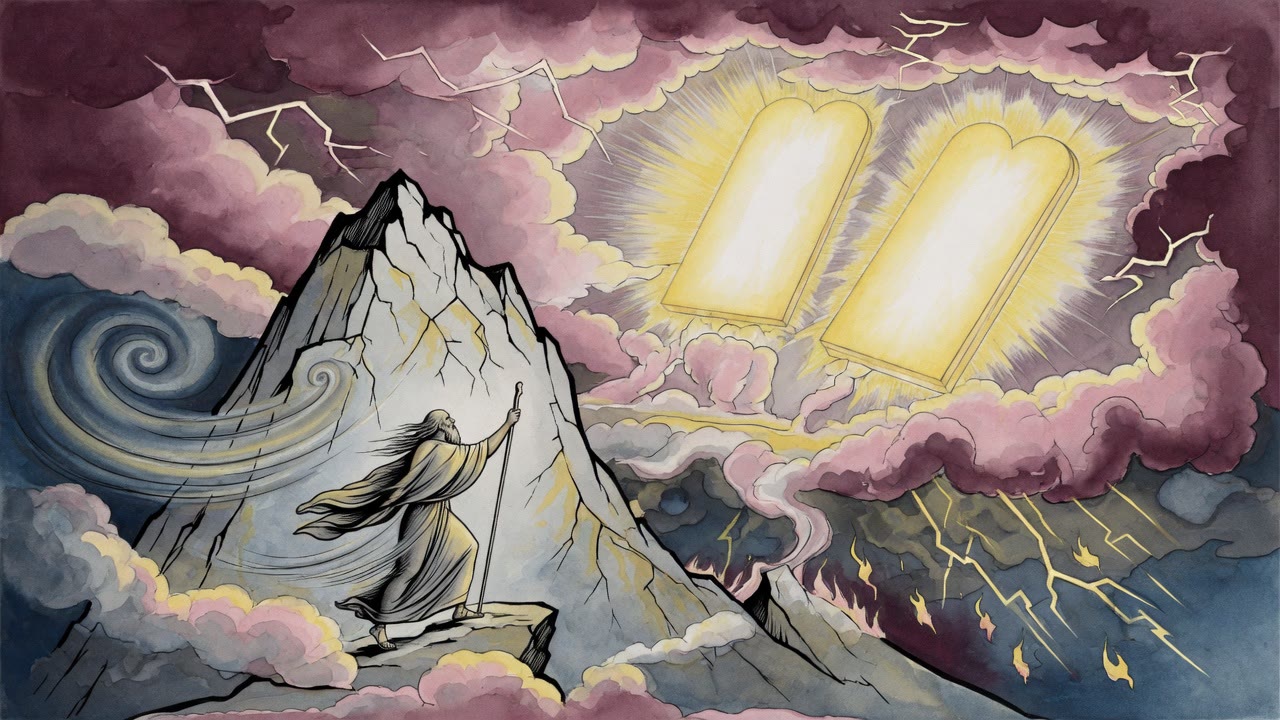
Another thing is prayer to Moses. As it says in Deuteronomy 9:18, "And I fell down before the Lord, as at the first." Rabbi Berachiah and Rabbi Helbo in the name of Rabbi Samuel bar Nahmani said that Moses did not leave a corner of the heavens without falling on it, as it says, "And I fell down before the Lord." We find that many prophets and righteous people prayed before the Lord, but the scripture only attributes it to Moses because his actions were unique among all creatures. How does a person stand and pray for an hour or two, and when he prays a lot, he prays for one day? But Moses prayed for forty days and forty nights. The Lord said to the ministering angels, "Have you seen his strength?" As it says in Psalm 103:20, "Bless the Lord, his angels, the mighty in strength." This is Moses, who told Israel the words of the Lord, as it says in Exodus 20:19, "You speak with us, and we will hear." What they could not hear, he put forth to them in the tens of thousands. So prayer is like this for Moses. A parable: Three people came to take freedom from the king. The first one came and paid respects and said, "What do you want?" He said, "For the rebellion that I rebelled, I ask that you give me freedom." He gave it to him. The second one came and he gave it to him. The third one came and said, "What do you want?" He said, "My lord the king, I do not ask for anything for myself, but for a certain country that is desolate and belongs to you, decree that I may build it." The king said, "This is a great crown for you." Similarly, David came to pray. The Lord said to him, "What do you want?" He said, "Hear my prayer," as it says in Psalm 17:1, "Hear my just cause, O Lord." Habakkuk came and said, "What do you want?" He said before Him what he said before you by mistake: Hananiah and his companions were thrown into the fiery furnace and escaped, while Rabbi Hananiah ben Teradion and his companions were burned. When he saw this, he exclaimed and said, "Master of the universe, these are righteous and those are righteous, these are pure and those are holy, so why do these escape and those are burned?" (Habakkuk 1:13) Therefore, the law fails, and justice never goes forth, for the wicked surround the righteous, so justice comes out perverted (Habakkuk 1:4). However, Nebuchadnezzar is uncircumcised and impure, while Daniel is holy and pure, so he clothed Daniel in purple (Esther Rabbah 7:14). Ahasuerus is uncircumcised and impure, while Mordecai is holy and pure, so he crowned Mordecai (Esther Rabbah 10:10). Pharaoh is uncircumcised and impure, while Joseph is holy and pure, so he made Joseph ruler (Esther Rabbah 7:12). For the wicked surround the righteous, so justice comes out perverted. At that moment, the Holy One, blessed be He, was revealed to him and said, "After you call out in protest, not so shall it be, for the righteous shall live by faith, but if he shrinks back, My soul shall have no pleasure in him." (Habakkuk 2:4) At that moment, he began to say by mistake, "I uttered a prayer to Habakkuk the prophet about my mistakes." Moses came to him and said, "What do you seek?" He replied, "Please forgive the iniquity of this people." He said to him, "This is a great crown for you, that I pass over my will before you, as it is said, 'A prayer of Moses, the man of God.' " He did not need to say, "Moses, the man of God." It can be compared to a king who was angry with his son and sought to kill him. He said to him, "Please, my love for you, forgive him and do not kill him." And so he did. The next day, the king began and said, "If I had killed my son myself, I would have stumbled. But remember my loved ones who asked for mercy for him, and what shall I do for him? I shall make him a father to kings." Thus said the Lord (Deuteronomy 9:14), "Let me alone and I will destroy them." Moses said to him (Numbers 11:15), "If this is how you treat me, please kill me." What does "kill me" mean? "Kill the one who kills." If I speak against them, they will kill me, but if I do not do your bidding, I am obliged to be killed before you. From here and from here I am the one who is killed. Kill the one who kills. Please kill me. What is written (Exodus 32:20), "And God said, 'I have forgiven according to your word.'" Afterwards, the Lord said, "If I had killed Israel, I would have stumbled myself. I hold good for Moses who asked for mercy for them, as it is said (Exodus 32:11), 'And Moses pleaded.' What shall I do for him? I will make him a father to the prophets." Let there be prayer for Moses, the man of God. When Israel came out of Egypt, he stood and prayed, saying, "I do not know the way." The Lord said to him (Exodus 23:20), "Behold, I send an angel before you." Moses said to him, "Even if you send many angels, I will not leave you if you are not before me." He said to him, "I swear by your life, I will do your decree." (Exodus 33:14) "My presence shall go and I will give you rest."
"The Lord has been our dwelling place. Rabbi said, 'We do not know if the Holy One, blessed be He, is the dwelling place of the world or if the world is His dwelling place.' Then Moses came and explained (Deuteronomy 33:27) 'The eternal God is thy dwelling place.' Rabbi Yose bar Chalafta said, 'We do not know if the Holy One, blessed be He, is dependent on His world or if His world is dependent on Him.' Then Moses came and explained (Exodus 33:21) 'Behold, there is a place with Me.' His world is dependent on Him and He is not dependent on His world. Rav Huna said in the name of Rabbi Ami, 'Why is the Holy One, blessed be He, called "Makom" [Place]? Because He is the place of the world, as it says "Behold, there is a place with Me." Another explanation for why He is called "Makom" is that wherever the righteous stand, He is with them, as it says (Jeremiah 32:21) "In every place where I cause My name to be mentioned, I will come to you and bless you." Similarly, it says (Genesis 28:11) 'And he encountered the place and stayed there overnight,' before the mountains were born. And it is written elsewhere (Proverbs 8:25) 'Before the mountains were sunk, before the hills, I was brought forth,' when they were like thin pipes of water. And wherever the Holy One, blessed be He, saw a deep place, He would put a great mountain inside and fill it, and wherever He saw a shallow place, He would put a small mountain, as it says 'Before the mountains were born.'"
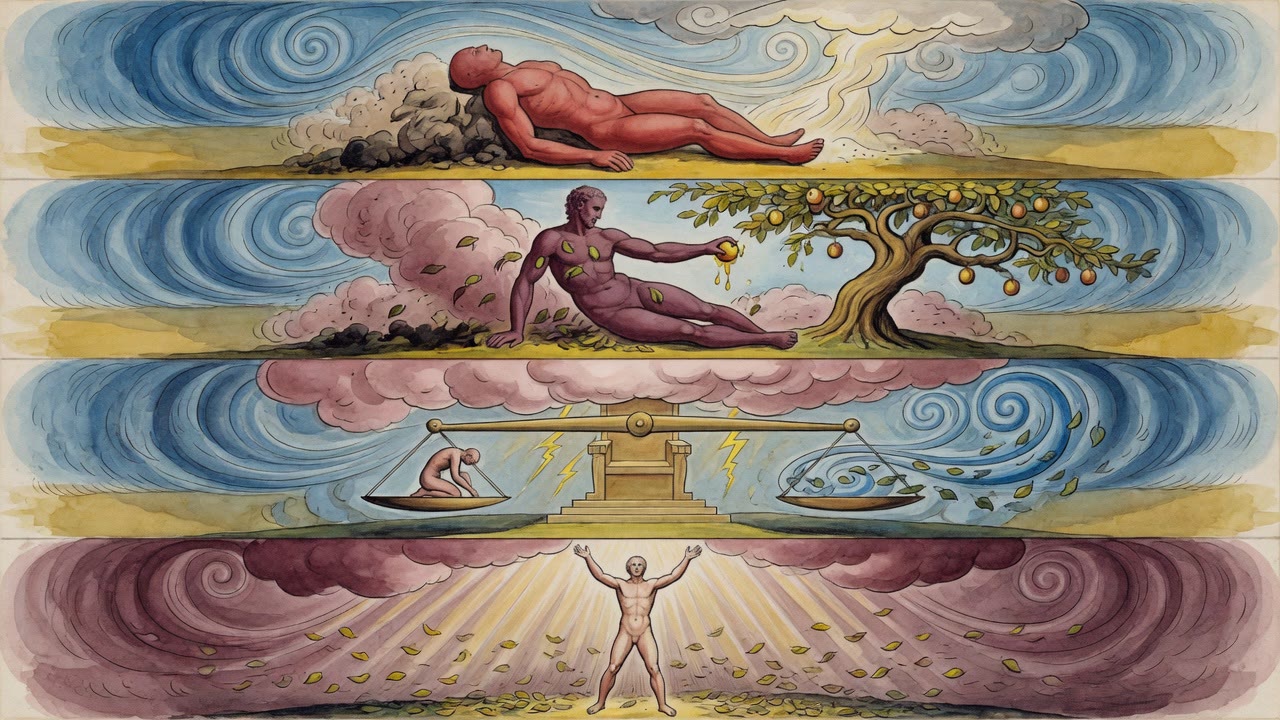
"Man shall sit in silence and be brought low." Rabbi Abbahu said: Repentance preceded the creation of the world, as it is said, "Before the mountains were born, before You brought forth the earth and the world, from eternity to eternity, You are God" (Psalm 90:2). Rabbi Reish Lakish said: The Torah existed 2000 years before the creation of the world, as it is said, "I was with Him as a master craftsman, and I was His delight day by day" (Proverbs 8:30). And the day of the Holy One, blessed be He, is a thousand years, as it is said, "For a thousand years in Your sight are like a day that has just gone by" (Psalm 90:4).
"They shall be carried away in a deep sleep. Rabbi Yochanan said: "They will wither like a plant after being cut." Resh Lakish said: "They withered from your Torah, and a worm touched them." And the Rabbis said: "You have scattered them for a time." In the morning, it will sprout and pass away. The Rabbis and Rabbi Abba bar Kahana said: "In the morning, it will sprout and pass away - this refers to Israel. Why does it wither and dry up in the evening? Because of the nations of the world." Rabbi Abba bar Kahana said: "The entire destruction belongs to Israel. In the morning, it will sprout and pass away in the world to come. Why does it wither and dry up in the evening in this world? Drink our sins before You. At every hour, drink our sins, and if You seek to revive us, we are before You like those who never existed. At that hour, we are going towards Your light."...
"For all our days have passed away in Your wrath... Rabbi Yehuda says this refers to bitterness, and the Rabbis say it refers to a youth that is cut off. We have completed our years... Our days pass away with toil and trouble... Rabbi Chanina bar Yitzchak said even his kingdom was toil and trouble, as it says 'I will recall Rahav and Babylon...' The Rabbis say it refers to harsh shearing and afflictions. Rabbi Yudan said, nevertheless, there were good deeds in it. Who knows the strength of Your anger? Rabbi Abba bar Kahana said, perhaps transgression has filled up your hand. Who knows the strength of Your anger? Rabbi Chanina bar Yitzchak said, whoever advances the Day of Judgment in this world, his sins come first. Let us calculate our years, so that we may bring wisdom to our hearts. Rabbi Eliezer said, repent one day before your death. His students asked, does a man know on which day he will die? He answered, therefore, one should repent every day, lest he die tomorrow, and thus all his days will be spent in repentance. Let us calculate our years so that we may bring wisdom to our hearts. Return, O Lord; how long will it be? Rejoice us according to the days You afflicted us, the years we have seen evil. Such are the days of the Exile in Babylonia, in Media, and in Edom. Another interpretation: such are the days of the Messiah. How many will be the days of the Messiah? Rabbi Eliezer says, a thousand years, as it is said, 'A day that is like a thousand years.' Rabbi Yehoshua says, two thousand years, as it is said, 'For the days of our life are seventy years,' and seventy times two is one hundred and forty. And the day of the Holy One, blessed be He, is one thousand years, as it is said, 'A thousand years in Your eyes are like yesterday.' Rabbi Baruchya says six hundred years, as it is said, 'The days of my people will be like the days of a tree.' And it is learned that this workshop is done in the earth for six hundred years. Rabbi Yosei says sixty years, as it is said, 'Before the moon, for generation of generations.'" Generation follows generation; one generation passes away, and another generation comes. According to Rabbi Akiva, a generation is forty years, as it says, "As the days of our years, so is our life" (Psalms 90:10), which is likened to the forty years that our ancestors spent in the wilderness, as it says, "And He afflicted you, and let you hunger" (Deuteronomy 8:3). However, the Sages say that a generation is three hundred and fifty-four years, corresponding to the number of days in the lunar year, as it says, "And the year of my redemption has come" (Isaiah 63:4). Rabbi Abbahu says that a generation is seven thousand years, corresponding to the seven days of the week, as it says, "For a young man shall marry a virgin" (Isaiah 62:5), and just as a wedding lasts seven days, so too a generation lasts seven thousand years.
"May your actions be seen by your servants. Rabbi Berechiah said in the name of Rabbi Chiya, this refers to Abraham and Sarah, and the path upon their children. This is Isaac and Rebecca, as it says, 'Isaac went out to meditate in the field.' At the moment they bound Isaac upon the altar and prepared the wood and the fire, and he put his foot upon it as a person does when slaughtering an animal, a radiance shone upon him from the splendor of the Divine Presence. And when Rebecca came with Eliezer on the way and saw Isaac, as soon as she saw him, she saw the whole generation, and this entered into her heart. And she said to Eliezer, 'Who is that man over there?' "The generation," as it says, 'For this man.' May your actions be seen by your servants. Another explanation of 'the path' is the blue thread in the fringes that Israelites wear, which are called 'children of the Omnipresent.' And why is it blue more than any other color? Rabbi Yitzchak said, and some say it was Rabbi Meir, that blue is similar to grasses, and grasses are similar to trees, and trees are similar to the firmament, and the firmament is similar to the radiance, and the radiance is similar to the bow, as it says, 'As the appearance of the bow.' Rabbi Yitzchak said, if Israel wear fringes and blue thread, they will not be forgotten, for if they gaze upon those fringes, it is as if the Divine Presence is gazing upon them, as it says, 'And you shall see it and remember.' And it is as if they are occupied with all the commandments, as it says, 'And let the pleasantness of the Lord our God be upon us.' My soul is from the blue thread, my eyes are from the dilated pupil. He said to God, 'You have given us your Torah, and you have given your glory to the upper worlds. Where have you given your Torah? It is fitting that you give your glory there.' And it says, 'And let the pleasantness of the Lord our God be upon us.' God replied to him, 'In the past, because the Temple was built by flesh and blood, therefore it was destroyed. But in the future, I will build it and place my Divine Presence within it, and it will never be destroyed.'"

 Click for full size