No Bird Flew Over Israel for Fifty-Two Years
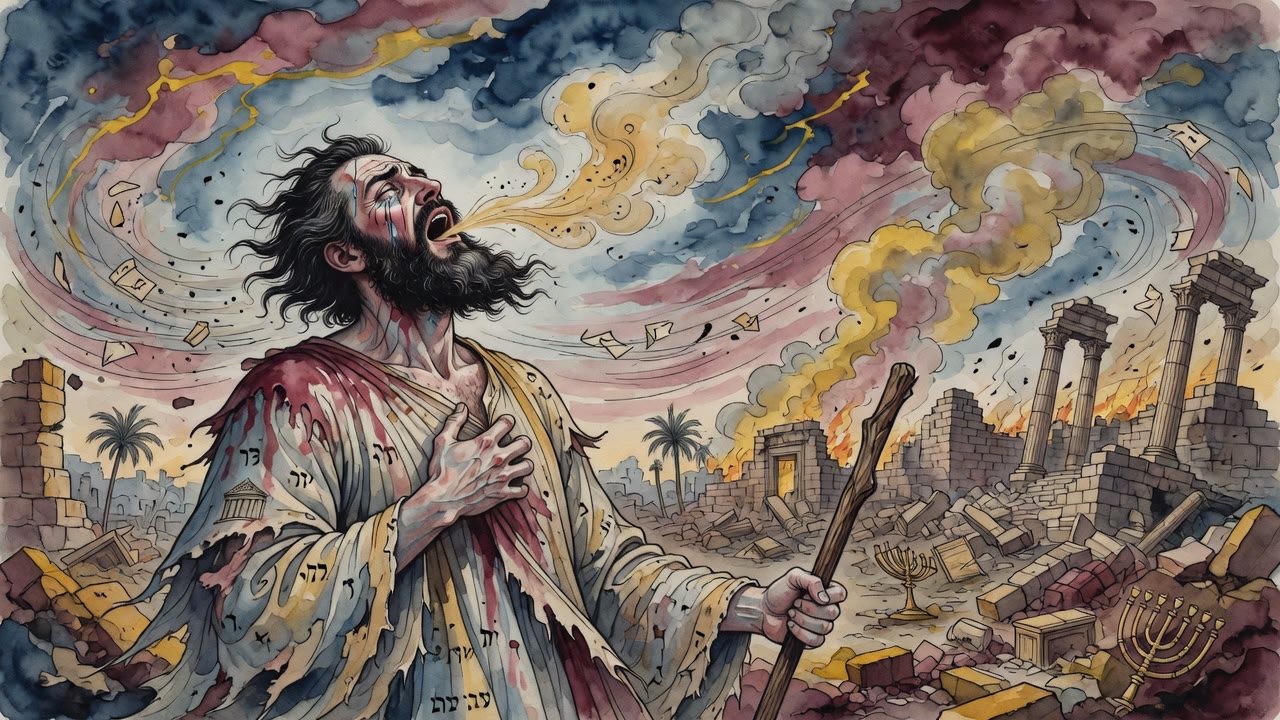
They found Isaiah in the ruins and asked if the comfort was something he had invented. He pointed at a single tense in the verse.
Table of Contents
 Click for full size
The Plow Hits Burnt Earth
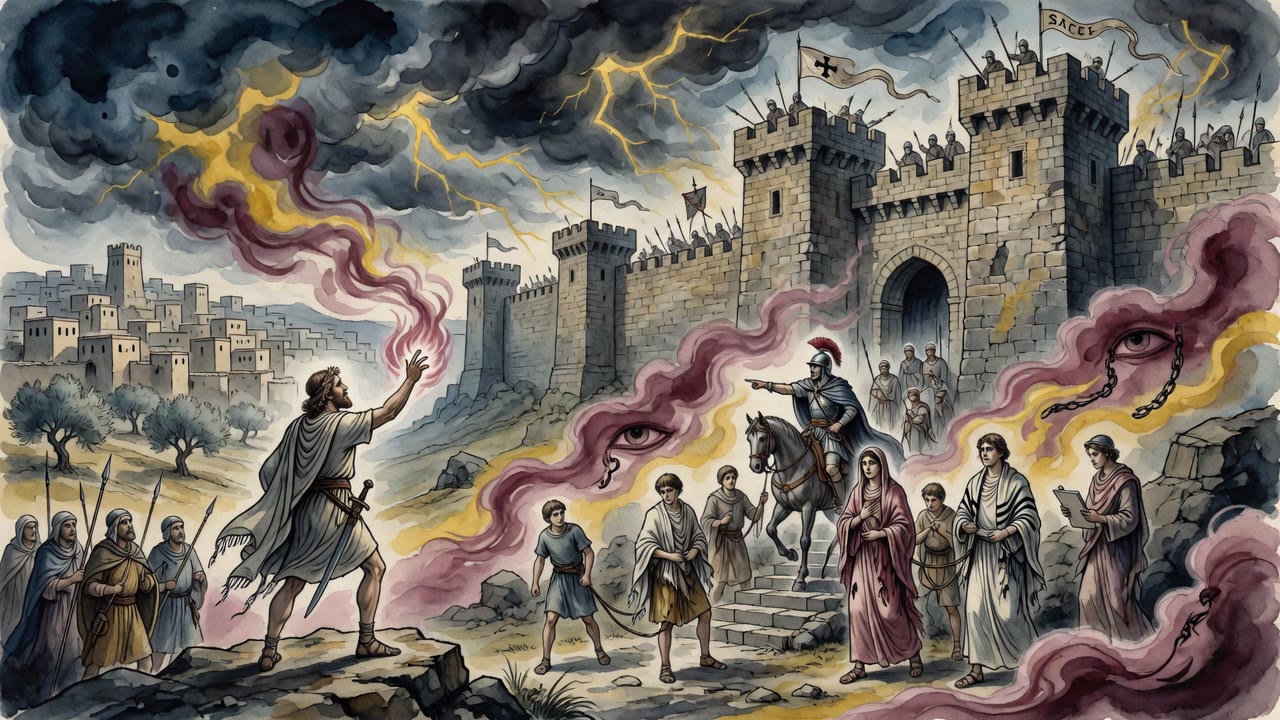
A man was plowing in the valley of Arbel. He drove his stake in deeper than usual and turned up earth that was still burnt. Whatever he had sown that morning scorched where it lay.
The ground had been holding brimstone and salt for seven years by then. People who tried to work the fields found it went in patches. Sow here, it burns. Move over and sow there, it burns. Above all of it the sky was empty. No shadow going over a field. No noise in a tree.
Forty years before any of this, while Jerusalem still stood, Babylonians had been planting date orchards at home in Babylon. They knew who was coming. They knew these particular exiles ran after anything sweet, because sweetness loosens the tongue for Torah.
Fifty-Two Years Without a Bird
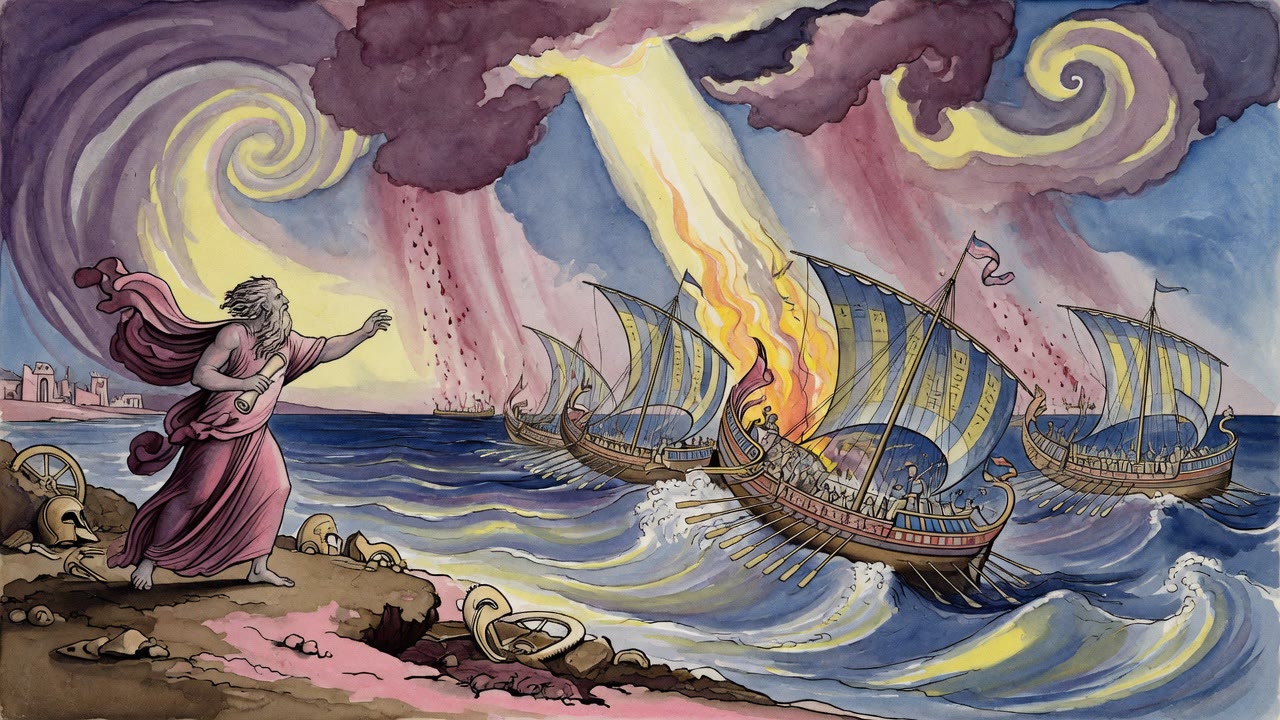
Rabbi Yose bar Halafta put a number on the emptiness. Fifty-two years, and nobody saw a single bird fly over the land of Israel.
The verse had already said it. From the fowl of the heavens to the beast, they wandered away (Jeremiah 9:9). Rabbi Yose only counted what the eye could not find.
Generations later Rabbi Zeira walked the same country and found it in fruit, and he said the only honest thing available. Look how brazen this land is. It produces anyway. One sage said the soil had been fed. Another said it had been turned right over, like a measure tipped upside down, everything that was underneath brought up into the light. The plowman at Arbel had already met the underside. It was still hot.
The Call That Was Also a Dirge
Long before the empty sky, God had used the same four letters on a man in a garden.
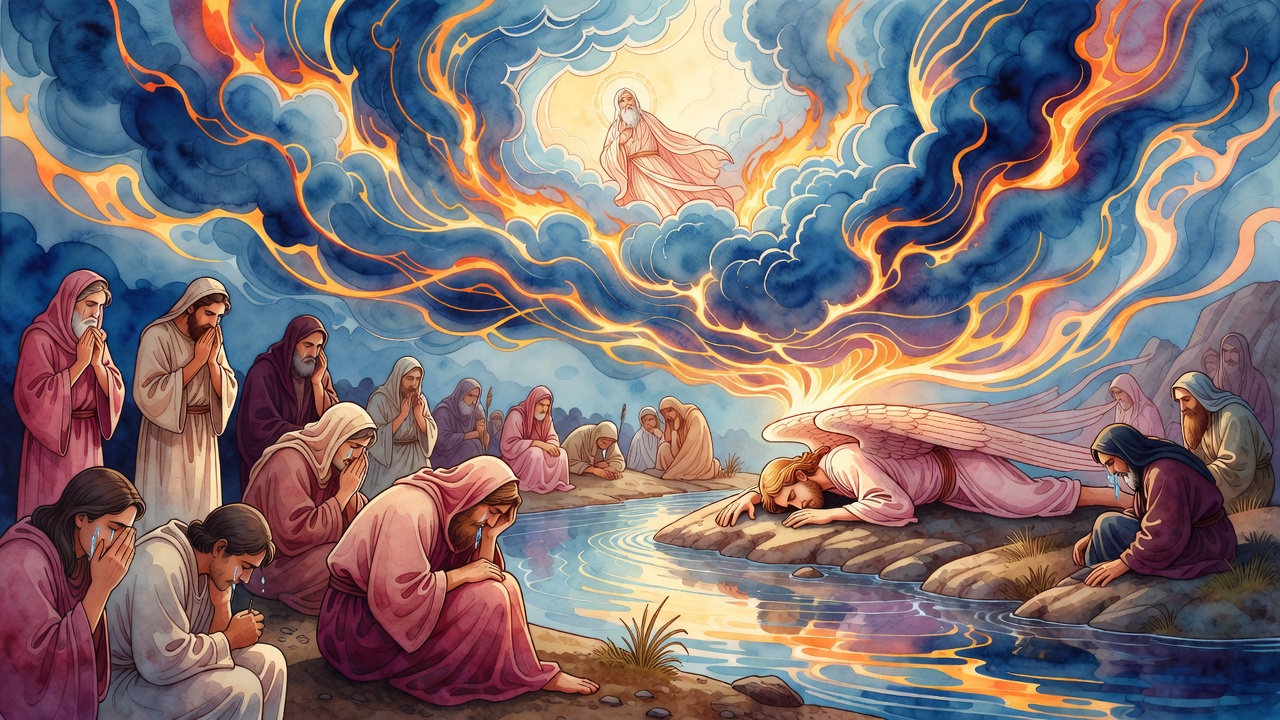
Adam hid among the trees. God called after him, "Where are you?" (Genesis 3:9). Ayekah. The same letters, turned, are Eikhah (איכה). How. The dirge was already being sung on the first afternoon of the world.
God counted what He had done with Adam in five steps. I brought him into the garden. I gave him a command. He broke the command. I sentenced him to be driven out and sent away. And I mourned over him with How.
Then the same five steps over the sons. I brought them into a land of orchards. I gave them a command. They broke it. I drove them out and sent them away. And I mourned over them with How. How does she sit alone (Lamentations 1:1).
The survivors standing in the burnt valleys already knew which count they were on.
They Asked Isaiah If He Made It Up
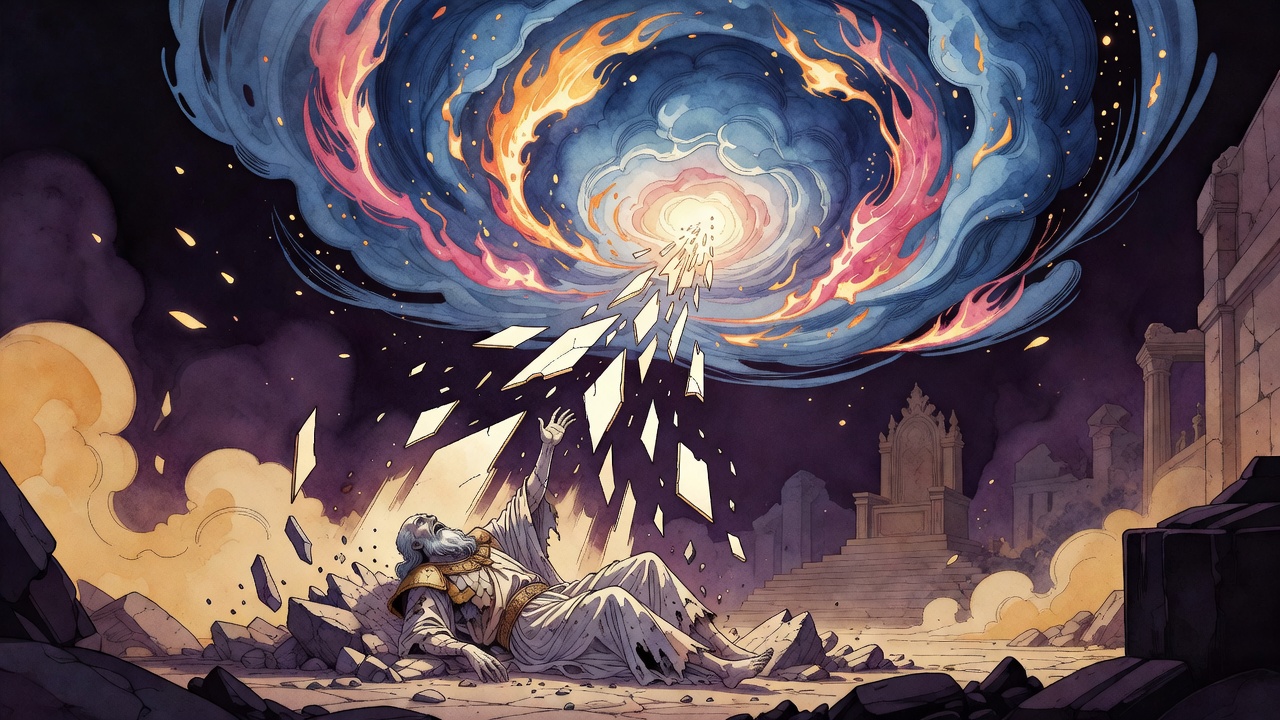
They pressed the question up. Can a woman forget her nursing child, the prophet had asked them, and they turned it back on the One who said it. All those offerings we carried in to You. The bulls, the flour, the doves in the hands of the poor. Have You forgotten them?
The answer came back tilted. The bad things I forget, God said. The good things I never forget. What I let go of is what you said in front of the calf, these are your gods, Israel (Exodus 32:4). What I keep is what you said to Me at the mountain, before you had heard a single one of the terms: we will do it, and then we will hear it (Exodus 24:7).
One generation had put both sentences in the same mouth inside of forty days. God had chosen which one to file.
Comfort, comfort my people, Isaiah told them. Your God will say (Isaiah 40:1).
They came back at him twice, and neither time was gentle. "Our master Isaiah. Do you mean you came to comfort only the generation that watched the house burn down? Ours, and no one after us?"
"I came to comfort all the generations," he said. "The verse does not say your God has said. It says your God will say."
They stood on it and came at him again from the other side. "Our master Isaiah. Do you mean you are making all this up out of your own heart?"
Same answer. Not has said. Will say. The mouth is still open. Nothing about it is finished, and nothing about it is his.
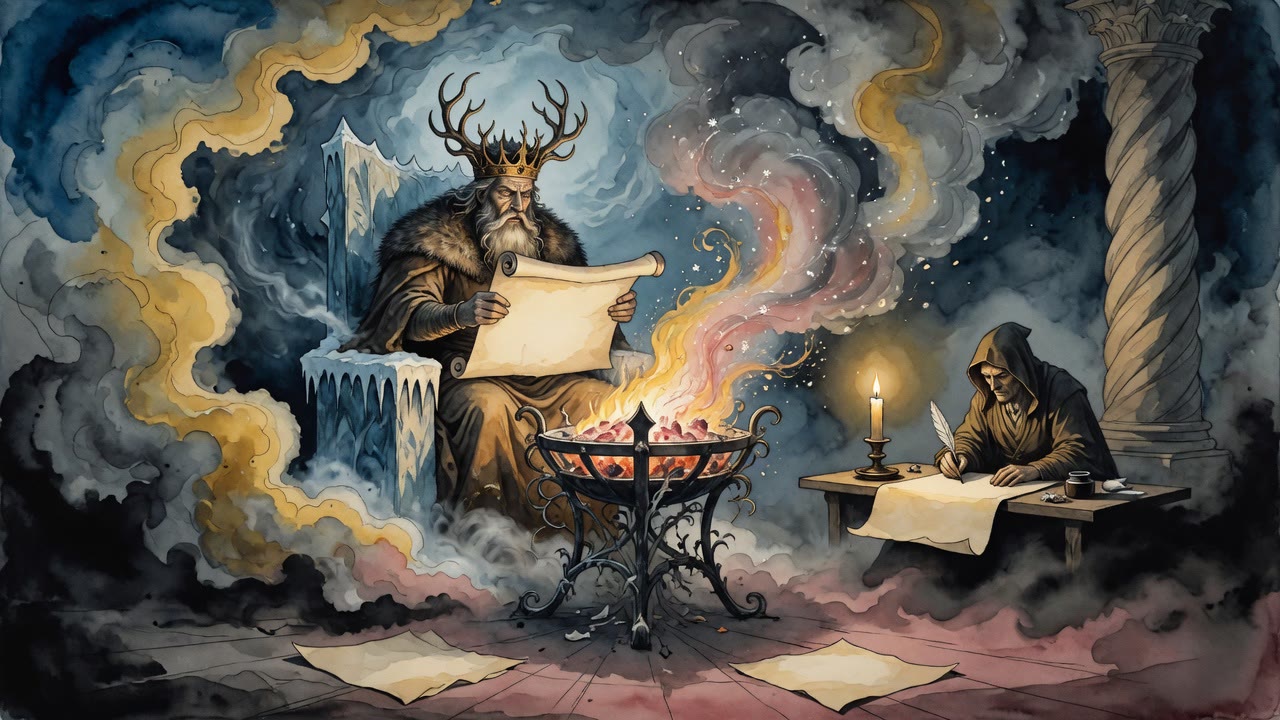
Rabbi Hanina son of Rabbi Abba went through the scrolls and found the phrase standing in eight places, one for each of the eight prophets who kept speaking after the destruction. Joel. Amos. Zephaniah. Haggai. Zechariah. Malachi. Ezekiel. Jeremiah. Eight mouths, so that no century of the exile would have to run on the memory of somebody else's consolation.
The Fish That Did Not Come Back
Everything that could leave had left. Seven hundred kinds of clean fish. Eight hundred kinds of clean locusts. Birds past counting. All of them went down into exile with Israel, and when Israel came back, all of them came back too.
Fish going into exile is a strange thing to picture, and somebody asked how it was managed. Rav Yose had the route. They went by way of the deep, and by way of the deep they returned.
So the sky filled in again over the burnt valleys, and the water under the country filled in, and the orchards came up out of soil that had been tipped over like a measure. Everything that had walked or swum or flown out of the land walked and swam and flew back into it.
One fish did not. It was called the shibuta, and nobody ever saw it in those waters again.
← All myths