The Oaths That Bind Both Heaven and Earth Together
The same God who pulled stars from the sky to drown the world later swore an oath beside a well, and both acts bound heaven to earth.
Table of Contents
 Click for full size
The Marriage of the Waters
When God divided the world on the second day, He split a single ocean in two and hung half of it above the firmament. The upper waters were called male. The lower waters, locked inside the earth, were called female. For ten generations they stayed apart, held at a distance by the thin shell of sky stretched between them. The whole architecture of the world rested on that separation holding.
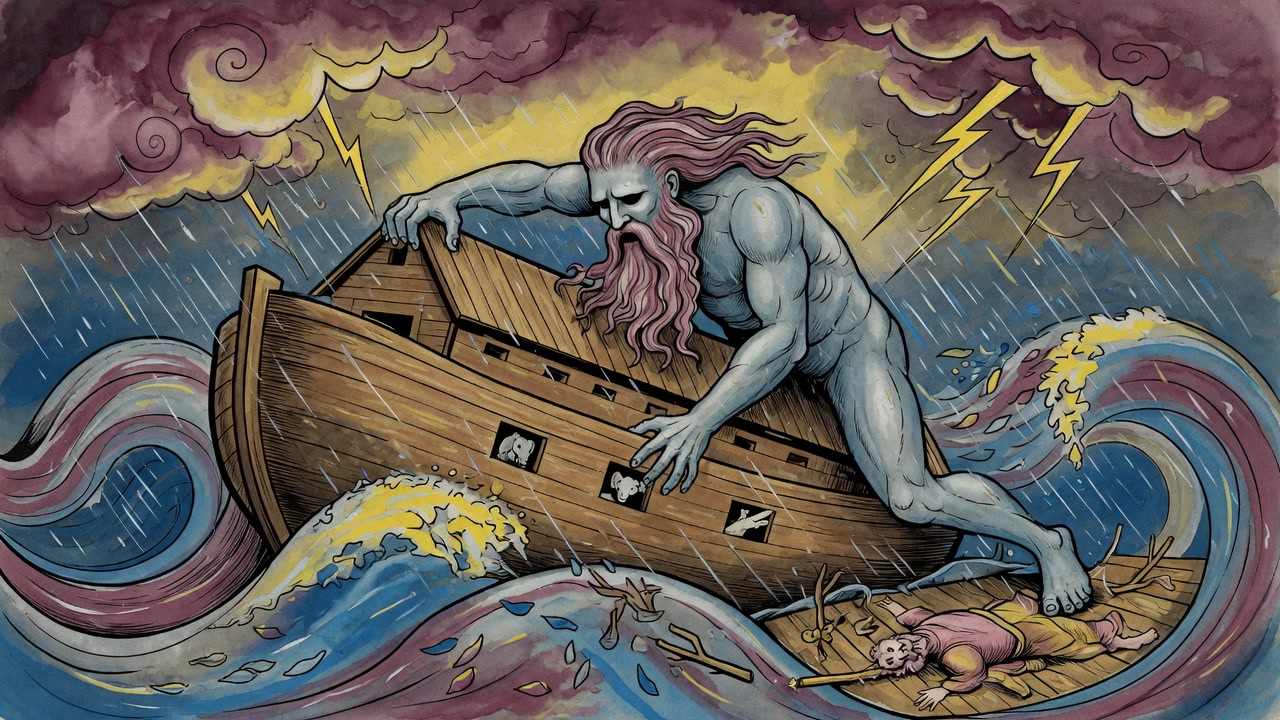
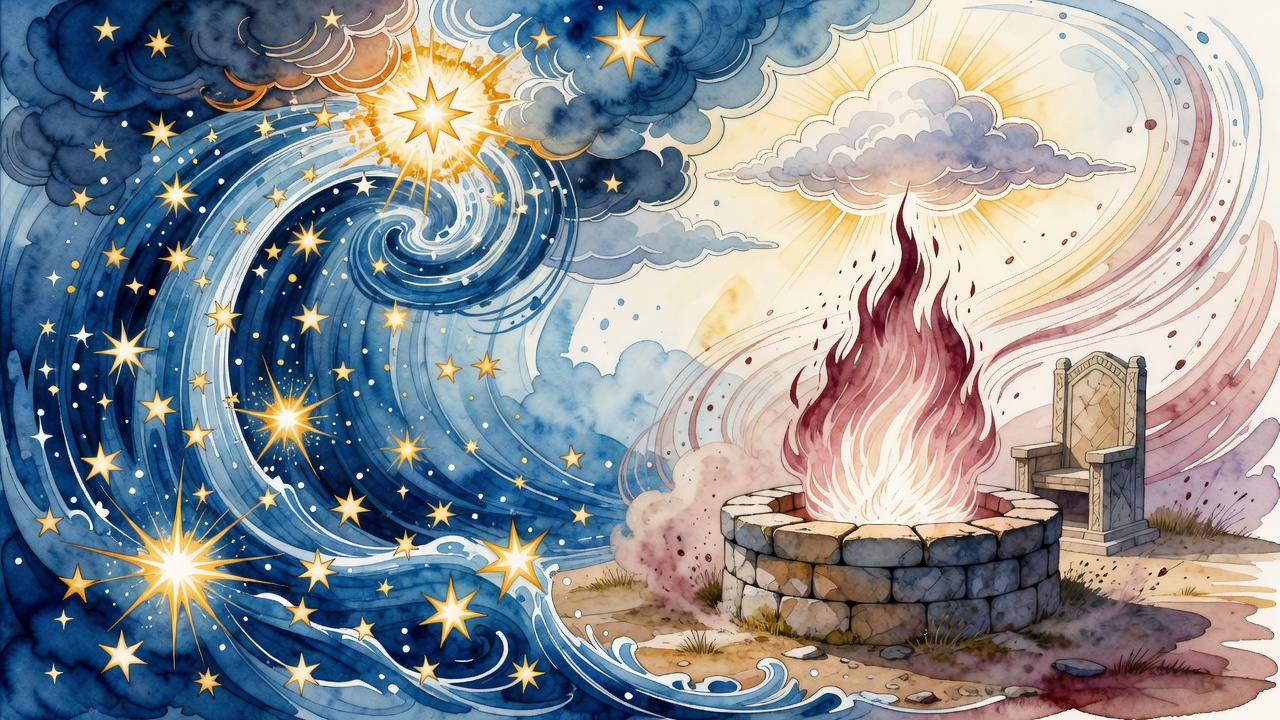
When humanity grew so corrupt that God let the structure fail, He did not simply open the rain clouds. The sages who read the flood as a cosmic event, not merely a meteorological one, described something far stranger. God reached into the constellation Pleiades and pulled out two stars. Through the gap those two missing stars left in the heavens, the celestial ocean came roaring down, and below it the springs of the deep burst upward to meet it. Male and female waters rushed into each other after ten generations of enforced separation, and where they met, the world drowned. The flood was not weather. It was a reunion.
A Year Tossed Like a Lentil in a Pot
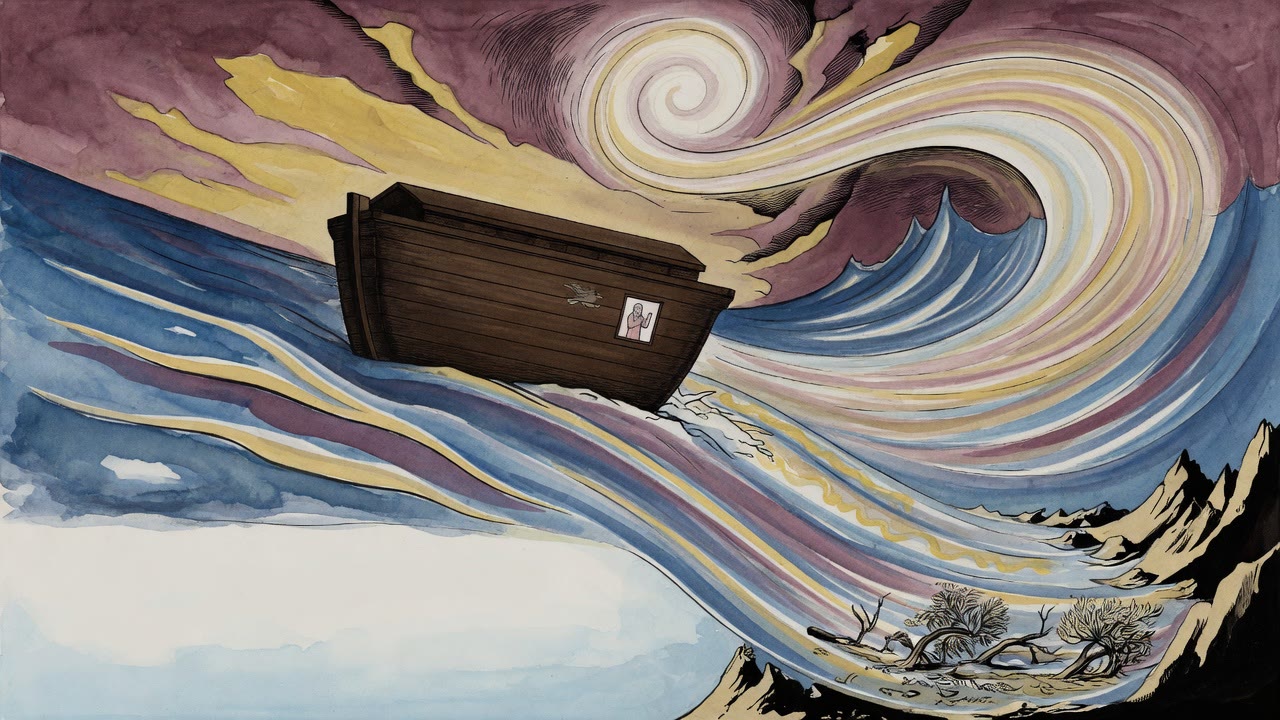
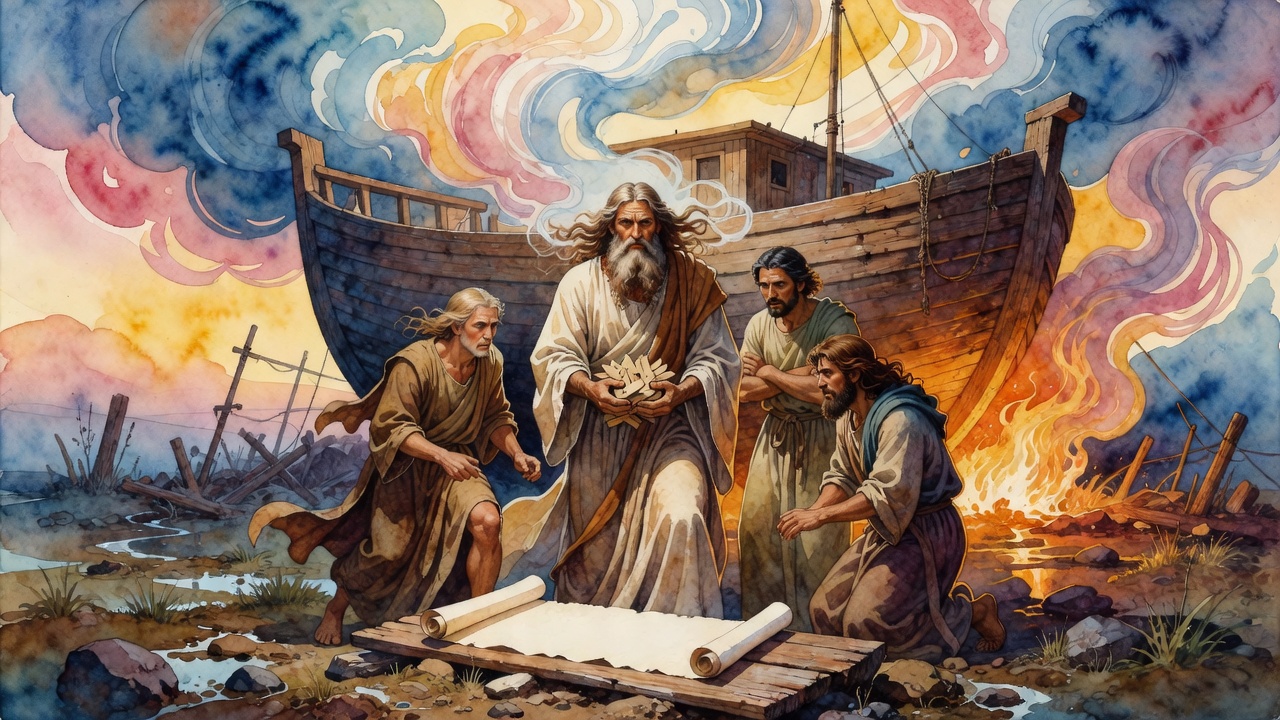
Inside the ark, eight people and every kind of creature alive endured a year of being boiled. The sages described the motion of the ark through those waters with a single image that has no parallel for visceral accuracy: a lentil in a pot of water that someone is stirring. Thrown from side to side without cease, no stability, no direction, no way to brace. Noah's family emerged after a year of that and walked out onto a world that was still dripping.
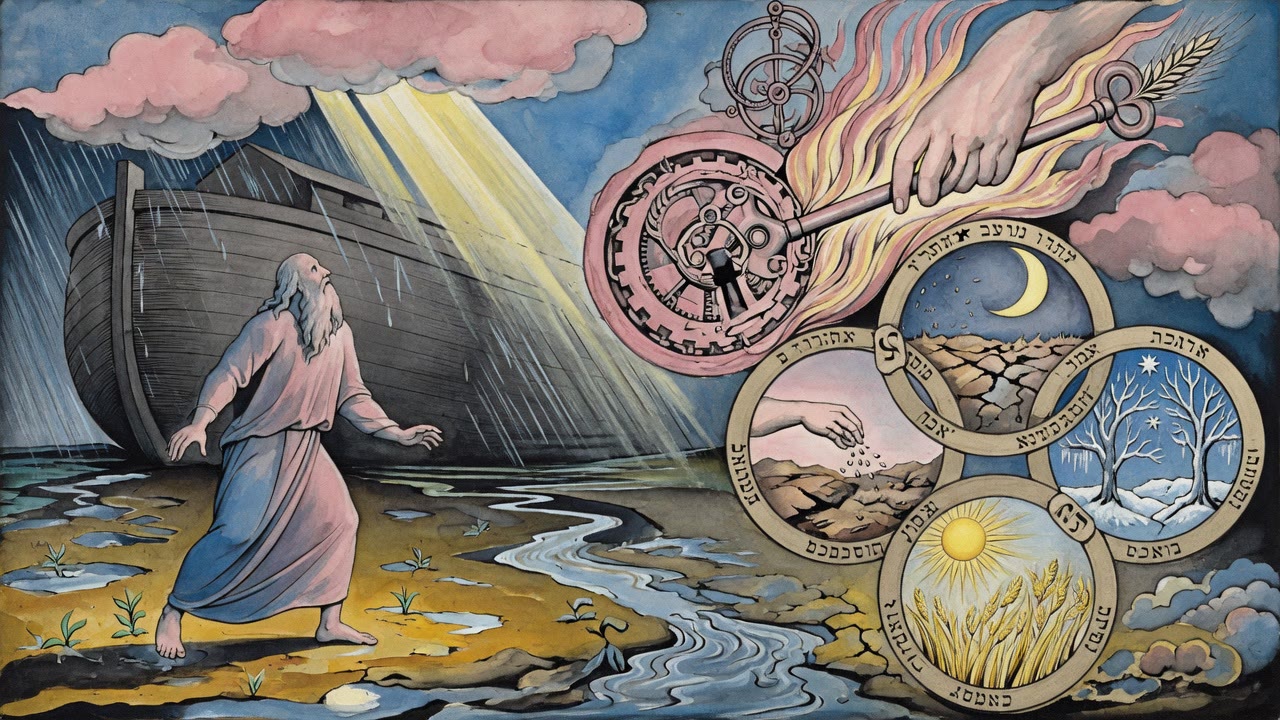
God replaced the two stars He had pulled from Pleiades. He replaced them with two others, not the same configuration restored but a new arrangement, because what had been done could not be undone. The sky that existed after the flood was not the same sky that had existed before it. The marriage of the waters had changed the cosmos, and the cosmos had to reorganize itself around the change.
Then God made the rainbow. The covenant. The sign that said: never again will all flesh be cut off by flood waters. The sages noted that this was not merely a promise. It was a binding oath, the kind that holds a party to its word even when circumstances change. God bound Himself to a limitation He had not accepted before the flood, because the event of the flood had demonstrated what unconstrained divine response to human wickedness looked like, and even God, in the Jewish telling, found that demonstration sufficient.
The Well at Beer-Sheba
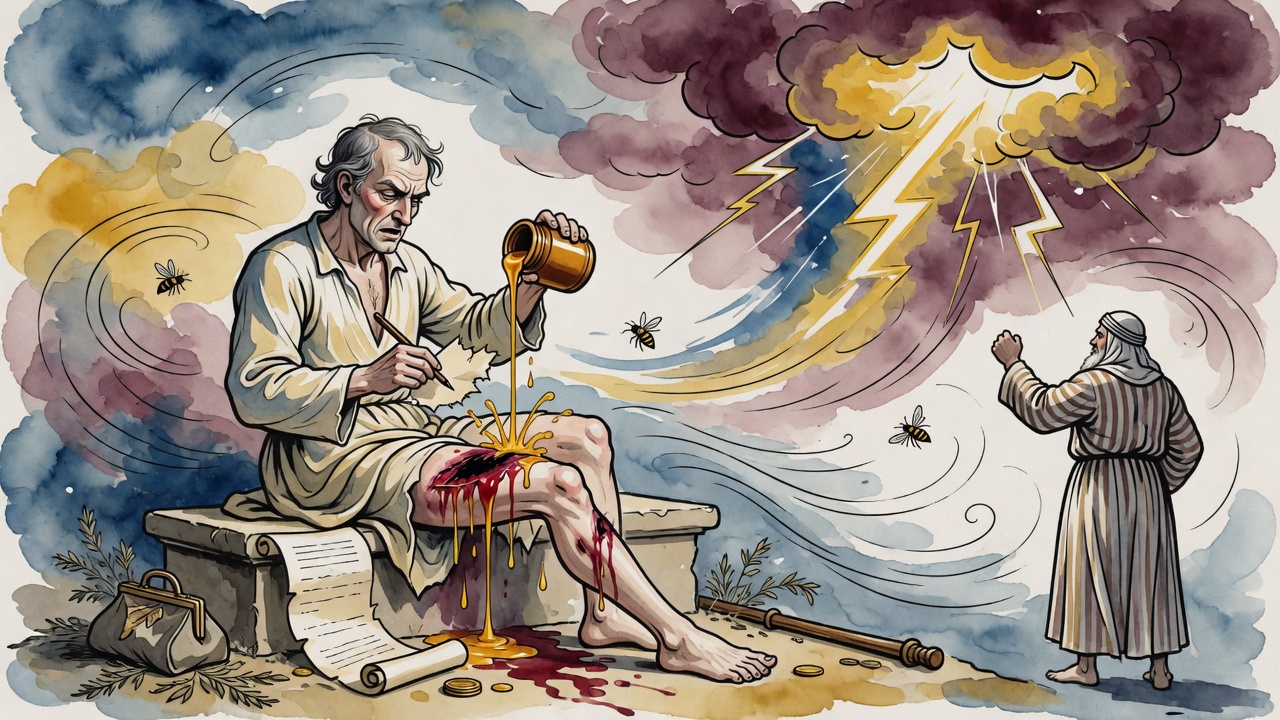
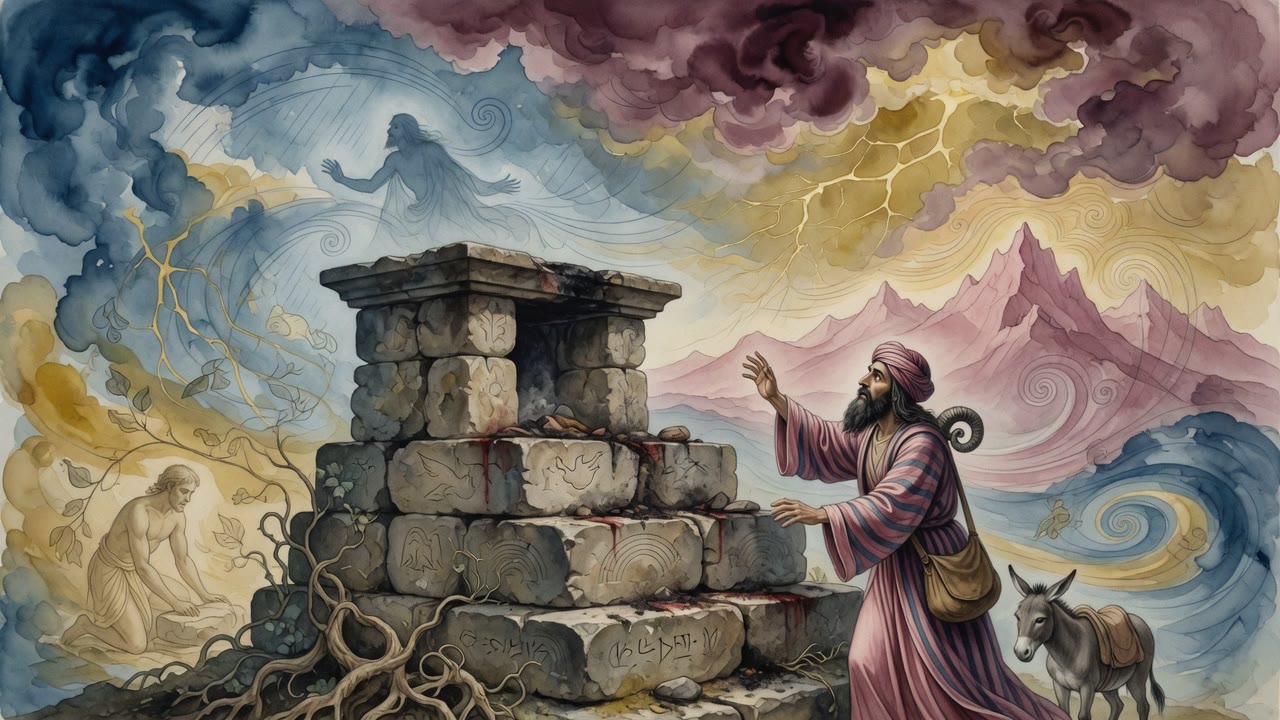
Centuries after the flood, a different kind of oath happened at a well. Abraham dug a well in the Negev at a place he would call Beer-Sheba, the well of the oath, and there he made a covenant with Abimelech, the Philistine king of Gerar. Seven ewes, set apart from the flock, were the witnesses. You do not swear by things you are willing to destroy. The ewes stood as living evidence that both parties had invested something real in the arrangement.
The content of the covenant was simple. The well belonged to Abraham. Abimelech had seized it once through his servants, and Abraham had objected. Now they agreed, formally and publicly, that the well was his. Seven ewes as proof. The Hebrew name of the place, Beer-Sheba, holds both meanings inside it: the well of seven, and the well of the oath. Language and action locked together in a name that would outlast both men.
What Holds Heaven to Earth
The flood covenant and the Beer-Sheba covenant look nothing alike. One was written in rainbow across the post-catastrophe sky. The other was sealed with a small herd of sheep at a dug-out hole in the desert. But the tradition that gathered them into one story was pointing at something that runs through both. The world stays together because of binding speech. God's word that held the upper and lower waters apart for ten generations. God's word at the rainbow that said never again. Abraham's word at the well that established who owned what.
These are not ornamental promises. They are load-bearing architecture. The Jewish imagination of covenant insists that the universe runs on oaths the way a body runs on blood, that without binding speech there is nothing to hold the male and female waters apart, and the world collapses back into the flood it has always, technically, been waiting to become.
← All myths