Noah Warned the World and Still Entered Alone
Noah plants cedar trees and cuts them down for 120 years, warning a generation that watches, mocks, and drowns without surprise.
Table of Contents
 Click for full size
Wickedness Grew Larger Every Morning
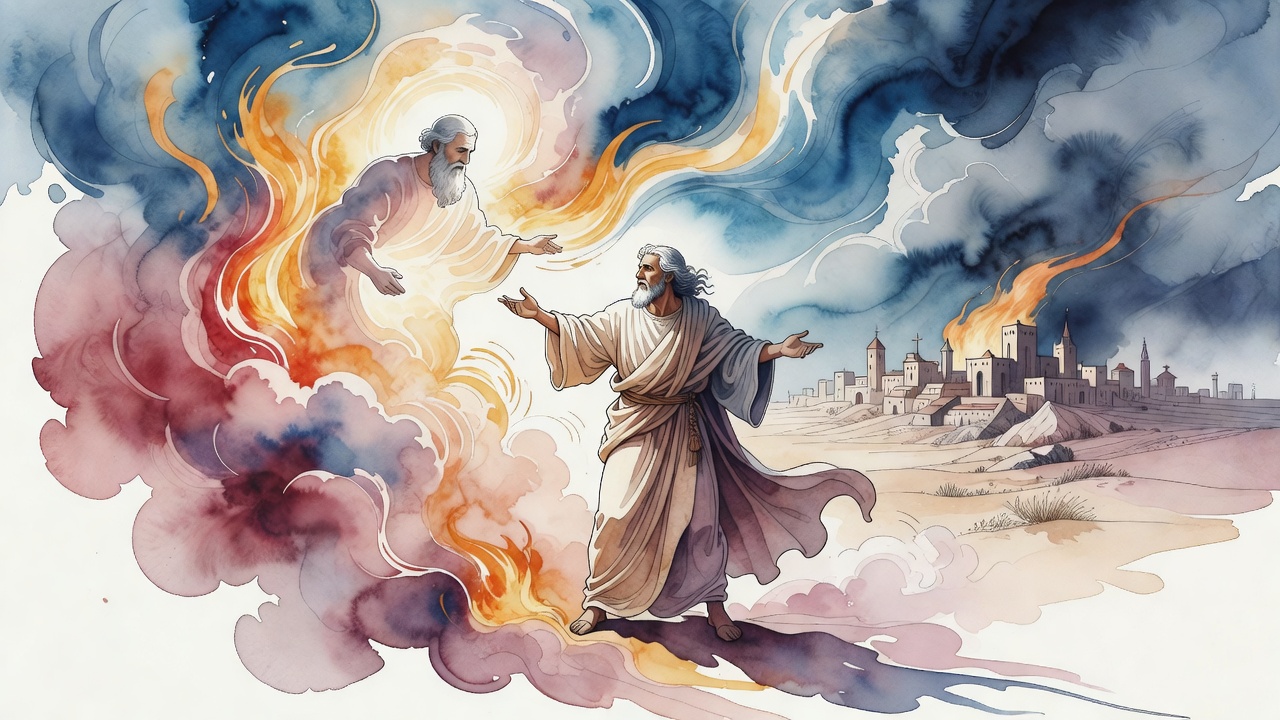
God saw that human wickedness was great. The word the Torah chose, raba, great, caught the attention of Rabbi Hanina, who heard in it not a fixed quantity but a direction. The wickedness was increasing. It was not simply present; it was growing. Each day's evil was larger than the day before, and the generation of the Flood was building toward a height that the earth itself could not sustain.
Bereshit Rabbah compared the Flood generation with Sodom. Both stories used the same word, great, for the scale of the offense. Sodom's cry is great. Humanity's wickedness is great. The verbal connection let the rabbis imagine the punishments as intentional parallels: water for the generation of the Flood, fire for Sodom. When violence fills the earth, the element that covers the earth responds. Water covered the world not because heaven was impatient but because injustice had become the texture of daily life, and the earth could no longer bear it.
Murder entered the midrash through Job. Job 24 contains some of the darkest language in Scripture, murderers who rise before dawn, adulterers who stalk the dusk, hands soaked in the work of killing. Bereshit Rabbah heard those verses as a description of what the Flood generation had become. They did not sin in ignorance. They had built a civilization around transgression. The flood, when it came, was not a surprise to heaven. It was a response to what the earth had been telling heaven for a century.
Noah Built in Public for a Hundred and Twenty Years
Noah was a righteous man. Bereshit Rabbah noticed the word ish, man. And said that wherever the Torah uses that word to describe someone, it signals a person who rebukes. Wherever you find ish in that sense, the person named is one who called others to account. Noah was not only righteous in his own conduct. He was righteous in his speech.
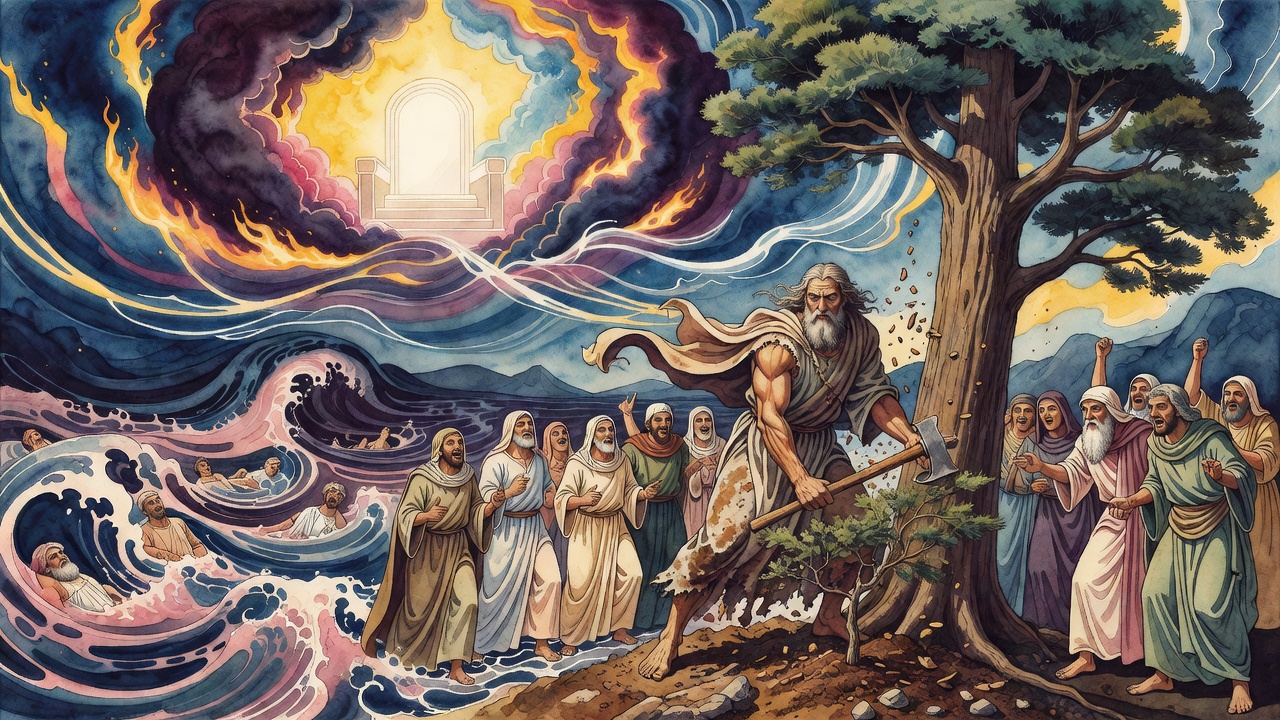
For 120 years, he planted cedar trees. When the trees had grown tall enough, he cut them down. When his neighbors asked what the lumber was for, he told them. He told them God was bringing a flood to destroy every living thing. He told them to repent. He told them this over and over, for more than a century, while the trees grew and were cut and the ark rose plank by plank in their sight.
They mocked him. They did not believe the rain would come. They did not change. The cutting and the building and the warning continued until the last boards were joined and the door was ready, and still no one turned.
Strange Passengers Came Aboard Without Invitation
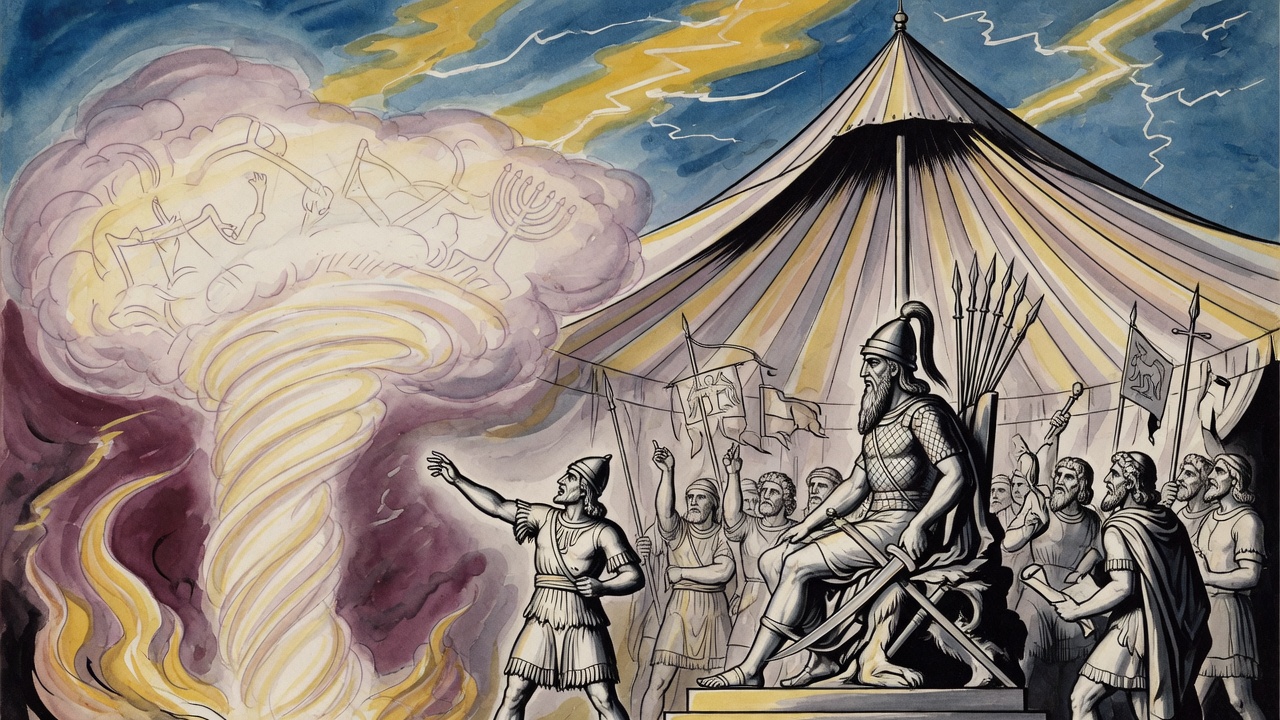
God commanded Noah to bring two of every living thing aboard the ark. Bereshit Rabbah expanded the manifest. Rabbi Hoshaya read the verse, of every living being, of all flesh, as including beings for whom souls were created but bodies were not. The mischievous spirits, the mazikin, came aboard too. They arrived without bodies and left without bodies, but the verse that included every living thing was broad enough to cover them.
Nothing was left outside. The ark carried the violent and the innocent in the animal world, the clean and the unclean, the visible and the invisible. Noah had not asked for spirits as passengers. The Torah's language was simply wide enough to include them, and the rabbis followed the language wherever it led.
This was also where the midrash placed its observation about impurity and divine speech. God, the rabbis noted, extended the wording of the commandment about animals to avoid speaking the name of an unclean animal directly. Instead of saying impure animals, the Torah wrote from the animals that is not pure. It added words to protect the sanctity of what was being commanded. The Torah itself was practicing the care it asked of human beings.
Abraham's Body Was the New Covenant
After the Flood, after the rainbow, the story kept moving forward. Bereshit Rabbah did not stop at Ararat. It followed the chain of toledot forward to Abraham, who stood in a different relationship to the covenant than Noah had. Noah was preserved by an ark. Abraham was transformed in his flesh.
The rabbis heard Abraham reading Job 19 over his own circumcision: "from my flesh I will view God." He said, "had I not done this, on what basis would the Holy One have appeared to me?" The flesh was not incidental to the encounter. The covenant required a mark in the body, because the body was where the human being met the world, worked the land, suffered the cold, and finally returned to the ground from which it came. A covenant sealed only in memory could be forgotten. A covenant sealed in flesh traveled everywhere the person traveled.
Proselytes came to attach themselves to Abraham after his circumcision, the midrash said, and the Hebrew word for struck, nikfu, was related to mukaf, attached. The act of covenant-making attracted other people to the covenant. Abraham had gone first, alone, as Noah had entered the ark alone. But what Abraham did with his body opened a door that was still open to anyone willing to walk through it.
← All myths