4 min read

Abraham Was Born While Noah Was Still Alive

The chronologies of Jubilees place Abraham and Noah in overlapping lifetimes. The man of the flood and the father of the nation shared the same world.

Curated by Arthur · Told by Maggid ·
Table of Contents
  1. Two Men in the Same Century
  2. The Exception to What Killed Everyone Else
  3. The Covenant Cut in Darkness
  4. Keturah and the Sons Who Went East

Two Men in the Same Century

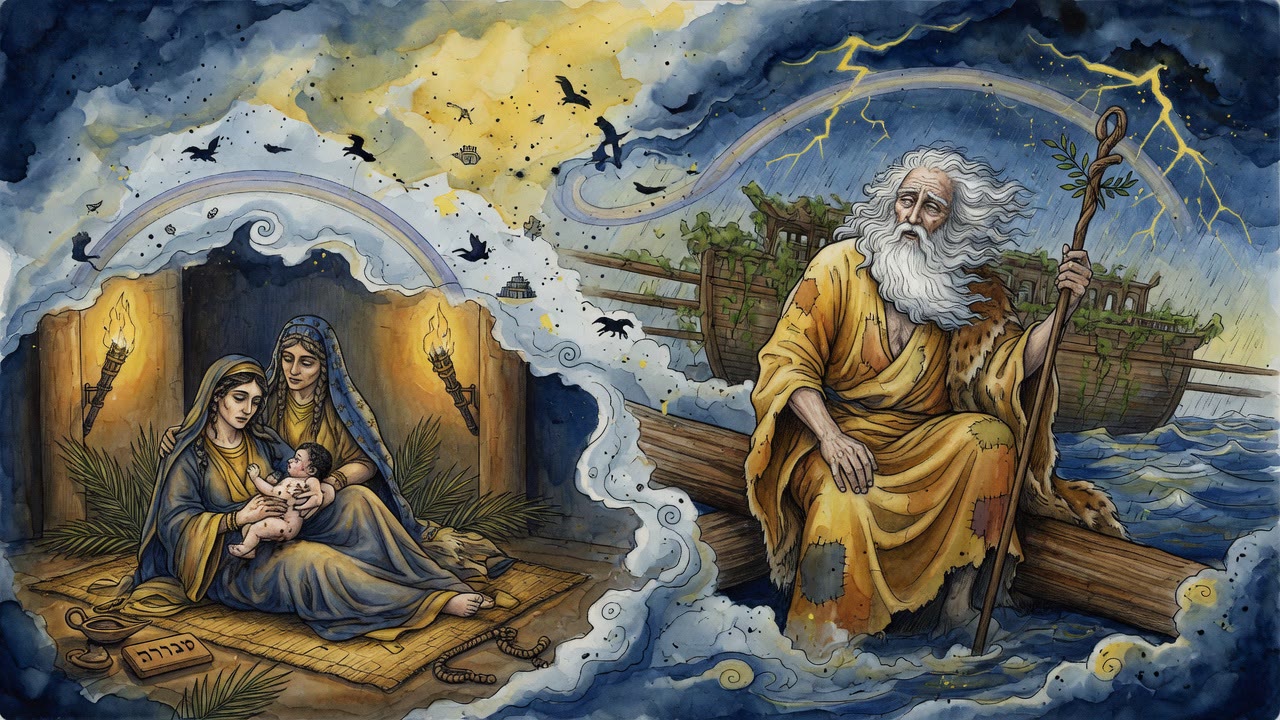
Abraham entered the world while Noah still breathed. Not as metaphor and not only as spiritual inheritance, the chronology is literal. The Book of Jubilees, the ancient Jewish text that recounts Genesis and the beginning of Exodus with a more precise accounting of years than the Torah itself provides, places the lifespans of Noah and Abraham in actual overlap. The man who built the ark and survived the flood lived long enough to be a contemporary of the man who would become the father of the Jewish people.

Noah outlived Abraham's grandfather by decades. He was still alive when Abraham was a young man, watching the world that had grown up around the flood's aftermath, noticing how quickly humanity had resumed its old habits. Abraham grew up in a world that still contained the oldest human being who had ever lived, a man who had seen the earth emptied and refilled, who had smelled the waters receding, who remembered what the world looked like after God had washed it clean.

The Exception to What Killed Everyone Else

Abraham lived one hundred and seventy-five years, three jubilees and four weeks of years in the accounting of Jubilees. He died old and full of days. The Book of Jubilees frames this against the backdrop of a world in which human lifespans had been collapsing since the flood. The generations after Noah were dramatically shorter-lived than those before. Abraham was the exception to a trend that had been running in the wrong direction for centuries.

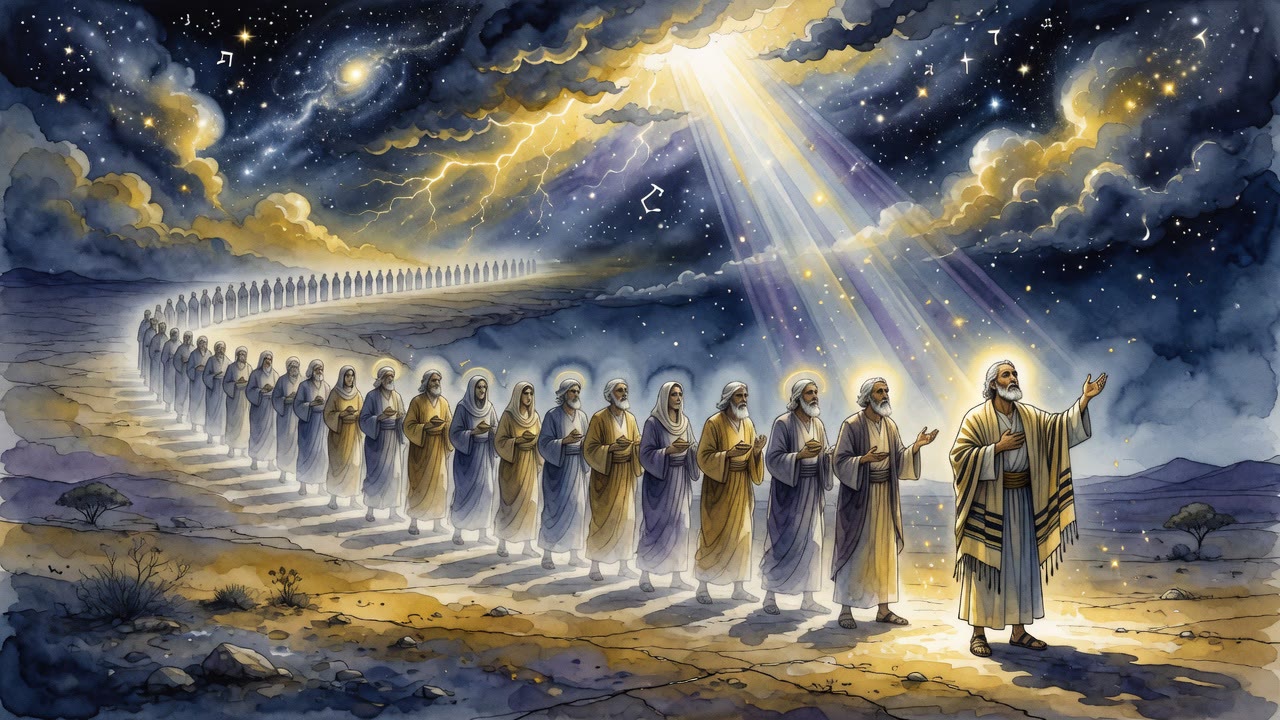
The promise God made to Abraham was embedded in this context. When God told him to look at the stars and count them, and promised that his descendants would be as numerous, Abraham fell on his face and laughed, not from disbelief, the tradition says, but from overwhelming joy, from the shock of hearing something so large said so plainly. He and Sarah were old. The laughter was the only response his body knew how to make to news that size.

The Covenant Cut in Darkness

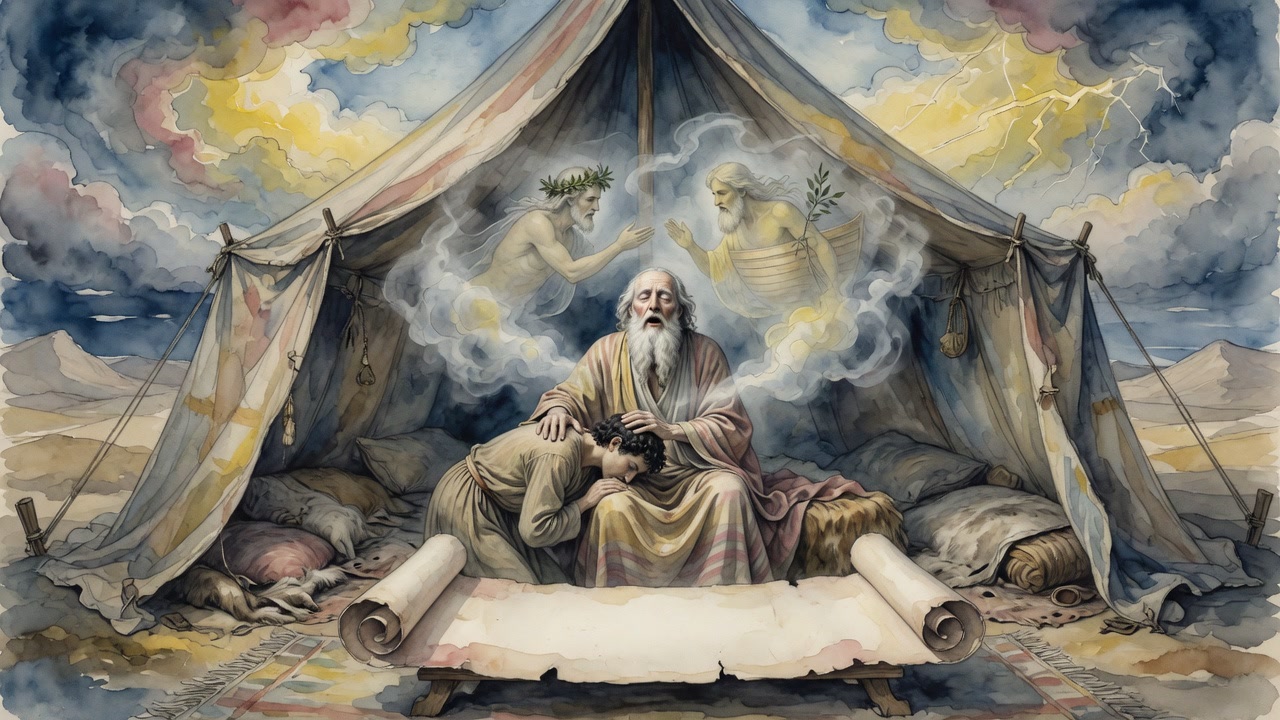
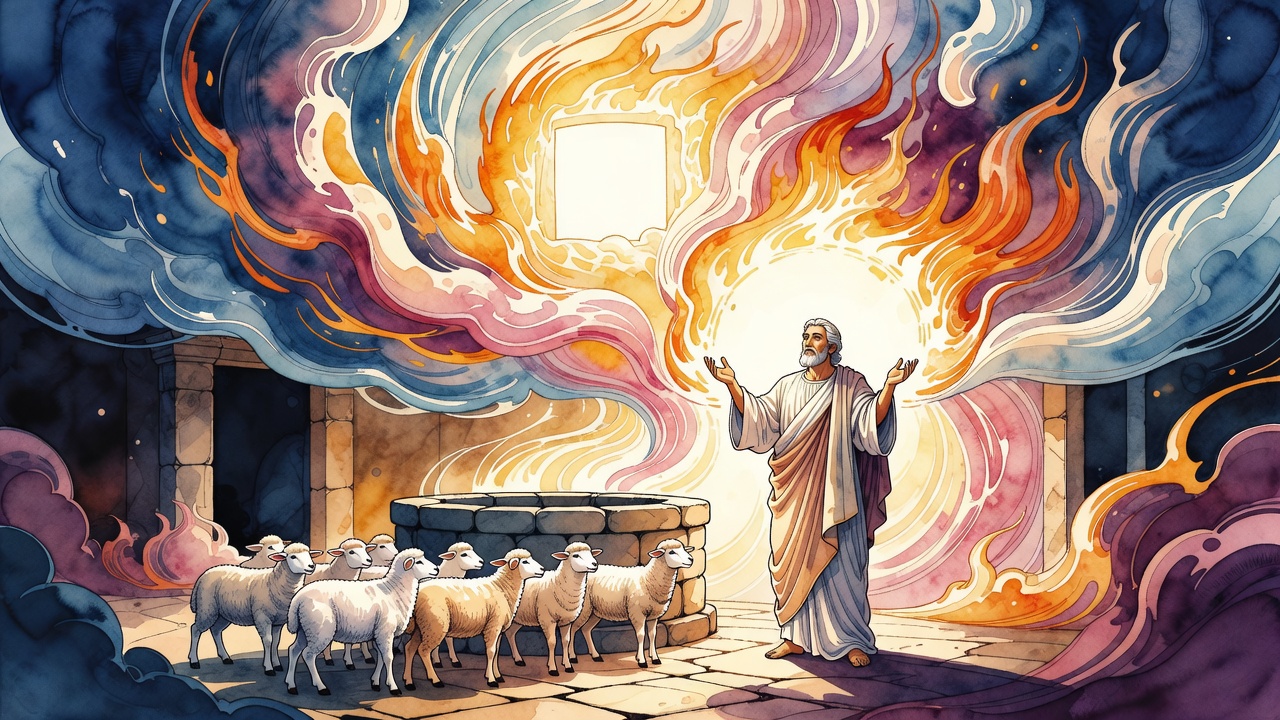
The covenant that God sealed with Abraham in Genesis 15 was made at night, between the halves of animals, with a smoking fire-pot and a flaming torch passing through the pieces while Abraham slept in a deep and terrifying darkness. God bound himself to Abraham's descendants by the most solemn form of ancient oath, the kind where both parties walk between the animal halves, accepting that they will be like those animals if they break what they have sworn. Only the fire passed through. Only God's presence moved between the pieces. Abraham lay on the ground and God made the promise alone.

The territory named in that covenant stretched from the river of Egypt to the great river Euphrates. It was a span that no nation descended from Abraham would ever fully occupy but that the tradition would never stop regarding as the rightful inheritance. The animals, the darkness, the smoking torch, all of it was in the record, precisely catalogued, available for every subsequent generation to point to.

Keturah and the Sons Who Went East

After Sarah died, Abraham took another wife named Keturah, from the land of Canaan, and she bore him six more sons. The tradition recorded their descendants in careful genealogical detail, sons of Zimran, sons of Jokshan, the branching lines that headed east and south and away from the main story. Abraham gave gifts to all of them and sent them away from his son Isaac while he was still living. Isaac was the heir. The others received generosity and distance. They became the tribes and peoples of Arabia and the eastern lands, related to Israel by blood but outside the covenant.

Abraham died full of years, gathered to his people, and was buried by Isaac and Ishmael together in the cave of Machpelah beside Sarah. The two sons he had kept apart in life came back together over his grave.


← All myths
From the tradition

Sources

4 sources

The texts this telling draws on, in full. Open a card to read inline, or expand it for a wider, quieter read.

Book of Jubilees 23:15Book of Jubilees

A brief but thought-provoking passage from the Book of Jubilees, specifically chapter 23. It's a short reflection on aging and righteousness.

"And he lived three jubilees and four weeks of years, one hundred and seventy-five years, and completed the days of his life, being old and full of days."

Okay, first things first: what’s a jubilee? In the Book of Jubilees, a jubilee is a period of 49 years (seven cycles of seven years, or Shmita). So, "three jubilees and four weeks of years" translates to (3 x 49) + (4 x 7) = 147 + 28 = 175 years. Not quite Methuselah's 969, but still a good run!

The passage goes on to say, "For the days of the forefathers, of their life, were nineteen jubilees; and after the Flood they began to grow less than nineteen jubilees."

Nineteen jubilees! That's 19 x 49 = 931 years! Talk about longevity! The text suggests a decline in lifespan after the Flood. Why?

"…and to decrease in jubilees, and to grow old quickly, and to be full of their days by reason of manifold tribulation and the wickedness of their ways."

According to Jubilees, our lifespans shrunk because of… well, because we weren't so good. Because of “manifold tribulation and the wickedness of their ways.” In other words, sin and suffering took their toll. It's a pretty straightforward cause-and-effect: bad behavior, shorter life. It's a concept we see echoed in other ancient literature, too.

But then comes a glimmer of hope, a single exception:

"with the exception of Abraham. For Abraham was perfect in all his deeds with the Lord, and well-pleasing in righteousness all the days of his life."

Abraham, the patriarch, the father of the Jewish people. He stands apart. The text paints Abraham as a shining example of righteousness. Because he was "perfect in all his deeds with the Lord," he somehow transcended the general decline. He was "well-pleasing in righteousness all the days of his life."

Now, "perfect" is a loaded word. Was Abraham truly without fault? Perhaps the text means he was striving for perfection, that his heart was always directed toward God. Maybe it's less about flawless execution and more about unwavering intention.

What does this passage from Jubilees tell us about how ancient people viewed the relationship between morality and mortality? It suggests a deep connection. That living a righteous life, a life aligned with God's will, could somehow extend your days.

It also raises questions. Is longevity a reward for good behavior? Or is it simply a coincidence? Does living a moral life guarantee a long life? We all know good people who die young and… well, you know the opposite.

Maybe the takeaway isn't about literal years, but about living a full life, a life of meaning and purpose. Like Abraham, perhaps striving for righteousness, for being "well-pleasing" in God's eyes, is the key to a life that feels long, regardless of the number of years we're given.

Full source
Book of Jubilees 15:13Book of Jubilees

There are moments in the Torah where the sky seems to split open and a promise falls through. Chapter 15 of Genesis is one of them. In it, God binds Himself to Abraham with a covenant that still echoes through Jewish history and identity.

"(And I shall give to thee and to thy seed after thee) the land where thou hast been a sojourner, the land of Canaan, that thou mayst possess it for ever, and I shall be their God."

This is God speaking directly to Abraham, promising him the land of Canaan – the land we now know as Israel – as an everlasting inheritance for him and his descendants. It's a bold promise, filled with hope and destiny. It also establishes a profound relationship: God will be their God. This isn't just about land; it's about a spiritual bond, a shared future.

What does God ask of Abraham in return? It's not just about believing; it's about action.

"And the Lord said unto Abraham: "And as for thee, do thou keep My Covenant, thou and thy seed after thee, and circumcise ye every male among you, and circumcise your foreskins, and it will be a token of an eternal covenant between Me and you."

Here it is: the commandment of brit milah, circumcision. It's more than a physical act; it's a symbol, a “token of an eternal covenant." It’s a way of marking oneself as part of this ongoing relationship with God, a physical reminder of the promise. It's a powerful statement of belonging and commitment.

And the text continues, laying out the specifics of the ritual:

"And the child on the eighth day ye will circumcise, every male throughout your generations, him that is born in the house, or whom ye have bought with money from any stranger, whom ye have acquired."

The detail about the eighth day is crucial. It establishes a timeline, a tradition that has been meticulously observed for millennia. And notice the inclusion of "him that is born in the house, or whom ye have bought with money from any stranger." This highlights that the covenant isn't just for those born into Abraham's line, but also for those who choose to join it. It speaks to the potential for inclusion, for welcoming others into the fold.

This passage in Jubilees offers a glimpse into the origins of a practice that remains central to Jewish identity. It's a reminder that our relationship with God is not passive, but active. It requires commitment, action, and a willingness to embrace a shared destiny.

So, as we reflect on this ancient text, let's consider the power of covenants, the enduring nature of tradition, and the ongoing promise of a land and a God for those who choose to embrace them. What does it mean to you to be part of an "eternal covenant?" It's a question worth pondering.

Full source
Book of Jubilees 15:21Book of Jubilees

A reader can skim over those verses in Genesis, but the Book of Jubilees gives us a peek into his immediate reaction.

the verse says, “And Abraham fell on his face, and rejoiced, and said in his heart: ‘Shall a son be born to him that is a hundred years old, and shall Sarah, who is ninety years old, bring forth?’”

Can you imagine the sheer awe and maybe a little disbelief? I mean, a hundred years old! Sarah, ninety! It's a miracle of epic proportions, a evidence of God’s power to defy all odds. Abraham's response is fascinating. He doesn't just nod and accept; he's overwhelmed, expressing his astonishment internally, in his heart.

Then, Abraham, ever the compassionate father, makes a plea. "O that Ishmael might live before thee!" He’s thinking of his firstborn, the son he already loves. He wants God's blessing on Ishmael's life, too. It’s a very human moment, this concern for all his children.

And God, in His infinite wisdom and understanding, responds with reassurance. "Yea, and Sarah also will bear thee a son, and thou wilt call his name Isaac, and I shall establish My covenant with him, an everlasting covenant, and for his seed after him." The covenant, the promise, it’s all tied to Isaac. The future of the Jewish people, the lineage, everything hinges on this miraculous birth.

But God doesn't dismiss Ishmael. He acknowledges Abraham's concern. "And as for Ishmael also have I heard thee, and behold I shall bless him, and make him great, and multiply him exceedingly, and he will beget twelve princes, and I shall make him a great nation."

Isn't that remarkable? God makes a promise to bless Ishmael, too. He will be made great, father twelve princes, and become a great nation. It’s a powerful affirmation that even though the covenant is specifically through Isaac, Ishmael is not forgotten or forsaken.

What I find so beautiful about this passage from Jubilees is the balance it strikes. The unique covenant, the miracle of Isaac's birth, and the compassionate consideration for Ishmael. It reminds us that blessings aren’t always zero-sum. God's love and provision are vast enough to encompass multiple paths, multiple destinies. And it speaks to the enduring power of a parent's love, wanting the best for all their children, regardless of circumstance.

Full source
Jasher 25Book of Jasher

After Sarah's death, Abraham took another wife named Keturah, said to be from the land of Canaan. And she bore him six sons: Zimran, Jokshan, Medan, Midian, Ishbak, and Shuach. That's a whole new generation added to the family tree!

What became of these sons? The children of Zimran were Abihen, Molich and Narim. Jokshan's sons were Sheba and Dedan, while Medan had Amida, Joab, Gochi, Elisha, and Nothach. And then there were the sons of Midian – Ephah, Epher, Chanoch, Abida and Eldaah. Ishbak's sons were Makiro, Beyodua and Tator, and Shuach had Bildad, Mamdad, Munan and Meban. All of these were the families of the children of Keturah, the Canaanitish woman who bore them to Abraham.

So, what did Abraham do with this burgeoning brood? As we read in Jasher, he gave them gifts and sent them away from his son Isaac, so they could find their own places to dwell. All these sons of Keturah went to the mountain at the east, and built themselves six cities where they dwelled. But the children of Sheba and Dedan, sons of Jokshan, didn't settle in cities; they journeyed and encamped in countries and wildernesses. Interesting. Each branch of the family taking a different path.

The children of Midian, son of Abraham, went east of the land of Cush, and there found a large valley in the eastern country where they built a city and remained. Jasher even gives us the names of Midian's sons according to their cities: Ephah, Epher, Chanoch, Abida, and Eldaah. And we get a further breakdown - the sons of Ephah were Methach, Meshar, Avi and Tzanua, and so on. And then, we are told, the families of Midian spread throughout the land.

But that’s not all for Abraham’s descendants! Jasher turns its attention to the generations of Ishmael, Abraham’s son with Hagar.

Ishmael took a wife from Egypt named Ribah (also called Meribah), who bore him Nebayoth, Kedar, Adbeel, Mibsam, and a daughter, Bosmath. But their marriage didn't last. Jasher tells us that Ishmael cast her away, and she returned to her father's house in Egypt, because she was very bad in the sight of Ishmael, and in the sight of his father Abraham. Harsh!

Later, Ishmael married a woman from Canaan named Malchuth, and she bore him Nishma, Dumah, Masa, Chadad, Tema, Yetur, Naphish, and Kedma. These sons became twelve princes, representing their nations. And like the sons of Keturah, Ishmael took his children, his possessions, and his household, and they went to dwell where they could find a place. They settled near the wilderness of Paran, dwelling from Havilah to Shur, near Egypt and Assyria. Ishmael and his sons had many children and prospered.

We even get a list of the grandsons of Ishmael: Mend, Send, Mayon (sons of Nebayoth); Alyon, Kezem, Chamad, and Eli (sons of Kedar); Chamad and Jabin (sons of Adbeel), and so on. The text meticulously lays out the lineage, emphasizing how the families of Ishmael spread and built cities in the lands where they dwelled.

Finally, the chapter notes that Rebecca, Isaac's wife, was barren at this time. Isaac lived with his father in Canaan. The chapter concludes with the death of Arpachshad, son of Shem, son of Noah, at the age of 438.

What are we to make of all these names and migrations? Perhaps the Book of Jasher is trying to tell us something about the interconnectedness of peoples and the spread of cultures. It shows us how one man, Abraham, became the ancestor of many nations, each with its own unique destiny. It reminds us that history is not just about kings and battles, but also about families and migrations, about the choices people make and the places they choose to call home. And maybe, just maybe, it's a reminder that even those who seem to be on the periphery of the main story – the sons of Keturah, the descendants of Ishmael – have their own stories to tell, their own contributions to make to the tradition of human history.

Full source