Parshat Lech Lecha6 min read

Og the Giant Brought Abraham Word of the Drowned World

The lone survivor of the Flood walked out of the drowned earth and into the tent of Abraham, carrying news that would send a patriarch to war.

Curated by Arthur · Told by Maggid ·
Table of Contents
  1. The Hole Noah Drilled in the Side of the Ark
  2. The Refugee Who Walked Out of a Drowned Earth
  3. The Cakes Baking at the Tent of Abraham
  4. The Reward and the Curse Folded Into One Sentence
  5. The War He Started and the Hand He Fell To

The water had been gone for years, but the giant still smelled it on himself. Og walked the drying world on feet so long the old storytellers measured them in miles, and wherever he set them down the ground remembered the Flood. He had been there for all of it. Not inside the ark with the rescued, but outside it, clinging.
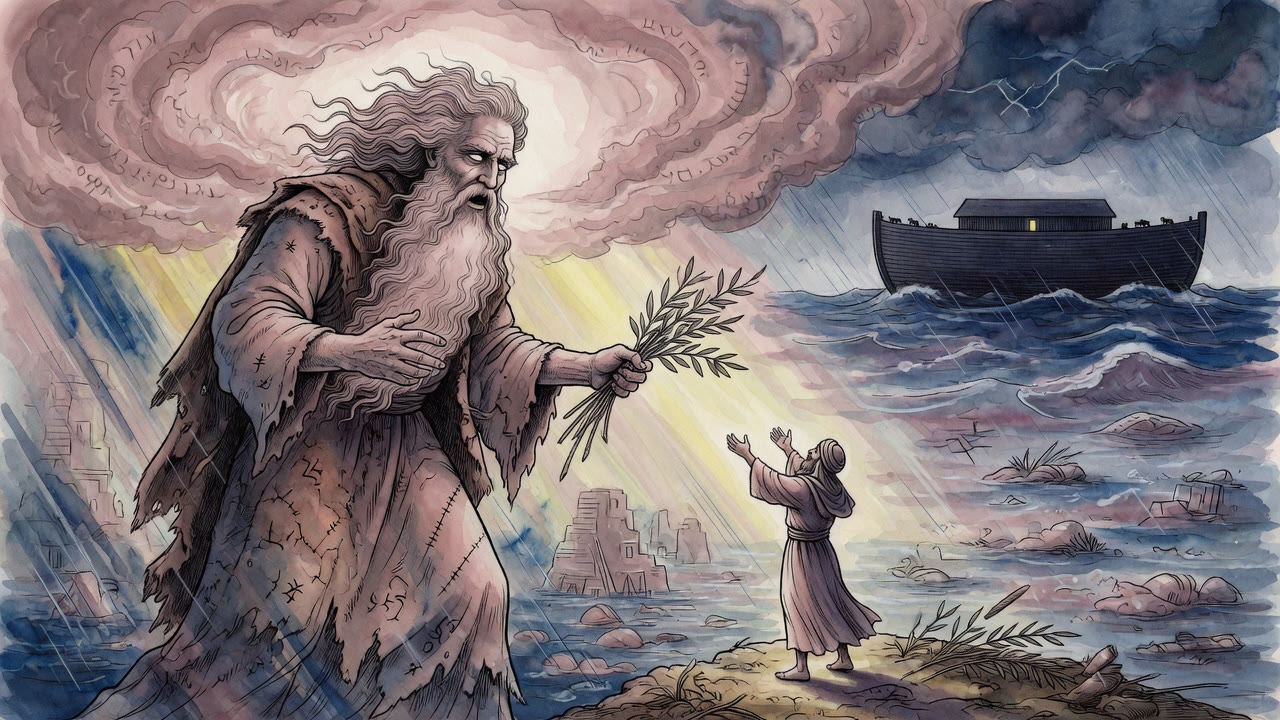
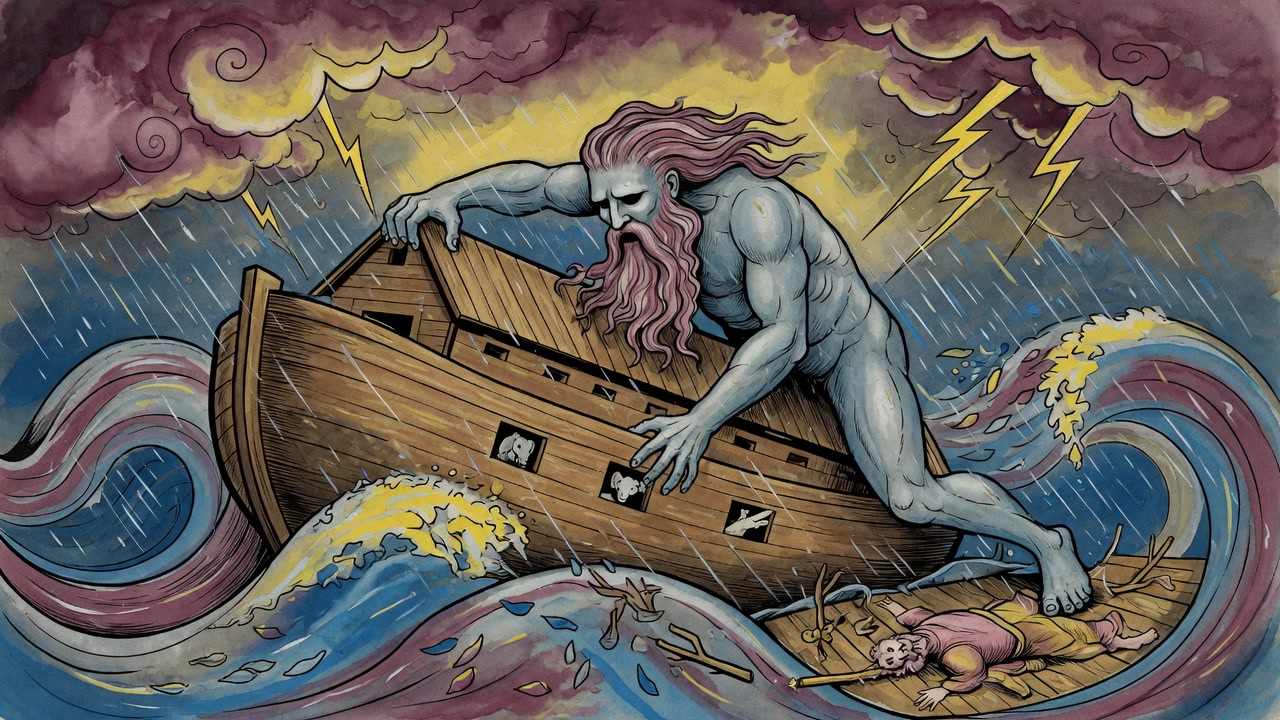
When the rain first came and the deep cracked open beneath the earth, every creature left outside the wooden box drowned. Og did not. He had wrapped his enormous arms around the hull of the teivah and held on as the world went under him. The mountains slid beneath the surface. The cities, the orchards, the men who had laughed at Noah while he hammered the planks, all of them turned to silence and salt. And Og rode the swells with his face pressed to the side of the only thing still floating.

The Hole Noah Drilled in the Side of the Ark

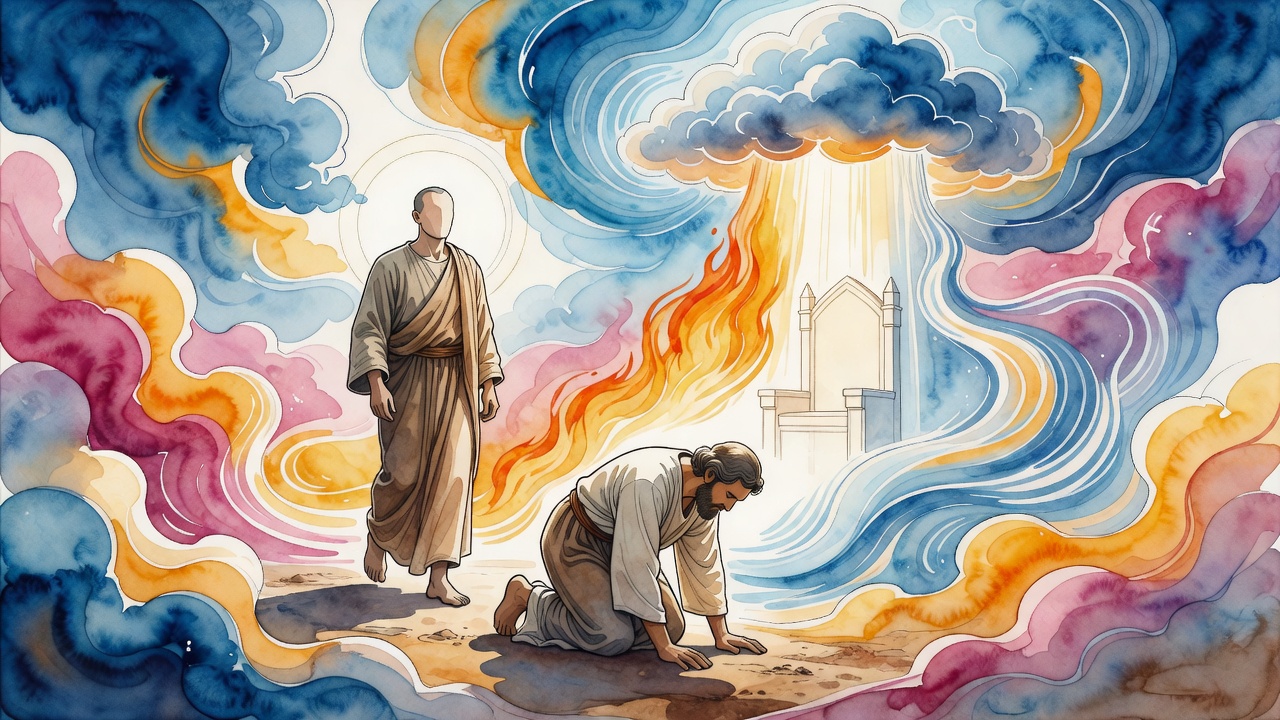
Inside, Noah heard him. A scraping against the planks, a weight that tilted the ark when the giant shifted his grip. Noah could have let him drown. Instead he took an auger and bored a small hole through the wall of the teivah, low and careful, so the waters would not pour in. Through that hole, every day, he passed food to the thing clinging outside.

So the last man of the old world ate scraps handed through a hole by a man who would not look at him. Og swore on his life he would serve Noah and his sons forever if he were kept alive. The waters chewed at the hull. The giant held on. And when at last the ark scraped down onto the drying mountain, Og loosened his arms and stepped off into a world scrubbed empty of everyone he had ever known.

The Refugee Who Walked Out of a Drowned Earth

Generations passed, and Og did not die. He walked through them. He saw the tower rise and split into a confusion of tongues, saw new nations crawl out across the plains, and through all of it he remained, the one set of eyes that had watched the first world go down. The others spoke of the Flood the way men speak of a rumor. Og had tasted it.

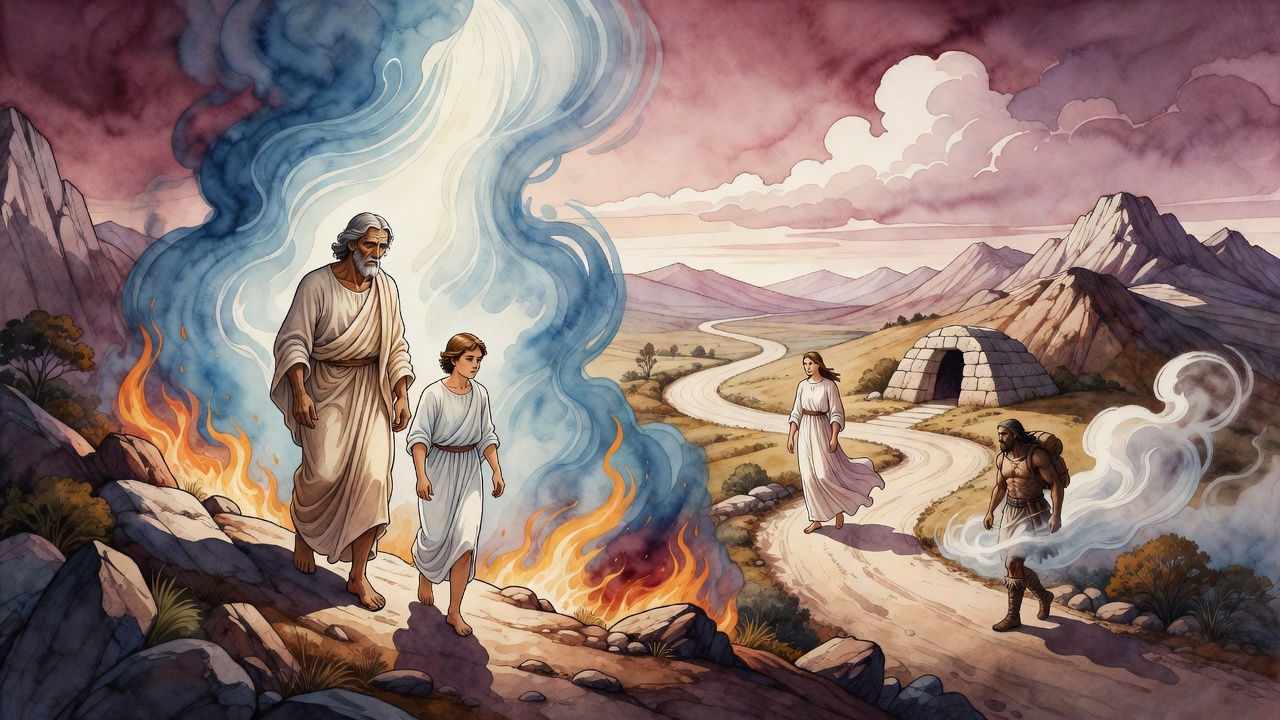
Then came the day the kings of the east swept through the valley and carried off the people of Sodom, and among the captives was a man named Lot. Og knew that Lot had an uncle. He knew where the uncle pitched his tent. And the giant who had outlived an entire creation turned his miles-long stride toward the oaks of Mamre, carrying the news like a blade he meant to hand to another man.

The Cakes Baking at the Tent of Abraham

He found Abraham at the mouth of his tent, his hands white with flour. The patriarch was baking ugot, unleavened cakes, busy in a sacred act, the dough flattening under his palms. Og looked down at the small busy man and felt his old hunger stir, but it was not for bread.

Abraham, he thought, was a zealot. Tell this man his nephew has been dragged off in chains, and he will not weigh the odds. He will arm his household and chase four kings into the night, and four kings will cut him down. And when Abraham lies dead in some northern pass, his wife Sarai will be a widow, and who is left in all the earth tall enough to take her?

So the giant spoke. "The refugee came," is how the words are remembered, the survivor arriving with his report. He told Abraham that the kings had taken Lot. He watched the flour-white hands go still. He watched, exactly as he had planned, the patriarch straighten and turn toward his men, already counting them, already reaching for the chase.

The Reward and the Curse Folded Into One Sentence

But the Holy One saw the shape of the thought behind the giant's helpful mouth. God saw the marriage Og was already arranging in the cellar of his heart, the patriarch he expected to bury.

And God answered him, not in the valley, not where any ear could hear, but in the place where verdicts are spoken. "By your life," God said, "you will receive a reward for your strides. You will live long in the world." The legs that had carried him to Abraham's tent would carry him for centuries more. That was the reward, and it was real.

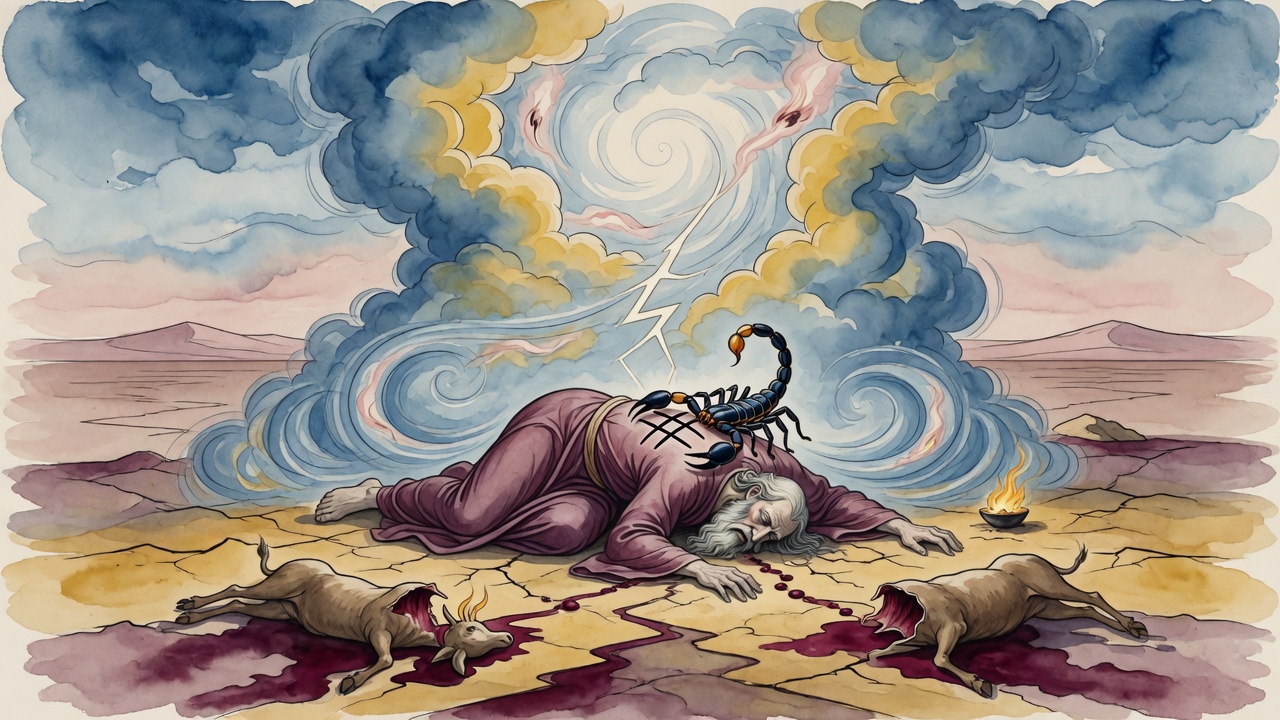
Then the other half came down. "Because you thought to kill that righteous man, by your life, you will see thousands upon thousands and tens of thousands upon tens of thousands of his descendants. And the end of that man will be only to fall into their hand." The giant would live, and live, and live, precisely so that he could watch Abraham's seed multiply into a nation. And the nation would be the thing that finally killed him.

The War He Started and the Hand He Fell To

Abraham rode out that night and did not die. He fell on the kings while they slept, scattered them, and brought Lot home with all the plunder. The giant's scheme had armed the very man it was meant to destroy.

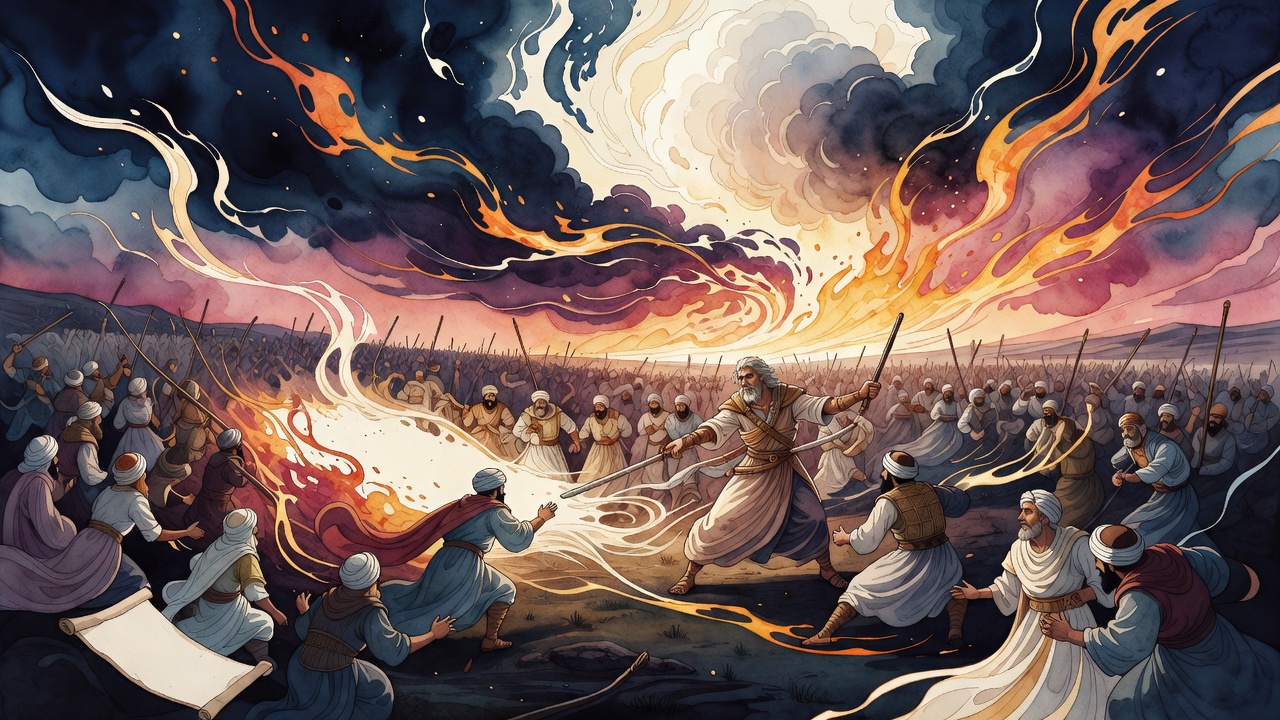
And Og went on walking. He walked through Isaac and Jacob, through Egypt and the sea and forty years of desert, his feet still measured in miles, still treading ground that remembered water. He was an old man older than memory when he finally lifted a mountain over a camp of Abraham's descendants in the wilderness, the last gesture of the last man of the drowned world. Moses killed him there. And somewhere in heaven a sentence spoken over a tent of baking bread closed shut, exactly as it had been written.


← All myths
From the tradition

Sources

2 sources

The texts this telling draws on, in full. Open a card to read inline, or expand it for a wider, quieter read.

Hebraic Literature (Harris, 1901), Talmudic MiscellanyHebraic Literature (1901)

The rabbis preserved a strange little tradition about how Og, the giant king of Bashan, survived the Flood. The Torah never explains it. Og appears later, towering over the Israelites in the wilderness, and Moses himself has to fight him (Numbers 21:33). But how did he live through the waters that drowned every other creature outside the ark?

The Targum of Jonathan ben Uzziel says he clung to the outside of the ark itself. Noah, according to one tradition, drilled a small hole in the side of the teivah and passed food through it every day, feeding the giant like one feeds a stray from a window.

The Book of Jasher imagines Og’s feet forty miles long. Later storytellers, building on this, explained every impossible feat Og performed afterward: how he uprooted mountains, how he nearly crushed the Israelite camp with a boulder. If his feet were forty miles long, of course he could do such things.

What the tradition is really saying is that the old world never fully washes away. Giants, grudges, and unfinished business cling to the outside of every ark.

Full source
Bereshit Rabbah 42:8Bereshit Rabbah

The Torah is full of such moments, and the Rabbis of the Midrash (rabbinic interpretive commentary) are masters at unearthing the layers of meaning. The source turns to Bereshit Rabbah, specifically section 42, where we find a fascinating exploration of a verse from Genesis (14:13): "The refugee came and told Abram the Hebrew, and he was dwelling in the plains of Mamre the Emorite, brother of Eshkol and brother of Aner, and they were allies of Abram."

Who is this "refugee"? Reish Lakish, citing bar Kappara, identifies him as none other than Og, the giant! But why is he called a "refugee" in this context? According to this Midrash, Og found Abraham – or Avram ha-Ivri, Abraham the Hebrew – engaged in a mitzva, a sacred act: baking ugot, unleavened bread, likely for Passover.

Og's intentions weren't exactly pure. The Midrash suggests his motives weren't "for the sake of Heaven." Instead, Og thought to himself, "This Abraham is a zealot. If I tell him his nephew has been captured, he'll rush into battle and be killed, and then I'll take his wife Sarai!"

The Holy One, blessed be He, sees through Og's scheme. God says, "By your life, you will receive reward for your strides.in that you will live long in the world." So, Og’s life is extended. But there’s a catch. "Because you thought to kill that righteous man, by your life, you will see thousands upon thousands and tens of thousands upon tens of thousands of his descendants, and the end of that man will be only to fall into their hand.” This is why Moses eventually defeats Og centuries later, as we read in (Numbers 21:35). God even reassures Moses in (Deuteronomy 3:2), saying, "Do not fear him, as I have delivered him into your hand." It's a cosmic chess game playing out over generations!

The Midrash then dives into the meaning of "Avram ha-Ivri” – Abraham the Hebrew. Rabbi Yehuda, Rabbi Neḥemya, and the Rabbis each offer a different explanation. Rabbi Yehuda says it means, "The entire world was on one side, and he was on the other" – a lone figure standing for his beliefs. Rabbi Neḥemya suggests it's because he was a descendant of Ever, a figure in Genesis also associated with the Hebrew language. The Rabbis offer a more literal interpretation: it's because Abraham came from the other side (ever) of the river, the Euphrates, and spoke the Hebrew (Ivri) language.

And what about "dwelling in elonei Mamre" – the plains of Mamre? Again, we have different interpretations. Rabbi Yehuda sees it as a place called Mamre, while Rabbi Neḥemya sees it as the palace of a person named Mamre. But why was this Mamre so important?

Rabbi Azarya, quoting Rabbi Yehuda in the name of Rabbi Simon, tells us that Mamre was "brazen-faced" regarding Abraham. This means he was bold in his support. When God told Abraham to circumcise himself, Abraham consulted his three friends: Aner, Eshkol, and Mamre. Aner and Eshkol were hesitant, warning Abraham about the pain and potential dangers. But Mamre said, "This is your God who stood by you during your ordeal in the fiery furnace, and during your war with the kings, and during the famine, and in this matter that He has said to you, to circumcise yourself, you do not heed Him?"

Because of Mamre's unwavering support, God declares, "You gave him counsel to circumcise himself; by your life, I will not appear to him in Aner’s palace, nor in Eshkol’s palace, but only in your palace." This is why (Genesis 18:1) states, "The Lord appeared to him in the palace of Mamre."

So, what can we take away from this interplay of interpretations? It's a reminder that even seemingly simple stories in the Torah are filled with layers of meaning. It highlights the importance of intention, the power of standing up for one's beliefs, and the profound impact of offering genuine support to others. And it all started with a refugee, a giant, and some unleavened bread. Food for thought, indeed!

Full source