Rabbi Eleazar Ben Shimon's Body Gave Rulings From the Hidden Loft
Litigants knocked, and a voice came from the loft. His wife sat by the door and did not say the man they asked for was dead.
Table of Contents
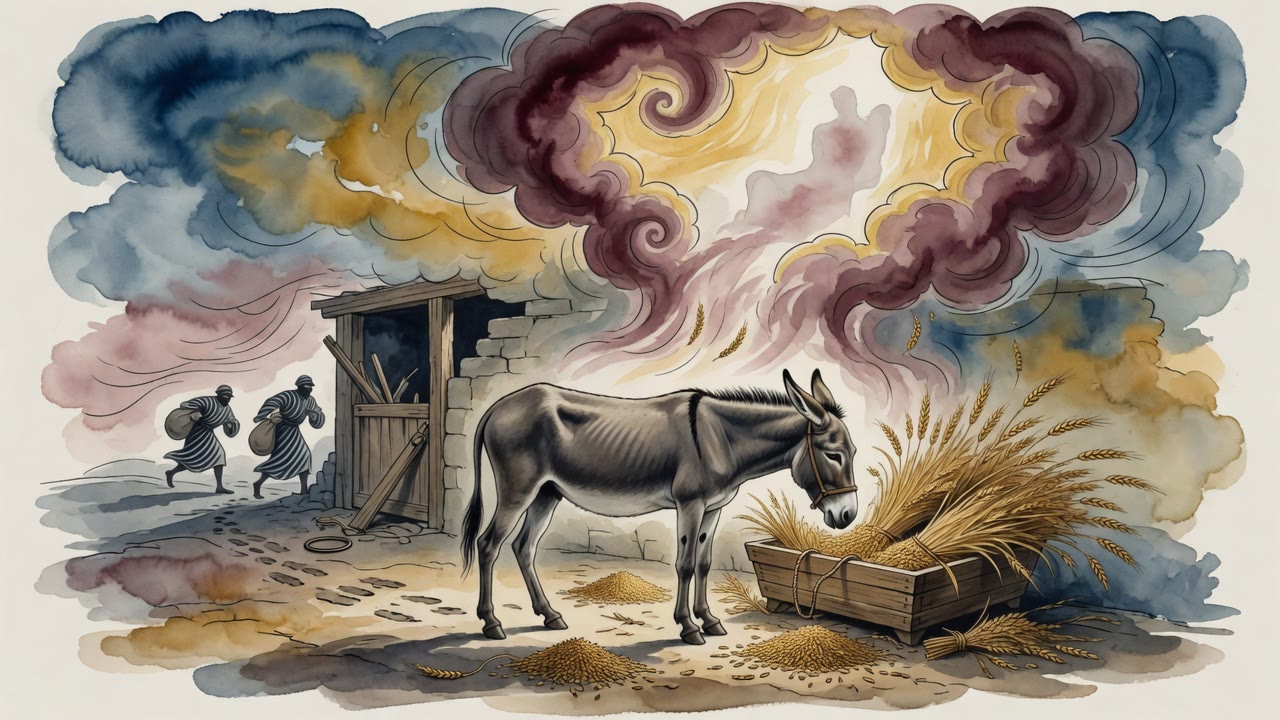 Click for full size
He Put Their Donkeys in the Loft
The donkey-drivers laughed while he ate. Eleazar ben Shimon, son of Rabbi Shimon bar Yohai, had a belly large enough for an ox to pass under it. He ate like a man rebuilding a city. The drivers mocked the size.
He stood up. He walked to their animals. One by one he lifted each donkey with his bare hands and set it in the loft above the courtyard. The drivers looked up at their beasts in the rafters and begged his pardon. He lifted the donkeys down two at a time, faster going down than going up, and sent the men on their way.
He used to earn coins carrying travelers across rivers on his back. Strength was not a rumor on him. It was how he moved through a room.
Vinegar, Son of Wine
Rome appointed him to catch thieves, and he was good at it. He sat in drinking booths and watched who came in. A man tired at midday had either studied all night or stolen all night. Torah scholars did not loiter in taverns. He took the tired ones.
Rabbi Yehoshua ben Korcha found him and did not soften it. "Vinegar, son of wine. Why do you hand over your own people?"
"I am only weeding the vineyard," Eleazar said. "I have put to death only men already guilty."
"Let the Master of the vineyard look after His own thorns," Yehoshua said. "You should have fled to Laodicea rather than serve as their instrument."
Once Eleazar arrested a man who had only spoken to him with insolence, then reproached himself for handing over an innocent. At the execution the man confessed a capital crime. Eleazar's conscience cleared. He went on.
The Old Man Grew Heavy
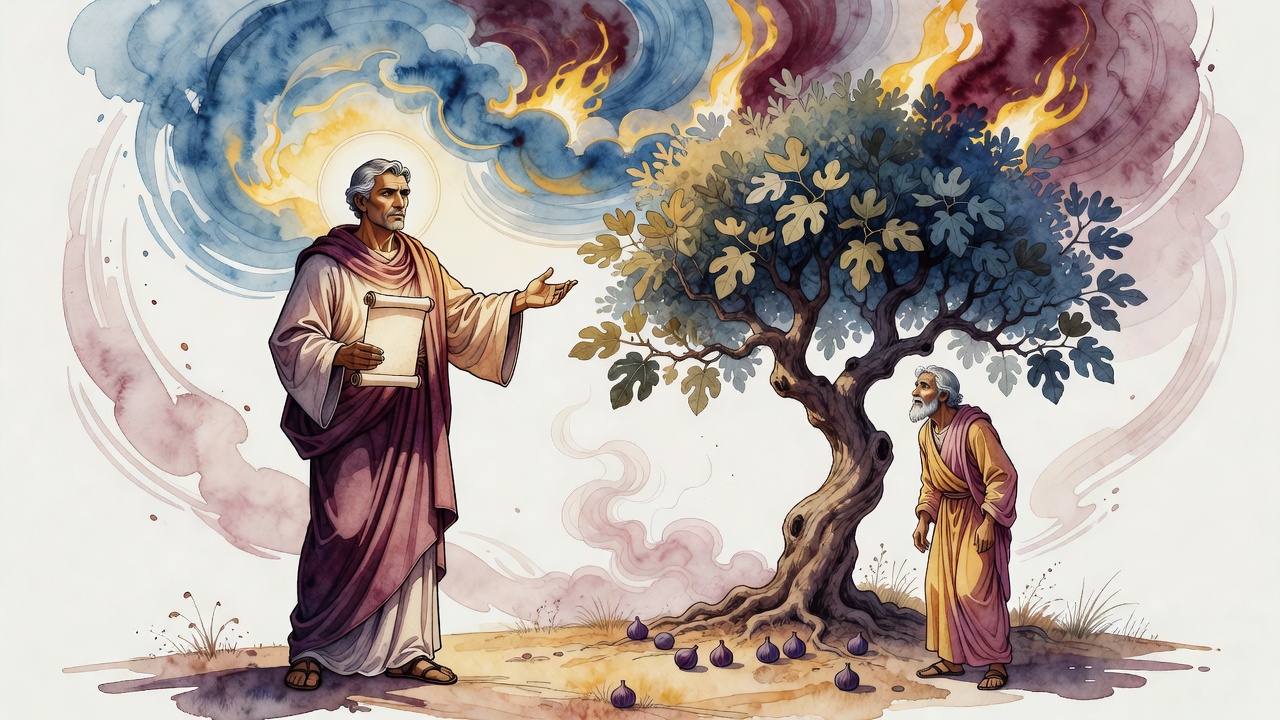
The prophet Elijah came disguised as an old man and asked for a beast of burden. He held up a worn cloak and a water-skin. Eleazar laughed. "I could carry you to the ends of the world. Why would you need a donkey?"
He swung the old man onto his shoulders and set off. As they walked, the weight doubled and redoubled. Eleazar began to stagger. "Old man, get lighter, or I will throw you off."
They sat under a tree. Eleazar gave him bread and water. Elijah looked at him and said, "You have this strength and this beauty, and you have done no work for your Father in heaven."
"Is there someone who could teach me?" Eleazar asked.
"Yes," Elijah said, and vanished.
Thirteen years Eleazar sat in the house of study. When he came out he could barely carry the weight of his own cloak. The coat would not fit over the collar that the walk had left him. He invited pain after that, and he bore it without a murmur.
A Voice Answered From Upstairs
When he died, his wife would not let the town take him. He had told her the body would not decay. She carried him to the loft of their house, the same kind of loft he had once filled with other men's donkeys, and laid him there and told no one he had died.
Legal questions kept arriving. She sat by the door. Litigants spoke their cases toward the ceiling. A voice came down from the loft and ruled. The body did not rot. Worms did not touch it. While it lay there, no wild beast came near the village.
Eighteen years the loft answered. The town was glad of the protection and did not ask whose mouth was speaking. The body kept judging. Litigants went home with rulings and did not guess they had been arguing with a corpse.
The Worm Behind His Ear
On his deathbed his arm had slipped uncovered, and he had seen his wife laughing and weeping at once. He told her he understood both. She laughed because she had clung to so righteous a body. She wept because such a body would be given to the worm. He said he was only sleeping. Decay would have no power, save for a single worm destined to gnaw behind his ear, because once, in the synagogue, he had heard a man blaspheme and had the power to call him to judgment and let it pass.
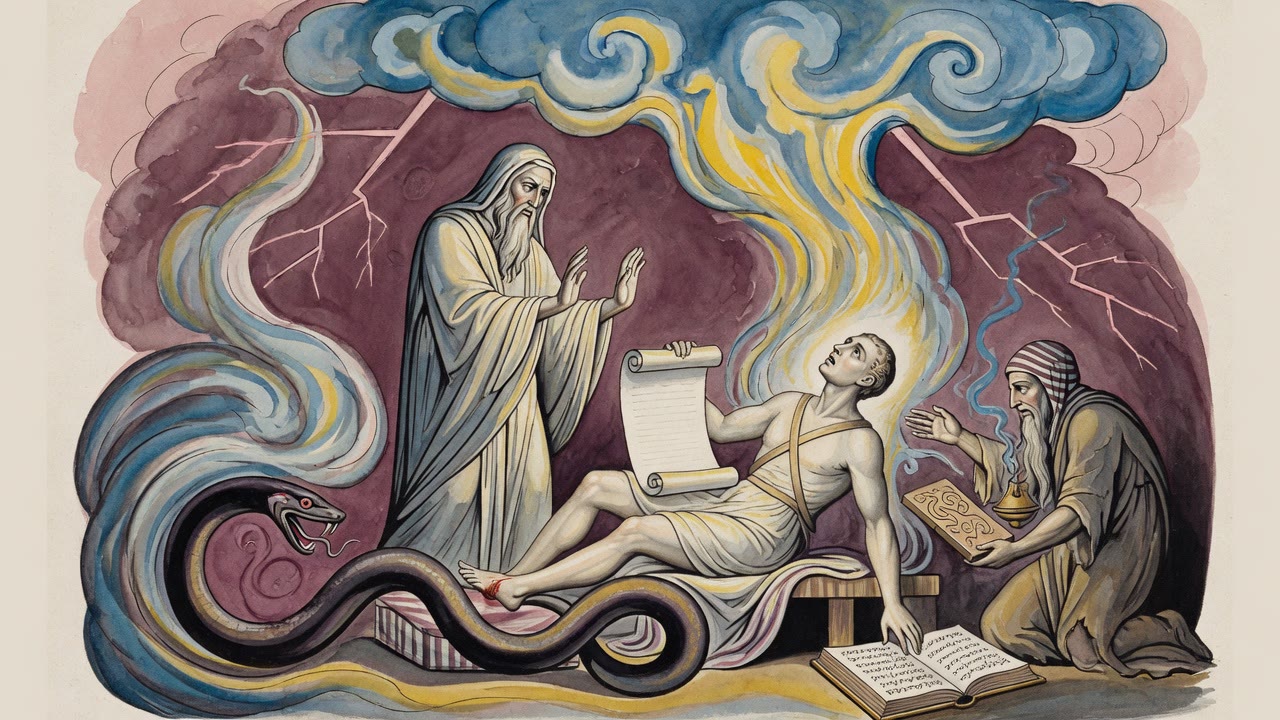
The worm came. Neighbors heard screaming from the loft. His wife found the one gnawing thing and moved to take it out. A voice from heaven stopped her: leave the worm to finish its work, that the debt be fully paid. This one bite, the body cried, was harder than all the suffering he had invited in life.
The sages, warned in a dream, came to bury him. The townspeople would not give him up. The rabbis took the body by a ruse and carried it toward Meron, where his father lay. A serpent was coiled around the tomb. They said, "Serpent, let the son come to the father." The snake uncoiled. They laid them side by side. The eighteen years of rulings were over. The loft was empty, and the village had to live without the voice.
← All myths