6 min read

Rabshakeh Mocked Zion and the Shadow Climbed Back Up the Steps

Sennacherib's herald shouted up in Hebrew so the farmers on the wall would understand. By morning a hundred eighty five thousand of his men lay dead.

Curated by Arthur · Told by Maggid ·
Table of Contents
  1. The Herald at the Wall
  2. The King in Sackcloth
  3. The Morning the Camp Fell Silent
  4. The Sickbed and the Childless King
  5. The Shadow Climbed the Steps
Rabshakeh Mocked Zion and the Shadow Climbed Back Up the Steps Click for full size

The Herald at the Wall

Sennacherib, king of Assyria, had already been paid. In the fourteenth year of Hezekiah's reign the king of Judah had emptied his treasury to buy quiet, three hundred talents of silver and thirty of gold, and Sennacherib had taken all of it. Then he sent his army anyway.

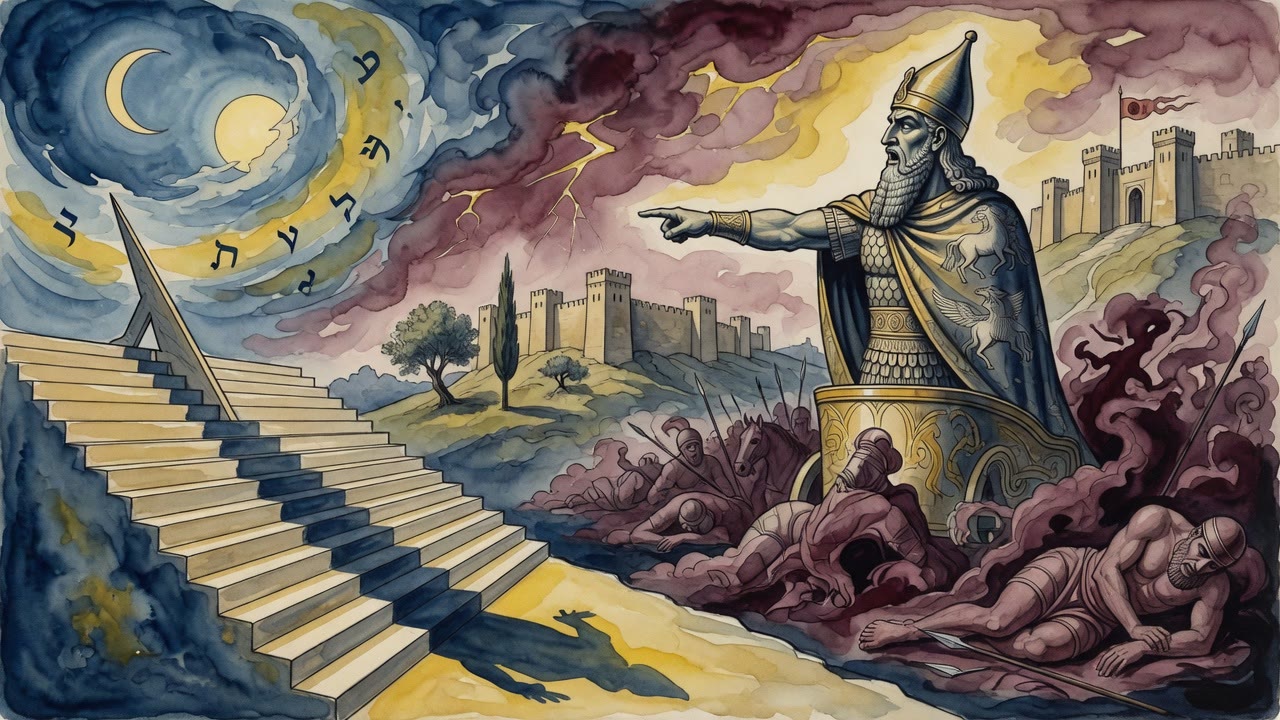
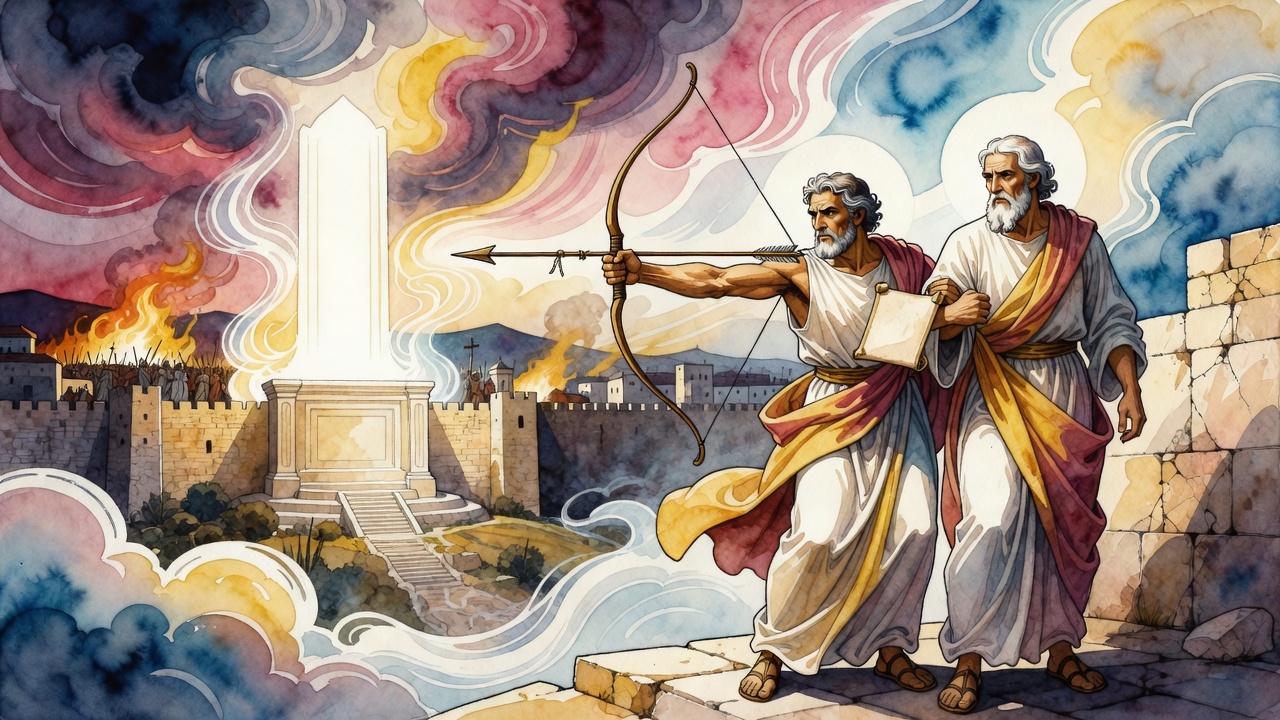
At the head of it came Rabshakeh, and he arrived not with a battering ram but with his voice. He stood below the walls of Jerusalem where every farmer and water-carrier crowded the ramparts to watch, and he spoke in their own Hebrew so that none could miss a word. "Your God cannot save you," he shouted up at them. "Your allies in Egypt are a broken reed that will run into the hand of any man who leans on it. Surrender, or we will take you by force." He lifted his hand against Zion and blasphemed the God of Israel in his pride, boasting that no god of any nation had ever kept its city out of Assyrian hands.

Hezekiah's officers called down to him. Speak Aramaic, they begged, the tongue of courts and treaties, so the common people on the wall would not understand and lose heart. Rabshakeh only filled his lungs and shouted louder.

The King in Sackcloth

Inside the city the people heard him and were appalled at his pride. They writhed like a woman in the grip of labor and doubled over in fear of him. And Hezekiah, heir to the ways of David, stripped the royal purple from his shoulders, wrapped himself in sackcloth, and threw his body flat on the ground before God.

He sent to the prophet Isaiah. The answer came back without hesitation. The Assyrian would fall without a single battle joined, without one arrow loosed from the wall, and Sennacherib himself would go home to die by the sword in his own land.

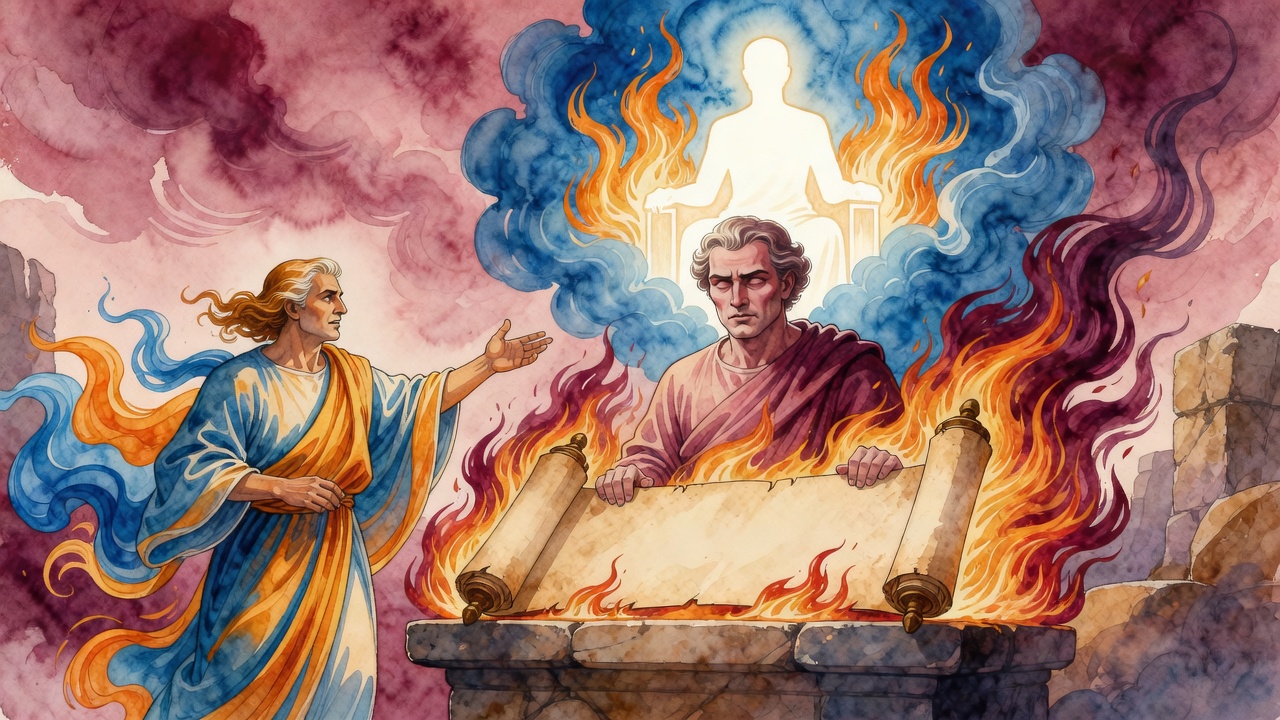
Sennacherib heard of the prophecy and answered it with a letter. In it he called Hezekiah a fool for trusting a God who could not lift a hand. The king read it through. Then he rolled it closed, carried it up into the Temple, and spread it open before God. The insult now lay where the One it named could read every word of it.

The Morning the Camp Fell Silent

That night nothing marched. No siege tower rolled forward, no ladder touched the stone. Something moved through the Assyrian tents in the dark, and it was not a soldier.

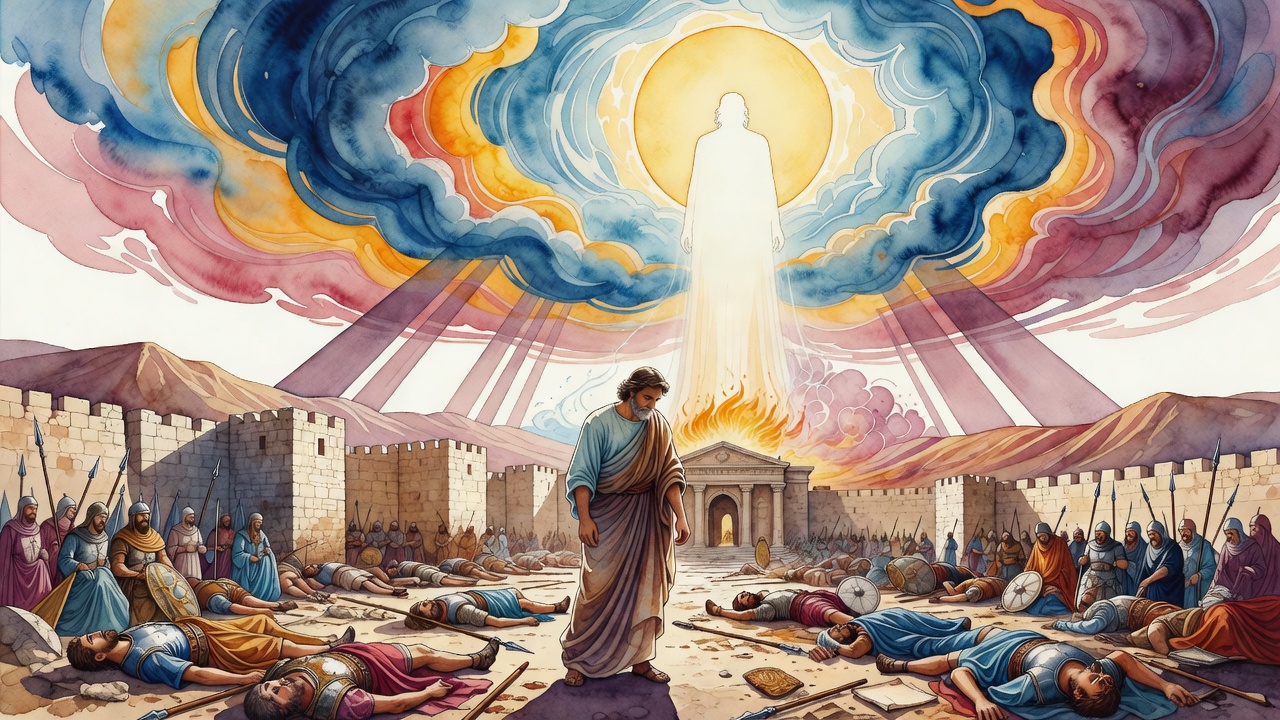
By the time the sun rose over the plain, a hundred and eighty-five thousand men lay dead in their bedrolls. Captains, commanders, the whole weight of the army that had roared under the walls at dusk, gone in the space of one night without a wound anyone could name. The camp made no sound at all.

Sennacherib rode out of the silence alone and did not stop until he reached Nineveh. He did not rule there long. His own sons, Adrammelech and Seraser, cut him down inside the temple of his own god while he bowed in it, and every word Isaiah had spoken stood fulfilled to the letter.

The Sickbed and the Childless King

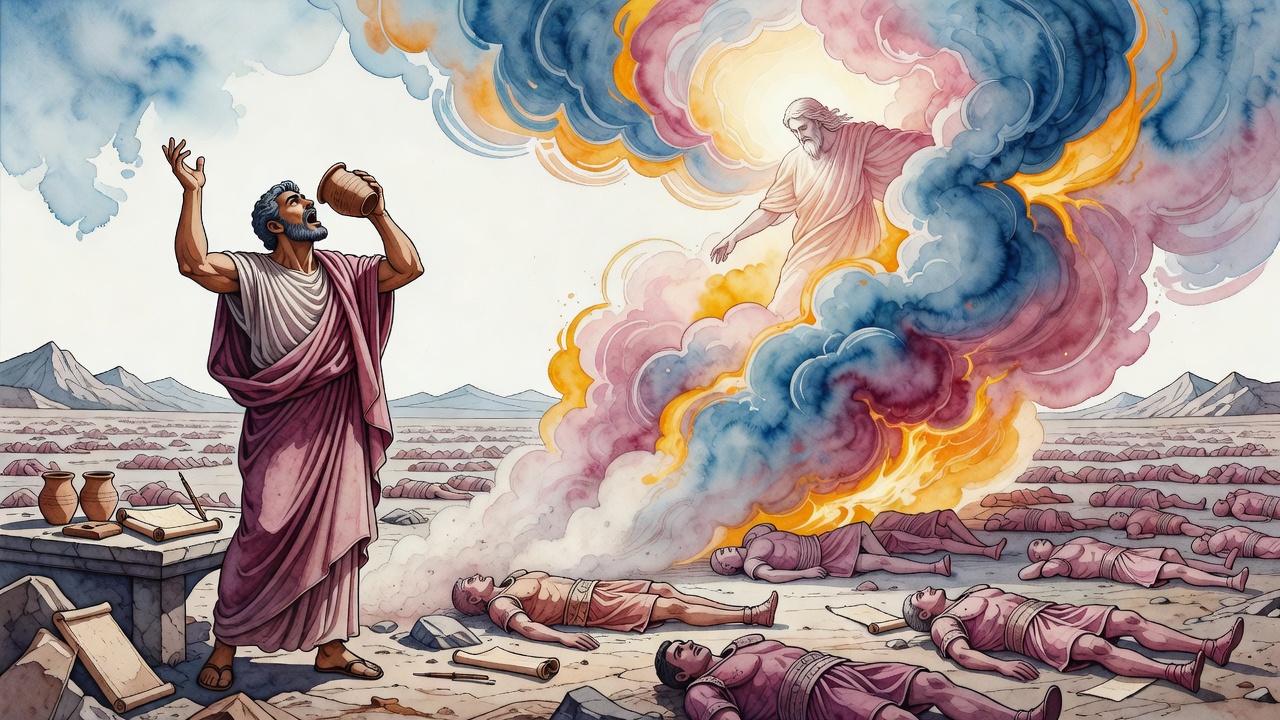
The deliverer did not stay well for long. Not many days after the camp emptied, Hezekiah fell into a sickness that bent the strongest king in the east flat on his bed. The physicians came, looked, and gave him up. They had no cure for what was draining the life out of him, and they said so to his face. What broke him was not the fever. It was the thought of dying with no son to take his throne, the line of David stopped dead in his own body.

He turned his face to the wall and wept, and out of the weeping he begged God for more time. Isaiah came again, and the message he carried was almost past believing. In three days the illness would lift. The king would rise from the bed and live another fifteen years.

Hezekiah could not hold it. He asked for a sign.

The Shadow Climbed the Steps

Isaiah did not argue. He asked the king what proof he wanted. Hezekiah lay where he could see the great stepped dial that measured the daylight by a falling line of shadow, and the shadow had already crept down ten of its steps toward evening. "Make it go back," the king said. "Let the shadow climb the ten steps it has come down."

Isaiah prayed. The shadow stopped, hung, and reversed. Step by step it climbed back up the face of the dial, the light returning to stone it had already left, the hour unmaking itself while the whole city could look up and count. Time bent backward over the bed of a dying man to keep a single promise.

On the third day Hezekiah rose. He walked out of the sickroom on his own feet, up to the Temple, and gave thanks in the house where he had once laid an enemy's letter open before God. In his days the sun had stood still, and the standing had bought fifteen years for the king.


← All myths
From the tradition

Sources

2 sources

The texts behind this telling. Some cards carry a translation of the source; others are our own retelling of it, and each card says which. Every card links out to the original.

Ben Sira 48:23Ben Sira

Retold in our words. Read the original at the link below.The Wisdom of Ben Sira, Cambridge University Press (1899) · CC-BY

This tale, found in the book of Ben Sira (Sirach), one of the Deuterocanonical books, really brings home the power of faith and righteous action in the face of overwhelming odds.

Sanḥeriv, a mighty king, sets his sights on Zion, on Jerusalem. He sends his commander, Ravshaqeh (Rabshakeh), ahead to intimidate the people. And it wasn't just military might he wielded – it was psychological warfare. Ben Sira tells us that Ravshaqeh "lifted his hand against Zion, and blasphemed God in his pride." He taunted them, mocked their faith, and boasted of his own king's power.

The people of Jerusalem, terrified, feeling utterly helpless. Ben Sira vividly describes their reaction: "Then they were appalled at his pride, and writhed like a woman in labor." The pain, the fear, the desperation – it's palpable.

What do they do? They don't give in to despair. Instead, "they called to God the Highest, and they spread out their hands." They turned to prayer, to the one power greater than any earthly king.

And here's where the miraculous happens. "And He smote the camp of Assyria, and they were devastated in a plague." Just like that. Divine intervention. The enemy, seemingly invincible, is brought to its knees.

Ben Sira then tells us, "Thus did Yeḥizqiyahu (Hezekiah) good, and was strong in the ways of David." Hezekiah’s strength wasn't just military; it was moral. He followed in the footsteps of his ancestor David, guided by the prophet Yeshayahu (Isaiah). He was "praised among the prophets."

And there's more! Ben Sira adds a truly astonishing detail: "In his days the sun stood, and added to the life of the king." This is a reference to the story found in Isaiah (Isaiah 38:8) where God grants Ḥizkiyahu an extra fifteen years of life, and as a sign, causes the shadow on the sundial to move backwards. It's a powerful symbol of God's intervention, of bending the very laws of nature for those who are faithful.

What does this story tell us? It's not just about a historical event; it's about the power of faith, the importance of righteous leadership, and the unwavering support of the Divine in times of crisis. Like Ḥizkiyahu, we can turn to something greater than ourselves and find the strength to overcome. Remember the power of prayer, the importance of doing what is right, and the possibility of miracles. Because sometimes, even the sun can stand still.

Full source
Antiquities X.1-2Antiquities of the Jews (Josephus)

Retold in our words. Read the original at the link below.Antiquities of the Jews, trans. William Whiston · Public Domain

One hundred and eighty-five thousand soldiers died in a single night. That is how God answered Sennacherib, king of Assyria, when he broke his word to Hezekiah and sent an army to destroy Jerusalem.

It started with submission. Hezekiah, in the fourteenth year of his reign, agreed to pay three hundred talents of silver and thirty talents of gold to buy peace. Sennacherib took the money, then sent his general Rabshakeh and two commanders with a massive army to Jerusalem anyway. Rabshakeh stood before the walls and mocked Hezekiah in Hebrew, loud enough for every citizen to hear: "Your God cannot save you. Your Egyptian allies are a broken reed. Surrender now, or we will take you by force." When Hezekiah's envoys begged him to speak Aramaic so the common people would not panic, Rabshakeh only shouted louder.

Hezekiah stripped off his royal garments, put on sackcloth, and threw himself on the ground before God. He sent messengers to the prophet Isaiah, who delivered God's answer: the enemy would be destroyed without a single battle, and Sennacherib himself would die by the sword in his own land. Then Sennacherib sent a letter calling Hezekiah a fool. The king read it, rolled it up, and placed it inside the Temple.

That night, a pestilence swept through the Assyrian camp. One hundred and eighty-five thousand men, along with their captains and generals, were dead by morning. Sennacherib fled to Nineveh, where his own sons, Adrammelech and Seraser, murdered him in his own temple. Isaiah's prophecy was fulfilled to the letter.

Shortly after, Hezekiah himself fell gravely ill. The physicians gave up. What tormented the king most was not death itself but dying childless, leaving no heir. He wept and begged God for more time. God sent Isaiah with astonishing news: in three days the illness would lift, and Hezekiah would live fifteen more years. The king could not believe it. He demanded a sign. Isaiah asked what he wanted. Hezekiah pointed to a sundial whose shadow had already descended ten steps and said, "Make it go back." Isaiah prayed. The shadow reversed. The king was healed and went to the Temple to give thanks.

Full source