King Uzziah Struck Amos and Caught Leprosy
Amos would not quiet his mouth. Uzziah heated an iron and drove it into the prophet's brow. Two years later the king reached for the altar.
Table of Contents
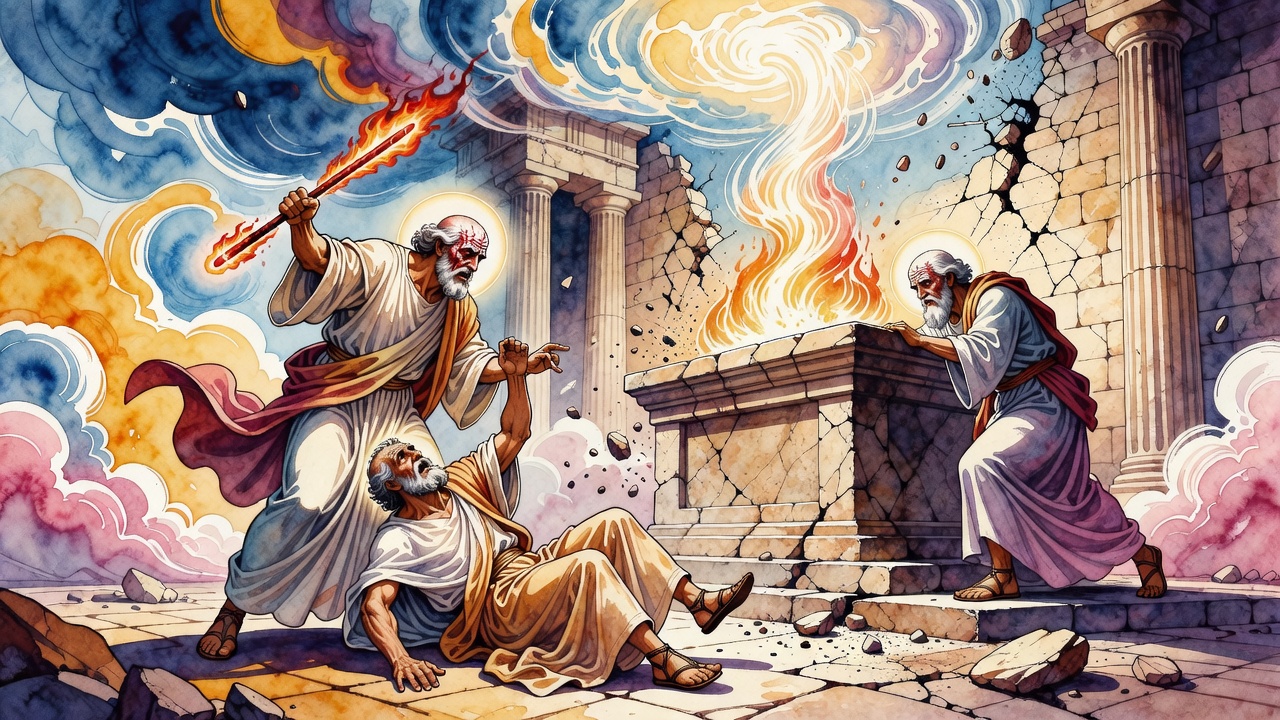
Amos would not quiet his mouth for a crown. King Uzziah heated an iron until it glowed and drove it into the prophet's forehead.
 Click for full size
Amos died for the crime of speaking. Two years later another mouth opened in the same city. Isaiah received his first call on the day the king decided the priesthood was too small for him.
The King Walked Toward the Altar
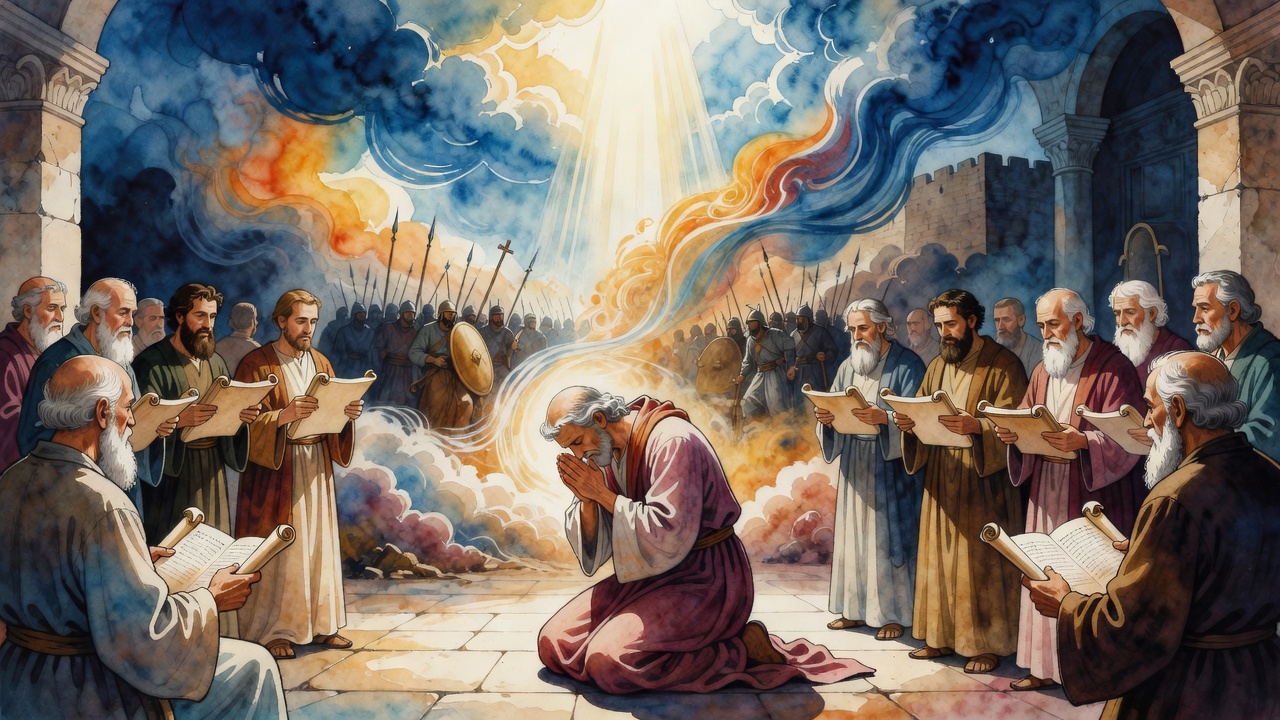
Uzziah had won wars. Success sat on him like extra clothing. He walked into the Temple as if the altar were a prize for a successful campaign, and he reached for the incense that belongs to Aaron's house.
Azariah, the high priest, stepped in front of him.
The king did not argue law. He promised death. Any man of Aaron's house who stood with Azariah would fall. The priests froze between a sword and a sacrifice that did not belong to royal hands. The courts held their breath.
Sun Through a Split Wall
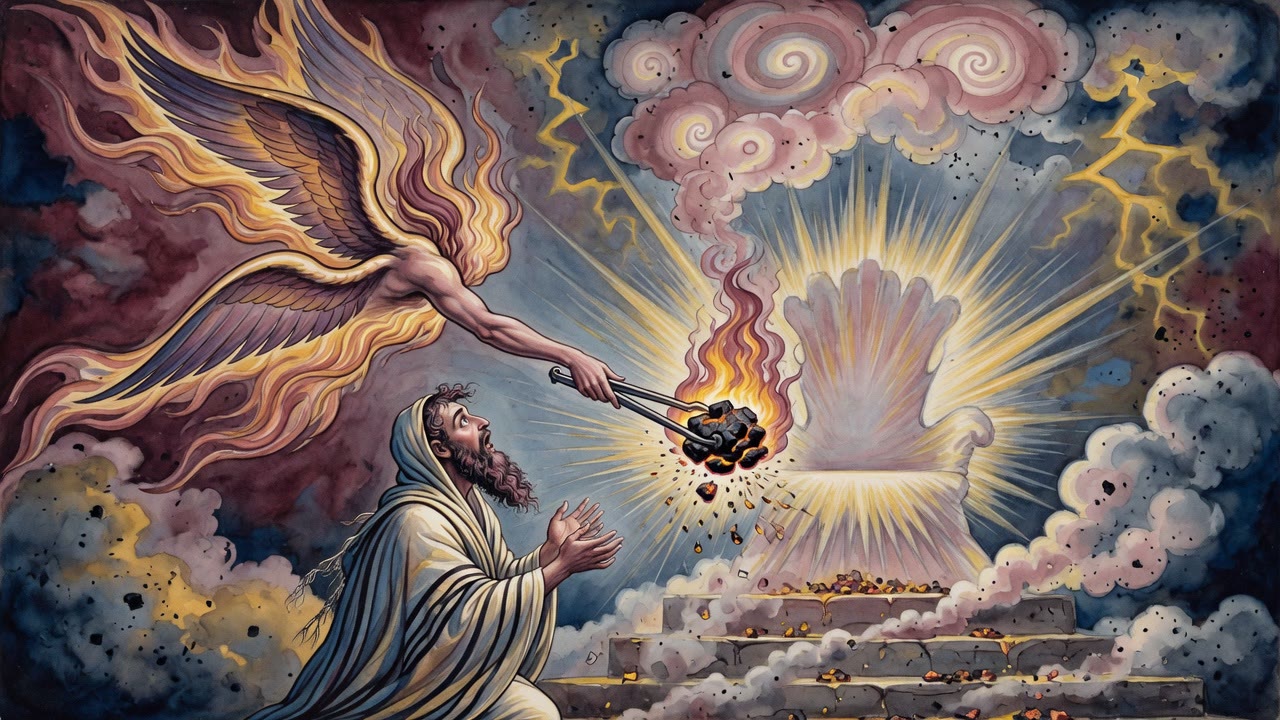
The floor moved. The walls of the House of God tore. A ray of sunlight cut through the breach and struck Uzziah where Amos had been struck, on the forehead. Leprosy (צרעת, tzaraat) flowered on the skin that had claimed holy smoke.
Angels of fire leaned in, ready to eat him the way the ground had eaten Korah's company. A voice from above stopped them. Uzziah would not share Korah's death. He would wear impurity like a living exile inside his own palace.
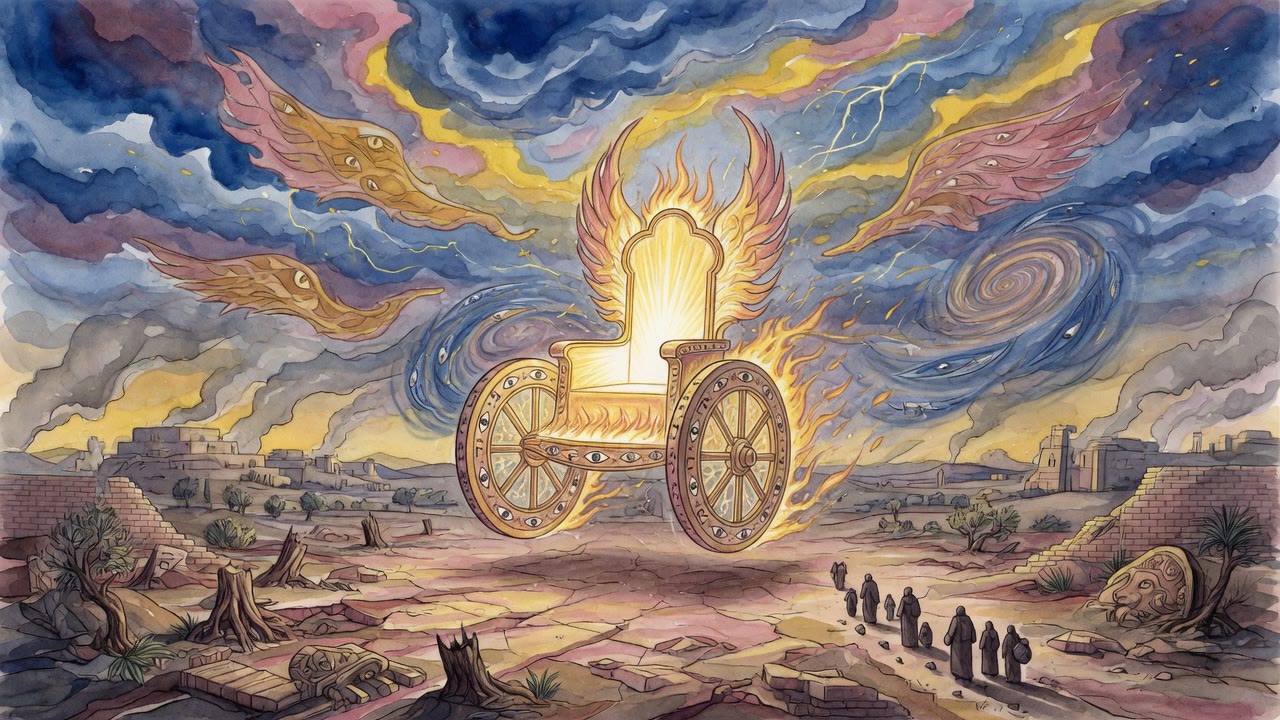
Outside Jerusalem the earth finished the work. Half a mountain on the west side of the city sheared away and flew four stadia east, and landed in the middle of a road. The king who tried to own the altar found the ground itself refusing his rank.
Isaiah Spoke in the Dust
The first word came to Isaiah while the breach was still in the wall. Holiness and horror shared a day. He had to speak while priests still tasted the king's threat in their mouths, and while a leprous brow was being led out of the courts.
The priests who had faced Uzziah's sword were not playing palace games. They were holding a line older than any single reign. Nearness to the altar is not a medal for campaigns. Azariah's no was not treason. The Torah had drawn the line before Uzziah was born.
A Handful of Greens
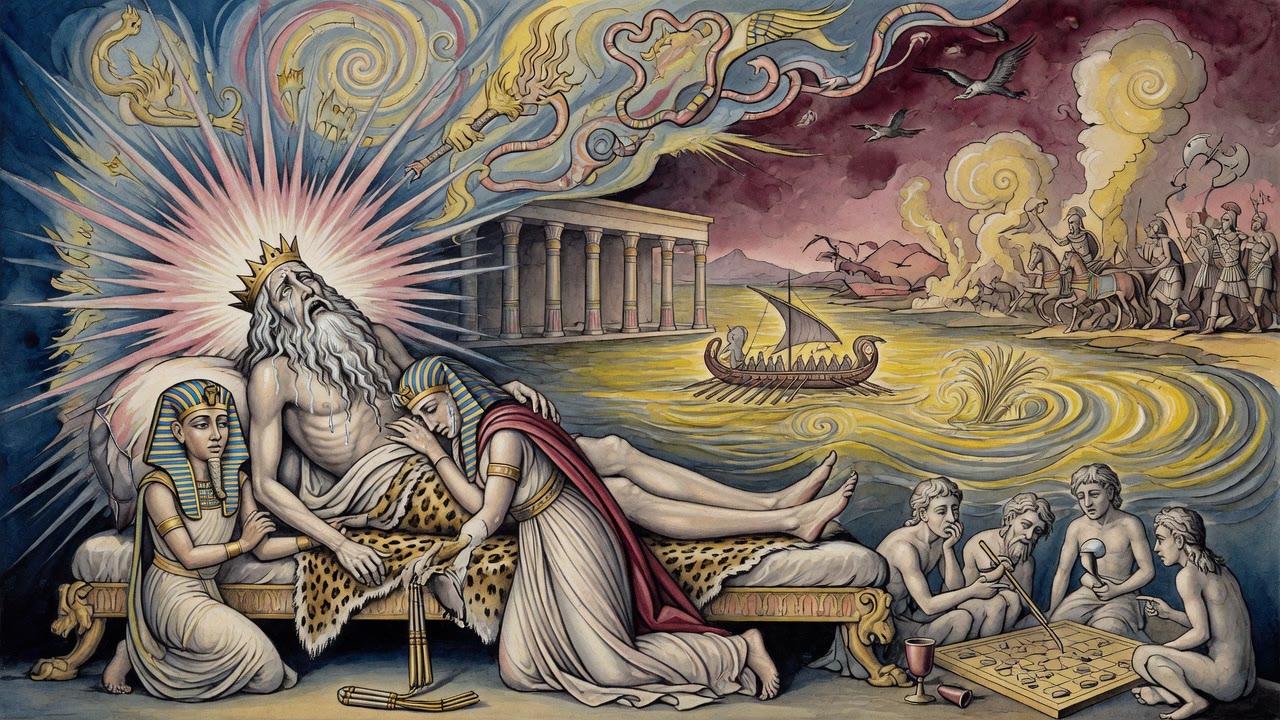
Generations later Assyria crushed Samaria and turned toward Judah. In the palace they still remembered a forehead marked by light. Scoffers measured kings by tables anyway. They mocked Hezekiah for a meal of vegetables and plain bread. They praised Pekah of Samaria, whose dessert alone ran to forty seim of young pigeons.
Forty birds at the end of a banquet looked like power. A handful of greens looked like a king who had already lost.
Hezekiah sat down to the plate anyway. The war did not read the menu. His frugal court broke the Assyrian advance. The mockers learned that a king's strength is not counted in pigeons.
The Forehead Kept the Mark
Amos went to his grave with a brand. Uzziah lived with a brand of another kind, shut in a house apart, the light still written on his skin. Isaiah kept speaking in a city that had watched a mountain fly.
Hezekiah inherited that memory whether he named it or not. He ate simply. Assyria misread the plate. Heaven did not.
Uzziah sat in a separate house with the mark on his brow. Hezekiah's dish still held greens. The mountain that had flown four stadia did not fly back.
← All myths