5 min read

Hezekiah Prayed While Shevna Carved a Royal Tomb

Isaiah's death sentence pushed Hezekiah to the wall, while Shevna carved himself a royal grave and aimed an arrow at the king.

Curated by Arthur · Told by Maggid ·
Table of Contents
  1. The Prophet Turned Back
  2. The King Counted His Limbs
  3. David Stood Behind the Mercy
  4. Figs Went Onto the Wound
  5. Shevna Carved a Grave Too High
  6. The Arrow Flew Toward Assyria

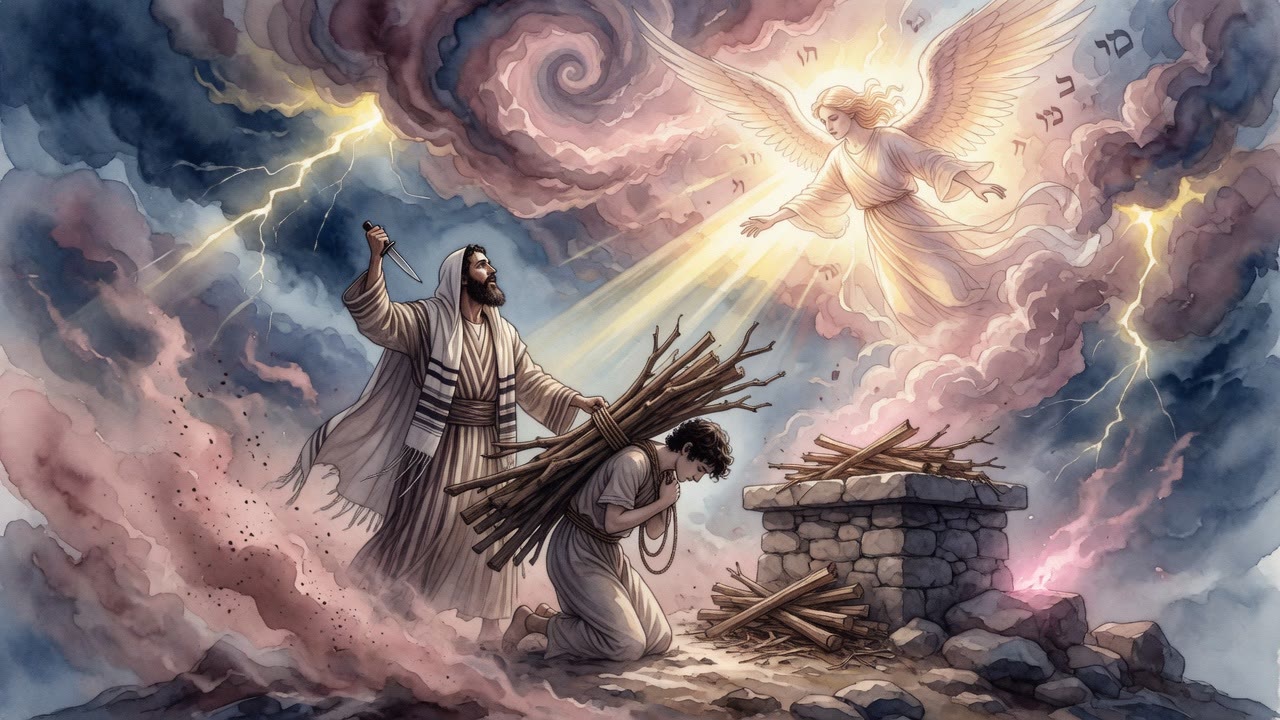
Isaiah gave the death sentence and turned to leave. Set the house in order. The king was dying. Before the prophet crossed the outer court, heaven had already broken the decree behind him.
The Prophet Turned Back

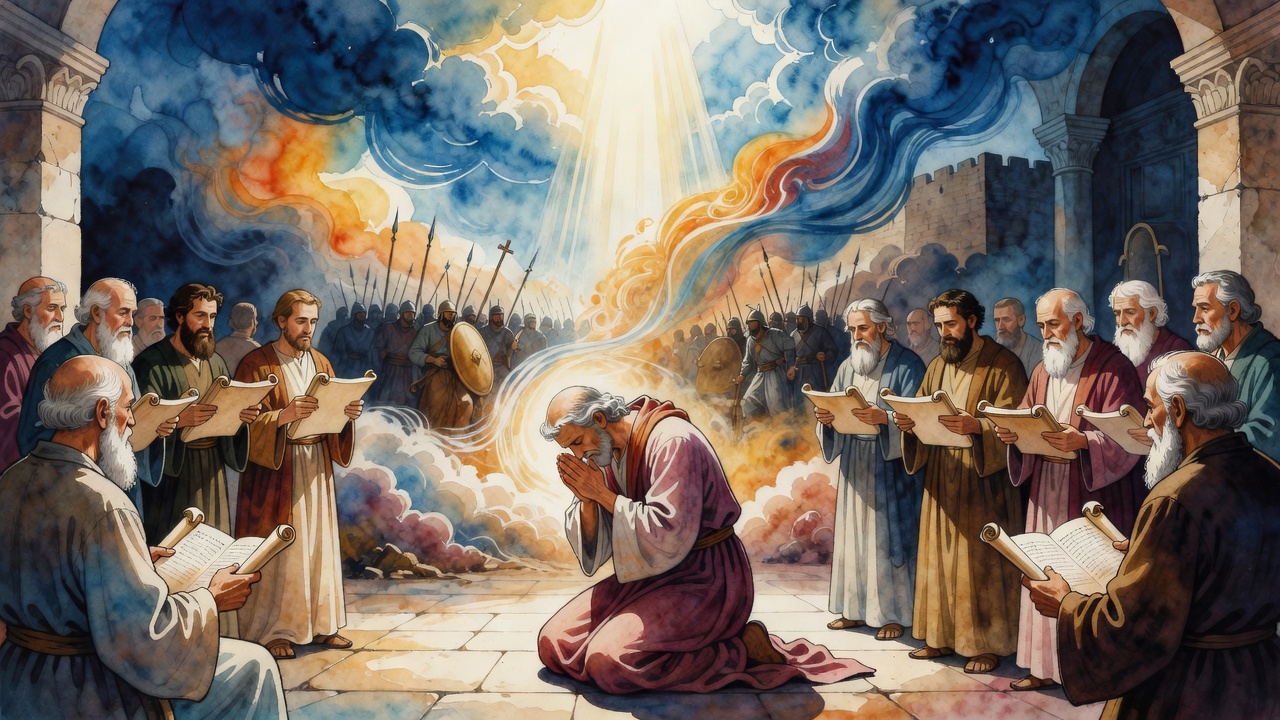
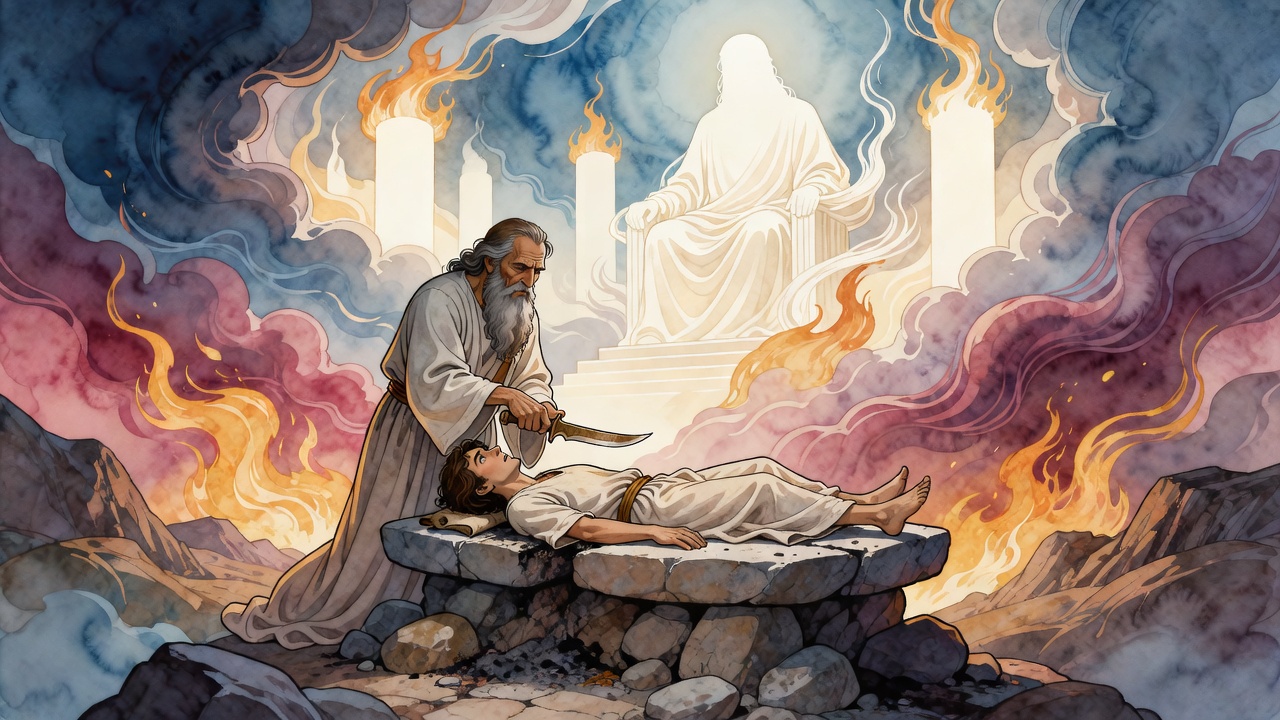
Hezekiah did not summon a council. He did not gather singers, guards, physicians, or priests. The palace still held the echo of Isaiah's footsteps when the king turned his face toward the wall and began to pray from the narrow place where no courtier could stand between his breath and God.

The wall mattered. It gave him no audience. A king can perform grief before servants, but a dying man turned to stone has only the truth left. Hezekiah spoke as if his own body had become evidence.

The King Counted His Limbs

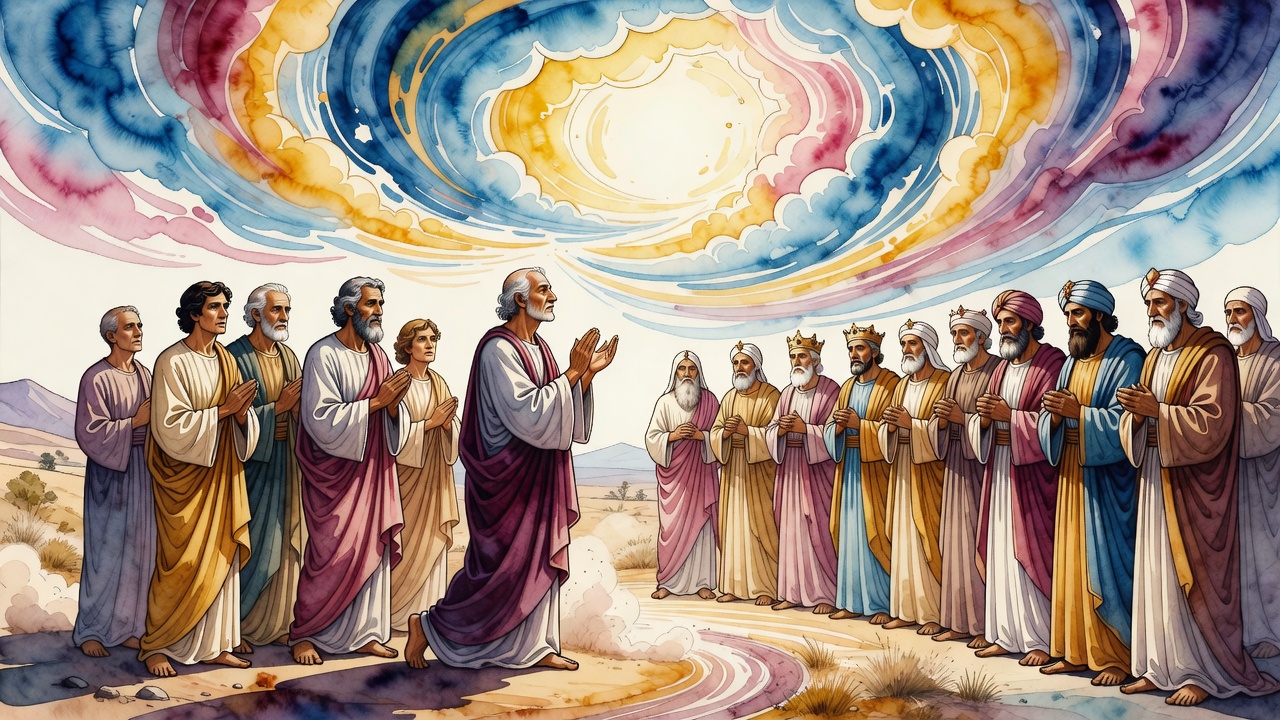
He searched himself, limb by limb. Two hundred forty-eight parts of the body, the sages counted, answering the two hundred forty-eight positive commandments. Hezekiah held up that whole inventory before heaven. He had been given hands, feet, mouth, eyes, heart, and strength, and he claimed that none had been used against God's will.

It was a dangerous prayer because it was so exact. He did not say, I was mostly faithful. He did not say, I meant well. He counted the whole man and brought the total to the throne. Then he added the merit of those who came before him, the builders of the Temple, the ancestors who brought others under the wings of the divine presence.

David Stood Behind the Mercy

The prayer rose, and mercy answered, but not in the way Hezekiah thought. Fifteen years were added to his life. The sentence did not disappear into vagueness. It was measured, counted, and given back to him like coins placed in an open palm.

Heaven also made the accounting clear. The mercy came through David. Hezekiah's piety was real, but it did not stand alone. A king can count his limbs and still live on the stored merit of a house older than his own breath. The wall heard his prayer. David's merit carried it.

Figs Went Onto the Wound

Isaiah had to return with the opposite message. A moment earlier he had spoken death. Now he had to speak life. The prophet feared the turn would make his words look unstable, as if prophecy had shifted under his feet.

God knew the king's modesty better than Isaiah's fear did. Hezekiah would not mock the prophet for returning. He would receive the reversal.

The cure itself looked almost like a riddle. Isaiah placed a cake of figs on the boil. Such a thing should have worsened the wound, not healed it. That was the wonder. The remedy did not hide the miracle. It made the miracle stare back from the bandage.

Shevna Carved a Grave Too High

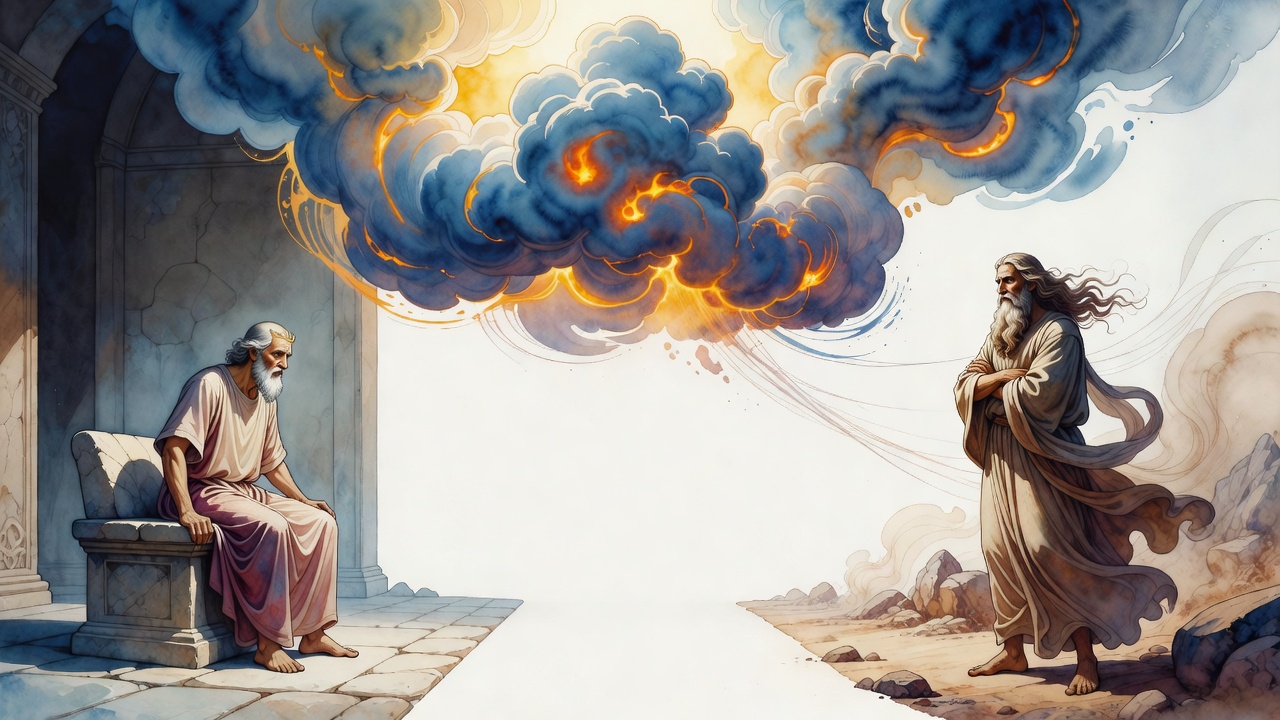
While Hezekiah turned his body into a petition, Shevna turned his office into a monument. Some remembered him as the High Priest. Others called him the overseer, the master of all, the treasurer who held sacred things in his hands. Either way, he had climbed into authority and mistook access for belonging.

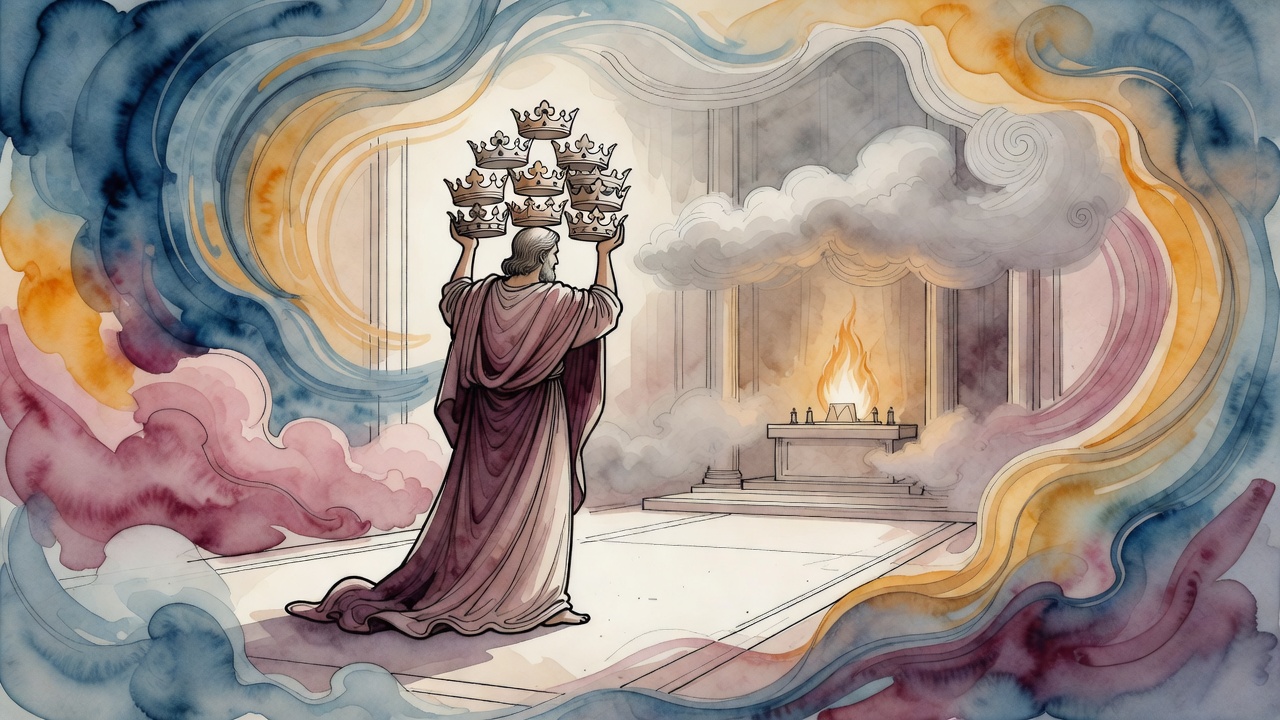
He carved a grave for himself among heights that did not belong to him, a royal resting place shaped like a birdhouse in the rock. The prophet's rebuke struck the stone before the chisel cooled. What wall had Shevna built in Jerusalem? What pillar had he raised? What nail had he fixed there that he should claim a grave among the kings of David's house?

From On High the answer came against him. He would not rest in the land. He would be shaken from place to place, wrapped in disgrace, tossed like a ball that never reaches the ground.

The Arrow Flew Toward Assyria

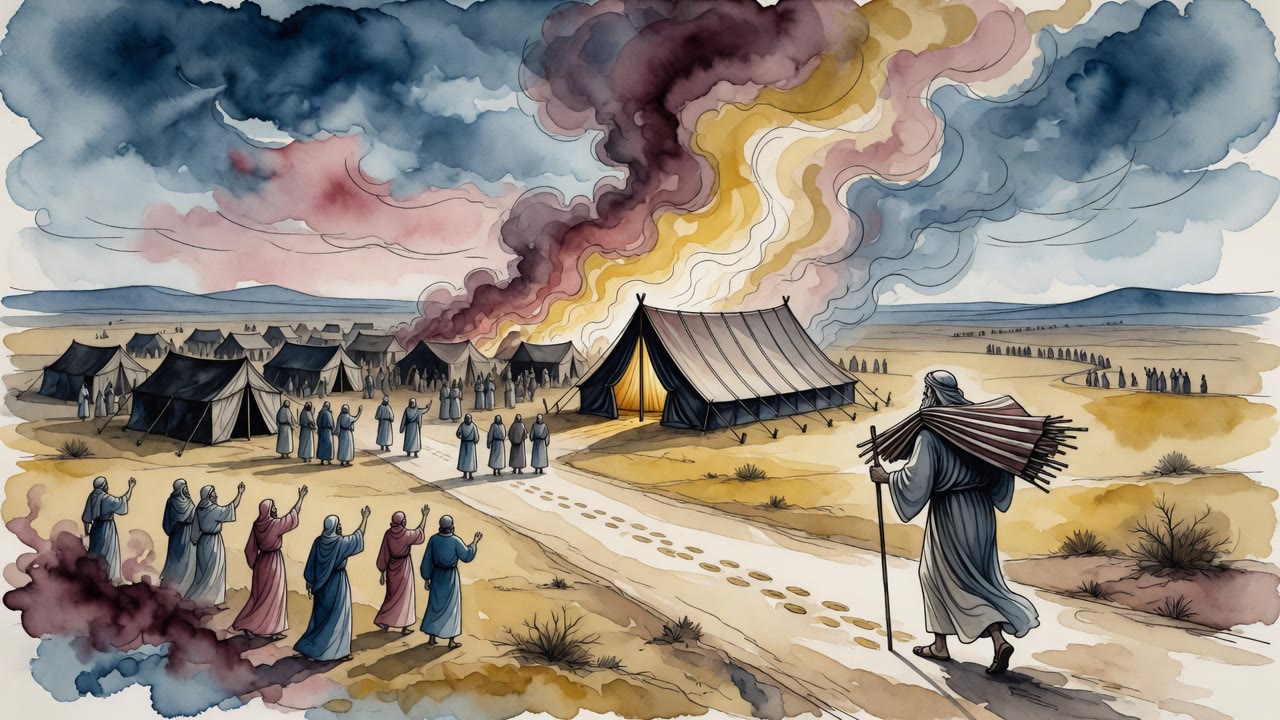
Shevna's betrayal did not stay inside his thoughts. He and Joah wrote to Sennacherib, fixed the message to an arrow, and shot it out through the window. The words were poison: the people wanted peace with Assyria, and only Isaiah and Hezekiah stood in the way.

One king pressed his face to the wall and asked for life. One official pressed his ambition into an arrow and sent it toward the enemy. Hezekiah received fifteen years. Shevna received exile, disease, and the shame of a grave he had carved but could not inhabit.


← All myths
From the tradition

Sources

2 sources

The texts this telling draws on, in full. Open a card to read inline, or expand it for a wider, quieter read.

Legends of the Jews 9:36Legends of the Jews

Death had been decreed against him. Seriously. But Hezekiah, being the resourceful and pious king that he was, wasn't about to take that lying down. He prayed. He pleaded with God. He asked to be kept alive.

What was his argument? What did he say that could possibly sway the Divine will? He invoked the merits of his ancestors, those who had built the Temple and brought converts into the Jewish faith. He reminded God of his own good deeds, declaring, "I searched out all the two hundred and forty-eight members of my body which Thou didst give me, and I found none which I had used in a manner contrary to Thy will." Now, the number 248 is significant, corresponding to the number of positive commandments in Jewish law, as well as, in Kabbalistic thought, the number of "limbs" or components of the body. He was saying he used every part of himself for good.

It worked! God heard his prayer and granted him fifteen more years of life. But, as Legends of the Jews (Ginzberg) makes clear, there was a caveat. God made it known to Hezekiah that this mercy was due to the merits of his ancestor, David, not to his own, as Hezekiah seems to have believed. It's a humbling reminder that even our best efforts often stand on the shoulders of giants who came before us.

Enter Isaiah, the prophet. God instructed him to return to the king and announce his recovery. But Isaiah, understandably, had some reservations. He had just recently predicted Hezekiah's imminent demise! Would the king trust him this time around? God reassured him. He knew that in his modesty and piety, the king would not doubt the prophet's trustworthiness.

The healing itself is interesting too. The remedy Isaiah employed was a cake of figs applied to Hezekiah’s boil. A cake of figs! It seems almost… counterintuitive. This would more likely aggravate the malady rather than alleviate it. According to the legends, this seemingly strange cure only increased the wonder of Hezekiah's recovery.

What are we to make of all this? Was it truly Hezekiah's prayer, or the merit of David, or even the improbable figs that saved him? Perhaps the answer lies in the interplay of all these things. The power of prayer, the legacy of our ancestors, and even the unexpected interventions that can sometimes change the course of our lives. It is a fascinating story that reminds us of the delicate balance between destiny and free will.

Full source
Vayikra Rabbah 5:5Vayikra Rabbah

A fascinating story from Vayikra Rabbah, a Midrash (rabbinic commentary) on the Book of Leviticus, that explores just that. It's a story of ambition, betrayal, and ultimately, divine justice.

Our tale begins with a verse: “If the anointed priest shall sin so that he brings guilt on the people” (Leviticus 4:3). The Midrash uses this verse as a springboard to discuss a figure named Shevna. Now, who was Shevna? That's where things get interesting.

The text references (Isaiah 22:15), which speaks of "this official [hasokhen], to Shevna, who is over the house." Rabbi Elazar identifies Shevna as none other than the High Priest! A position of immense spiritual authority. Rabbi Yehuda, however, suggests he was the amarkal, the overseer or treasurer.

To understand the High Priest claim, Rabbi Elazar points to (Isaiah 22:21): "I will garb him in your tunic." The tunic, understood as the High Priest's garment, being passed on. But if Shevna was merely the overseer, Rabbi Yehuda suggests the verse, "I will deliver your authority into his hand" (Isaiah 22:21), applies. Rabbi Ḥiyya even explains that amarkal means "master of it all" [mar lakol], highlighting Shevna's significant influence regardless of his specific title.

Rabbi Berekhya adds another layer: Shevna, he says, was from Sikhnin, and rose through the ranks to become a Temple treasurer. This rise is what the prophet Isaiah rebukes in (Isaiah 22:16): “What do you have here and whom do you have here, that you have dug a grave here for yourself?” The prophet is essentially saying, "What right do you have to be here? What have you contributed?"

The prophet's words cut deep. "Exile, son of exile," he taunts, "what wall have you constructed here, what pillar have you established here, even what nail have you affixed here?" The implication, according to some commentaries, is that Shevna was trying to usurp King Hezekiah's authority, despite not being from Jerusalem or having contributed to its foundation.

Rabbi Elazar even makes an interesting point: a person should have some connection, "a nail or a peg," in a cemetery to merit burial there. The Arukh (a dictionary of Talmudic terms) suggests this connection could be contributing to the local synagogue. Shevna, however, built himself a lavish tomb, "like a dovecote," a sign of his arrogance and misplaced priorities.

The story takes a darker turn. Rabbi Shmuel, citing Mar Ukvan, says that it was decreed from Above that Shevna wouldn't even be buried in the Land of Israel. Isaiah's prophecy continues: “Behold, the Lord will shake you a great [gaver] shake” (Isaiah 22:17), which Rabbi Shmuel bar Naḥman likens to a rooster [also gaver] wandering from place to place. He would be afflicted with leprosy (illustrated by the phrase “He will wrap you [veotekha ato]” which is compared to the leper covering his lip (Leviticus 13:45). The image is powerful: a once-powerful figure reduced to a wandering outcast.

The consequences of Shevna's actions are severe. If Rabbi Elazar is correct, and Shevna was the High Priest, his punishment stemmed from profiting from the offerings. If Rabbi Yehuda's view is accurate, his sin was exploiting consecrated objects. Either way, he abused his position for personal gain.

“The shame of your master’s house” (Isaiah 22:18) is interpreted as either disrespecting the offerings (according to Rabbi Elazar) or showing contempt for his two masters, Isaiah and Hezekiah (according to Rabbi Yehuda).

But the story doesn't end there. Rabbi Berekhya, in the name of Rabbi Abba bar Kahana, reveals a shocking act of treason: Shevna and another individual named Yoaḥ conspired against their own people. They wrote a message on a sheet, attached it to an arrow, and shot it through a window to Sennacherib, the king of Assyria. The message? "We and all the children of Israel seek to make peace with you; Isaiah and Hezekiah do not seek to make peace with you."

This act of betrayal is so profound that the Midrash connects it to (Psalm 11:2): “For, behold, the wicked bend the bow… They fixed their arrow on the string to shoot, in darkness, at the upright of heart.” Shevna and Yoaḥ, in their ambition and self-interest, were willing to undermine their leaders and endanger their entire community.

What are we to make of this complex and unsettling story? It serves as a potent reminder of the dangers of unchecked power, the corrupting influence of ambition, and the importance of integrity in leadership. Shevna's story is a cautionary tale about the consequences of betraying one's trust and prioritizing personal gain over the well-being of the community. It compels us to reflect on our own actions and the impact they have on those around us. Are we building walls and pillars of integrity, or digging graves of self-interest?

Full source