4 min read

Abraham Made God Promise to Remember the Knife

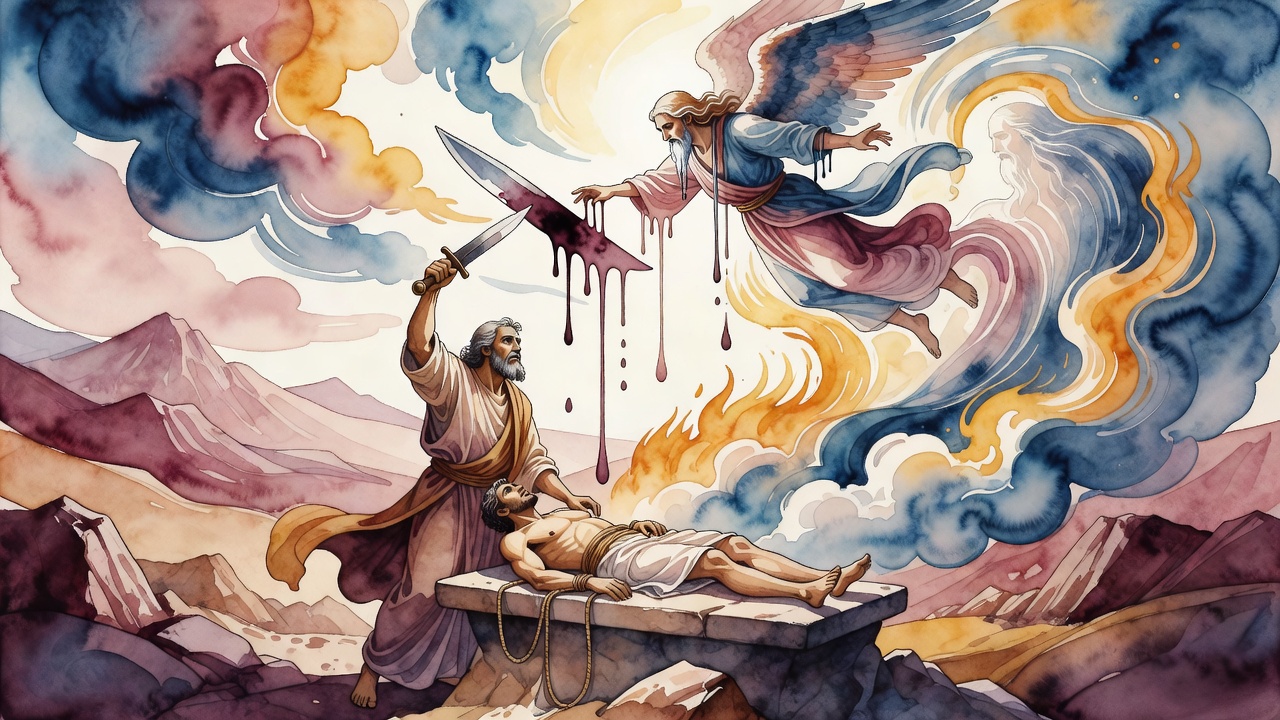
Abraham lowered the knife over Isaac, then demanded that God remember the altar whenever his descendants needed mercy in every age.

Curated by Arthur · Told by Maggid ·
Table of Contents
  1. The Test God Already Knew
  2. The Demand at the Altar
  3. The Mountain That Would Whiten Sin
  4. The Road Without a Map
  5. The Knife Held Above the Generations

The knife stopped, but Abraham did not.

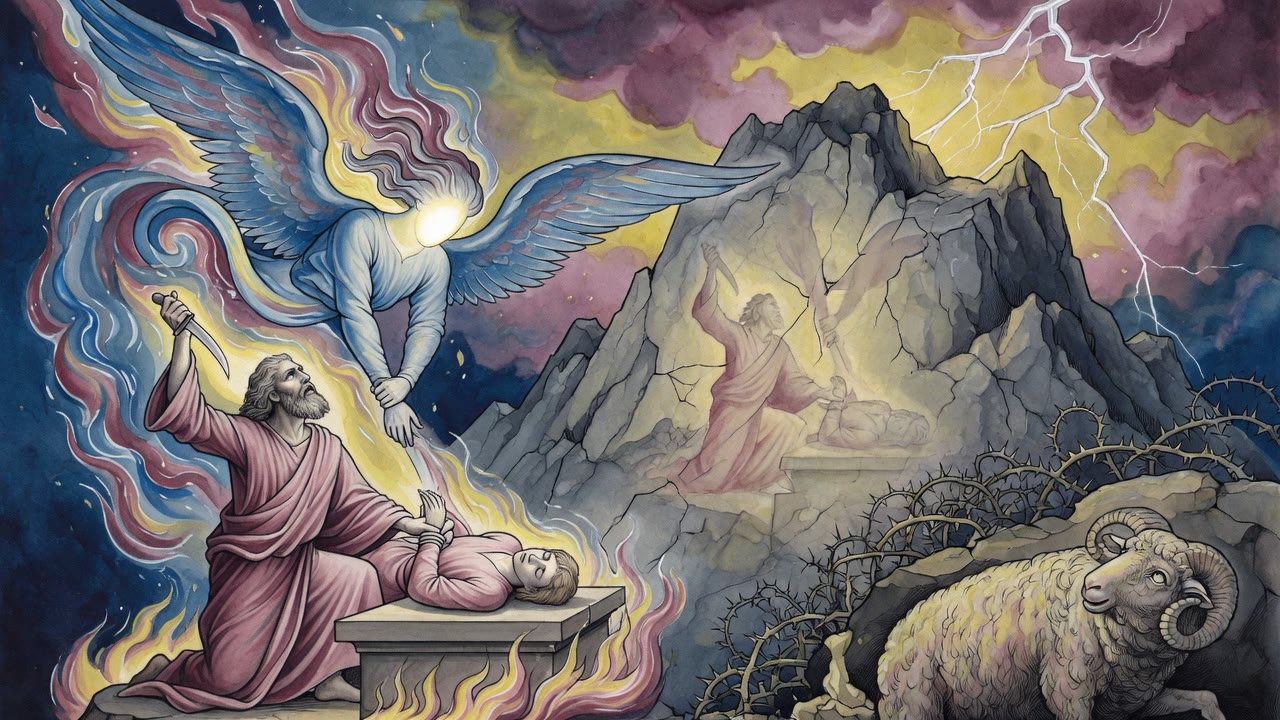
The angel had called from heaven. Isaac was breathing. The ram was caught in the thicket, its horns tangled where the boy's body had almost lain. The mountain should have gone quiet then. A father should have collapsed. A son should have been untied. The test should have ended.
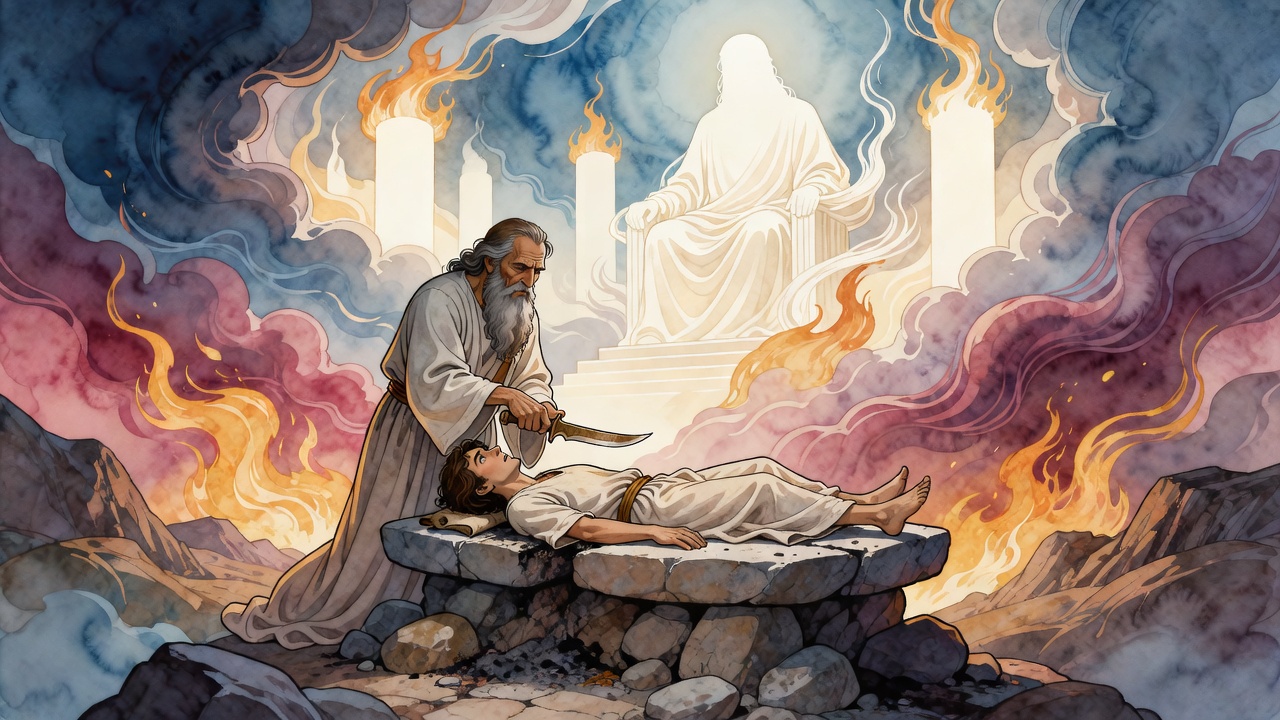
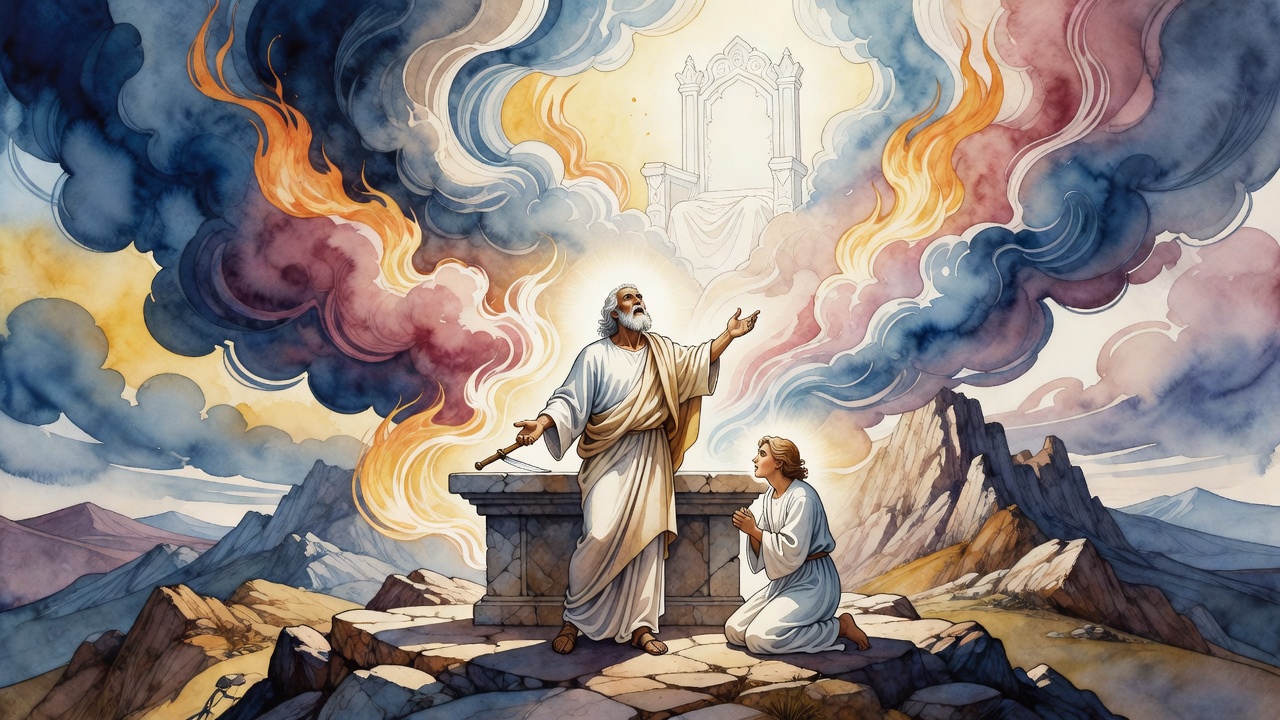
Abraham stood on the altar mountain with the knife still warm in his hand and argued with God.

The Test God Already Knew

Abraham asked the question hidden under the whole command.

Human beings test because they do not know. A teacher tests a student. A king tests a servant. A father tests a son. But God had known Abraham's heart before the mountain, before Isaac, before the stars, before the first command to leave home. God knew whether Abraham would obey.

So why make him lift the knife?

The question did not come from rebellion. It came from the wound obedience had opened. Abraham had walked three days with the son he loved. He had built the altar. He had bound Isaac. He had raised his hand. If heaven already knew what was inside him, then the mountain had to mean something beyond information.

The Demand at the Altar

Abraham did not ask for an explanation only.

He demanded memory. If the test had torn father and son open before heaven, then heaven would have to keep the sight forever. When Isaac's descendants sinned, when judgment tightened around them, when their own merit thinned, God would remember the altar, the binding, the knife, the ram, the father's obedience, the son's survival.

Abraham turned the most terrible moment of his life into a plea for generations not yet born.

God agreed. The mountain would not be a private trauma sealed inside one family. It would become a treasury of mercy for Israel.

The Mountain That Would Whiten Sin

The mountain did not remain empty.

The sages would identify it with the place where Jerusalem and the Temple would stand. The name Levanon, white place, became a hint of the work that would happen there. Blood, prayer, confession, and return would meet on the same height where Abraham had refused to leave without a promise.

That is why the mountain matters. Abraham did not bargain in a random wilderness. He stood at the future center of atonement and made the first claim on its mercy. The Temple would later whiten sin because the mountain had already heard the sound of a father demanding that obedience become compassion.

The Road Without a Map

Abraham had been walking toward unknown places from the beginning.

Leave your land. Leave your birthplace. Leave your father's house. Go where God would show him. The command did not start with coordinates. Trust came first, geography later. The same pattern returned with Isaac. Take your son. Go to the land of Moriah. Offer him on the mountain God would show.

Abraham walked without being allowed to master the destination in advance. That was the shape of his love: not ignorance, but trust under conditions that gave him no control. By the time he reached the altar, his whole life had trained him to keep walking when God withheld the map.

The Knife Held Above the Generations

Abraham's demand did not erase the terror of the binding.

It preserved it as advocacy. The knife remains in the tradition because it stopped. Isaac lives, and because he lives, the almost-sacrifice can speak for his children. A completed offering would have ended one life. The interrupted offering becomes a voice that does not stop.

Every later plea for mercy rises toward that suspended moment. The father still stands. The son still breathes. The ram still pulls against the thicket. The knife still points to heaven, not as accusation alone, but as evidence.

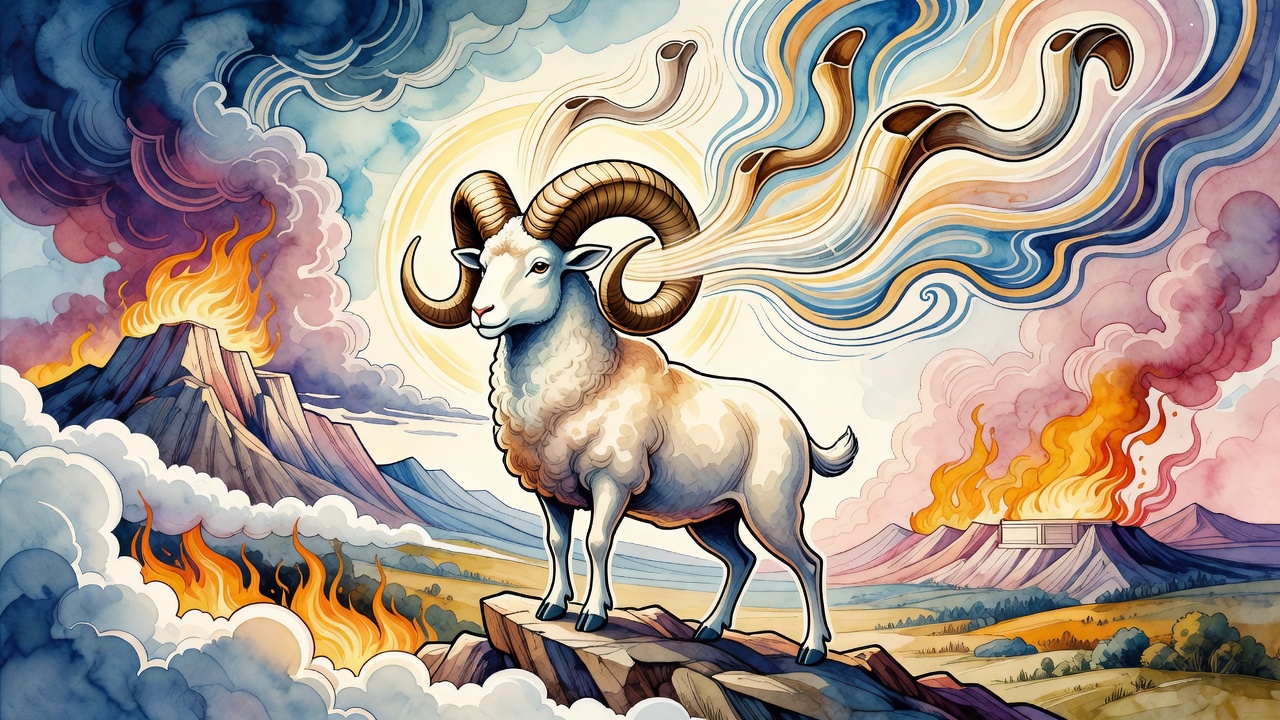
The shofar takes that evidence into sound. A ram's horn remembers the animal caught in the thicket, and the horn's broken cry carries the mountain back into judgment day. The blast does not explain the binding. It makes the old plea audible again. Abraham made God promise to remember the knife. The promise is why the mountain still answers.


← All myths
From the tradition

Sources

4 sources

The texts this telling draws on, in full. Open a card to read inline, or expand it for a wider, quieter read.

Legends of the Jews 5:243Legends of the Jews

The familiar story centers on the binding of Isaac, the Akeidah, a narrative that echoes through millennia. But what happened after the angel stayed Abraham's hand? What was said in the hushed moments that followed?

The story, as we find it in Ginzberg's masterful retelling in Legends of the Jews, offers a glimpse into a truly human exchange.

The scene: the knife is lowered, Isaac is safe, and the relief must have been overwhelming. But then, Abraham, ever the man of conviction, turns to God and essentially says: "Wait a minute. What was that all about?"

In legend, Abraham doesn't hold back. He points out the obvious: humans test each other because we can't see into each other's hearts. But God? God knows everything! "Thou surely didst know that I was ready to sacrifice my son!" Abraham declares.

It's a bold statement, tinged with understandable frustration. You can almost hear the echo of his earlier willingness, his unwavering faith, now laced with a bit of: "Really, God? Was that necessary?"

And God's reply? It's not a simple apology. Instead, it's a profound statement about the nature of faith and example. God acknowledges that He knew Abraham's devotion. "It was manifest to Me, and I foreknew it, that thou wouldst withhold not even thy soul from Me."

But then comes the kicker. Abraham, still wrestling with the experience, asks, "And why, then, didst Thou afflict me thus?"

God's answer reveals a deeper purpose to the whole ordeal: "It was My wish that the world should become acquainted with thee, and should know that it is not without good reason that I have chosen thee from all the nations. Now it hath been witnessed unto men that thou fearest God."

In other words, the Akeidah wasn't just about testing Abraham; it was about revealing him to the world. It was about showing humanity what true devotion, true yirat Hashem (fear of God, or awe of God), looks like. The most intimate test of faith becomes a public demonstration. Abraham's personal struggle becomes a lesson for all time.

It makes you wonder, doesn't it? How often are our own trials, our own moments of questioning, not just about us, but about something larger? How often are we, unknowingly, being witnessed? And what message are we sending to the world?

Full source
Sifrei Devarim 28:3Sifrei Devarim

Our guide for this exploration is the Sifrei Devarim, a collection of early rabbinic legal interpretations on the Book of Deuteronomy. Within its verses, we find a fascinating perspective on the significance of Jerusalem and the Temple.

About "this good mountain and the Levanon." Notice how it simply refers to Jerusalem as "mountain." But why? Well, it seems everyone, throughout history, has called it that! Abraham himself, as we read in (Genesis 22:14), prophetically declared, "… of which it will be said: 'On this day, in the mountain, the L-rd shall appear.'" Centuries later, Isaiah echoed this sentiment (Isaiah 2:2), proclaiming that "the mountain of the house of the L-rd will be established." Even the nations, according to (Isaiah 2:3), would recognize its importance, urging each other to "go and ascend to the mountain of the L-rd." It's as if the very essence of Jerusalem is intertwined with this idea of a mountain, a place of elevation, both physical and spiritual.

What about "the Levanon?" The Sifrei Devarim equates this with the Temple itself. (Jeremiah 22:6) speaks of "the head of the Levanon," and (Isaiah 10:34) prophesies that "the Levanon by a mighty one will fall." Why this connection?

The text explains that the Temple is called "Levanon" because it "whitens" (malbin) the sins of Israel. The Temple, through its rituals and presence, possessed the power to cleanse, to purify. This idea is beautifully captured in (Isaiah 1:18): "If your sins be like scarlet, they will be as white (yalbinu) as snow."

The Hebrew word lavan, meaning "white," is at the root of "Levanon". So the very name of Lebanon (or Levanon in Hebrew) is intrinsically linked to purity and cleansing. It's a powerful image, isn't it? A place so holy, so connected to the Divine, that it can transform even the deepest stains into a state of pristine innocence.

Isn't it incredible how a single place, a single word, can hold so much meaning? Jerusalem, the mountain, the Levanon – it’s more than just geography. It's a symbol of our aspirations, our yearning for connection with the Divine, and our hope for redemption. It’s a reminder that even when we stumble, even when we're stained by our mistakes, the possibility of renewal, of becoming "whiter than snow," always remains.

Full source
Legends of the Jews 5:89Legends of the Jews

When God first called to Abraham, He didn't immediately reveal the destination. “Leave your home,” God said “and go…” But go where? According to Legends of the Jews, this lack of specific direction only magnified Abraham's merit. The greater the trust, the greater the reward. Abraham, in complete faith, responded, "I am ready to go whithersoever Thou sendest me." Can you imagine having that level of faith?

Only then did God offer a little more clarity: He would lead him to a land where He would reveal Himself. Later, upon arriving in Canaan, God appeared to Abraham, confirming that this was, the promised land.

Even upon entering Canaan, Abraham wasn't immediately certain that this was the land, his destined inheritance. But something shifted within him. As Ginzberg recounts in Legends of the Jews, while in Mesopotamia and Aramnaharaim, he'd been disgusted by the inhabitants' behavior – their excessive eating, drinking, and wantonness. "O that my portion may not be in this land!" he'd wished.

Canaan was different. He observed the people diligently cultivating the land, working hard, and he felt a sense of belonging. "O that my portion may be in this land!" he exclaimed. It was at that moment that God affirmed, "Unto thy seed will I give this land."

Overjoyed by this divine promise, Abraham immediately built an altar to the Lord, a physical expression of his gratitude. This wasn't just a symbolic gesture; it was an act of thanksgiving for the incredible news.

And he didn’t stop there. He journeyed southward toward the future site of the Temple, establishing his connection to the land. In Hebron, he erected another altar, essentially staking his claim. It was, in a sense, a way of taking possession, a physical manifestation of his faith and God's promise.

He also raised an altar in Ai. Why there? Because, as the Legends tell us, Abraham foresaw a future misfortune that would befall his descendants during Joshua's conquest of the land. This altar, he hoped, would somehow mitigate the negative consequences, perhaps offering protection or atonement. What an incredible vision to have. Abraham, driven by faith, not only embraced the promise but actively worked to secure it, even anticipating future challenges and trying to lessen their impact. His journey wasn't just a physical one; it was a evidence of unwavering trust and proactive faith. It makes you wonder, what promises are we holding onto, and what active steps can we take to nurture them?

Full source
Sifrei Devarim 32:21Sifrei Devarim

We say the words, of course. "V'ahavta et Adonai Elohecha b'chol l'vavcha" – You shall love the Lord your God with all your heart… but what does that actually look like?

Our sages wrestled with this question for centuries. How do you quantify something as vast and encompassing as divine love? Fortunately, they left us some clues.

Rabbi Meir, a brilliant voice in the Mishnah (the earliest code of rabbinic law), offers a powerful interpretation in Sifrei Devarim. He breaks down the familiar verse from Deuteronomy (6:5), "And you shall love the L-rd your G-d with all your heart, with all your soul, and with all your might," and connects each phrase to the lives of our patriarchs.

First, "with all your heart." Rabbi Meir says this means to love God as Abraham did. He points to the verse in Isaiah (41:8), "Avraham, My lover," and Nehemiah (9:8), "and You found his heart faithful before You.": "My lover." That's an incredibly intimate description of Abraham’s relationship with God. Abraham’s entire being was oriented toward the Divine, a constant striving to fulfill God’s will, even when it demanded immense sacrifice and unwavering faith. It was a love so profound that God Himself recognized it.

Then, "with all your soul." This, Rabbi Meir suggests, mirrors the devotion of Isaac, who offered himself – willingly – to be bound upon the altar. The Akeidah, the Binding of Isaac, is one of the most challenging and profound stories in the Torah. Isaac’s willingness to sacrifice his very life, his very essence, is the ultimate expression of love and surrender. It’s not just about obedience; it's about a complete merging of his soul with God's will. It shows us love can mean utter self-sacrifice.

And finally, "with all your might (meodecha)." Here, Rabbi Meir makes a clever connection. Meodecha, meaning "might," is linguistically linked to the word modeh, meaning "to confess" or "to acknowledge." So, he connects this phrase to Jacob, who confessed to God’s abundant kindness. Rabbi Meir finds support for this in (Genesis 32:11), where Jacob says, "I am too small for all of the lovingkindness and all of the truth that You have done with Your servant. For with my staff did I cross this Jordan, and now I have become two camps."

Jacob, facing his brother Esau after years of estrangement, doesn’t boast of his accomplishments. Instead, he acknowledges his unworthiness, recognizing that everything he has is a gift from God. He is overwhelmed by God’s chesed (Lovingkindness), His lovingkindness. This act of humility, of acknowledging our dependence on the Divine, is, according to Rabbi Meir, an essential component of loving God with all our might.

So, what do we learn from this? Love for God isn’t just a feeling; it’s an action, a way of being in the world. It's about emulating the faith of Abraham, the selflessness of Isaac, and the humility of Jacob. It's a lifelong journey of striving, sacrificing, and acknowledging the Divine presence in every aspect of our lives. It’s a tall order, no doubt. But perhaps, by striving to embody these qualities, we can inch a little closer to understanding what it truly means to love God with all our heart, soul, and might.

Full source