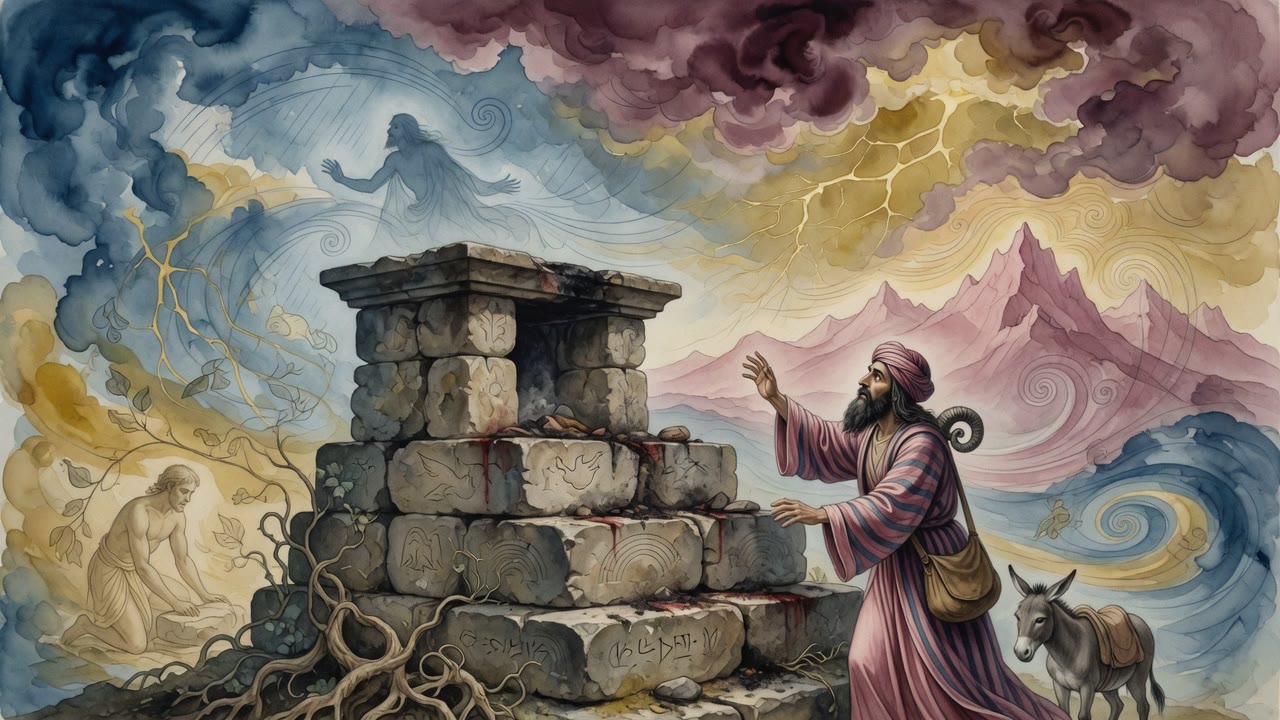
Abraham Refused to Leave the Altar on Moriah
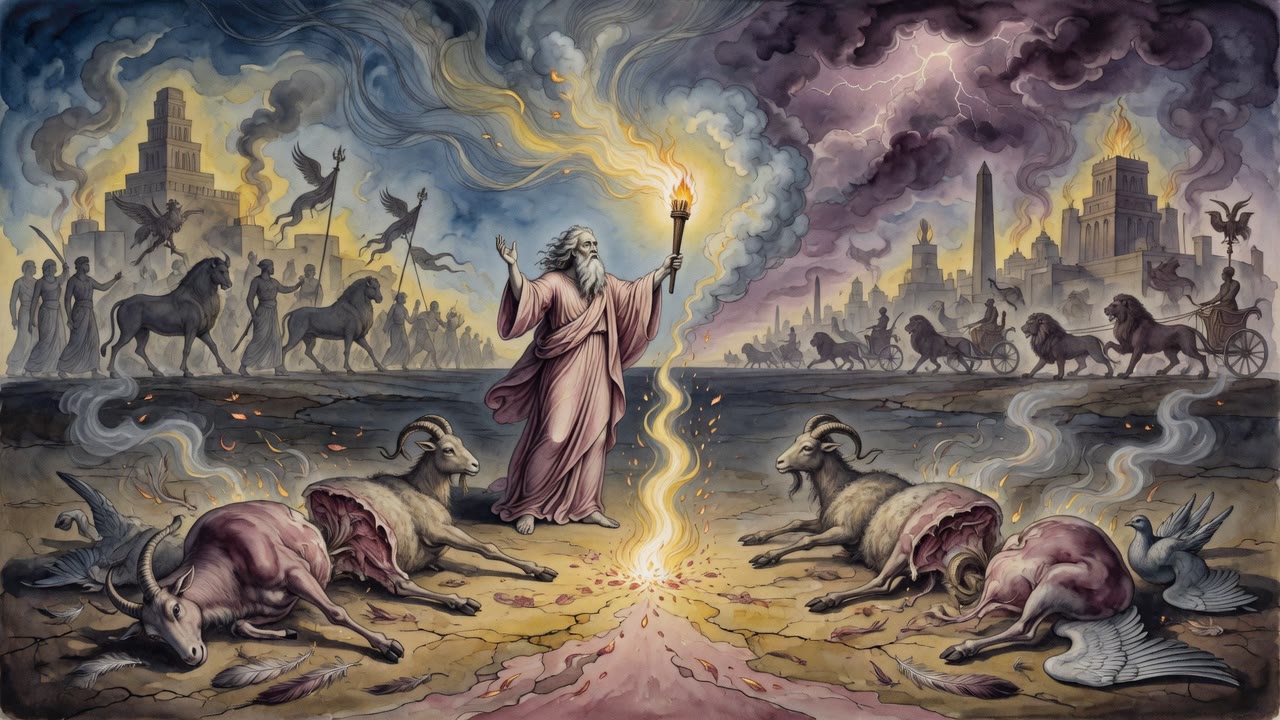
The ram was already burning. Isaac was breathing. Abraham still would not step down until God bound the morning to Israel's future.
Table of Contents
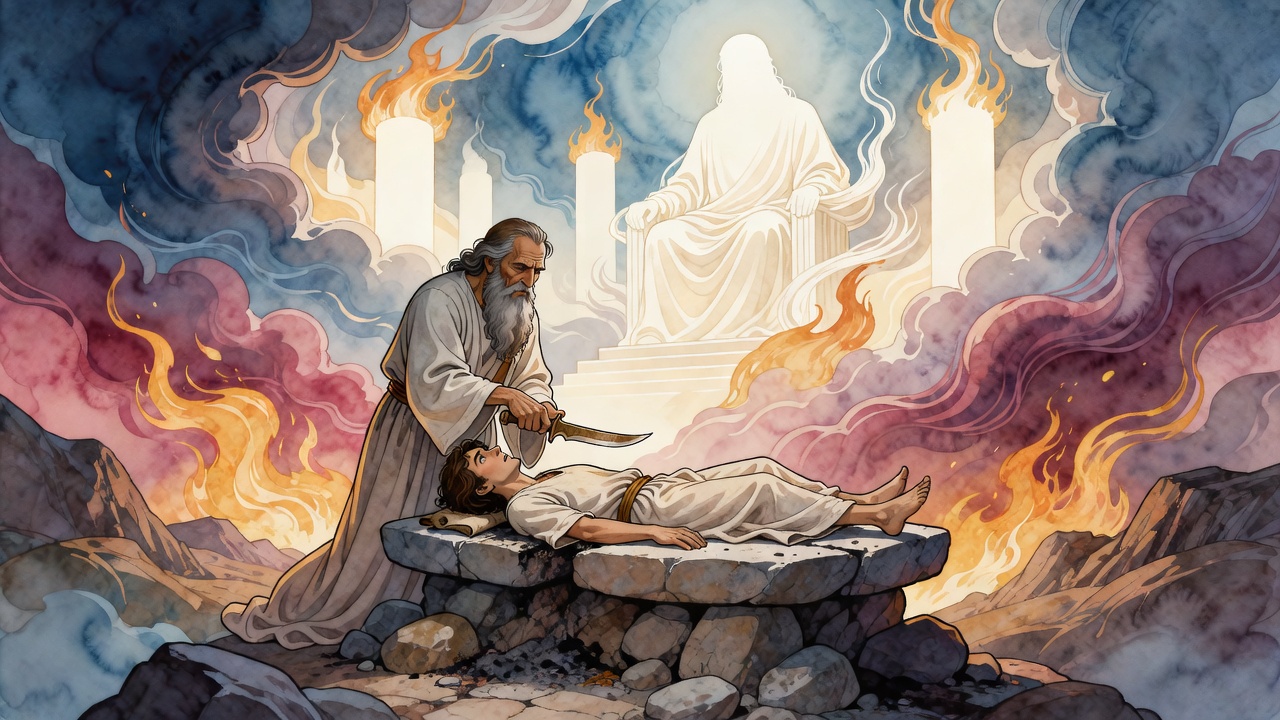
The knife had stopped. The ram was already in the fire. Abraham did not step down.
 Click for full size
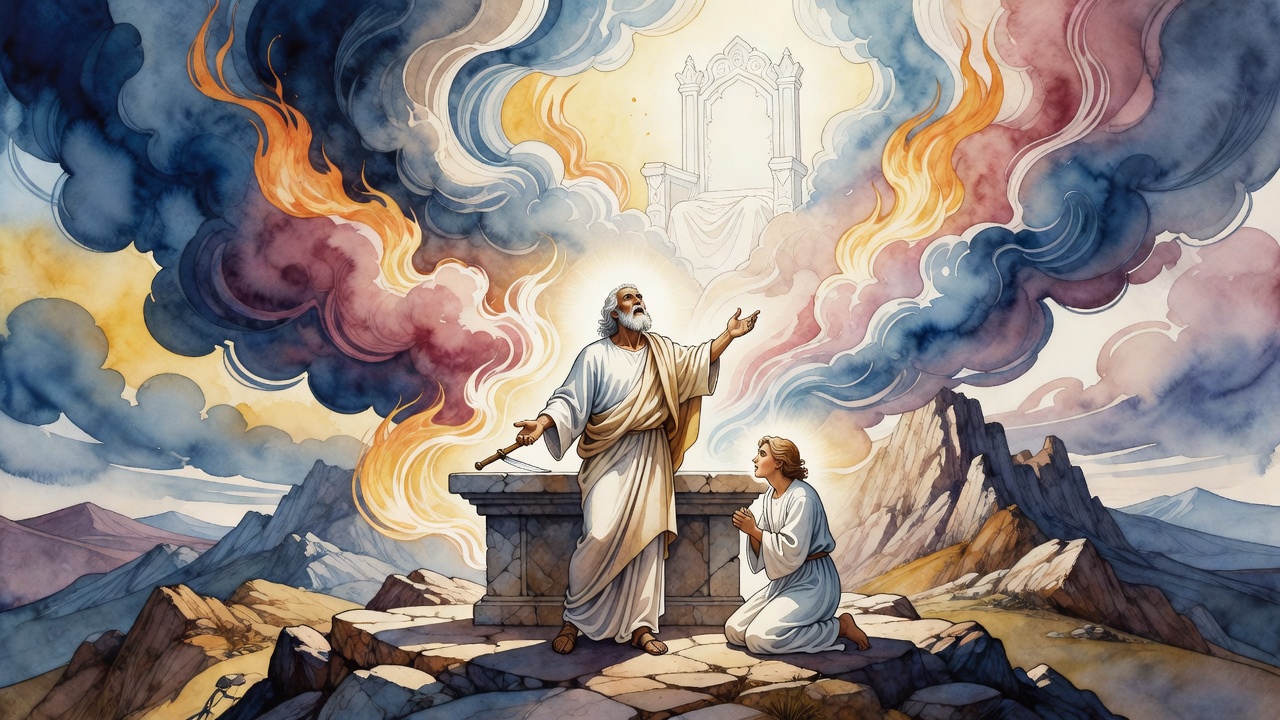
Isaac was breathing. Ram's blood ran into the cracks between the stones. Above the mountain God spoke with the force of an oath: "By Myself I swear." (Genesis 22:16)
A father had lifted the blade. A son had been returned. A ram burned in the son's place. Heaven had sworn blessing. Abraham planted his feet on the ash and would not move.
He Swore an Oath of His Own
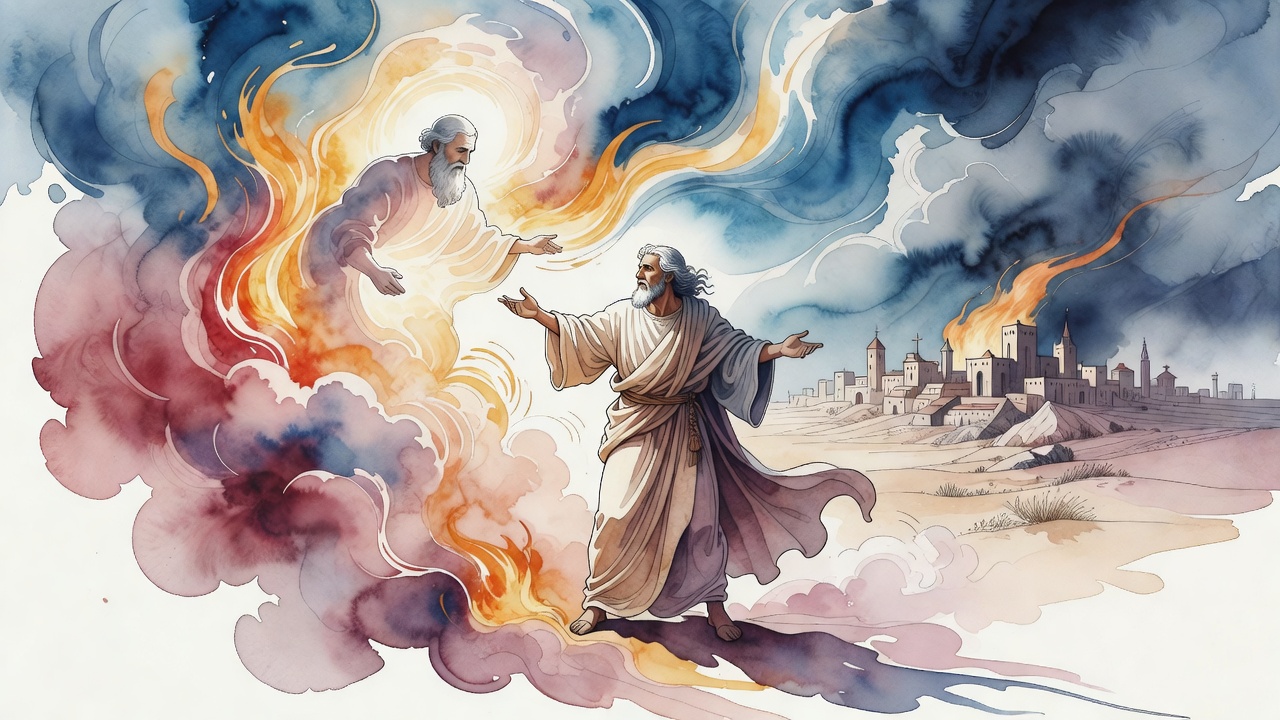
"You swear," he said, "and I swear too. I will not leave this altar until I have said what I have to say."
No servant stood near enough to pull him back. No angel put a hand over his mouth. Isaac's wrists still held the mark of the rope. The ram cracked and spat fat into the flame. Abraham faced heaven the way a man faces a court that has almost taken his child.
The stones were not new to his blood. On the tenth day of Tishri, the day that would become Yom Kippur, he had entered the covenant in his own flesh on this same height, the place where the Temple altar would later stand. Three days after that cut, when every step was labor, God desired to visit him. The angels recoiled. "Blood and filth," they said. A body opened and sore.
God would not leave him alone in it. "The smell of that blood," God answered, "was sweeter than myrrh and incense." If the angels would not go, God would go alone.
Abraham had learned it then, in pain: God does not turn away from the cut place. He brought that knowledge back to the mountain now, with a ram burning and a living son behind him, and he used it.
He Named the Sand Again
"Did You not promise me," Abraham said, "that one would come from my own body, and that his seed would fill the whole world? Did You not promise to make my seed as many as the sand on the shore?"
The sand was not a pretty picture to him. Sand entered sandals. Sand got crushed under every foot. Sand lay at the border where sea tried to take land and land refused to vanish.
He had carried that promise from pasture to pasture, through famine, through war, through the laughter of an old woman told she would bear a son, and up this silent climb. God had said Isaac would carry the line. Then God had said to offer Isaac as a burnt offering.
Abraham could have thrown the contradiction into heaven like a stone while the knife was still in his hand. He had not. That silence was what he set on the altar now.
The Protest He Had Bound With the Boy
He told God the words he had swallowed. Yesterday You said, "In Isaac shall your seed be called." Then You said, "Take your son, your only son, Isaac." He had not shouted the accusation on the way up. He had tied his own protest alongside his son.
Now he untied it.
"Remember the offering of their father Isaac," he said. "When his children sin, when they fall into suffering because of it, forgive them. Deliver them from their pain."
He asked God to see the morning as if the ashes of Isaac lay heaped on the stones. The boy was alive. Abraham wanted the almost-death to count as if it had been completed, stored, ready for generations that had not yet drawn breath.
The mountain grew crowded. Trespassers. Sufferers. Children of Isaac bent under kingdoms that would trample them. A long divine day would darken over them, and somewhere before evening a thin light would have to rise.
The Ram's Horn Took the Morning
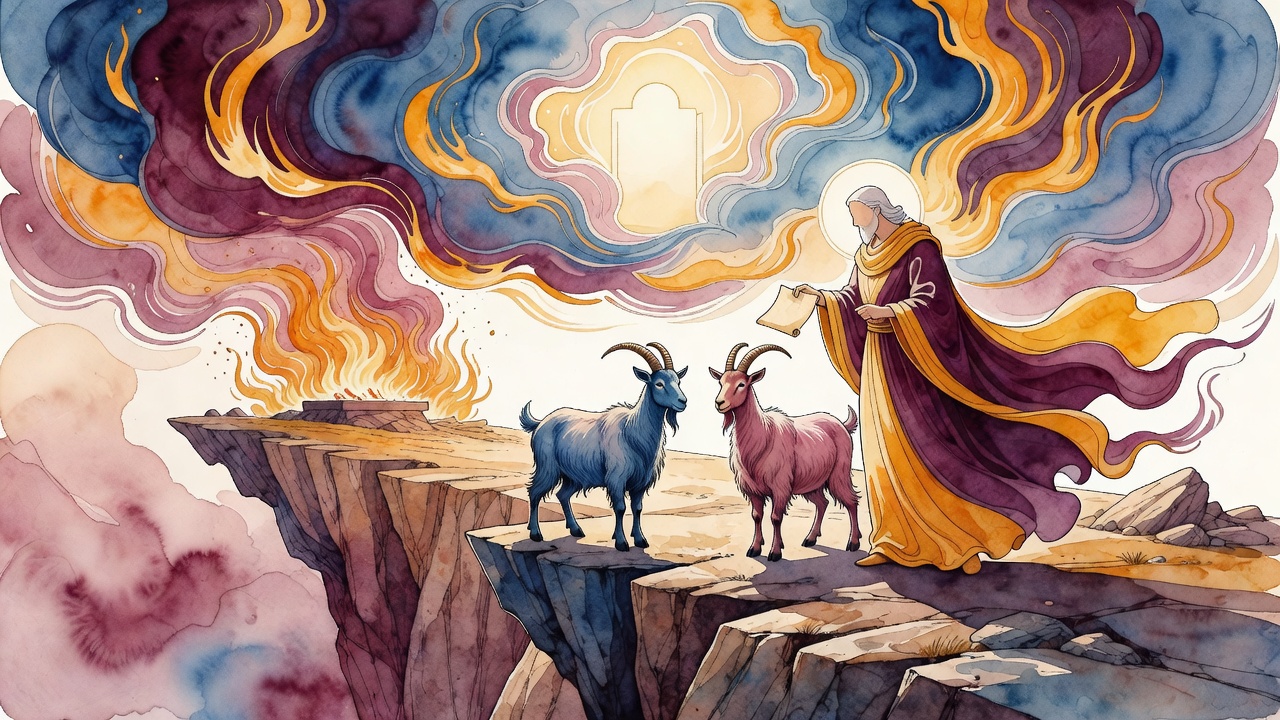
God granted the ask with a sound attached to it. When Isaac's children want forgiveness on the Day of Judgment, let them blow the shofar, the ram's horn. The merit of this morning will rise with that blast.
Abraham named the place. The Lord will see. Adonai-Yireh (ה' יראה). See it, he asked, as though I had truly slaughtered my son upon this altar. Let the mountain testify tomorrow, when the children of Isaac stand before You burdened by their sins.
The fire bent low. Isaac stood. The father still had ash in his beard. Only then could Abraham leave. He stepped down off the stones that had held his blood twice, once from his own flesh, once from the ram that took his son's place, and the smoke stayed behind him like a witness that would not blow away.
← All myths