Four Prophets Softened Moses' Four Harsh Decrees
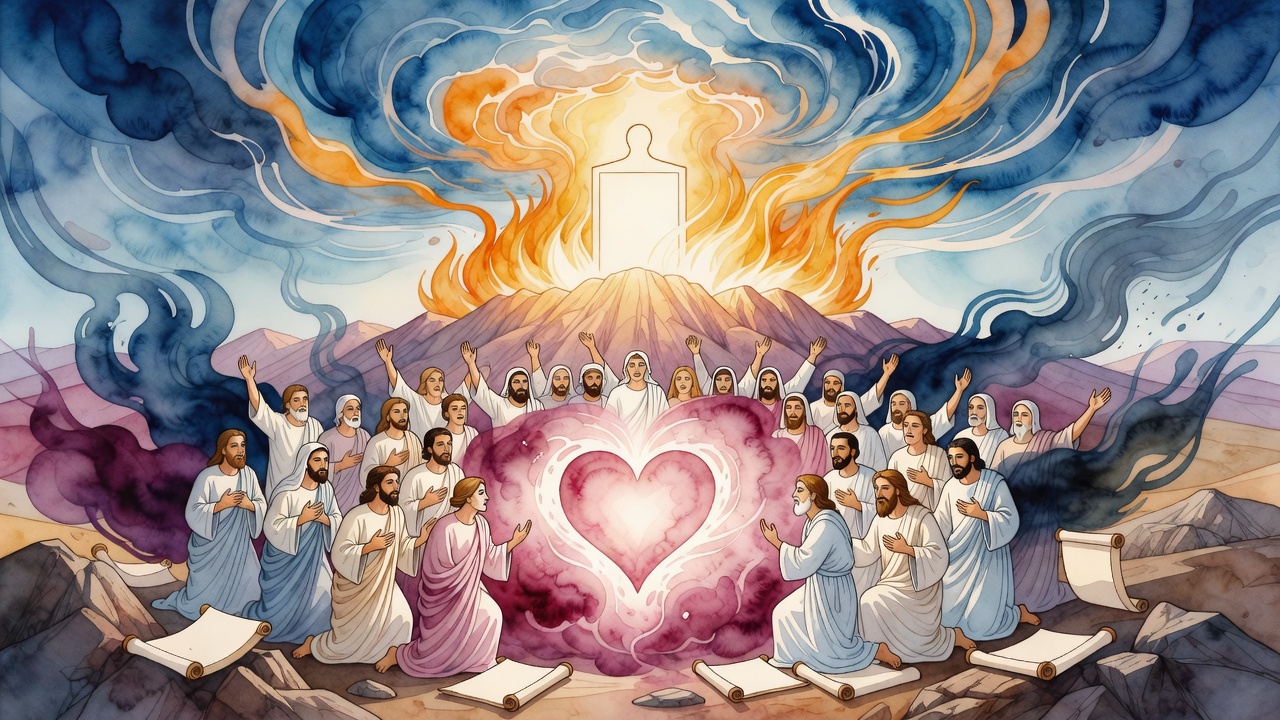
Moses spoke four hard judgments over Israel. Centuries later Amos, Jeremiah, Ezekiel, and Isaiah rose and mercy-read each decree until heaven agreed.
Table of Contents
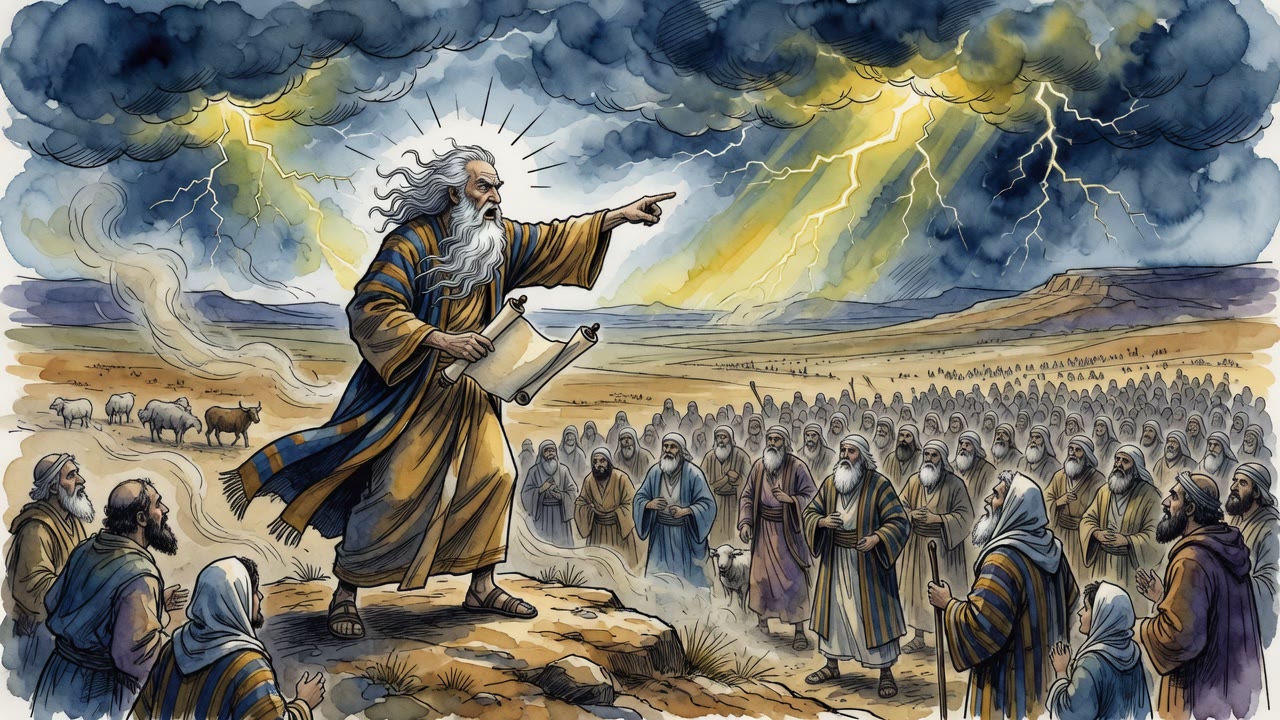
Moses stood in the plains of Moab with a hundred and twenty years on him and still enough force to break a nation's sleep.
 Click for full size
He had slain Sihon and Og. The wars were behind him. The river was ahead for others. He had thirty-six days, from the first of Shevat toward the sixth of Adar, to set the whole Torah in the people's ears before his own death on the seventh, born and dying on the same date so that no one could say his years were cut short by accident. In that late thunder he also left four hard sentences hanging over Israel's future like weather that would not move until later mouths asked heaven to shift the wind.
Alone, Uneasy, Visited, Perishing
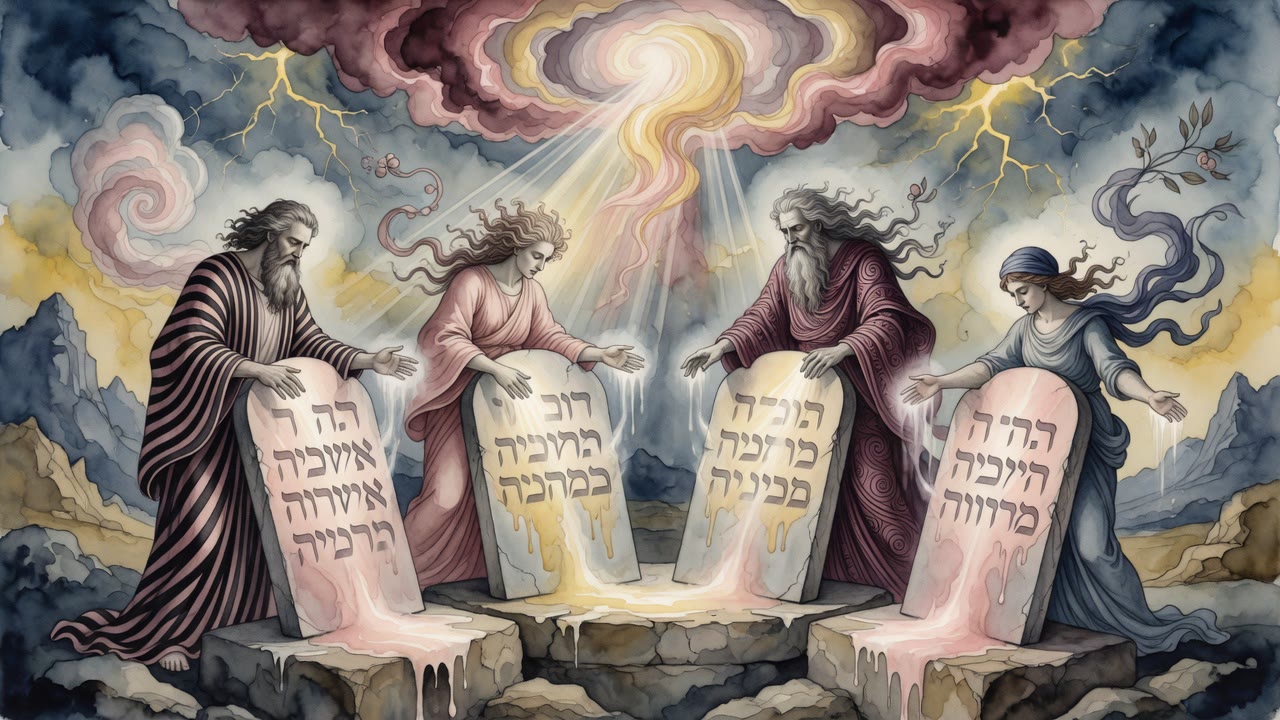
He said Israel would dwell in safety alone among the nations, sealed by difference. He said among the nations they would find no ease, no rest for the sole of the foot. He said God visits the iniquity of fathers upon children, a chain of consequence that can feel like fate. He said they would perish among the peoples, the nightmare under every dispersion and every census that comes up short.
Each line was true enough to bruise a listener who had already walked forty years of dust. Isolation can be holiness and can be a noose. Exile can teach and can grind the face into brick. Guilt can travel generations until someone refuses the inheritance of blame as if it were land. Disappearance is the quiet death of a name.
Moses loved them enough to scare them clean before he left them with Joshua and a river.
Amos Asked Heaven to Stop
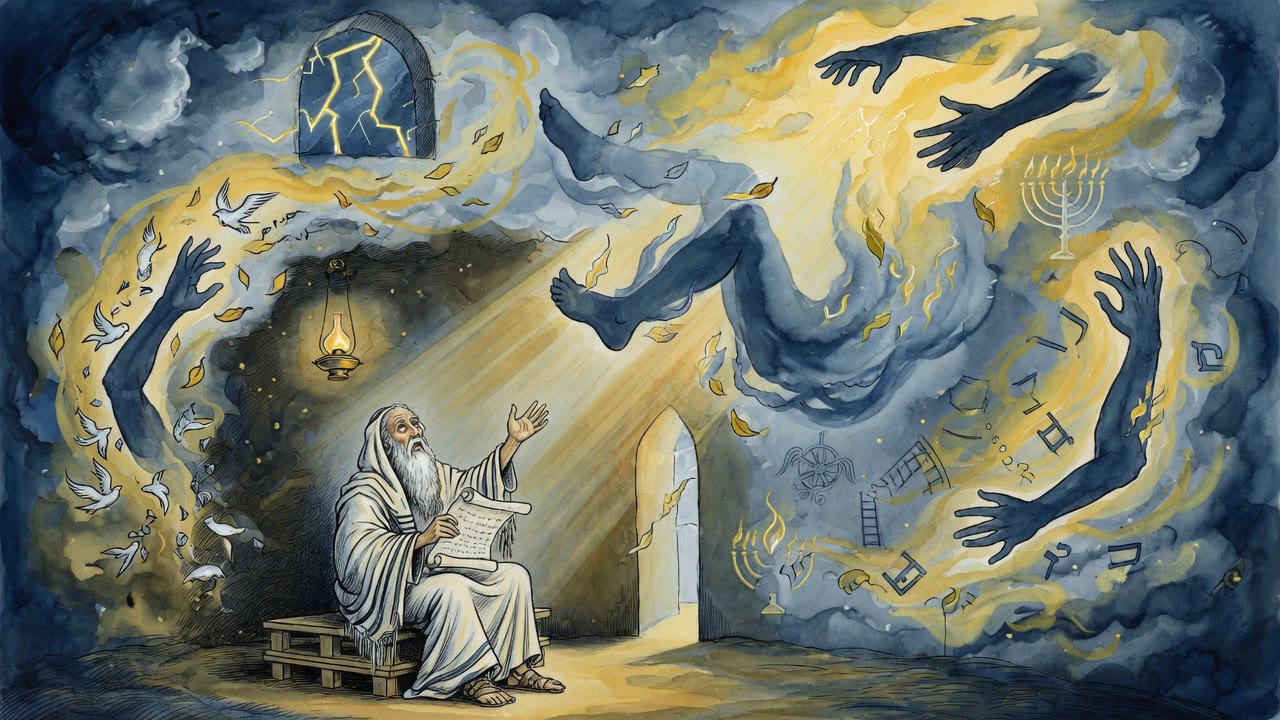
Then Amos stood in a later century, far from Moab's plains, and would not let the first decree rest as the last word. "Cease, I beseech thee," he pleaded over a vision of ruin, and God answered, "This shall not be." The isolation was lifted from its hardest reading. The people would not be sealed into loneliness as their only form of safety, as if alone were the whole of the blessing.
Mercy did not call Moses a liar or a failed teacher. Mercy continued the conversation the first teacher had started with sentences sharp enough to require an answer.
Jeremiah, Ezekiel, Isaiah
Jeremiah found rest where Moses had seen no ease: even in the going out, a place to cause Israel to rest, a grace inside exile that Moab's warning had not paused to describe. Ezekiel cut the chain of inherited guilt with a clarity that still startles. "The soul that sinneth, it shall die." Each generation answers for itself. The child is not a vault for the father's crime. Isaiah heard a great trumpet for those ready to perish and promised they would come, gathered from the places that should have erased them, mouths that were supposed to stay lost finding a road home.
Four decrees. Four answers. Judgment from the first teacher, mercy from the later mouths. Both voices are God's. The Torah breathes in two directions without tearing down the middle, thunder and balm in one long book.
The Teacher Who Knew His Days Were Numbered
On the sixth of Adar the word came that his days approached death, the calendar turning like a blade. On the seventh he told Israel he was a hundred and twenty that very day, eye undimmed, natural force unabated, a body that could have walked further if the decree of years had allowed. Then the grave no one would know opposite Beth-peor, and Joshua ordered the people to prepare food for a river crossing within three days, because leadership does not pause for perfect mourning.
The man who spoke hard decrees also spent his last month teaching with full strength. He did not leave them only with fear and a map of cliffs. He left them with a whole Torah expounded while his body still held and his voice still carried across the camp.
Later prophets would soften what needed softening. They could not have softened a silence. Moses gave them words sharp enough to require centuries of answer.
The Long Conversation
Israel lives inside that conversation still, in every generation that must choose which tone to amplify. Sometimes the needed voice is Moses in Moab, naming the cliff so no one walks off it smiling. Sometimes it is Amos saying cease, or Ezekiel refusing to damn a child for a father's sin, or Isaiah sounding a trumpet over the nearly lost until the nearly lost stand up.
A people that can hear both tones is harder to break than a people that only knows thunder or only knows comfort. The decrees were not canceled as if they never mattered. They were answered, the way a hard teacher is answered by students who grew brave enough to plead.
Moses finished his day. The prophets kept the argument alive. Heaven kept saying yes to mercy without erasing the mountain's first weather.
← All myths