Moses Summoned Heaven, Earth, and Four Winds
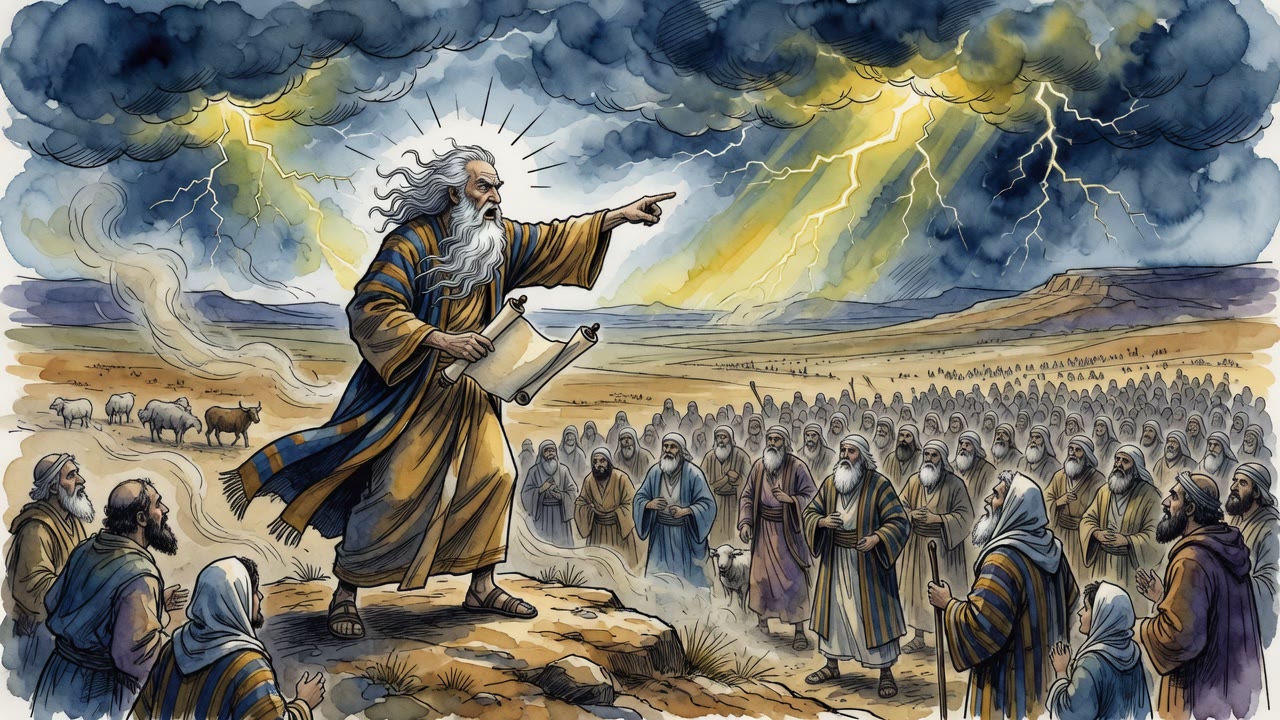
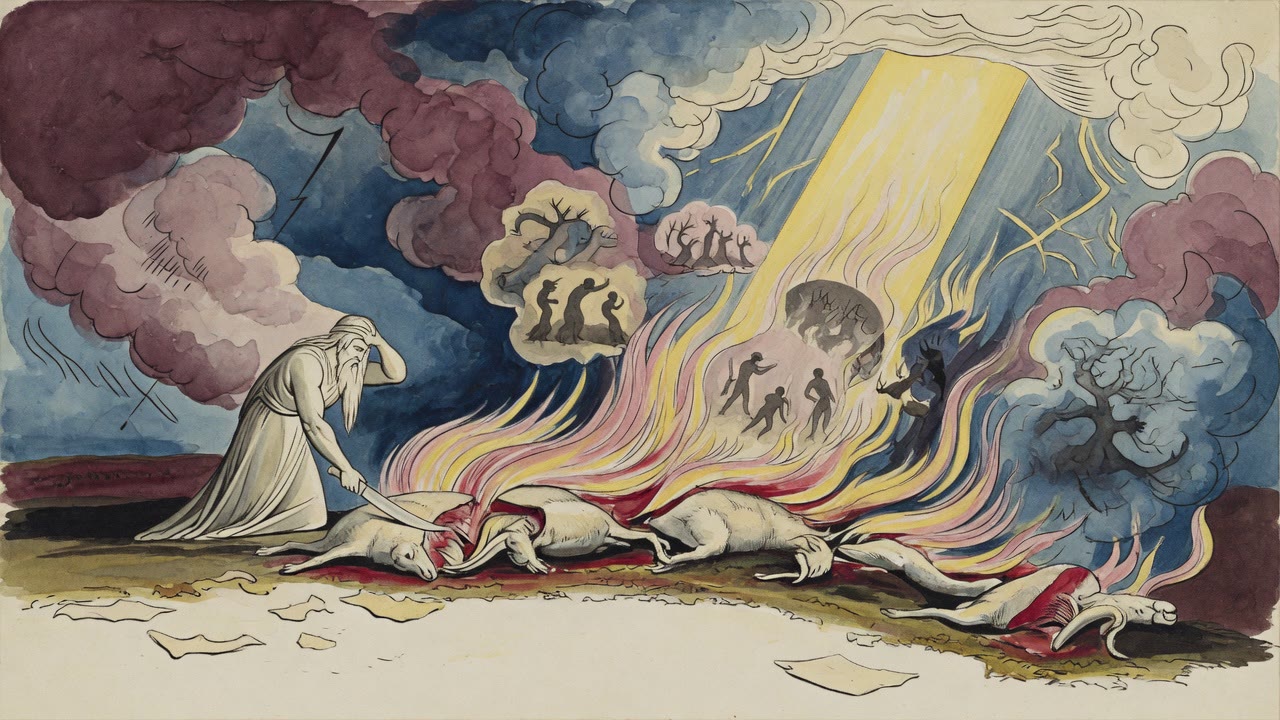
Moses stood on the last ridge and called the sky to hear him. He was about to die, and a human jury would not last long enough.
Table of Contents
Wind moved across the last ridge, and Moses did not call a scribe first. He called heaven. He called earth.
 Click for full size
"Hear, O heavens, and I shall speak" (Deuteronomy 32:1).
Sky and soil took the oath as witnesses to a covenant that would outlive his mouth. The people shifted in their sandals. Courts usually need human juries that can be bribed or bored. This one needed the world itself, which has a longer memory than any elder.
Heaven Takes the Oath
He was not decorating a poem for a funeral. He was seating a permanent bench. If Israel broke faith, heaven and earth would still be present to say what they heard on that ridge. No generation would get to claim the elements had not been informed.
Moses' voice went thin in the open air. He was close to dying, and he knew it. Across the Jordan the land waited, a country he would see and not enter. He could not walk the people in. He could seat what would still be sitting when their grandchildren tested the word.
Then he widened the summons until even weather stood under the same charge.
Four Winds on the Ridge
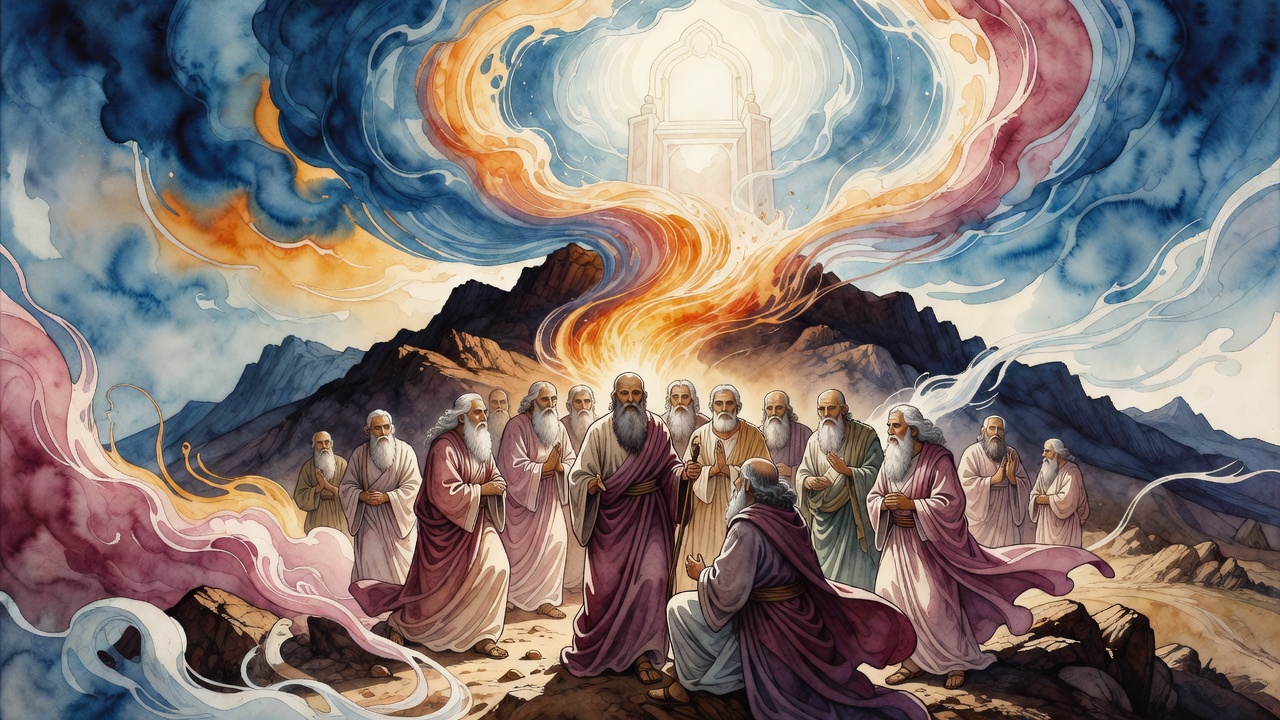
West wind first, back of the world, rain of blessing, the direction of turning and return. North wind next, dew that slips in quiet and wakes the field without theater. South wind with its danger of blast and mildew when the gift goes wrong and becomes curse. East wind with its own sharp errand across dry ground.
Moses called them as he called heaven and earth, because the word of God falls like rain and like dew, and weather itself can testify when speech has been kept or wasted (Deuteronomy 32:2).
Every direction that could touch a field was now a witness. Hiding from this covenant would mean hiding from wind, which no tent does perfectly. The people felt air move across their faces and understood, without a lecture, that the lawsuit of faithfulness would be filed in a court larger than any city gate.
A child pulled his cloak tighter. An old man turned his cheek into the west wind as if to let it hear him too.
Isaiah Calls the Same Jury
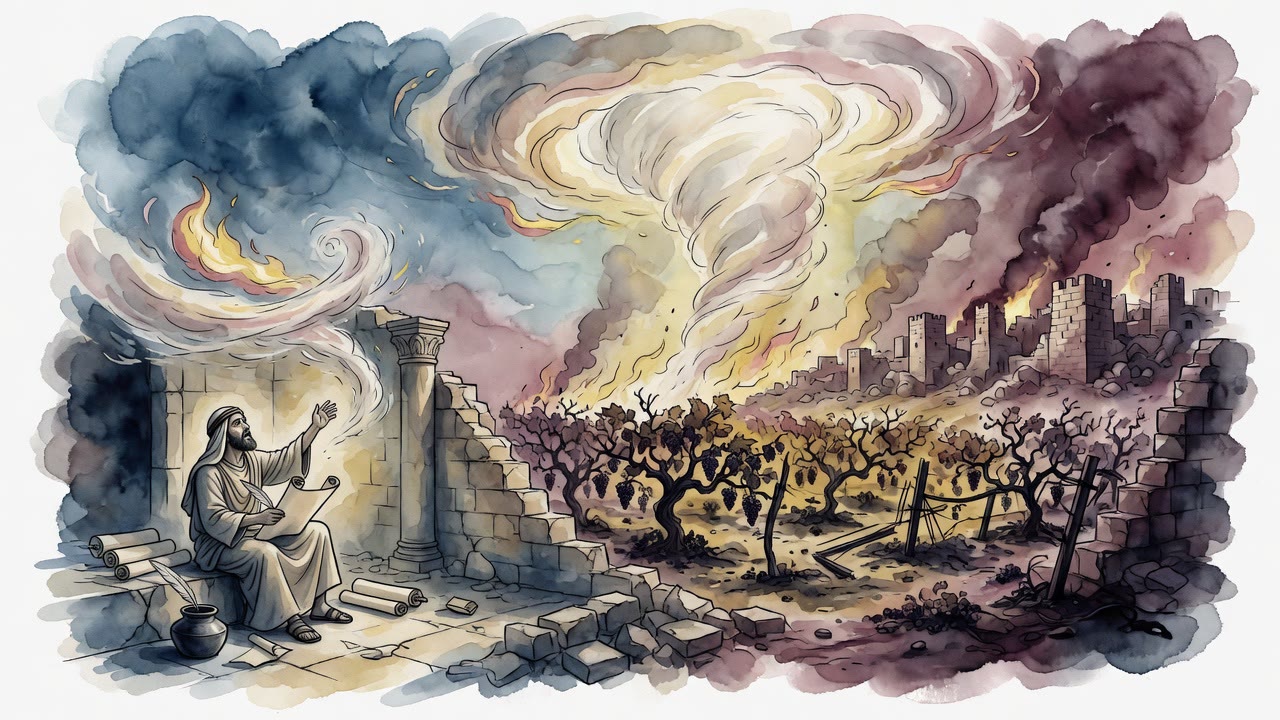
Generations later Isaiah stood in a different century and said, "Hear, O heavens, and give ear, O earth, for the Lord has spoken" (Isaiah 1:2). He was not inventing a courtroom. He was recalling witnesses who had never been released.
Heaven and earth answered again, older now, still under oath. The charge had grown. Blood on hands. Worship bent toward other names. Orphans ignored in the same streets where festivals made noise. The jury was the same jury. No generation gets a fresh set of dumb elements that never heard the first speech.
Isaiah's mouth burned with a summons written before he was born. The words felt new in the city and ancient in the air. He did not start the chain. He took up a word God had already seated in the world through Moses.
Jeremiah Speaks Twice
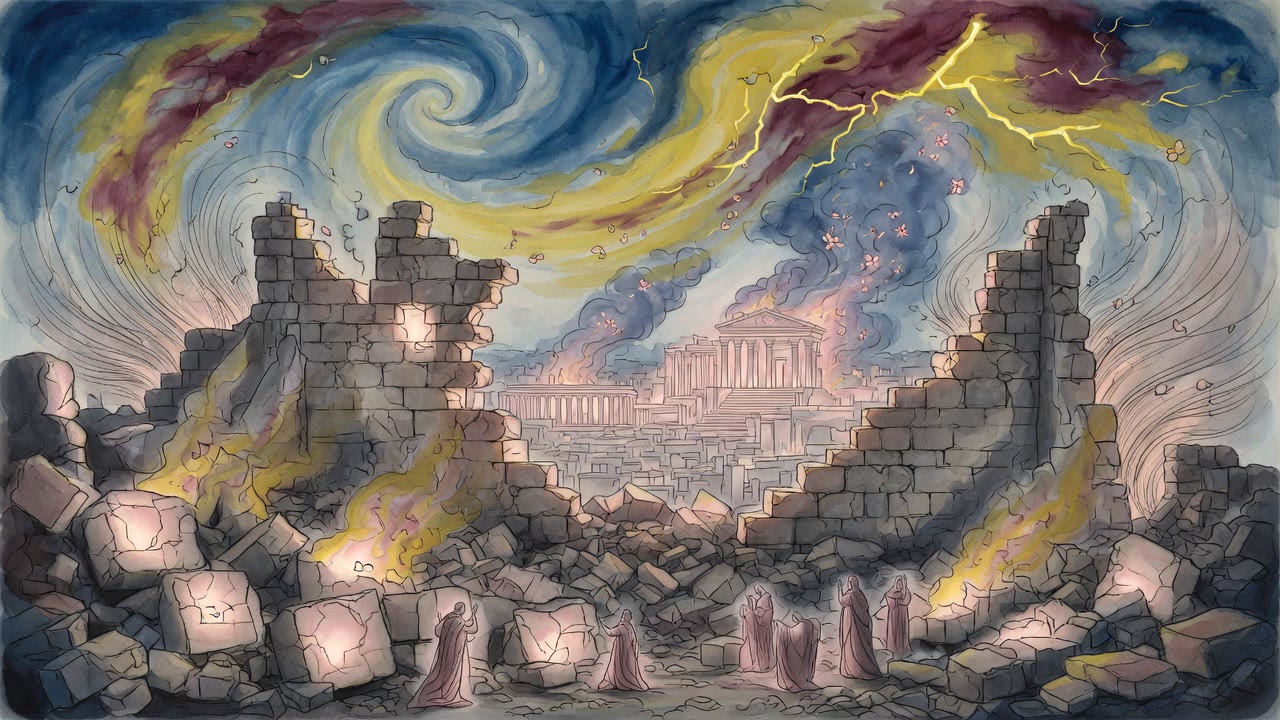
Jeremiah inherited the same long court and had to speak both ways without becoming two men. First, words that sounded like consolation for Babylon's rise. Nevuchadnezzar named servant, lands given into his hand, even beasts of the field assigned to him (Jeremiah 27:6). The witness-world watched Israel hear that hard permission. An enemy can be a tool. The tool is still an enemy. The permission is still temporary.
Then the prophet reversed into punishment. Babylon would sink and not rise from the evil brought upon her (Jeremiah 51:64). Same mouth. Same God. Two sentences for two moments, because a permanent court can try more than one defendant across time.
Moses on the ridge could not have named Babylon. He seated the bench that would still be sitting when Babylon needed both a loan of power and a final drowning. Jeremiah's throat hurt from the turn. He spoke the second sentence anyway.
After Moses Is Buried
When Moses' authority slid toward Joshua, song remained. Leaders change. The witnesses do not retire. Heaven, earth, and the four winds kept their places after the man who summoned them was buried across the Jordan, eyes still open on a land he was not allowed to enter.
Joshua stepped into command with the song still vibrating in the air. He could not re-summon the elements as Moses had. He did not need to. They were already seated. His job was to walk the people under a sky that had taken an oath and would not pretend forgetfulness when the next generation tested it.
Dust settled on the ridge. Wind kept moving. The first voice still held the gavel inside every later echo.
← All myths