5 min read

Jeremiah Bought a Field While Babylon Was at the Gates

Imprisoned for predicting the city's fall, a prophet was commanded to purchase land in a city already surrounded by the army that would destroy it.

Curated by Arthur · Told by Maggid ·
Table of Contents
  1. Why Jeremiah Was in Prison
  2. Hanamel Tried Something Else First
  3. The Logic of the Clay Jar
  4. What Jeremiah Was Born For

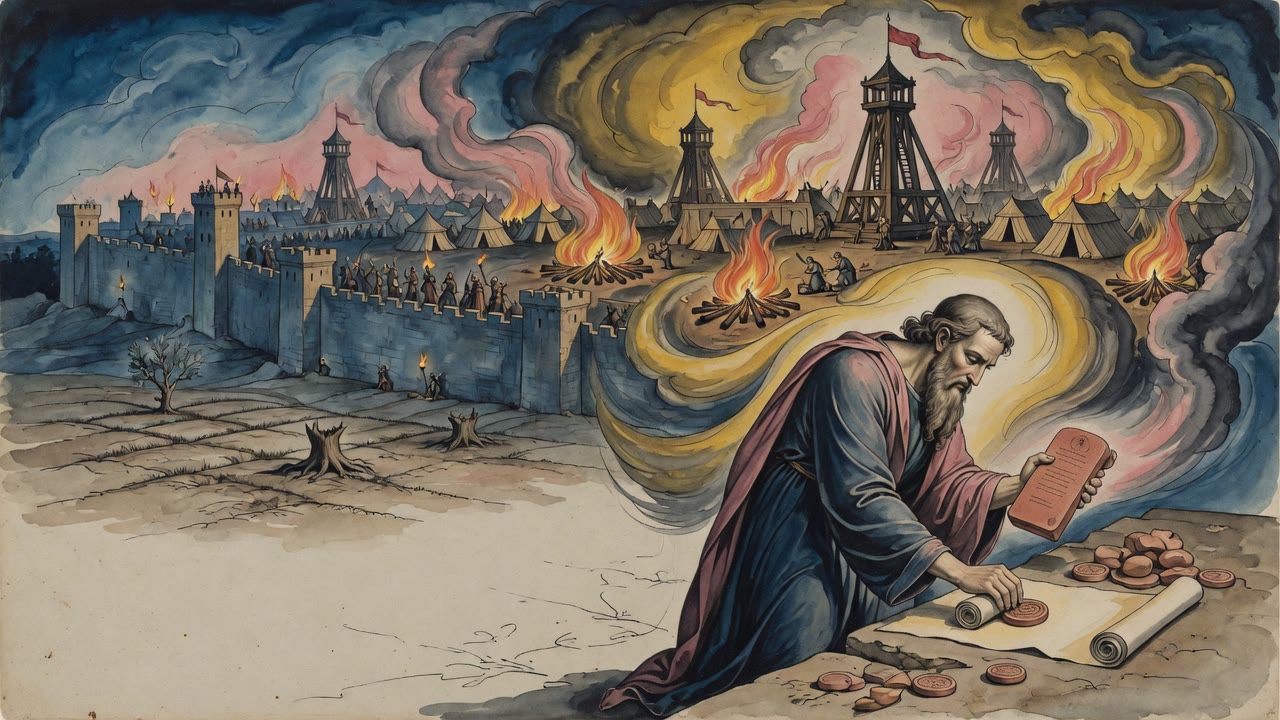
The city was surrounded. Babylonian siege ramps were going up outside the walls. Jerusalem had perhaps months left. The prophet who had been saying this for decades was confined to the court of the guard by the king who was unhappy hearing it. And God chose this moment to tell Jeremiah to buy real estate.

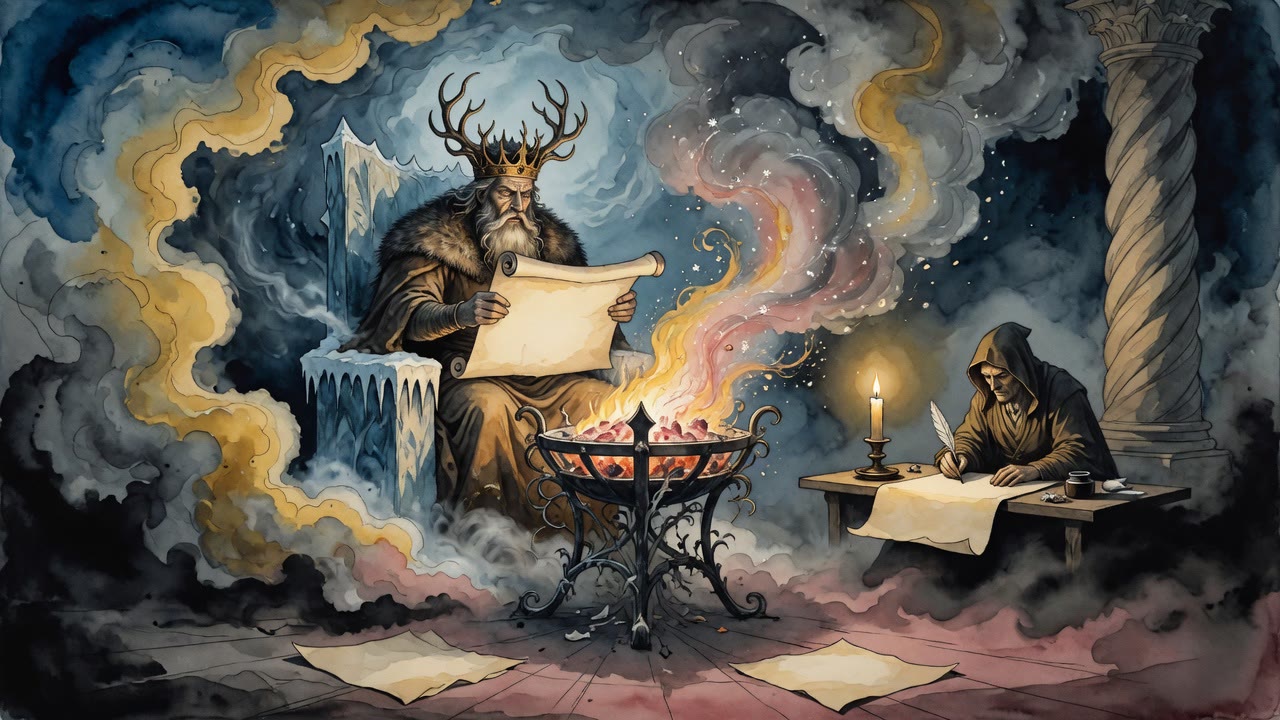
His cousin Hanamel showed up in the prison courtyard, just as God had predicted, offering to sell a field in Anatoth. Jeremiah bought it. He weighed out seventeen shekels of silver, wrote out the deed, sealed it, called witnesses, and had the document stored in a clay jar with instructions that it should last a long time. Then, with the deed in hand and the walls shaking, he turned to God and essentially asked: you do understand what is happening here, right?

Why Jeremiah Was in Prison

He had been saying the same thing for decades. Stop fighting. Surrender. Go into exile. Survive. The city will fall. The king who fights Babylon will be carried off. He had said it through the reigns of multiple kings and through multiple sieges and through every diplomatic initiative that ended in the same place. The king had imprisoned him for it.

The midrash noted that Jeremiah's situation was unique among the prophets. Isaiah prophesied destruction but died before it happened. Ezekiel prophesied it from Babylon, already in exile, surrounded by the people whose fate he was describing. Jeremiah alone prophesied the destruction of Jerusalem from inside Jerusalem while it was being destroyed, from a prison in the city, watching through whatever light his cell allowed.

Hanamel Tried Something Else First

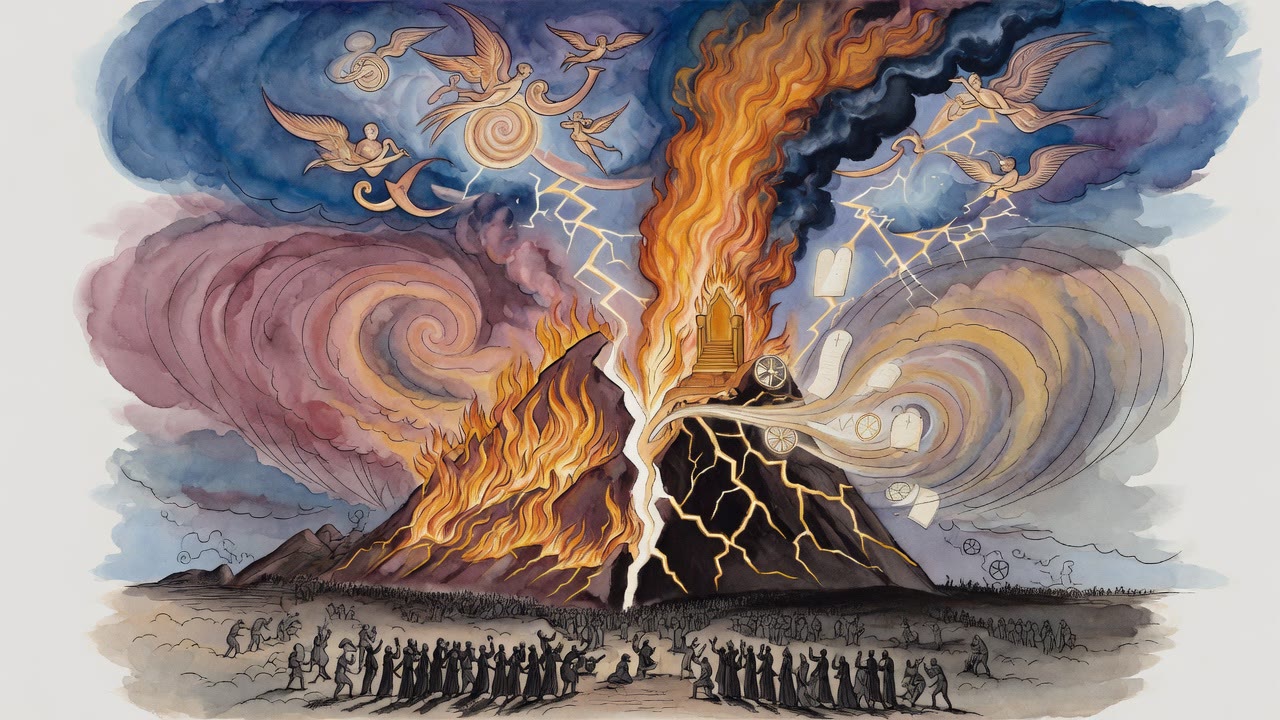
One tradition adds a dimension to Hanamel that the book of Jeremiah does not contain. Hanamel was not merely a relative selling family land under financial pressure. Before coming to the prophet with the deed, he had tried to save the city himself. He had studied the mystical arts, and he summoned angels and stationed them on the walls of Jerusalem, armed and ready to drive the Chaldeans back. The Chaldeans saw the celestial defenders and retreated. It appeared to work. Then God told the angels to leave their posts, and the Chaldeans came back, and everything Hanamel had constructed dissolved. He went to find Jeremiah with the deed in his hand because his plan had failed and he had nothing left to offer except a field in a town that would soon be occupied territory.

The Logic of the Clay Jar

Jeremiah understood the purchase as a sign, but the sign was not for him. He was already committed to the position that Babylon would win and that surrender was the only rational response. The purchase was for everyone watching. The deed in the clay jar said: houses and fields and vineyards will again be bought in this land. The act of putting a real estate transaction into a waterproof container to survive the destruction that was currently in progress was not denial. It was the most aggressive form of prophecy available. You do not preserve a deed in a clay jar for land you expect to be worthless.

The law of redemption in Leviticus stood behind the whole episode. When your relative becomes poor and sells some of his property, his redeemer shall come. God was the ultimate redeemer, and the purchase of the field in Anatoth was a human enactment of that divine function. Israel was poor. The land was being lost. Someone had to step forward and pay for it anyway, not because the investment made sense, but because the act of buying said what could not be said in words while the siege ramps were being constructed: I believe this land will be inhabited again.

What Jeremiah Was Born For

The traditions said Jeremiah was one of four human beings Scripture calls formed by God. He entered the world already grieving. His first cry sounded like the cry of a grown man. He accused his own city before he could walk. He did not want the office. He told God that every prophet sent to Israel had been threatened or nearly killed. He called himself a youth, unable to speak. God sent him anyway, and Jeremiah spent his life being right about everything and paying for it in real time.

He outlived the city. He was present at the fall. He stayed while others were taken to Babylon. He eventually went to Egypt with a group that fled there despite his advice against it. The tradition placed him at the burial of the people he had warned. He stood over graves he had seen coming. The field in Anatoth was still in the clay jar somewhere, waiting for the land to be inhabited again.


← All myths

From the tradition

Sources

4 sources

The texts this telling draws on, in full. Open a card to read inline, or expand it for a wider, quieter read.

Legends of the Jews 10:23Legends of the Jews

Legends of the Jews turns to Trial of Hanamel.

Hanamel, the uncle of the prophet Jeremiah, wasn't content to sit idly by as the Chaldeans threatened the city. Oh no. He took matters into his own hands. According to Ginzberg's retelling in Legends of the Jews, Hanamel was determined. He was going to use his knowledge of the mystical arts to protect Jerusalem.

So, what did he do? He conjured angels! Not just any angels,. He armed them, stationed them on the city walls, ready to defend Jerusalem from the invading Chaldeans. Can you imagine the sight? A heavenly host standing guard!

For a moment, it worked! The Chaldeans, terrified by the sight of these celestial warriors, retreated. Victory seemed within reach.

But here’s where the story takes a heartbreaking turn. God, in His infinite wisdom (or perhaps, His inscrutable plan), intervened. in the story, God changed the names of the angels and recalled them to heaven. Poof! Just like that, Hanamel’s angelic army vanished.

Why would God do that? It's a question that echoes through the ages. Perhaps it was a test. Perhaps it was a decree that couldn't be avoided. Whatever the reason, Hanamel was back to square one.

But he didn’t give up. Not yet. He tried his hand at exorcisms, calling upon the angels by name. But even this failed. When he called the Angel of the Water, for instance, the Angel of Fire answered, bearing the water angel’s former name. It was as if the very fabric of reality was working against him. Imagine the frustration!

In a final, desperate act, Hanamel resorted to summoning the Prince of the World. This was serious stuff. This powerful being actually lifted Jerusalem high into the air. A breathtaking, almost unbelievable sight!

But alas, even this wasn't enough. God, in an act of finality, thrust the city back down. The enemy, no longer hindered, poured in. Jerusalem fell.

What are we to make of Hanamel’s efforts? Was he foolish to try and defy what seemed like destiny? Or was he a hero, willing to fight to the very end, even when the odds were stacked against him?

Perhaps the story of Hanamel isn't just about the fall of Jerusalem. Maybe it’s a reminder that even in the face of overwhelming odds, even when our best efforts seem to fail, there’s value in standing up for what we believe in. Even if the ending isn't the one we hoped for. It's a powerful, poignant image, isn't it?

Full source
Midrash Tanchuma, Behar 3Midrash Tanchuma

(Lev. 25:25:) ”When your relative becomes poor and sells some of his property, then his redeemer shall come.” Who is his redeemer? I am He, as stated (in Jer. 50:33-34), “The Children of Israel […] are oppressed […]. Their Redeemer is mighty, His name is the Lord of hosts […].” Seven names are given to the poor. And they are the following: crushed (dakh), poor ('ani), lowly (makh), dispossessed (rash), oppressed (tekhakhim), wretched (misken), and pauper (evyon). [(Lev. 25:25:) “When your relative becomes poor.”] This text is related (to Ps. 106:43), “Many times He delivered them, but they rebelled; so they became poor through their iniquity.” You find that in the days that the Judges judged, Israel served idols; so they were enslaved in the hands of the peoples of the world, as stated (in Jud. 3:7-8), “Then the Children of Israel did evil in the sight of the Lord…. So the anger of the Lord was kindled against Israel, and he delivered them into the hands of Cushan.” What did they do (according to vs. 9)? “The Children of Israel cried unto the Lord, and the Lord raised up a savior for the Children of Israel [to save them, i.e.,] Othniel ben Kenaz.” They immediately repented and were redeemed. So [it happened] another time, as stated (in Jud. 3:12), “Then the Children of Israel again did evil….” They immediately repented; so the Lord raised up a redeemer for them, Ehud ben Gera the Binyaminite; and they were redeemed at his hands. Then they served idols again and were sold into the hands of Sisera, as stated (in Jud. 4:3), “and he oppressed the Children of Israel with might twenty years.” What is the meaning of “with might?” With blasphemies and with curses, just as you say (in Mal. 3:13), “Your words have been mighty against me.” When they repented, He raised up Barak and Deborah as redeemers for them; and they were redeemed at their hands. Ergo (in Ps. 106:43), “Many times He delivered them…; so they became poor through their iniquity.” What is the meaning of “so they became poor through their iniquity?” That they became impoverished in the midst of the nations, as stated (in Jud. 6:6), “And Israel became very impoverished….” What is the meaning of “and Israel became impoverished?” R. Isaac and R. Levi differed. One said, “They were impoverished (rt. dll) from good works”; and the other said, “They did not have [enough] to bring even a poor person's (rt. dll) offering, as stated (in Lev. 14:21), ‘If, however, he is poor (rt. dll) and does not have the means.’” Ergo (in Ps. 106:43), “so they became poor through their iniquity,” as they had become impoverished (rt. dll). Another interpretation (of Ps. 106:43), “Many times He delivered them”: [These words] speak about people. When trouble comes to one [of them] and he repents, the Holy One, blessed be He, delivers him. So it is the first time and the second. [If he repents, that is preferable; but if not, the Holy One, blessed be He, brings trouble upon him. And you yourself know that the Holy One, blessed be He, tests Israel to know if they will repent. First, He brings punishments against the [other] nations, as stated (Zeph. 3:6-7) “I wiped out nations: Their corner towers are desolate… I thought that she would fear Me, would learn a lesson.” [If] they repented, that is preferable; but if not, He destroys their money, as stated (Hos 7:9), “Strangers have consumed his strength….” [If they] repented, that is preferable; but if not, the Holy One blessed be He, brings evil upon one of the cities of Israel, as stated (Is. 42:25), “it blazed upon them all about… it burned among them.” [If] they repented, that is preferable; but if not, what is written (in (Numbers 14:3)5)? “In this desert they will end, and there will they die.” And a person should not say, “The evil is not coming on my account.” He should know that he [too] will die, as stated (Amos 9:10), “All the sinners of My people shall perish [by the sword], who boast, ‘Never shall the evil overtake us or come near us.’” Come and see how difficult it is for the Holy One, blessed be He, to raise His hand against a human being. So what does He do to him? When he sins, He begins by raising His hand against his assets. From whom have you learned it? From Naomi, her sons, and Elimelech her husband, who was the head of [his] generation. When famine came, what did he do? He left the Land of Israel and went to the Land of Moab. Now the Holy One, blessed be He, was angry with him because he was prince (nasi) of [his] generation. The Holy One, blessed be He, said to him, “These have abandoned My children and left the Land of Israel a wilderness.” What is written there (in (Ruth 1:3))? “Then Naomi's husband Elimelech died,” but his sons were unable to learn from their father to return to the Land of Israel. And what did they do? (According to vs. 4) They also “took Moabite wives for themselves,” whom they neither immersed nor converted. (Ibid., cont.) “The name of the one was Orpah ('rph) and the name of the second was Ruth”: Orpah ('rph), because she turned her back ('rp) on her mother-in-law; Ruth, because she esteemed (r'th) the words of her mother-in-law. (ibid., cont.) “And they lived there about ten years.” All those ten years (in Moab) the Holy One, blessed be He, had been warning them, that they might repent and return to the Land of Israel. When He saw that they did not repent, he began to raise His hand against their camels and against their cattle. When He saw that they did not repent (literally, return in repentance), immediately (in vs. 5), “Both of them, Mahlon and Chilion, also died.” Thus [you may infer] that it is difficult for the Holy One, blessed be He, to raise His hand against [a human being]. So what does He do to them? He deprives them of their assets, and they sell them. When someone sins, what does the Holy One, blessed be He, do to him first? He brings poverty upon him, so that he sells his field. If he repents, then fine; but if not he sells his house. If he repents, then fine; but if not he sells himself. How is this shown? So is it written (in Lev. 25:25), “When your relative becomes poor.” If he repents, then fine; but if not, see what is written in the second section; (in Lev. 25:29), “And when someone sells a dwelling house.” If he repents, then fine; but if not, (in Lev. 25:39), “When your relative becomes poor and he is sold to you.” Why all this? Because they became poor through [their] iniquities. (Lev. 25:25:) “Then his redeemer shall come.” R. Simeon ben Johay said, “Elimelech, Salmon, So-and-So, and Naomi's father were all descendants of Nahshon ben Amminadab; and Elimelech, Mahlon, and Chilion were leaders of the generation.” So for what reason were they punished? Because they went abroad from the Land of Israel. Thus it is stated (in (Ruth 1:1)9), “the whole city was excited over them, [and the women said, ‘Is this Naomi?’]” What is the meaning of, “Is this (Hazot) Naomi?” You saw (hazitem) Naomi when she went abroad from the Land of Israel. What has happened to her? (Lev. 25:25:) “Then his redeemer shall come, the one most closely related (qarov).” This is Boaz. When? When Naomi sold the field, as stated (in Ruth 4:3), “the parcel of land which belonged to our relative, [Elimelech].” (Lev. 25:25:) “Then his redeemer shall come, the one most closely related to him.” This is Boaz, since it is stated (in (Ruth 2:2)0), “The man is our relative (qarov), [he is one of our redeeming kin (go'el)].” At that time Ruth went to Boaz. Her mother-in-law said to her (in Ruth 3:2), “see, he is winnowing barley on the threshing floor tonight.” [If] he was a prince (nasi), would he have been winnowing on a threshing floor? It is simply because his generation was dissolute in matters of theft, and [so] he went out to guard his threshing floor. She said to her (in vs. 3), “You are to wash and anoint yourself.” Then after that (ibid), “and go down to the threshing floor.” "And I shall go down" is the actual written text (ketiv)]. What is the meaning of "and I shall go down?" She said to her, “My merit will go down with you.” Hence it is written, "And I shall go down." But she did not do as her mother-in-law had told her. What did Ruth do? [Only] after she went down to the threshing floor, she did what she was told, as stated (in vs. 6), “She went down to the threshing floor and did just as her mother-in-law had commanded her.” Why? It is simply that she said, “The generation was dissolute in sexual matters. What if they see me made up and say, ‘Perhaps she is a harlot?’” Therefore, “She went down to the threshing floor and” afterwards “she did just as her mother-in-law had commanded her.” (Vs. 7:) Then, when Boaz had eaten and drunk, and his heart was merry.” What is the meaning of “and his heart was merry?” That he was occupied with words of the Torah. Thus it is stated (Prov. 4:2), “As a good teaching…,” and it is [also] written (about wisdom in Prov. 9:5), “Come and eat of my bread.” (Ruth 3:7, cont.) “And when he came to lie down beside the grain pile, then she came in secret.” What is the meaning of, “in secret (lt; rt. lwt)?” [It is] just as you say (in I Sam. 21:10), “here it is wrapped (rt. lwt) in a mantle.” (Ruth 3:8:) “Now it came to pass in the middle of the night that the man was startled. So he turned aside, [and here was a woman lying at his feet].” What is the meaning of, “turned aside (rt. lpt)?” [It is] just as you say (in Jud. 16:29), “And Samson embraced (rt. lpt) the two middle pillars.” That righteous man began to yell. [Fear] embraced him. (Ruth 3:9:) Then he said, “Who are you?” And she said, “I am your handmaid Ruth.” He said to her, “What have you come here to do?” She said to him, “To fulfill the Torah (in Lev. 25:25), ‘When your relative becomes poor [… then his redeemer shall come].’ Arise and fulfill the Torah.” He said to her, “Since you have come to fulfill the Torah, (Ruth 3:13:) ‘Spend the night; then it shall come to pass in the morning that, if he will redeem you, good (tov)’”; for he had a relative older than he, whose name was Tov. R. Hanina said, “She said to him, ‘And are you dismissing me with words?’” He said to her (ibid., cont.), “’As the Lord lives,’ I am not dismissing you with words.” (Ruth 4:1:) “Then Boaz went up to the gate and sat down there, and behold, the redeemer of whom Boaz had spoken was passing by.” He said to him, “Sit down, and we shall look into the Torah; what is written there? Is it not written (in Lev. 25:25), ‘When your relative becomes poor and sells some of his property, [then his redeemer shall come, the one most closely related to him, and redeem…]’” Boaz said to Tov (in (Ruth 4:3)–4), “’Naomi is selling the parcel of land which belonged to our relative Elimelech […]. And I thought I should disclose it to you, saying, ‘Buy it,’” since you are a senior redeemer than I [and have the right] to redeem it. [Hence] (as in vs. 4, cont.,) “If you will redeem it, redeem it.” (Vs. 6:) “Then the redeemer said, ‘Acquire it for yourself.’” At that time Boaz redeemed what Naomi had sold. Now from where did Boaz learn [what to do]? From this section (in Lev. 25:25), “When your relative becomes poor and sells [some of his property, then his redeemer shall come, the one most closely related to him, and redeem…].” And who else was [like] this? Jeremiah was [like] this. At the time that the Holy One, blessed be He, said (in Jeremiah 32:7), “Behold Hanamel the son of Shalum your uncle is coming to you…,” [Jeremiah said] (in Jeremiah 32:8), “And just as the Lord had said, my cousin Hanamel came to me in the prison compound.” Immediately, Jeremiah fulfilled this section [of the Torah], as stated (in Jeremiah 32:9), “And I bought the field.” Now from where did he learn [what to do]? From this section (in Lev. 25:25), “When your relative becomes poor and sells some of his property, [then his redeemer shall come, the one most closely related to him, and redeem…].”

Full source
Legends of the Jews 10:15Legends of the Jews

The prophet Jeremiah certainly knew. Even as tragedy unfolded around him, he refused to sugarcoat the truth. Imagine him, standing before the king, knowing that his words could seal his own fate. When the king asked if he had a message from God, Jeremiah didn't flinch. "Yes," he said, "the king of Babylonia will carry thee off into exile." He held back the grimmest details, perhaps out of mercy, perhaps out of strategy.

Jeremiah didn't just deliver prophecies of doom. He also pleaded for his own freedom. He pointed out to King Zedekiah, whose very name means "just man," that even wicked people usually had some pretense for revenge! Surely, Zedekiah could be more just than they were. And the king listened, at least for a time, and released Jeremiah from prison.

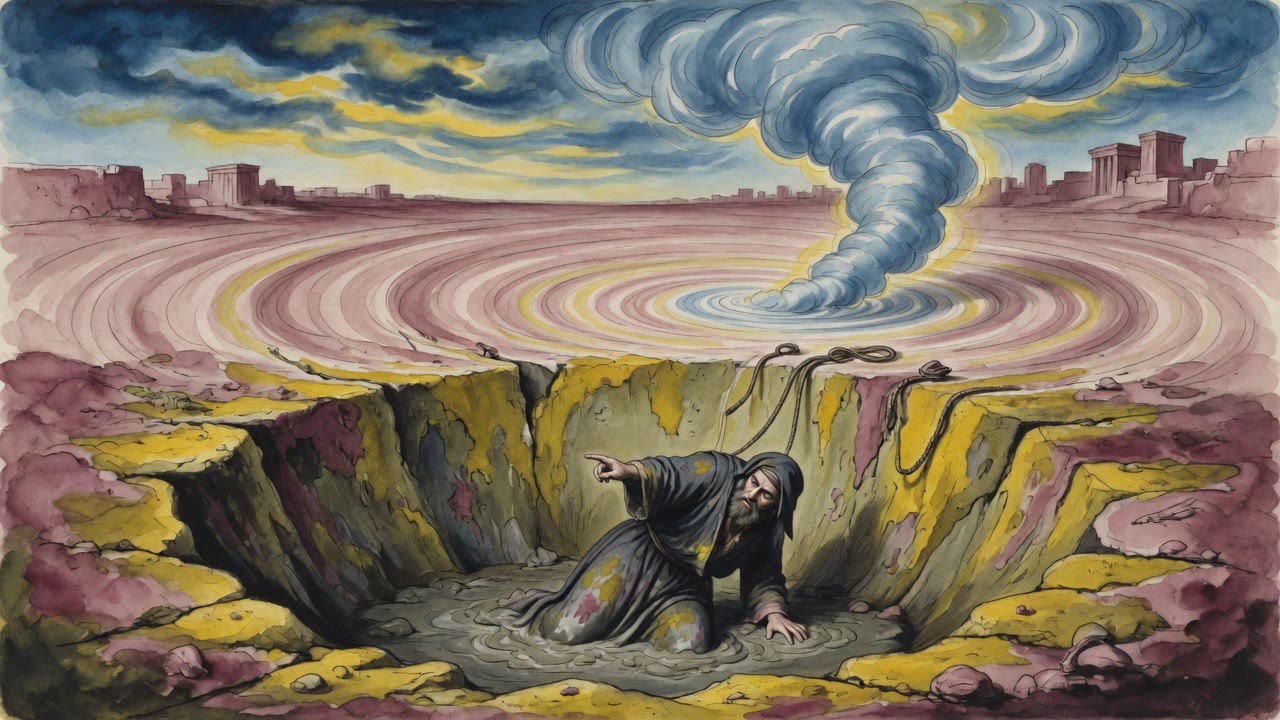
Freedom was fleeting. Jeremiah, true to his calling, continued to urge the people to surrender, likely seeing it as the only path to survival. This, understandably, infuriated the nobility. They seized him and threw him into a bor, a lime pit filled with water, hoping he would drown.

Can you imagine the horror? Trapped in a pit, sinking in lime and water, abandoned by those in power. But then, a miracle occurred. The water receded, and the mud rose, supporting Jeremiah above the deadly liquid.

And then came Ebed-melech. The Talmud (Shabbat 151b) identifies him as none other than Baruch ben Neriah, Jeremiah's faithful scribe and companion. Legends call him a "white raven," a rare and righteous man in a corrupt court. He understood that Jeremiah's fate was intertwined with the fate of Jerusalem. He boldly approached the king, declaring, "Know, if Jeremiah perishes in the lime pit, Jerusalem will surely be captured."

The king, perhaps swayed by fear or a flicker of conscience, granted Ebed-melech permission to rescue Jeremiah. Ebed-melech went to the pit and called out, "O my lord Jeremiah!" But there was no answer. Jeremiah, remembering his tormentors, feared it was just another cruel taunt. He'd endured so much mockery, even from his former jailer Jonathan, who would sneer, "Do not rest thy head on the mud, and take a little sleep, Jeremiah." To such cruelty, Jeremiah refused to respond.

As the story goes, according to the Yalkut Shimoni (Remez 327), Jeremiah thought Jonathan was back to his old tricks. Thinking Jeremiah was dead, Ebed-melech began to lament and tear his clothes. It was then that Jeremiah, realizing the voice was that of a friend, asked, "Who is it that is calling my name and weeps therewith?" He needed assurance, a sign of genuine compassion. And Ebed-melech gave it, confirming that he had come to save him from his perilous position.

What does this story tell us? Perhaps it highlights the importance of unwavering faith, even in the face of unimaginable adversity. Or maybe it's a evidence of the power of friendship and the courage of those who dare to stand up for what's right, even when it's unpopular. Maybe it’s about learning to discern the voices of cruelty from the voices of compassion, a lesson that remains relevant today. Whatever your takeaway, Jeremiah's story, rescued from the depths of despair by a loyal friend, resonates across the ages.

Full source
Pesikta Rabbati 26:1Pesikta Rabbati

And it happened when the flock went corrupt and would not listen to the words of its Master. It hated the shepherds of its lambs and its good providers, and it drew far away from them. The flock means the house of Israel, who are compared to sheep, as it says, "And you My flock, the flock of My pasture" (Ezekiel 34:31). It hated the shepherds of its lambs and appointed false shepherds over itself. Its heart too wandered away from its Creator and turned toward sin. Jeremiah the prophet prophesied about this by the Holy Spirit.

Jeremiah was one of four human beings called "formed." The first was Adam, as it is written, "And the LORD God formed man" (Genesis 2:7). The second was Jacob, as it is written of him, "Thus says the LORD, your Creator, O Jacob, and your Former, O Israel" (Isaiah 43:1). The third was Isaiah, as it is written, "And now says the LORD, who formed me from the womb" (Isaiah 49:5). The fourth was Jeremiah, as it is written, "Before I formed you in the belly I knew you" (Jeremiah 1:5). These are the ones about whom Scripture writes formation.

When Jeremiah came out into the world, he cried a great cry like a young man and said, "My inward parts, my inward parts. I writhe. The walls of my heart. My limbs shake over me. Breaking upon breaking. I am the one who has broken the whole earth." From where do we know Jeremiah said this? For it is written, "My inward parts, my inward parts. I writhe. The walls of my heart. My heart moans within me" (Jeremiah 4:19). He opened his mouth and rebuked his mother. He said to her, "My mother, my mother, you did not conceive me in the way of women, and you did not bear me in the way of women who give birth. Perhaps your ways were like the ways of all women suspected of adultery, and you set your eyes on another after your husband. Why do you not drink the bitter waters? You have made your forehead brazen." From where do we know Jeremiah said this? For it is written, "You had the forehead of a harlot" (Jeremiah 3:3).

When his mother heard these words, she said, "What has this child seen, that he should speak so about me? He opened his mouth before his time." He said to her, "Not about you, my mother, do I say this. Not about you, my mother, do I prophesy. I say it about Zion and Jerusalem. She adorns her daughters, clothes them in scarlet, and crowns them with gold, but the destroyers will come and despoil them. 'And you, O desolate one, what will you do, though you dress in scarlet and adorn yourself with ornaments of gold?'" (Jeremiah 4:30).

The Holy One, blessed be He, said to him, "Before I formed you in the belly, before I fashioned you in your mother's womb, I appointed you to prophesy over My people." Jeremiah answered before the Holy One, blessed be He, "Master of the Universe, I cannot prophesy over them. Which prophet ever went out to them without their seeking to kill him? You raised up Moses and Aaron for them, and did they not seek to stone them, as it says, 'All the congregation said to stone them with stones' (Numbers 14:10)? You raised up Elijah, the man of hair, and they mocked and laughed at him. You raised up Elisha, and they said to him, 'Go up, baldhead, go up, baldhead' (II Kings 2:23). I cannot go out by the hand of Israel. 'Behold, I do not know how to speak, for I am a youth'" (Jeremiah 1:6).

The Holy One, blessed be He, said to him, "It is precisely the youth whom I love, as it says, 'When Israel was a youth, I loved him' (Hosea 11:1), one who has not tasted the taste of sin. When I redeemed Israel from Egypt, I called them a youth, as it is written, 'When Israel was a youth, I loved him, and out of Egypt I called My son' (Hosea 11:1). In the love of youth I remember the congregation of Israel, as it is written, 'I remember for you the kindness of your youth' (Jeremiah 2:2). You too must not say, 'I am a youth,' for 'to all to whom I send you, you shall go'" (Jeremiah 1:7).

"Take this cup of wrath and make the nations drink." Jeremiah took the cup and said, "Whom shall I make drink first? Which province shall drink?" He said to him, "Make Jerusalem and the cities of Judah drink first, for they are the head of all the kingdoms." When Jeremiah heard this, he began to open his mouth and curse his day, as it is written, "Cursed be the day on which I was born" (Jeremiah 20:14). He was one of two who cursed the day on which they were born, Job and Jeremiah. Job said, "Let the day perish on which I was born" (Job 3:3). Jeremiah said, "Cursed be the day on which I was born" (Jeremiah 20:14).

Jeremiah said, "I will tell you what I resemble. I resemble a High Priest whose lot came up to make a woman drink the bitter waters. They brought the woman near him. He uncovered her head and loosened her hair. He took the cup to make her drink, looked at her, and saw that she was his mother. He began to cry out, 'Woe is me, my mother. I used to labor to honor you, and now I disgrace you.' So Jeremiah said, 'Woe is me over you, my mother Zion. I thought I would prophesy good things and consolations over you, but now I prophesy words of calamity over you.'"

Jeremiah was one of three prophets who prophesied in that generation. Jeremiah prophesied in the markets, Zephaniah inside the synagogues, and Huldah among the women. Jeremiah prophesied and said, "If you turn back from your evil deeds and listen to my words, the Holy One, blessed be He, will raise you over all kingdoms. If you do not listen to my words, He will hand His house over to the enemies, and they will do with it according to their desire." But they did not incline their ear, "and they walked in counsels, in the stubbornness of their heart" (Jeremiah 7:24).

When Nebuchadnezzar came to exile them in the first exile, the exile of Jeconiah, his mercy was stirred over them. He said, "Do you have someone from the seed of Josiah? I will make him king over you." Mattaniah son of Josiah was there, from the seed of Josiah. Nebuchadnezzar said to him, "What is your name?" Mattaniah thought in his heart, "I will bring out my name as Zedekiah, so righteous people will come from me." He did not know that in his days the Holy One, blessed be He, would make the judgment righteous over the Temple, which He burned with fire. Nebuchadnezzar made him king over Jerusalem and said to him, "Swear to me that you will not rebel against me." Zedekiah said, "I swear by my soul." Nebuchadnezzar said, "I will not make you swear except by the Torah that was given on Mount Sinai." What did Nebuchadnezzar do? He brought a Torah scroll, placed it by Zedekiah's knees, and made him swear that he would not rebel against him. Nebuchadnezzar had not even had time to return to his land before Zedekiah rebelled against him.

Thus Zedekiah turned back and rebelled against the Holy One, blessed be He, and his officers and servants were with him. They refused the words of Jeremiah, as it is written, "Neither he, nor his servants, nor the people of the land listened to the words of the LORD, which He spoke by the hand of Jeremiah the prophet" (Jeremiah 37:2). The king sent Jehucal son of Shelemiah and Zephaniah son of Maaseiah the priest to Jeremiah, saying, "Seek, please, on our behalf. The Chaldean forces surround us." At that hour the army of Egypt came up to help Israel. The Chaldeans who were besieging Jerusalem heard and fled from before them. Jeremiah answered and said to them, "Thus says the LORD, the God of Israel: Thus shall you say to Zedekiah king of Judah, who sent you to me. The army of Egypt that came up to help you will turn back and go to Egypt. The Chaldeans will return, capture this city, and burn it with fire. Do not say to yourselves that they will surely go away from us, for they will not go away. Even if you struck down the whole army of the Chaldeans who fight against you, and only wounded men remained among them, each man in his tent, they would rise from their place and burn Jerusalem" (Jeremiah 37:7-10).

When the army of the Chaldeans withdrew because of Pharaoh's army, Jeremiah went out from Jerusalem to go to Anathoth and divide his portion with his brothers the priests. He was leaving by the Benjamin Gate. There was a man appointed over those who entered and left, Irijah son of Shelemiah son of Hananiah son of Azur, the false prophet who had misled the inhabitants of Jerusalem by saying, "The vessels of the house of the LORD will be returned from Babylon" (Jeremiah 27:16). "Do not fear." When Jeremiah had heard Hananiah say this, he said to him, "Amen. May your words stand and mine be nullified. I gain and you lose, for I am a priest who eats from the Temple, while you are a Gibeonite, a woodchopper and water drawer for the altar. Before you prophesy about the house of the Holy One, blessed be He, prophesy about yourself: this year you will die, and you will be buried in the second year."

When Hananiah was about to die, he called Shelemiah his son and said to him, "Know that Jeremiah rose and cursed me. See how you can find a pretext against Jeremiah and collect payment from him." Shelemiah kept looking for a pretext and did not find one. When he too was about to die, he called his son Irijah and said to him, "See how you can find a pretext against Jeremiah and collect payment from him for what he did to my father." What did Irijah do? He saw Jeremiah leaving by the Benjamin Gate. He went and seized him and said to him, "You are going out to the Chaldeans to surrender to them." Jeremiah said to him, "You speak falsely. I am going to take my portion with the priests." Irijah seized him and brought him out to the officials. He said to them, "This man has done us much harm, and I found him going out to the Chaldeans to surrender to them." The officials became angry with him, struck him, and put him in prison, in the house of Jonathan the scribe. Jonathan mocked him and said, "See the honor your beloved has given you. Fine is the prison house in which you sit," adding an obscure taunt preserved in the edition.

At that hour Zedekiah sent and brought Jeremiah to him. He said, "Is there a word from the LORD?" Jeremiah said to him, "There is a word: the king of Babylon is destined to exile you." Zedekiah's face changed, and he glowered before Jeremiah. Jeremiah feared that Zedekiah might kill him, so he turned the matter to another place and said to him, "We have something to learn from the wicked: they are not punished until a pretext is found against them. How much more so the righteous. And besides, your name is Zedekiah, for you are a righteous man. What have I sinned against this people, that they have put me in prison? Where are those who prophesied to them and said, 'The king of Babylon will not come up against Jerusalem'? I beg you. I arrange my prayer before you. Do not return me to the house of Jonathan" (Jeremiah 37:20). Zedekiah commanded concerning Jeremiah, and they put him in the court of the guard. They gave him bread each day until the bread was gone from Jerusalem, and Jeremiah stayed in the court of the guard.

Then Shephatiah son of Mattan, Gedaliah son of Pashhur, Jehucal son of Shelemiah, and Pashhur son of Malchiah heard the words Jeremiah spoke to all the people, saying, "One who stays in this city will die by sword, by famine, and by pestilence" (Jeremiah 38:1-2). At that hour they came to King Zedekiah and said to him, "This man prophesies many evils against us. He does not seek the welfare of this place." Zedekiah answered them, "He is in your hands. Do with him as seems good in your eyes." They took Jeremiah and threw him into the pit of Malchiah the king's son. The pit was full of water. The Holy One, blessed be He, made miracles for him: the water went down below and the mud came up above, and Jeremiah sank into the mud. Jonathan the scribe insulted him and taunted him, saying, "Lower your head onto the mud. Perhaps sleep will come to your eyes."

"Ebed-melech the Cushite heard" (Jeremiah 38:7). He was one of four people called Cushites: Zipporah, Israel, Saul, and Ebed-melech the Cushite. Why was he called Cushite? Just as a Cushite is recognizable by his skin, so Ebed-melech was recognizable by his good deeds inside Zedekiah's palace. He came to Zedekiah and said to him, "Know that if Jeremiah dies inside the pit, the city will be handed over to the enemies." Zedekiah said to him, "Take three men with you and bring Jeremiah up from the pit." They raised him with difficulty. Ebed-melech the Cushite entered the king's house, took worn rags and worn cloths from there, went and stood over the pit, and called out, "My lord Jeremiah, my lord Jeremiah." There was no voice and no answer. He put his hands into his garments and tore them, weeping as he went. Jeremiah heard him but was afraid that it might be Jonathan the wicked scribe. When he heard his voice weeping, he said, "Who is calling me and weeping?" Ebed-melech said to him, "It is Ebed-melech the Cushite. By your life, I thought you were dead. Here is the rope. Put the rags and cloths under the joints of your arms." They brought Jeremiah up from the pit.

Jeremiah remained in the court of the guard. At that time Nebuchadnezzar gathered his camps and came out against Jerusalem. When he reached Riblah, he stayed there, for he was afraid that God might do to him what He had done to Sennacherib. At that hour he called Nebuzaradan and made him head over all the armies. He said to him, "Go, conquer Jerusalem." Nebuzaradan went and besieged Jerusalem from the ninth year of Zedekiah's reign until the eleventh year of his reign. They could not capture Jerusalem, for their decree had not been sealed until then. But when the end came for Zion and Jerusalem to be destroyed, an end had come for every human being, an end for all the living. On the seventeenth of Tammuz, five calamities happened to Israel: the tablets were broken, the daily offering ceased, the city was breached, Apostomos burned the Torah, and an idol was set up in the Sanctuary. But on the ninth of Av, the Temple was burned.

"The famine was strong in the city" (Jeremiah 52:6). The daughters of Zion joined together in the marketplaces and looked at one another. One would say to her companion, "Why did you go out to the marketplace? You never went out to the marketplace in your life." The other would answer, "Can I hide it from you? The blow of famine is hard. I cannot endure it." They would hold on to one another and return, searching through the city, but they found nothing. They would embrace the pillars and die upon them at every corner. Their children, who had been nursing from them, went on their hands and knees. Each child recognized his mother, climbed up, took her breast, and put it in his mouth, thinking perhaps he could draw milk. He drew nothing. His life was convulsed, and he died in his mother's lap, fulfilling what is said, "as their soul was poured out into their mothers' bosom" (Lamentations 2:12).

At that hour the Omnipresent said to Jeremiah, "Rise. Go to Anathoth and buy the field from Hanamel your uncle" (Jeremiah 32:7). At that hour Jeremiah thought in his heart, "Perhaps the Omnipresent is giving the city back, and they will buy and sell in it, since the Omnipresent tells me, 'Go, buy the field for yourself.'" Once Jeremiah left Jerusalem, an angel descended from heaven, set his feet on the walls of Jerusalem, and breached them. He called out and said, "Let the enemies come and enter a house whose Master is not inside it. Let them plunder it and destroy it. Let them enter the vineyard and cut down its vines, for the watchman has left it and gone away. Do not praise yourselves and say, 'We captured it.' You captured a city already captured. You killed a people already killed." The enemies came and fixed their platform on the Temple Mount. They went up to the middle platform, the place where King Solomon would sit and take counsel from the elders, the place from which the Temple had been completed. There the enemies sat and took counsel about how to burn the Temple. While they were deliberating among themselves, they lifted their eyes and saw four angels descending with four torches of fire in their hands. The angels placed them in the four corners of the Sanctuary and burned it.

When the High Priest saw that the Temple had been burned, he took the keys and threw them toward heaven. He opened his mouth and said, "Here are the keys of Your house. I was a false steward inside it." He went out to leave, but the enemies seized him and slaughtered him beside the altar, the place where he used to offer the daily offering. His daughter ran out, fleeing and crying, "Woe is me, my father, the delight of my eyes." They seized her, slaughtered her, and mixed her blood with her father's blood. When the priests and Levites saw that the Temple had been burned, they took their lyres and trumpets, fell into the fire, and were burned. When the maidens who wove the curtain saw that the Temple had been burned, they fell into the fire and were burned, so the enemies would not violate them.

When Zedekiah saw this, he went out to flee through a tunnel that ran to Jericho, to the place where the aqueduct came. He was weary, and his sons were walking first. Nebuzaradan saw him, seized him and his ten sons, and sent them to Nebuchadnezzar. Nebuchadnezzar said to him, "Say to Zedekiah: why did you see fit to rebel against me? By what law should your master judge you? If by the law of your God, you are liable to be killed, for you swore falsely by His name. If by the law of kingship, you are liable to be killed, for anyone who violates the oath of a king is liable to be killed." Then Zedekiah answered, "Kill me first, so I do not see the blood of my children." His sons said and begged him, "Kill us first, so we do not see our father's blood spilled on the ground." So Nebuchadnezzar did to them. He slaughtered them before Zedekiah, then gouged out Zedekiah's eyes and put them in a furnace, and brought him to Babylon. Zedekiah cried out and said, "Come and see, all human beings. Jeremiah used to prophesy about me and say to me, 'You are going to Babylon, and in Babylon you will die, but your eyes will not see Babylon.' I did not listen to his words. Now I am in Babylon, and my eyes do not see it."

Jeremiah the prophet went out from Anathoth to come to Jerusalem. He lifted his eyes and saw the smoke of the Temple rising. He said in his heart, "Perhaps Israel has repented and is offering sacrifices, for the smoke of the incense is rising." He came and stood by the wall and saw the Temple made into heaps of stones and the wall of Jerusalem closed up. He began to cry out and say, "You enticed me, O LORD, and I was enticed. You were stronger than I and prevailed" (Jeremiah 20:7). He went on his way, crying out, "By which road did the sinners go? By which road did the lost ones go? Rather, I will go and be lost with them." He went and saw the path full of blood and the earth soaked with the blood of its slain on every side. He set his face to the ground and saw the footprints of infants and young children who had gone into captivity. He bent to the ground and kissed them.

When Jeremiah reached the exiles, he embraced them and kissed them. He wept before them, and they wept before him. He answered and said to them, "My brothers and my people, all this happened to you because you would not listen to the words of my prophecy." When he reached the Euphrates River, Nebuzaradan answered and said to him, "If it is good in your eyes to come with me to Babylon" (Jeremiah 40:4). Jeremiah thought in his heart, "If I go with them to Babylon, there will be no one to comfort the remnant left from them." He left them. The exiles lifted their eyes and saw that Jeremiah had separated from them. They all broke into loud weeping and cried out, "Our father Jeremiah, are you leaving us?" There they wept, as it is written, "By the rivers of Babylon, there we sat; we also wept" (Psalms 137:1). Jeremiah answered and said to them, "I call heaven and earth as witness: if you had wept even one weeping while you were still in Zion, you would not have gone into exile." Jeremiah went on weeping, and this is what he said: "Alas for you, precious among cities."

Jeremiah said, "When I was going up to Jerusalem, I lifted my eyes and saw one woman sitting on the top of a mountain. Her garments were black, her hair was undone, and she cried out, seeking someone to comfort her. I too cried out, seeking someone to comfort me. I came near her and spoke with her. I said to her, 'If you are a woman, speak with me. If you are a spirit, depart from before me.' She answered and said to me, 'Do you not know me? I am the one who had seven sons. Their father went overseas. While I was going up and weeping over him, someone prophesied and said to me, "The house has fallen on your seven sons and killed them." I do not know over whom I should weep or over whom I should tear out my hair.' I answered and said, 'You are no better than my mother Zion, who has been made pasture for the beasts of the field.' She answered and said to me, 'I am your mother Zion. I am the mother of the seven, as it is written, "She who bore seven languishes" (Jeremiah 15:9).'

Jeremiah said to her, "Your blow resembles the blow of Job. From Job I took his sons and daughters, and from you I took your sons and daughters. From Job I took his silver and gold, and from you I took your silver and gold. Job I cast into the ash heap, and you I made into a heap of refuse. Just as I returned and comforted Job, so I am destined to return and comfort you. For Job I doubled his sons and daughters, and for you I am destined to double your sons and daughters. For Job I doubled his silver and gold, and for you I am destined to do the same. Job I shook out from the ash heap, and concerning you it says, 'Shake yourself from the dust. Arise, sit, O Jerusalem' (Isaiah 52:2). Flesh and blood built you, and flesh and blood destroyed you. But in the future I will build you, as it is written, 'The LORD builds Jerusalem. He gathers the dispersed of Israel' (Psalms 147:2). Amen. Speedily in our days, may the Holy One, blessed be He, fulfill the verse written concerning us: 'The redeemed of the LORD shall return, and come to Zion with singing'" (Isaiah 35:10).

Full source