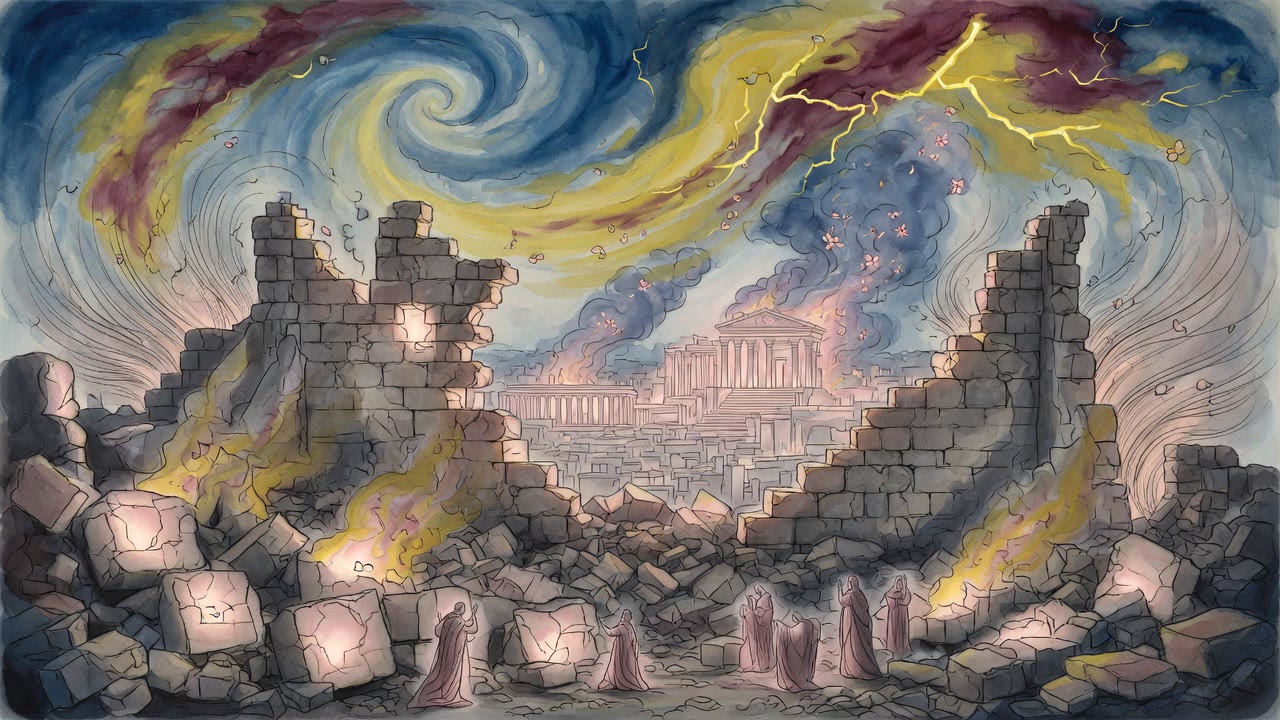
Moses Opened Deuteronomy With Hard Rebuke
The Jordan was in sight. Moses did not open with the road. He named the places they had already failed, one by one.
Table of Contents
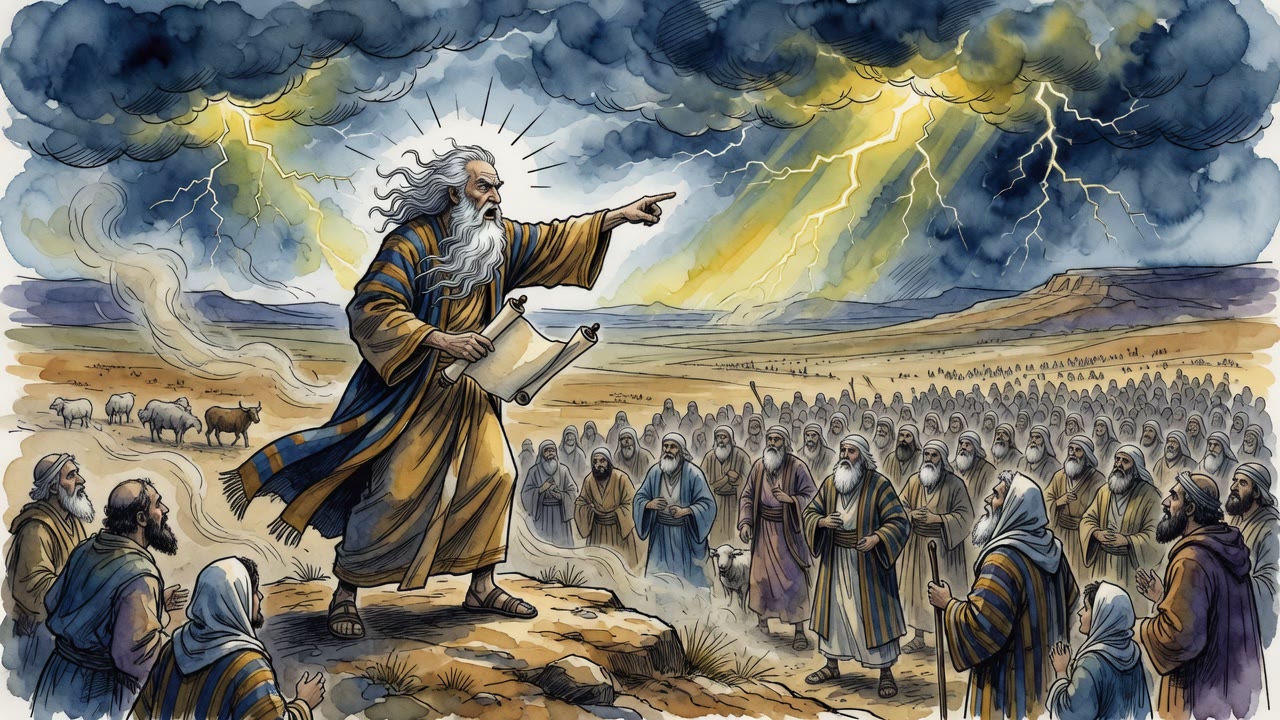
Moses stood on the plains of Moab with the Jordan in sight and a people who thought they already knew the map.
 Click for full size
He did not open with flattery. Wind moved over the camp. Sandals shifted. He held the silence, then he used it.
These Are the Words
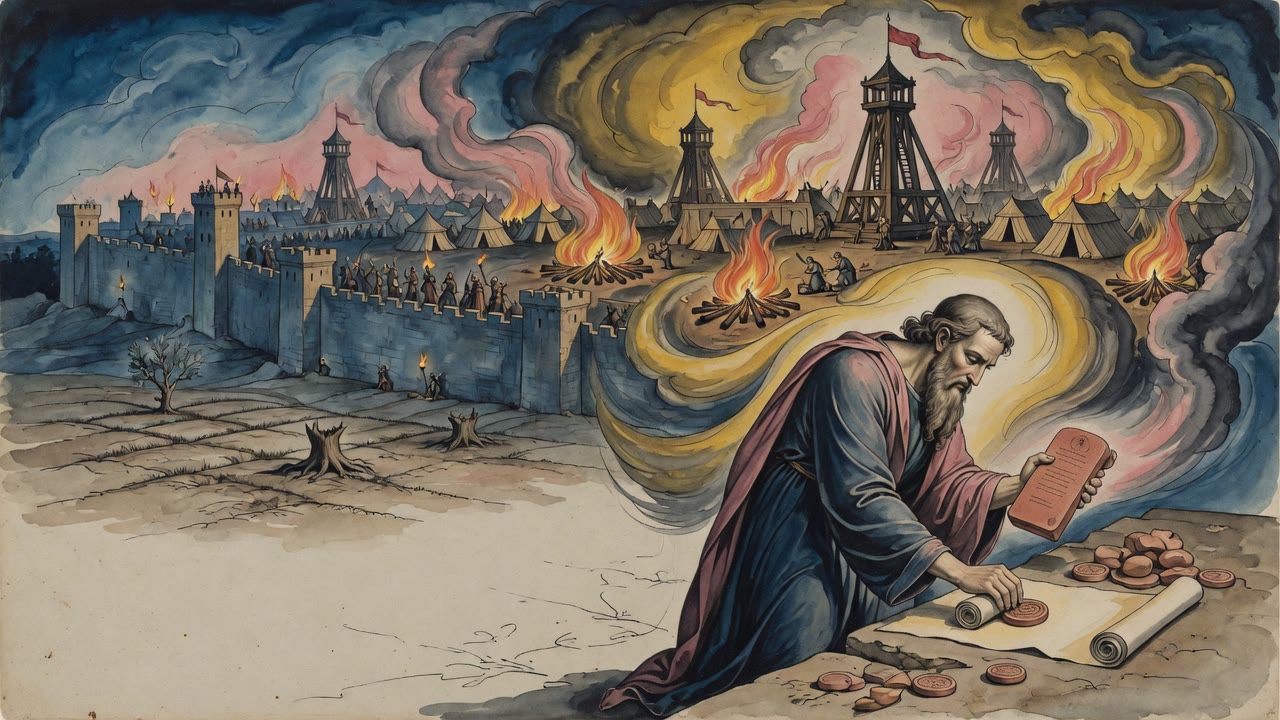
"These are the words which Moses spoke" (Deuteronomy 1:1). Not the words he wrote later for deposit. The words he spoke into living ears that could still flinch.
He had written Torah. He would write again (Deuteronomy 31:9). This opening was different. He stacked place-names the way a prosecutor stacks dates, not to humiliate, but to make forgetting expensive. Rebuke first. A farewell with a blade still in it.
A man near the front looked at the river and then at Moses, as if the river were the speech he had come to hear. Moses did not give him the river.
Yeshurun Grew Fat and Kicked
Yeshurun, the upright beloved name for Israel, had grown fat and kicked (Deuteronomy 32:15). Comfort had made the body lazy. Moses aimed at the kick before the people crossed into a land that could feed the same mistake with milk and honey, and then with arrogance.
He reminded them of failures they preferred to rename as logistics. He named the golden calf without letting nostalgia sand it smooth. He named the spies without letting fear call itself prudence forever.
Some rolled their eyes the way a full stomach treats a warning about hunger. Moses kept speaking. He was old. He was not soft. The river waited, and he refused to send them across with only congratulations in their packs.
Amos Faced the Judges
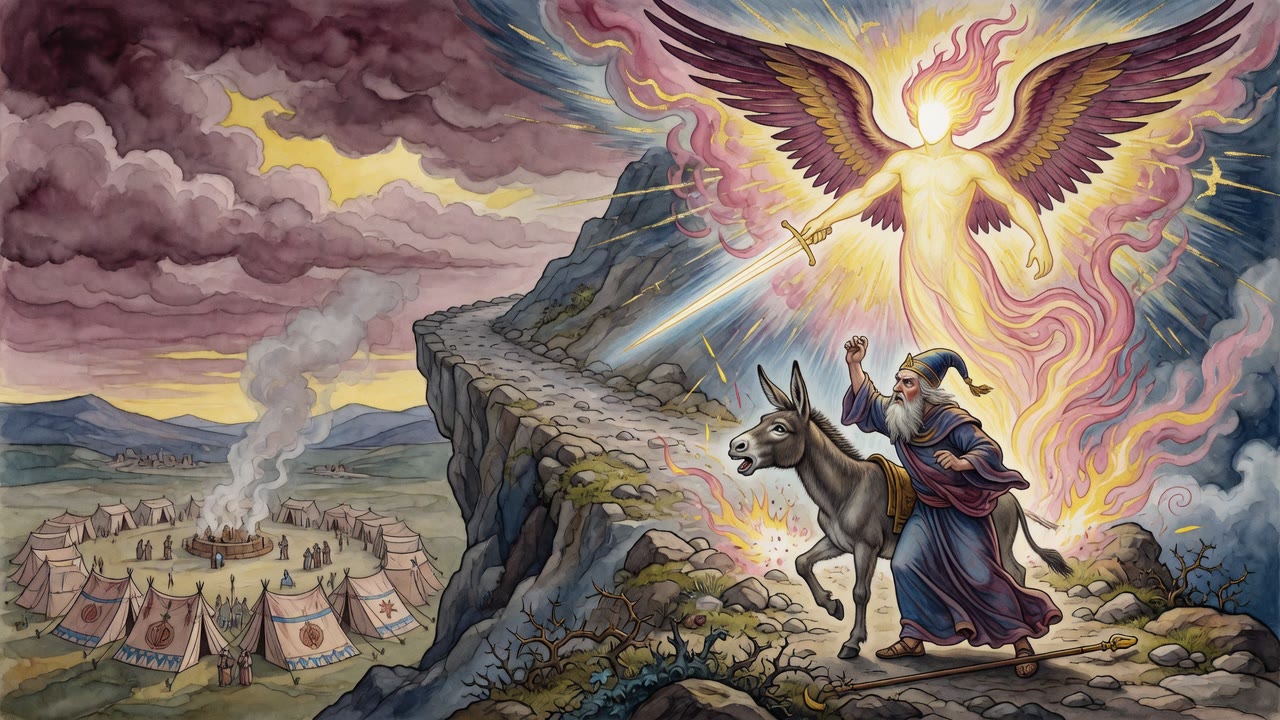
Years later a herdsman from Tekoa opened his mouth the same way. Amos had seen many visions. He used the first sentence that stung.
"Hear this thing, you cows of Bashan on Mount Samaria" (Amos 4:1). The cows were not livestock. They were corrupt judges padded with ease, heavy with comfort, light with justice. He aimed the word at men who sat on cases and grew fat on the outcome.
Jeremiah heard a sound of terror, of fear and not peace. He saw every man putting his hands on his loins like a woman in childbirth, faces turning pale. A time of trouble for Jacob, he said, and from it he will be saved (Jeremiah 30:5-7).
Moses on Moab had already cut the first door to that shape. First the cut. Then whatever teaching can stick in the wound.
Brass Sky, Iron Ground
If the people would not hear, the land itself would join the argument. The ground would not yield its produce. The tree of the land would not yield its fruit (Leviticus 26:20). A man who thought he could live on stored cleverness would find the soil uninterested in his plans.
Escape abroad would not help. Skies like brass. Earth like iron (Deuteronomy 28:23). Nowhere to run from a drought sent as answer.
Wrath would hold back the rain, and exile would arrive as the last teacher. Moses saw that chain while the people still stood on free soil east of the river. Children played near tents. He talked about brass heavens anyway, pointing past the play to a weather they had not yet felt.
Do Not Weep for the Dead King
"Do not weep for the dead one, and do not bemoan him. Weep for the one that goes, for he will return no more to see the land of his birth" (Jeremiah 22:10).
The dead one is Yehoyakim, king of Judah. The burial of an ass will he be buried, dragged and cast beyond the gates of Jerusalem (Jeremiah 22:19). Death at home, even a disgraceful death, still happens in the land. Exile is the one that does not come back to see it.
Moses spoke as if that weather were already a possible report. When the speech ended, the words remained. These are the words. Not a travelogue. A last honest conversation before the water of the Jordan, and before the sweetness that can make a nation kick.
← All myths