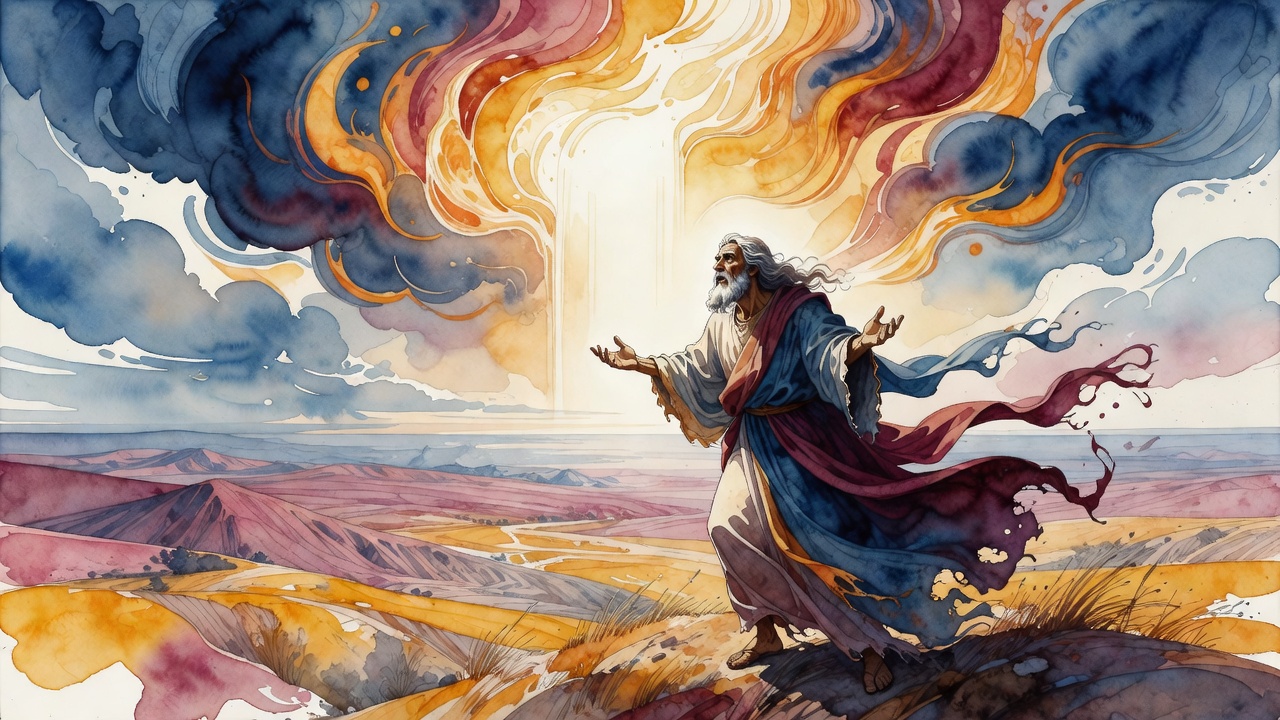
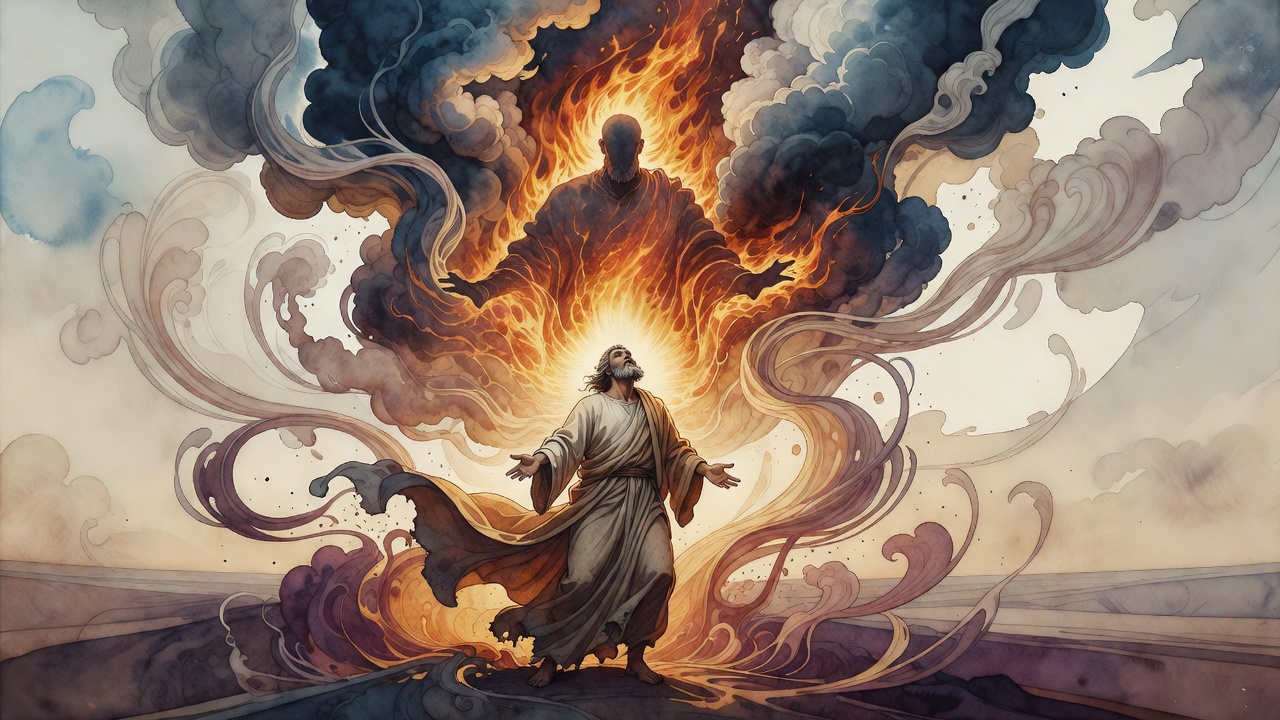
Moses Held His Rebuke Until Death Drew Near
Eleven days should have brought Israel from Horeb. Forty years burned instead. Moses saved his hard words for the edge of death, then blessed a thousandfold.
Table of Contents
 Click for full size
Eleven Days and Forty Years
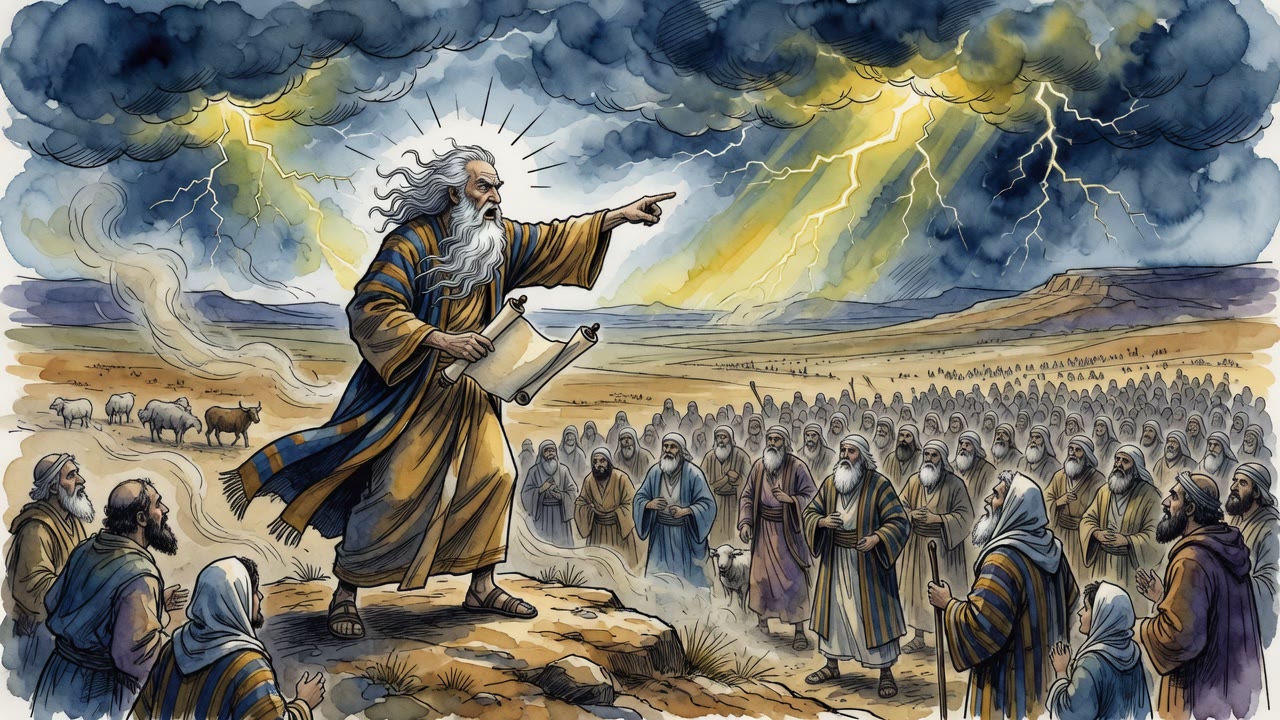
"Eleven days from Horeb by way of Mount Seir." Moses turned the arithmetic of the wilderness into a reproach. Eleven days: that is all the journey should have taken. Here they stood at the edge of the land, and forty years had burned away behind them. Graves marked the difference between a map and a life.
See, he told Israel, see what you brought upon yourselves. This is why the Torah marks the moment: "And it came to pass in the fortieth year." The number is not scenery. It is evidence.
The hard words came late. Death was already near. Why did Moses wait until now to speak them? Why not rebuke them in the heat of their failures, when the calf still smoked or the spies' tears still wet the ground?
Rebuke That Cannot Curdle
Because a wise person guards his tongue. Reproof, even just reproof, can plant lasting enmity in the heart of the one rebuked. So one speaks the difficult truth only at the end, near one's own death, or when about to part forever, when no resentment can take root and curdle into hatred. The timing is itself a kindness. The content stays sharp. The aftertaste is not poison.
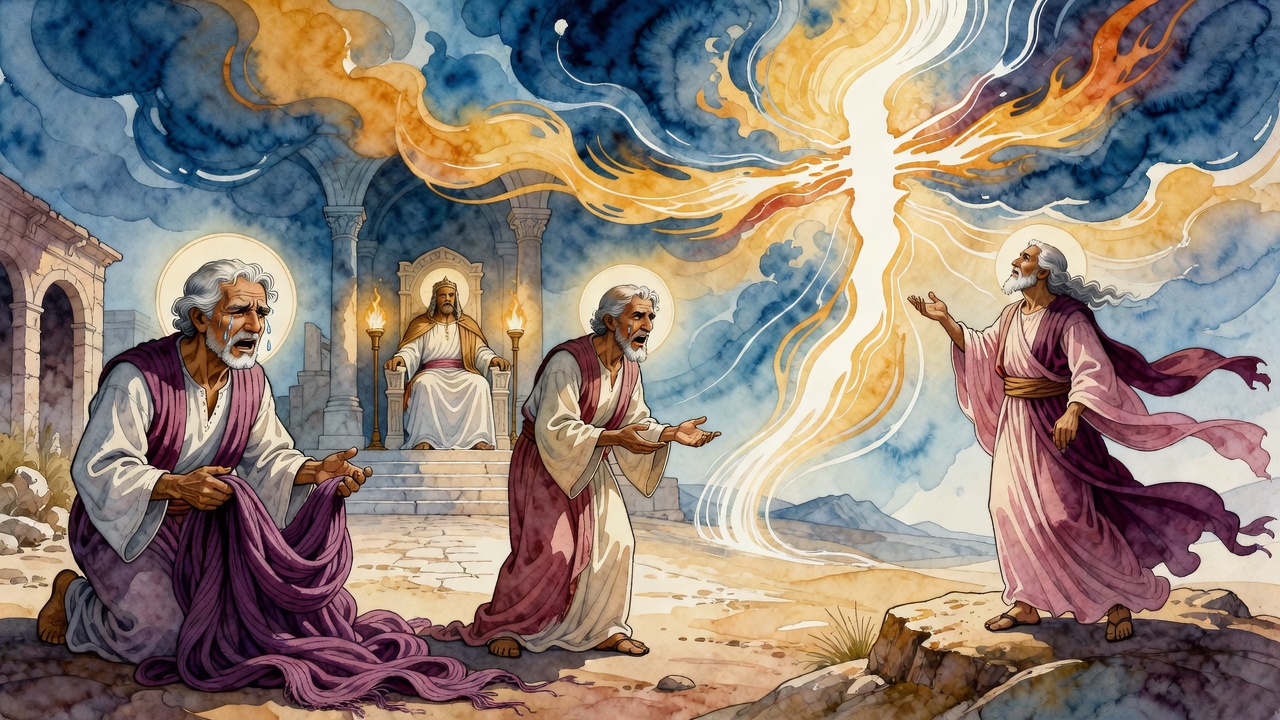
This is the path of the fathers. Jacob did not reprove Reuben, Simeon, and Levi in his lifetime, but only as he lay dying, blessing his sons. Moses, the faithful shepherd, followed him, withholding his rebuke until the last days, so that love, not bitterness, would outlast his words.
The forty years stood as evidence. The rebuke stood as a last clean cut, not a long campaign of scolding that would have trained the people to resent the man who fed them manna. He had carried them without constant indictment. Now, at the edge, he could name the cost without living long enough to become their enemy.
Hear, Because Do Was Broken
Why does the Book of Deuteronomy phrase its commandments again and again in the language of "hear"? At Sinai Israel had answered with two words bound together: na'aseh ve-nishma, "we will do, and we will hear." Two crowns, one for each word. When the people built the golden calf, they shattered the crown of "we will do." That pledge was forfeit. Only "we will hear" remained in their hand.
So when Moses stood at the edge of the land and rehearsed the law, he chose his word with a teacher's care. He spoke in the language of shema, "hear," guarding the one vow Israel had not lost, lest that too slip away. Every "hear" in Deuteronomy is a hand on the remaining crown.
The forty years of hunger and wandering were a test set before all creation, so that every nation might know the truth of Israel's heart: that they kept the commandments not for comfort alone, but out of love. Afflicted, they did not let go. The vocabulary of the farewell matched the wound and the survival at once.
A Thousandfold and an Objection
When Moses blessed Israel on the plains of Moav, he prayed that the LORD, the God of their fathers, would add to them a thousand times their number. The people bristled. "We have no need of your blessing," they told him. "The Holy One, blessed be He, swore to Abraham that our seed would be as the stars of heaven, beyond counting. And here you come and cap our increase at a mere thousandfold. You have set a limit where God set none."
Moses did not flinch. "The blessing I give you is my own gift, drawn from what is mine to give. The promise the Holy One made to your fathers stands untouched. My word does not shrink His word by a hair. It comes only to add to it. The thousandfold I name is mine, laid atop His uncountable stars."
So the smaller blessing did not bind the greater. The prophet's gift rested upon the divine oath like a coin set upon a treasure. He had waited until death to rebuke. He did not wait to bless. The hard words and the generous words left the same mouth in the same season, and the people who rejected a limit still walked under stars no man can number. Rebuke without bitterness. Blessing without rivalry with God. That was the shape of a death-near farewell.
On the plains of Moav the air was thin with endings. Moses could already feel the mountain that would take him. That nearness made honesty safe for the people. They could hear the eleven-day truth without planning a long feud against the speaker. He would not be there to resent.
The same nearness made the thousandfold blessing more than poetry. A man about to die still wanted their numbers to rise. They argued the math of stars against his thousand. He smiled the argument aside by refusing competition with God's oath. Add, do not replace. That is how a prophet blesses when the divine promise already fills the sky.
Between rebuke and blessing sat the word shema, the crown that survived the calf. Hear. Keep hearing. Do not let the last vow fall. Forty years had tested that hearing under hunger. Deuteronomy would test it under open land and open sky. Moses packed the farewell accordingly: hard history, guarded vocabulary, and a gift the people almost refused for being too small beside the stars.
← All myths