Baruch Asked for Prophecy While the City Fell
Jeremiah's scribe wants the spirit that rested on Joshua and Elisha. God answers that a ruined vineyard needs no fence, and prophecy is not for him.
Table of Contents
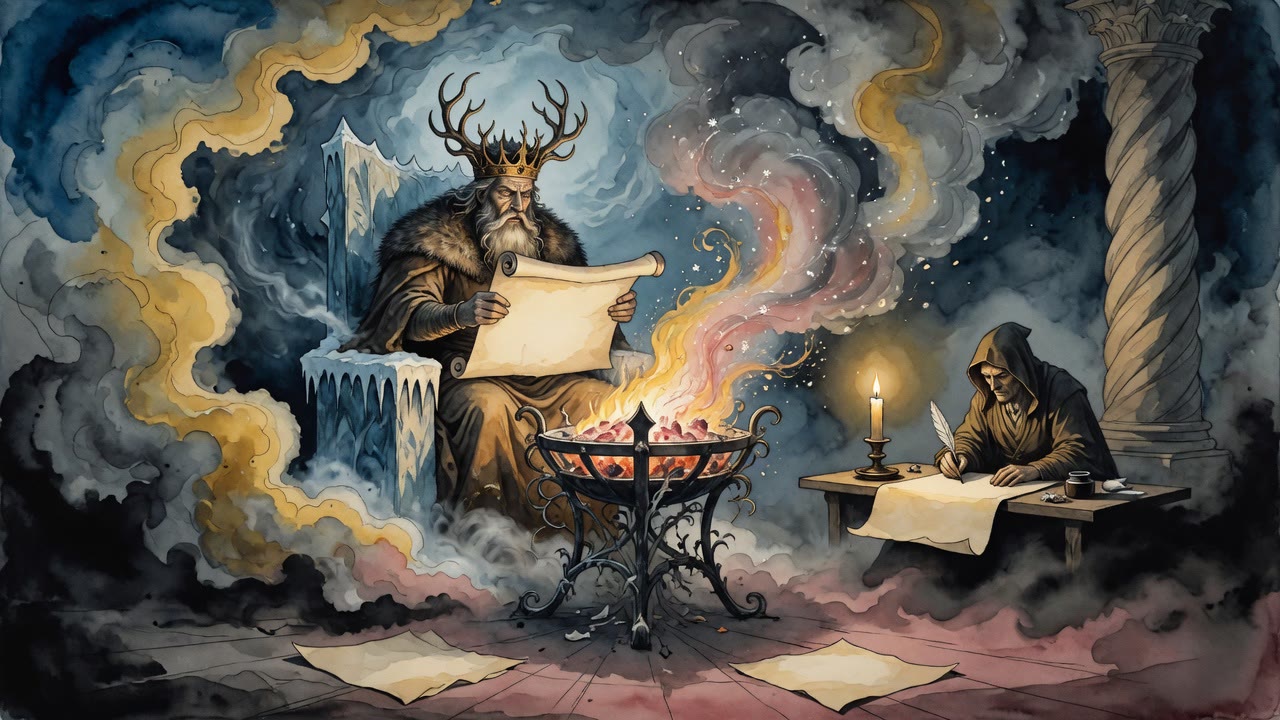
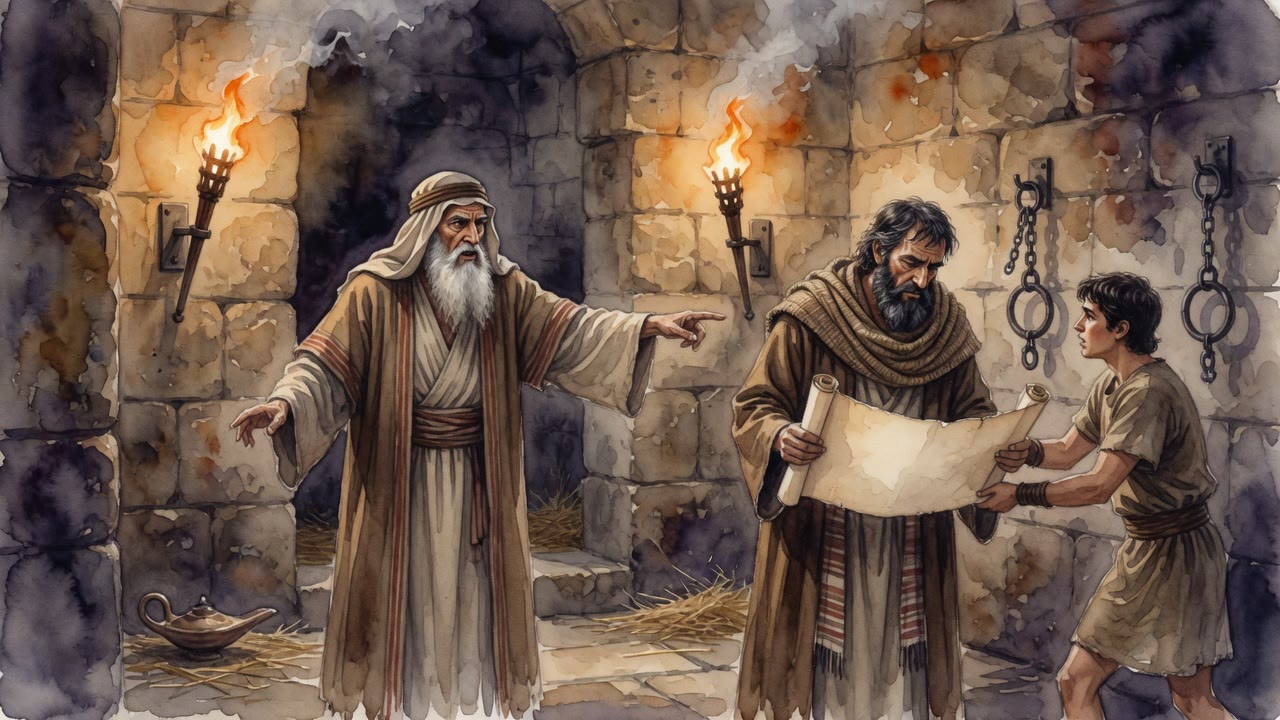
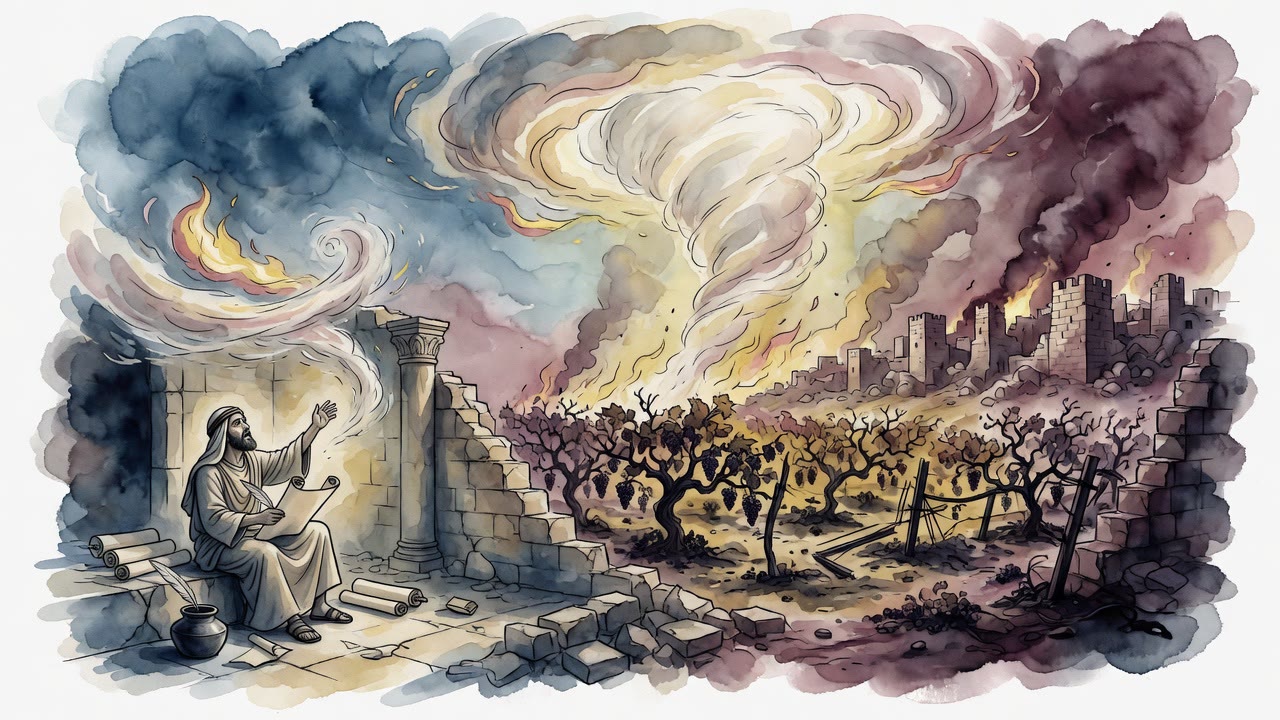
Baruch son of Neriah sat with a scraped scroll and ink that refused to dry clean. Smoke from the city stained the window. Outside, carts rattled with goods that would not stay in Jerusalem. Inside, the scribe who had written Jeremiah's bitter oracles waited for a different gift. He wanted the spirit, not only the pen. He wanted rest that meant prophecy, the settling of the divine wind on a man the way it had settled on others who served greater names.
 Click for full size
"Woe unto me," he said before the Lord. "The Lord has added grief to my pain." His shoulders shook. The reed snapped in his fingers and he did not notice until ink ran onto his wrist. "Why am I different from all the disciples of the prophets."
The Roster of Servants Who Received
Joshua had served Moses, and the spirit of the Lord reposed upon him. Elisha had served Elijah, and the spirit of the Lord reposed upon him. Baruch had served Jeremiah through threats, stocks, and burning scrolls, and the spirit did not come. He wearied himself with groanings and did not find rest. Rest, here, is not sleep. Rest is the landing of prophecy, as when the spirit rested on the seventy elders and they prophesied in the camp (Numbers 11:25), as when the spirit of Elijah rested on Elisha (II Kings 2:15), as when the spirit of the Lord would rest upon the shoot from Jesse (Isaiah 11:2).
Baruch measured his years against that roster and found himself short. He had copied destruction. He had not been chosen to announce it with a mouth of fire. The city outside was already teaching him what loss sounded like. He wanted the great things that mark a prophet, the deeds people later beg a servant to retell, the openings of heaven that make a name heavy.
Jeremiah moved in the next room. A door board creaked. Neither man slept well anymore. The king still had ears for soft words. Heaven had ears for almost none.
What I Built I Am Going to Destroy
The answer came hard and clean. "Thus said the Lord. What I have built I am going to destroy, and what I have planted I am going to uproot, and you are seeking great things for yourself." Great things means prophecy, the way Elisha's great acts are called great, the way God promises to show Jeremiah great things not yet known (Jeremiah 45:4-5; II Kings 8:4; Jeremiah 33:3).
Then the image that ends careers. If there is no vineyard, there is no need of a fence. If there is no flock, there is no shepherd. Prophets stand as fence and shepherd for Israel. When God brings evil upon all flesh and uproots the planting, the office itself thins. "Shall I render your soul as spoil unto you wherever you go." Baruch would keep his life. He would not keep the station he craved. The prophetic soul is spoil rescued from a burning house, not a crown set on a willing head.
Baruch put both hands flat on the table. The ink under his nail looked blacker than the smoke at the sill. He had wanted elevation. He received survival with a purpose stripped down to paper and breath.
Prophets Only in Israel's Merit
The principle sits under the refusal. Prophets prophesy only in the merit of Israel. When the people stand, the mouths open. When the people are being torn up, heaven does not staff seers for private ambition. Joshua inherited a nation entering land. Elisha inherited a school still counted. Baruch inherited a city under sentence.
Even the long memory of redemption can shift. A man who longed for children first swore by the life of his daughter, then by a son born later, not because the daughter lost worth but because a greater joy arrived. So a future rescue can displace even the Exodus as Israel's deepest oath. Baruch lived in the hollow between salvations, when the old oath still stood and the present was only uprooting.
He rose and walked to the window. A line of people moved toward the gate with bundles. No one asked him for a word from heaven. They asked for water and for road news.
One Dove and a People Redeemed
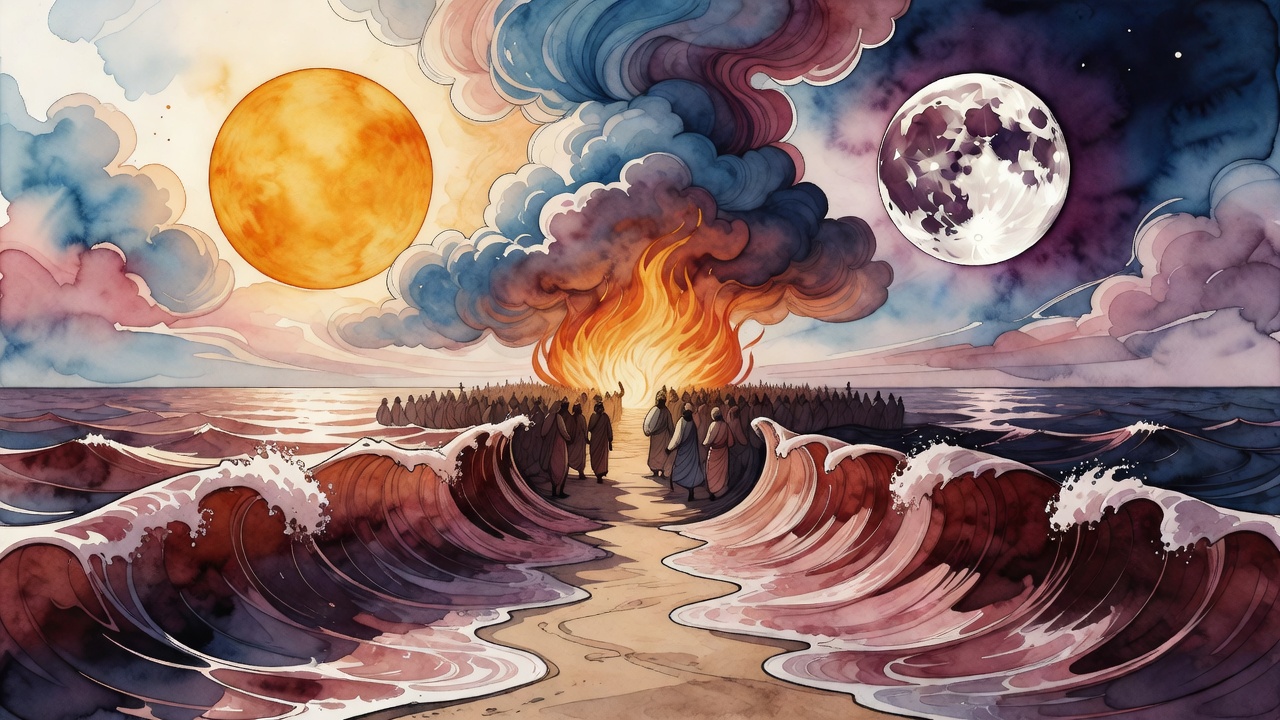
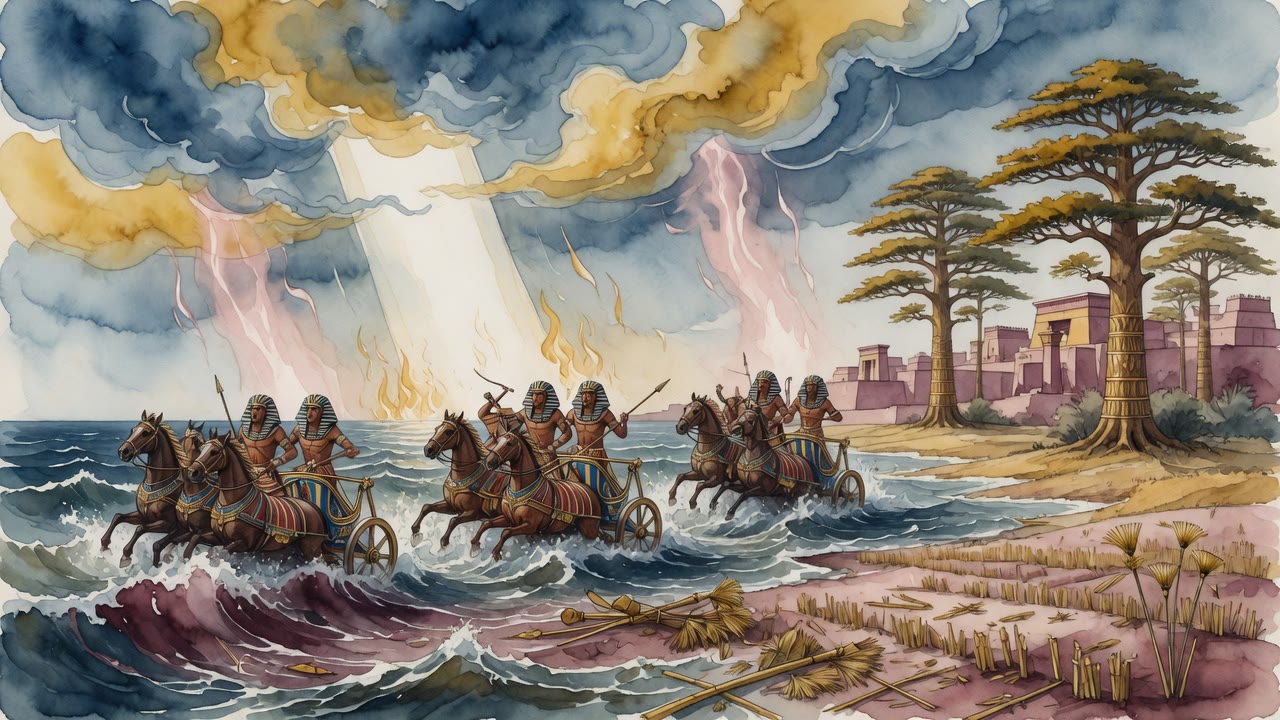
At the sea, long before this smoke, God had redeemed "this people" as His own among all the world. Queens and concubines and maidens without number can name the tiers of those who left Egypt, yet "one is My dove, My perfect one" can rest on Moses alone, the shepherd whose weight balances a nation. A redeemed people needs such a mouth. A people under the axe still needs scribes who will not drop the scroll.
Baruch returned to the table. He cut a new reed. He mixed ink. Jeremiah's next line would still need a hand that did not shake into illegibility. The vineyard was going. The fence was not for him. He would carry another man's vision through the years of spoil, and that labor would have to be enough.
When fire took more of the city, Baruch's name did not rise as a prophet's name rises. It rose as the name of a man who asked for great things in a season of uprooting and was answered with life, paper, and a closed heaven. The flock scattered. The shepherd's staff stayed in Jeremiah's grip. The scribe kept writing until the ink ran out and then mixed more.
← All myths