Translation of the source text.Mechilta de-Rabbi Simon b. Jochai, ed. D. Hoffmann, Frankfurt 1905 · Public Domain
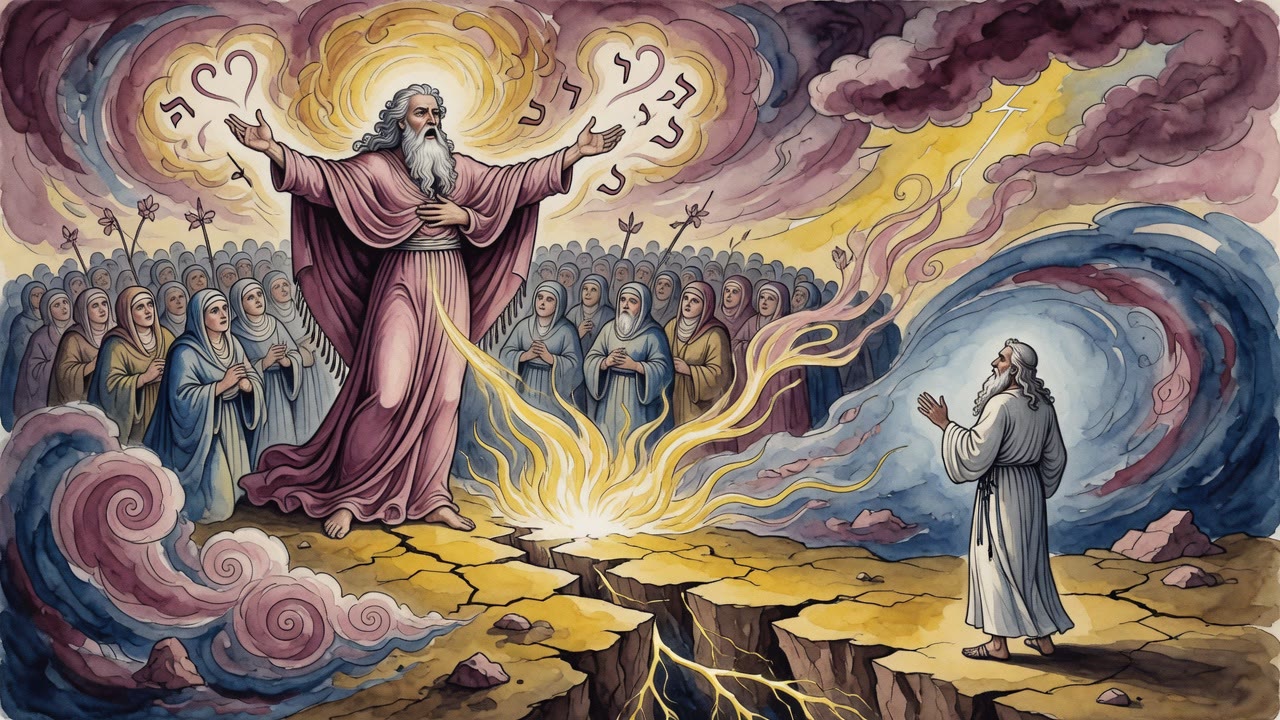
"Then Moses and the children of Israel sang" (Exodus 15:1). There is a "then" for what has passed and a "then" for what is yet to come. For what has passed: "Then people began to call upon the name of the LORD" (Genesis 4:26); "Then she said, A bridegroom of blood because of the circumcision" (Exodus 4:26); "Then Joshua built an altar" (Joshua 8:30); "Then David said" (1 Chronicles 15:2); "Then Solomon said" (1 Kings 8:12). For the future: "Then you shall see and shine" (Isaiah 60:5); "Then your light shall break forth like dawn" (Isaiah 58:8); "Then the lame shall leap like a deer" (Isaiah 35:6); "Then the eyes of the blind shall be opened" (Isaiah 35:5); "Then the virgin shall rejoice" (Jeremiah 31:12); "Then our mouth shall be filled with laughter and our tongue with song" (Psalms 126:2), and "then they shall say among the nations, the LORD has done great things with these" (Psalms 126:2-3). Rabbi says: it is not written here, "Then Moses sang," but "Then Moses will sing"; from here we learn resurrection of the dead from the Torah. Another interpretation: "Moses and the children of Israel" teaches that Moses was weighed as equal to all Israel, and Israel as equal to Moses, when they sang the Song. Another interpretation: it teaches that Moses sang the Song facing all Israel. "This song": is there only one song? Are there not ten songs? The first was said in Egypt: "You shall have a song as on the night when a festival is sanctified" (Isaiah 30:29). The second was said at the Sea: "This is my God, and I will glorify Him" (Exodus 15:2). The third was said at the well: "Then Israel sang this song: Spring up, O well; answer it" (Numbers 21:17). The fourth is the Song of Haazinu: "Moses spoke in the ears of all the assembly of Israel the words of this song" (Deuteronomy 31:30). The fifth Joshua said: "Then Joshua spoke to the LORD on the day the LORD gave the Amorite" (Joshua 10:12). The sixth Deborah and Barak said: "Then Deborah and Barak son of Abinoam sang" (Judges 5:1). The seventh David said: "David spoke the words of this song" (2 Samuel 22:1). The eighth Solomon said: "A psalm, a song for the dedication of the House, of David" (Psalms 30:1). Did David build it? Did Solomon not build it, as it says, "He built the House and finished it" (1 Kings 6:9)? Rather, because David gave his soul over it, it was called by his name. Where did he give his soul over it? "Remember, LORD, for David, all his affliction, how he swore to the LORD, vowed to the Mighty One of Jacob" (Psalms 132:1-2). What was said to him? "Now see your house, David" (1 Kings 12:16). Any matter to which a person gives his soul is called by his name. Another interpretation: Solomon's song, as it is written, "The Song of Songs, which is Solomon's" (Song of Songs 1:1). The ninth Jehoshaphat said, as it says, "He consulted with the people and appointed singers to the LORD... saying, Give thanks to the LORD, for His kindness endures forever" (2 Chronicles 20:21). The tenth is for the future: "Sing to the LORD a new song, His praise from the end of the earth" (Isaiah 42:10), and "Sing to the LORD a new song, His praise in the assembly of the faithful" (Psalms 149:1). All past salvations were called with a feminine term; just as a female gives birth, past salvations have subjugation after them. But the salvation to come is called with a masculine term; just as the male does not give birth, as it says, "Ask now and see, does a male give birth?" (Jeremiah 30:6), so the future salvation has no subjugation after it, as it says, "Israel is saved by the LORD with everlasting salvation; you shall not be ashamed or confounded forever" (Isaiah 45:17). "To the LORD": they said it to the LORD and not to flesh and blood, not like "the women came out singing" and answered, "Saul struck his thousands, and David his tens of thousands" (1 Samuel 18:6-7). Here it is "to the LORD," not to flesh and blood. "They said, saying": Rabbi Nehemiah says the holy spirit rested upon Israel and they said the Song like people reciting the Shema. Eleazar ben Tadai says: Moses would open and say, "I will sing to the LORD," and Israel would answer after him and complete with him, "horse and rider He cast into the sea"; Moses would open, "The LORD is my strength and song," and Israel would answer and complete, "This is my God, and I will glorify Him"; Moses would open, "The LORD is a man of war," and Israel would complete, "the LORD is His name" (Exodus 15:1-3).
"I will sing to the LORD": greatness is fitting for the LORD, might is fitting for the LORD; His are glory, victory, and majesty, as the son of David says, "Yours, LORD, are the greatness, might, glory, victory, and majesty" (1 Chronicles 29:11). They told a parable. To what is this like? To a king of flesh and blood who entered a province, and they praised him as mighty when he was weak, wise when he was foolish, rich when he was poor, merciful when he was cruel, judicial and faithful when he had none of these traits; they were flattering him. But sing to the LORD, for He is wise: "The LORD founded the earth with wisdom" (Proverbs 3:19), and "With Him are wisdom and might; His are counsel and understanding" (Job 12:13). He is rich: "To the LORD your God belong the heavens, the heavens of heavens, the earth, and all that is in it" (Deuteronomy 10:14), and "Mine is the silver and Mine is the gold, says the LORD of hosts" (Haggai 2:8). He is merciful: "The LORD, the LORD, a merciful and gracious God" (Exodus 34:6), and "for the LORD your God is a merciful God" (Deuteronomy 4:31). He is judgment: "the LORD is a God of judgment" (Isaiah 30:18), and "God stands in the divine assembly; among judges He judges" (Psalms 82:1). He is faithful: "the faithful God, who keeps covenant and kindness" (Deuteronomy 7:9), and "a God of faithfulness and without injustice" (Deuteronomy 32:4). Sing to the LORD, for He is exalted, glorious, and praised, as it says, "For who in the skies can be compared to the LORD?" (Psalms 89:7), "LORD God of hosts, who is like You, mighty LORD?" (Psalms 89:9), "There is none like You among the powers, Lord, and nothing like Your works" (Psalms 86:8), and "My beloved is white and ruddy, distinguished among ten thousand" through "This is my beloved and this is my friend, daughters of Jerusalem" (Song of Songs 5:10-16). Thus, might is fitting for the LORD; His are glory, victory, and majesty. And so David said, "Yours, LORD, are the greatness, might, glory, victory, and majesty" (1 Chronicles 29:11). "For He is highly exalted": He exalted me, and I exalted Him. He exalted me in Egypt, "Thus says the LORD: Israel is My son, My firstborn" (Exodus 4:22), and I exalted Him and said a song before Him: "You shall have a song as on the night when a festival is sanctified" (Isaiah 30:29). He exalted me at the Sea, "The angel of God who went before the camp of Israel moved" (Exodus 14:19), and I exalted Him and said before Him, "This is my God, and I will glorify Him" (Exodus 15:2). Another interpretation: "For He is highly exalted": He is exalted and will in the future be exalted, as it says, "For the LORD has a day against all that is proud and lofty" (Isaiah 2:12-17). Another interpretation: He is exalted above all the proud, for by the very thing in which the nations of the world exalt themselves before Him, He takes punishment from them. So you find with the people of the Flood, the people of the Tower, and the people of Sodom; so too with Egypt, who exalted themselves by saying, "Every son that is born you shall cast into the river" (Exodus 1:22), and what is said of them? "Pharaoh's chariots and his army He hurled into the sea" (Exodus 15:4). So too with Sisera: in the thing by which he exalted himself before Him, he was punished, as it says, "Sisera gathered all his chariots, nine hundred iron chariots" (Judges 4:13), and what does it say? "From heaven the stars fought; from their courses they fought with Sisera" (Judges 5:20). So too with Sennacherib: in the thing by which he exalted himself before Him, he was punished, as it says, "By your messengers you have mocked, and you said, With my many chariots... I dug and drank water, and with the sole of my feet I dried up all the streams of Egypt" (2 Kings 19:23-24). What does it say? "The angel of the LORD went out and struck in the camp of Assyria one hundred eighty-five thousand; they rose early in the morning, and behold, all of them were dead corpses" (2 Kings 19:35). These were his army commanders. They said: the greatest of them was appointed over one hundred eighty-five thousand; the smallest of them was no less than two thousand, as it says, "How then will you turn back the face of one captain of the least of my lord's servants, and put your trust in Egypt for chariots and horsemen? Now therefore, please wager with my lord the king, and I will give you two thousand horses" (2 Kings 18:23-24). What does Scripture say? "This is the word that the LORD has spoken concerning him: the virgin daughter of Zion despises you and mocks you; the daughter of Jerusalem shakes her head behind you" (2 Kings 19:21). So too with Nebuchadnezzar: in the thing by which he exalted himself before Him, he was punished, as it says, "You said in your heart, I will ascend to heaven; above the stars of God I will raise my throne" (Isaiah 14:13), and what does it say? "You shall be brought down to Sheol, to the depths of the pit" (Isaiah 14:15). So too with the prince of Tyre: in the thing by which he exalted himself before Him, he was punished, as it says, "Son of man, say to the prince of Tyre: Thus says the Lord GOD: because your heart was raised and you said, I am a god; I sit in the seat of God in the heart of the seas; yet you are a man and not God, though you set your heart like the heart of God" (Ezekiel 28:2). What does it say of him? "You shall die the deaths of the uncircumcised by the hand of man, for I have spoken, says the Lord GOD" (Ezekiel 28:10). Thus, in the thing by which the nations exalt themselves before Him, He takes punishment from them. Therefore it says, "For He is highly exalted."
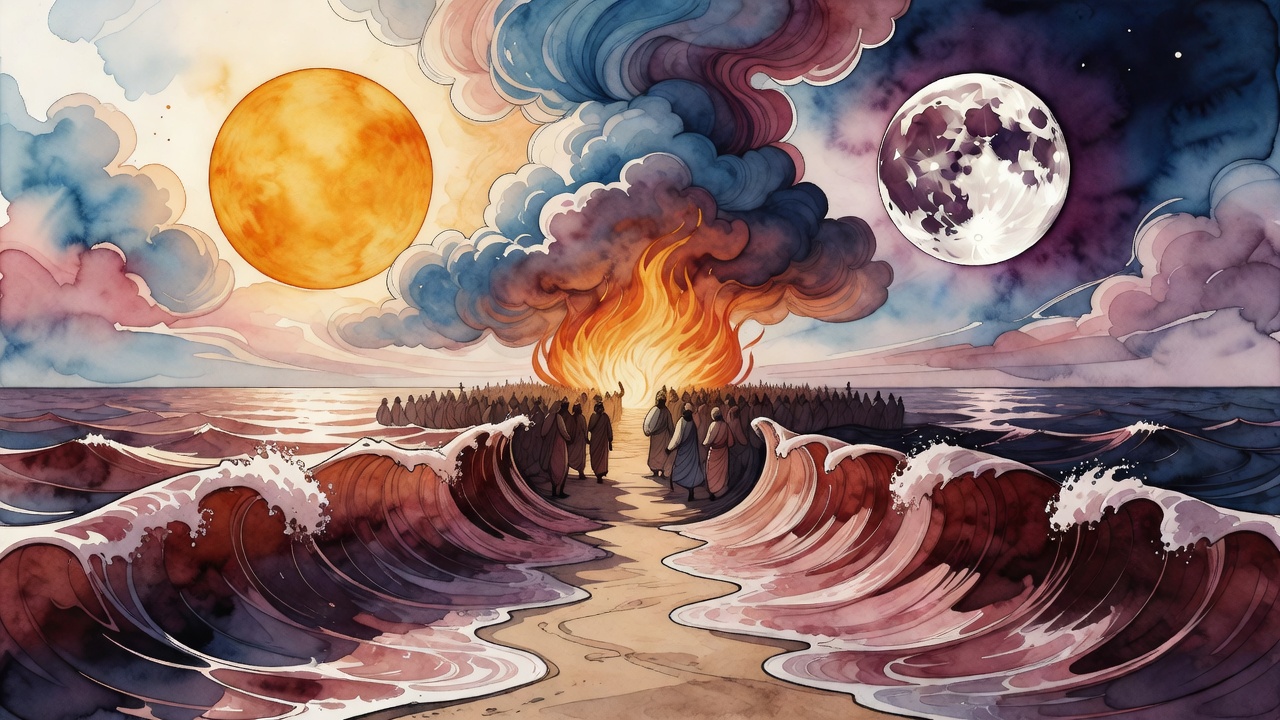
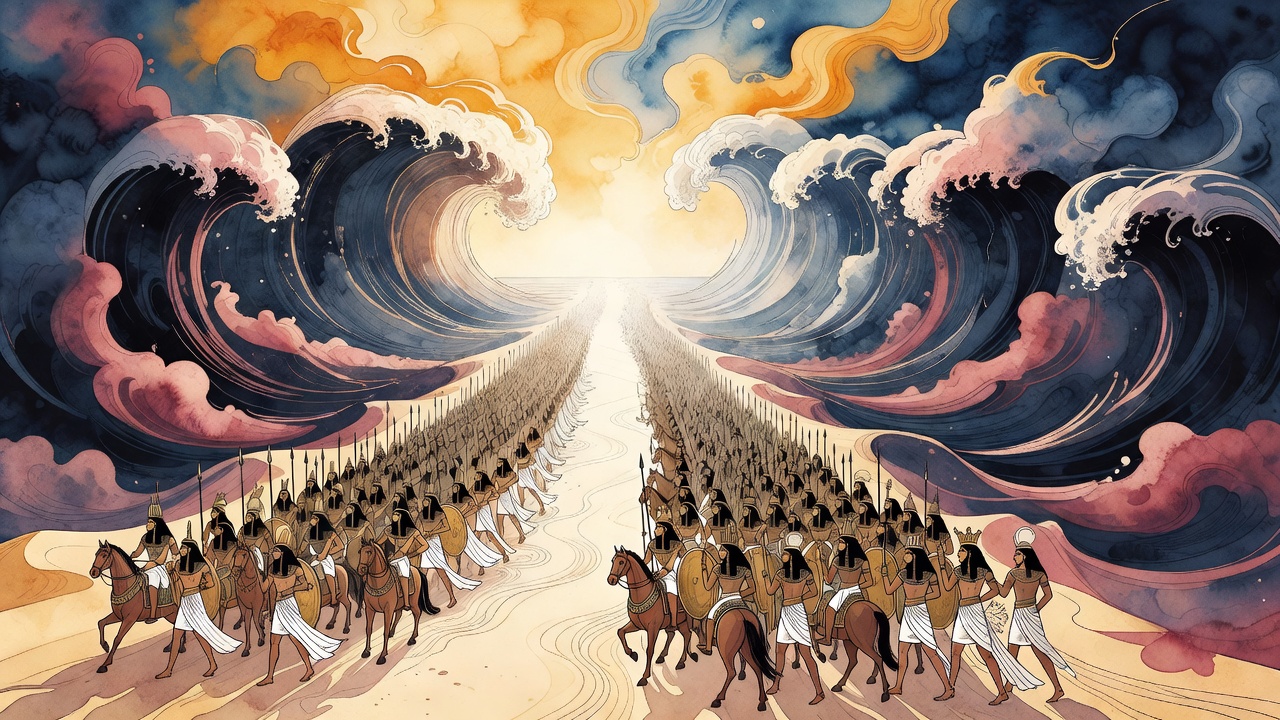
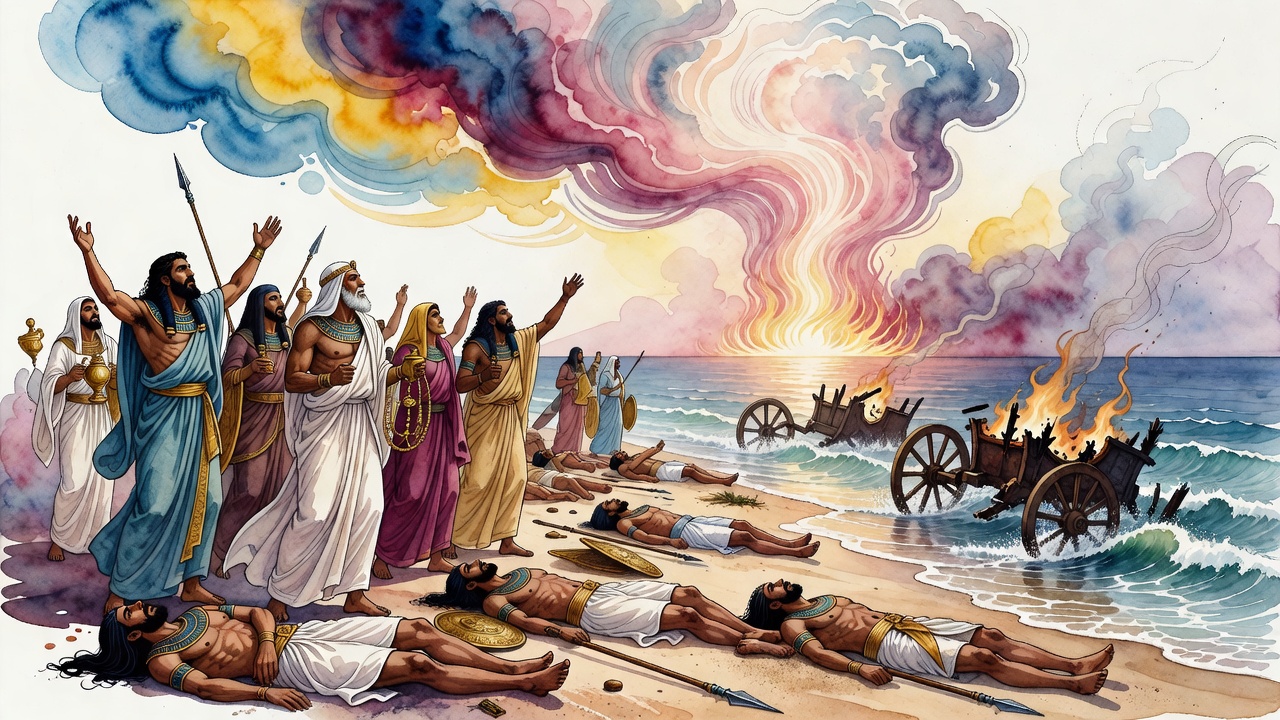
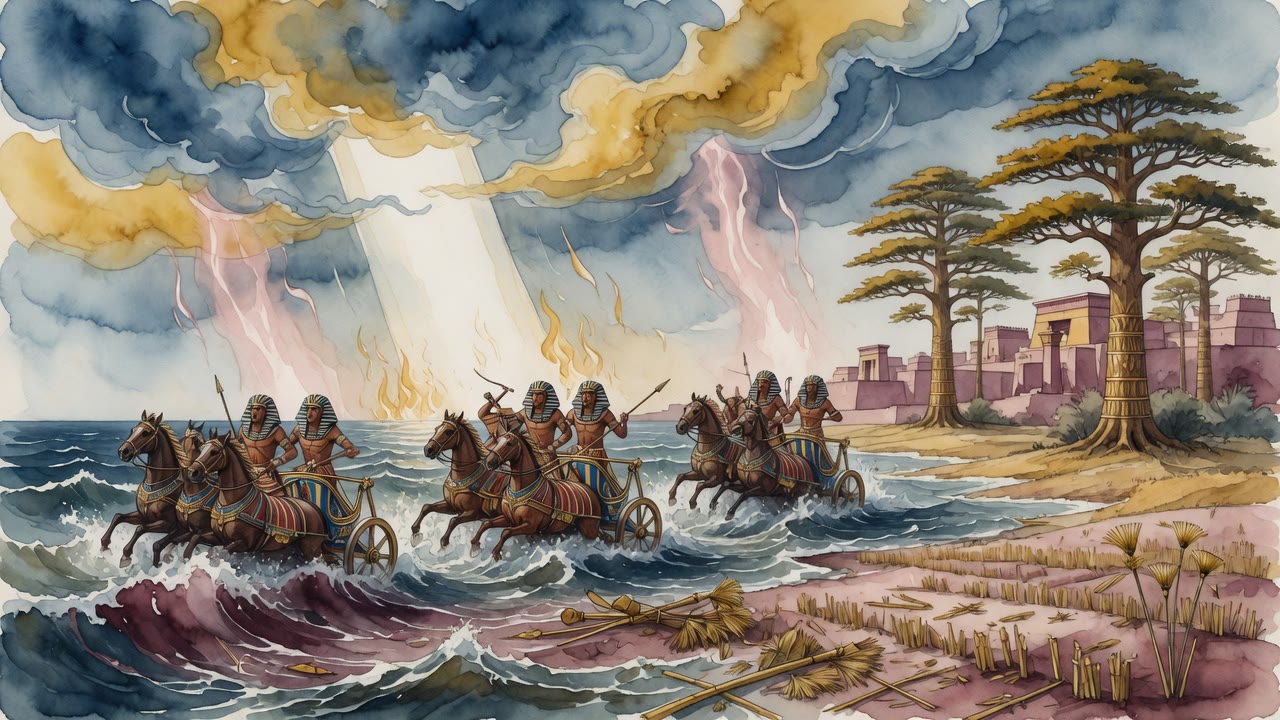
"Horse and its rider": was there one horse and one rider? Has it not already been said, "He took six hundred chosen chariots" (Exodus 14:7)? Rather, this teaches that before the Omnipresent they were only like one horse and one rider. Similarly, "When you go out to war against your enemies and see horse and chariot" (Deuteronomy 20:1): do the nations of the world go out with one horse and one chariot? Rather, whenever Israel does the will of the Omnipresent, their enemies are before them only like one horse and one chariot. Another interpretation: "horse and its rider" teaches that the horse was bound to the rider and the rider bound to the horse. "He cast into the sea." One verse says "He cast," and another says "He hurled" (Exodus 15:4). How can both verses stand? "He cast": they rose upward; "He hurled": they descended to the deep, and they were not separated from one another. In the way of the world, if a person throws two vessels into the air, is not one of them finally separated from the other? Here, they rose upward and descended to the deep and were not separated. Another interpretation: "He cast into the sea": when Israel saw the prince of Egypt fallen, they began placing praise before Him; therefore it says, "He cast into the sea." So too you find that the Omnipresent does not punish the kingdoms until He first casts down their princes, as it says, "On that day the LORD will punish the host of heaven in heaven, and afterward the kings of the earth on the earth" (Isaiah 24:21); and it says, "How you have fallen from heaven, morning star, son of dawn," and afterward, "you are cut down to the earth, you who weakened nations" (Isaiah 14:12); and it says, "For My sword has drunk its fill in heaven," and afterward, "behold, it shall descend upon Edom and upon the people of My ban for judgment" (Isaiah 34:5). Another interpretation: "Horse and rider He cast into the sea": the Holy One, blessed be He, would bring horse and rider and set them in judgment. He would say to the horse: why did you run after My children? It would say to Him: the Egyptian made me run against my will, as it says, "Egypt pursued after them, every horse of Pharaoh" (Exodus 14:23). He would say to the Egyptian: why did you run after My children? He would say: the horse made me run against my will, as it says, "For Pharaoh's horse came" (Exodus 15:19). The Holy One, blessed be He, would bring horse and rider and judge them as one. Antoninus asked Rabbi: since a person dies and the body decays, does the Holy One, blessed be He, bring him to judgment? Rabbi said to him: instead of asking me about an impure body, ask me about a pure soul. They gave a parable. To what is this like? To a king of flesh and blood who had an orchard with fine first-fruits in it and set two servants there to guard it, one lame and one blind. The lame one said to the blind one: I see fine first-fruits. The blind one said: do I see? The lame one said: can I walk? What did they do? The lame one rode on the blind one's back, they went and took the first-fruits, and they sat back in their places. Later, the king came and sat over them in judgment. He said to them: where are the first-fruits? The blind one said: do I see? The lame one said: can I walk? The king was wise. He set the lame one on the blind one's back, and they walked. He said to them: this is what you did, and you ate the first-fruits. So too, the Holy One, blessed be He, brings body and soul and sets them in judgment. He says to the body: why did you sin before Me? It says before Him: Master of the world, did I sin? The soul sinned. From the day it left me, am I not cast before You like a stone? He says to the soul: why did you sin before Me? It says before Him: Master of the world, did I sin? The body sinned. From the day I left it, am I not pure before You? The Holy One, blessed be He, brings the soul, puts it into the body, and judges them as one, as it says, "He calls to the heavens above and to the earth, to judge His people" (Psalms 50:4): "He calls to the heavens above" to bring the soul; "and to the earth" to bring the body; and afterward, "to judge His people." Another interpretation: Isi ben Shammai says: here "horse" is stated plainly, and elsewhere it says, "On that day, says the LORD, I will strike every horse with panic and its rider with madness... and every horse of the peoples I will strike with blindness" (Zechariah 12:4), and it says, "This shall be the plague with which the LORD will strike all the peoples that warred against Jerusalem: their flesh shall rot while they stand on their feet, their eyes shall rot in their sockets, and their tongue shall rot in their mouth" (Zechariah 14:12), and so shall be the plague of the horse, mule, camel, donkey, and every animal in those camps, like this plague (Zechariah 14:15). The explicit passage comes to explain the unspecified one: just as the explicit passage has five plagues, so the unspecified one has five plagues.

 Click for full size