5 min read

The Sun and Moon Witnessed a Sea Already Split

Before the first wave rose, the sun and moon already stood as witnesses that God had bound Himself to tear the sea for Israel.

Curated by Arthur · Told by Maggid ·
Table of Contents
  1. What the Celestial Bodies Already Knew
  2. This People, Not All Peoples
  3. Guided by a King Not Yet Born
  4. The Road That Was Always There
  5. The Road Between Two Walls

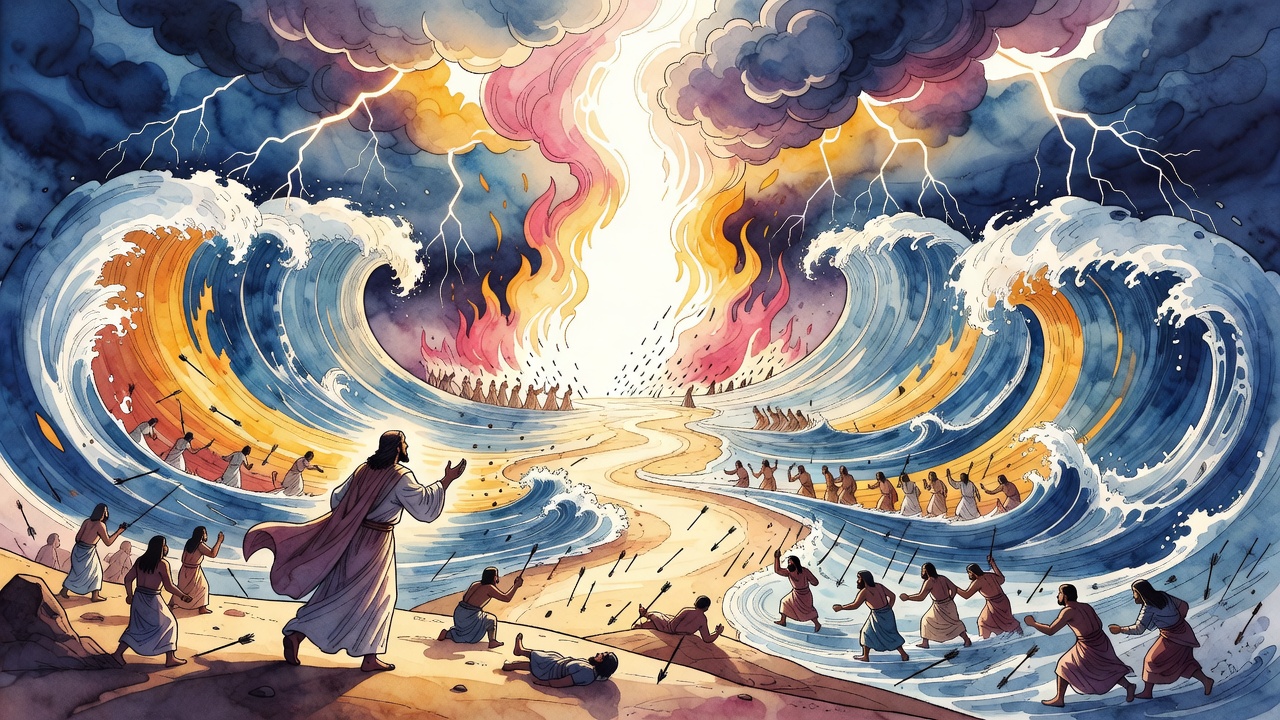
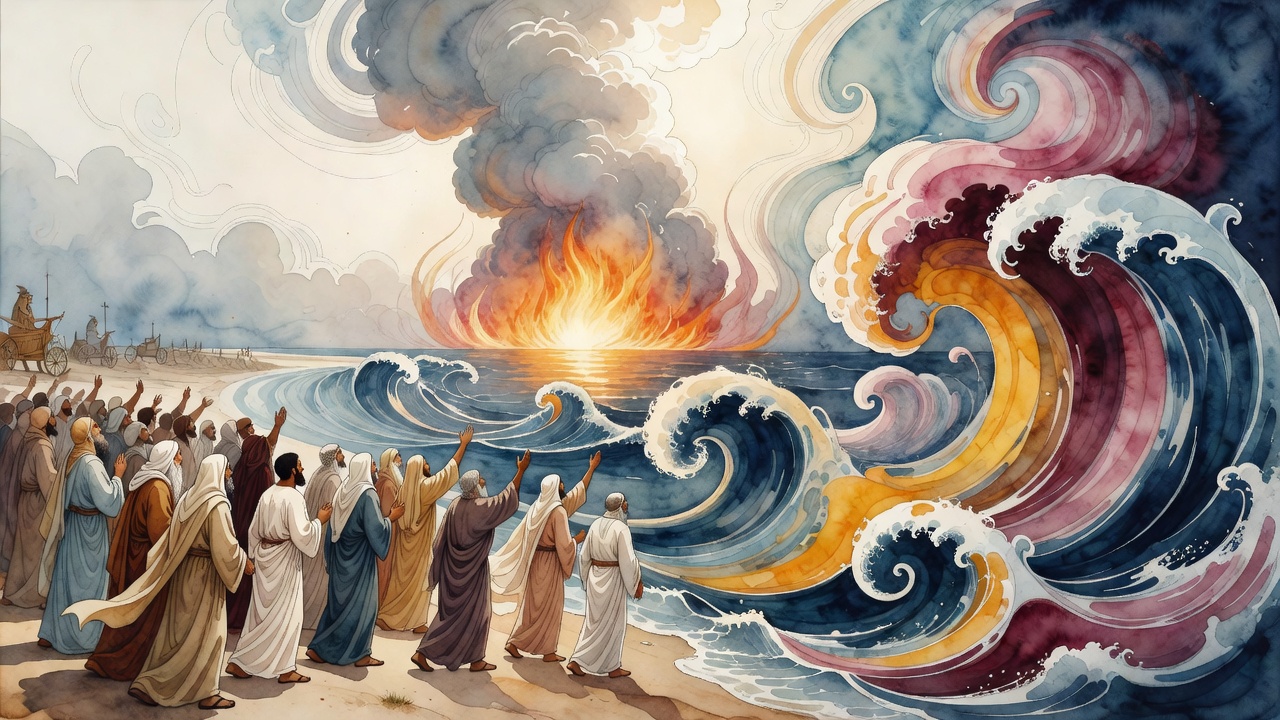
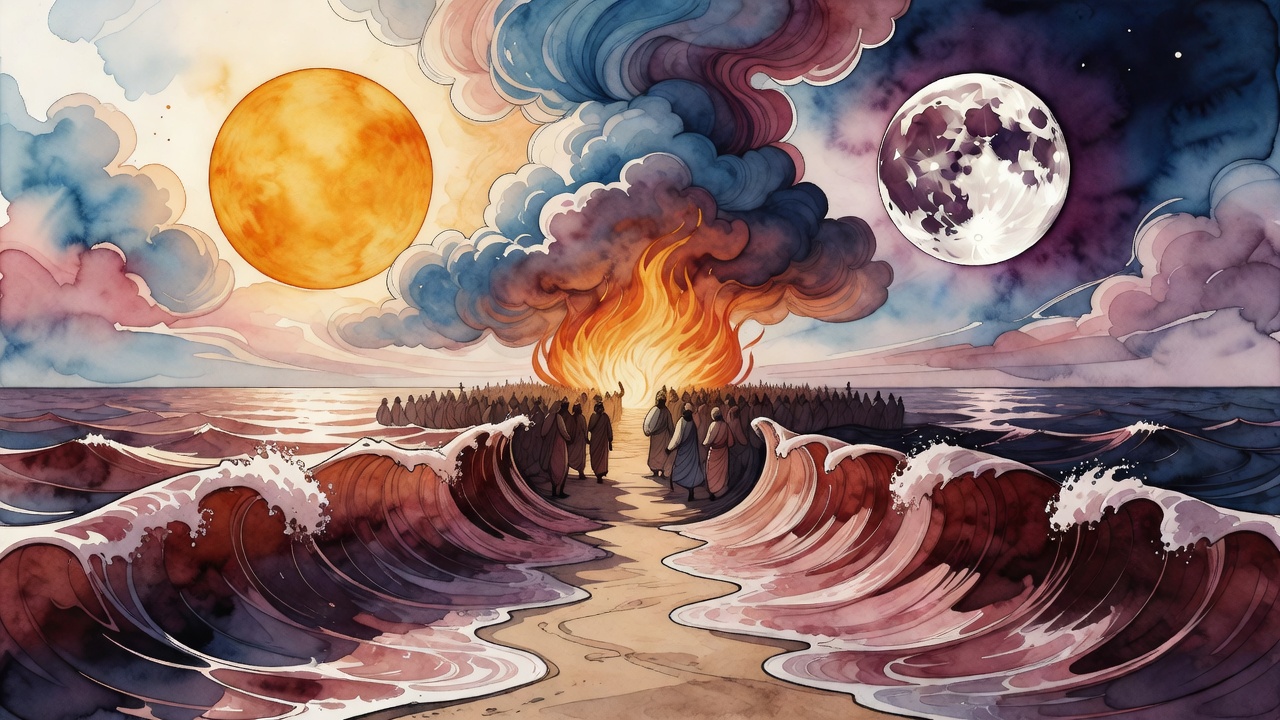
Moses raised his staff and the water did not wait for persuasion. It heaved, then tore, and dry ground appeared like a wound that would not close until the last cart had crossed. Behind him the sun climbed as if it had always known this hour. Above the night path the moon kept its law. Neither light looked surprised.
The Sun and Moon Witnessed a Sea Already Split Click for full size

What the Celestial Bodies Already Knew

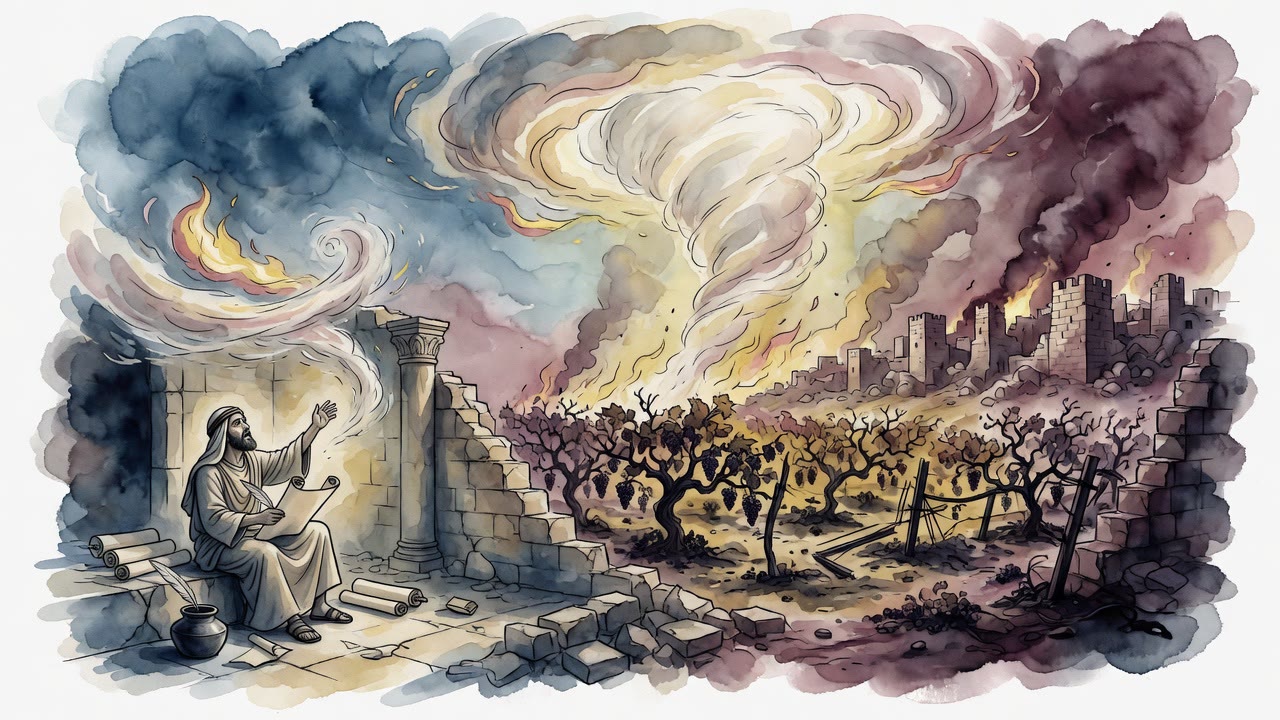
Long before Pharaoh's chariots churned the mud, a prophet would name three works of God in one unbroken breath: the sun given for day, the laws of moon and stars for night, and the splitting of the sea that stuns its waves (Jeremiah 31:35). Rabbi Shimon ben Yochai heard that list as a single permanent order. The sea's opening was not a scramble written on the fly. It sat beside sunrise and moonrise as something the world already carried in its bones.

Every morning after the crossing, the same sun rose over free people and over the wet wreck of Egypt. Every night the same moon counted its measures. The lights did not preach. They simply kept rising, and their rising said the same thing the midrash would later put into words: the God who sets the lamps is the God who tore the water, and He had committed to that tearing before the first Hebrew foot left Goshen.

The camp did not see the full theology. They saw walls of water and a road. They sang because their throats still worked.

This People, Not All Peoples

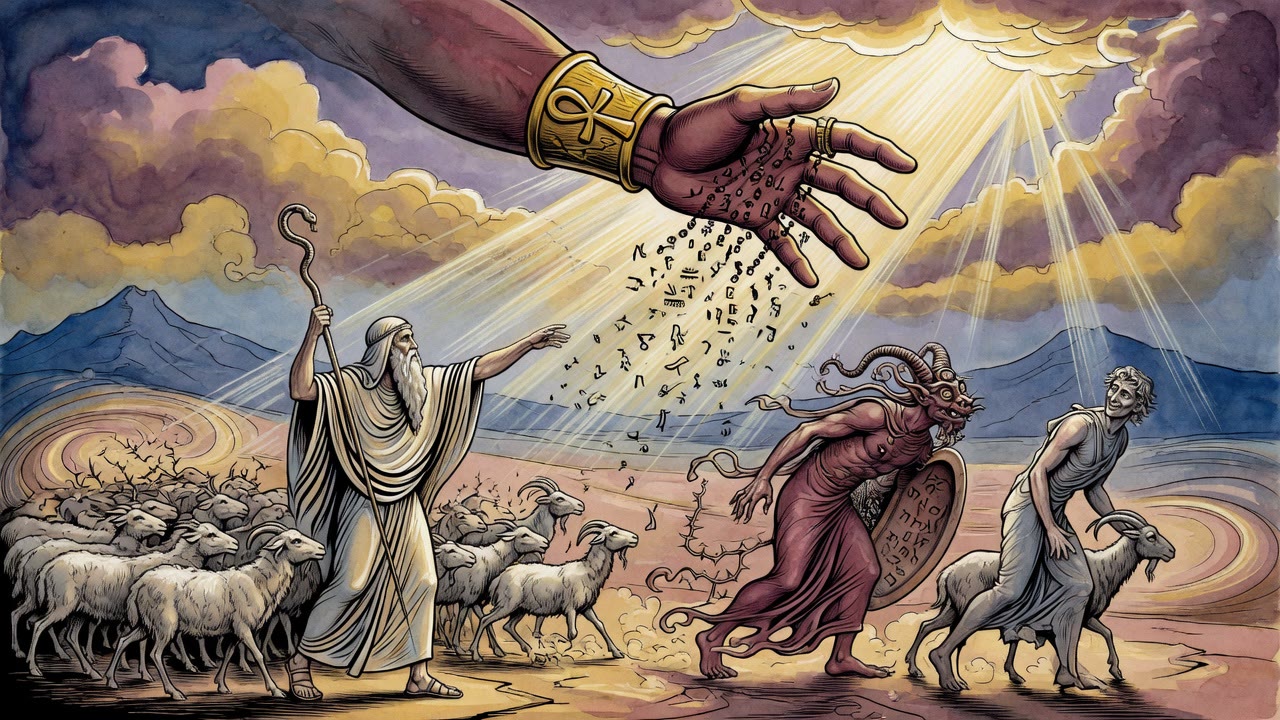
In the Song they called themselves "this people whom You have redeemed," and the claim was sharper than gratitude. The whole earth already belonged to God. He did not need a nation the way a king needs soldiers. He chose one people the way a lover chooses one face in a crowded market.

Isaiah would later put the same intimacy into plain speech: this people I created for Myself (Isaiah 43:21). At the shore the midrash heard Song of Songs counting the redeemed in ranks. Sixty queens for the six hundred thousand men of fighting age. Eighty concubines for those under twenty. Young maidens without number for the children who could not yet be tallied. Then the poem turns: one is My dove, My perfect one. That one, the sages said, was Moses, whose faithfulness balanced the whole host.

Israel crossed as a nation. Heaven weighed them as a beloved with a single shepherd at the front.

Guided by a King Not Yet Born

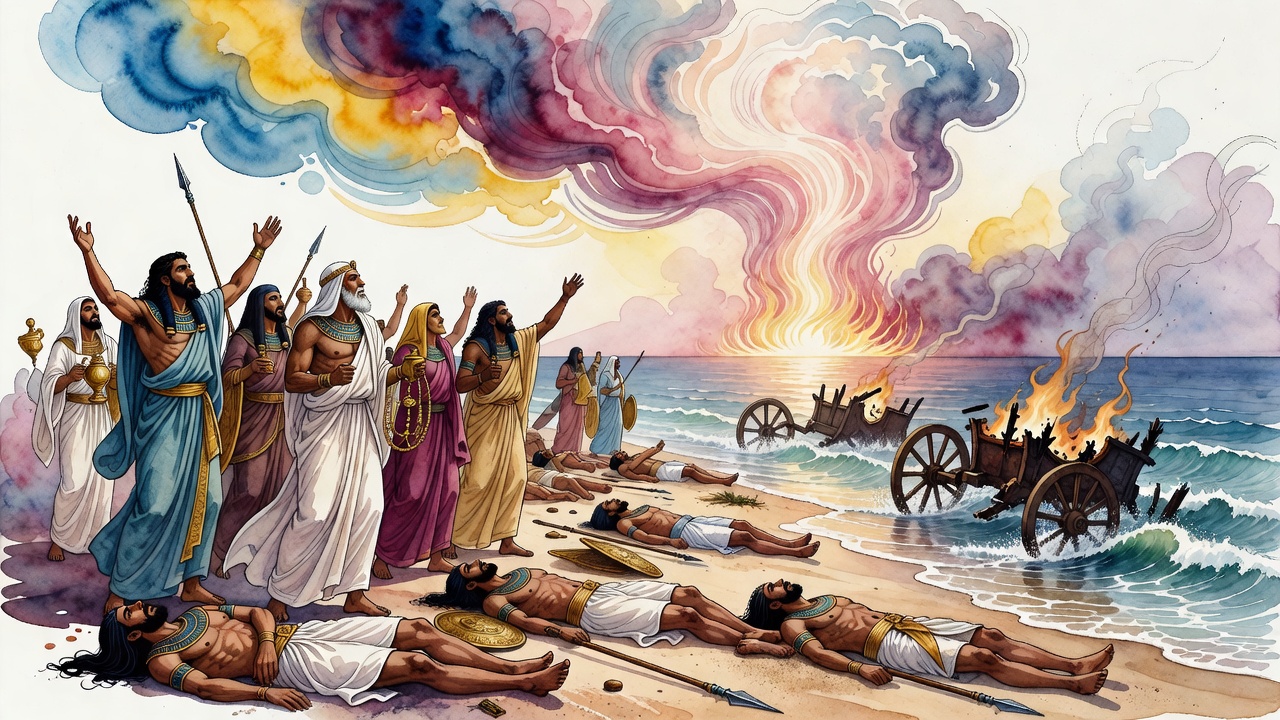
Another reading of the Song heard the word "strength" and did not hear Torah alone. Strength, in the mouth of the Psalmist, is what makes a king rejoice (Psalms 21:2). Hannah's prayer binds strength to God's king (1 Samuel 2:10). So the midrash said the sea opened in the merit of the house of David, a throne that would not stand in Jerusalem for centuries.

Men and women walked between water walls while a boy named David was not yet a thought in Bethlehem. The rescue reached forward. God pulled them through on the credit of a dynasty still unborn, the way a father spends for a child who has not taken a first breath.

Present terror. Future crown. Same act of guidance.

The Road That Was Always There

When the last of Egypt drowned and the last of Israel stood on the far bank, the sun kept its schedule. The moon did not change its ordinances. The people sang of a God who acts in time, and the lights above them testified that the act had been woven into the world's regular work.

No angel needed to stand as clerk. The sky itself signed the record every dawn and every dusk: this people was redeemed on purpose, for love, and under a strength that stretched from the first light to a king who would one day sing in Zion.

Moses put down the staff. Sand stuck to wet ankles. Behind them the sea closed as if it had never been a road, and ahead of them the desert waited with its own mercies and its own tests. The witnesses did not leave. They rose again the next day.

The Road Between Two Walls

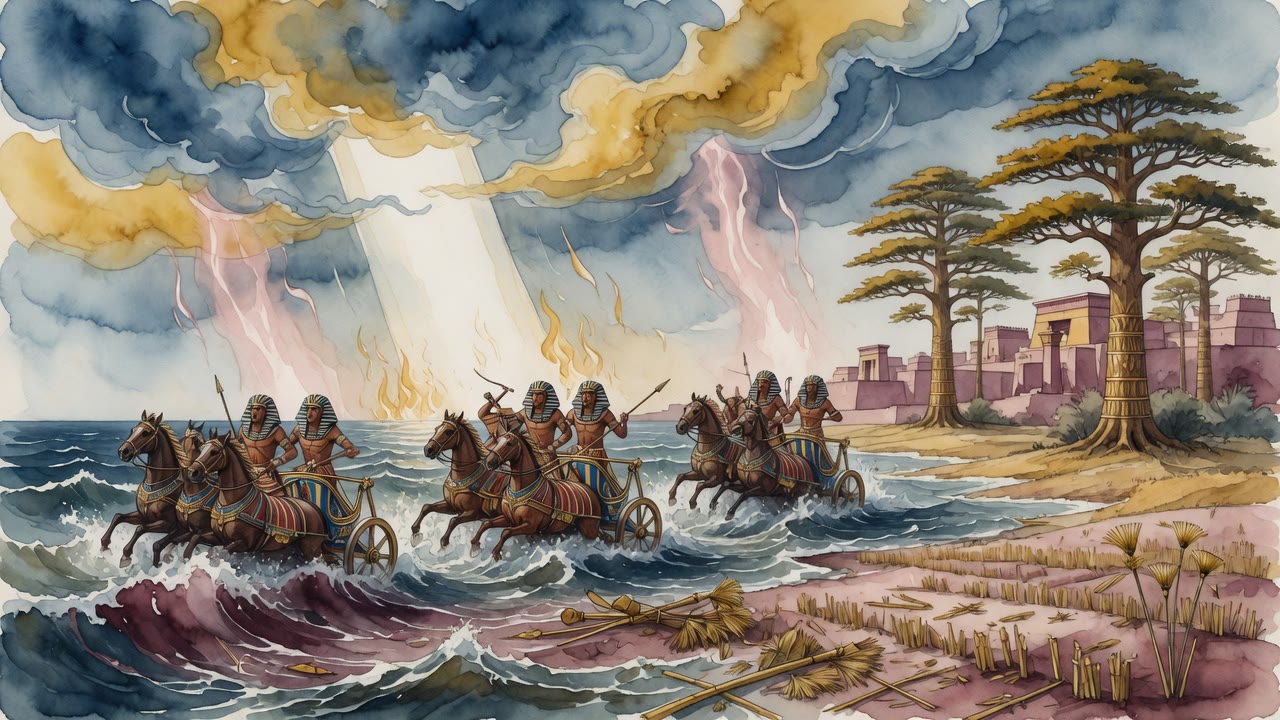
Between the standing walls a child dropped a clay cup and heard it hit stone that should have been mud. Fish hung in the frozen panels of water like coins in glass. Egypt's horses screamed when the path began to soften under the last chariots. None of that surprised the sun. None of it altered the moon's schedule.

Moses did not lecture the camp about Jeremiah. He walked. The theology would wait for later mouths. On that day the proof was wet boots on dry ground and a sky that kept ordinary time while extraordinary work finished under it. When the Song rose, it rose under lights that had already signed their names to the event.

Years later, when Israel forgot the sea in other fears, the same sun and moon would still rise. The midrash's claim is that their rising is not neutral weather. It is ongoing testimony that the God of regular light is the God who once irregularly tore a sea, and that He had bound Himself to that tearing as firmly as He binds Himself to dawn.


← All myths
From the tradition

Sources

3 sources

The texts behind this telling. Some cards carry a translation of the source; others are our own retelling of it, and each card says which. Every card links out to the original.

Mekhilta Tractate Vayehi Beshalach 4:7Mekhilta DeRabbi Yishmael

Retold in our words. Read the original at the link below.Mechilta, translated by Rabbi Shraga Silverstein · CC-BY

Rabbi Shimon ben Yochai made a breathtaking claim: the sun and the moon themselves serve as eternal witnesses that God had already committed to splitting the sea for Israel long before the event occurred.

The proof comes from the prophet Jeremiah: "Thus said the Lord who gives the sun for light by day, the laws of moon and stars for light by night, who splits the sea and stuns its waves, the Lord of hosts is His name" (Jeremiah 31:35).

Rabbi Shimon read this verse with extraordinary precision. Jeremiah lists God's attributes in a single unbroken sequence: He gives the sun, He governs the moon and stars, He splits the sea. All three are presented as permanent, ongoing realities, not one-time historical events. Just as the sun rises every day and the moon follows its laws every night, so too the splitting of the sea is woven into the fabric of creation itself.

The sun and moon are witnesses because their very existence testifies to the same God who split the sea. Every sunrise and every moonrise repeats the testimony: the God who set these lights in motion is the same God who tore the waters apart. The celestial bodies do not merely illuminate the world, they bear witness to God's power over all the elements.

For Rabbi Shimon ben Yochai, the splitting of the Red Sea was not an interruption of nature. It was an expression of the same divine will that keeps the sun burning and the moon orbiting. Nature and miracle are not opposites, they are different manifestations of the same Creator, testified to by the same witnesses, every single day and every single night.

Full source
Mekhilta Tractate Shirah 9:7Mekhilta DeRabbi Yishmael

Retold in our words. Read the original at the link below.Mechilta, translated by Rabbi Shraga Silverstein · CC-BY

Mekhilta DeRabbi Yishmael expounds a phrase from the Song at the Sea, "this people whom You have redeemed." The midrash hears in it a declaration of intimacy: although all the world belongs to God, He has set His love upon one people in particular. As Isaiah says (Isaiah 43:21) "This people have I created for Myself," Israel is singled out from among all nations as God's own. The sages then draw a striking proof from a verse in the Song of Songs, read throughout this tradition as a love poem between God and Israel.

The verse (Song of Songs 6:8) reads "Sixty are the queens and eighty are the concubines, and young maidens without number." The midrash decodes each group as a count of the people who left Egypt. The "sixty queens" are the six hundred thousand adult men numbered at the Exodus; the "eighty concubines" are those below the age of twenty; and the "young maidens without number" are the small children, too many to count. Yet the verse continues, "one is My dove, My perfect one," and the midrash applies this to Moses alone, who outweighs them all. By this reading the entire redeemed nation, in all its tiers, is gathered into the beloved of God, and at its head stands the single faithful shepherd whose worth balances the whole, a portrait of a people uniquely cherished and uniquely led.

Full source
Mekhilta Tractate Shirah 9:10Mekhilta DeRabbi Yishmael

Retold in our words. Read the original at the link below.Mechilta, translated by Rabbi Shraga Silverstein · CC-BY

The Mekhilta offers an alternate reading of "You have guided them in Your strength." Here, "strength" does not refer to the Torah. It refers to the kingdom of the house of David. God guided Israel through the sea in the merit of the Davidic monarchy they would one day establish in the land.

The proof text is characteristically elegant. The Psalmist writes (Psalms 21:2): "O Lord, in Your strength the king will rejoice." And Hannah's prayer in (1 Samuel 2:10) declares: "And He will give strength to His king." In both verses, "strength" and "king" are bound together. The word "strength" in the Song at the Sea therefore points to royalty, specifically, to the dynasty of David.

This interpretation creates a breathtaking timeline. The Israelites crossing the Red Sea around 1250 BCE were being guided by the merit of a kingdom that would not be established until David took the throne in Jerusalem centuries later. The splitting of the sea was not just a response to Egyptian oppression. It was an act shaped by the entire sweep of Israelite destiny, including a future king who had not yet been born.

Where the first reading saw Torah as the guiding merit, this variant sees monarchy. Both agree on the essential principle: God acts in the present on the strength of what Israel will become.

Full source