Parshat Beshalach6 min read

Moses Began Each Line and Israel Finished It

At the sea Moses kindled each phrase and Israel completed it. The Name warred without weapons, and faithfulness turned left hand into right.

Curated by Arthur · Told by Maggid ·
Table of Contents
  1. Call and Answer on the Seabed
  2. One Word, Three Ways to Host God
  3. He Wars with the Name Alone
  4. When Left Becomes Right
  5. The Chorus That Still Starts

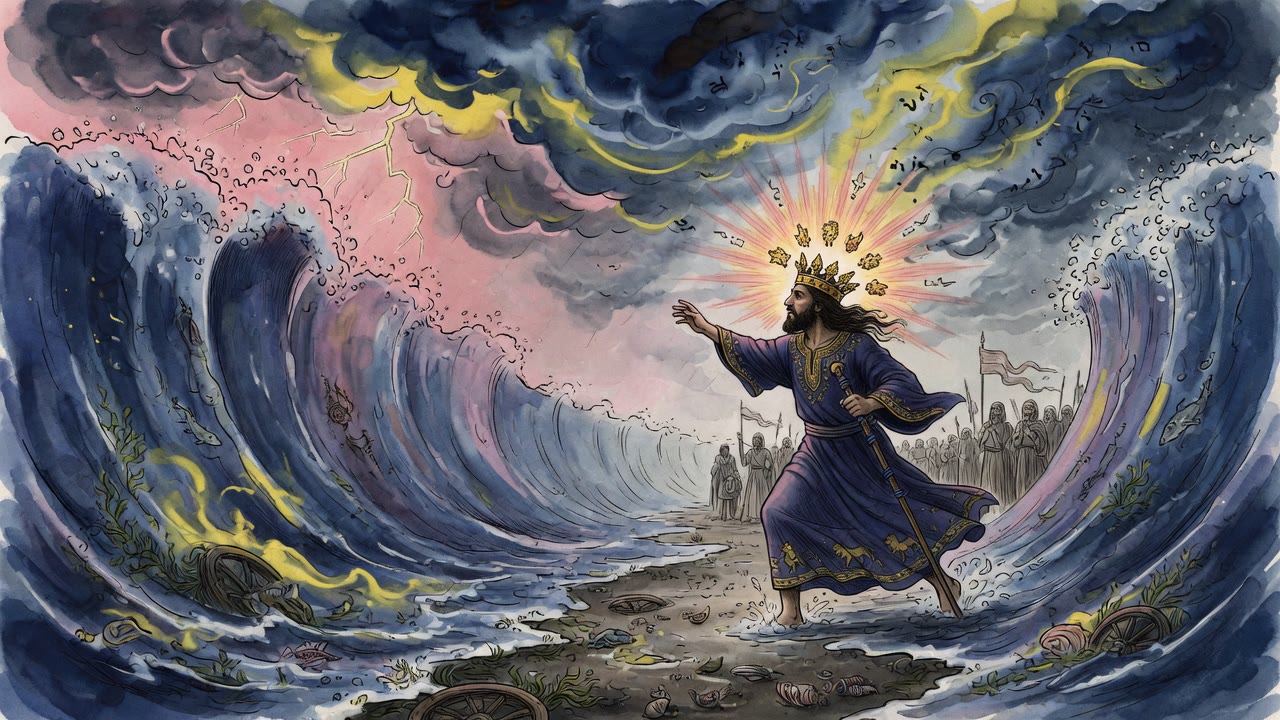
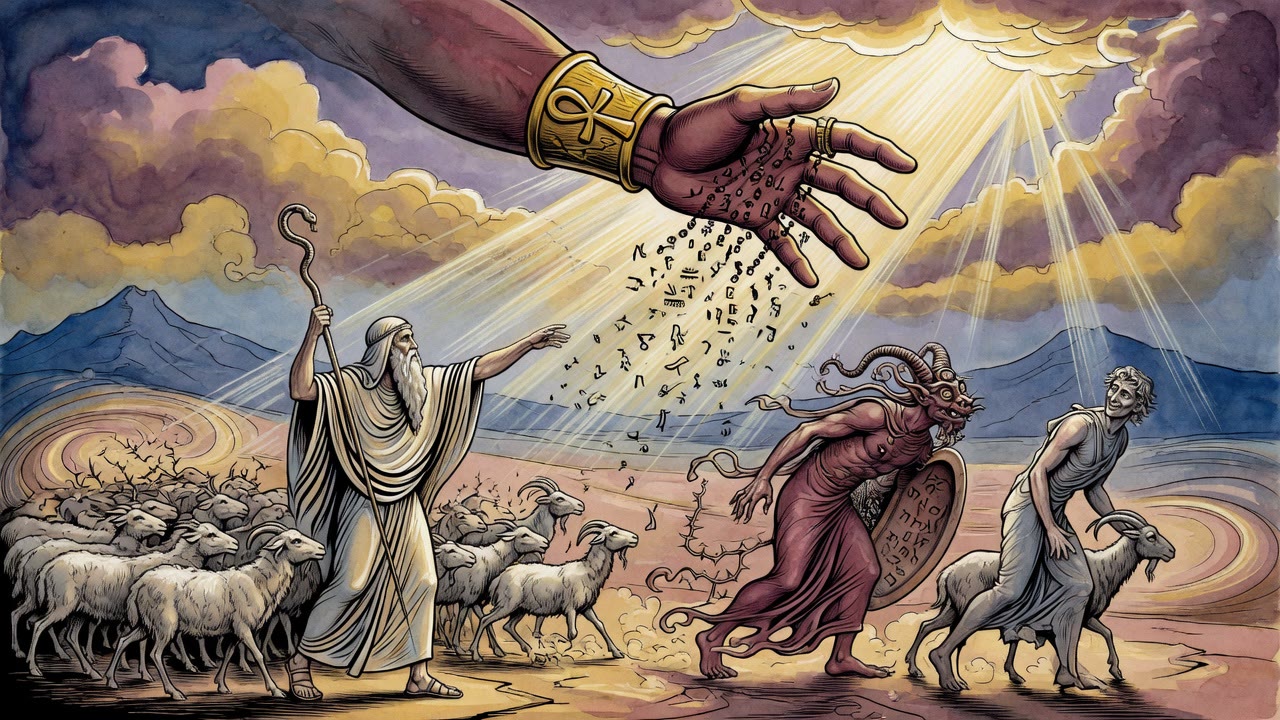
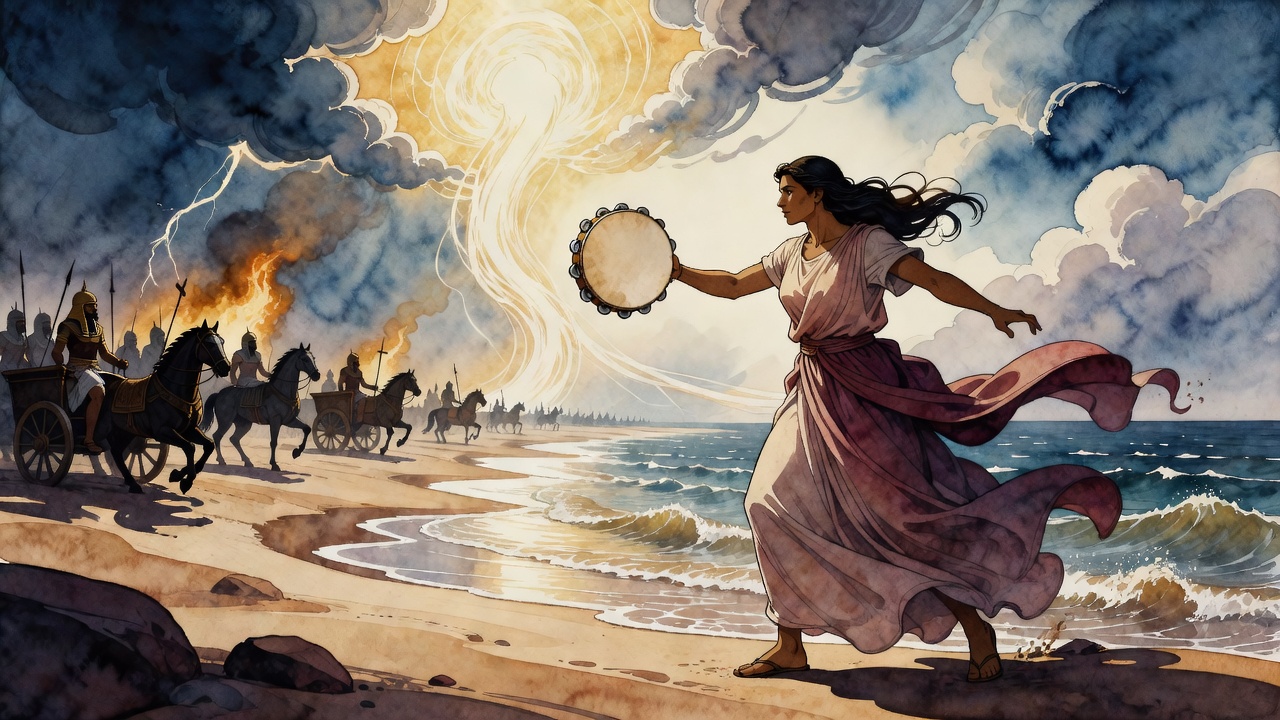
The sea still stood in walls when the first line rose from a human throat. Moses opened his mouth on ground that had been seafloor an hour before, and a nation answered him phrase by phrase until the Song filled the dry path between the waters.
Moses Began Each Line and Israel Finished It Click for full size

Call and Answer on the Seabed

R. Eliezer son of Tadai pictured the Song not as one vast unison forced from a million mouths at once, but as fire passed from leader to people and back again. Moses began, I shall sing to the Lord. Israel took the line and finished it, I shall sing to the Lord for He is high on high; horse and its rider He cast into the sea (Exodus 15:1). Moses started again, The strength and vengeance of the Lord. The people completed the salvation that had just wet their ankles with the last of Egypt. A third time he gave them the spark, The Lord is a man of war, and they closed with him, the Lord is His name.

The redeemed did not wait for a finished hymn written on a scroll to copy in schoolroom order. They built the hymn in midair with him while the walls of water still held. Kindling word and gathered chorus became one act of praise. The leader set each phrase. The people carried it through. A nation learned its first free song as a conversation, not a lecture.

Other sages offered other models of how a whole people could sing as one. Tadai's picture stays the most intimate. Moses does not drown them in sound. He lights them line by line until their own voices can stand without him.

One Word, Three Ways to Host God

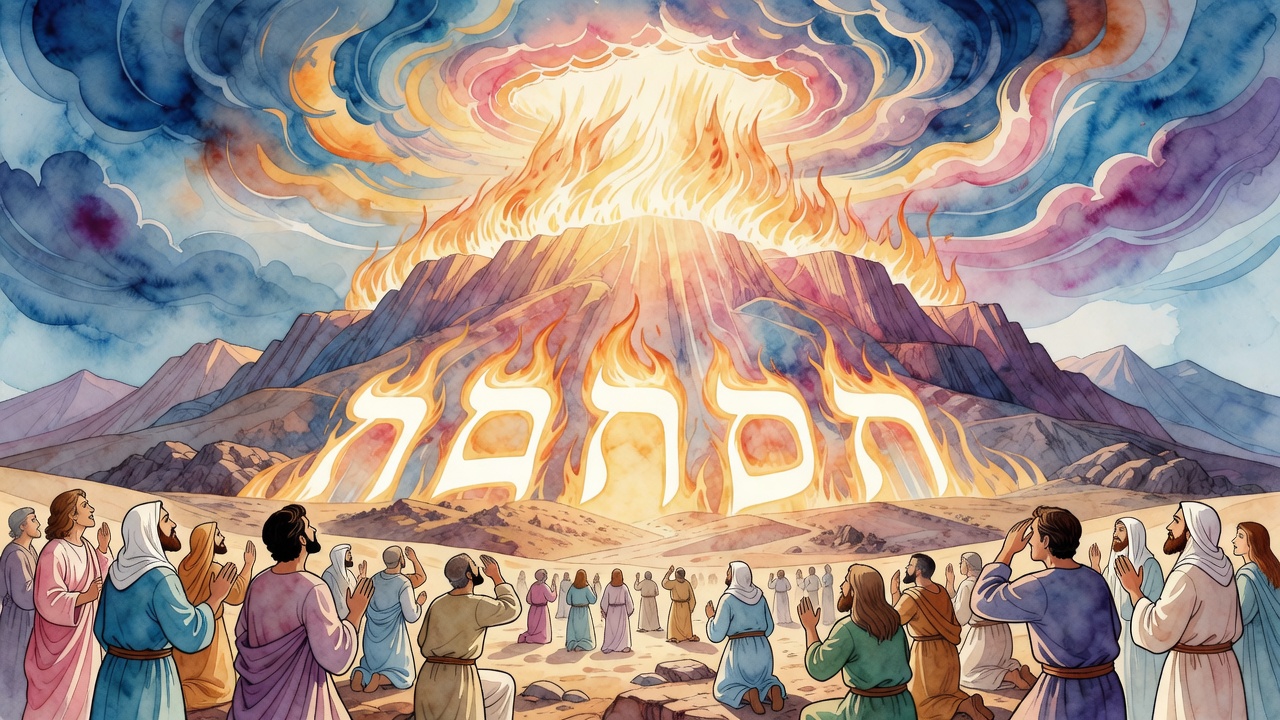
In the Song they sang, This is my God, ve'anvehu (Exodus 15:2). The Hebrew word bent under three teachers without breaking. Rabbi Yishmael refused a crude hosting of the Master in a human house. How can flesh host the Creator of sea and dry land? He heard na'eh, beauty, inside the letters. I shall beautify myself before Him with mitzvot (commandments). A beautiful lulav (the palm branch) chosen with care. Beautiful tzitzit (ritual fringes) that hang with intention. A beautiful shofar (a ram's horn sounded in worship) whose sound is not the cheapest blast. Prayer shaped with attention, not the bare minimum muttered while the mind walks elsewhere.

Abba Shaul split the letters into ani vehu, I and He. I will liken myself to Him. As God is merciful and gracious, so must Israel walk in mercy and grace toward the weak. Beauty of object. Imitation of attribute. The Mekhilta kept both readings alive on the same page, because a people just pulled from water needed both a lovely commandment and a lovely character before the manna fell.

To host God is impossible as innkeeper. To host God as beauty and as likeness is the work of a lifetime that began on wet sand with salt on their hems.

He Wars with the Name Alone

The Song said the Lord is His name, and the sages heard a battlefield without iron or horse-bit. God conquers by the Name. No sword, spear, chariot, or warhorse required for the One who split the sea with a wind. Later witnesses lined up behind the same claim. Young David faced the Philistine giant with no armor fit for the duel and said, You come with sword and spear and javelin, but I come with the name of the Lord of hosts (I Samuel 17:45). Israel sang in the psalm, Some with chariots and some with horse, but we with the name of the Lord our God (Psalms 20:8). King Assa, staring at an army too large to count, cried that there is none besides You to help the powerless against the strong (II Chronicles 14:10).

From the sea to the valley of Elah to the wars of the kings, the pattern held like a spine. Victory sits with the Name, not with the forge or the stable. Egypt's horses learned that lesson first. Later enemies would learn it again whenever Israel remembered how the Song was built between water walls.

When Left Becomes Right

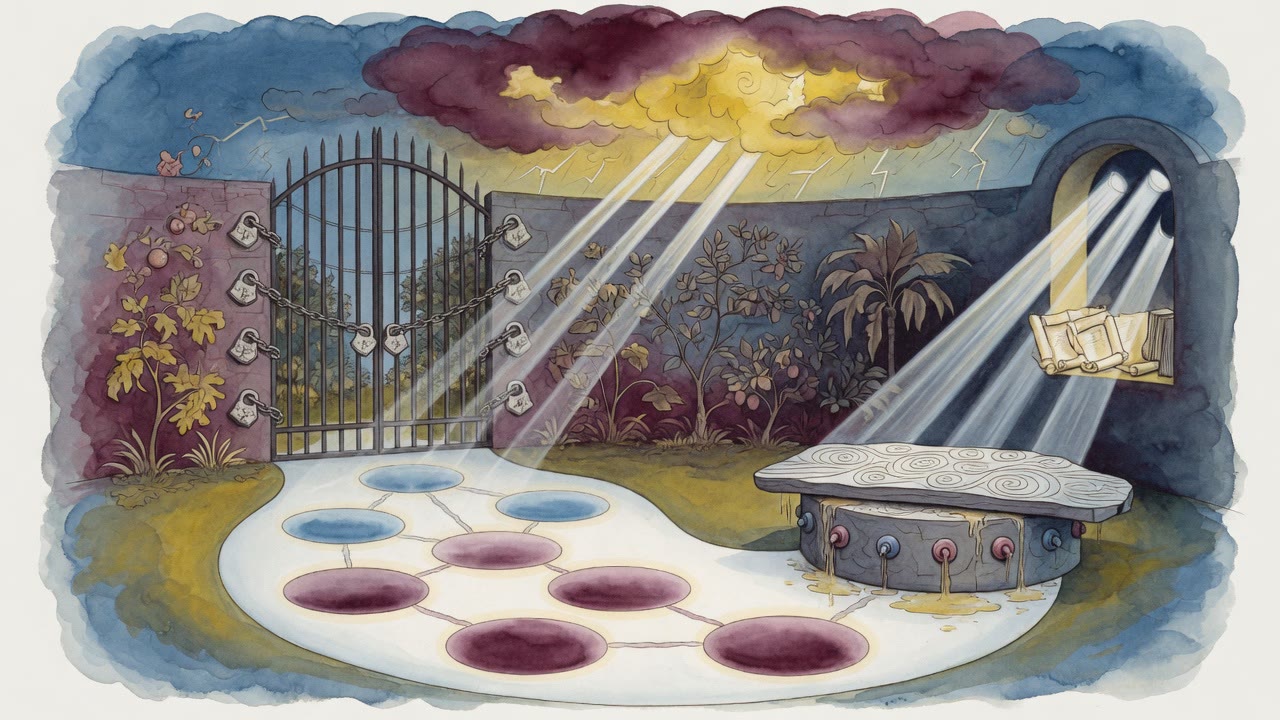
Twice the Song names Your right hand, O Lord, as grand in power (Exodus 15:6). The doubling is not empty poetry for the ear alone. The right hand of mercy is not fixed in place like a carved idol. When Israel does the will of God, even the left hand of judgment is drawn into the right. Severity softens into compassion. Distance becomes nearness. When Israel abandons that will, the right hand turns back before the foe (Lamentations 2:3). The shield drops. Closeness becomes a cold space where the enemy walks in.

A people that can answer Moses line by line can also move the posture of heaven. Faithfulness is not private warmth kept under a cloak. It is a hand that turns on high. The Song that celebrated a right hand already taught that the same hand can be withdrawn if the singers stop living what they sang between the waters.

Left and right are not only directions on a body. They are the weather of the covenant, and Israel is the one who changes the weather by what the camp does after the Song ends.

The Chorus That Still Starts

On that day the horses drowned and the singers lived with salt on their lips. Moses gave each spark. Israel completed each flame until the Song stood finished between water and wilderness. They beautified the Name with the first free breath in their lungs. They learned that the same Name wars without weapons, and that their own deeds can convert left into right or right into left.

The walls of water fell behind them when the last Egyptian was counted. The Song kept going ahead of them into every generation that still begins a line in the mouth of a teacher and waits for the people to finish it with full voice. Call and answer did not end at the sea. It became the shape of praise whenever the redeemed remember who started the first phrase and who must carry it home.

Somewhere between the kindling word and the gathered chorus, a nation became able to say, This is my God, and mean beauty, likeness, and the Name that needs no spear.


← All myths
From the tradition

Sources

4 sources

The texts behind this telling. Some cards carry a translation of the source; others are our own retelling of it, and each card says which. Every card links out to the original.

Mekhilta Tractate Shirah 1:14Mekhilta DeRabbi Yishmael

Retold in our words. Read the original at the link below.Mechilta, translated by Rabbi Shraga Silverstein · CC-BY

This midrash from the Mekhilta DeRabbi Yishmael belongs to a string of teachings that ask how exactly the Song at the Sea was performed by Moses and the redeemed people. The sages offer competing models of how a whole nation could sing together with one voice, and R. Eliezer b. Tadai gives his own picture: Moses would begin each line, and Israel would answer by completing it and singing it back with him. The song was thus a responsive performance, a call and answer rather than a recitation in perfect unison.

The passage illustrates this with the opening verses of the Song. Moses would open, "I shall sing to the L-rd," and Israel would join and round out the line, "I shall sing to the L-rd for He is high on high; horse and its rider He cast into the sea." Again Moses would begin, "The strength and vengeance of the L-rd," and the people would complete it, "The strength and vengeance of the L-rd has been salvation to me." A third time Moses would start, "The L-rd is a man of war," and they would finish with him, "The L-rd is a man of war; the L-rd is His name." In this model the leader sets each phrase and the people take it up and carry it through, so that the praise rises from Moses as the kindling word and from Israel as the gathered chorus, a shared act of song that bound the redeemer's voice to the whole nation he had brought through the sea.

Full source
Mekhilta Tractate Shirah 4:13Mekhilta DeRabbi Yishmael

Retold in our words. Read the original at the link below.Mechilta, translated by Rabbi Shraga Silverstein · CC-BY

"the L-rd is His name." The Mekhilta seizes on this phrase from the Song at the Sea to teach that God conquers through His name alone. It is with His name that He wars, and He has no need of any of these military appurtenances, none of the sword, spear, chariot, or horse on which mortal armies depend. To prove that the truly faithful rely on the same divine name rather than on weapons, the sages gather three witnesses from later Scripture. And thus did David say, when he went out as a youth against the Philistine giant (I Samuel 17:45) "You come to me with sword, and spear, and javelin; but I come to you with the name of the L-rd of hosts." David carried no armor worthy of the contest, only his trust in the Name, and he prevailed. The Mekhilta then cites the words sung by Israel, (Psalms 20:8) "These with chariots and these with horse, but we with the name of the L-rd our G-d." Other nations boast of their cavalry and their war machines, while Israel's confidence rests in God Himself. And thus did Assa say, the king of Judah facing an overwhelming host, (II Chronicles 14:10) "And Assa called out to the L-rd his G-d and said: O L-rd, there is none besides You." Across the generations, from the sea to the battlefield of David and the wars of the kings, the same conviction holds: victory belongs not to armaments but to the One whose name is the L-rd.

Full source
Mekhilta Tractate Shirah 5:12Mekhilta DeRabbi Yishmael

Retold in our words. Read the original at the link below.Mechilta, translated by Rabbi Shraga Silverstein · CC-BY

The Mekhilta notices something extraordinary in the Song at the Sea: the phrase "Your right hand, O Lord" appears twice in (Exodus 15:6). Why the repetition? Because the right hand of God is not fixed, it shifts according to Israel's faithfulness.

When Israel does the will of God, they convert the "left" to the "right." In rabbinic symbolism, the right hand represents mercy, favor, and closeness, while the left represents judgment and distance. A faithful Israel draws even God's hand of judgment into the realm of mercy. The left becomes right. Severity becomes compassion.

The reverse is also true. When Israel abandons God's will, they convert the "right" to the "left", turning mercy into judgment, closeness into distance. The Mekhilta cites the haunting verse from (Lamentations 2:3) as proof: "He has turned back His right hand before the foe." God's right hand, the hand of protection, withdraws. The shield drops.

This teaching from the Mekhilta DeRabbi Yishmael (Tractate Shirah 5:12) places astonishing power. And responsibility, in human hands. Israel's choices do not merely affect the world below. They reshape the very posture of heaven, determining whether God's hand extends in mercy or pulls back in grief.

Full source
Mekhilta Tractate Shirah 3:11Mekhilta DeRabbi Yishmael

Retold in our words. Read the original at the link below.Mechilta, translated by Rabbi Shraga Silverstein · CC-BY

The Mekhilta takes a single Hebrew word from the Song of the Sea, "ve'anvehu". And shows how three different rabbis derive three entirely different meanings from it, each revealing a distinct dimension of the relationship between Israel and God.

The word appears in (Exodus 15:2): "This is my God, ve'anvehu." Literally, it might mean "I will host Him" or "I will glorify Him." Rabbi Yishmael immediately challenges the literal reading. Is it really possible to "host" one's Master? Can a human being provide hospitality to the Creator of the universe?

Rabbi Yishmael's solution is elegant. He reads "ve'anvehu" as derived from the root "na'eh," meaning beautiful. The verse therefore means: "I shall beautify myself before Him with mitzvot (commandments)." How? By acquiring a beautiful lulav for Sukkot (the Festival of Tabernacles). By wearing beautiful tzitzit (fringes). By blowing a beautiful shofar. By offering beautiful prayer. The commandments themselves should be performed with aesthetic care, not the bare minimum, but with attention to beauty, quality, and devotion.

Abba Shaul offers a radically different reading. He breaks "ve'anvehu" into two words: "ani vehu", "I and He." The verse becomes a declaration of imitation: "I will liken myself to Him." Just as God is merciful and gracious, you too must be merciful and gracious. This is the principle of imitatio Dei, walking in God's ways by embodying His attributes.

Three readings of one word. One teaches aesthetic devotion. Another teaches moral imitation. The Mekhilta preserves all of them, because all are true simultaneously.

Full source