5 min read

Moses and Aaron Rose as the Blossoms of Egypt's Last Night

Moses walked the brick-dust lanes with one line: at about midnight. Children watched the brothers pass, men who no longer bent at every Egyptian shout.

Curated by Arthur · Told by Maggid ·
Table of Contents
  1. Blossoms in a Slave Land
  2. The Hour of Severing
  3. The Turtledove's Voice
  4. My God and My Fathers' God
  5. Green Against the Whip
Moses and Aaron Rose as the Blossoms of Egypt's Last Night Click for full size

Blossoms in a Slave Land

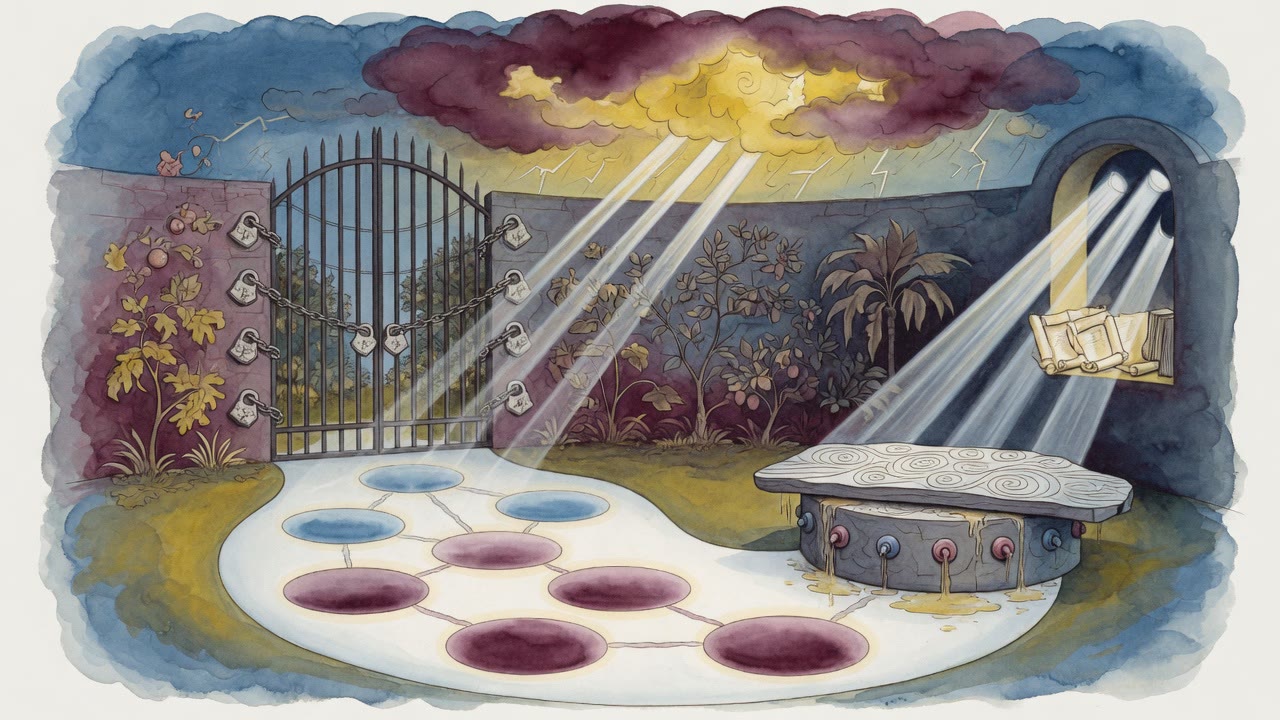
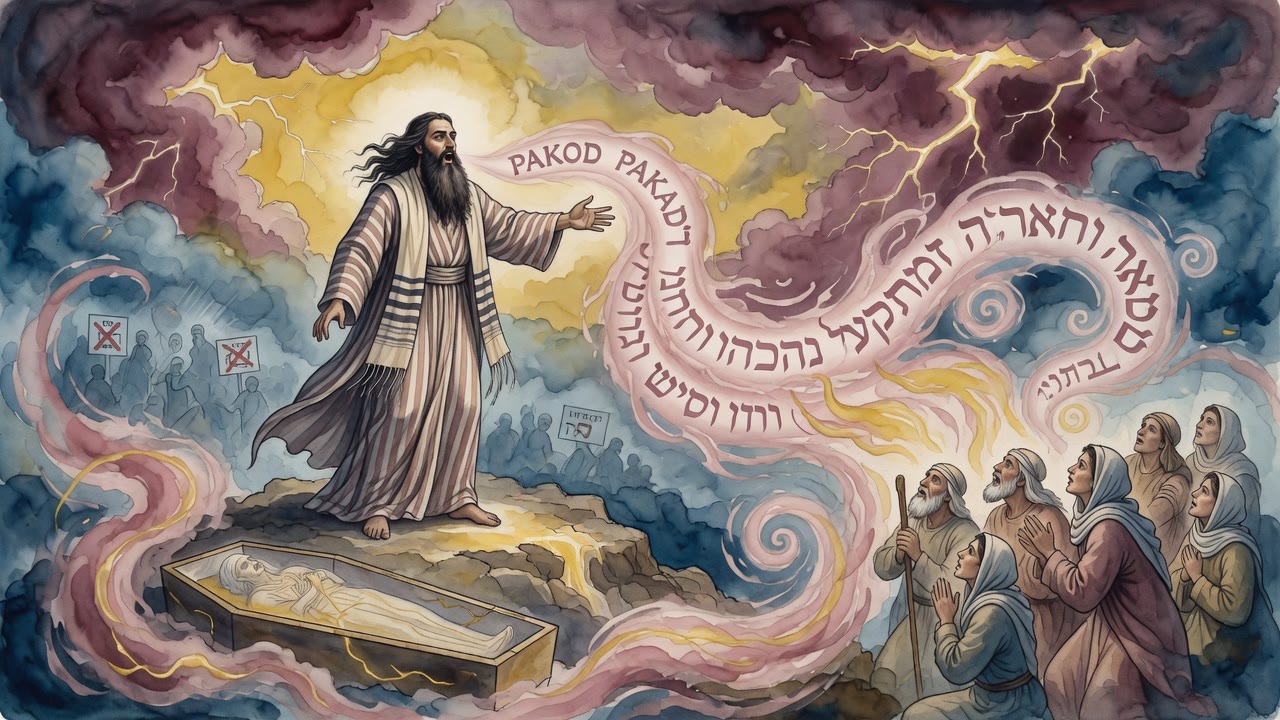
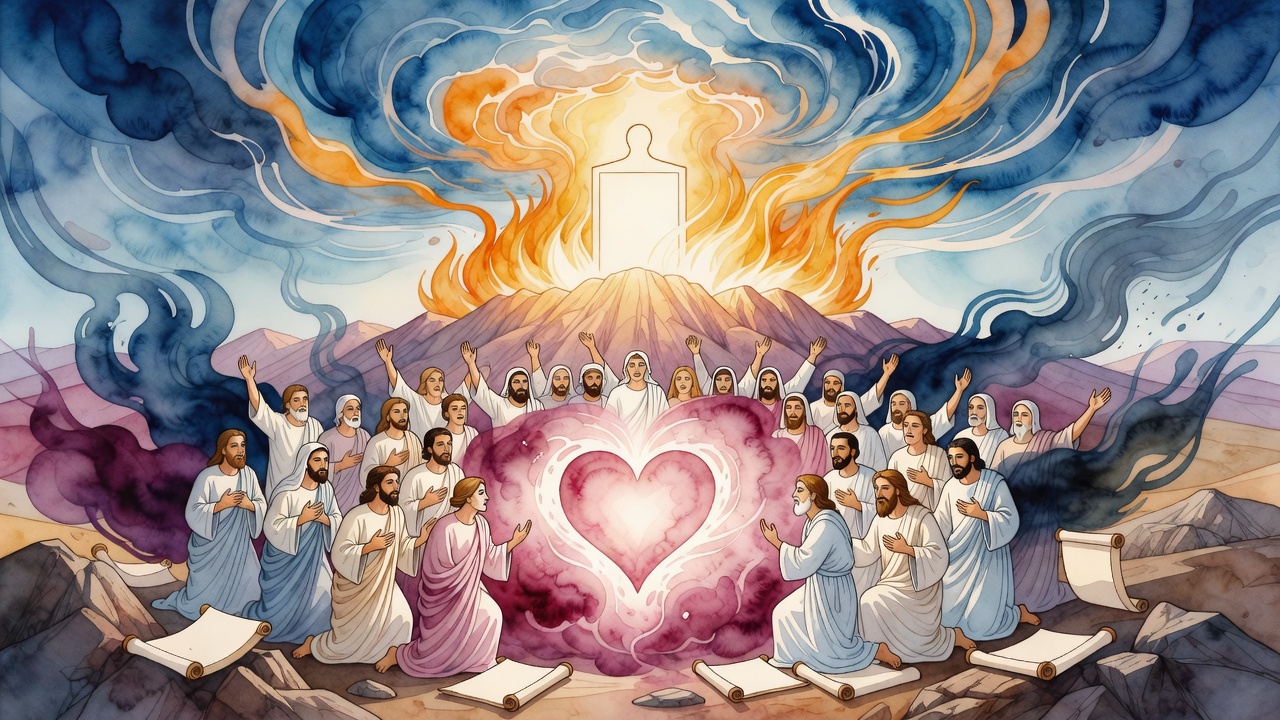
Moses walked the brick-dust lanes of Egypt with a message that did not look like a flower. "At about midnight," he said, speaking for the Lord, and the words fell into houses that still smelled of leeks and fear (Exodus 11:4). The Song would later call that hour a blossoming. "The blossoms have appeared in the land" (Song of Songs 2:12). The sages heard not petals but administrators: Moses and Aaron, the pair named together when God spoke in the land of Egypt (Exodus 12:1). Leadership opened like a bud no Pharaoh had planted.

Children watched the two brothers pass and did not yet know the word redemption. They only saw men who no longer bent at every Egyptian shout. The land was still Goshen and still under a whip, but something green had shown against the mudbrick. The nightingale's season, the time of zamir, was also a time of cutting. Pruning. Foreskins of a covenant people. The cutting off of Egypt's gods. The splitting that would come at the sea.

The Hour of Severing

Midnight did what speeches could not. Firstborns fell. Idols cracked under a judgment promised in advance (Exodus 12:12). Israel ate in haste with loins girded while the empire learned how thin a throne can be. The time of the nightingale was the time to sever an old life. Slavery's stalk was cut. The people stepped into a night that was already a road.

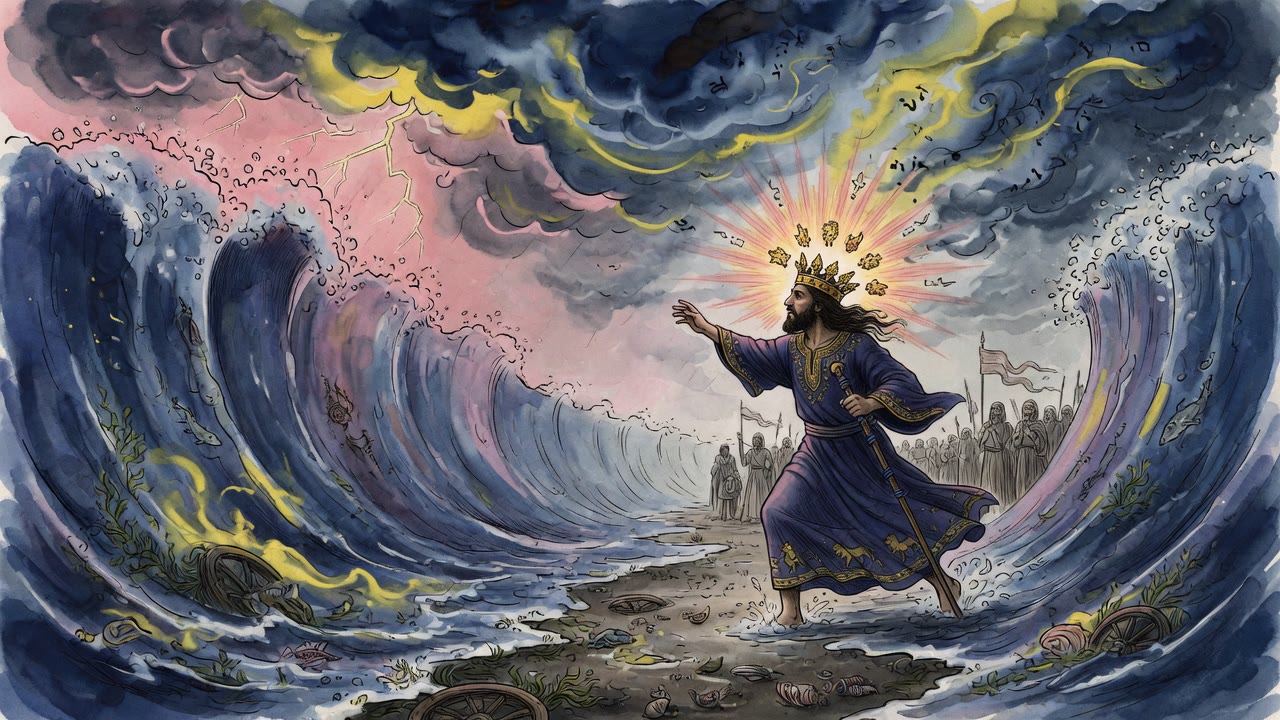
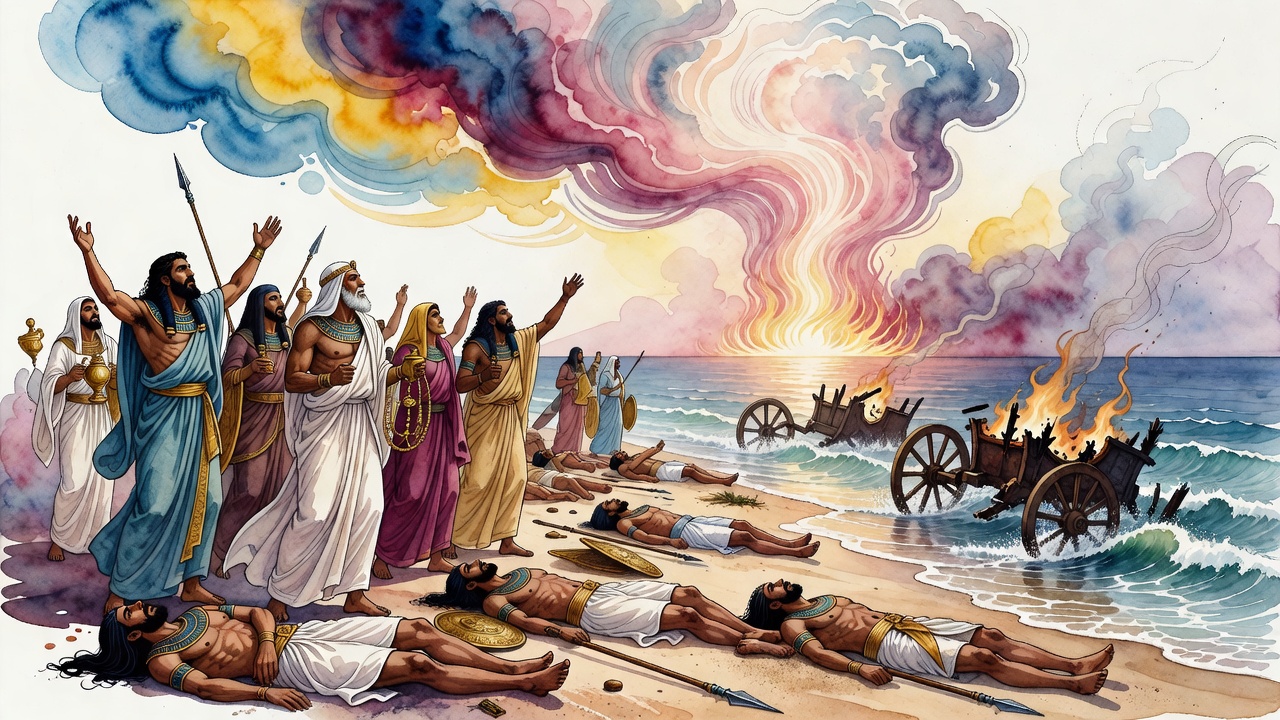
At the sea the cutting finished its work. Water stood like walls. Egypt drove in and the same water closed. Moses would sing, and the Song of Songs would be heard underneath that singing as a love that had waited through furnaces and pits for this shoreline. Rabbi Tanhuma heard paeans in the word for song. Rabbi Beivai heard statutes themselves as songs of devotion. Law and lyric were not enemies on that beach.

The Turtledove's Voice

"The sound of the turtledove is heard in our land." Rabbi Yochanan twisted tor toward tayar, explorer. The good scout's voice had already run ahead on the night Moses announced midnight. Exploration here was not mapwork. It was the courage to name what God was about to do while bricks still sat in their molds. A turtledove does not sound like a war drum. It sounds like a small insistence that the season has changed.

Israel standing between walls of water was the proof of that season. Behind them, chariot noise. Ahead, a path that should not have existed. The blossoms of leadership had not been decoration. They had been the first green of a people learning to walk where only a command made ground.

My God and My Fathers' God

When the song rose, Israel did not sing for one miracle alone. "Lord of the world," the congregation declares in the Mekhilta's hearing, "it is not only for what You did with me that I chant, but for the miracles You did with my fathers and with me in all the generations." "This is my God and I will extol Him" holds the dry path under their feet. "The God of my father, and I will exalt Him" holds Abraham in the furnace, Isaac on the altar, Jacob before Esau, Joseph rising from the pit.

The sea became a throat for the whole chain. A child who had never heard of Ur still sang inside a people that carried Ur's rescue. The Song of Songs' blossoms and the Song of the Sea's exaltation locked together: love speech and war speech, both aimed at the same faithful Partner.

Green Against the Whip

Years later, in study halls far from Goshen, the rabbis would still smell that night on the verses. They refused to let the Song of Songs stay only a wedding song of bodies. They walked it back into Egypt until Moses and Aaron flowered on the page and midnight became a season. They refused to let the sea-song stay only a victory chant. They stretched it across every father God had already pulled from fire and pit.

Stand on the shore in the midrash's wind. Blossoms are men who accept a mission. Cutting is the end of an empire's claim on Hebrew bodies. The turtledove is a voice that speaks midnight before the dark arrives. The exaltation is older than the salt on your lips. That is how a slave people learns it was loved before it was free.

In the hours before midnight, mothers packed dough that would not rise and fathers checked doorposts for blood that had to dry into a sign. The blossoms of leadership were not only Moses and Aaron in the midrash's reading. Every household that obeyed became a bud of a free people. The cutting season reached into flesh and calendar and kitchen. Egypt's gods received their sentence while Hebrew children asked why the meat had to be roasted and why the night felt like a doorway.

When the sea finally opened, the Song of Songs and the Song of the Sea shared one breath. Love that had been deferred through brick and whip found a shoreline. The scout's turtledove voice, once only a warning, became the memory of a path. Israel sang for fathers and for themselves, for furnaces and for this water-wall, until the shore held more praise than sand.


← All myths
From the tradition

Sources

2 sources

The texts behind this telling. Some cards carry a translation of the source; others are our own retelling of it, and each card says which. Every card links out to the original.

Shir HaShirim Rabbah 2:12Shir HaShirim Rabbah

Retold in our words. Read the original at the link below.The Sefaria Midrash Rabbah, 2022 · CC-BY

Ever read a love poem and thought, "This is beautiful, but what does it mean?" Well, the Jewish tradition has been doing that for centuries with the Song of Songs, also known as Shir HaShirim in Hebrew. It's this gorgeous, sensual book in the Bible, and Jewish mystics have always seen it as an allegory for the relationship between God and Israel.

That's where Shir HaShirim Rabbah comes in – a rabbinic commentary that unpacks the layers of meaning within the Song. the story turns to one fascinating interpretation, focusing on the verse, "The blossoms have appeared in the land, the time of the nightingale has arrived, and the sound of the turtledove is heard in our land" (Song of Songs 2:12).

What do blossoms, nightingales, and turtledoves have to do with God and Israel? Buckle up, because the Rabbis are about to take us on a wild, insightful ride.

"The blossoms [hanitzanim] have appeared in the land," the commentary states, but then makes a surprising leap. It connects hanitzanim (blossoms) to hanatzohot (administrators). Who are these administrators? Moses and Aaron, of course! The leaders chosen to guide the Israelites out of Egypt. The text supports this by quoting (Exodus 12:1): "The Lord said to Moses and Aaron in the land of Egypt, saying…" According to this reading, the verse in Song of Songs isn't about literal flowers, but about the emergence of leadership at a crucial moment of redemption.

Next, "The time of the nightingale [hazamir] has arrived." Now, zamir can mean "nightingale," but it also shares a root with the Hebrew word meaning "to prune" or "to cut off" [shetizamer]. So, the Rabbis interpret this as the time for Israel to be redeemed, the time for the foreskin to be cut off (referencing the ritual of circumcision), the time for Egypt to be "cut off" from its power. It’s a time for endings and beginnings, a symbolic severing from the old life of slavery.

The commentary continues, piling on examples of what this "cutting off" entails: the uprooting of Egyptian idol worship, as promised in (Exodus 12:12) ("And I will administer punishments against all the gods of Egypt"). And, powerfully, the splitting of the Red Sea, as described in (Exodus 14:21) ("The water split"). It was also a time for song, for rejoicing in newfound freedom, as celebrated in (Exodus 15:1) ("Then Moses…sang").

Rabbi Tanhuma adds that it was the time to compose paeans – songs of praise – to God. He references (Exodus 15:2): "The Lord is my strength and my song [vezimrat ya]"; zemirot ya being paeans to the Lord. Rabbi Beivai even connects this to (Psalms 119:54): "Your statutes were paeans to me." The very laws and commandments are seen as songs of devotion!

Finally, "The sound of the turtledove [hator] is heard in our land." Rabbi Yoḥanan offers another clever twist, connecting tor (turtledove) to tayar (explorer). The voice of a good explorer was heard in the land – and who is this explorer? None other than Moses himself, at the moment he announces God's impending actions in (Exodus 11:4): "Moses said: So said the Lord: At about midnight…"

So, what does it all mean? This passage from Shir HaShirim Rabbah reveals the beautiful, intricate way the Rabbis read the Bible. They saw connections everywhere, finding echoes of the Exodus story within a seemingly simple love poem. They transformed images of nature into symbols of redemption, leadership, and divine communication.

It’s a reminder that even the most familiar texts can hold new depths of meaning, waiting to be uncovered with a little creativity and a lot of tradition. Maybe the next time you hear a birdsong, you'll think of Moses, Aaron, and the long journey to freedom.

Full source
Mekhilta Tractate Shirah 3:21Mekhilta DeRabbi Yishmael

Retold in our words. Read the original at the link below.Mechilta, translated by Rabbi Shraga Silverstein · CC-BY

The Mekhilta presents a remarkable statement from the congregation of Israel, addressed directly to God, that explains exactly why they are singing at the Red Sea.

"Lord of the world," Israel declares, "it is not for the miracles that You performed with me alone that I chant song before You, but for the miracles that You performed with my fathers and with me in all of the generations."

This is a profound reframing of the Song of the Sea. The Israelites are not simply celebrating the fact that they just walked through the Red Sea on dry ground while the Egyptian army drowned behind them. They are singing for the entire accumulated history of divine intervention, every miracle, every rescue, every moment when God stepped into history to save their ancestors.

The splitting of the sea is the latest in a long chain of wonders: Abraham rescued from the furnace, Isaac saved on the altar, Jacob protected from Esau and Laban, Joseph raised from the pit to the palace. The song encompasses all of it. The Israelites at the shore are not merely survivors of one event. They are the inheritors of an entire tradition of divine faithfulness.

That is why the verse says both phrases: "This is my God and I will extol Him", for what He has done for me, right now, today. And "the God of my father, and I will exalt Him", for everything He has done across all the generations. The song is personal and historical at once, a celebration of both present miracle and ancient covenant.

Full source