God Called Himself Israel's Brother at the Red Sea
Moses shouted at the sky with the chariots already closing. The answer came back in family language, and then the lightning began herding Egypt.
Table of Contents
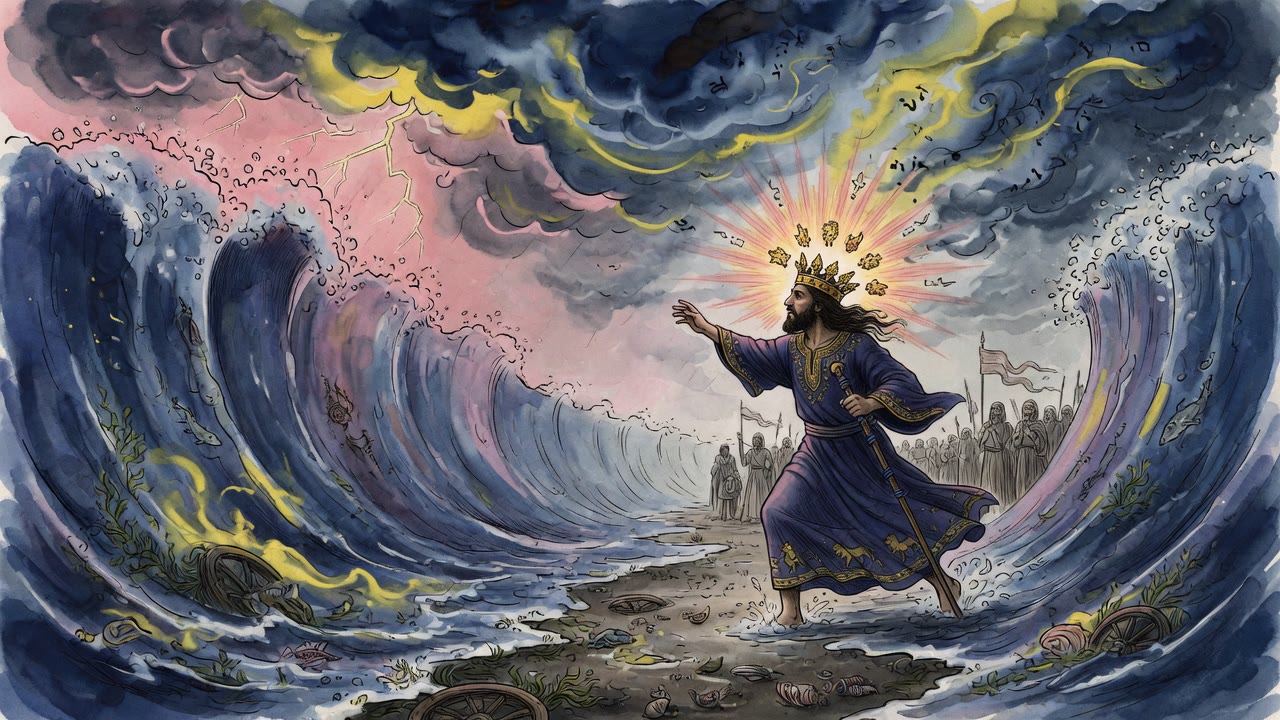
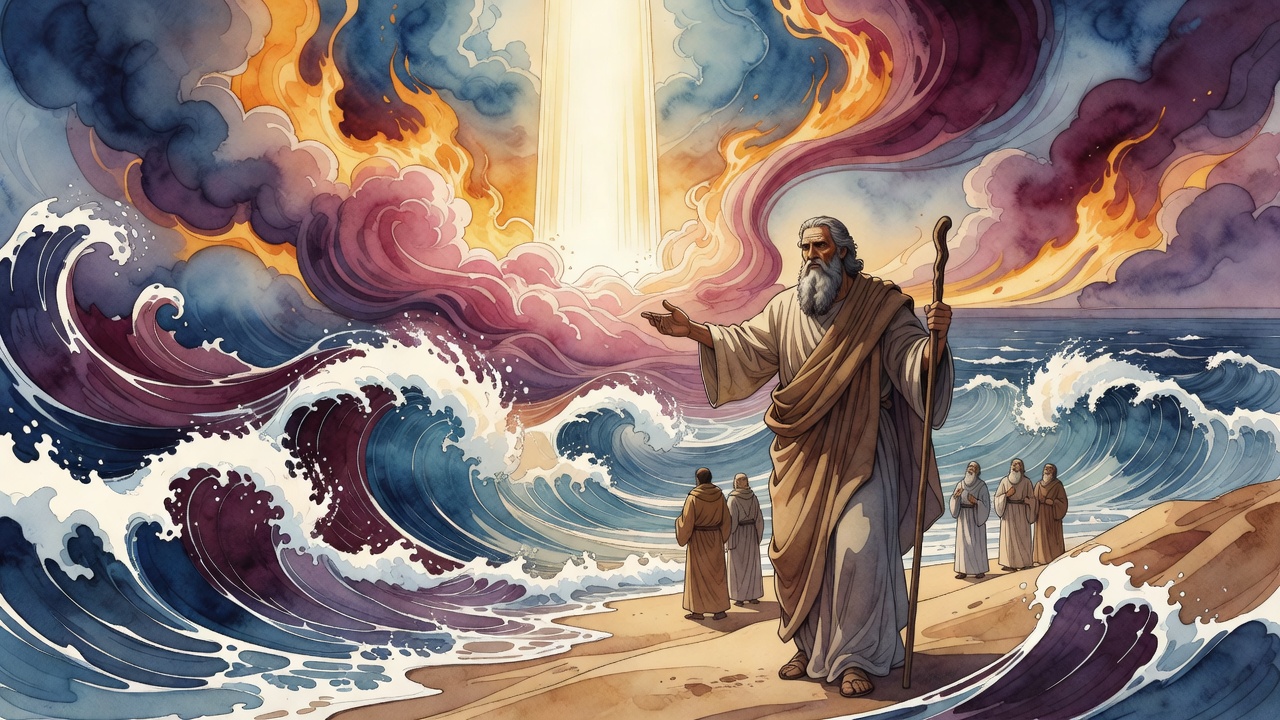
The chariots came on across the sand in a line as wide as the shore. Ahead of Israel the water stood flat and gave nothing. Moses lifted his voice and shouted at the sky.
 Click for full size
What came back was not the voice of a king working through a petition. "A brother is born for the time of trouble," God answered. "I am a brother to Israel in their trouble." He called Himself family, out loud, with an army closing on the beach.
The Word He Used for Them
Kinship was not a courtesy in that mouth. When God spoke about the peace of Jerusalem He spoke about brothers and friends, and the word He used for this people was the word a man uses for someone who shares his mother. On the shore that vocabulary had teeth. A people with no boats needed a relative strong enough to move an ocean, and the relative had just identified Himself by name.
Behind them the Egyptian drivers shortened their reins.
Shafts One Way, Lightning the Other
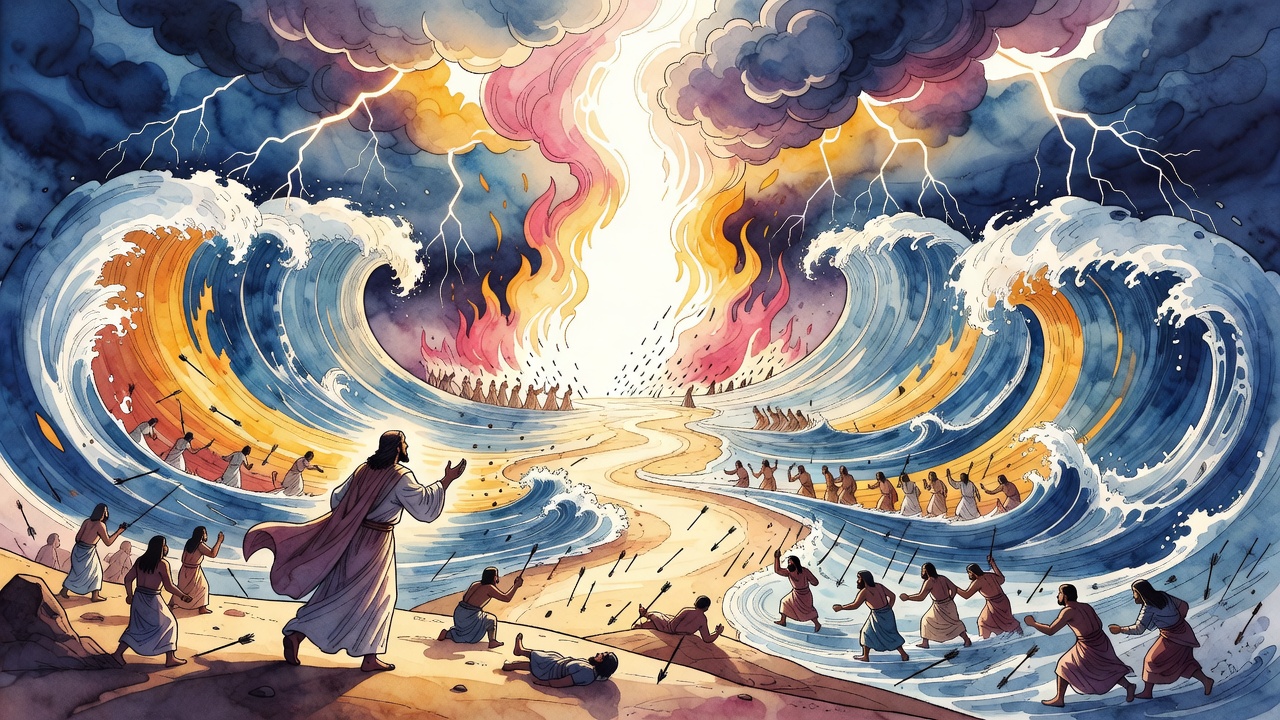
The first volley came out of the air above the ranks. Shafts fell among the Egyptians and drove them apart, and the men scattered sideways over wet sand, breaking the lines they had held since dawn. Then the lightning came down, and the lightning did the opposite work. It herded them. Where the arrows had opened the formation the bolts squeezed it shut, packing soldiers into knots so tight a man could not lift his own arm.
They were pulled apart and pressed together and pulled apart again, and no captain could give an order that survived the next breath.
He Took Their Greaves
Then the armor went. The bronze plates strapped over their shins came away from their legs, and the soldiers stood in the surf with nothing between the water and their skin. Men who had spent twenty years learning to hold a line lost the line and could not have said how. They did not know what they were doing. That is the whole of the description: an army wading in circles with its shins bare, obeying nobody.
These were the drivers who had counted bricks and cracked whips over Hebrew backs for as long as anyone in the camp could remember. Now the weather had picked a side and would not tell them which way to run.
The Roar That Dried the Sea
Then God roared at the sea.
Not a gesture. Not a slow parting under the touch of a staff. A shout, and the water heard it and dried up. Where there had been depth there was a floor, and the floor was dry enough for children to cross on it without slipping. Israel walked out onto ground that had been under the sea while they were still deciding whether to be afraid of it.
On the far side they sang. Who is like You among the mighty. They sang it as a question, and behind them the answer was still draining out of the wheel ruts.
Three Days and No Water
Three days later the singing had stopped.
The water they had carried out of the rocks was gone. So were the pits. Servants sent ahead with jars came back with the jars dry and their heads covered, and the men who had sent them looked at the empty clay and said nothing. Salvation had not come with a supply line. It had come, and then it had left them standing in a wilderness doing arithmetic on their own thirst.
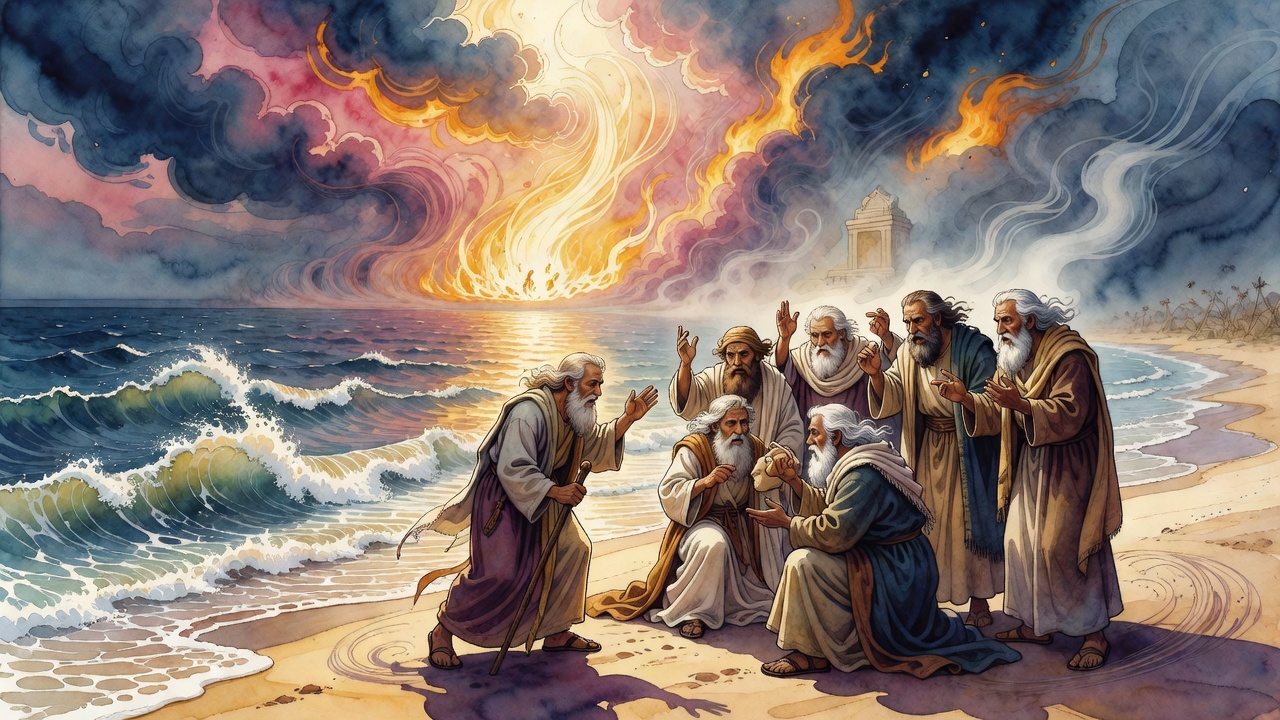
Some in the camp argued that the three dry days were never about wells. Water in that argument meant the teaching, and what the people had gone three days without was Torah. The two readings agree on the number, and the number is what the elders acted on. They fixed the reading days after that road: Shabbat, then the second day of the week, then the fifth, so that three days in a row would never again pass without it.
Out of the same stretch of road came a harder rule than the calendar one. A man who listens once will find himself listening the next time. A man who lets one word go past him will let the next one go, and the one after that, until forgetting is the thing he has become good at. The choice was handed to the people along with the freedom, and no one in that camp was going to be excused from making it.
The wheels of Egypt stayed on the sea floor. The empty jars came home with the camp.
← All myths