5 min read

The Lion Roared and Amos Could Not Stay Mute

When the lion of heaven sounded, fear ran through the prophet's bones. Silence became impossible. The mouth that heard had to open.

Curated by Arthur · Told by Maggid ·
Table of Contents
  1. A Sound Too Large for a Throat
  2. Why Compare the Maker to a Beast
  3. Ink That Had to Be Written
  4. Taunts Already Heard Above
  5. The Mouth Opens
The Lion Roared and Amos Could Not Stay Mute Click for full size

A Sound Too Large for a Throat

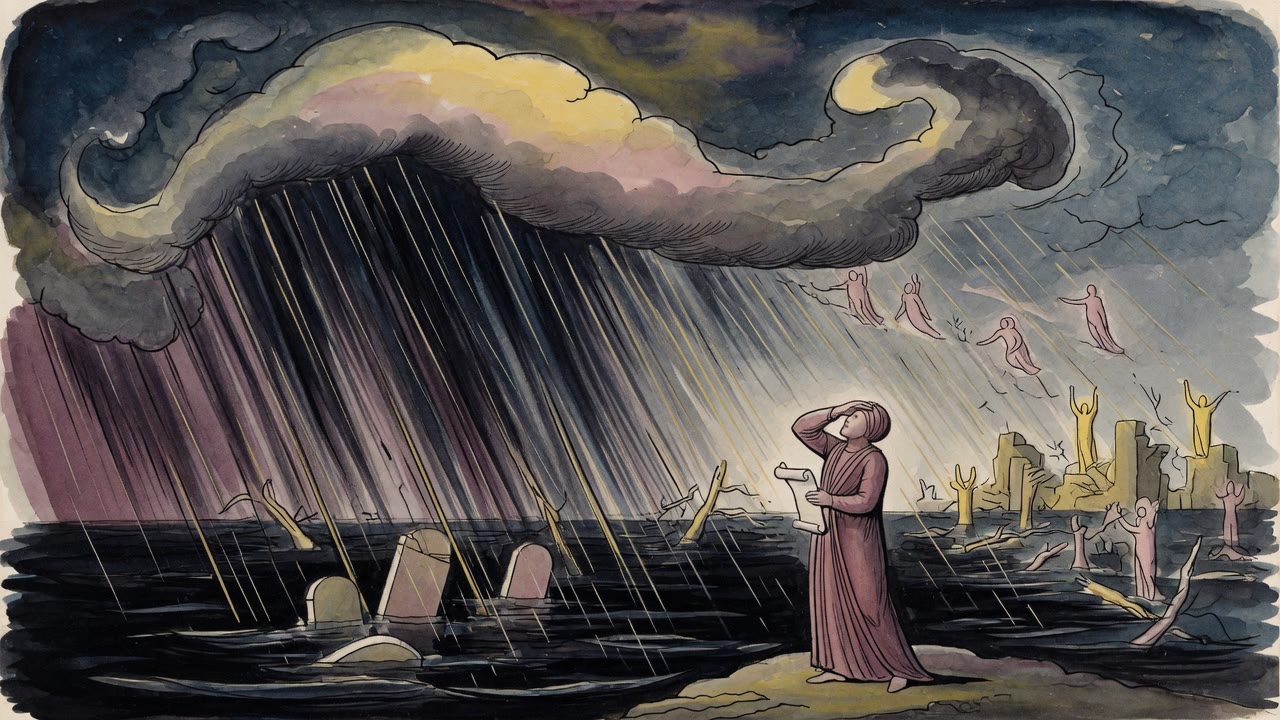
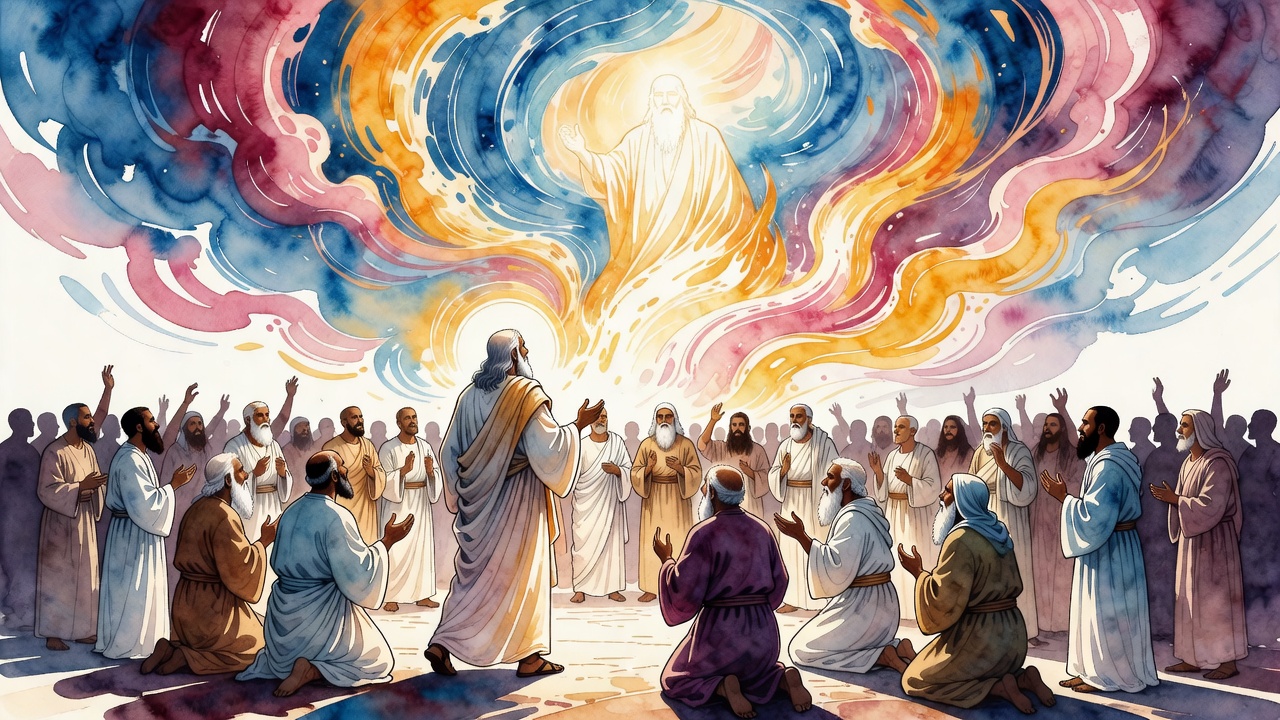
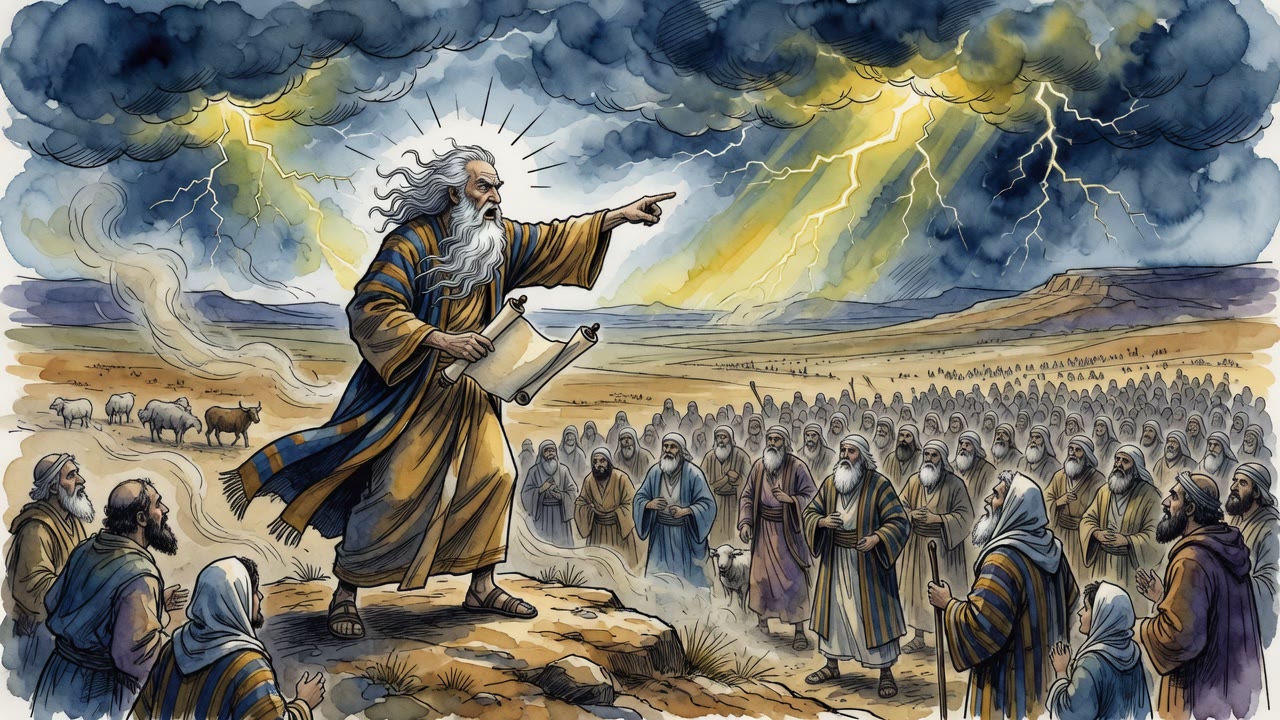
Amos flinched before he understood the words. Somewhere beyond Tekoa a roar rolled through him that was not weather and not a beast in the scrub.

"The lion has roared. Who will not fear? The Lord God has spoken. Who will not prophesy?" (Amos 3:8).

His knees knew the answer before his mind did. Fear first. Speech second. The order is fixed. A person who truly hears does not get to keep the hearing private.

He had been among sycamores and herds. The roar did not ask whether he preferred a quieter trade. It used him as an instrument that had to sound.

Dust rose when he stood. His staff felt thin. The valley did not care that he was afraid. Fear was part of the proof that the sound was real.

Why Compare the Maker to a Beast

Teachers later pressed the verse hard. Who gave the lion its strength if not God Himself? Why describe the Creator with one of His creatures? Does the comparison not shrink what it tries to name?

They did not throw the metaphor away. "We use the epithet of His creations to help the ear by what it is accustomed to hearing." Human language has no native word for the sound of God's voice. Scripture borrows the worst terror the ear already knows, a lion in the dark, the way it borrowed kiln smoke for Sinai.

The roar is true enough to shake a body. It is also infinitely short of the thing it points to. Metaphor is a ladder that never reaches the roof. It is still the only ladder most mouths can climb.

Amos did not pause to critique the image. His bones were already convinced. Later students in study halls could afford the question. He had only the answer of open speech.

Ink That Had to Be Written

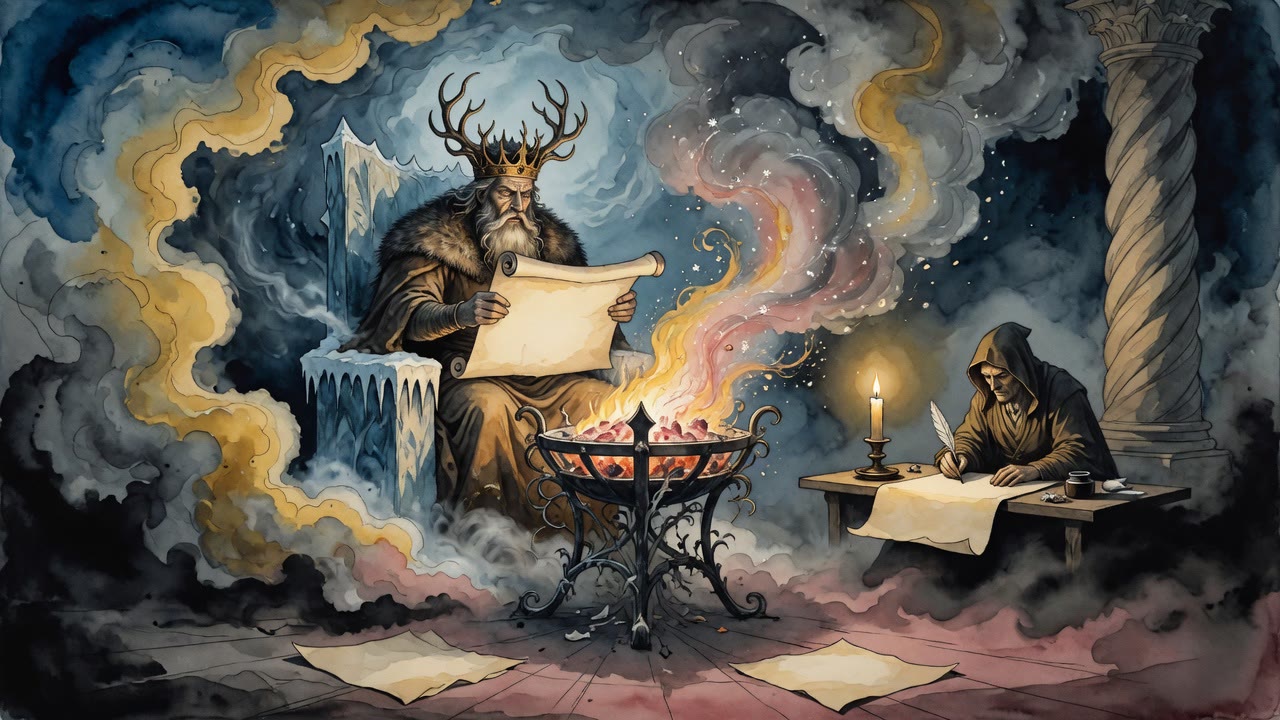
In another generation Baruch sat with a scroll and ink while Jeremiah spoke. "From his mouth he read all these words to me, and I wrote it in the book with ink." Prophecy that stays in air dies with the hour. Prophecy that enters ink can travel into years that have not yet learned to fear.

The rabbis argued about writing on stone or scroll for other laws. For words meant for every generation, they leaned toward the medium that endures like a divorce writ endures, not like a one-time monument on a hill. Baruch's ink is that choice made personal. A human hand shakes. The words still land on skin that lasts.

Amos had no Baruch in the field when the roar hit. He had a mouth. That was enough for the first stage. Later, scribes would catch what mouths began. The chain from roar to ink is long, but it starts with a person who will not stay mute.

Baruch's knuckles stained black. Jeremiah's voice went raw. Between them a book took shape that kings would try to burn. Burning is also a kind of testimony that the words landed.

Taunts Already Heard Above

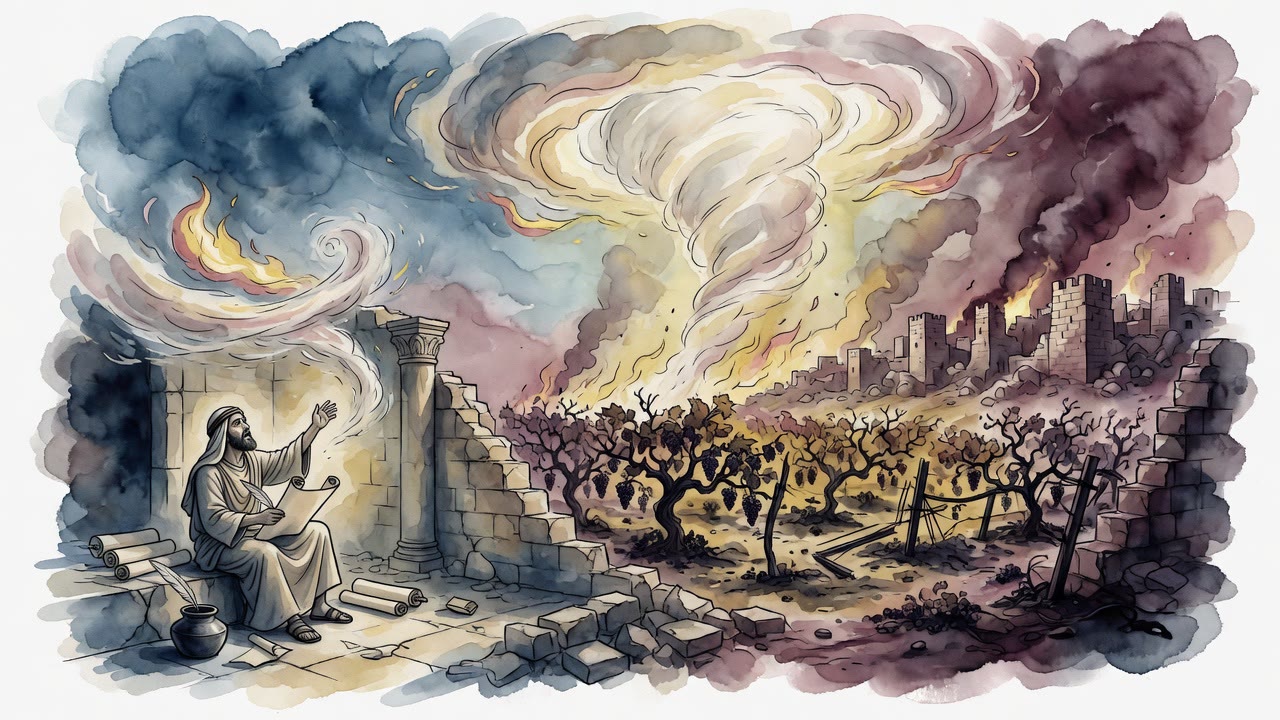
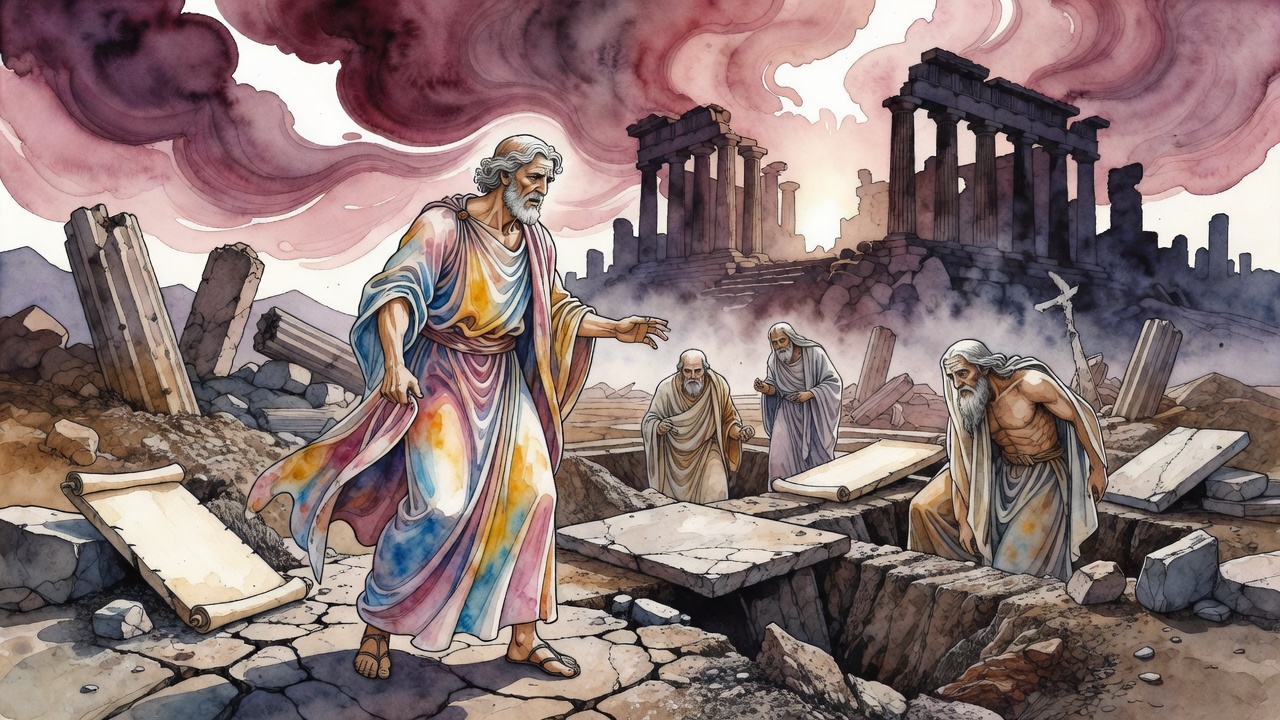
Later still, a mourner in ruined streets lays humiliation before God. "You heard their taunt, Lord, all their thoughts about me." Enemies make Israel their song of derision from sitting to rising, a whole day's entertainment built from someone else's wound.

The midrash refuses to treat the cry as noise into emptiness. The taunt is already registered. Unspoken thoughts are already known. The complaint is also a summons. The One who hears is asked to answer in time.

Prophecy and lament share a nerve. Both assume heaven has ears. Amos cannot stay silent because God has spoken. The mourner cannot stay silent because God has heard.

In the ruined street, someone laughs an ugly laugh that thinks itself private. Above, the laugh is already filed. That knowledge does not stop the pain. It stops the lie that pain is invisible.

The Mouth Opens

Amos left the sycamore trees. He walked toward rooms that did not want him. Kings prefer quieter weather. Priests prefer oracles that match the calendar of comfort.

He spoke anyway. Not because he enjoyed the sound of his own fear, but because a roar had already used him as an echo chamber. Who will not prophesy? The question is not an invitation. It is a diagnosis.

Somewhere a lion of flesh still sleeps in a thicket. Somewhere a greater roar still waits for the next ear willing to bruise. The metaphor remains inadequate and necessary. The ink still dries on scrolls. The taunts still rise and fall with the day. And a man who has truly heard still finds that closed lips hurt more than open ones.

When he finished the first hard message, his throat ached the way Moses' arms would ache on another hill. Different battle. Same demand. Stay lifted. Stay speaking. Let the body pay what the hearing costs.


← All myths

From the tradition

Sources

3 sources

The texts behind this telling. Some cards carry a translation of the source; others are our own retelling of it, and each card says which. Every card links out to the original.

Mekhilta Tractate Bachodesh 4:3Mekhilta DeRabbi Yishmael

Retold in our words. Read the original at the link below.Mechilta, translated by Rabbi Shraga Silverstein · CC-BY

The Mekhilta extends its principle about biblical language by examining another verse: (Amos 3:8) says, "The lion has roared. Who will not fear? The Lord God has spoken. Who will not prophesy?" The prophet compares God's voice to the roar of a lion, the most terrifying sound in the ancient world. But the Mekhilta immediately asks: who gave the lion its power and strength in the first place? Is it not God Himself?

The question is rhetorical, and it exposes an apparent absurdity. We are comparing the Creator to one of His own creations. We are using a lion, something God made, to describe God, who made it. The comparison seems to diminish rather than elevate. What need do we have of such epithets when the reality they point to infinitely exceeds them?

The Mekhilta does not reject the comparison. Instead, it explains: "We use the epithet of His creations to help the ear by what it is accustomed to hearing." This is the same principle established regarding the "lime kiln" at Sinai (Exodus 19:18). Human language is inherently limited. We have no words for the sound of God's actual voice, no vocabulary for the infinite. So Scripture borrows from the created world, the roar of a lion, the smoke of a kiln, the rush of mighty waters, not because these comparisons are adequate, but because they are the strongest images the human mind can process.

The Mekhilta is articulating a theology of biblical metaphor. Every comparison in Scripture is simultaneously true and insufficient. The lion's roar genuinely conveys something about the terror of God's voice. But it also falls infinitely short. The metaphor is a concession to human limitation, a ladder that points upward but never reaches the top.

Full source
Sifrei Devarim 36:2Sifrei Devarim

Retold in our words. Read the original at the link below.Sifrei by Rabbi Shraga Silverstein · CC-BY

It revolves around a seemingly simple phrase: "And you shall write them."

Write them where? That's the crux of it.

This teaching presents a debate, a classic example of rabbinic reasoning. We start with a simple idea: maybe we should write these words – presumably, the words of the Torah – on stones. Why stones? Because the Torah mentions writing elsewhere, and sometimes it's about writing on stones!

However, here's where the rabbinic mind kicks in. We see the phrase "writing" (ketivah) in our verse, and we also see it in (Deuteronomy 24:1), which speaks of writing a bill of divorce. Now, that's clearly written on a scroll. So, the argument goes, if both verses use the same word for "writing," shouldn't they both refer to the same medium – a scroll?

But hold on! Someone might object. We also see "writing" in (Deuteronomy 27:8), which describes writing the Torah on stones. So why not write it on stones in this instance as well?

This is where things get interesting. The text introduces a principle: we can learn from similar instances, but not all instances are created equal. We can learn something that applies to all generations (like the writing of the Torah) from something else that applies to all generations (like the writing of a divorce scroll). But we cannot learn something that applies to all generations from something that was specific to a particular time (like writing on the stones at Mount Gerizim and Mount Ebal after the Israelites crossed the Jordan River).

Think of it like this: We want to derive a universal rule, something timeless. Do we base it on a fleeting moment, or something that endures?

The text then brings in a powerful prooftext from the Book of Jeremiah (36:18): "And Baruch said to them: From his mouth he read all these words to me, and I wrote it in the book with ink." Baruch, the scribe, wrote down Jeremiah's prophecies in a book, using ink. This reinforces the idea of writing on a scroll, a format that could be preserved and passed down through generations.

So, what’s the takeaway? It's not just about where we write, but about why and how we transmit wisdom. The rabbis, through their careful reasoning, guide us toward a medium that ensures the enduring relevance of the Torah. It's evidence of the power of the written word, carefully considered and intentionally preserved for all time.

Full source
Eikhah Rabbah 3:21Eikhah Rabbah

Retold in our words. Read the original at the link below.The Sefaria Midrash Rabbah, 2022 · CC-BY

The midrash takes up three verses from the book of Lamentations, where the speaker, traditionally the prophet Jeremiah mourning over a ruined Jerusalem, lays his humiliation before God: "You heard their taunt, Lord, all their thoughts about me. The lips of those who rise against me and their thoughts are against me all day. Look at their sitting and their rising; I am their song" (Lam. 3:61-63). The sage reads the passage not as a cry into emptiness but as testimony that nothing escapes the divine ear. The taunts of the enemy, even their unspoken thoughts, are already heard above.

The aggadic comment fastens on the final phrase, "I am their song," and explains its bitter meaning: "I am their song of derision." The mockery is not random cruelty but a fixed routine that fills the enemy's whole day, from their sitting to their rising, the ordinary postures of a life. When they sit down and when they rise up, the suffering of Israel is the entertainment that occupies them, the refrain they chant. The midrash thereby turns the verse into a double witness. It records the depth of the disgrace, that a holy people has become a drinking-song for its conquerors, and at the same time it insists that the God who "heard their taunt" has registered every word. The complaint is also a summons to judgment, asking the One who hears to answer in due time.

Full source