Sancheriv Boasted and Fell by His Own Count
The Assyrian king drinks the water of strangers and counts his hosts, then an angel answers with a body count of one hundred eighty-five thousand.
Table of Contents
 Click for full size
A Hand Raised Against the City
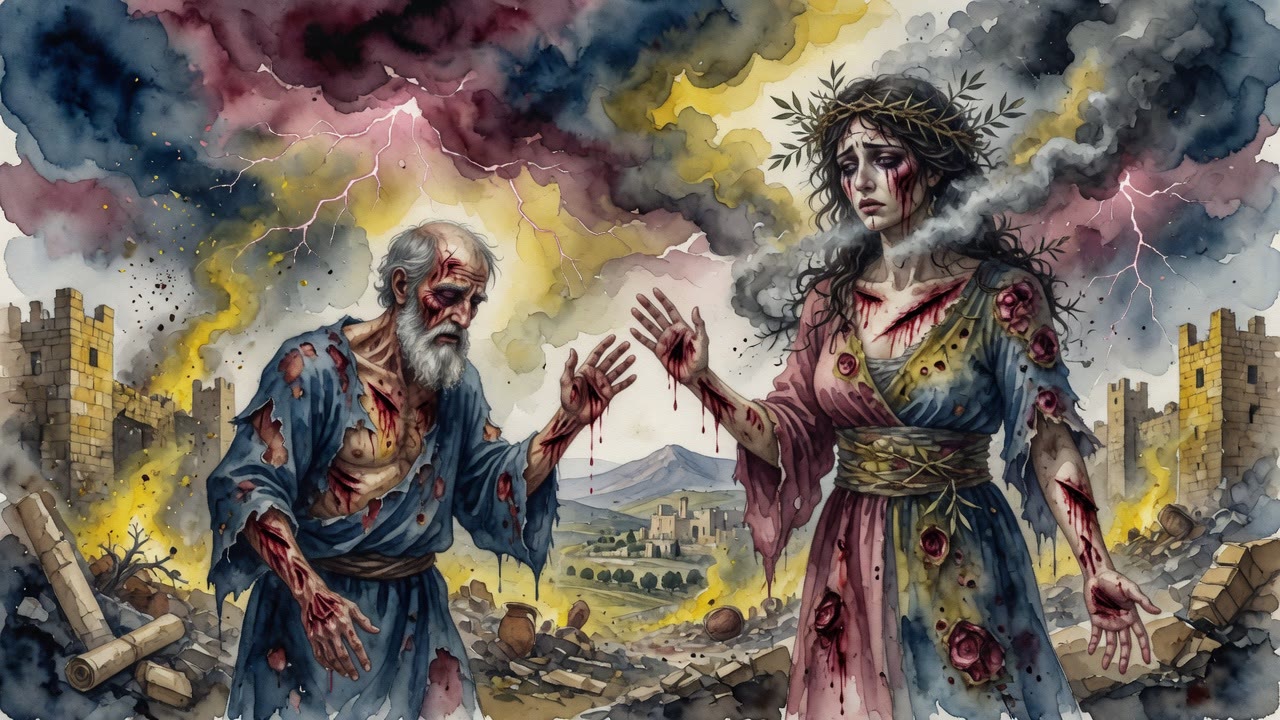
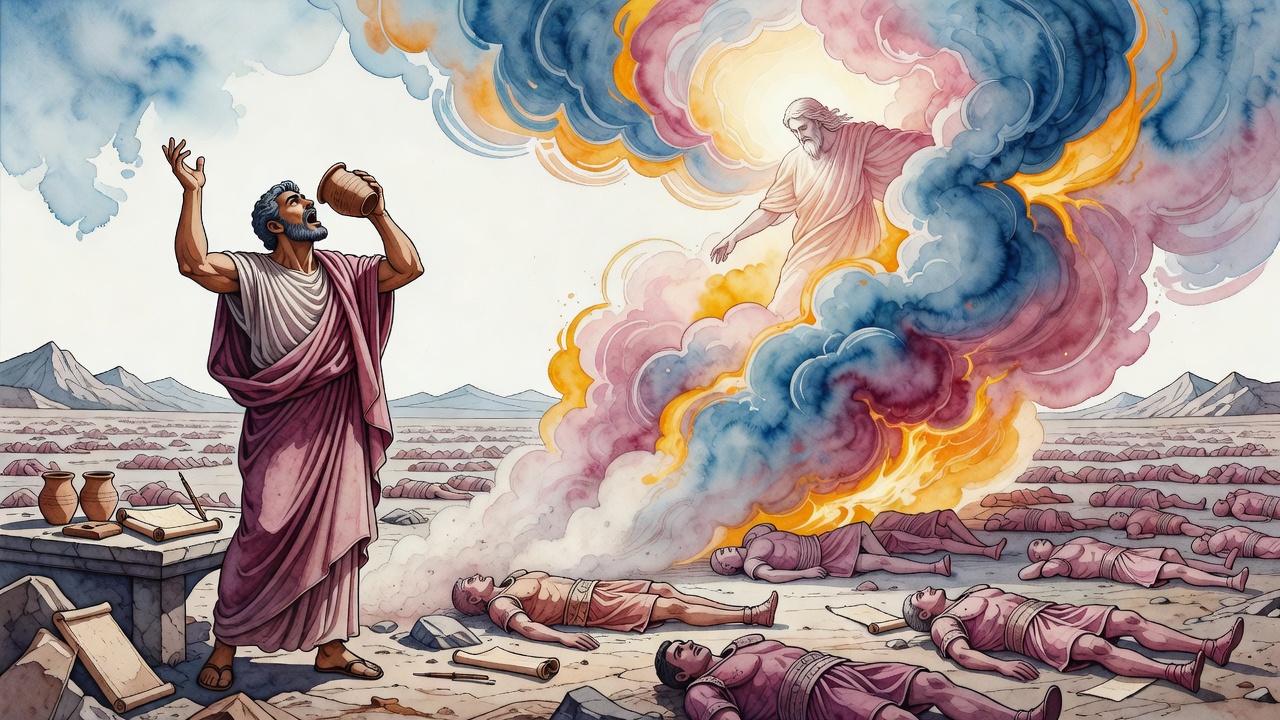
Sancheriv stood where the road climbs toward Jerusalem and raised a hand as if the city were already a cup he could tip. The Assyrian host filled the valleys like a second earth. Officers shouted numbers that made smaller kings kneel. Horses drank the streams dry in the telling of later fear. The king who had emptied cities now measured this one for a final swallow.
He sent words ahead of swords. Through your envoys you have blasphemed the LORD, Scripture records of him. He boasted that he had drawn and drunk the water of strangers. The boast was the weapon he loved most. Walls could be broken later. First he wanted the people on the wall to hear that no god could rescue them from his hand, that their trust was a joke told in a dying language.
Smoke from distant villages still hung in the air. Messengers arrived with lists of cities taken. Sancheriv listened as if the lists were psalms.
The Thing by Which a Man Exalts Himself
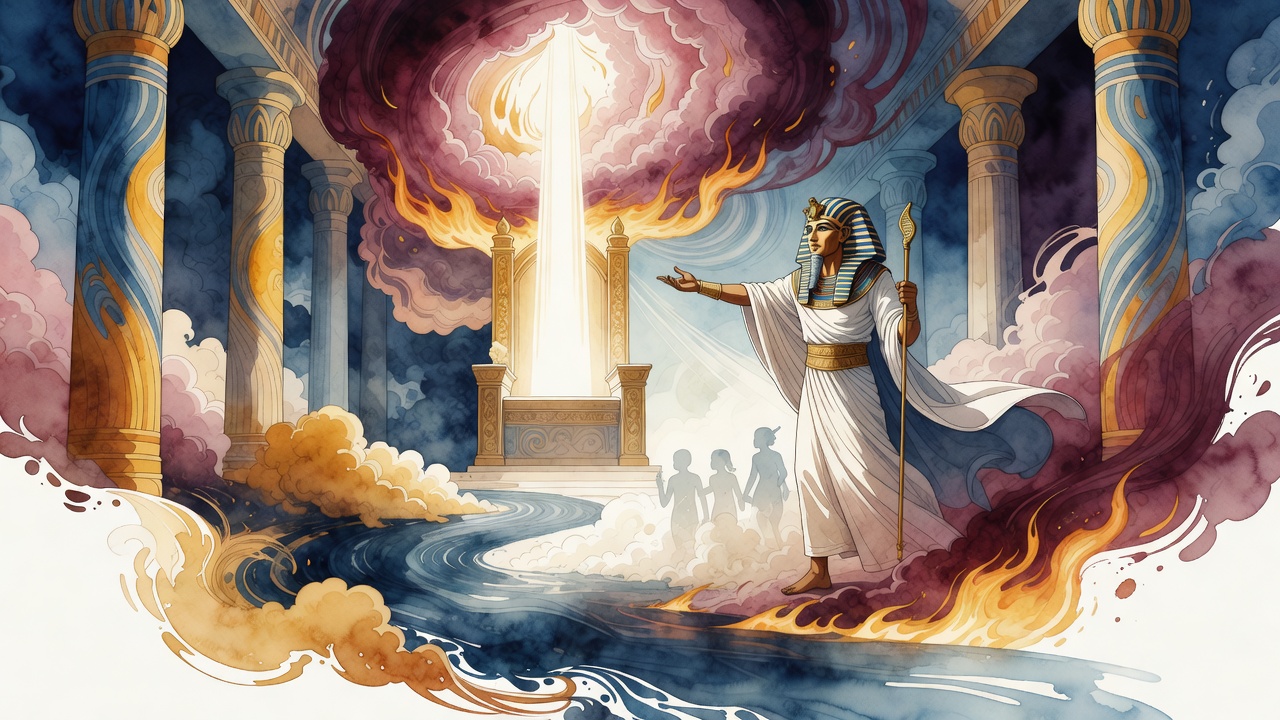
The Mekhilta names a principle that runs through Scripture: with the very thing by which a man exalts himself, that same thing is used to bring him down. Sancheriv counted hosts. Heaven answered with a count of the dead. An angel of the LORD went out and smote in the Assyrian camp one hundred and eighty-five thousand. The boaster who measured conquests is answered by a measure of corpses laid out under the same stars he thought he owned.
The sages weigh the scale of that host. The greatest of his officers commanded one hundred and eighty-five thousand men, and even the least commanded no fewer than two thousand, as the taunt in Kings hints when he mocks reliance on Egypt's broken reed. Against all this stands the LORD's word: Whom have you blasphemed? Isaiah sees him at Nov, hand wavering, the advance freezing before the holy city as if the road itself had decided to refuse him.
No Israelite sword had to match his numbers. The angel did not negotiate. The morning light fell on a silence so complete that birds returned before the survivors could invent a story.
Hezekiah on the Other Side of the Boast
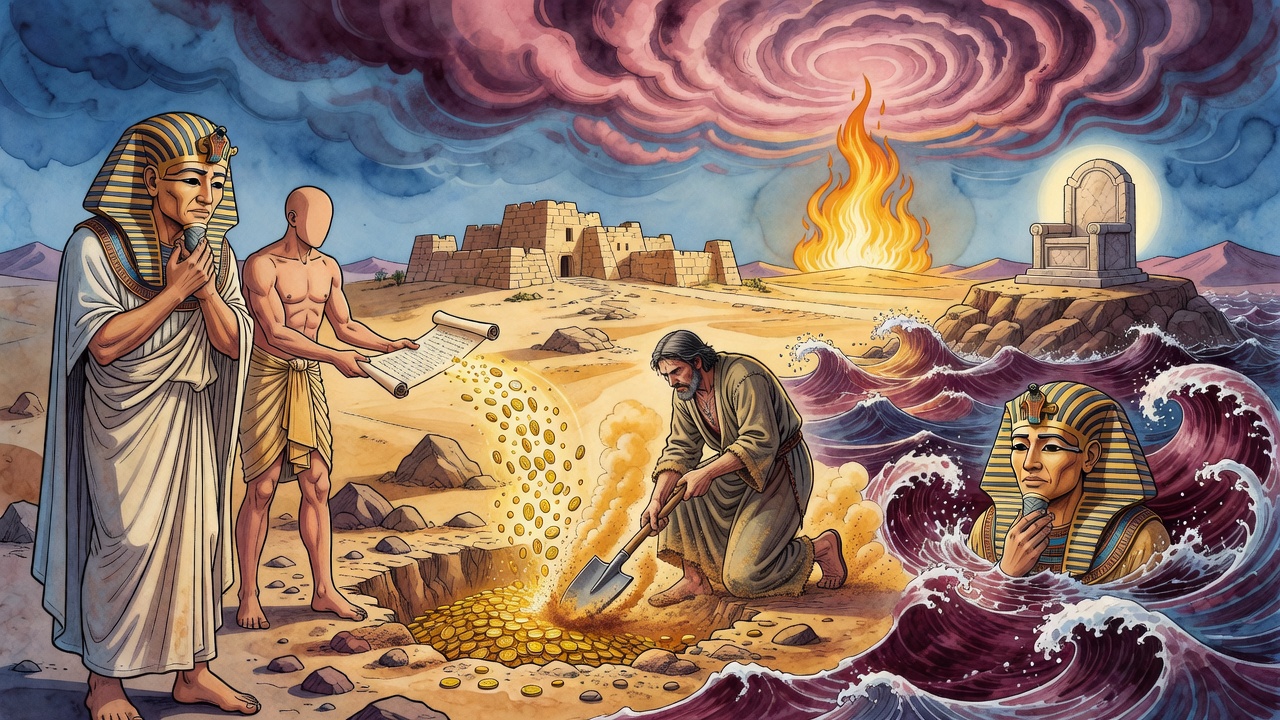
Inside Jerusalem, Hezekiah did not answer with a larger army. He tore clothes. He sent to the prophet. He spread a letter before the LORD like a man who knows ink can be more honest than iron. Kohelet Rabbah sets him in a longer pattern: the sinner gathers and amasses so that the one who is good before God may receive. Nimrod gathered for Abraham. Avimelekh's wealth dimmed beside Isaac's hundredfold harvest. Laban's schemes fed Jacob. Haman built a house that passed to Mordechai. Sancheriv gathered a host that ended as a gift of quiet to Hezekiah, who was exalted in the eyes of the nations after the night of the angel.
The midrash is not a cold ledger of payment. It is a story of hands that clutch and hands that open. The king who drinks other people's water finds his own throat closed in the morning. The king who turns to the prophet finds a city still breathing, walls still warm with the bodies of those who slept poorly and woke free.
Numbers That Turn Against the Counter
Sancheriv loved numbers because numbers make a man feel large enough to rewrite a skyline. One hundred eighty-five thousand is a figure that should end debate in any war council. After the angel, that same figure becomes the size of his shame. The lesser officers with two thousand each become footnotes to a silence. The camp that threatened to drink Jerusalem dry becomes a field of stillness under the same sky that heard his blasphemy.
Hezekiah walks the wall later and does not need to invent a speech for the crowd. The city can see what heaven did without a trumpet from the palace. Boast had been Sancheriv's liturgy. Silence becomes Hezekiah's answer, not because silence is always holy, but because this silence is full of a count no scribe of Assyria wants to write down.
What the Pattern Still Does
From Abraham to Mordechai the same shape returns: the gatherer works through the night, and the gift lands in another lap by morning. Sancheriv is the loudest gatherer in the set, because his tools are blasphemy and census. When he falls, the fall teaches more than a private morality tale for kings. It teaches that Jerusalem's survival is not a trick of better logistics. It is the refusal of heaven to let a raised hand rewrite the Name that keeps the city.
A child in Jerusalem the next morning counts bread loaves, not corpses. That smaller counting is allowed. The king's counting was not. Between those two kinds of arithmetic the whole story turns: one count serves pride, the other serves life, and only one of them still stands when the angel is done.
← All myths