Assyrian King Gathers Nations Like Abandoned Eggs
He spoke of nations as eggs in a nest no bird guarded. Outside Jerusalem his officers already counted the Temple gold.
Table of Contents
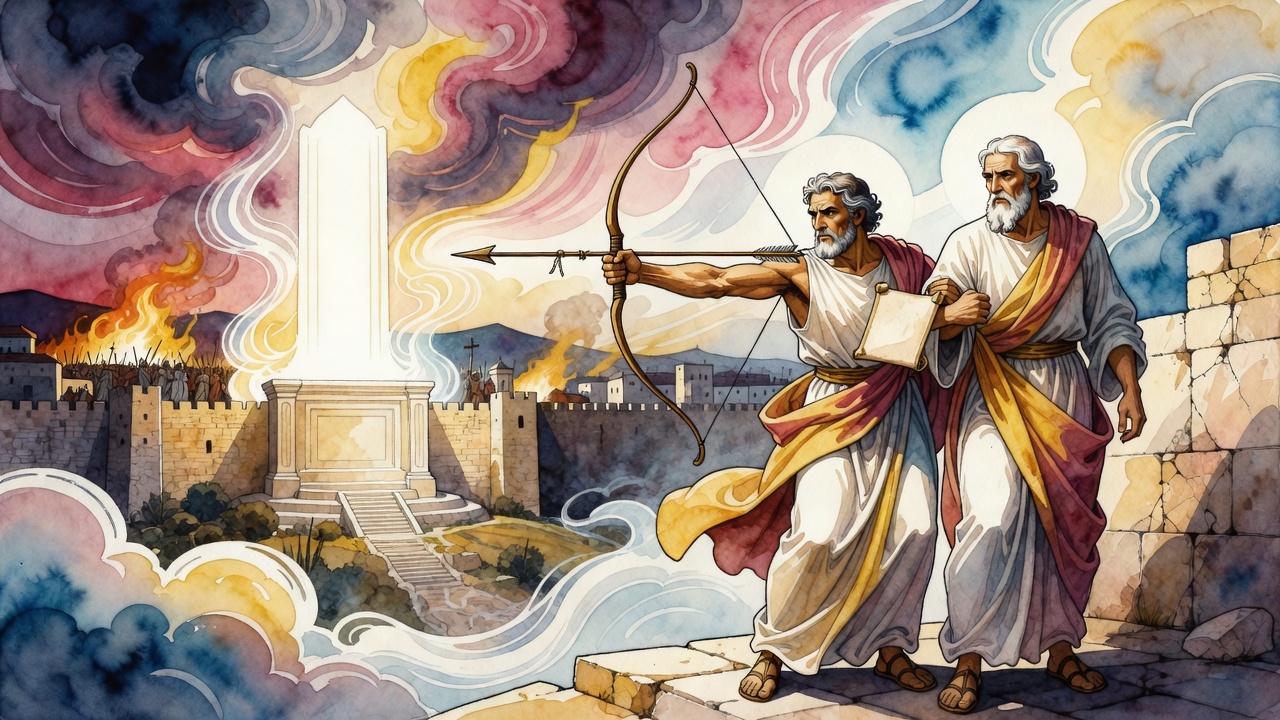
The king of Assyria held his hand out as if the world were a nest left unwatched. "My hand found, as a nest, the wealth of peoples," he said. "As one gathers abandoned eggs, I gathered all the earth. No one flapped a wing or opened a mouth to peep" (Isaiah 10:14).
 Click for full size
He meant the words as poetry of power. They were inventory. Nations reduced to yolks and shells. Conquered cities not even granted the dignity of enemies.
Sennacherib wore that speech like armor. Outside Jerusalem his camp glittered. Officers measured siege engines against older victories. Soldiers diced for small spoils and told jokes about Judean walls. The Temple's gold was already counted in their sleep.
He Gathered the Earth Like Eggs
In the camp the nest speech became mess-hall theology. The world is unguarded. The army is the hand. Peeping is for birds already dead. No one posted a watch against heaven. Heaven does not always announce its scouts.
Jerusalem's walls still stood. Priests still kept the gold where it belonged. Somewhere a child listened for Assyrian horns and could not sleep. The king slept well. He had never expected a wing to cut him.
He walked the lines at dusk and named cities the way a man names fruit in a basket. This one taken. That one silent. This one not worth a peep. The officers laughed because he laughed. The laugh was part of the armor.
The Night That Emptied the Camp
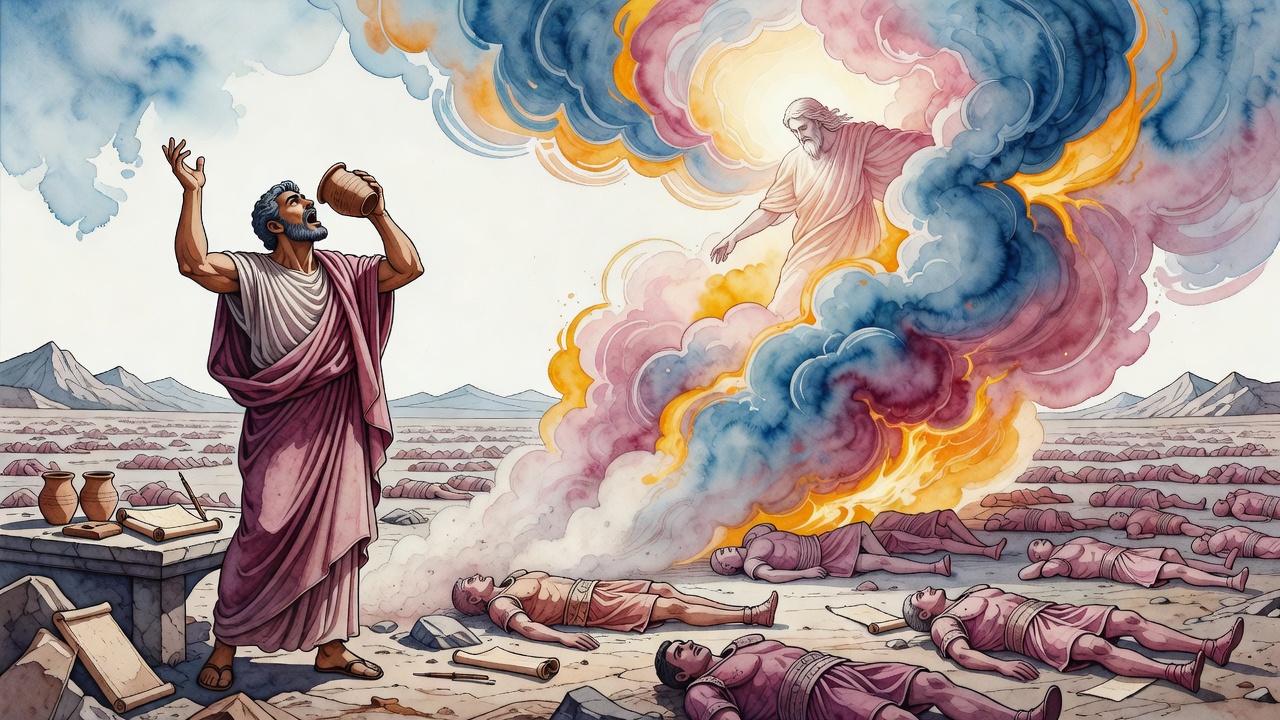
Then the night that does not negotiate arrived. An angel moved through the Assyrian lines the way wind moves through dry grass, except grass does not fall as corpses. One hundred eighty-five thousand soldiers did not wake.
Morning found a field of stillness where arrogance had drilled. Armor held no breath. Horses stood confused by the quiet. The eggs the king had gathered rolled nowhere. The nest he imagined empty had contained a Name that does not leave the house unguarded.
The few who lived carried the news home in throats that still worked. Sennacherib's return was a parade with the music cut out. Priests of Dagon polished the idol harder, as if shine could replace the missing army. The empire that had mocked every nation for failing to peep learned what silence sounds like when it is forced on the mocker.
Sons Heard the Offering and Rose
Power that fails in public often hardens in private. Sennacherib went in to pray before his idol Dagon. He told the court he would slay his two sons to buy favor, if that would make his god help him after the emptied camp.
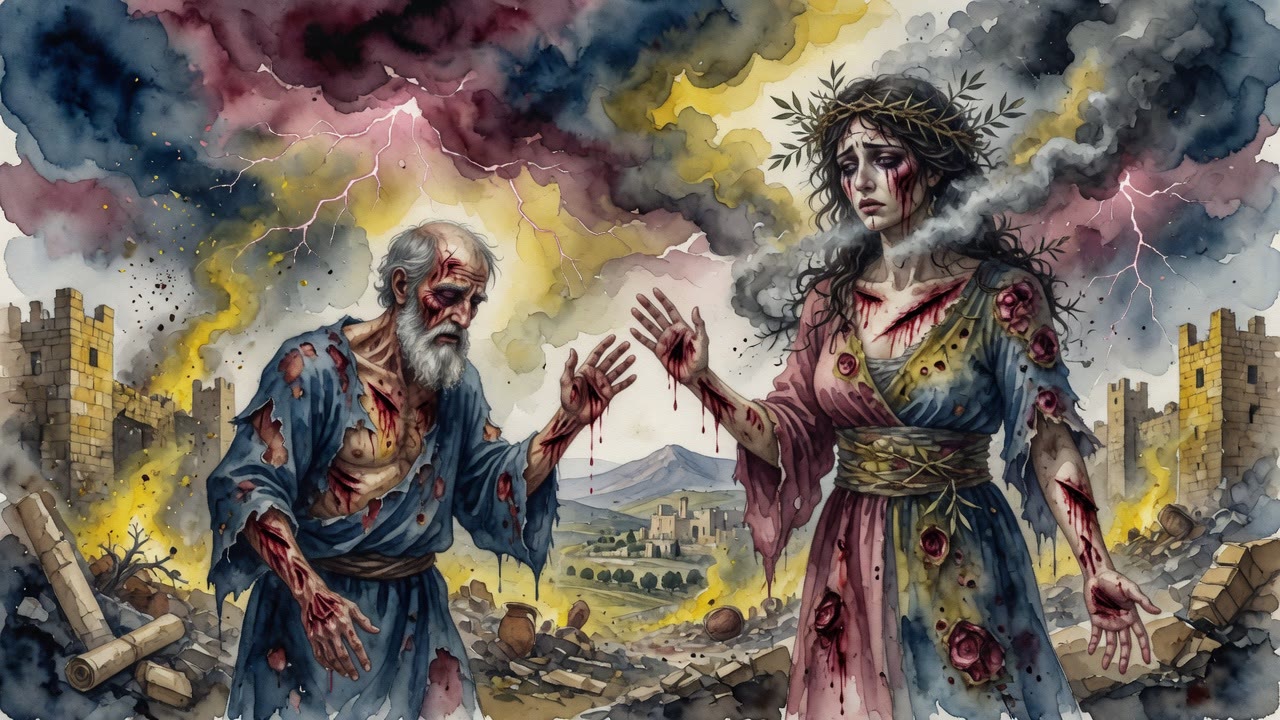
The saying came to Adrammelech and Sharezer. They did not wait for the altar. They laid in wait at the threshold of that prayer and killed him with the sword, at the hour he went in to Dagon. The father who gathered eggs became the broken shell. The knife empire had used on nests turned inward.
He had raised the knife in his mind first. They raised it in the doorway second. He fell on the stones in front of a god that did not shout. They fled toward Ararat, mountains already thick with older stories of survival after ruin. Murder at prayer is ugly. So is an empire's math when being offered looks costlier than a throne.
A Nephew Opened One Gate
Esarhaddon took the throne. Courts reshuffle faster than graves cool. He set Akikar, nephew of the exile Tobit, over much of Assyria's administration. Akikar spoke kind words for his kinsman. The king brought Tobit back to Nineveh, and they restored him his wife Hannah and his son Tobiyyah, whom the old king's rage had seized.
One gate opened for one exile. Empire continued around that gate. The boast about eggs did not continue with the same mouth.
Jerusalem's walls still stood. The Temple's gold stayed where the priests kept it. Somewhere a child who had listened for Assyrian horns slept through a quieter dawn and did not know why the air felt lighter. On the ground that mattered, the hand that gathered eggs learned it was also an egg, and the nest it trusted was only a statue that could not shout when the knife came.
← All myths