God Built the Temple With Two Hands, Not One
Moses sang on the far bank of a house with no beams yet. Earth had taken one divine hand. The sanctuary demanded two.
Table of Contents
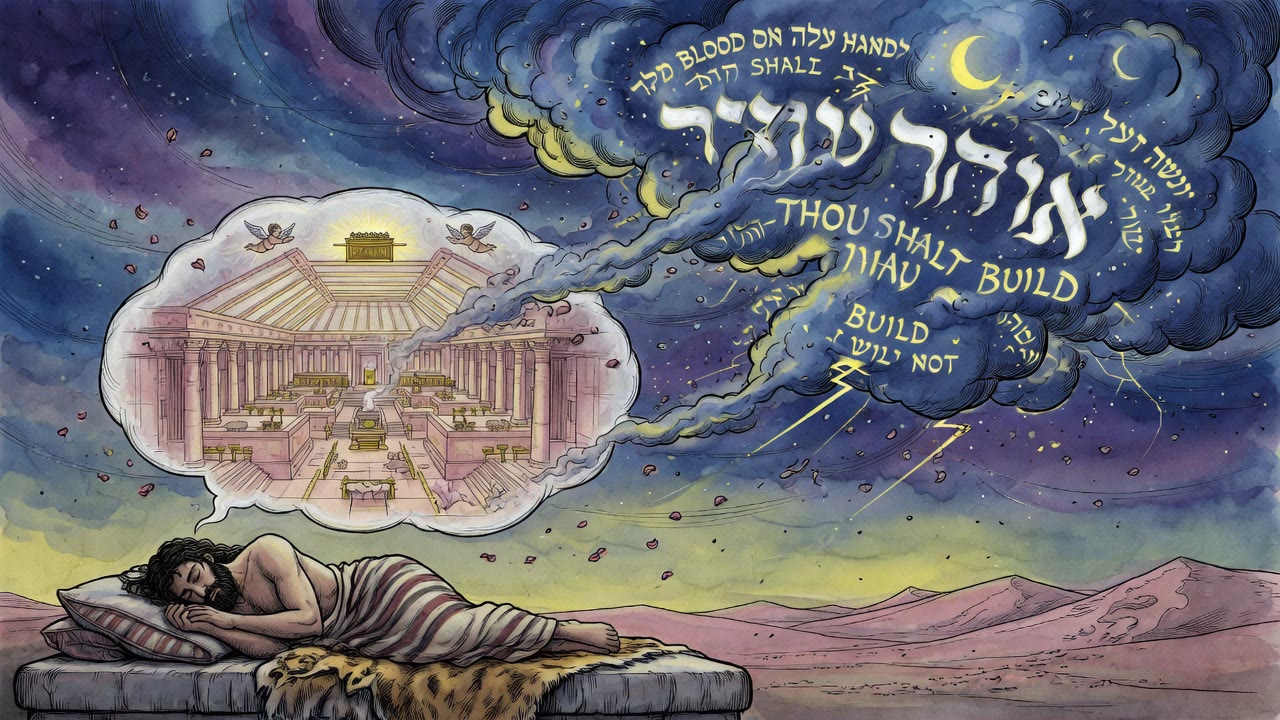
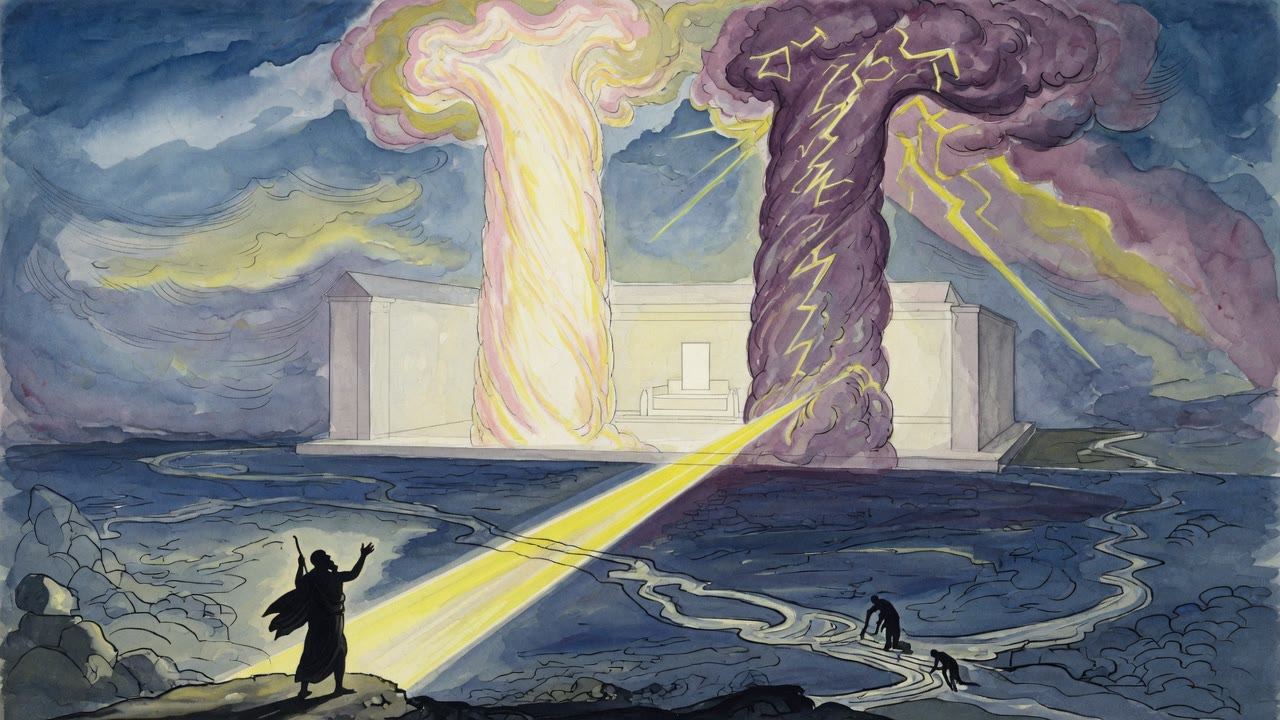
On the far bank of the sea, with Egyptian iron still drying in the sand, Moses sang of a house not yet drawn on any plan. "The sanctuary, O Lord, did Your hands establish." The word in his mouth was plural. Hands. Not hand.
 Click for full size
Behind him the water had closed. Ahead of him there was only desert, and still the song built a hill in Jerusalem no one in that company had ever climbed.
One Hand Laid the Earth
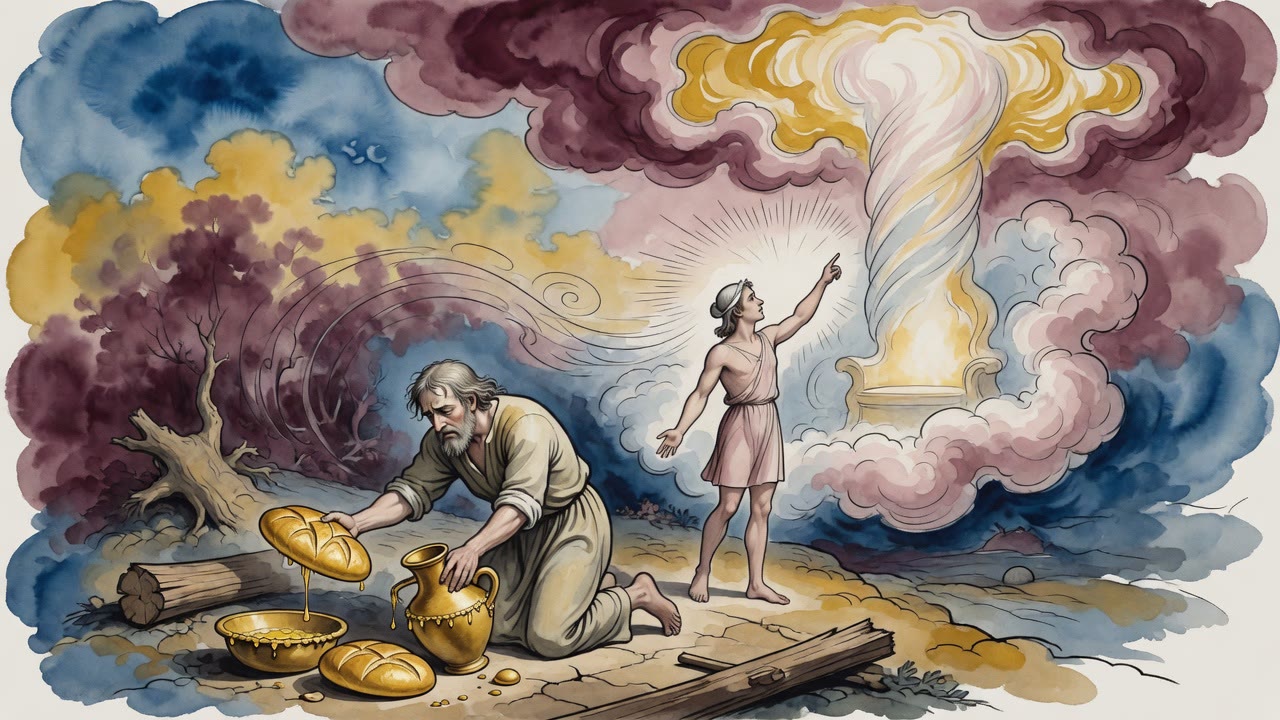
Isaiah would later hear God say, "My hand, too, laid the foundation of the earth" (Isaiah 48:13). Singular. Heavens stretched. Oceans found their rims. Mountains locked into place. All of it with one hand, as if half of heaven's craft was enough for the whole cosmos.
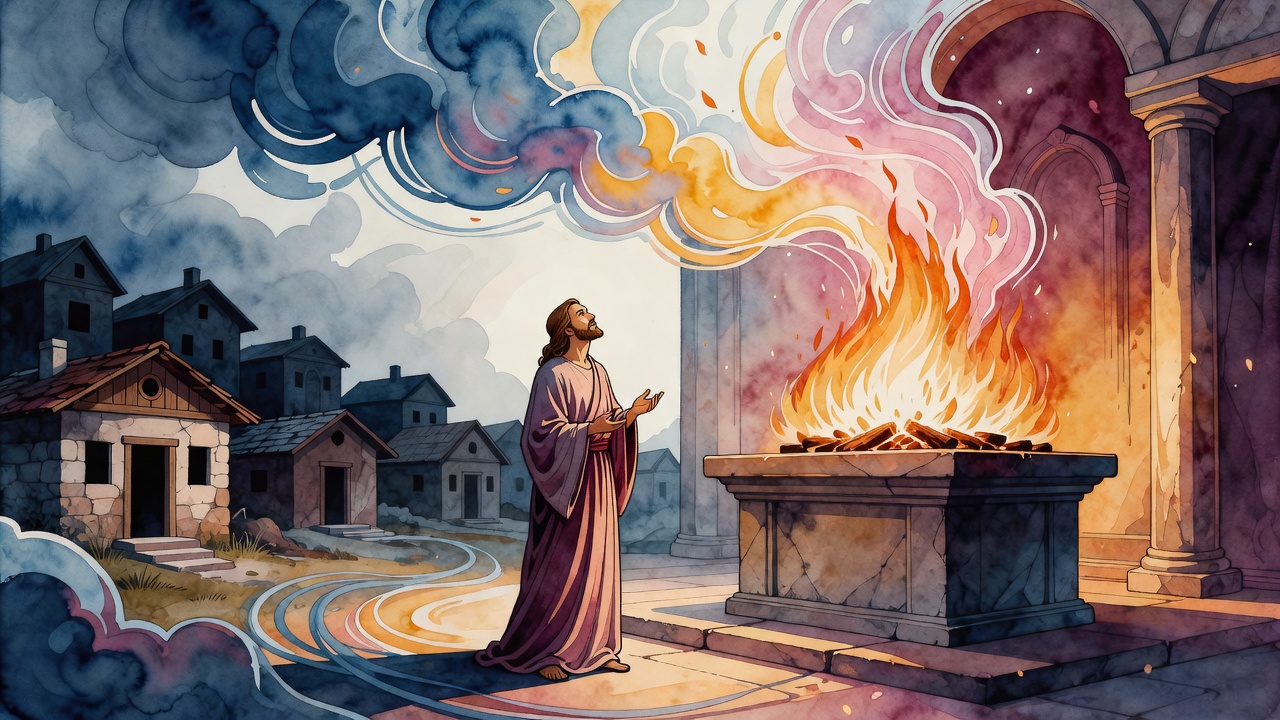
Moses' song set a smaller building against that vast work and gave it more of God. Creation was huge and still counted as a single-handed labor. The Temple on one hill would take both hands fully engaged, the entire craft of heaven bent toward a house the size of a king's court.
The grammar was small. The claim was not. Twice the investment of the universe, for a room where God and Israel would meet.
The people on the bank heard it with salt on their lips. They owned no cedar yet. They owned a song, and the song already spent both of God's hands on a building they could not see.
Them, Not Us
In the same song Moses sang, "You will bring them in and plant them," not "bring us in." The pronoun landed like a stone in the chest. He heard it as he sang it. The wilderness generation would glimpse a future it would not walk. Children would cross. Fathers would stay on the wrong side of a river, like a shepherd told to follow the young kids while the old ewes remain behind.
The comfort, if it was comfort, was the planting itself. This was not a seedling a wind could tear out. It was a vineyard set in fixed rows, tribe beside tribe, rooted with God's whole heart and whole soul. A planting with no uprooting written into the verse.
Moses sang what he would not personally harvest. The people heard a promise that would outlive the singers. Some of them were already doing the math in their heads: if "them" is the children, then "us" is the graves along the way.
He did not stop the song. He did not swap the pronoun. He gave the house more of the verse than he gave his own entry.
Speech Made the World, Hands Made the House
The universe came by speech. God said, and it was. The sanctuary is called something more, a deed of His own hands, framed between divine Names. Speech for the cosmos. Labor for the Temple. A word can stretch a sky. A house of meeting, the song insisted, costs work.
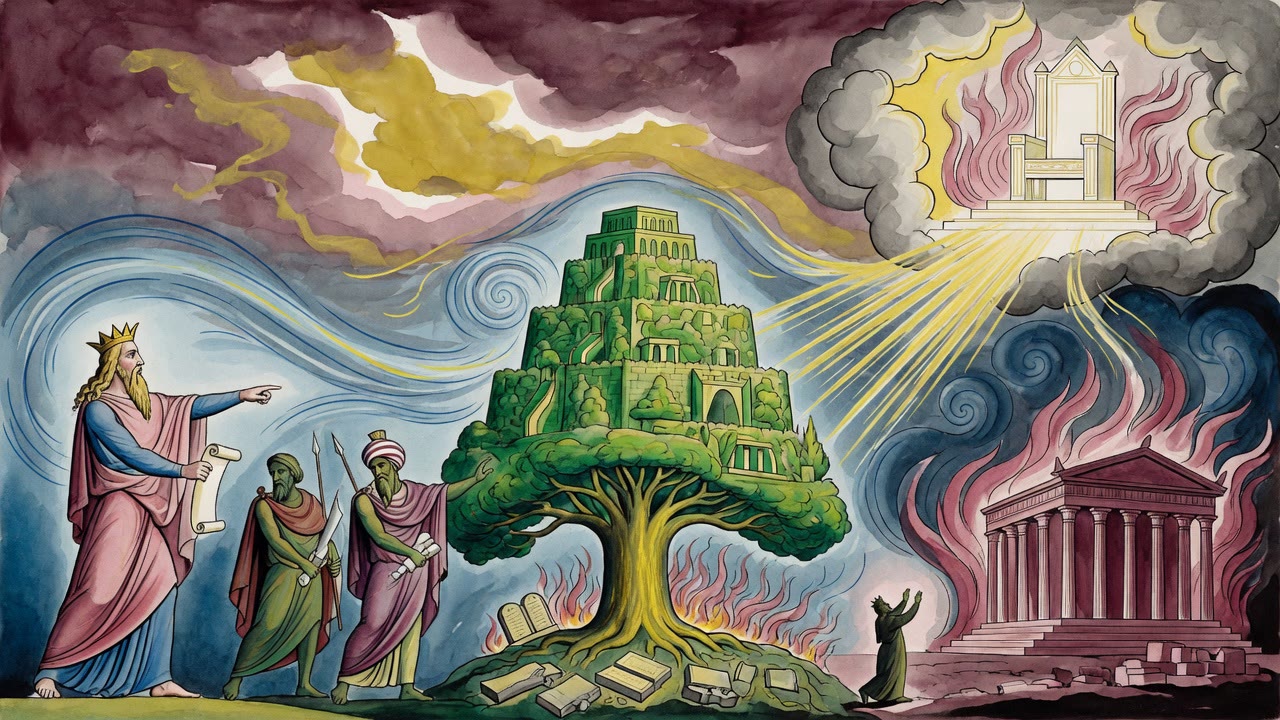
When nations later tore that handiwork down to its foundation, the old comparison returned as a wound. Bandits enter a king's palace while the king is away. They slaughter servants. They wreck the walls. The world mistakes absence for weakness. The king returns. He sits in judgment. He repays each crime. He rebuilds. Only then is his name known again across the countries that thought the empty lot was the end of him.
Israel singing at the sea could not yet see Babylon or Rome. They could hear plural hands and a planting that would not be uprooted. The song stored a future lawsuit. Whoever tears down what two divine hands established will answer to the owner of those hands.
The Inheritance on the Hill
The song piled names on that hill until it could barely hold them. Torah is called an inheritance. Israel is called an inheritance. The land is called an inheritance. The Temple is called an inheritance. Let the people who are an inheritance come to the land that is an inheritance and build the house that is an inheritance, by the merit of the teaching that is an inheritance. That is why the verse says "the mountain of Your inheritance."
A throne below answers a throne above. Heaven is a seat. Earth is a footstool. The house in the middle is where the two meet, a place prepared for God to dwell among them, not a decoration on a skyline.
Moses, who would never walk those courts, still gave the sanctuary more of the Song than he gave his own hope. Two hands for the house. One denied path for the singer. The proportions are severe and clear.
The House Still Unbuilt
The human Temple, for all its glory, would be raised by human hands under blessing. The harder question sat inside the song from the first night of freedom. When will it be rebuilt with Your two hands? Not a copy of Solomon's craft alone. God's own direct work, both hands again, no half measure.
At the sea that future still smelled of salt and smoke. Israel walked into a desert that had no sanctuary yet, carrying in their mouths a grammar of two hands and a planting that would outlast their bones.
Behind them the water closed. Ahead of them the land waited to be planted. Above both hung the claim that one hill would cost heaven more than the making of earth and sky. Moses kept walking. The house was already in the song. It was not yet in the world, and he would die on the near side of it, having spent both of God's hands on a doorway he would not pass.
← All myths