Rahab Kept Every Charge the Prophets Laid
In Jericho a woman swore truly, hid the spies, and begged for her parents. Each act mirrored a sin the prophets charged against Israel.
Table of Contents
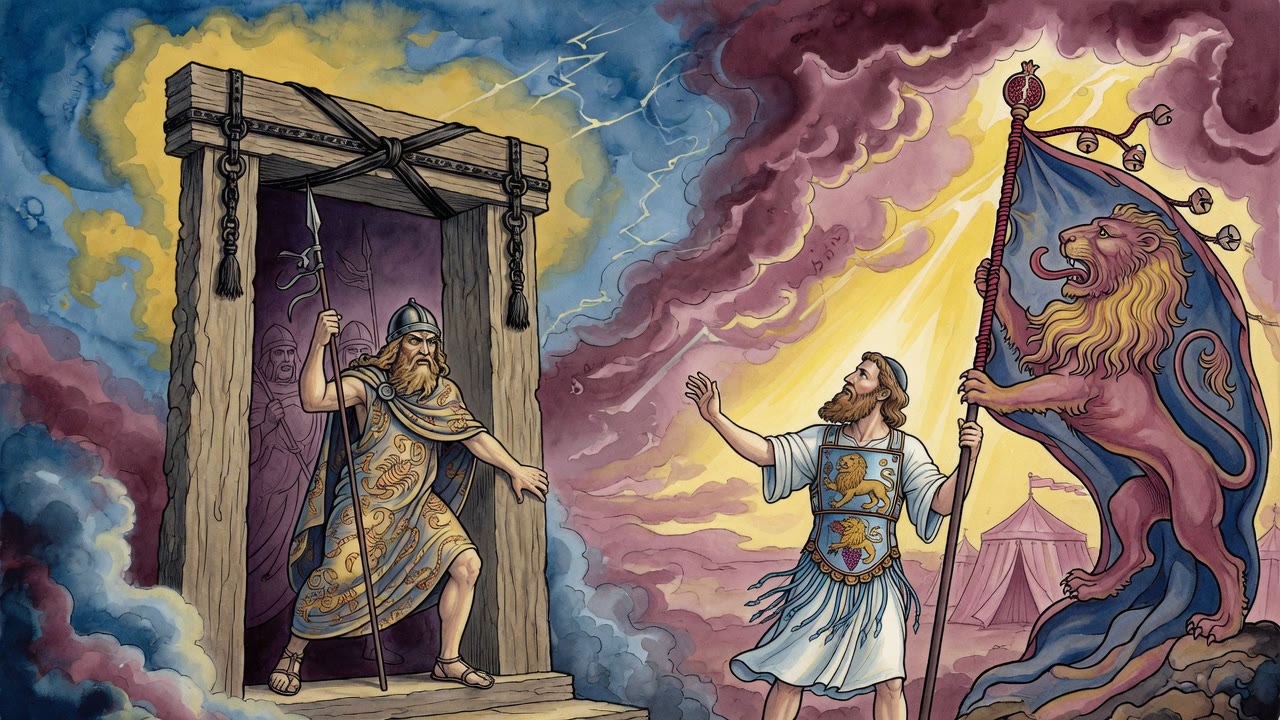
Rahab opened her mouth to the two spies and asked them to swear by the LORD. The request was small. A harlot of Jericho wanted an oath that would hold when walls fell. Rabbi Shimon heard in that request a mirror large enough to shame a nation.
 Click for full size
Take any verse the prophets aimed at Israel as a charge, he said, and find its echo in Rahab as a compliment.
The Mirror on the Wall
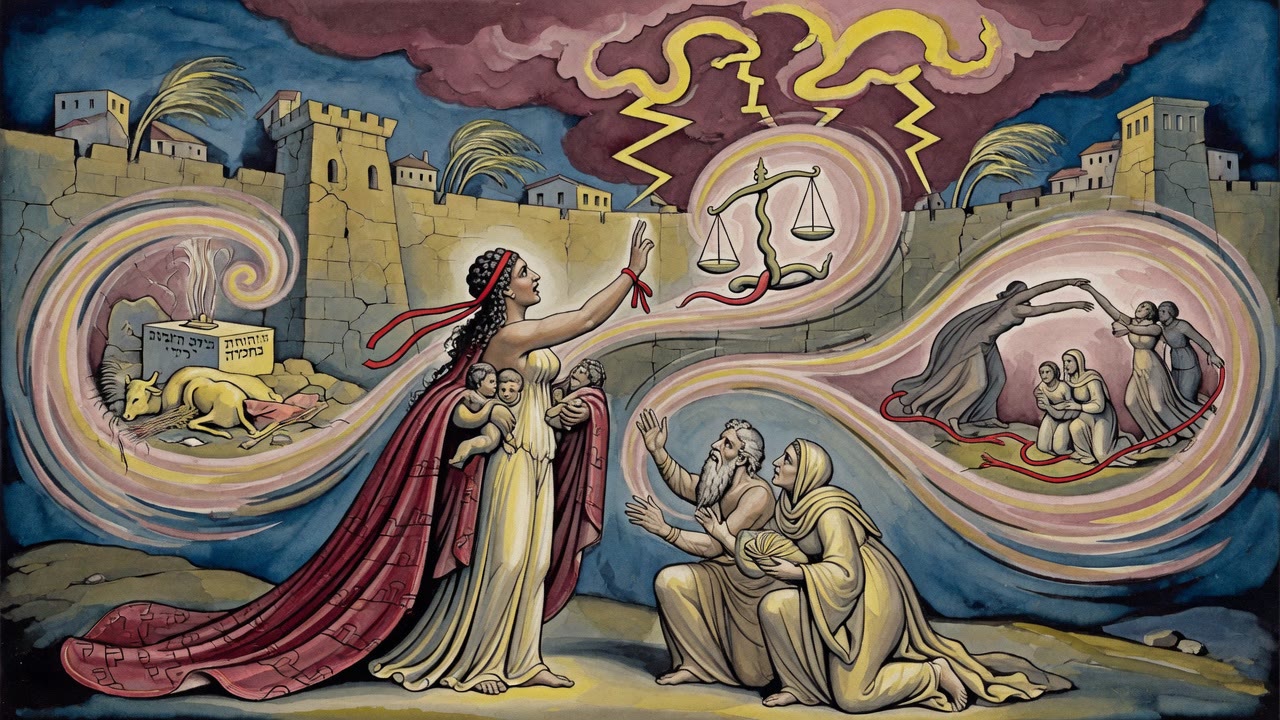
She swears truly by God's name. Jeremiah accuses Israel of swearing falsely. She begs the spies to spare her father and mother. Ezekiel charges Israel with treating father and mother with contempt. She brings the men up to her roof to hide them. Zephaniah condemns those who climb roofs to bow to the stars.
She tucks them under stalks of flax, a thing pulled from a tree, while Israel is mocked for calling a piece of wood its father. She sends the spies to the safety of the mountain. Israel is rebuked for sacrificing on the mountaintops. She asks for a token of truth. Jeremiah laments that they speak no truth.
Line by line the outsider keeps the commandments the insiders broke. The harlot of Jericho, ruined in reputation, becomes the standard against which a chosen people is measured and found wanting.
Pedigree Guarantees Nothing
Birth does not save. Covenant memory does not save if the mouth lies and the parents are despised. Rahab has no pedigree the camp would envy, and still her roof becomes a sanctuary and her word becomes reliable weight.
The spies leave with a scarlet cord as sign and a household marked for life. The walls will fall. Her faith, spoken in fear and calculation and real courage, will stand. Yalkut Shimoni on the Prophets, a thirteenth-century anthology, keeps Rabbi Shimon's catalogue so the contrast cannot be softened.
Thirty-Six Warnings for the Stranger
The Torah returns to the stranger again and again, by one count in thirty-six places. Rabbi Eliezer, in Mekhilta DeRabbi Shimon Ben Yochai, asks why the convert needs so many warnings. His answer is unsentimental. The stranger's inclination is fragile. A cruel word from those born inside the covenant can push a soul back toward what it left.
The verse gives its own reason: "for you were strangers in the land of Egypt" (Exodus 23:9). From this Rabbi Eliezer draws a rule of devastating simplicity. The blemish that is in you, do not name in your fellow. Israel tasted outsider life under a foreign sun. That taste forbids using "stranger" as a weapon.
Rahab is the story's sharp edge of the same law. The outsider who acts with truth becomes a rebuke to the insider who acts without it. To sneer at her origin is to forget Egypt.
What Jericho Heard
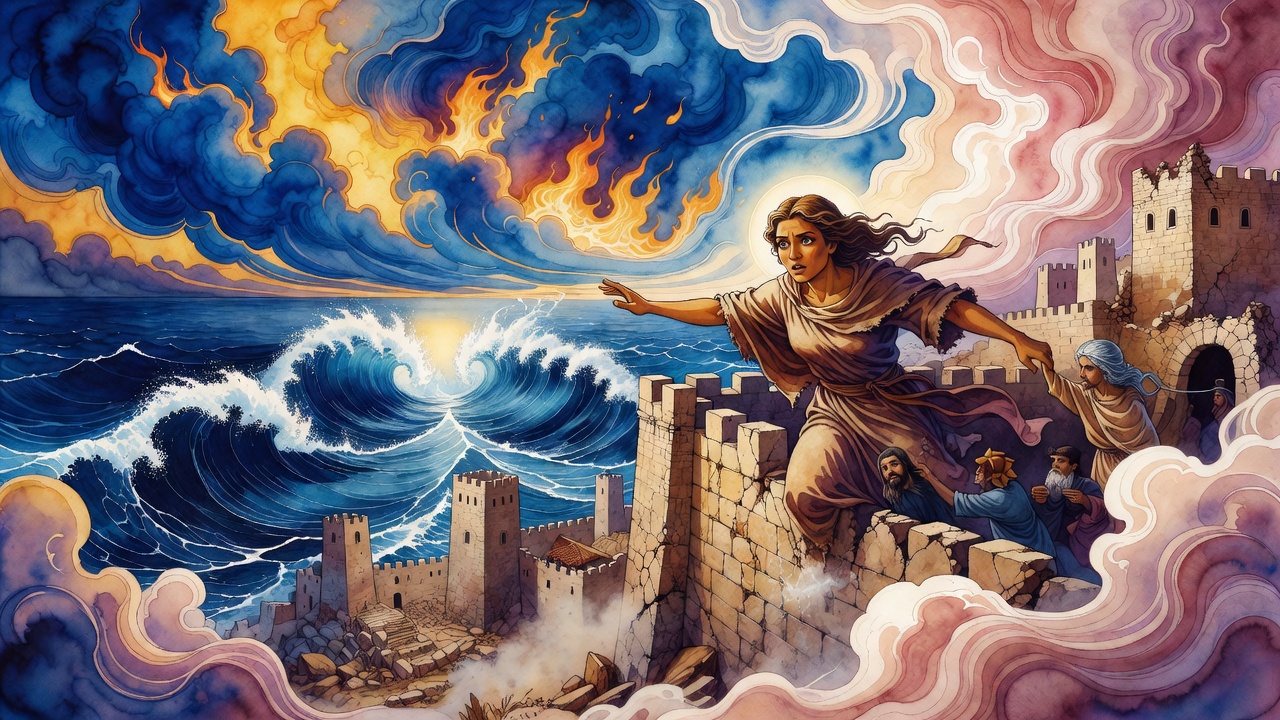
Inside the city, people whispered about the Israelite camp. Rahab named what she knew: the LORD dried the Sea of Reeds, and the dread of Israel had already entered Canaanite bones (Joshua 2:9-11). She bargained for her father's house the way a person bargains when the future has a deadline.
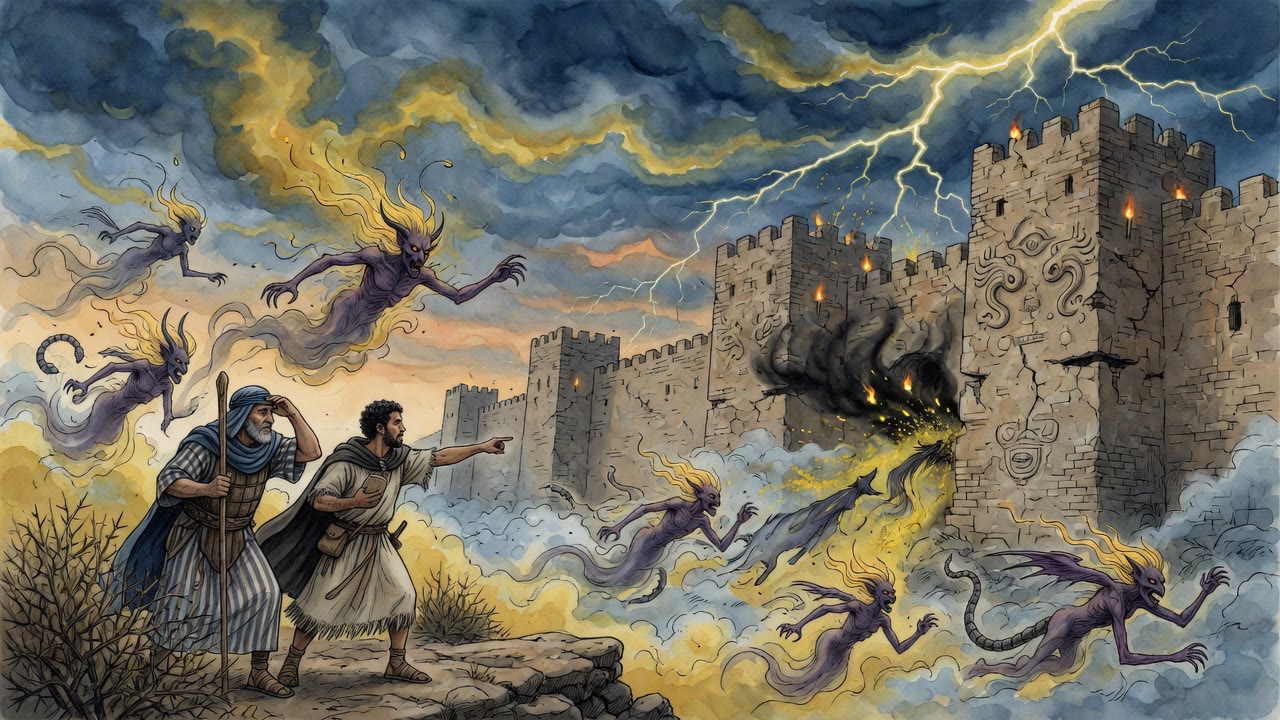
The prophets later scold Israel for roof-idolatry and false oaths. Centuries earlier on a Jericho roof, a woman who sold her body refused to sell the spies. The chronology of the books is not the chronology of moral scorekeeping. The midrash stacks them so the ear can hear both at once.
The Cord and the Charge
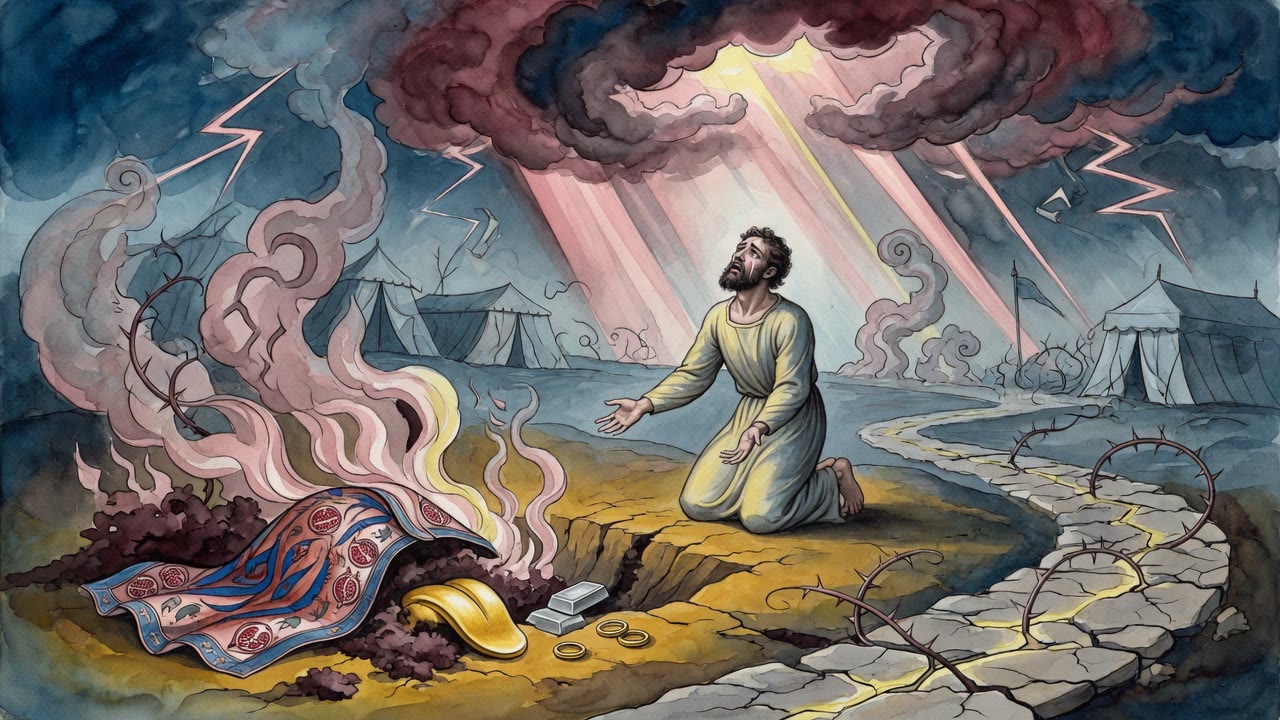
When the city falls, the cord is still in the window. The household lives. Israel will go on to fail in ways Jeremiah and Ezekiel will name. The story does not cancel Israel's election. It refuses to let election become an alibi.
A single act of faith can lift a stranger above those who were given everything. That is not a slogan. It is a woman hiding men under flax while prophets, in another age, still have to shout at a people who will not hide truth under anything but convenience.
The spies slept under flax that smelled of harvest. Below them the city went about its night. Rahab had already named the dread that walked ahead of Israel, the drying of the Sea of Reeds, the melting of Canaanite courage. Her faith was not abstract. It was a calculation with a window and a cord and a family she refused to leave behind.
When the walls fall, the cord still hangs. The household lives. Elsewhere, in another century of the books, prophets will still have to shout about false oaths and despised parents. The midrash stacks Jericho and the prophets so no listener can say the outsider's standard is unfair. The standard is the prophets' own list, only kept.
Thirty-six warnings ring the convert because a single cruel joke can undo a hard journey into the covenant. Israel of all peoples knows the taste of being the stranger. Forgetting that taste is how a camp becomes Egypt to someone smaller.
Rahab's roof is therefore not only a spy story. It is a standing challenge. If a woman of Jericho can swear true and honor father and mother while hiding men under flax, then pedigree without practice is a thin shield.
Token of truth. Scarlet cord. A window facing the outside of a doomed wall. Faith here has hardware.
False oaths, contempt for parents, roof-star worship, wood called father, mountain sacrifices, truth abandoned: the prophets' charge sheet becomes Rahab's resume of faithfulness. The midrash is almost mathematical in the pairing so no one can call the comparison poetic exaggeration.
Converts still walk into communities that forget Egypt. The thirty-six warnings are a fence around a soul mid-journey. Rahab is the narrative proof that the stranger can outrun the native in the very virtues the native was taught from youth.
When Israel later fails, the Jericho roof remains in the archive as a standard, not as a replacement of covenant. Standards sting. That is their job.
← All myths