Parshat Shelach5 min read

The Spies Named Amalek First While Judah Camped Toward the East

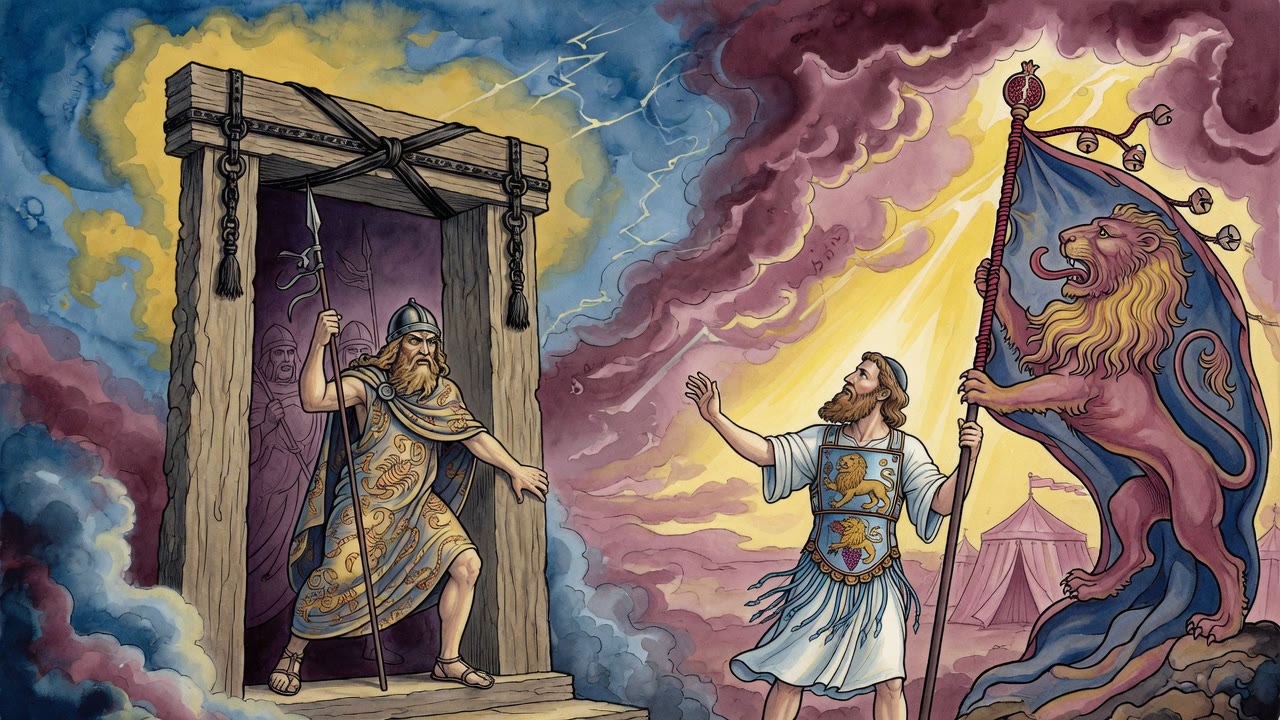
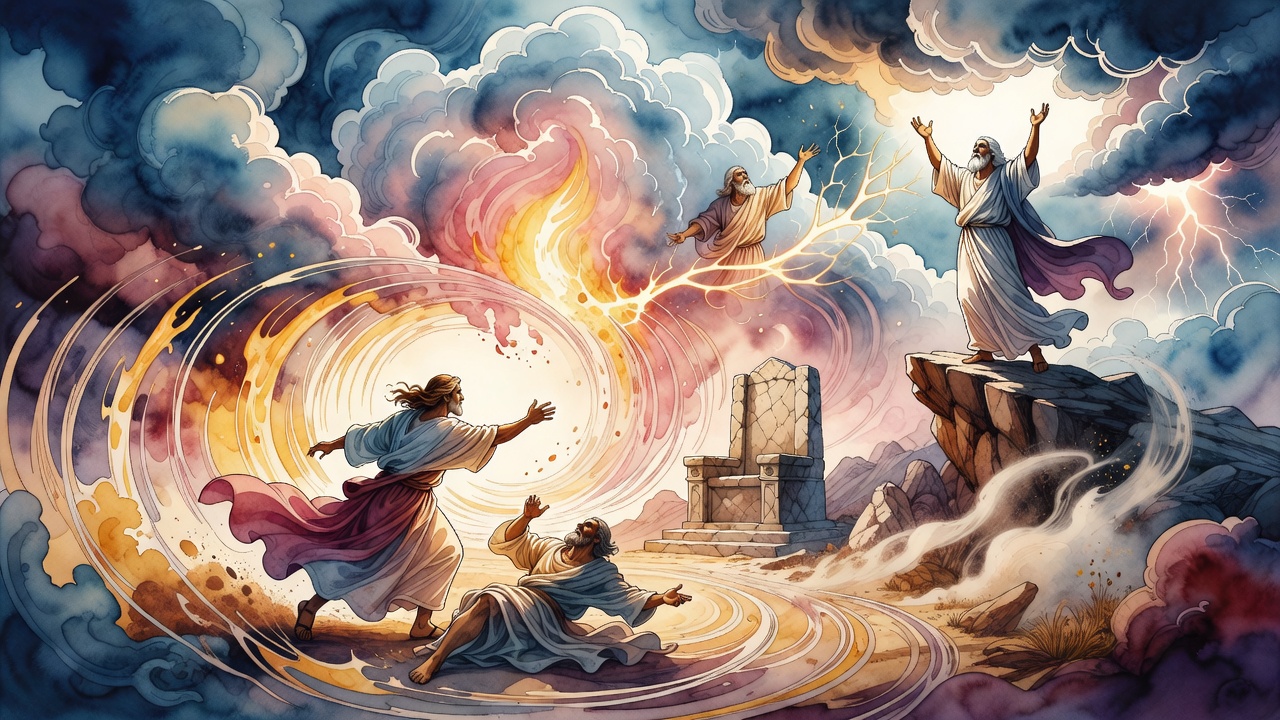
The spies named Amalek first, the harsh strap at the door of the Land, while Nahshon of Judah camped toward the rising light.

Curated by Arthur · Told by Maggid ·
Table of Contents
  1. A Map of Guardians
  2. Judah Toward the Rising Light
  3. First in Camp and First in War
  4. Four Banners and Four Angels
  5. The Door and the Banner

The twelve men came back with dust on their sandals and Amalek on their tongues. Not last. First. The harshest name sat at the front of the report like a strap already raised.

The Spies Named Amalek First While Judah Camped Toward the East Click for full size

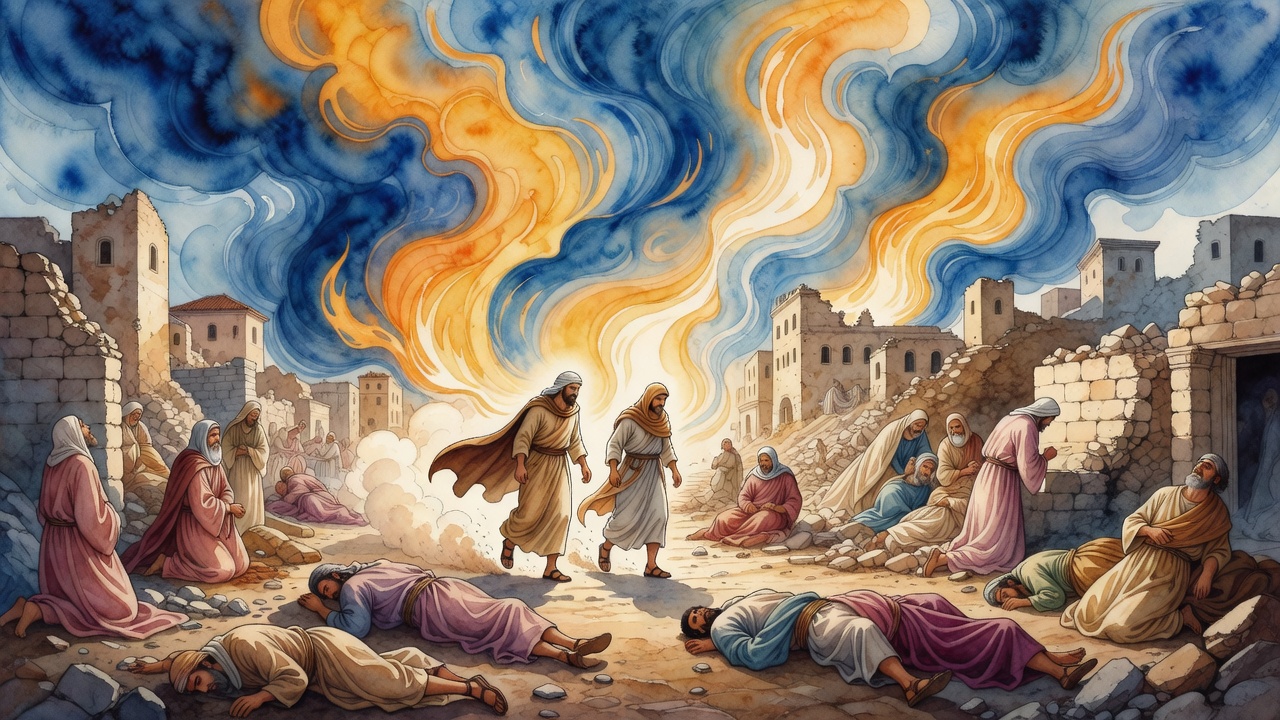
They had walked the Land. They had seen fruit and walls. When they opened their mouths before Moses and the camp, the order of the names was itself a map of fear. Amalek first, because Amalek had always been to Israel like a hard lash in the wilderness, and because he sat at the very threshold of entry. Anyone coming in would meet him at the door.

A Map of Guardians

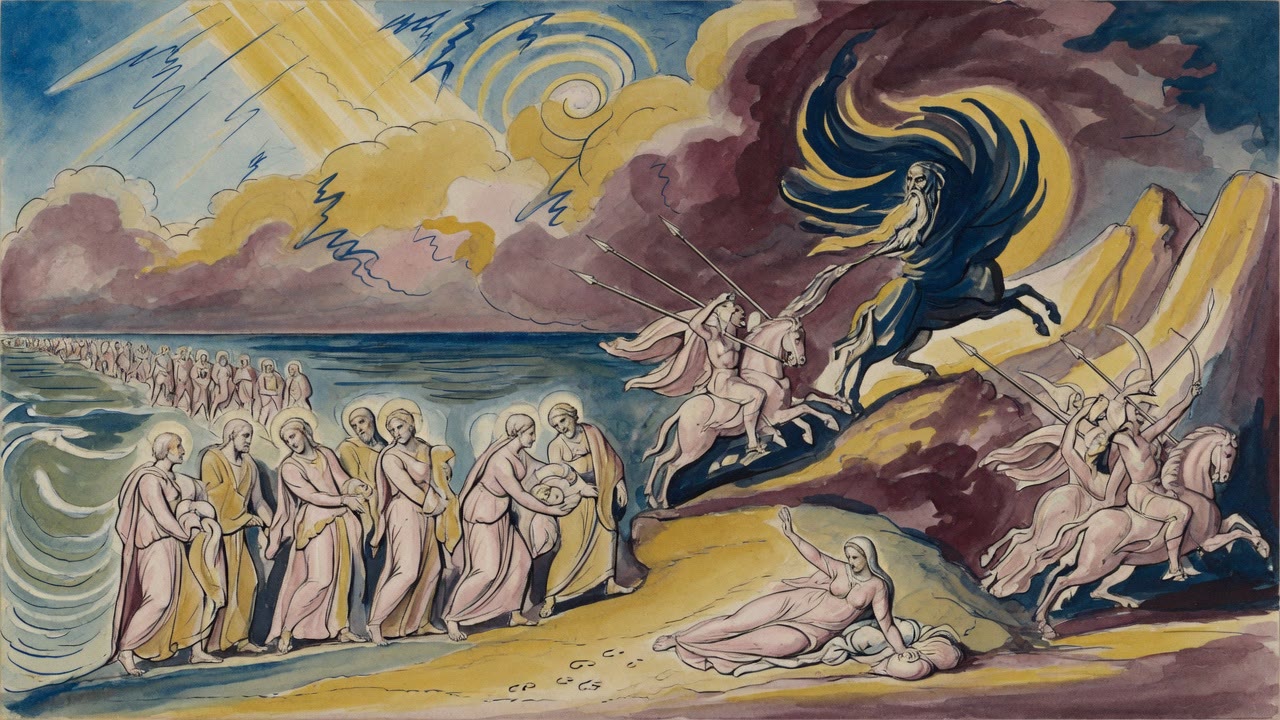
Then they listed the others. The Hittite. The Jebusite. The Amorite. Why name them all? The Midrash answers that every one of them was a warrior, a mighty man, stationed at the mountain passes and the narrow crossings. They sat upon the fords so that no nation could slip through. The report was not a catalog of peoples. It was a wall of strong men drawn across every gate.

So the spies measured Canaan not by its milk and honey but by its guardians. Amalek at the entrance. Warriors on the heights. Crossings locked. The Land became, in their telling, a fortress of other men's bodies. The grapes they carried could not outweigh the names they spoke in that order.

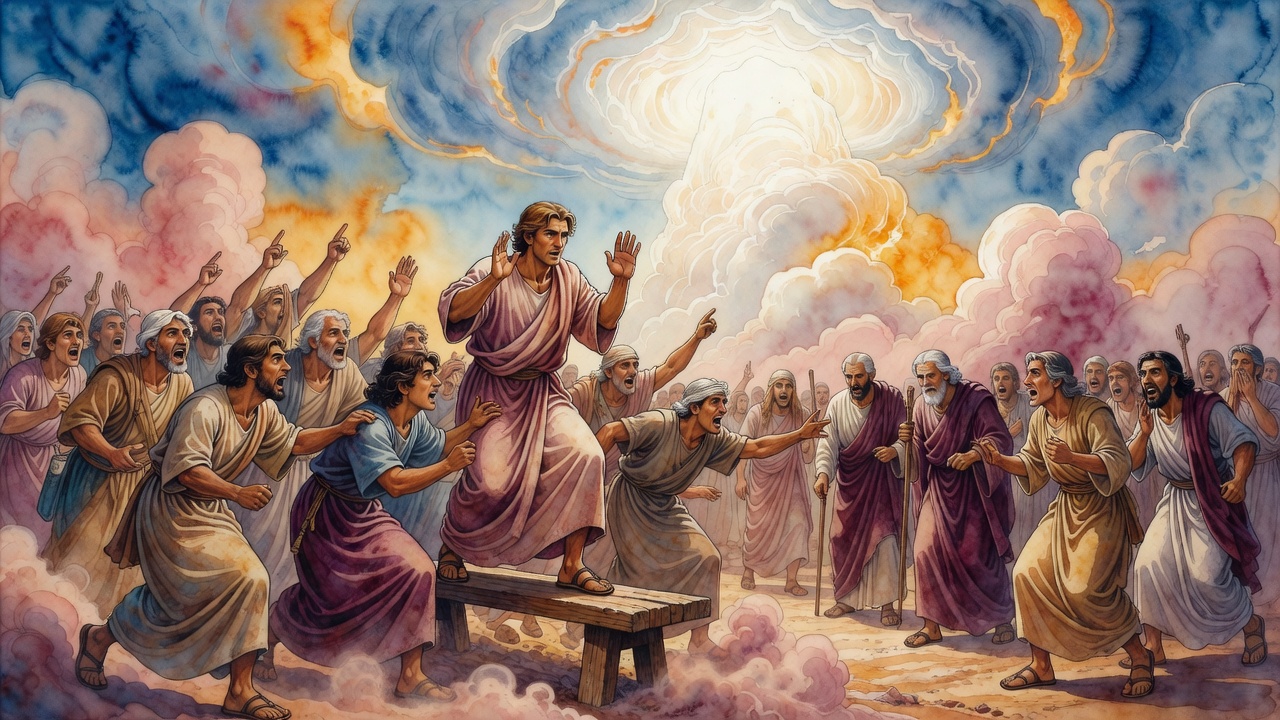
In the camp the women listened and held their children closer. The names of mountain peoples are heavier when spoken after dark. Someone asked about the fruit again, and the spies lifted the cluster as if weight alone could answer terror. It could not. The order of the speech had already taught the people what to fear first.

Caleb still had breath left for another kind of report, but the crowd had already swallowed Amalek as a first course. Once a lash is named at the door, every other detail becomes furniture in a room of dread. The Land shrank to its guards.

Judah Toward the Rising Light

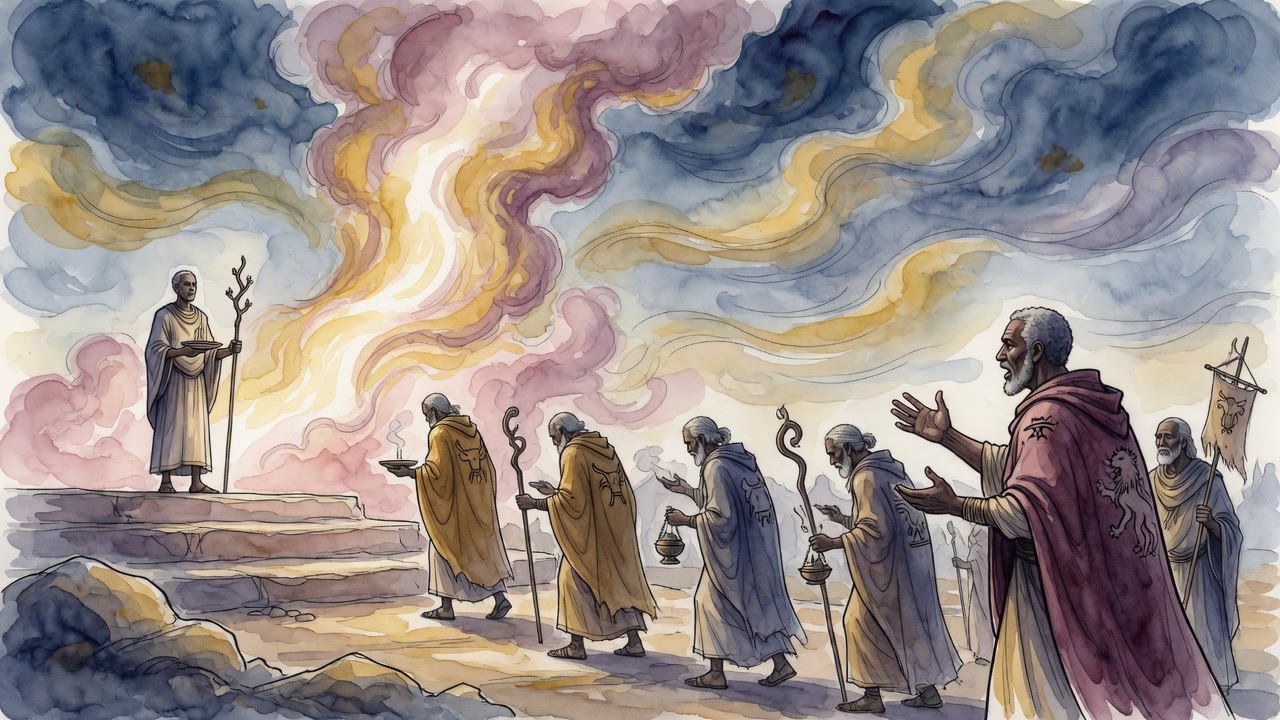
Against that map of fear stands another arrangement of bodies. When Israel camped in the wilderness by banners, those who encamped to the east, toward the light, flew the standard of Judah, and the prince of the children of Judah was Nahshon son of Aminadav. East is where light emerges. West holds storehouses of snow and hail. South brings dews and rains of blessing. North is the quarter of darkness.

The Holy One, said the sages of Bamidbar Rabbah, founded the earth with wisdom and set the four directions with their properties. He also set four beasts around the Throne. Corresponding to these, He arranged the banners for Moses. Judah to the east was not a random placement. Kingship faces the place where light is born.

First in Camp and First in War

Judah was first in encampment, first in travel, first in the offerings when the princes brought gifts, and first in war when the question rose, who will ascend first against the Canaanites. The Lord said Judah will ascend. Even when the herald comes announcing peace on the mountains, Judah is named to hear the good news first.

With Judah stood Issachar, possessors of understanding of the times, and Zebulun, dwellers by the seashore of trade. Wisdom and wealth flanked the banner that faced the dawn. Nahshon's name sits at the head of that eastern host. The man who would later step into the sea is already posted where morning begins.

When the trumpets sound for travel, Judah's camp lifts first. Dust rises from their side of the formation before the other banners move. That habit of going first is not swagger alone. It is a training for thresholds, including the threshold the spies painted with Amalek's name.

Four Banners and Four Angels

South held Reuben, the banner of repentance, with Gad the warrior and Simeon nearby. West held Ephraim, Manasseh, and Benjamin, tribes the midrash sets against the harsh judgments of snow and hail, with the Shechinah (שכינה), the Divine Presence, said to rest on Benjamin's border. North held Dan, the quarter of darkness, because of the idol that would one day stand there, yet Asher and Naphtali stood with him to bring oil-light and food into that gloom.

Around the Throne the sages set four angels. Mikhael. Gavriel. Uriel. Refael. Each quarter of the camp answered a quarter of heaven. The wilderness was not a shapeless crowd. It was a living diagram of light, repentance, endurance, and the struggle with darkness.

The Door and the Banner

Set the two pictures side by side. The spies paint Amalek as the door-guard of the Land, a strap waiting for the first foot across the threshold. The camp of Judah paints a people who sleep facing the east, under a prince whose tribe is ordered to go first when war comes. Fear names the guardian. Command names the banner.

The grapes still hang between them. The Land is good. The guardians are real. The order of speech can turn a spy into a salesman of panic, and the order of camping can turn a tribe into a morning edge. Amalek remains at the door in the old report. Nahshon remains under the eastern cloth. The question that follows is which arrangement a people will walk under when the threshold finally opens.


← All myths

From the tradition

Sources

2 sources

The texts behind this telling. Some cards carry a translation of the source; others are our own retelling of it, and each card says which. Every card links out to the original.

Midrash Aggadah, Numbers 13:29Midrash Aggadah

Translation of the source text.Midrash Aggadah (Buber), Public Domain, on Sefaria · CC-BY-SA

"Amalek dwells, etc." And why did they mention Amalek? Because Amalek was like a harsh strap to Israel, and therefore they mentioned that he dwells at the entrance to the Land of Israel.

"And the Hittite, and the Jebusite, and the Amorite, etc." And why did they mention them? To tell you that they were all mighty men, and they were sitting upon all the passes so that they would not allow any nation to enter.

Full source
Bamidbar Rabbah 2:10Bamidbar Rabbah

Retold in our words. Read the original at the link below.The Sefaria Midrash Rabbah, 2022 · CC-BY

Bamidbar Rabbah turns to Nahshon in Battle.

Chapter 2 of Bamidbar (Numbers), starts with this: "Those who encamp to the east, the banner of the camp of Judah, according to their hosts, and the prince of the children of Judah is Nahshon, son of Aminadav." Seems straightforward. But Bamidbar Rabbah, a classical collection of Midrashic (rabbinic interpretive commentary) interpretations, takes this simple verse and explodes it with meaning.

The key, according to the Midrash, lies in the verse, "The Lord founded the earth with wisdom, [established the heavens with understanding]" (Proverbs 3:19). The Holy One, blessed be He, created the four directions – east, west, north, and south – each with its unique properties. East is where light emerges, West holds the storehouses of snow and hail, South brings dews and rains of blessing, and North… well, North is where darkness comes from.

Here's where it gets really interesting. Just as God created these four directions, He also surrounded His Throne with four beasts. Corresponding to these, He arranged the banners of the tribes for Moses.

So, what's the connection? God tells Moses that the east, the source of light, corresponds to Judah, the tribe destined for kingship. As it says, "Those who encamp to the east, the banner of the camp of Judah" (Numbers 2:3). With Judah are the tribes of Issachar, possessors of Torah wisdom ("From the children of Issachar, possessors of understanding of the times" - (1 Chronicles 12:3)3), and Zebulun, possessors of wealth ("Zebulun [will dwell] at the seashore, [and he shall be a shore for ships]" - (Genesis 49:1)3).

The Midrash emphasizes Judah's primacy. Judah is first in encampment, first in travel ("They shall travel first" - Numbers 2:9), first in offerings ("The one who presented [his offering on the first day was Nahshon, son of Aminadav, of the tribe of Judah]" - (Numbers 7:1)2), and first in war ("Who will ascend first against the Canaanites for us…? The Lord said: Judah will ascend" - (Judges 1:1)–2). Even when the herald comes to announce redemption, Judah will hear the news first ("The feet of the herald are upon the mountains, announcing peace. Celebrate your feasts, Judah" - Nahum 2:1).

The south, the direction of blessing, corresponds to Reuben, the tribe of repentance. "The banner of the camp of Reuben is to the south…" (Numbers 2:10). Repentance is powerful, because God's mercy comes upon those who turn back to Him. With Reuben are Gad, known for their warriors ("Gad will wage war by regiment" - (Genesis 49:1)9), and Simeon, positioned to atone for past sins.

Moving westward, where the storehouses of snow and hail reside, we find Ephraim, Manasseh, and Benjamin. These tribes, the Midrash suggests, can withstand the "snow and hail", the harsh judgments of the world. "Rouse Your might before Ephraim, Benjamin, and Manasseh" (Psalms 80:3). The Divine Presence, the Shekhinah (the Divine Presence), is always in the west, on the border of Benjamin, as it is stated: "Of Benjamin he said: The beloved, [the Lord will dwell in safety with him; He covers over him all the day, and He rests between his shoulders]" (Deuteronomy 33:12).

Finally, the north, the direction of darkness, corresponds to the tribe of Dan. Why Dan? Because, the Midrash says, they brought darkness into the world through idol worship. Yerovam, a king of Israel, crafted two golden calves, and the tribe of Dan was the first to embrace this idolatry ("The king consulted, and he crafted two golden calves…and he placed one in Dan" - (1 (Kings 12:2)8)–29). But even in darkness, there is hope. With Dan are the tribes of Asher, who illuminate the darkness ("Blessed…and he dips his foot in oil" - (Deuteronomy 33:2)4), and Naphtali, who provides sustenance.

The Midrash concludes with a beautiful parallel. Just as God created four directions and four corresponding banners, He also surrounded His throne with four angels: Mikhael, Gavriel, Uriel, and Refael. Each angel corresponds to a direction and a tribe, embodying the qualities associated with them.

Mikhael, corresponding to Reuben in the south, embodies God’s question: "Who is like You [mikhamokha]" (Exodus 15:11)? Uriel, corresponding to Dan in the north, brings light to the darkness through Torah. Gavriel, corresponding to Judah in the east, embodies strength and leadership. And Refael, corresponding to Ephraim in the west, heals the breaches and wounds of the world.

So, what does this all mean? It's more than just a history lesson. The physical world, the spiritual realm, the tribes of Israel, even the angels themselves – all are interwoven in a cosmic tapestry, reflecting God's wisdom and understanding. And perhaps, within this ancient map, we can find our own place, our own direction, and our own potential to bring light into the world.

Full source