Shekhinah Buried the City So the Spies Could Pass
In every Canaanite town the leading men fell and funerals filled the streets. The spies walked free, then called the land a devourer of its own people.
Table of Contents
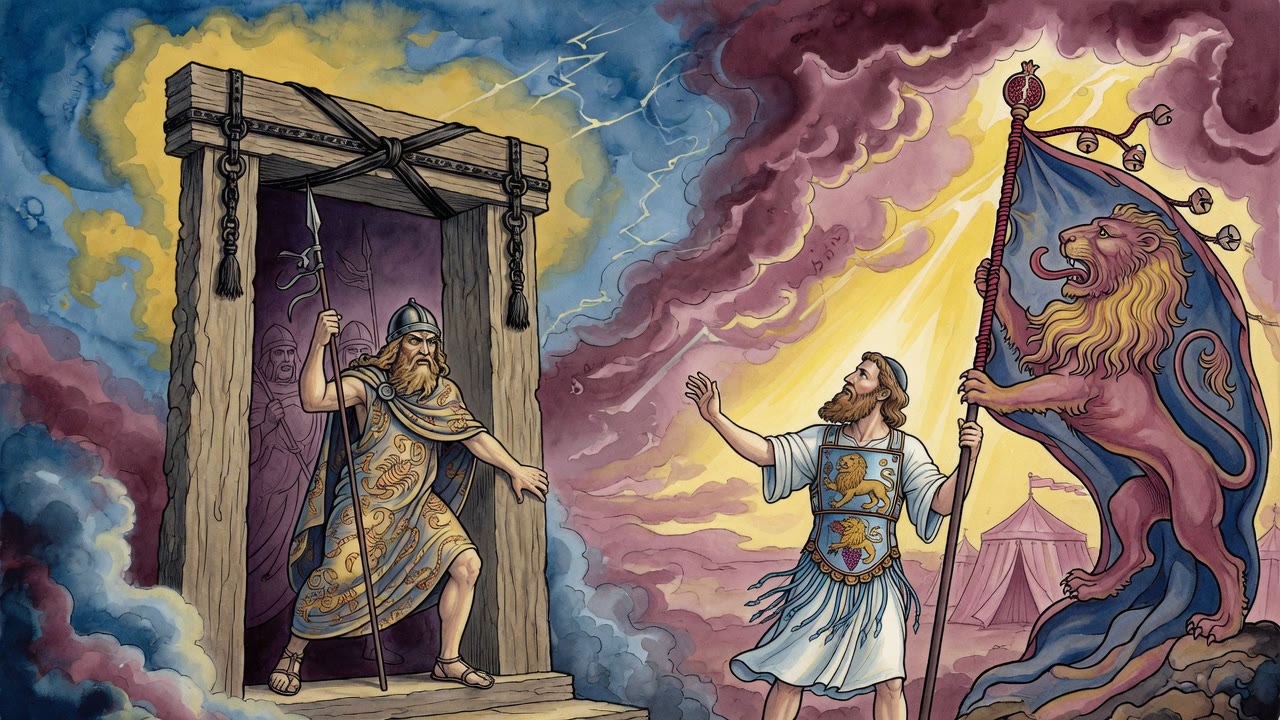
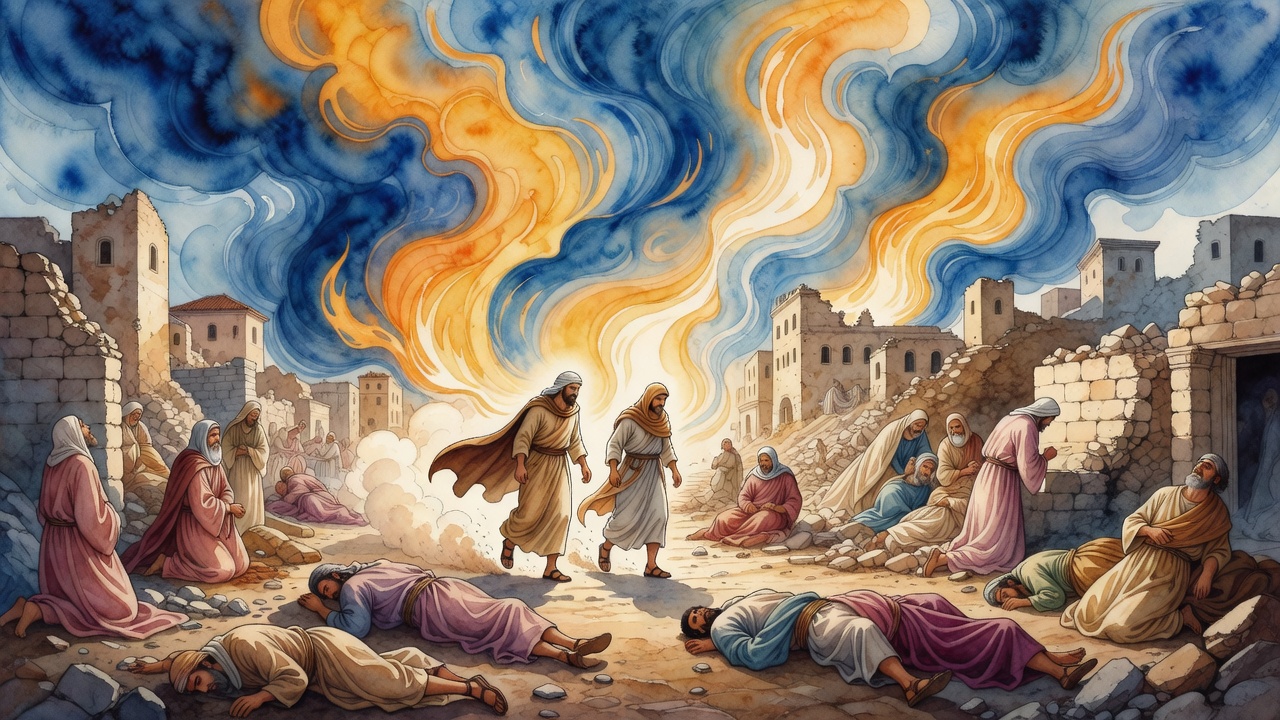
The gate of the first city stood open because no one was watching it. Wailing filled the streets. Leading men had fallen in the night, and every house that still had breath was busy with eulogy and burial.
 Click for full size
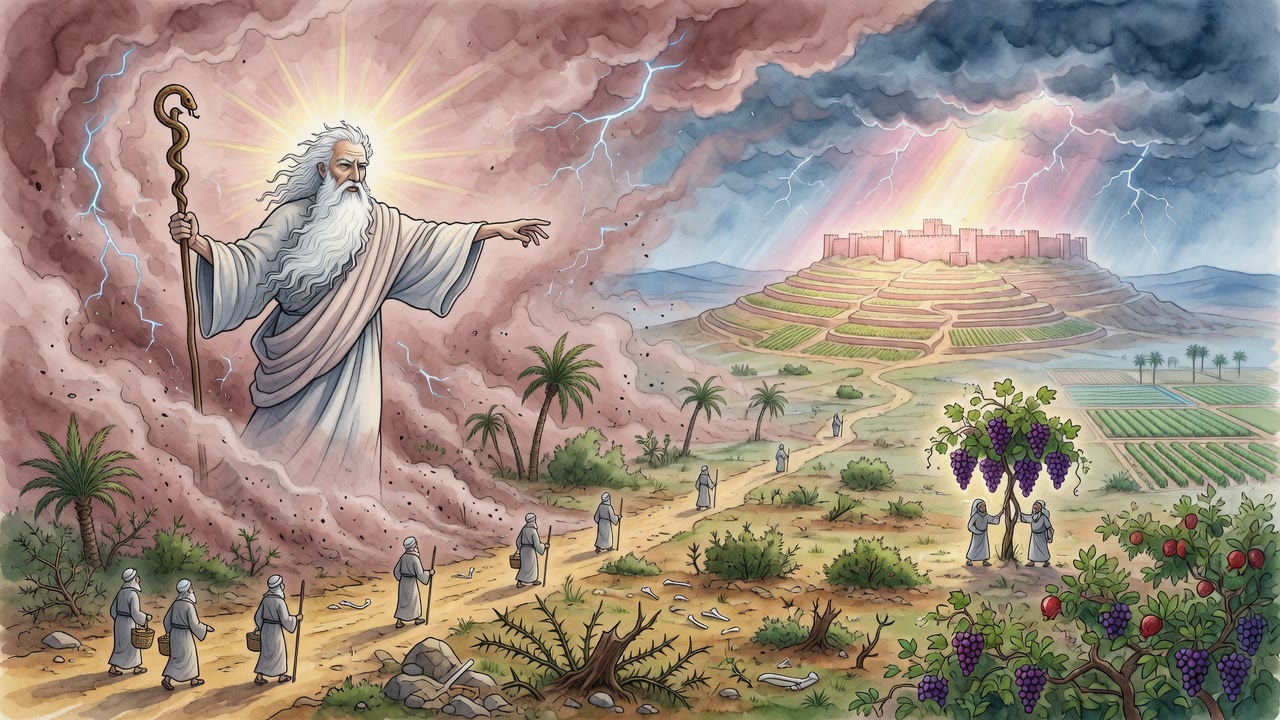
Twelve men in travel-stained cloaks slipped through. No guard asked, "From where do you come?" The Shekhinah (שכינה), the divine presence, had walked ahead of them into every town and struck the heads of the city so the strangers could pass unseen.
Kindness Dressed as Terror
It was protection. The hand of the Holy One cleared a path for the spies of Israel the way a parent clears thorns from a child's road. Faces wet with grief never lifted to study foreign accents or foreign sandals. A widow pulled a shroud tight and did not see the men measuring the thickness of the wall behind her.
The spies counted grapes and cisterns and the height of the men who still lived. They measured the land with fear already waiting in their throats. Giants like later Goliath, six cubits and a span, filled their eyes. Cedars and oaks, the prophet would say of the Amorite, and still God fells timber when He wills it.
They saw only the height. They did not see the One who makes tall things fall. One of them pressed a palm to cold stone and felt his pulse hammer as if the wall itself were alive and hungry.
The Report That Bit the Gift
When they returned to the camp, the kindness turned in their mouths. "It is a land that devours its inhabitants," they said, as if the funerals were a warning rather than a gift. They withheld praise and slandered the very mercy that had saved their scouting.
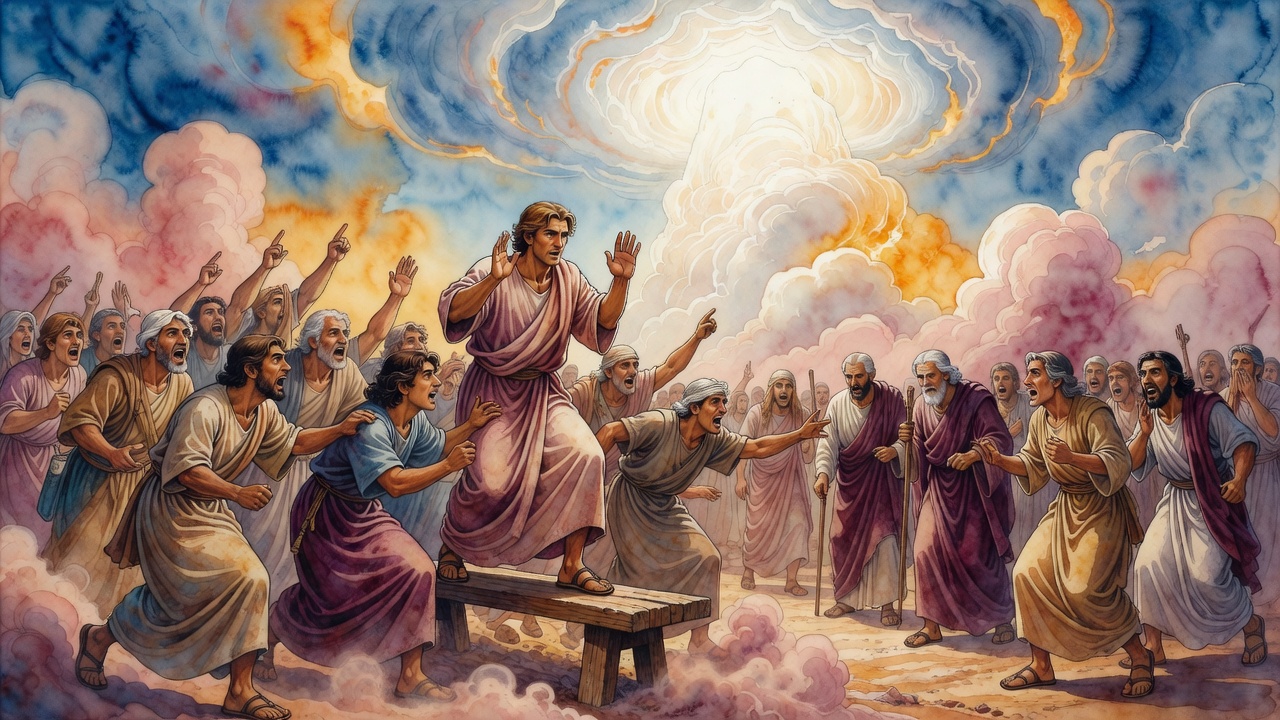
Caleb and Joshua tried to hold another story, but the ten had already poured fear into the tents. Night filled with weeping. Mothers held children too hard. Men who had watched the sea split now trembled at a report built on twisted funerals.
The cluster of grapes still hung on its pole, heavy and sweet, proof that the soil was rich. The sentence about devouring drowned the sweetness. People looked at fruit and heard death.
Names Built Like Pillars
Long before that night, the book of Exodus kept listing the tribes again and again, and the sages ask why the same roll call returns. They answered with a king who built a fortress that collapsed, rebuilt it and watched it fall, then braced it with pillars until it stood. He praised by name the building that endured.
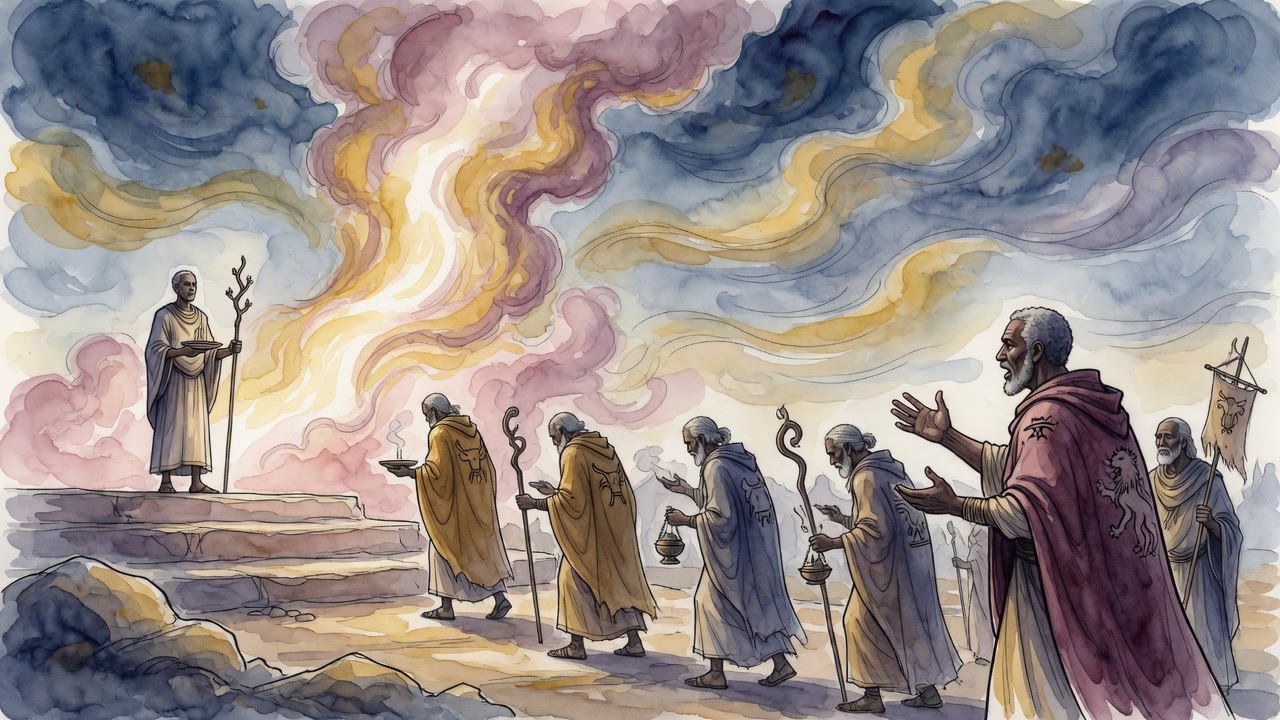
Abraham produced branches that fell away. Isaac produced Esau and chieftains who did not hold. Then Jacob raised twelve tribes who stood firm, and the Holy One kept naming them. Reuben echoes "I have surely seen" the affliction. Simeon echoes that God heard their groaning. Judah tastes of thanksgiving. Joseph holds the second gathering of a scattered people. Even Gad recalls manna, and Issachar the wage of honest labor.
The order shifts so sons of wives and handmaids sit woven together, none reckoned greater. The nation was built to stand. The spies almost tore the bracing out of the walls with a single sentence. The names that were meant for redemption were put to use as a roll call of cowards in the dark.
Why the Long Road Before the Land
Another teaching presses a harder question. If the goal was the Land of milk and honey, why not go straight there? The answer is put in God's own mouth. Bring a freed slave directly into rich fields, and he will not open a book. Each man will seize vineyard and plow, and Torah will fall from his hands.
So the Holy One led them in circles for forty years, manna from the sky, water from the well. No crops. No markets. Day after day, bread that asked for no plowing. Torah entered their flesh until study became a habit of the body. Rabbi Shimon ben Yochai would later say the Torah was given to be expounded to eaters of manna, and after them to eaters of the priestly portion. Real study belongs to people freed from grinding only for bread.
The wilderness was a school. The spies tried to graduate early and failed the exam of trust. They wanted soil without the schooling that makes soil safe to hold.
What They Carried Back
They carried a cluster of grapes on a pole. They also carried a sentence that turned funerals into a curse. The land did not devour. The report did.
In the camp the people wept for a death that had not yet been decreed. Heaven listened. The road lengthened. A generation would die in sand because ten men mistook a cleared path for a hungry country.
The Shekhinah (the Divine Presence) had buried the city so they could live. They repaid the gift by teaching Israel to fear the very ground waiting to receive them. Morning found tear tracks in the dust and a pole of grapes already beginning to soften in the heat, still sweet, still ignored.
← All myths