Parshat Shelach5 min read

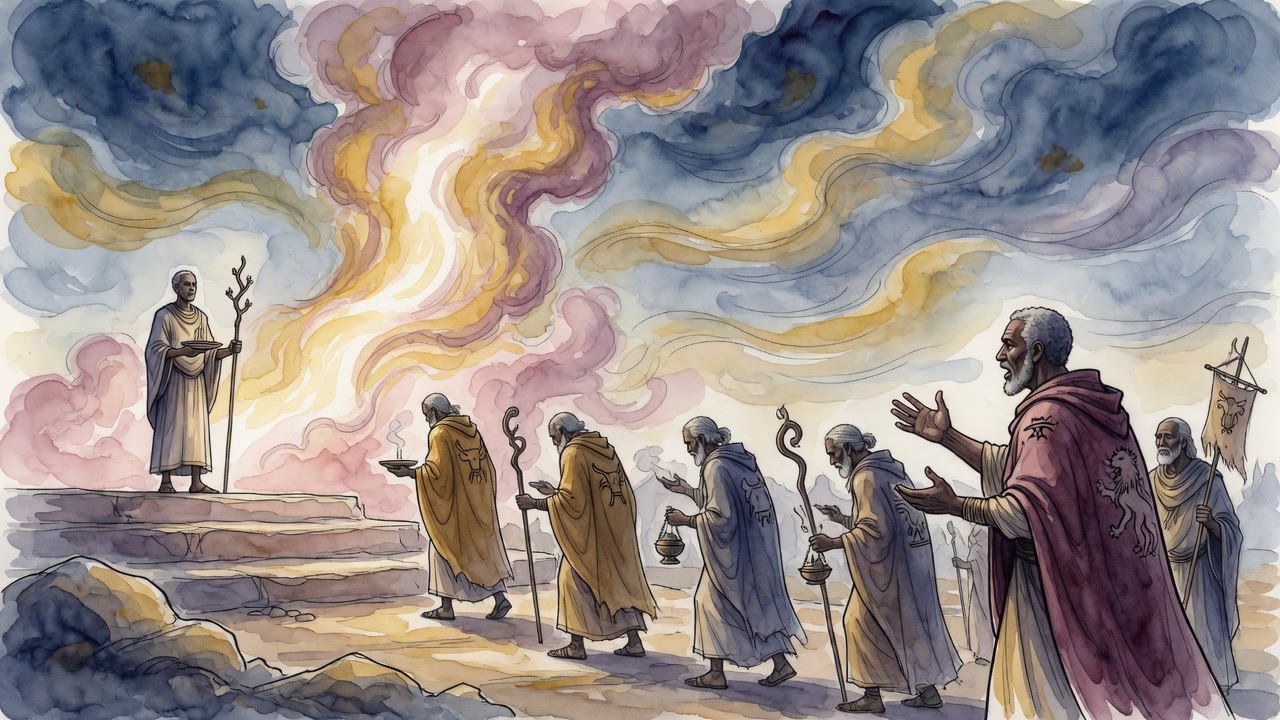
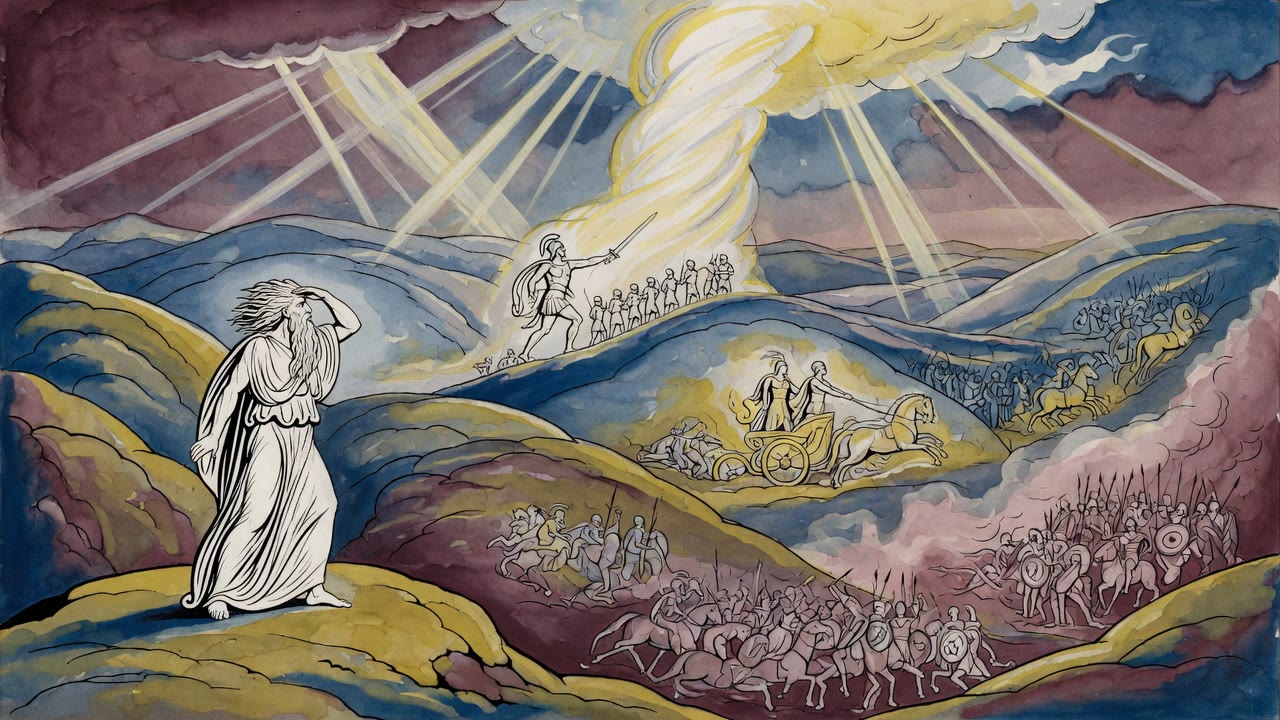
Moses Renames Hoshea Before the Spies Depart

The other ten adjusted their straps and practiced neutral faces. Joshua stood there saying the new syllables of his name under his breath, testing the weight.

Curated by Arthur · Told by Maggid ·
Table of Contents
  1. The Name Before the Road
  2. Send for Yourself
  3. What the Name Was For
  4. The Land That Waited Anyway
  5. After the Dust of the Mission
Moses Renames Hoshea Before the Spies Depart Click for full size

The Name Before the Road

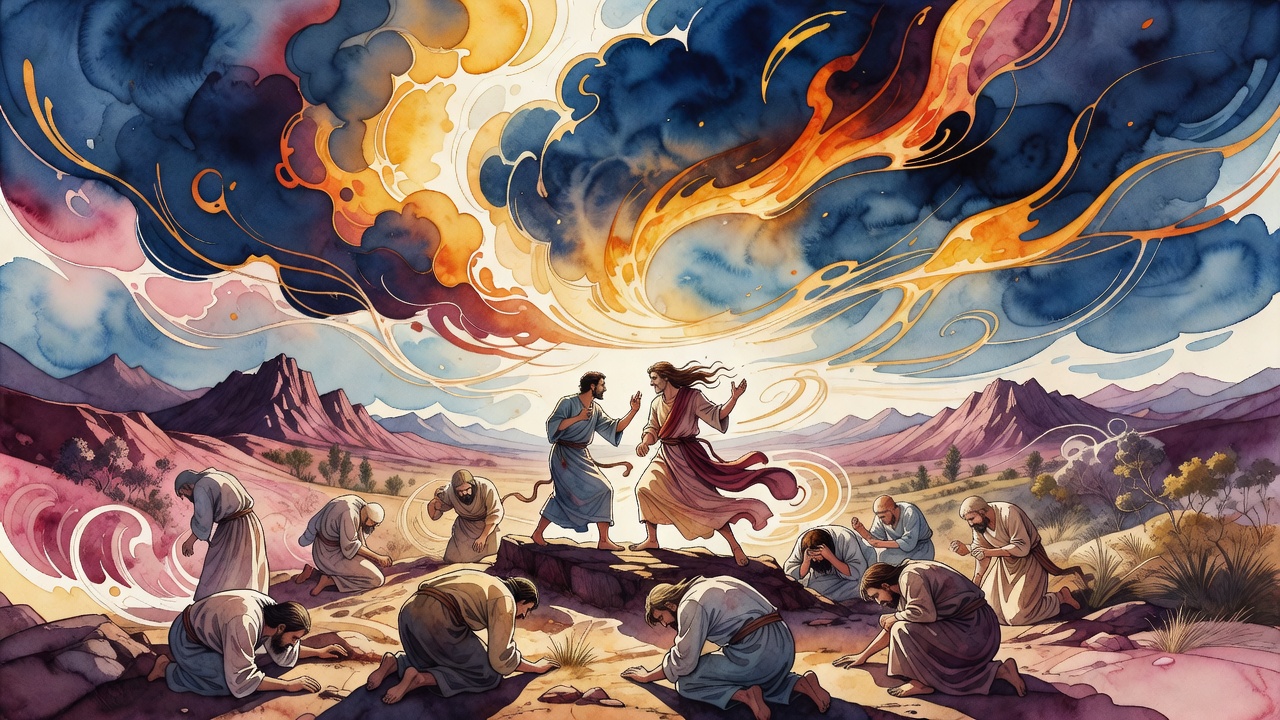
Moses set his hands on a man's future and changed his name. Hoshea son of Nun became Joshua, Yehoshua, a name that carried Yah inside it like a hidden blade (Numbers 13:16). The mission ahead was not a map exercise. It was a trial of sight, and Moses knew how easily eyes turn coward when walls look tall.

Caleb would later receive inheritance under his feet as reward for standing firm. Joshua's gift came earlier, in letters. A name can be a shield if heaven answers when it is spoken.

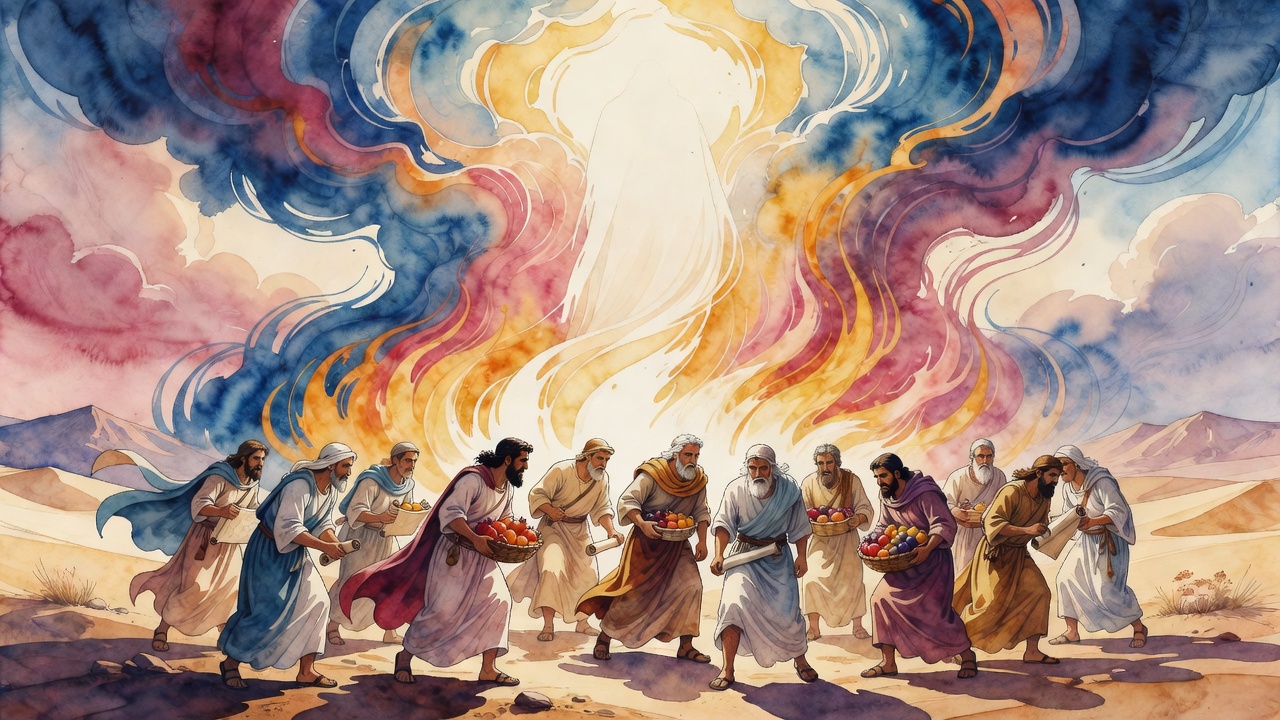
The other ten adjusted straps and practiced neutral faces. They did not know their mouths would soon melt a nation. Joshua felt the new syllables settle on his tongue and said them once under his breath, testing the weight.

Send for Yourself

The Holy One had already praised the land. Good land. Spacious land. A land promised in Egypt's furnace and sung again on the road. "See, the Lord your God has set the land before you," Moses cried at the border. The people answered with a request that sounded like wisdom and tasted like distrust: let us send men ahead.

"Send for yourself," God said, and the phrase was not eagerness. It was permission after pressure. The ark had already gone before them to seek resting places. Torah had already spoken. Still they wanted scouts, numbers, grape clusters, and stories they could argue with.

So twelve men prepared to walk into a gift as if it were a trap. Moses watched them go and felt the old ache of leading a people who trust their eyes more than their Deliverer. The border dust rose and fell. The land waited without anxiety. Only the camp was anxious.

What the Name Was For

Joshua did not leave as a tourist. He left as a man renamed against collapse. When the ten would later melt the camp with fear, he and Caleb would tear their clothes and hold the line. The extra letter in his name was not jewelry. It was Moses' petition stitched to identity: may God save him from the counsel of the spies.

Names in Israel often arrive at thresholds. Abraham at covenant. Jacob at the wrestling. Here Hoshea becomes Joshua at the hinge between promise and panic. Moses had watched this man in battle before, when Amalek came and Joshua weakened the enemy by the sword's edge while Moses' hands held the sky open. Even then, tradition heard lots in the verb of weakening, a casting of fate under heaven's eye. The same man now walked into Canaan's hills with a name upgraded for a harder war: the war against Israel's own dread.

He measured cities without letting the measurements own him. He tasted fruit without letting sweetness become a bribe for silence. Caleb walked beside him with a different fire, feet already claiming soil.

The Land That Waited Anyway

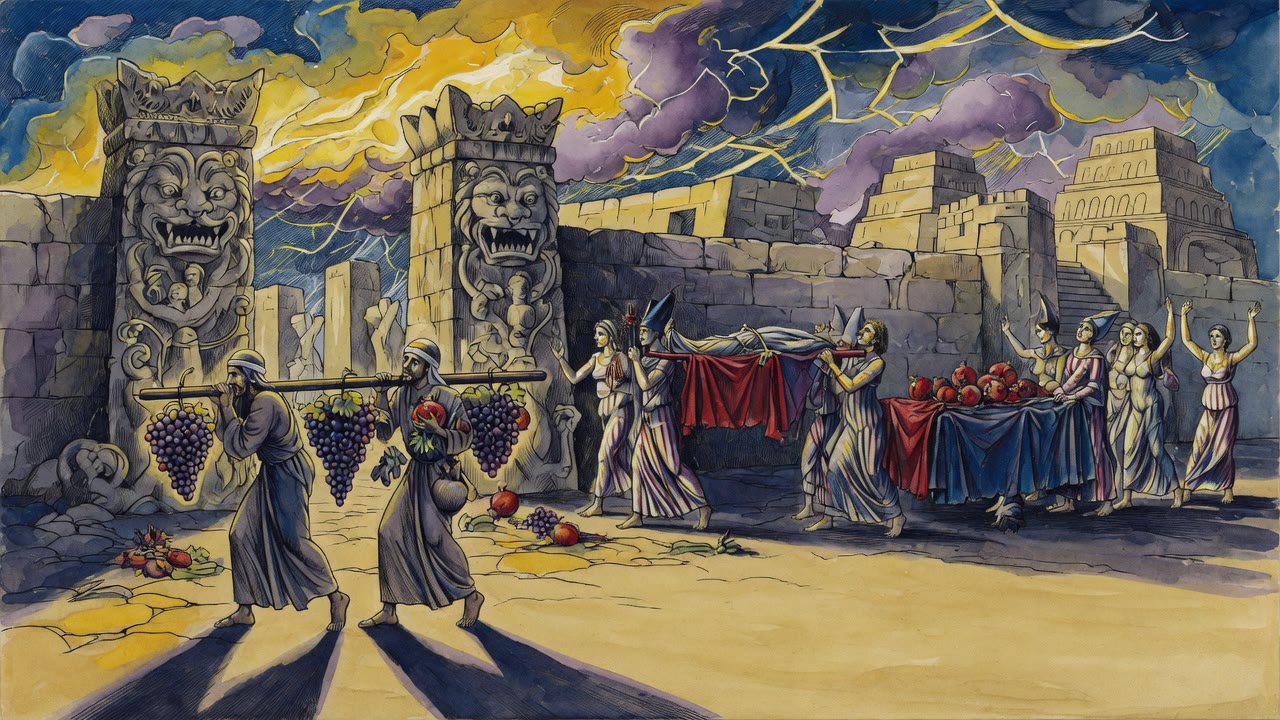
Figs and pomegranates did not change their sweetness because spies doubted. Clusters still hung heavy. Cities still stood. The report would split, and the split would cost a generation its shortcut. The renaming remained a fact: Moses had refused to send Hoshea unprotected into a mission born of fear.

On the road into the land, Joshua touched a fig and thought of the name in his mouth. Yah inside Yehoshua was not magic. It was companionship under pressure. When fear tried to write the report in advance, the name interrupted the draft. Caleb laughed once at a cluster so heavy it needed two men, and the laugh was not denial of walls. It was refusal to let walls become gods.

Caleb's reward would be soil under foot. Joshua's reward would be leadership after tears, and a name already practiced in God's presence. The ten returned with a story shaped like a giant's shadow. Joshua returned with the same eyes and a different conclusion: the land is good, and the Lord is able.

After the Dust of the Mission

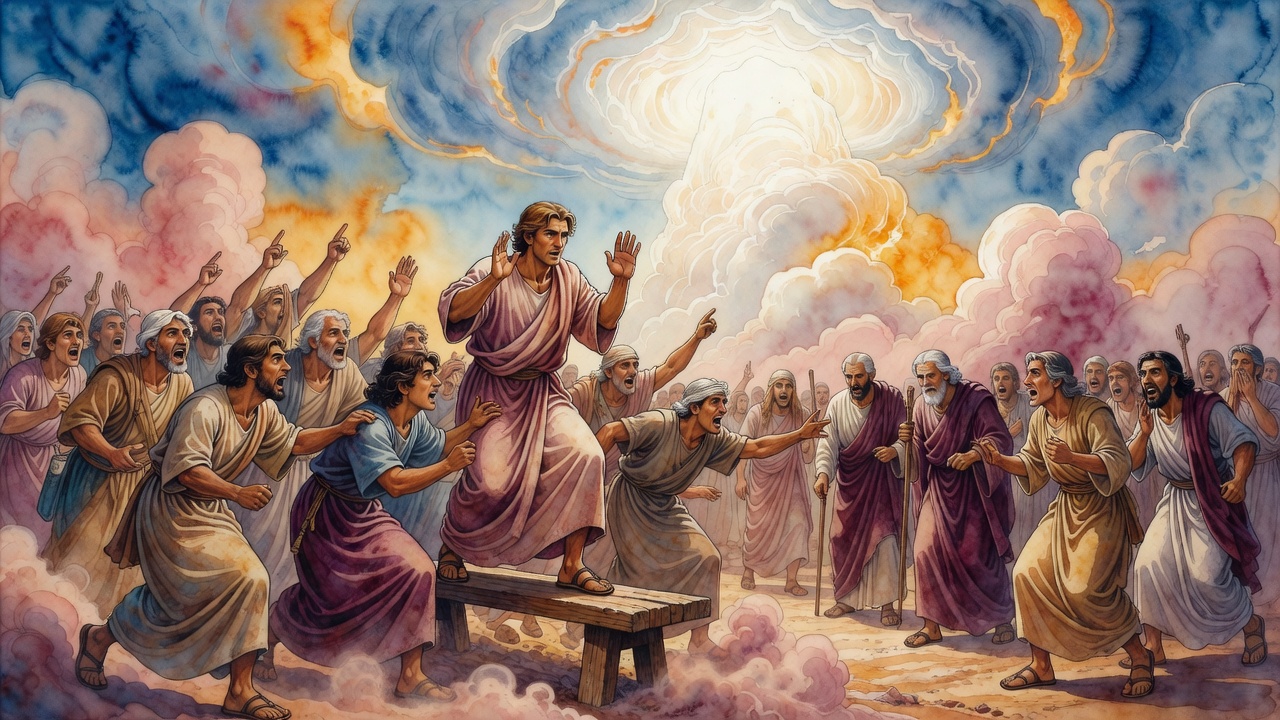
When the camp later shook with night-terror and talk of return to Egypt, Joshua's new name had already done its first work. He stood. He spoke. He did not join the arithmetic of giants that made Israelites into grasshoppers in their own mouths.

Moses, watching from the long burden of leadership, had given what a teacher can give before a student walks into fire: a name that remembers who fights beside him. The spies' journey began in human insistence. Joshua's journey through it began in a renaming that refused to let him face the land alone.

Back at the border of memory, Moses prayed without spectacle. He had armed a student with identity before panic. Years would pass. Graves would mark the desert. Joshua would still answer to the name Moses gave him, each syllable a small reopening of that first protection. The land would wait. The name would not expire.

A detail stuck in the mind the way a burr sticks to wool: a sound, a color, a hand that would not stop shaking until the moment passed.


← All myths

From the tradition

Sources

3 sources

The texts behind this telling. Some cards carry a translation of the source; others are our own retelling of it, and each card says which. Every card links out to the original.

Bamidbar Rabbah 16:9Bamidbar Rabbah

Retold in our words. Read the original at the link below.The Sefaria Midrash Rabbah, 2022 · CC-BY

The Torah tells us, "Moses called Hoshea son of Nun, Joshua [Yehoshua]" (Numbers 13:16). But here's the question: why did Moses change Hoshea's name to Joshua? What prompted this alteration?

Our sages, delving into the depths of the text, offer a few intriguing possibilities. One explanation revolves around the concept of reward and consequence. We know that CALEB, along with Joshua, were the only spies to bring back a positive report about the Promised Land. Caleb, as the Torah tells us, received his reward directly from the Land itself: "Surely, the land on which your foot trod will be an inheritance for you and for your children forever" (Joshua 14:9).

What about Joshua? The rabbis suggest that Joshua received his reward in a more symbolic way. The addition of the letter yod to his name, transforming Hoshea into Yehoshua, represented this reward. Why the yod? Because, as the text points out, the numerical value of the Hebrew letter yod is ten – perhaps alluding to the reward that Joshua took from the ten spies who spread fear and negativity.

A single letter, a tiny stroke of the pen, carrying the weight of both divine reward and the consequence of others' failings.

But there's another interpretation, a more poignant and direct one. According to this reading, when Moses saw the wickedness of the spies – their fear-mongering and their lack of faith – he turned to Joshua with a fervent prayer. Seeing the spies' moral failings, Moses pleaded, "May the Lord deliver you [ya yoshiakha] from this generation." This prayer, embedded within Joshua's new name, became a protective blessing. The name Yehoshua, in this understanding, is not just a name, but a constant reminder of divine protection.

So, what are we to make of this? Is it about reward? Is it about protection? Perhaps it's both. Perhaps the change of name represents a divine intervention, a way to safeguard Joshua from the negative influence of his peers, while simultaneously acknowledging his unwavering faith.

Whatever the precise reason, the story of Hoshea becoming Joshua serves as a powerful reminder: words have power. Letters have power. And even the smallest change can have profound and lasting consequences. What names do we carry, and what blessings or burdens do they represent?

Full source
Midrash Tanchuma Buber, Sh'lach 7:1Midrash Tanchuma Buber, Sh'lach

Translation of the source text.Midrash Tanchuma (Buber), Public Domain, on Sefaria · CC-BY-SA

Another interpretation of "Send for yourself." Even though the Holy One, blessed be He, said "Send for yourself," it was not the will of the Holy One, blessed be He, that they should go. Why? Because the Holy One, blessed be He, had already told them the praise of the Land of Israel, as it is said, "For the LORD your God brings you into a good land" (Deuteronomy 8:7); and likewise it says, "For the land into which you are entering to possess it, etc." (Deuteronomy 11:10); and even while they were still in Egypt He said to them, "And I have come down to deliver him, etc. [unto a good land, etc.]" (Exodus 3:8). Then what is "Send for yourself"? Rather, they themselves requested these things, for at the time they reached the borders, Moses said to them, "See, the LORD your God has set the land before you" (Deuteronomy 1:21). At that moment Israel drew near to Moses, as it is said, "And you all drew near to me and said, Let us send men, etc." (Deuteronomy 1:22). This is what Ezra said, "And they refused to listen, and were not mindful of Your wonders, etc." (Nehemiah 9:17). And it says, "And the ark of the covenant of the LORD traveled before them, etc., to seek out for them a resting place" (Numbers 10:33), yet they said, "Let us send men, etc.," only because they did not believe in His Torah. And likewise David said, "They did not believe in God, etc." (Psalms 78:22).

Rabbi Yehoshua says: To what were they comparable? To a king who arranged for his son a beautiful wife, the daughter of good and wealthy parents. He said to him, "Behold, I have arranged for you a beautiful wife, the daughter of good and wealthy parents; there is none like her in all the world." The son said to him, "Let me go to see her," for he did not believe his father. Immediately the matter became hard and grievous to his father. His father said, "What shall I do? If I say to him, I will not show her to you, now he will say she was ugly, and that is why he did not want to show her." In the end he said to him, "Look at her, and you shall know that I did not deceive you; but because you did not believe me, by an oath, you shall not see her in your house. Rather, to your son I will give her." So too the Holy One, blessed be He, said to Israel, "It is good," and they did not believe Him. They said, "Let us send men." The Holy One, blessed be He, said, "If I hold them back, they will say the land is not good, that He did not show it to us." The Holy One, blessed be He, said, "Rather, let them see it; but by an oath, not one of them shall enter into it," as it is said, "If they shall see the land, etc." (Numbers 14:23), "rather, to their children I will give it."

Full source
Midrash Tanchuma Buber, Yitro 4:4Midrash Tanchuma Buber, Yitro

Translation of the source text.Midrash Tanchuma (Buber), Public Domain, on Sefaria · CC-BY-SA

"And it came to pass, when Moses held up his hand, etc." (Exodus 17:11). What was the end of the matter? "And Joshua weakened (wa-yachalosh), etc." (Exodus 17:13). Rabbi Berekhyah the Priest said: He cast lots over them. A lot is called by four names: goral, pur, chevel, and cholesh.

Full source