Willing Ears Devoured the Spies' Fear Whole
Moses told them to take the back paths and buy grapes if anyone asked. Ten men came home with a map of giants. The camp wanted that map.
Table of Contents
In the desert Israel never asked for scouts. Rock split. Manna fell. A cloud walked ahead and showed the way. When the edge of the promised land came near, the people pressed Moses for men to go first, mark the road, and name the cities.
 Click for full size
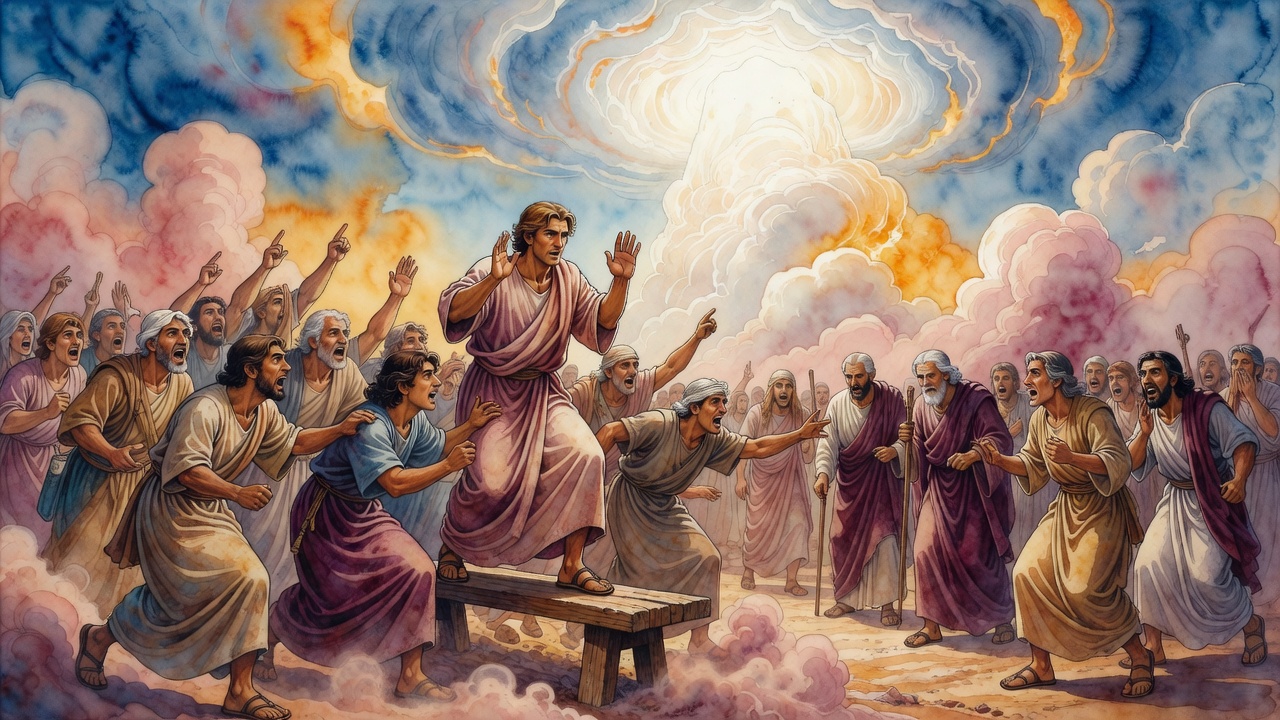
The young shoved the old. Leaders lost the line. They came without the order they had used for every other request. Moses heard prudence. Heaven heard a nation that wanted human eyes before it would take a gift already sworn.
"What?" God said. "When you went through pits and drought you wanted no scouts. Now that the land is full of good things, you want spies." He granted the sending and marked displeasure in the same breath. Permission is not always blessing. "If you wish to send them, send them. Do not pretend I ordered it."
Back Paths and Fruit Cover
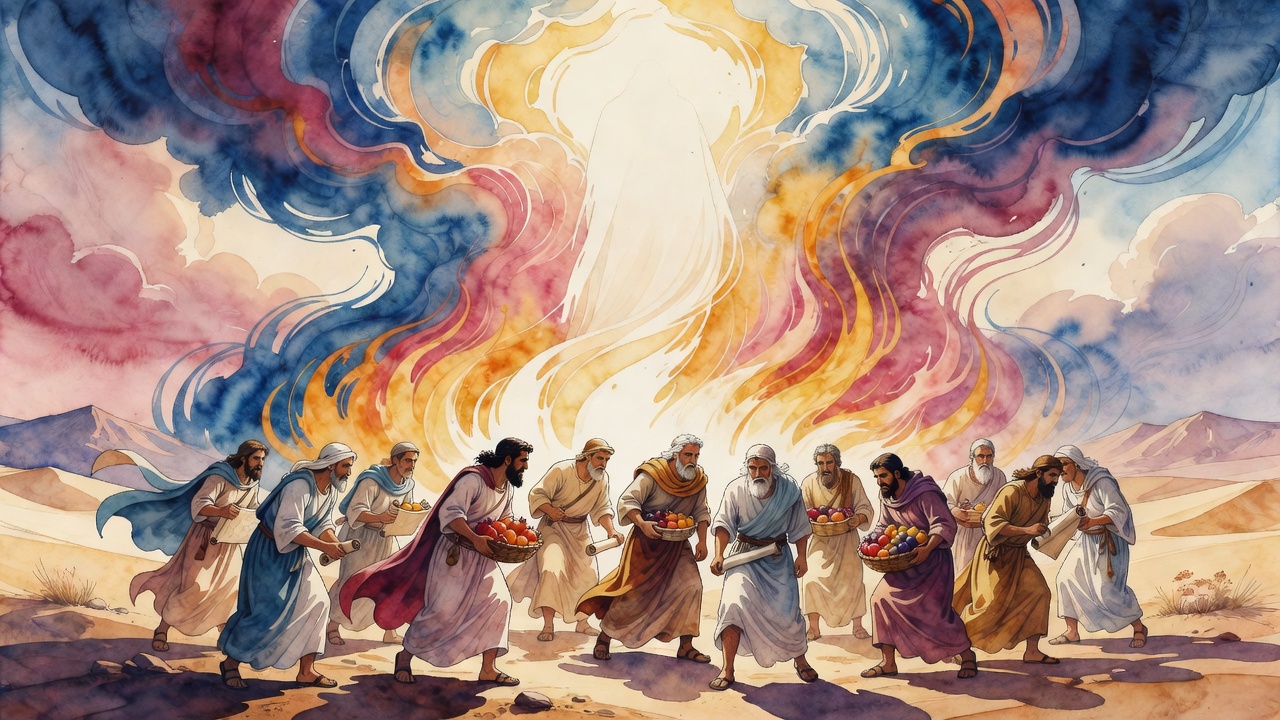
Moses briefed the twelve anyway. Stay off the main roads. Use the back paths. The Shechinah (שכינה), God's presence, would watch them. They were still not to strut. When a city forced their presence, they were not to skulk like thieves. Walk in sight. If asked, say they had come to buy pomegranates and grapes. Speak no word of tearing down idols or cutting sacred trees.
Look at the land itself. If people lived in the open, they were strong. If they huddled behind walls, they were afraid. Hard soil meant fat country. Soft soil meant lean. Find out if Job still lived. His righteousness, Moses said, could cover a whole region. If Job was dead, Canaan was already open.
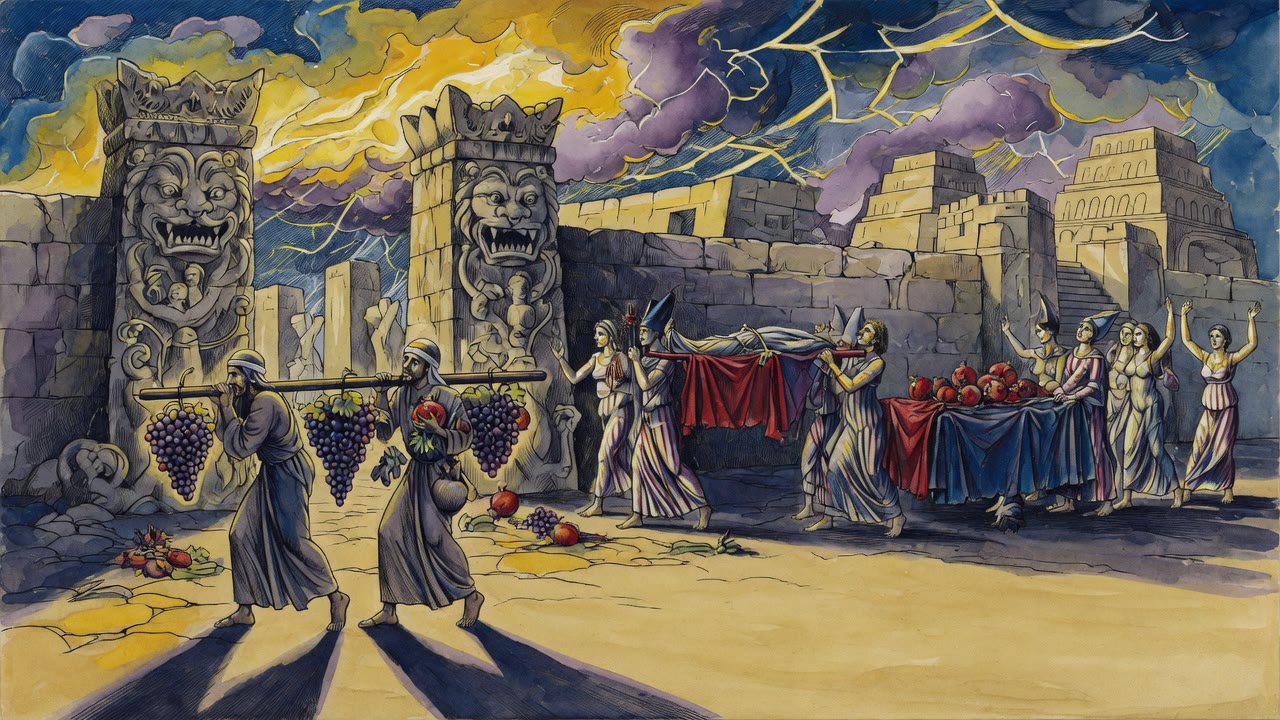
They reached the land and found the inhabitants at Job's grave, eating the funeral feast. The shield they had been told to fear was already in the ground. Twelve tribal chiefs still had to choose what to carry home in their mouths.
Ten Mouths Against Two
Joshua and Caleb came back ready to go up. Ten others came back with giants, walls, and a land that eats its settlers. Ammiel of Dan went further. He said the country was so strong that not even God could go up against it.
Shammua of Reuben did not obey. Sethur of Asher had a name that should have asked, "Who is like God?" He asked, "Who is God?" Nahbi of Naphtali shut truth in his mouth and let lies out. The roster had been chosen for trust. It returned as a choir of dread.
Moses had wanted soil that could feed faith. He received speeches that treated God as weaker than the sons of Anak. The two who refused the song could not drown ten voices the people already wanted to hear.
The Camp Quoted the Law
When Moses challenged the panic, the camp answered with legal cleverness. Two or three witnesses would have been enough under the law, they said. Here stood ten. How could a teacher demand they ignore such testimony?
"Our brethren have made us faint of heart," they said. "Because the Lord hated us, He brought us out only to hand us to the Amorites." They even tried a parable of fields. An earthly king with two sons gives the river field to his favorite and the rain field to the other. Egypt had the river. Canaan needed rain. Therefore, they claimed, God hated them.
Willing ears made the bad report a feast. Fear was more comfortable than the risk of entering. The same Torah that would have steadied them became a brief for retreat.
The Land Waited Behind Graves
God's anger and the decree of wandering followed. A generation that asked for spies after years of miracles received the answer its ears had already chosen. The land waited. The graves of the wilderness filled with men who preferred a report of walls to a word of promise.
Joshua and Caleb kept a minority report that history would vindicate only after the speakers of fear were dust. From that day the road to Canaan ran through years. Milk and honey stayed on the far side of an hour when prudence without faith asked for scouts and got a sentence instead of a shortcut.
The secret paths, the fruit cover, the careful silence about idols, none of it saved a mission poisoned from the request itself. Job was already dead when they arrived. The funeral feast had been eaten. They still came home describing a people they were ready to believe God could not beat. That belief became the longest detour in the national story.
← All myths