Achan Confessed and Opened the Road Back
Achan hid spoil under his tent and troubled Israel. When he confessed, the sages said he marked the road for every penitent after him.
Table of Contents
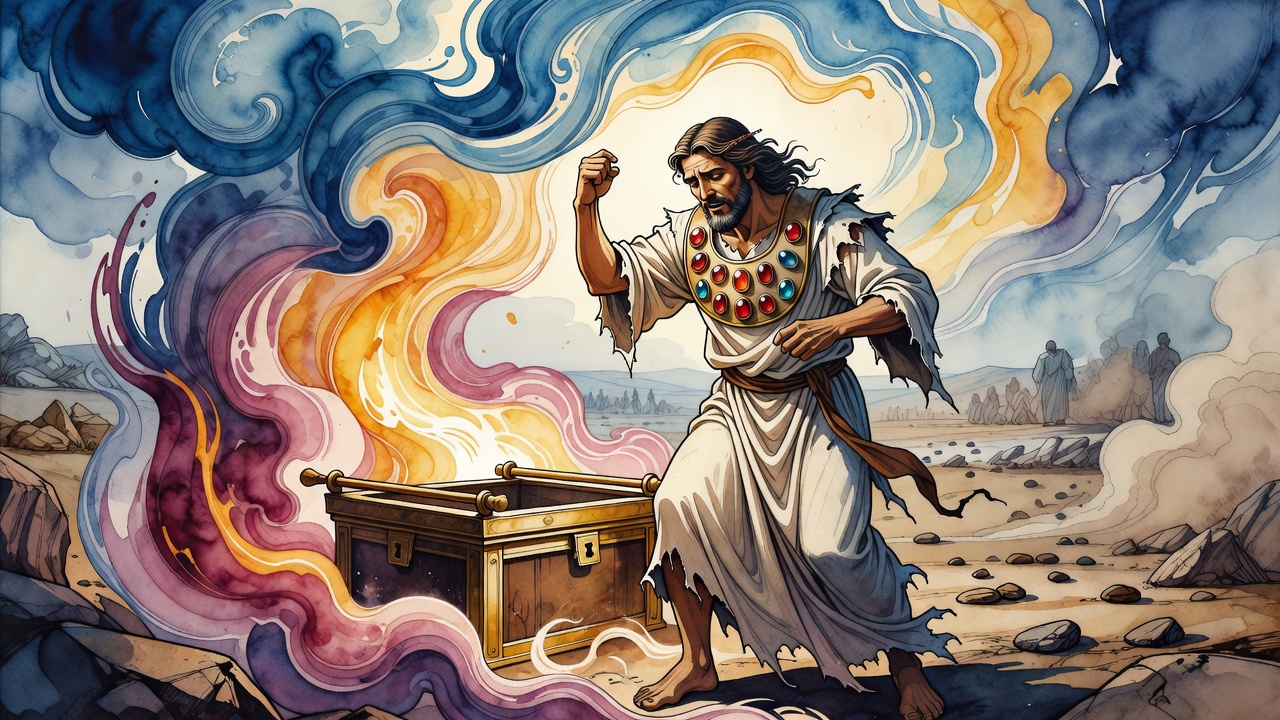
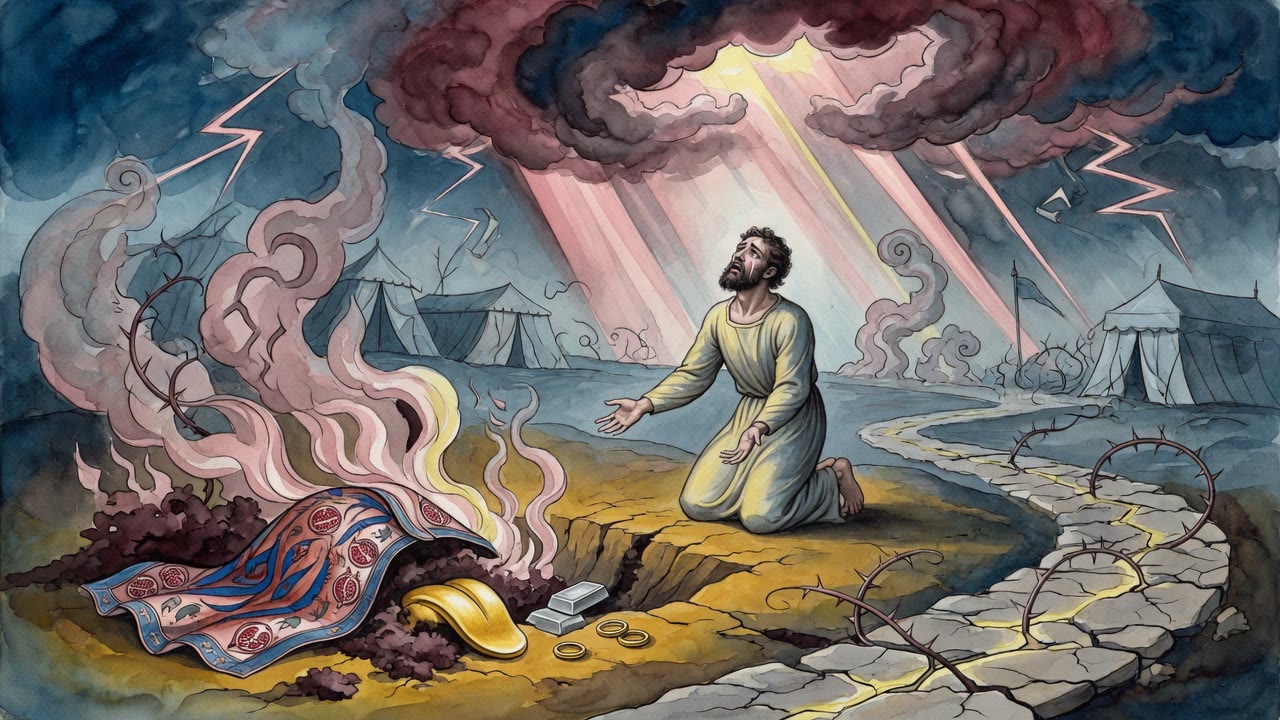
The lot fell. Achan stood in the open with the mantle of Shinar, the silver, and the gold bar that had been buried under his tent. Israel had failed at Ai because one man had taken what the ban forbade (Joshua 7:20-21).
 Click for full size
He could have kept silent until the stones. He named the theft. The midrash will not leave that naming as mere defeat.
Two Names, One Man
Chronicles lists the sons of Zerah and ends, "five of them in all" (1 Chronicles 2:6). The rabbis read a promise: all five are bound for the World to Come. One of those five is Zimri, and the sages identify him with Achan himself.
Why two names? Rav and Samuel disagreed. One held his real name was Achan, and he earned Zimri because his brazen sin echoed the notorious Zimri of the wilderness. The other held his name was truly Zimri, and he was called Achan because he brought the hidden sins of Israel to a head, troubling the nation until the wrong was forced into the open.
Either way the man carries the weight of public damage and the strange mercy of being counted among those headed for the World to Come.
Thanksgiving of the Inclination
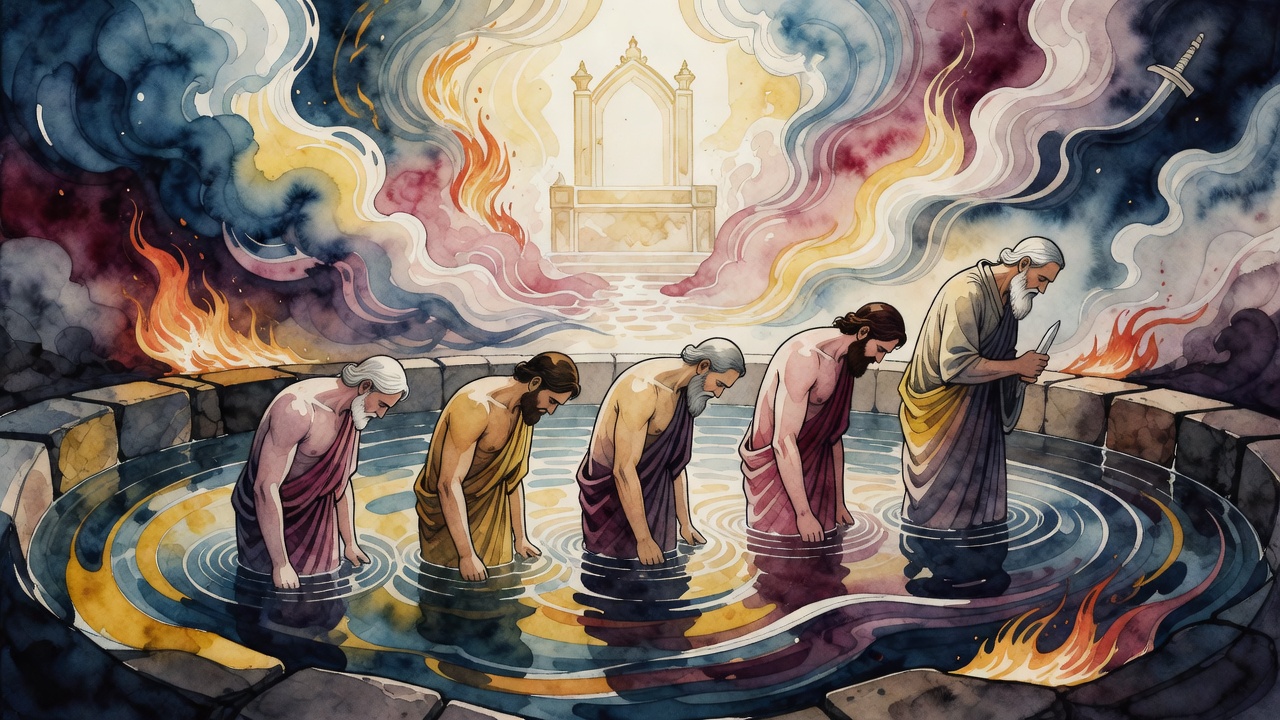
Rav Huna, in the name of Rabbi Acha, lifted Achan further. He read, "Whoever offers a thanksgiving sacrifice honors Me, and to him who orders his way I will show the salvation of God" (Psalms 50:23). This, he said, is Achan, who slaughtered his own evil inclination as if it were a thanksgiving offering on the altar.
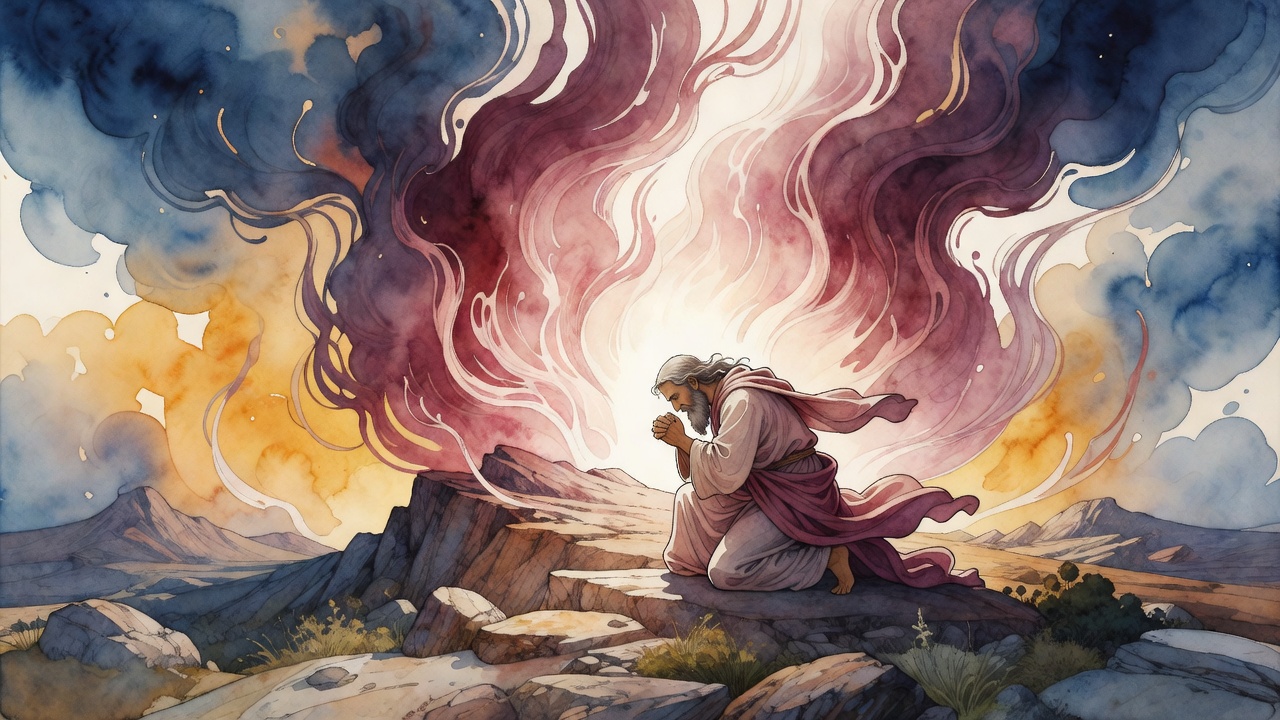
"Orders his way" means he marked out the road for every penitent who would come after. By confessing instead of hiding to the end, the thief of Jericho became the man who showed others how to find their way back.
The stones still fell. The midrash does not cancel consequence. It refuses to cancel the road-mark he left for others.
The Offering That Never Ends
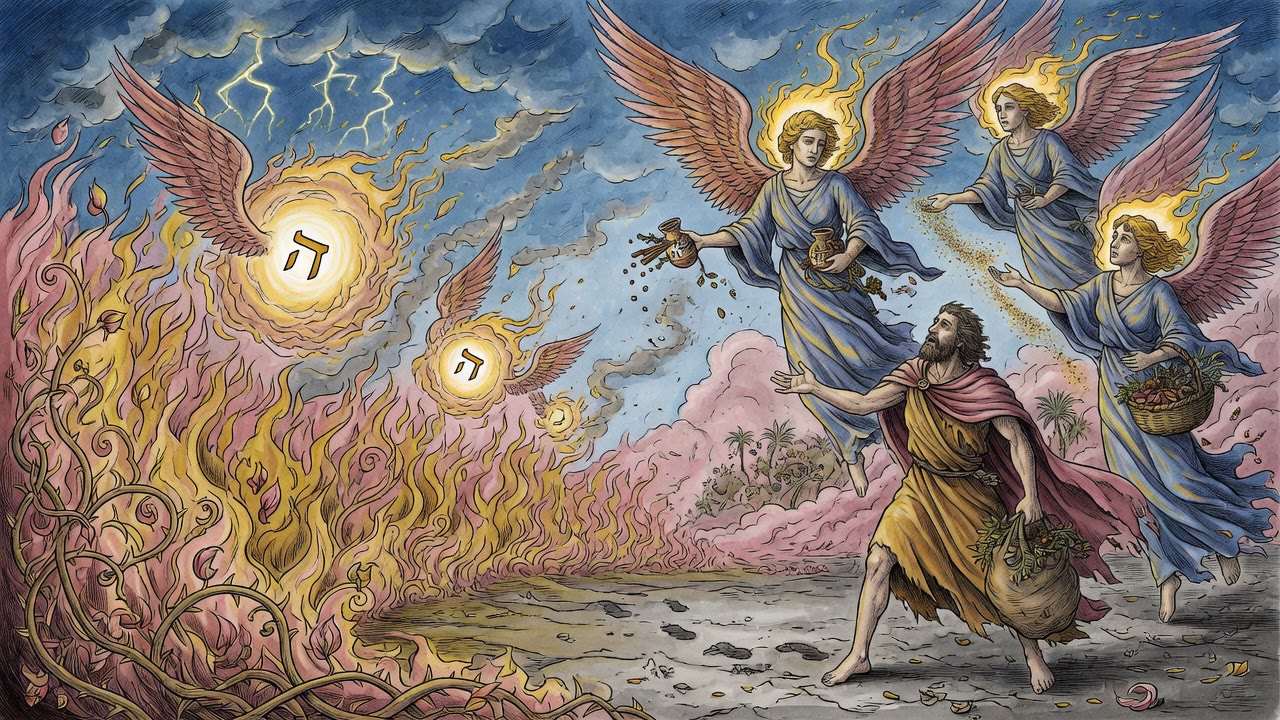
Pesikta DeRav Kahana teaches that in the world to come every other offering will fall silent. Sin offerings and guilt offerings cease when there is no more sin to repair. But the thanksgiving offering will never be abolished, and the prayer of thanks will never be abolished.
Other offerings answer a need, and needs end. Thanksgiving answers nothing but goodness already received, and that goodness has no expiration. Jeremiah sees restored streets filled with joy and with those who sing, "Give thanks to the LORD, for He is good" (Jeremiah 33:11), carrying thanksgiving to the house of the LORD. David pledged thank offerings in the plural, word and gift together (Psalms 56:13).
Achan's confession is not a sin offering that undoes the ban. In the sages' daring image it is closer to thanksgiving's cousin: the public slaughter of a private stubbornness, a man ordering his way so others can walk it.
Under the Tent
He had seen among the spoil a fine Shinar mantle and wanted it. Desire dug a hole under fabric and earth. The camp paid in soldiers' blood until the hole was opened. Confession did not make the mantle clean. It made the path visible.
Penitents after him would know the shape: name the thing, bring it out, stand in the damage, and still be counted among those who can have a future.
Before the lot, men of Ai had driven Israel back and thirty-six fell. Joshua tore his clothes. The ban had been broken, and the camp felt it as military failure before it knew the thief's name (Joshua 7:5-11). Hidden sin has public weather.
When Achan speaks, he does not minimize. "Truly I have sinned against the LORD... I saw... I coveted... I took" (Joshua 7:20-21). The verbs are a map. Seeing, wanting, taking, hiding. Confession reverses the last move even when it cannot reverse the first three.
The midrash's daring is to call that reverse a kind of thanksgiving, the slaughter of the inclination that wanted the mantle more than the camp's life. Stones still rise. Grace here is not escape from consequence. It is becoming a signpost for the next person who must choose between deeper hiding and speech.
In a world to come without guilt offerings, thanksgiving remains because goodness remains. Achan's road-mark is an early, rough cousin of that forever thanks: naming the truth so others can walk back toward God with a path under their feet.
Under the tent the Shinar cloth had gleamed like another country. Desire always imports a foreign shine. The road back is local, dusty, and spoken aloud.
World to Come for the five of Zerah is the midrash refusing to let one crime be the only line on a man's page. Confession writes a second line. Later penitents read both.
Rav and Samuel arguing his true name is the tradition refusing a flat villain. Brazen like Zimri. Troubling like the root of Achan. Both readings keep the public wound in view. Neither reading erases the World-to-Come promise attached to the five.
Ordering one's way is map-work. Achan's confession draws a line other sinners can follow: out from under the tent, into speech, into the costly light. Thanksgiving that never ends in the future world is pure gratitude without guilt. His thanksgiving of the inclination is the hard early form, gratitude's cousin under judgment.
Ai taught the camp that private loot is public defeat. Jericho's ban was not a game about fabric. It was a claim that the first fruits of conquest belong to God. Stealing them stole the camp's standing until the truth stood up and named itself.
← All myths