Abram Returned to His Old Altar Between Bethel and Ai to Pray
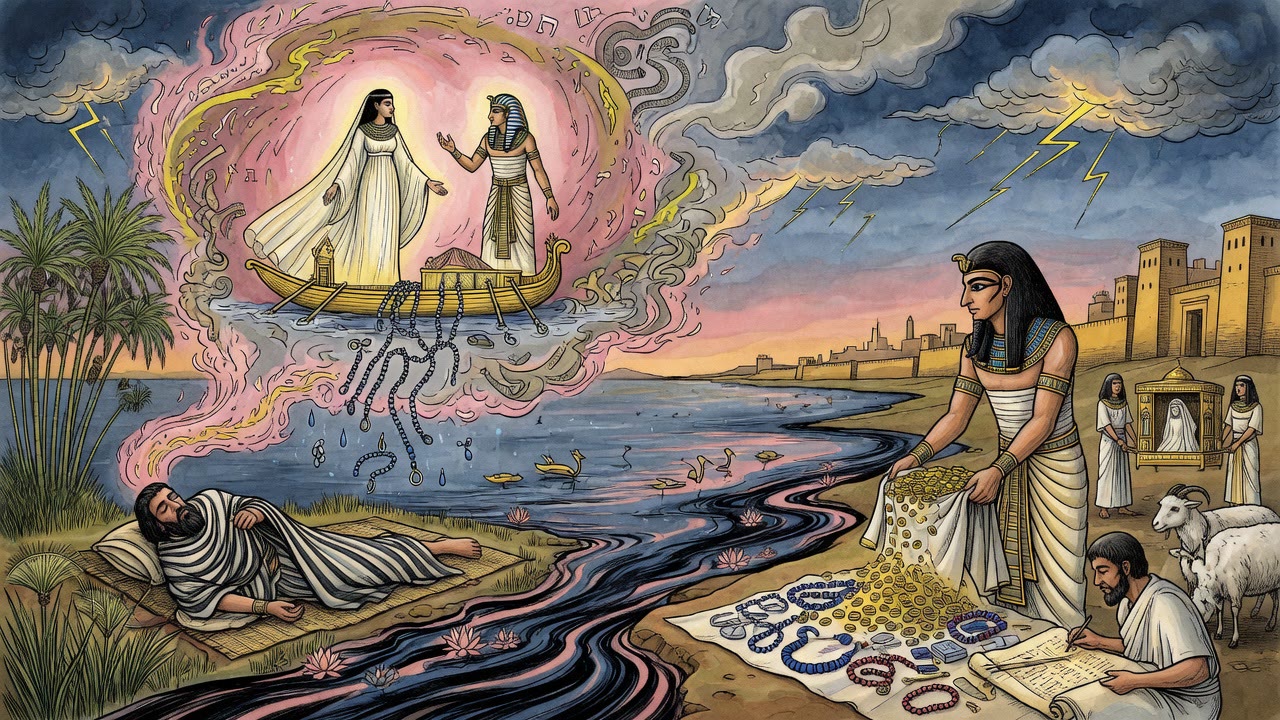
Egypt paid them in livestock and sent them north. Abram walked past every new hill and stopped at the old pile of stones between Bethel and Ai.
Table of Contents
 Click for full size
The Road Up From Egypt
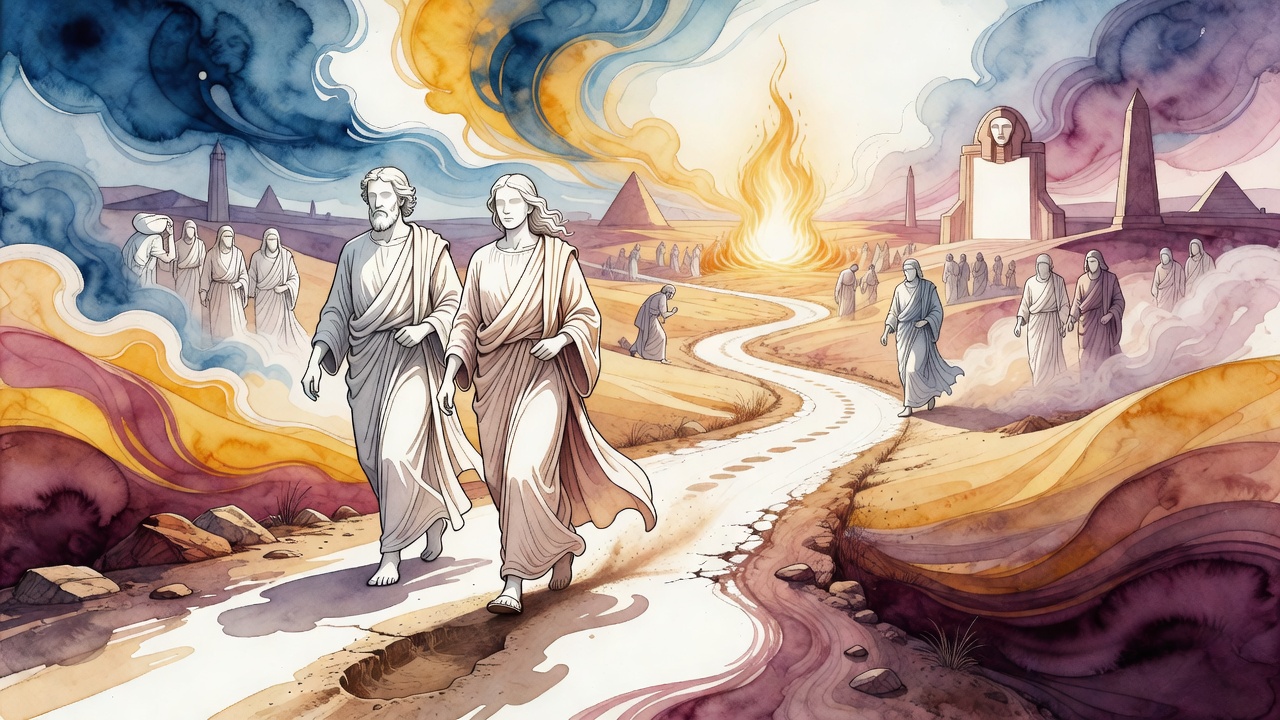
Abram came up out of Egypt with a heavier caravan than the one that had gone down.
Sheep. Oxen. Donkeys. Men and women bought in the market. Silver and gold hanging off the pack animals. Pharaoh's house had paid well for Sarah, then the plagues had come through the palace, and Pharaoh had worked out why. He handed her back and put an escort on Abram to make sure he left. Nobody sent them away empty. That was the humiliating part. Egypt broke something in that house and then paid for it in livestock.
They came up through the Negev with all of it, moving slowly the way rich people move. Sarah rode among the animals a king had bought her with.
He Did Not Build a New One
There was an obvious thing to do with that much wealth. Find a good hill. Put up something bigger than what he had stacked before he went down. Let the stones say the man who came back is not the man who left.
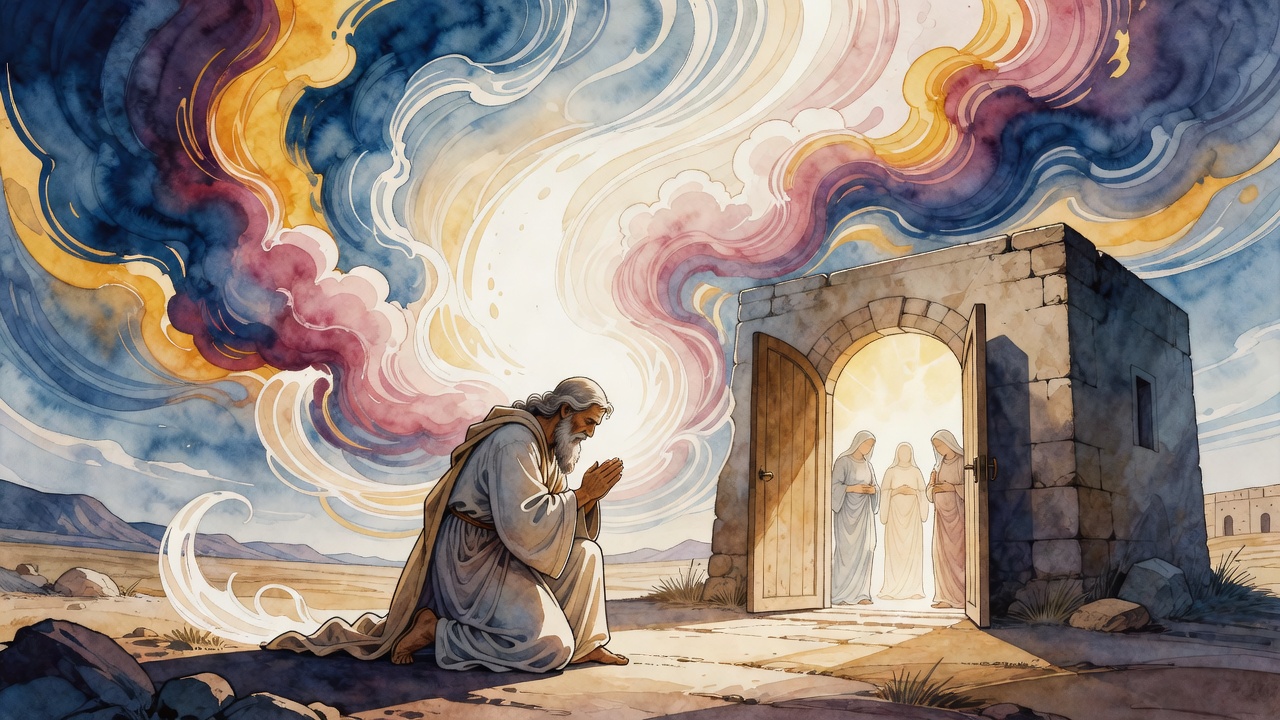
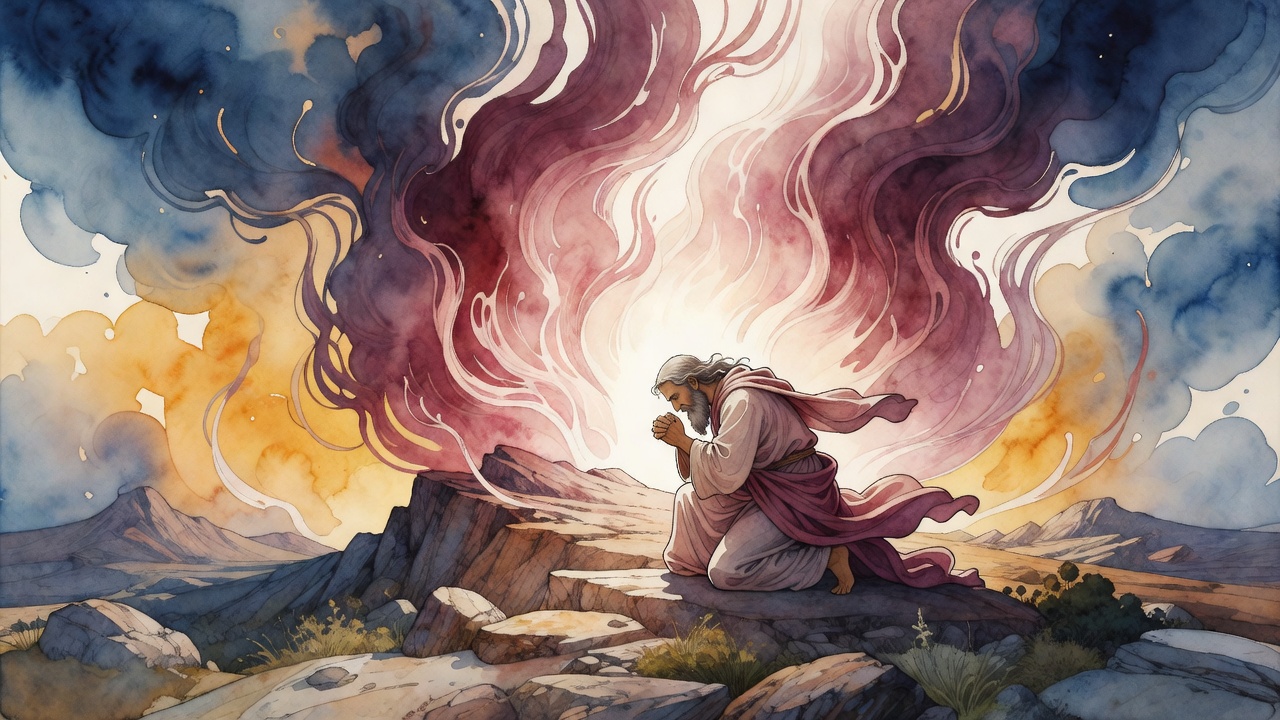
Abram walked to the ridge between Bethel and Ai and stopped at the pile of rocks he had already built there.
He spread his mashkena (משכנא), a goat-hair tent on a limestone saddle, the same kind of dwelling Israel would later carry as a sanctuary. The pegs went back into the dirt between the House of God and the Heap of Ruins. Those are what Bethel and Ai mean. He did not rename the place. He did not add a stone to the altar.
He knelt. He set his palm on a rock he had stacked before the famine. Lichen had started in the cracks. Sarah waited below with the animals Pharaoh had paid. Abram did not look at the gold. He looked at the old stone and called on the name of the LORD there, which is what he had been doing on that hill before Egypt interrupted him.
A Prayer With Nothing Wrong
Nothing was wrong that morning.
The famine was behind him. Sarah was back. The herds were fat enough that his shepherds and Lot's were about to start fighting over grass. No army stood on the horizon. No king sat in the tent. A man standing on that ridge had every reason to eat his bread and say nothing.
Abram prayed anyway.
He put the prayer in ahead of the trouble, while it was cheapest to stay quiet. A line from Job sounds like a shrug. "Will your cry help you when you are not in distress?" Abram answered it with his mouth open on a calm morning, before anyone needed rescuing.
The Remnant Hung on That Hour
If Abram had not prayed between Bethel and Ai before the trouble came, not one survivor of Israel would have been left. Not a remnant. Not one.
Everything downstream ran through that morning. The brothers in Egypt. The brick pits. The sea. The wilderness. The kings. The exiles. All of it held up by a childless man on a limestone ridge with nothing threatening him, deciding to speak. He had no descendants yet to pray for. He prayed anyway, in fair weather, for people who would not exist for centuries.
He came down off the hill and went back to arguing with his nephew about pasture.
The Question That Cost Two Centuries
The prayer held. It did not cancel the ledger.
When Abram went out to pull Lot back from the four kings, he armed his instructed. Students of Torah were pulled out of the study hall and handed weapons. A rescue is a rescue. Conscripting the scholars planted something. For that, his children served Egypt two hundred and ten years.
Years later the same mouth that had prayed in fair weather asked a question it should not have asked. God promised him the land. Abram said, "Whereby shall I know that I shall inherit it?" He wanted proof. Two ledgers, one man. His children learned trust the slow way, in clay pits, for two centuries and a decade.
The altar between Bethel and Ai is still just stacked rock. He had built it before he knew what any of it would cost, and when he came back up from Egypt with a broken household and a fortune he had not asked for, it was waiting where he left it.
← All myths