Amon Planned to Sin First and Repent Later
King Amon swore he would revel young and repent old like his father. He burned the Torah, then death cut him off mid-crime with no return.
Table of Contents
 Click for full size
A Maxim Written for Ruin
Amon studied his father's life the way a thief studies a lock. Manasseh had sinned from youth and done penance in old age. The son forged a doctrine from that arc. "First I shall satisfy the desires of my heart," he said, "and afterward I shall return to God." He treated repentance as a second act he could schedule, not as a door that might close while his hand was still on the latch.
The plan sounded clever in a palace. It sounded like control. It was a wager that time would wait for appetite to finish its meal.
Scrolls in the Fire
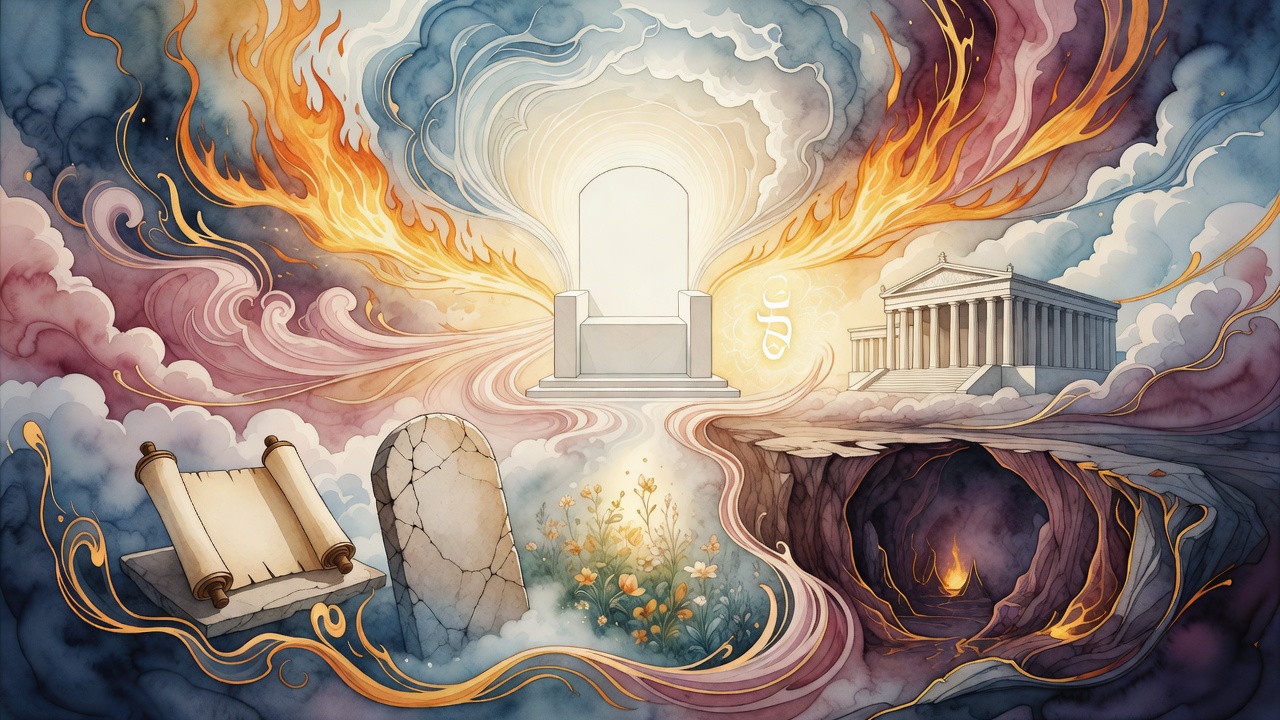
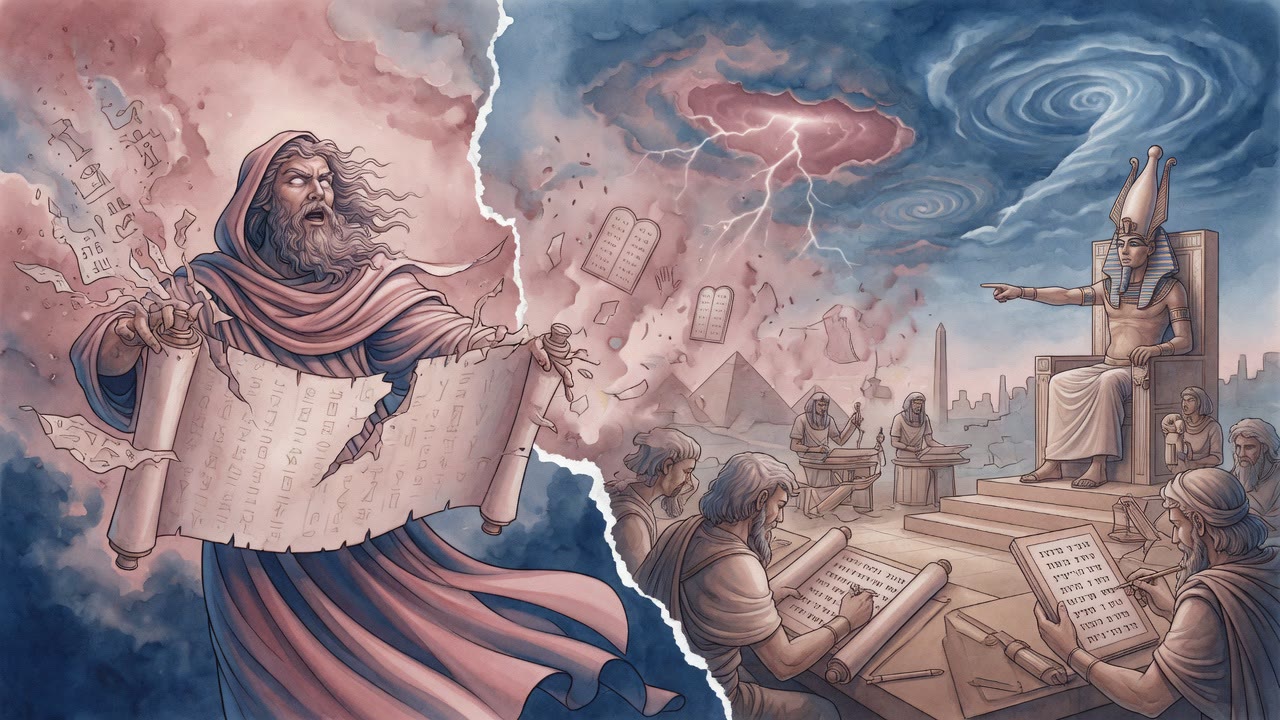
He burned the Torah. The scroll of the law became ash under a king's breath. The Temple, the Beit HaMikdash, fell into neglect until spiderwebs claimed the altar that should have held fire for heaven. Incest followed, a sin the legends call worse than the like crime of his father. Amon did not dabble. He executed the first half of his maxim with administrative thoroughness.
Every act assumed a later clean slate. Every night of power assumed a morning of penance still available on demand. The altar under webs was not an accident of laziness. It was the furniture of a theology that postponed God until convenience arrived.
Death Without the Second Half
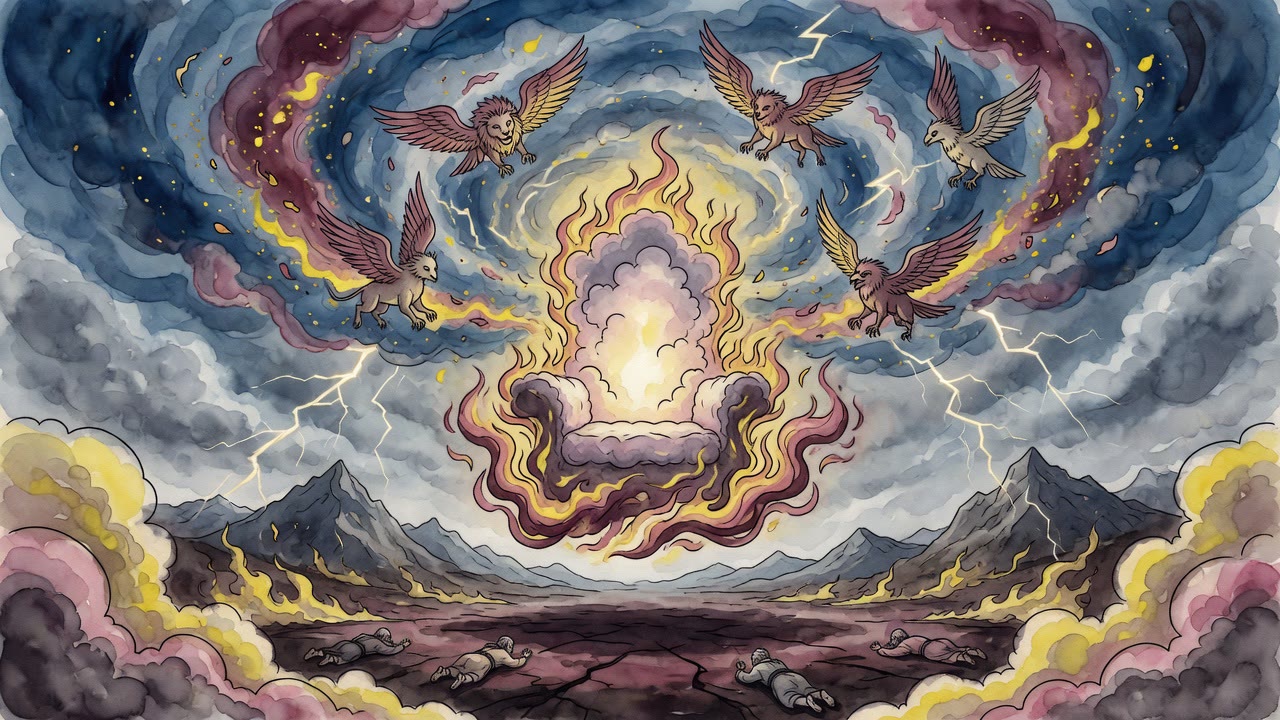
The second half never came. Death cut him off "in the fulness of his sinful ways." No grand return. No late tears that rewrite a reign. The maxim failed because the calendar of the heart is not a royal decree. A man who stores repentance like wine for old age may die before the vintage year.
The shock of the story is not only wickedness. Wicked kings fill chronicles. The shock is the philosophy that made wickedness feel temporary and therefore safe. Amon turned teshuvah (repentance, the turn back to God) into a loophole and then fell through the floor before he could climb back.
Heroes Who Did Not Wait
The same legendary stream remembers other rulers who met enemies without postponing courage. Abdon, after Jephthah, faced the Moabites when they pressed claims as if Israel's God had grown soft. Abdon answered that Moab had learned nothing from Ammon's fate, then went out and broke them. He is counted among the great heroes of the judges' age, a man who acted when the hour demanded action, not when comfort allowed a sequel.
Beside him the birth of Samson mocks another kind of calculation. Judge Ibzan threw one hundred twenty wedding feasts for sixty children and snubbed Manoah and Zelalponit as a sterile pair who could never repay hospitality. Heaven answered with Samson, while Ibzan watched his own sixty children die in his lifetime. Counting favors and scheduling virtue both crash when providence refuses the ledger.
The Closed Door
Amon's story asks whether there is a point of no return. The legends do not answer with a soft slogan. They show a king who presumed on grace, burned the book that taught grace, and died mid-crime. They set him near judges who did not delay the hard hour and near a snub that heaven overturned without waiting for human apologies.
Repentance remains real in Jewish teaching. Amon's error is not that return is impossible. His error is treating return as a guaranteed second act after a first act of pure will. Desire first, God later, is not a plan. It is a trap that snaps when breath ends.
Stand in the ruined Temple of his imagination, webs on the altar, smoke of burned parchment still in the nose. Hear the maxim spoken with a young king's confidence. Then hear the silence after the sword or sickness that took him. Between those sounds lives the warning: do not mortgage your soul to a future self who may never be hired.
Abdon's sword and Ibzan's empty house answer from another register. Act when justice calls. Do not sneer at the barren table of a neighbor. Heaven keeps its own schedule, and it is rarely the schedule of men who plan to become holy only after they have finished being cruel.
Manasseh's late penance had been real in the tradition, a scar that became a door. Amon treated that door like a schedule entry. He never asked whether a son who burns the Torah still owns the key his father used. Books burned are not easily reread by the same hands that lit them. An altar under webs does not wait politely for a convenient tearful season.
Judges like Abdon force a different tempo. Moab arrives with demands. Abdon answers with war, not with a promise to become brave next year. Ibzan's snub of Manoah shows another false schedule, the social calendar that ranks guests by expected return feasts. Heaven births Samson in the house that was written off and empties the house that kept score. Amon, Abdon, and Ibzan all teach time, but only one of them tries to rent repentance on credit.
The maxim still tempts. Delay the hard turn. Finish the appetite. Keep holiness for the epilogue. The legend of Amon is the epilogue that never loads. Death is not impressed by philosophy. It arrives mid-sentence, and the second half of the maxim falls out of the mouth unfinished, a theory without a body left to practice it.
← All myths