7 min read

Rahab of Jericho Hid the Spies and Saved Her Whole Bloodline

A harlot on the wall hears the sea split for runaway slaves, hides the spies, and drags every branch of her house out of the doomed city.

Curated by Arthur · Told by Maggid ·
Table of Contents
  1. The Rumor That Unstrung Every Knee in Canaan
  2. She Took the Two Men and Hid Him
  3. The Confession on the Roof
  4. The Oath of the Scarlet Cord
  5. The Whole Bloodline Dragged Out of the Fire

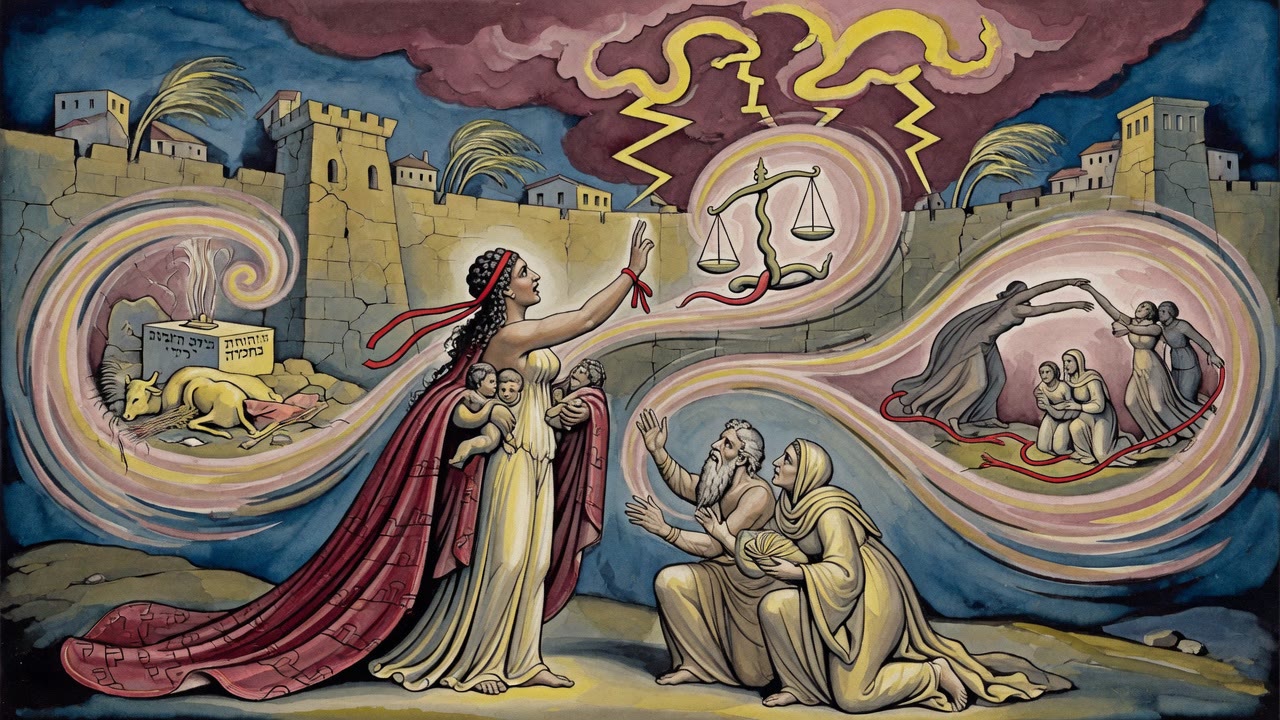
On the rampart of Jericho lived a woman whose door no prince had failed to find. They called her a harlot. For forty years the great men of Canaan had climbed to her room, and for forty years she had heard, between their boasts, a rumor they could not boast away.
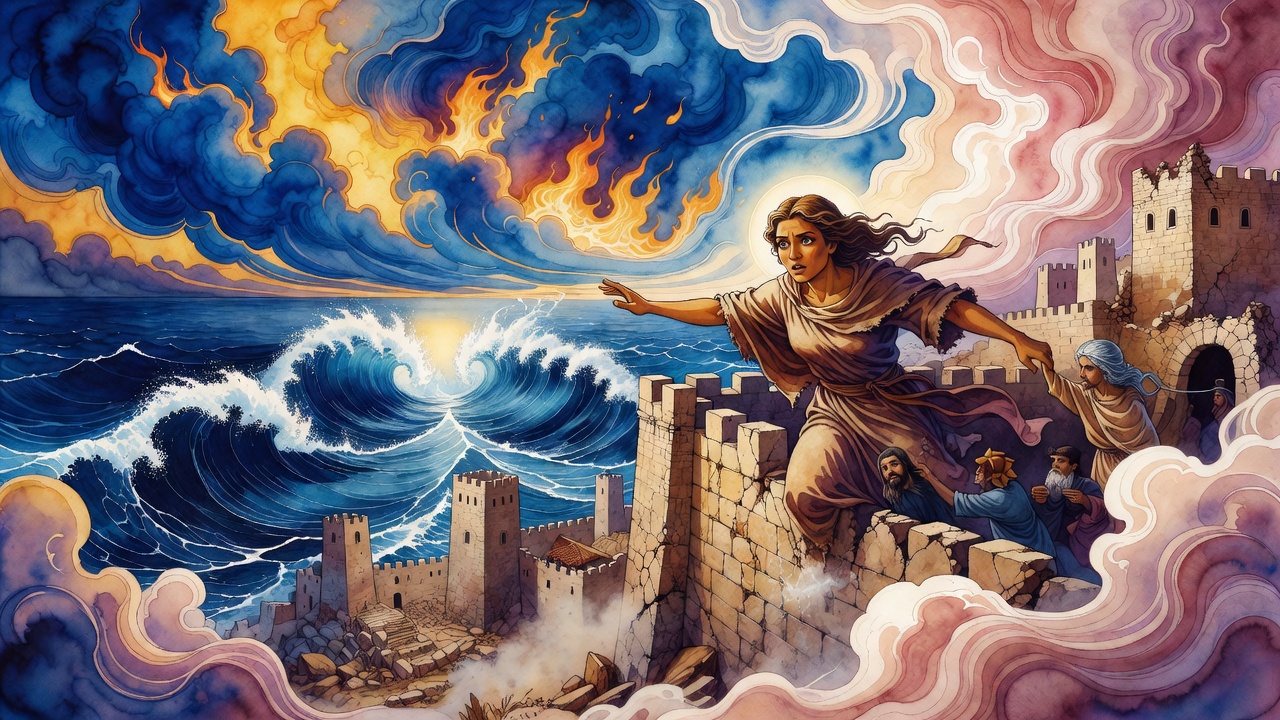
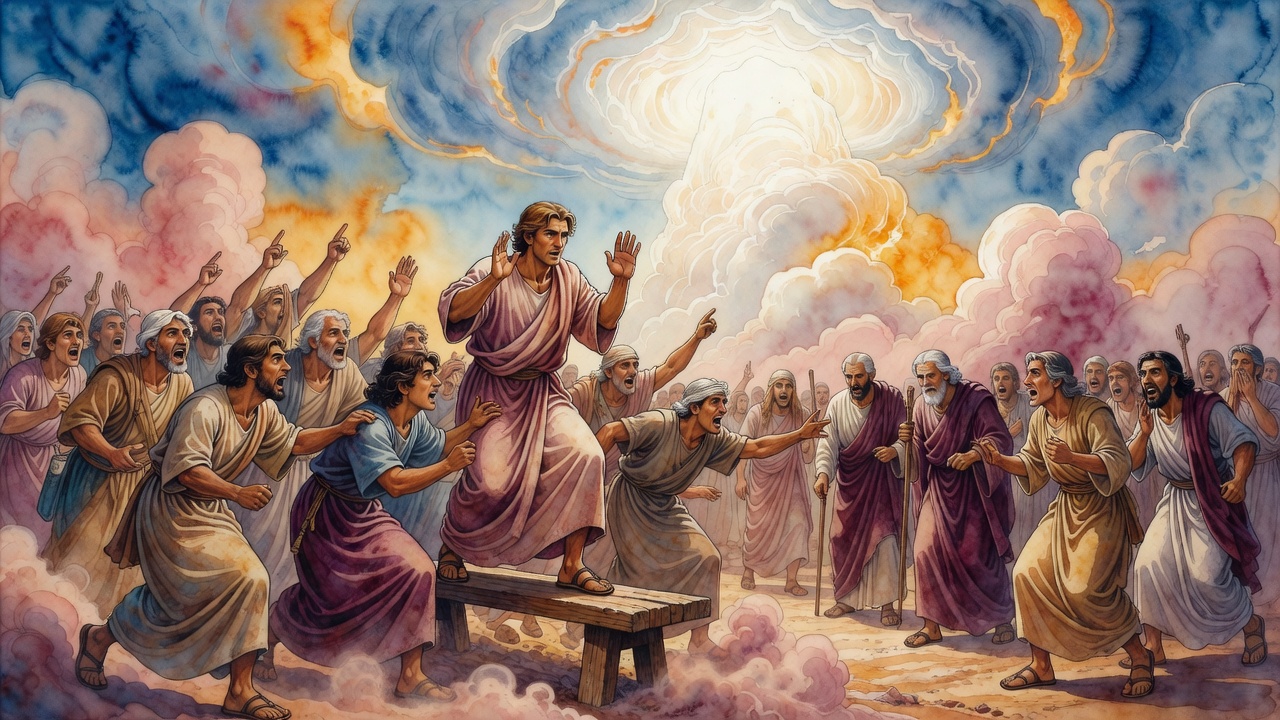
A nation of slaves had walked out of Egypt. The sea had stood up like two walls of water and let them pass on dry ground, and Pharaoh's chariots had gone down into the gap and never come up. The report reached the men who came to her bed, and it unstrung them. They could not even rise. The terror had gone into the marrow of Canaan, and the marrow had melted.

The Rumor That Unstrung Every Knee in Canaan

She had been ten years old when Israel left Egypt, a girl on the wall when the desert filled with that wandering camp. For forty years she practiced her trade while the slaves circled in the wilderness, and the dread never loosened. It tightened. Every man who came to her arrived already half defeated, and she learned what no king would say aloud. The gods of the city were finished.

So when two men crossed into Jericho at dusk, she knew them before they spoke. The king's word reached her door within the hour, demanding she bring out the men who had come to search out the land.

She Took the Two Men and Hid Him

Rahab took the two men up to the roof, where stalks of flax lay drying in long rows, and she pressed them down into the stalks. But the verse that remembers it stumbles. It says she took the two men, and then it says she hid him. One.

One of the two was Caleb. The other was Phinehas, a priest, and a priest stands close to the angels. An angel, when he wills it, is seen, and when he wills it, is not seen. So Phinehas stood plainly in the room while the king's officers looked through him as through air. There was nothing to hide. Rahab buried Caleb in the flax and left the priest standing in the open, invisible as the wind that had walked over the sea.

She went down to the officers. "The men came to me," she said, "but at the closing of the gate, in the dark, they went out. Chase after them quickly, and you will catch them." The officers ran toward the fords of the Jordan, and behind them the gate of Jericho swung shut.

The Confession on the Roof

She climbed back to the flax and the buried man and the unseen priest, and there the harlot of Jericho said a thing no king in the city would say.

"I know that the Lord has given you the land," she told them. "We heard how He dried up the water of the sea before you, and our hearts melted." Then she went further than fear. "For the Lord your God, He is God in heaven above and on the earth beneath."

Others had edged toward this and stopped short. Jethro had said the Lord was greater than all gods, and by saying greater than all he left the other gods a shelf to stand on. Naaman had said there was no God in all the earth but in Israel, and kept the heavens vague. Each had saved a corner of the world for the idols. Rahab kept nothing. A woman who had worshiped whatever a customer carried up the stairs swept heaven and earth clean in one sentence and handed them to a God she had never watched split a sea.

For that sentence the Holy One made her a promise. Of earth you spoke of what you know, He said, but of heaven above you spoke of what your eyes never saw. By your life, a descendant of yours will see what even the prophets were not shown. The heavens will open, and he will see visions of God.

The Oath of the Scarlet Cord

Rahab let the men down by a rope through the window, for her house was built into the wall and she lived in the wall itself. Before they touched the ground she pulled an oath out of them. As I dealt kindly with you, deal kindly with my father's house. Bind this scarlet cord in the window, gather all who belong to me into this house, and let no harm cross the threshold.

She knew the count of her sins. With three things I transgressed, she said before the Master of the universe, in the laws of the menstruant, in the dough offering, in the kindling of lights. With three things forgive me, the rope, the window, and the wall. The same window that had received the city's princes lowered out the spies of Israel, and then it wore the scarlet thread like blood on a doorpost in Egypt.

The Whole Bloodline Dragged Out of the Fire

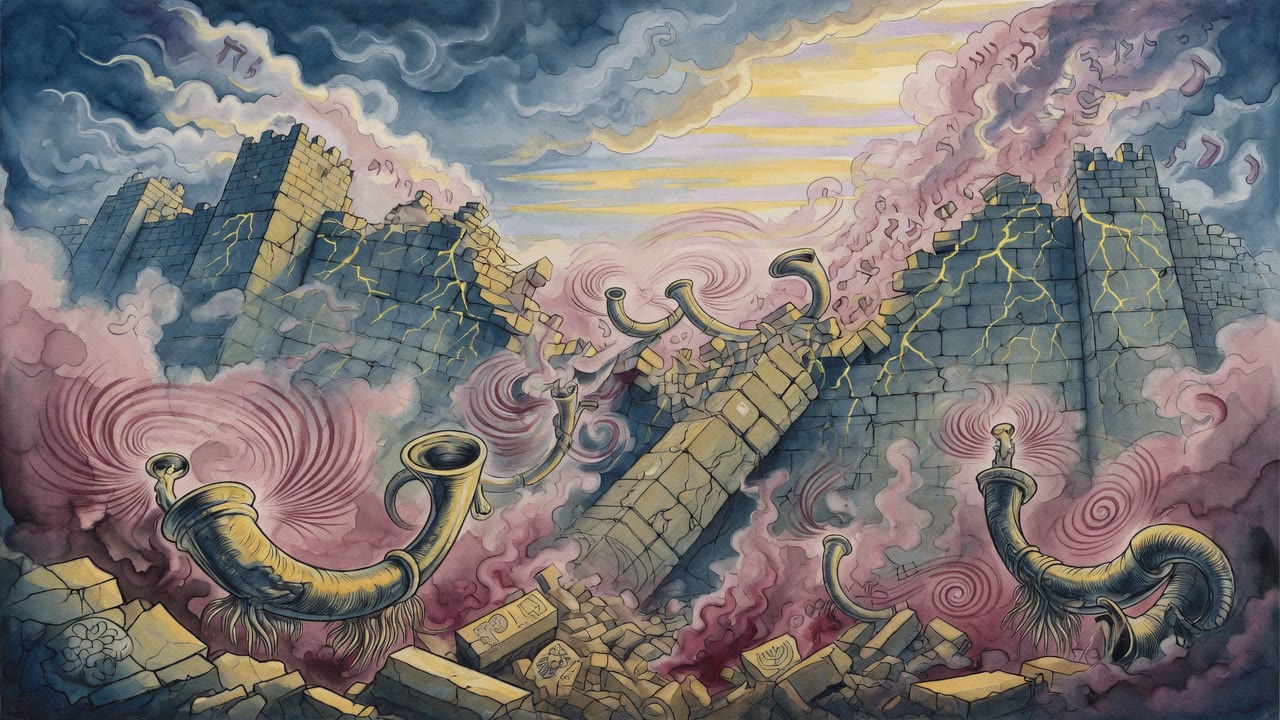
The walls of Jericho came down flat, and the city burned, and Joshua sent the two spies up into the rubble. They went into the standing house in the fallen wall and brought out Rahab, and her father, and her mother, and her brothers, and all that she had, and they brought out all her families.

All her families. The verse swells past the people in her house. Even if there had been two hundred souls in her clan, and those two hundred had married into two hundred other clans, the whole tangled web came out of the burning by her merit alone. One woman's courage on a roof reached into bloodlines she had never met and pulled them clear before the ash settled.

And the seed of the harlot did not run thin. From Rahab of Jericho came priests and prophets. Jeremiah descended from her, and Baruch son of Neriah, and even Huldah the prophetess, who read the scroll of the Law for a frightened king. The men who married into her house worked fine linen, the flax that had hidden a spy, and the records called them the house of the oath, because the spies had sworn to her at the window.

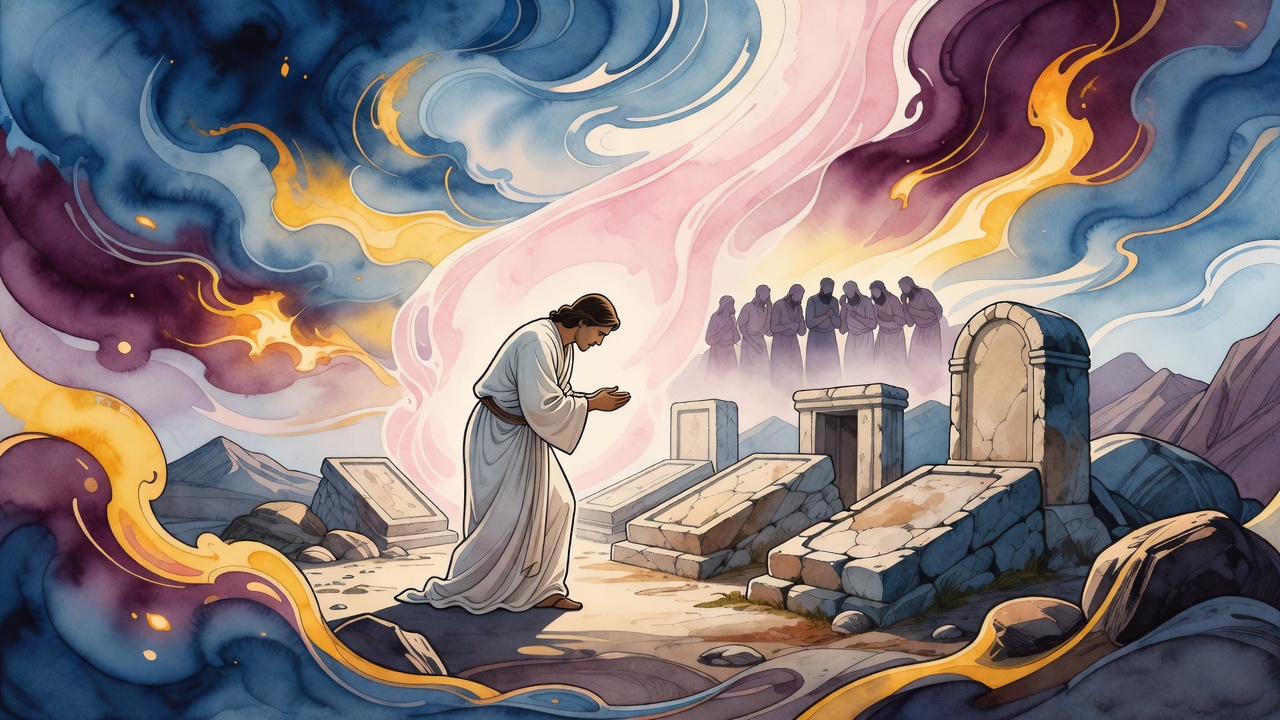
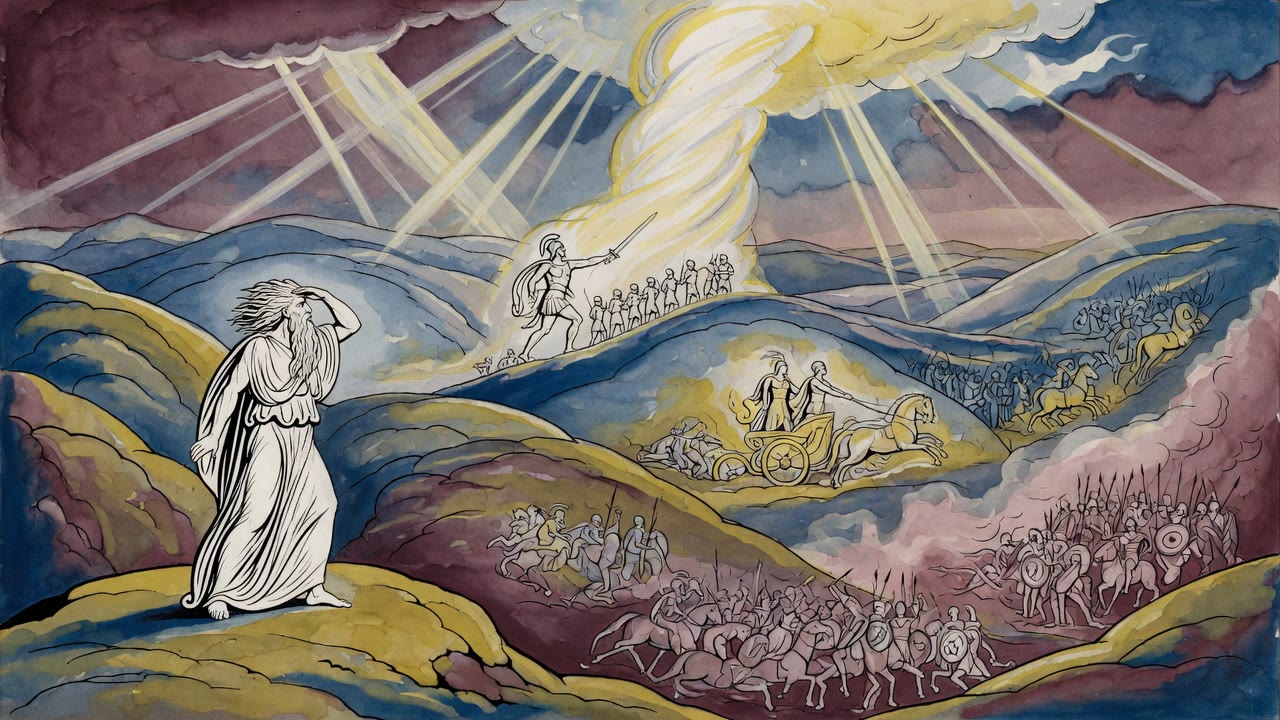
The promise on the roof kept its word. Ezekiel, of her line, stood by the river Chebar, and the heavens opened, and he saw visions of God, the very heaven above that she had confessed without ever seeing it. Of all the kings and princes who had climbed to her door, not one left a prophet behind him. Only the convert did, the most condemned woman in a city marked for destruction, who drew near and found that heaven drew nearer still.


← All myths
From the tradition

Sources

4 sources

The texts this telling draws on, in full. Open a card to read inline, or expand it for a wider, quieter read.

Yalkut Shimoni on Nach 8:2Yalkut Shimoni on Nach

"And the woman took the two men and hid him" (Joshua 2:4). She took them to conceal them. Phinehas said to her: I am a priest, and priests resemble an angel, as it is said, "For the lips of a priest guard knowledge... for he is a messenger of the LORD of hosts" (Malachi 2:7); and an angel, if he wishes, is seen, and if he wishes, is not seen. So she did not hide any but Caleb.

Full source
Yalkut Shimoni on Nach 10:1Yalkut Shimoni on Nach

"For we have heard how the LORD dried up the waters of the Red Sea before you" (Joshua 2:10). Rabbi Shimon ben Elazar said: When Israel does the will of the Omnipresent, His name is magnified in the world, as it is said, "For we have heard how He dried up..." "for the LORD your God, He is God," and it says, "And it came to pass, when all the kings of the Amorites heard..." But when Israel does not do the will of the Omnipresent, His name is profaned in the world, as it is said, "And when they came to the nations where they came, they profaned My holy name, in that men said of them, These are the people of the LORD, and they have gone out of His land" (Ezekiel 36:20).

"For the LORD your God, He is God in heaven above and on earth beneath" (Joshua 2:11). Jethro said, "Now I know that the LORD is greater than all gods" (Exodus 18:11) -- they said he left no idolatry in the world that he had not worshiped; therefore he said "than all gods," granting substance to idolatry. Naaman acknowledged the matter more fully: "Behold, now I know that there is no God in all the earth, but in Israel" (2 Kings 5:15). But Rahab acknowledged the matter more than all of them: "for the LORD your God, He is God in heaven above and on earth beneath."

The Holy One, blessed be He, said to Rahab: You said "for the LORD your God is God" -- on earth, well and good; but in heaven above, you spoke of what you did not see with your own eyes. By your life, your descendant shall stand and see what even the prophets did not see, as is said, "the heavens were opened, and I saw visions of God" (Ezekiel 1:1). Rahab left a portion in the empty space of the world; Moses came and said, "Unto you it was shown, that you might know... and there is none else" (Deuteronomy 4:35) -- even in the empty space of the world. The Holy One, blessed be He, said to him: You said "and there is none else"; give him of the fruit of his hands -- "And there arose not a prophet since in Israel like Moses" (Deuteronomy 34:10).

Full source
Yalkut Shimoni on Nach 9:1Yalkut Shimoni on Nach

"For we have heard how the LORD dried up... and no spirit remained in any man before you" (Joshua 2:10-11). And it is written, "And it came to pass when all the kings of the Amorites heard... that no spirit remained in them" (Joshua 5:1). Why the difference - there it is written "no spirit remained in them," and here "no spirit rose up"? To teach us that they could not even rise to arousal. How did she know? As the master said: there was no prince or ruler who had not come to Rahab the harlot. They said: she was ten years old when Israel went out of Egypt, and she practiced harlotry the entire forty years that Israel was in the wilderness. At the end of fifty years she converted. She said before Him: Master of the universe, with three things I sinned before You - in menstrual impurity, in the dough offering, and in kindling - with three things forgive me: with the rope, the window, and the wall, as it is said, "And she let them down by a rope" (Joshua 2:15).

And what reward did she receive for this? Rabbi Eliezer says, she merited that eight prophets and priests came forth from her, and these are they: Jeremiah, Hilkiah, Seraiah, Mahseiah, Baruch son of Neriah, Hanamel, and Shallum. And it is written, "and the families of the house of those who worked fine linen [butz], of the house of Ashbea" (I Chronicles 4:21) - these are the sons of Rahab the harlot, who hid the spies in flax [butz]; "of the house of Ashbea" because the spies swore [nishbe'u] to her. Rabbi Yehuda says, even Huldah the prophetess was among the descendants of Rahab, as it is said, "And Hilkiah the priest, and Ahikam, and Achbor went to Huldah the prophetess, the wife of Shallum son of Tikvah" (II Kings 22:14), and it is written, "behold, we are coming into the land, this hope [tikvah]..." (Joshua 2:18). And are these matters not a fortiori? If one who was from a people of whom it was said "you shall let none survive" (Deuteronomy 20:16), because she drew herself near, the Omnipresent drew her so near, then Israel who perform the Torah how much more so. There are pious women, converts: Hagar, Asenath, Zipporah, Shiphrah, Puah, the daughter of Pharaoh, Rahab, Ruth, and Jael the wife of Heber the Kenite.

Full source
Yalkut Shimoni on Nach 15:22Yalkut Shimoni on Nach

"And the young men, the spies, went in and brought out Rahab, and her father, and her mother, and her brothers, and all that she had; and they brought out all her families" (Joshua 6:23). What does Scripture teach by saying "and all her families"? Rabbi Shimon ben Yochai taught: that even if there were two hundred people in her family, and they had gone and attached themselves to two hundred other families, all of them were saved by her merit.

The Holy One, blessed be He, said: I said, "But if you do not drive out the inhabitants of the land, then those whom you allow to remain shall be as thorns in your eyes and as pricks in your sides" (Numbers 33:55), "for you shall utterly destroy them" (Deuteronomy 7:2). Yet they did not do so; rather, "and Rahab the harlot, and her father's household, and all that she had, Joshua kept alive" (Joshua 6:25). Behold, Jeremiah was of the descendants of Rahab, and he did to Israel things that were as thorns in their eyes, as it is said, "The words of Jeremiah" (Jeremiah 1:1).

Full source