5 min read

Joshua's Weight and the Steer That Carried Him

No horse, donkey, or mule could carry Joshua's weight into battle, so a steer bore him to Jericho and kept its mark forever.

Curated by Arthur · Told by Maggid ·
Table of Contents
  1. The Commander Needed a Mount
  2. Spies Moved Before the Hooves
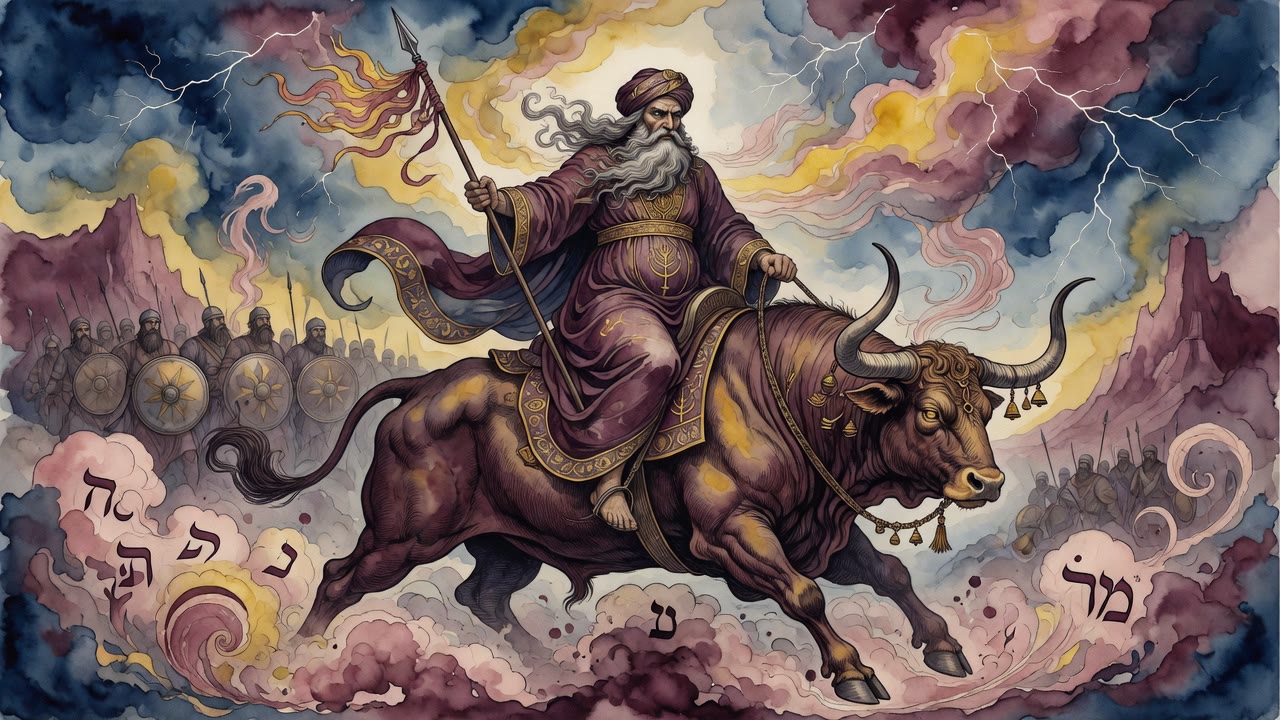
  3. The Steer Took the Weight
  4. The Kiss That Stripped the Hair
  5. The City Became Holy Spoil
  6. A Smooth Nose Remained

No horse would stay upright under Joshua. The general of Israel needed to reach Jericho, and every ordinary mount failed beneath him.

The Commander Needed a Mount

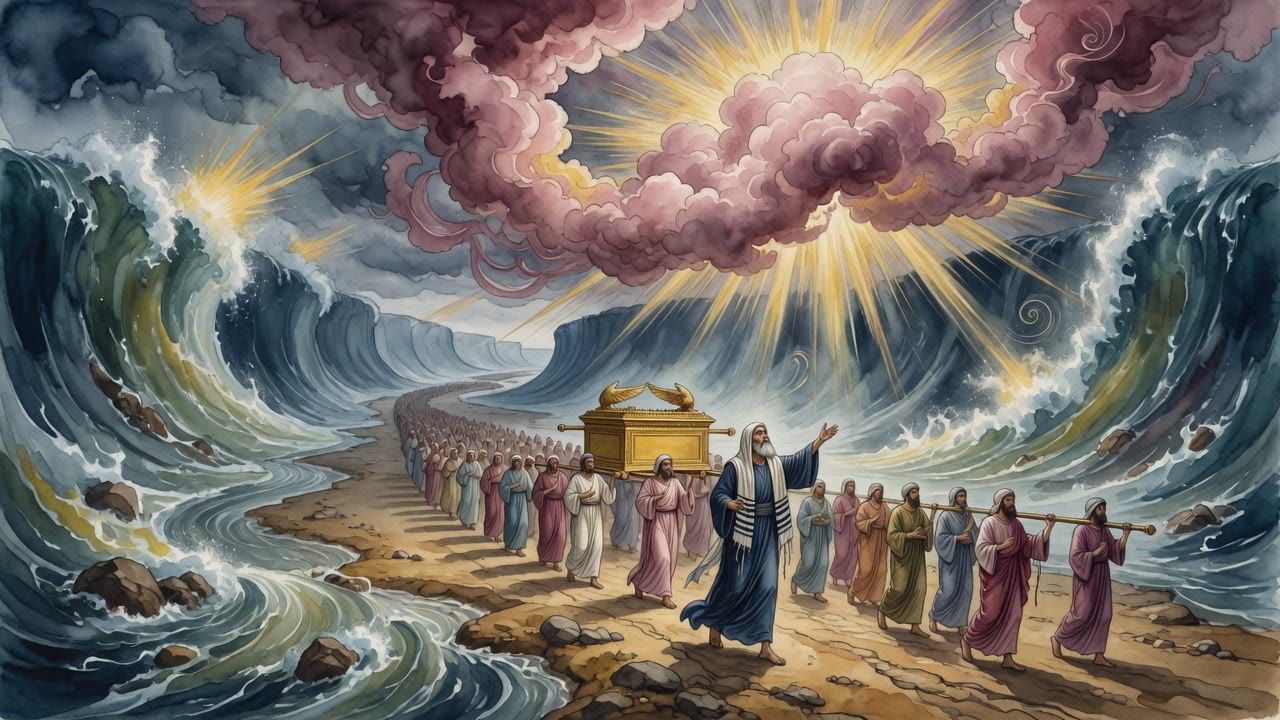
The camp stood before a city of walls, gates, and locked fear. Moses was gone. The wilderness years were behind them. Ahead stood Jericho, the first great stone throat of the land, and Joshua could not walk into that hour as if command weighed nothing.

A horse tried. It could not bear him. A donkey tried. It sank under the burden. A mule, sturdy and stubborn, did no better. The weight was not only flesh. Joshua carried memory, law, mourning, spies, soldiers, and the command to cross from promise into possession.

Men waiting outside the city could pretend courage while someone else held command. Joshua could not. If the first assault failed, every tent in Israel would hear the old question again: whether the land promised to their fathers would swallow their children. The mount beneath him had to carry that fear as well.

Spies Moved Before the Hooves

Before the march, Joshua needed eyes inside the city. The old wound of the wilderness spies had not healed. A bad report once frightened Israel until a generation died in sand. Jericho could not begin with another collapse of nerve.

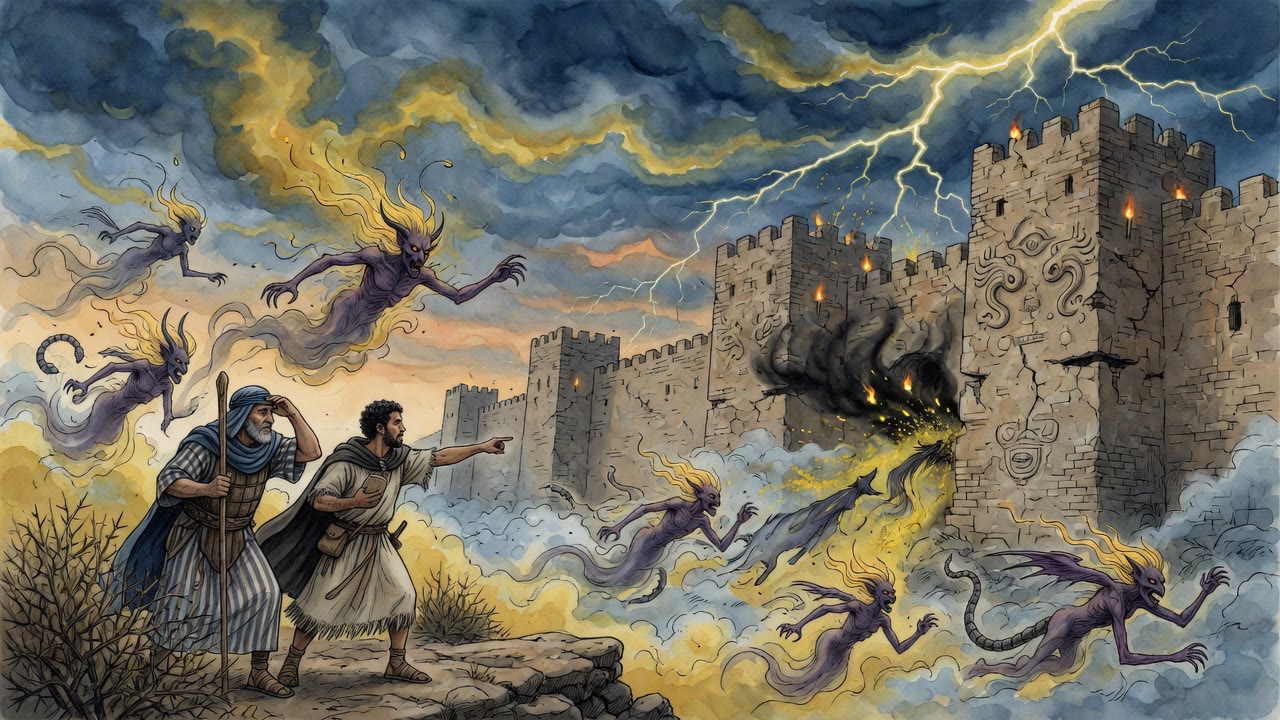
Caleb and Phinehas went forward, men Joshua trusted with danger. Help came from a stranger quarter as well: two demons tied to the wild margins of the world offered themselves for the mission. Joshua did not let the whole plan rest on their first offer. He used fear with care, shaping terror into a weapon so the people of Jericho trembled before the Israelite army touched the walls.

The Steer Took the Weight

Then the steer stepped under Joshua.

Hooves found rhythm in the dust. The animal did not argue with the weight, and the line of Israel could move because one broad back held.

Its legs held. Its back did not break. The animal bore what horse, donkey, and mule could not bear, and the camp moved with the commander lifted above the dust. Soldiers could see him. Jericho could see him. The steer felt each shift of the man on its spine and kept going.

No trumpet had sounded yet. No wall had fallen. But something had already been decided. Victory would not arrive only through bronze, shouting, and formation. It would come because a creature built for plowing accepted the burden of a warrior and carried him to the edge of the city.

The Kiss That Stripped the Hair

Joshua did not treat the steer like a tool dropped after use. When it had carried him to Jericho, he bent toward its face and kissed it on the nose.

The mark stayed. The hair never grew back where his lips touched. From then on, the nose of the steer carried a smooth place, a bare sign of service remembered in flesh. Every calf born after it inherited the trace, as if the whole line of cattle had been drawn into that one act at the edge of battle.

That is how small signs survive large wars. A city can fall. Trumpets can stop. Soldiers can go home with dust in their sandals. But the face of an animal keeps the kiss.

The City Became Holy Spoil

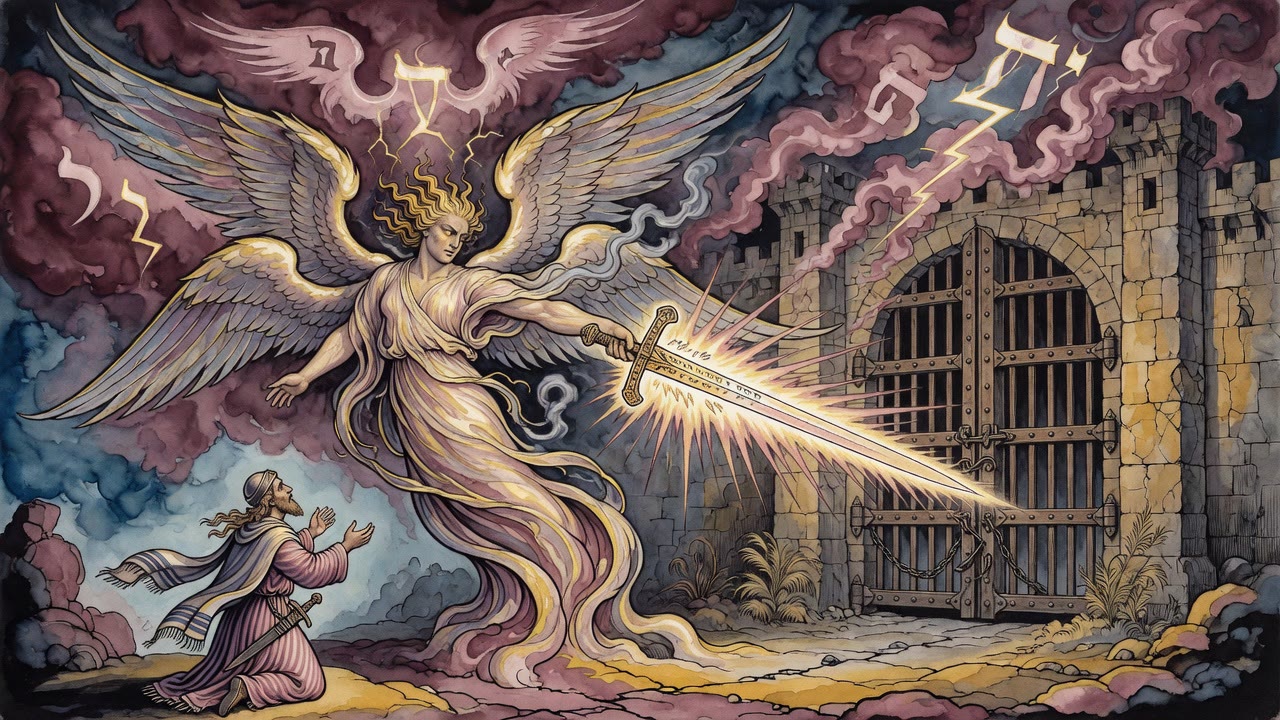
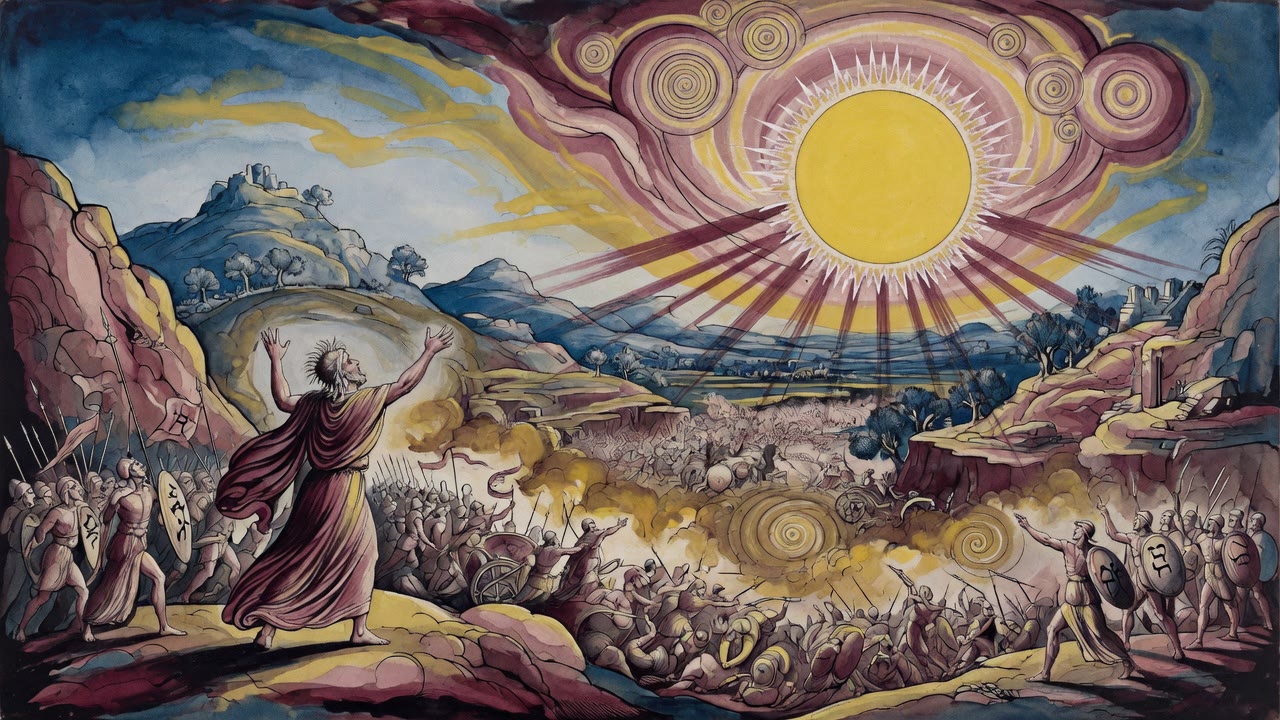
Jericho fell in a holy hour. The victory belonged to Shabbat, and Joshua treated the city as something set apart. What is taken on a holy day cannot be handled like ordinary loot. The spoil was not for grabbing hands.

The word was herem: devoted, placed beyond common use, given over to God. That made the triumph sharper and more dangerous. Israel entered the land with a miracle, but the first city did not become a marketplace for hungry soldiers. It became a boundary. Touch the wrong thing, and victory itself could turn against the camp.

A Smooth Nose Remained

The steer disappeared from the battlefield, but not from the world. Its descendants carried the bare nose forward, generation after generation, a quiet mark below the eyes. No wall explains it. No soldier's song is needed.

Before Jericho, command had weight. Trust had weight. A holy victory had weight. One animal lowered its back beneath all of it, walked toward the sealed city, and came away with the kiss that cattle still wear.


← All myths

From the tradition

Sources

3 sources

The texts this telling draws on, in full. Open a card to read inline, or expand it for a wider, quieter read.

Legends of the Jews 1:6Legends of the Jews

The story of Joshua preparing to conquer Jericho, as told in Legends of the Jews (Ginzberg), throws us headfirst into that shadowy world.

Before a single soldier marched, Joshua needed intel. But after what happened to Moses and the disastrous report of the original spies, Joshua couldn't afford another mistake. He needed reliability, loyalty. So, who did he choose? Caleb and Phinehas – two men he knew he could trust implicitly.

In legends, Caleb and Phinehas weren't entirely alone. They were accompanied by two demons, the husbands of the infamous she-demons Lilith and Mahlah. Demons? Spying for the Israelites? It sounds wild. The story goes that these demons actually volunteered for the reconnaissance mission. Joshua, wisely perhaps, turned down their initial offer. Instead, he altered their appearance to be so frightening that the inhabitants of Jericho were terrified just by the demons' presence.

Then there's Rahab. Her story is one of the most fascinating in the entire narrative. For forty years, she lived, shall we say, a less than pious life. But the arrival of the Israelites changed everything. She recognized the truth, embraced the one God, and became a convert. In a twist that could only happen in a legend, she eventually married Joshua and became the ancestress of eight prophets and the prophetess Huldah! Her house became a place of miracles, a evidence of her transformation. this former… well, let’s call her a "woman of the night". becomes a pillar of the Israelite nation. The ultimate redemption story, perhaps?

Now, when the king’s men came knocking, suspecting she was harboring spies, Rahab needed to act fast. That's when Phinehas, cool as a cucumber, reportedly told her, "I am a priest, and priests are like angels, visible when they wish to be seen, invisible when they do not wish to be seen." Talk about a divine get-out-of-jail-free card!

This whole episode is a reminder that the world is far more complex than we often perceive. Divine intervention, demonic influence, human fallibility, and the possibility of redemption – they're all woven together in the tradition of the Joshua's conquest. It makes you wonder, doesn't it? How many unseen forces are at play in our own lives, shaping our destinies in ways we can't even imagine?

Full source
Legends of the Jews 1:66Legends of the Jews

The smooth skin around its nose? Well, according to some beautiful old stories, there's more to that bovine face than meets the eye!

The Legends of the Jews, that amazing compilation of Jewish folklore by Louis Ginzberg, tells us that the steer – the ox – wasn't always so… bare-nosed. Originally, its face was covered in hair, just like the rest of its body. So, what changed?

Get this: it all boils down to a kiss from Joshua! Yes, that Joshua, the one who succeeded Moses and led the Israelites into the Promised Land.

Joshua wasn't exactly a lightweight. The stories paint him as… substantial. So substantial, in fact, that horses, donkeys, even mules couldn't carry him. They just buckled under his weight. Can you imagine?

But the steer? The steer was strong. It was loyal. It bore Joshua's weight all the way to the siege of Jericho. Jericho! The city with walls so high and thick, they seemed impenetrable. And there's Joshua, riding into battle on the back of a steer. It’s an image that just sticks with you, doesn't it?

And when the walls finally came tumbling down – remember, those walls came down after the Israelites marched around Jericho for seven days and blew their shofars, or ram's horns (Joshua 6) – Joshua was overcome with gratitude. He owed this animal a debt.

So, he did something remarkable. He kissed the steer on its nose! A simple act of thanks, a moment of connection between leader and beast. And that kiss, according to the legend, is what caused the hair to fall away from the steer's nose, leaving it smooth and bare for all time.

It's a charming little story, isn't it? It reminds us that even the most ordinary things – like the face of a cow – can hold hidden depths, whispers of ancient history and heartfelt gratitude.

So, the next time you see a steer, take a closer look at its nose. Remember Joshua, the heavy leader, and the loyal animal that carried him into battle. Remember the power of a simple kiss, and the enduring magic of a good story. Who knew there was so much to see, even on a cow?

Full source
Legends of the Jews 1:11Legends of the Jews

The story of Joshua’s conquest of the Promised Land is full of such moments, a rollercoaster of triumph and tragedy, and it all starts with Jericho.

Joshua, leading the Israelites after Moses' death, stands before the mighty walls of Jericho. And what a victory it was! A miraculous capture, the very first major conquest in this new land. But The entire city was declared anathema – set apart, devoted to destruction, a concept called herem in Hebrew. Why? Because, according to some accounts, this incredible feat happened on the Shabbat, the Sabbath.

You might be thinking, isn't working on the Sabbath forbidden? Well, Joshua reasoned that since the Sabbath is holy, what is won on the Sabbath must also be holy, consecrated to God. A fascinating interpretation, isn’t it? The spoils, the city itself, were considered off-limits, dedicated.

This dazzling victory was soon followed by a crushing defeat at Ai. Can you feel the whiplash? One moment, divine favor, the next, utter loss. In this battle, Jair, the son of Manasseh, perished, a loss so significant it was compared to the destruction of most of the Sanhedrin, the Jewish high court! A heavy blow.

So, what went wrong? Why this sudden reversal of fortune? Joshua, understandably desperate, sought answers. And it was revealed that the defeat was a direct consequence of the Israelites’ sin, specifically the actions of a man named Achan.

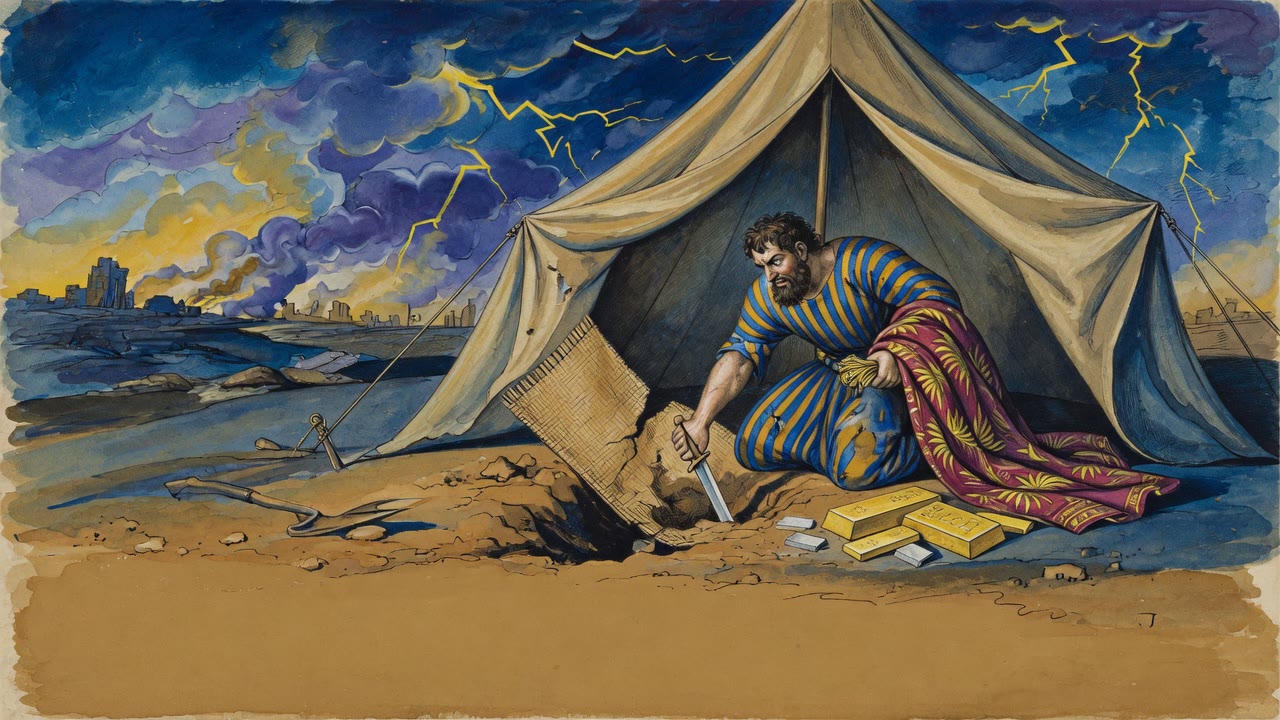
Achan, we learn, had taken forbidden spoils from Jericho. He’d laid hands on things that had been declared anathema, violating the sacred trust. The text paints him as a hardened transgressor, a criminal even before the crossing of the Jordan River. According to Ginzberg's retelling in Legends of the Jews, he had a history of appropriating things declared herem and committing other capital offenses.

Now, here's a crucial point: before the Israelites became a unified nation by crossing the Jordan, Achan's sins didn’t immediately impact everyone. But when he stole an idol and all its associated items from Jericho, the repercussions were swift and severe. As we find in Midrash Rabbah, the misfortune at Ai followed almost immediately. It's a powerful illustration of collective responsibility, the idea that the actions of one person can affect the entire community.

This story isn't just about battles and spoils. It's about the delicate balance between victory and defeat, obedience and transgression, individual actions and communal consequences. It makes you wonder: How often do we, individually or collectively, unknowingly invite misfortune through our choices? And how do we ensure that our triumphs are truly built on a foundation of integrity?

Full source