The Drawn Sword That Met Joshua at Jericho's Barred Gate
A barred city, a stranger with a naked blade, and the night Joshua learned who was truly commanding the war for the Land.
Table of Contents
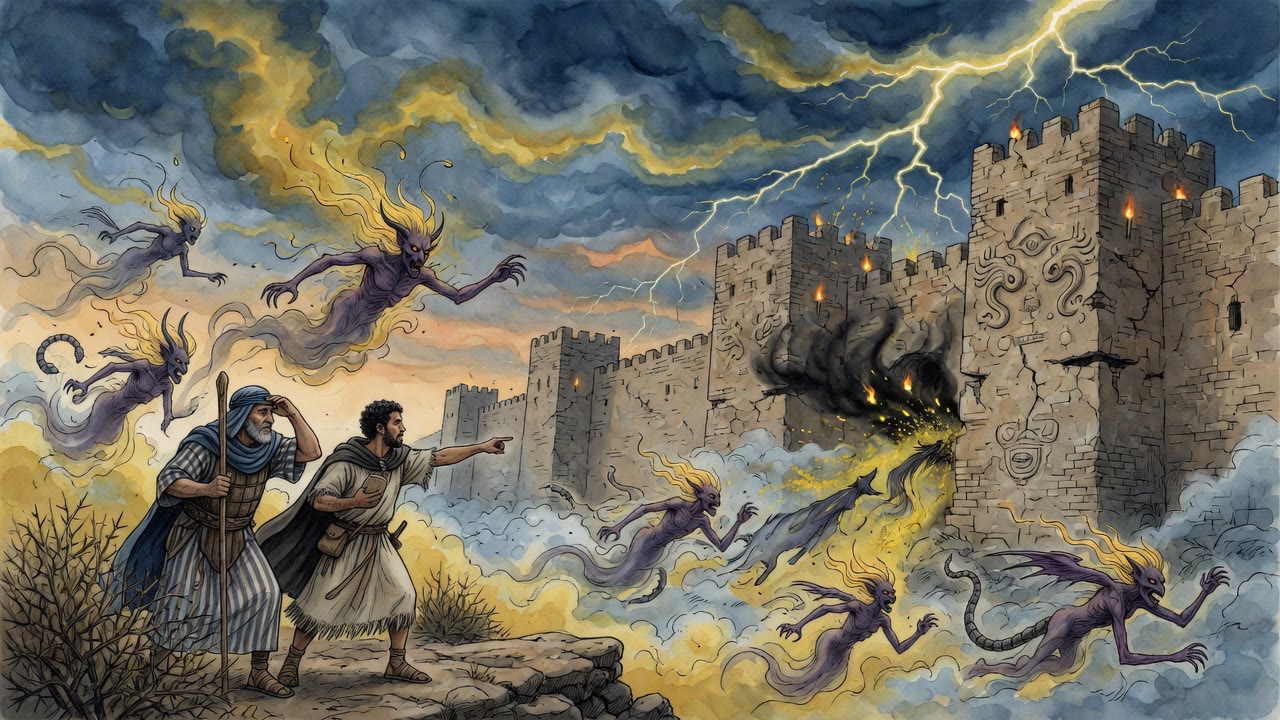
The walls of Jericho had not made a sound in days. Joshua stood at the foot of them in the dark, close enough to lay a hand on the stone, and nothing answered him. No watchman called down. No gate creaked. The city had pulled itself shut the way a fist closes, every bar dropped, every door sealed, so that no one went out and no one came in. It was the bolt that locked the whole Land of Israel. Take Jericho and the rest would fall like a door swinging open. Fail here and the crossing of the Jordan would mean nothing.
 Click for full size
A Man Standing Where No Man Could Stand
What no soldier in the camp could have explained was how Joshua came to be standing there at all. The verse placed him by Jericho, but Jericho was shut up tightly, not a person passing through its mouth. A barred city does not let a general lean on its wall in the night. So he was not inside it and not quite outside it either. He stood in the outskirts, the rough margin of houses and pens that clings to a city's edge, the strip a man counts as part of the place when he wants to belong to it and as no part of it at all when he sets down a boundary marker and finds he has gained nothing.
That was where Joshua waited. On the threshold of a city that would not open, in the country between counted and not counted, near enough to die and too far to enter.
The Stranger With the Naked Blade
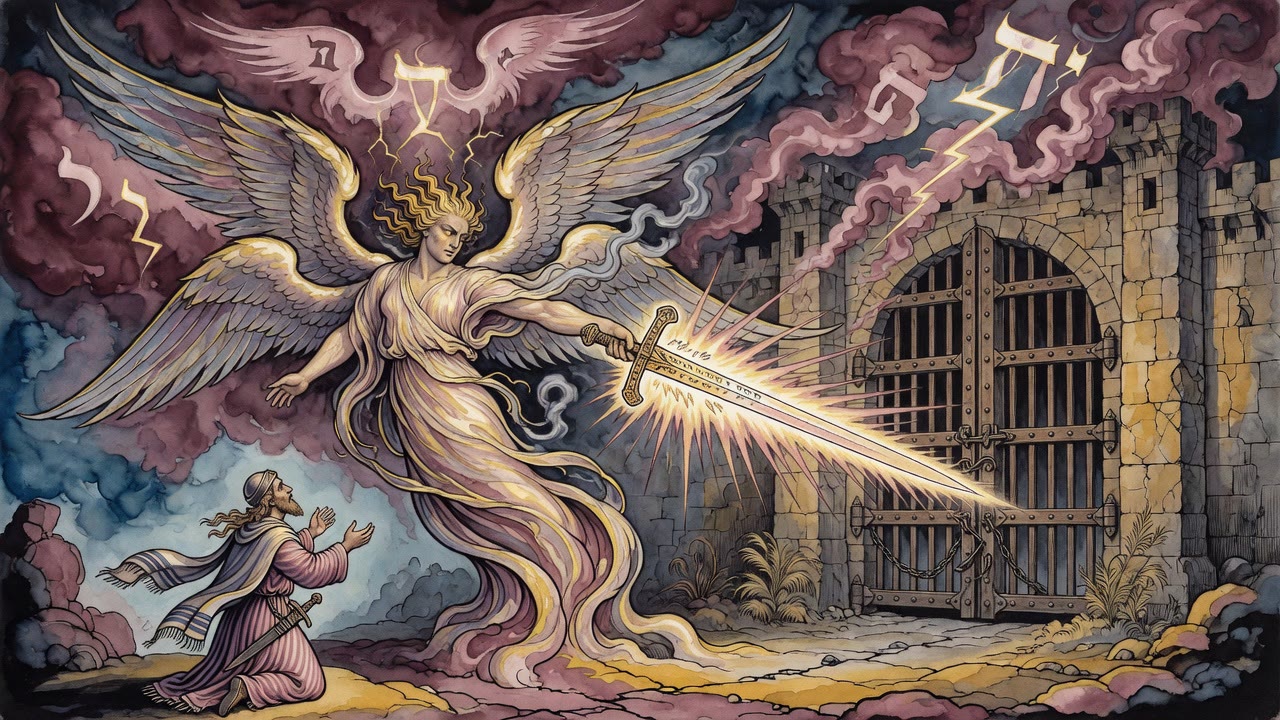
Then a man was in front of him with a sword already drawn, the blade bare and bright in his fist. He had not been there a breath before. He stood as though he had every right to the ground, his weapon out as if the night itself were a thing to be cut.
Joshua did what a commander does. He stepped toward the figure and put the question that decides whether a man lives. "Are you for us," he said, "or for our adversaries?"
The words were barely out before the wrongness of them settled on him. It was night. A man does not call out a greeting to a stranger in the dark, because the thing that answers may not be a man at all. It may be a sheyd, a demon wearing a shape, and to hail it is to hand it your name. Joshua had spoken first and asked afterward, and now he waited in the silence he had broken to learn what he had spoken to.
The Name That Cannot Be Spoken in Vain
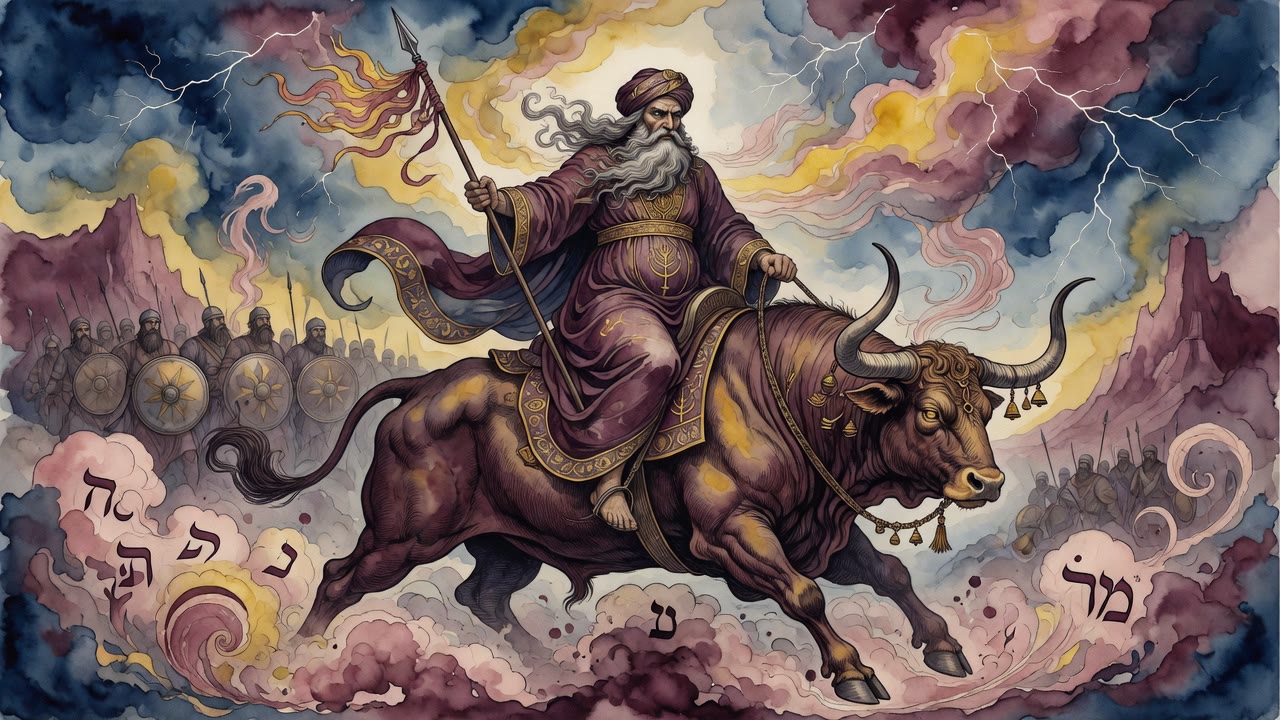
The figure lowered nothing. "I am captain of the host of the LORD," he said. "Now I have come."
A lie would have been easy. A demon could claim any rank. But the creature had set the Name of Heaven on its own lips, and there is an old truth that holds the dark in check: the demons do not speak the Name of Heaven for nothing. They will deceive in a hundred ways, but that one word they do not counterfeit. The thing in front of Joshua had named the LORD, and so Joshua knew, in the cold certainty of a man who has just escaped a trap he set for himself, that he stood before an angel.
He fell on his face to the ground. The general of Israel went down in the dirt of the outskirts before a soldier of a higher army.
Twice I Came and Was Sent Away
The angel began to cry out, and the cry seemed to rise from beneath the soles of its own feet, a grief older than this war. "Twice I have come to give Israel possession of the Land," it said. "I came in the days of Moses your teacher, and he pushed me away."
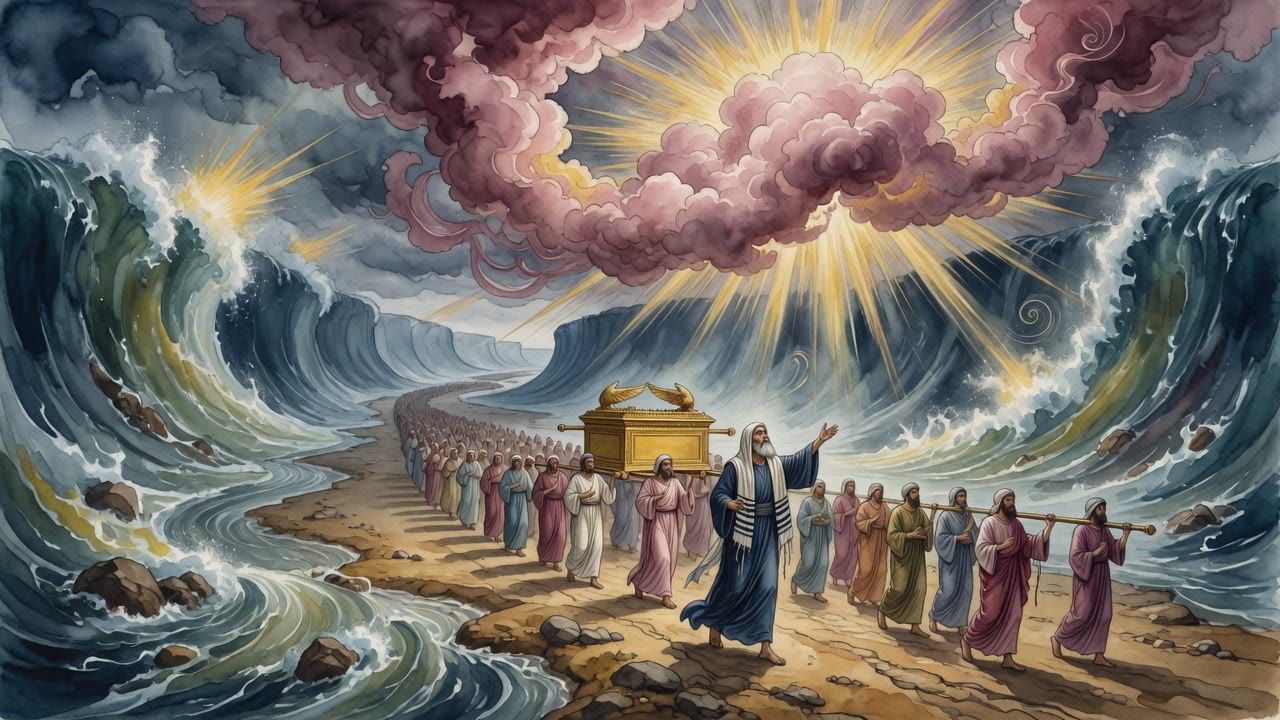
Joshua said nothing. He had stood at Moses' side for forty years. He knew the moment the angel meant. After the golden calf, when an angel was offered to go before the people in God's place, Moses had refused the substitute outright. "If Your presence does not go with us," Moses had said, "do not carry us up from here." Moses would take the Land with God or not take it at all. He had spurned the captain and his drawn sword and held out for the Presence itself.
"Now I have come," the angel said again. And the words landed differently the second time. Not a soldier reporting for a campaign. A messenger noting that this was the third arrival, and the first two had ended with a hand on its chest, pushing it back toward heaven.
The Charge Against the Commander of Israel
Joshua waited for orders. He got an accusation instead.
"Last evening you neglected the daily afternoon offering," the captain said. "And now you have neglected the study of Torah."
Two failures, named in the dark at the foot of the wall. The evening offering had gone unbrought. And the night that should have been given to the words of the Torah of the whole congregation had been given to the siege instead. Joshua, who had crossed the Jordan dry and would soon bring down stone with breath and ram's horn, stood charged like a man who had missed his prayers.
He asked the only question left to him. "For which of these have you come?"
"Now I have come," the angel said. For this. For the Torah that had gone unstudied tonight, not the Torah of one man alone, but the learning of the many that outweighs even the daily sacrifices on the altar.
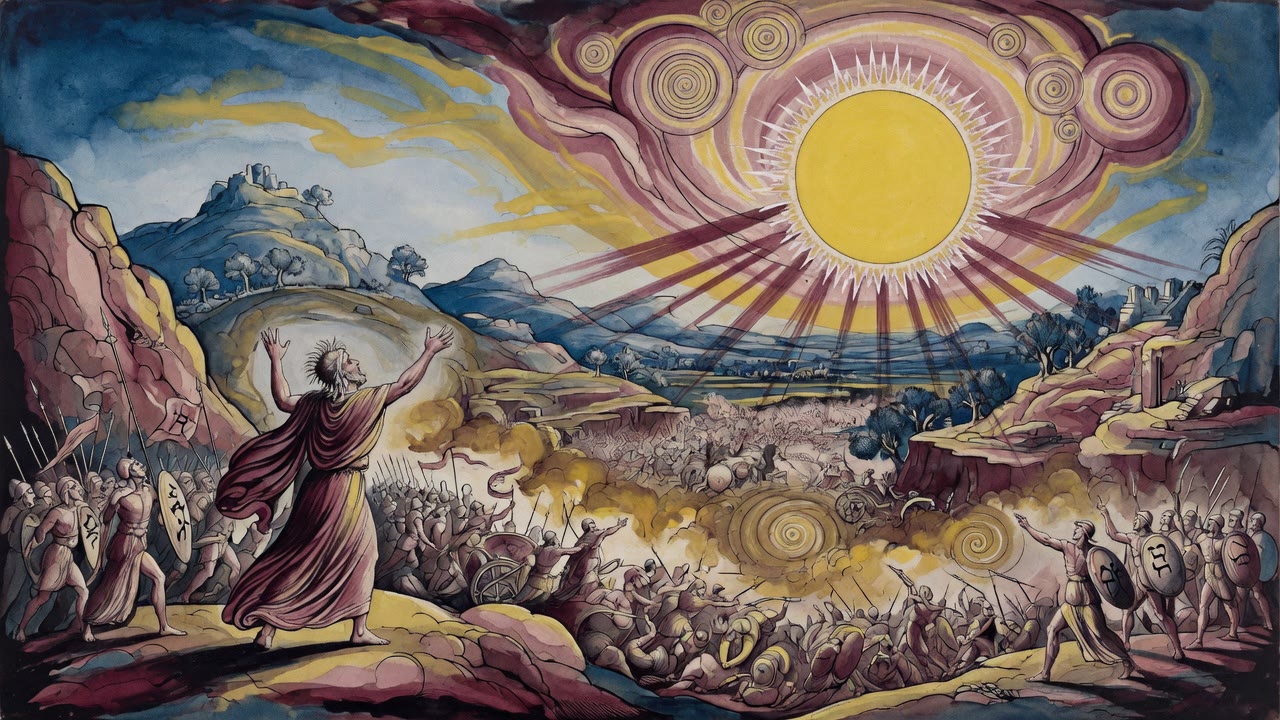
Joshua understood the verdict in the sword. The captain of the host of the LORD had not come to take the city for him. The city would be taken by the One whose host this was. What was being demanded of the commander was smaller and harder than a battle plan. It was a night.
So Joshua did not draw up his lines. That night he lodged in the midst of the valley, and the sages would say he lodged in the depths of the law, sitting in the dark with the words while the barred city slept behind its bolt. The general of Israel spent the eve of his greatest conquest as a student. The army of heaven could storm Jericho without him. It could not study in his place.
← All myths