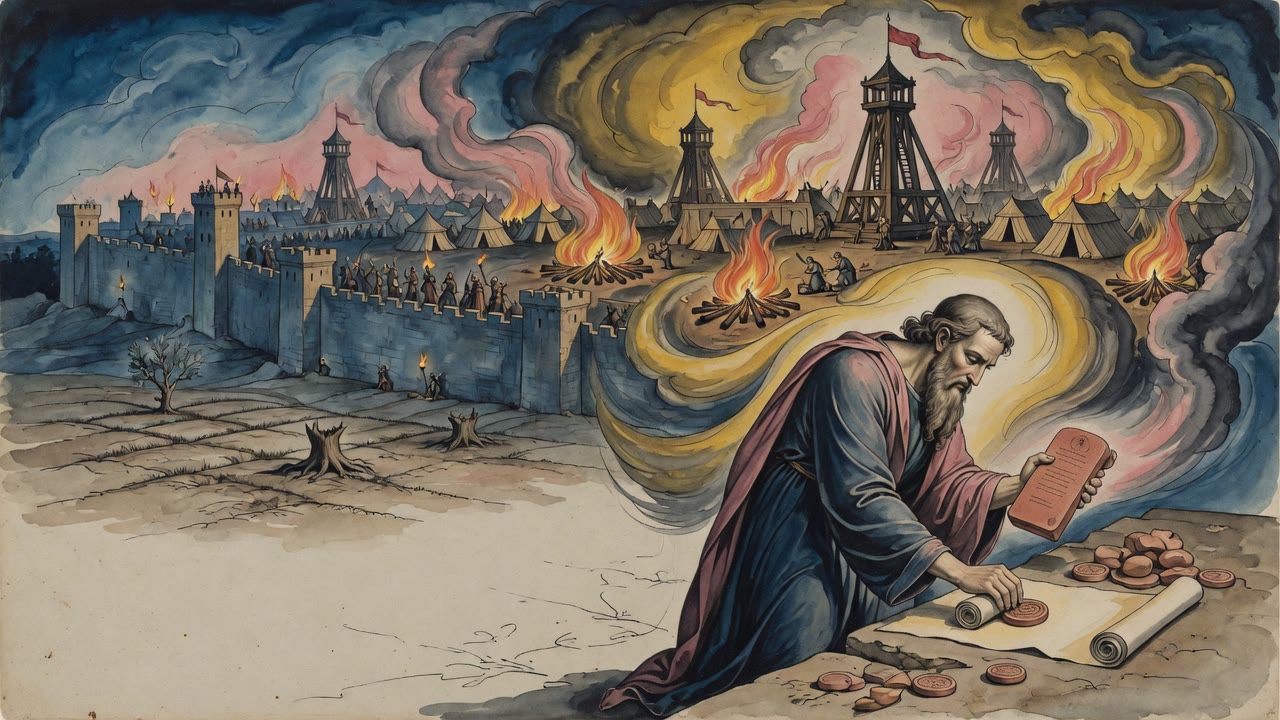
Samuel Rose from the Dead and Went Looking for Moses to Testify
When the witch of En-Dor conjured Samuel back from the dead, he assumed the Final Judgment had arrived and went immediately to find Moses as his witness.
Table of Contents
 Click for full size
The Witch's Cave
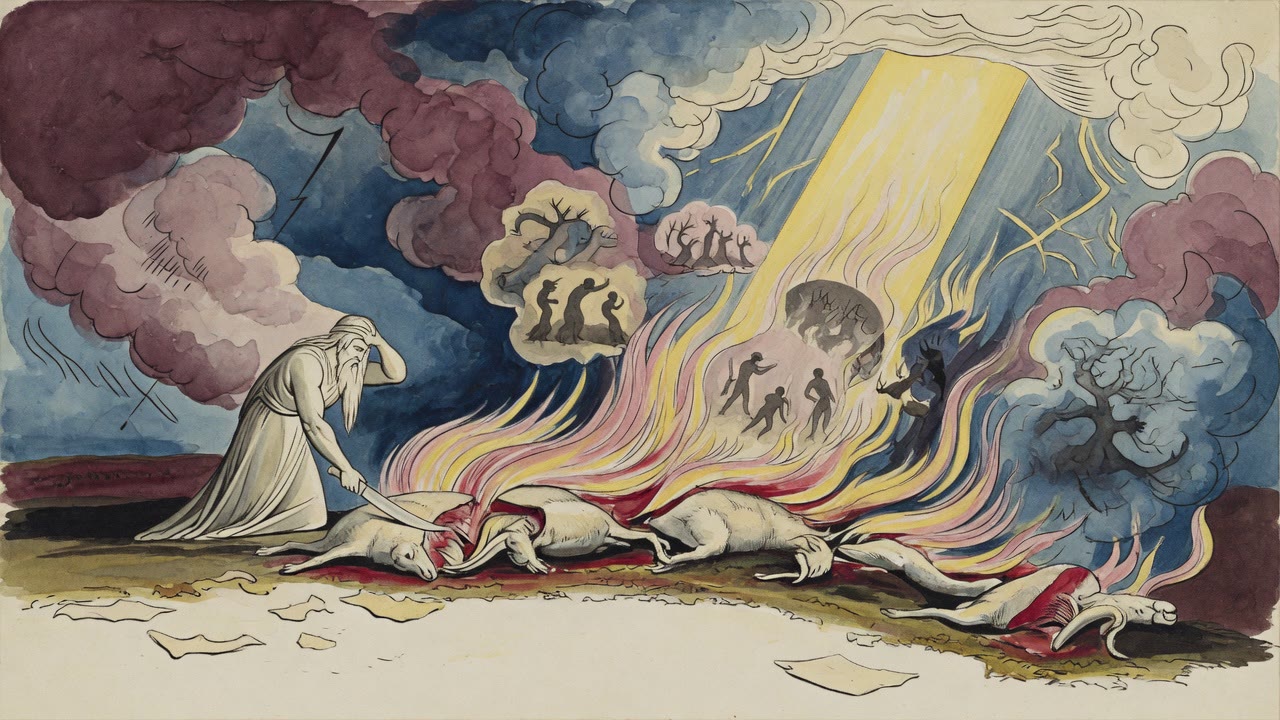
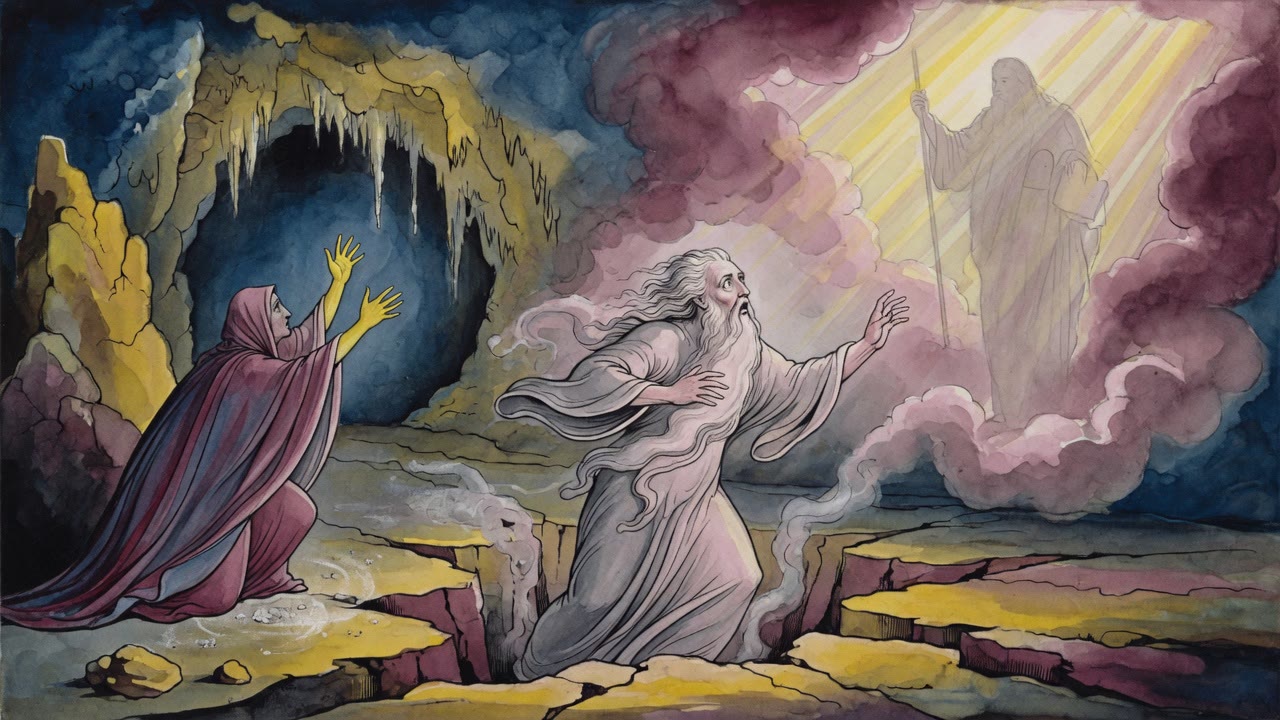
Saul had banned the practice of consulting the dead. He had expelled every medium and necromancer from the land. Then, on the night before the battle that would kill him, he went to the witch of En-Dor and asked her to conjure Samuel.
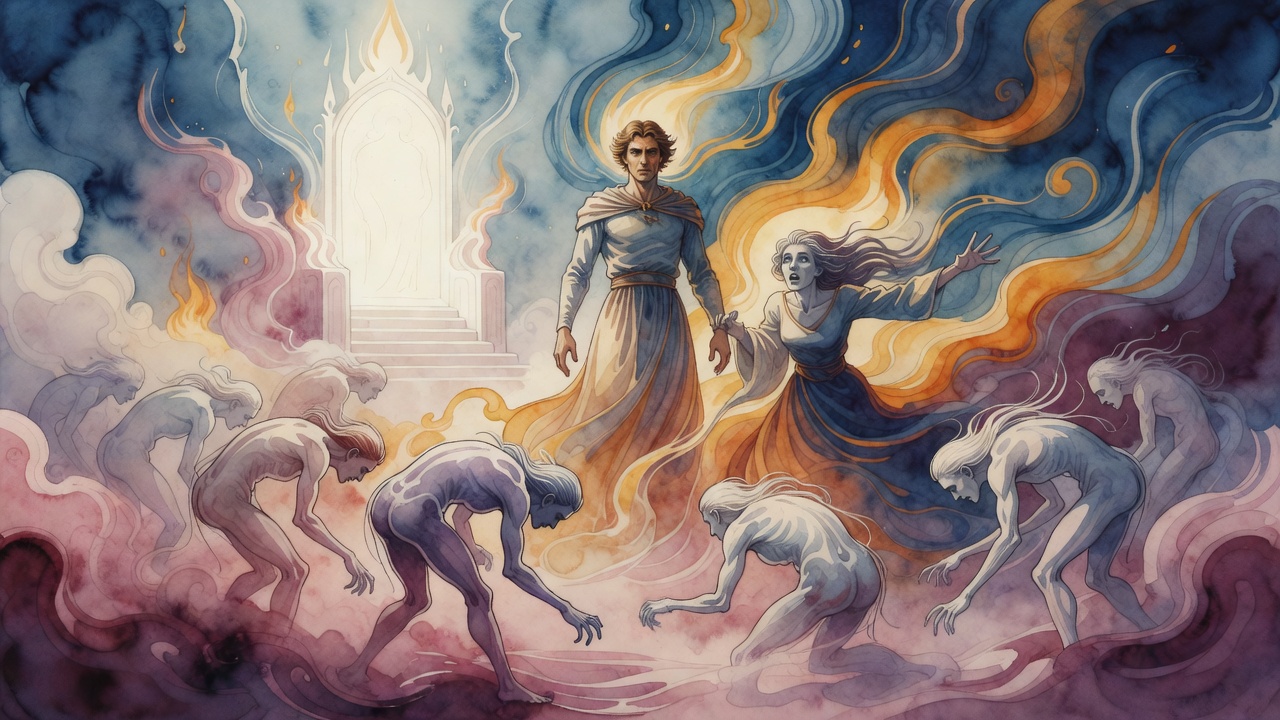
Samuel came up. The woman saw him and understood immediately that she had been deceived about who her client was, no ordinary man would have produced this particular dead prophet. She screamed. Saul told her not to be afraid and asked what she had seen. She described an old man wrapped in a robe. Saul bowed his face to the ground. He knew it was Samuel.
Samuel's First Thought
According to the Legends of the Jews, Samuel's first thought upon finding himself back in the living world was not about Saul. It was not about the war. It was not about what the witch had done or what her client wanted. His first thought was that the Final Judgment had arrived.
He had been pulled back from the dead in the middle of the night in a cave in En-Dor, and the most logical explanation, from Samuel's vantage point, was that the end of days had finally come and the dead were rising for the great reckoning. If that was what was happening, Samuel needed Moses immediately. He needed Moses to testify on his behalf, to confirm, before whatever tribunal was assembling, that Samuel had kept the laws of the Torah faithfully, just as Moses had established them.
The Gathering of the Righteous
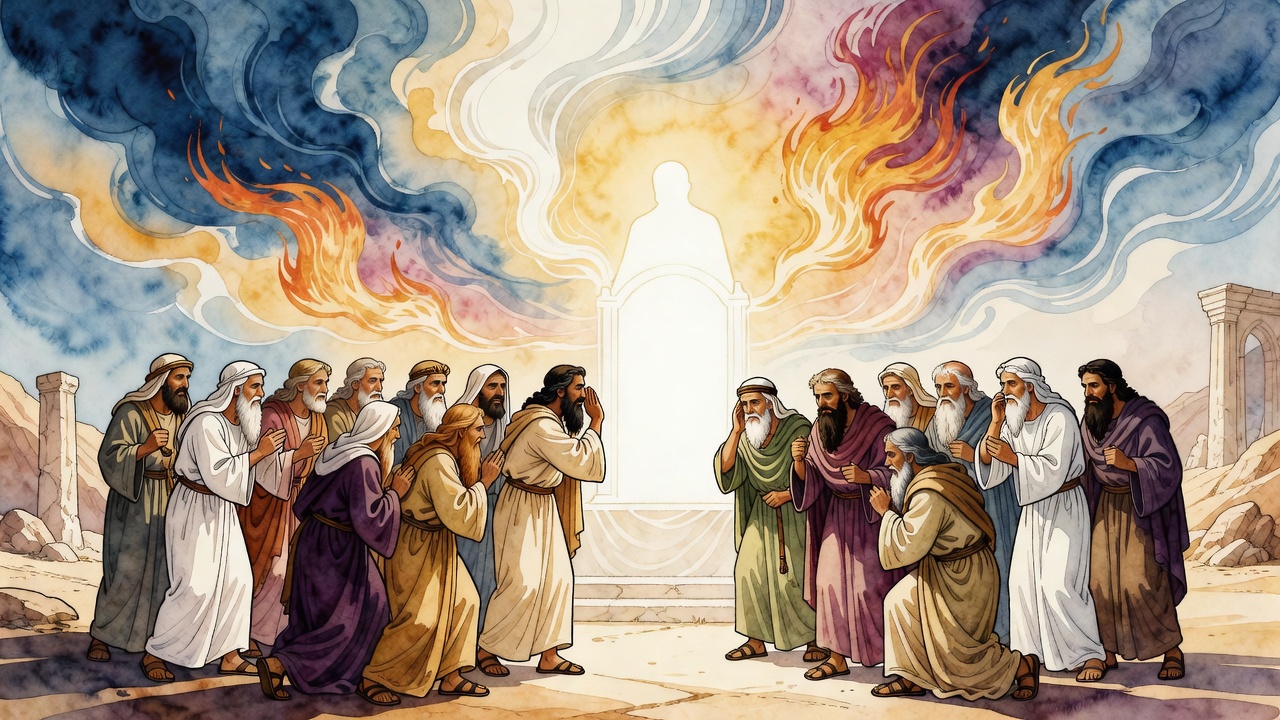
Samuel was not the only one who drew this conclusion. A whole company of pious souls rose with him, each one making the same calculation: if the dead are being called back, the Judgment must be at hand. They came up from their resting places convinced that the final accounting for all of human history was about to begin. The gathering of righteous souls in En-Dor was an unintentional assembly, summoned by a witch's spell and misread by everyone who found themselves in it as the most consequential moment since creation.
It was not. It was a frightened king in a cave the night before his death, and the dead had been pulled back into the world for the most ordinary of reasons: a man needed reassurance from a prophet he had spent years ignoring.
What the Scales Carry
The Shemot Rabbah connected Samuel and Moses through a different frame: divine justice as perfect balance. The verse from Proverbs, "a just balance and scales are the Lord's", served as the lens through which the sages read both prophets' interactions with God. Moses and Samuel were the two figures the tradition placed on either side of the scales. Both were great intercessors. Both had pleaded for the people in moments of crisis. Both had encountered God's judgment on its own terms and negotiated with it directly.
The Talmud preserved the comparison explicitly: before Samuel's birth, Hannah prayed with such intensity that the tradition compared her prayer to Moses's. After Samuel's death, the tradition placed him alongside Moses as the two prophets through whom God had most completely communicated the standards of Torah observance. When Samuel went looking for Moses on the night of his resurrection, he was going to the one person whose testimony about his conduct would carry the full weight of the law's own author.
The Soul in the Treasury
The Bamidbar Rabbah taught that all souls come from God and return to God, and that upon death, the soul is placed in the otzar, the divine treasury, a storehouse of souls held in God's keeping until the moment of return. Rabbi Eliezer the son of Rabbi Yossi HaGelili used the image of a man holding a bird: while we live, our souls are in God's hand, on loan. When we die, they return to the treasury from which they came.
Samuel, pulled from that treasury by a witch's spell, carrying the knowledge that his soul had been stored in God's hand since his death, understood the situation with the clarity of someone who had already been through the accounting and knew what it required. He had been a righteous man by his own reckoning, but righteousness still needed a witness, and the only witness he trusted entirely was Moses.
The Warning to Saul
When Samuel finally turned to Saul, he had nothing comforting to offer. Why have you disturbed my rest? What do you expect me to tell you? The Lord has departed from you and become your adversary. The kingdom will be given to David. Tomorrow you and your sons will be here with me. The battle would be lost, and Saul would not survive it.
Samuel delivered this verdict without softening it, because he was a prophet and the truth was the truth and he had already spent his life telling Saul things Saul did not want to hear. Having been pulled from the treasury of the dead by a witch in the middle of the night, he saw no reason to change his approach.
← All myths