Seventy-Two Elders Left Jerusalem With Eleazar's Worry
Eleazar sends his finest sages to Alexandria but fears no king will release men whose wisdom makes them too valuable to return.
Table of Contents
 Click for full size
The King Wanted More Than Books
Demetrius brought Ptolemy a problem. The royal library was almost complete, but the Jewish law was missing, and the law could not simply be copied. It needed translators who had lived inside it, men whose whole lives had been shaped by what they were asked to render. The king listened, and instead of sending for texts, he sent for people.
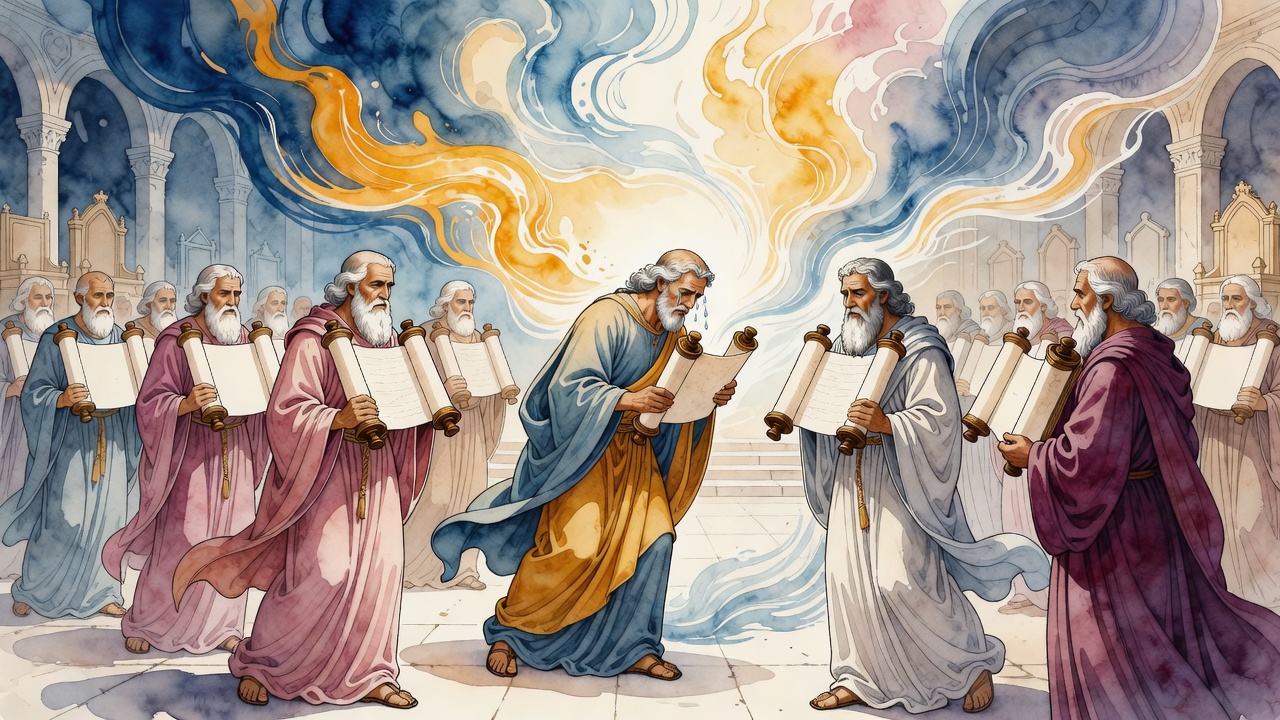
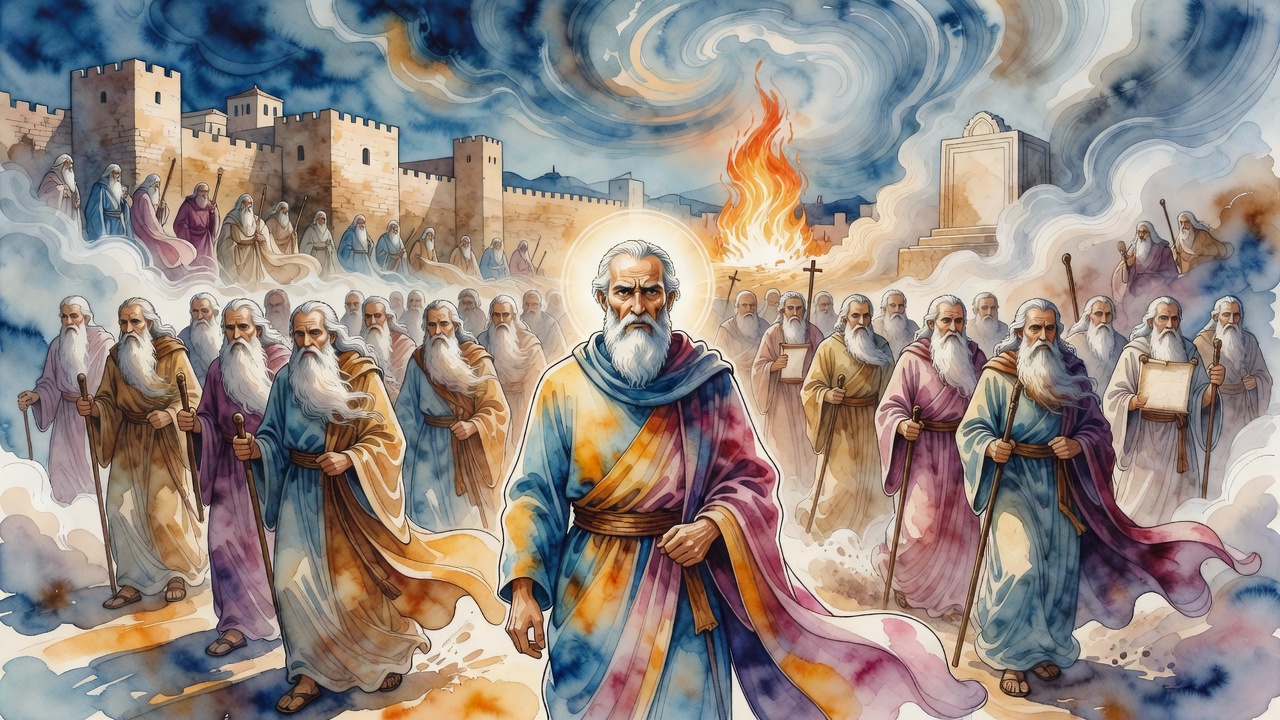
The request that went to Eleazar in Jerusalem asked for six elders from each of the twelve tribes: men of noble life, skilled in the law. Seventy-two in all. Israel would not send a single interpreter working alone. It would send a miniature people, six from each tribe, wide enough to carry memory and disagreement and consensus all at once.
The Letter That Remembered the Captives
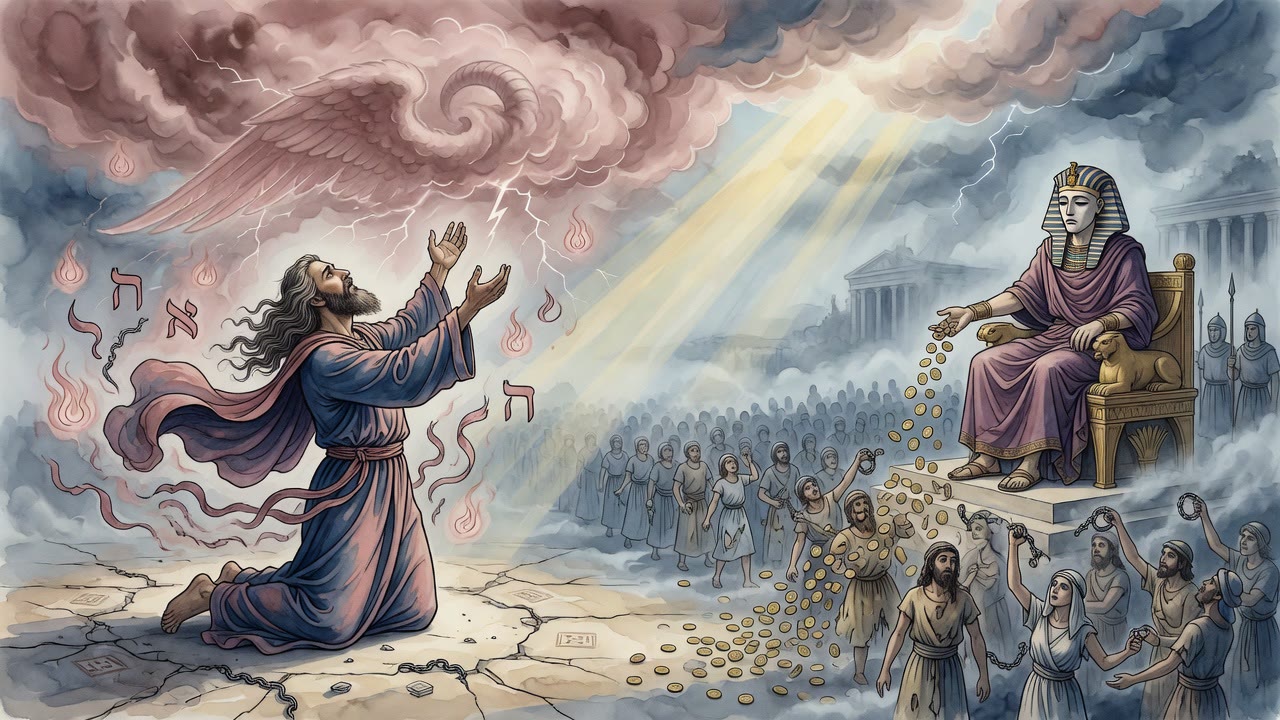
Ptolemy's letter to the high priest was careful. It remembered the Jews already in Egypt, some carried off by the Persians in an earlier age, others who had come as captives with his own father. Some had proved loyal enough to command fortresses against the native Egyptians. The king had released all of them as a gesture of goodwill, and he was asking Eleazar now to do the same: release men, not as slaves or captives, but as sages lent to a king who understood their value.
The letter also reminded Eleazar that hundreds of thousands of Jews already lived in his realm, more than enough reason to treat their holy writings with respect. It was a letter that knew exactly which arguments would land on a high priest who cared about the condition of Jews outside Judea.
The Names Were Called Tribe by Tribe
Eleazar selected carefully. From the fourth tribe, Jonathan, Abraeus, Elisha, Ananias, Chabrias. From the fifth, Isaac, Jacob, Yeshua, Sabbataeus, Simon, Levi. From the sixth, Judas, Joseph, Simon, Zacharias, Samuel, Selemias. Tribe by tribe the names came, tribe names and ancestor names braided together so that the translation being sent to Alexandria would carry genealogies inside it whether the king knew it or not. Seventy-two in all.
These men had grown up in the same house as the texts they would translate. They had not studied the law the way a scholar studies a foreign subject. They had kept it, lived inside it, been formed by it. Eleazar was not lending Ptolemy linguists. He was lending him parts of himself.
The Worry That Praise Could Not Quiet
The elders loved Eleazar, and Eleazar loved them in a way that made the separation visibly painful. He sent a letter with them to the king asking for their safe return. He asked Andreas and Aristeas, who were carrying the king's reply, to work for their return with all the effort they could give. They promised to give their best attention, but Eleazar said he was still greatly distressed.
He had seen this pattern before: a king who became fond of brilliant men near his person. Such a king, out of the goodness of his nature, considered it his highest privilege to summon men superior in culture and wisdom to his court and keep them there. Eleazar had given Ptolemy seventy-two of the finest minds Jerusalem held, and he understood that a king who loved wisdom might not easily let them go home.
← All myths