The Donkey Driver Answered What Rabbi Yonatan Could Not
A Samaritan stopped him on the road with a question about the Flood, and the rabbi had nothing. The man holding his reins asked for permission to speak.
Table of Contents
 Click for full size
The Road Up to a Ruin
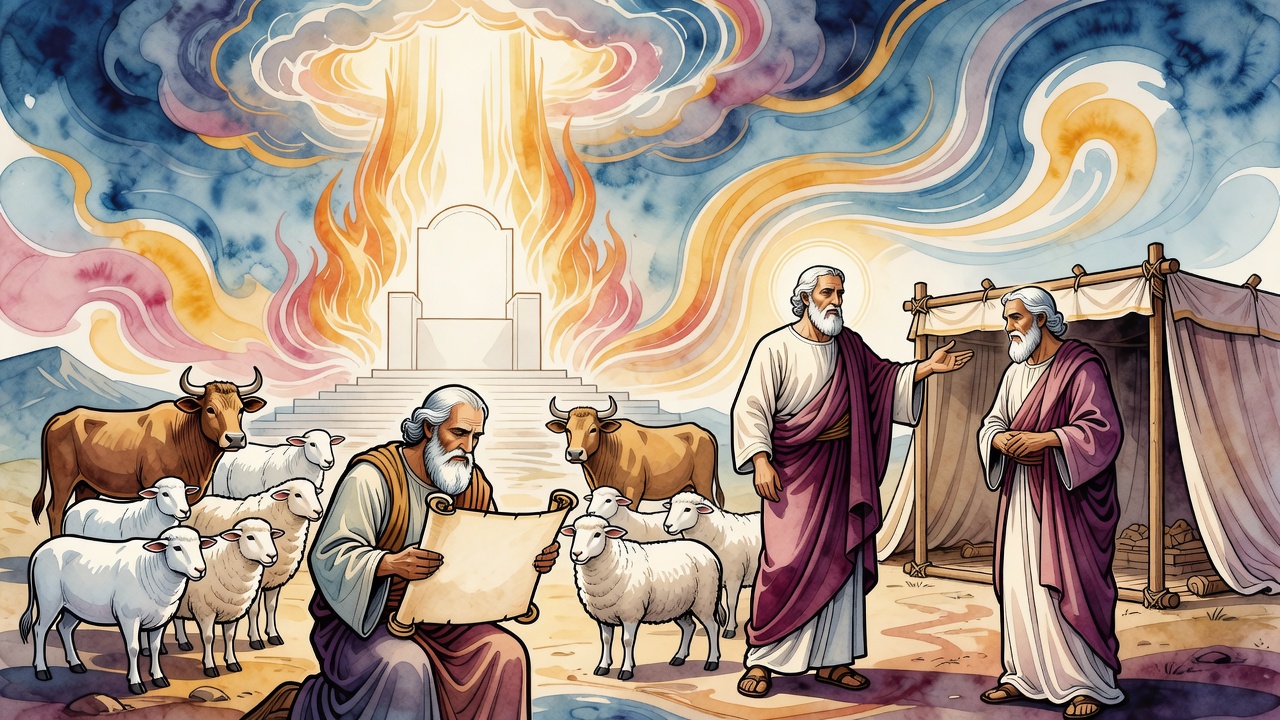
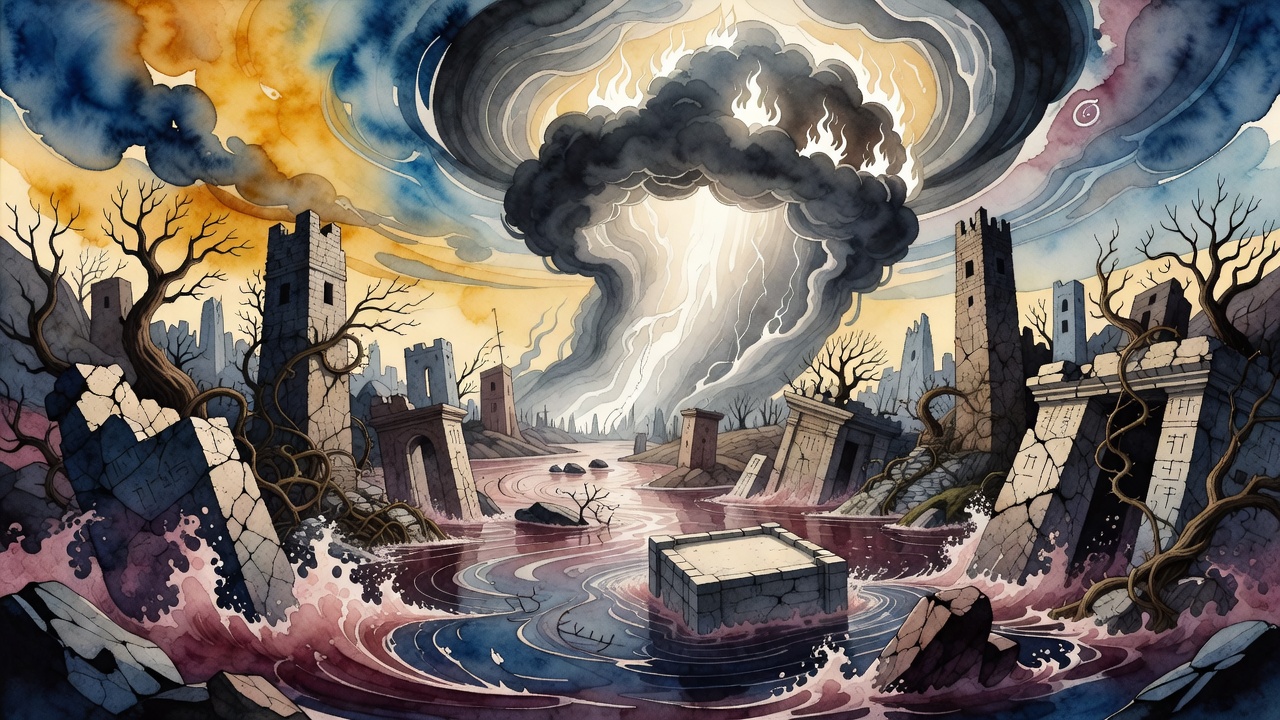
Rabbi Yonatan rode up toward Jerusalem to pray, and there was nothing standing at the other end of the road. Rome had burned the sanctuary generations before he was born. What was left on the mountain was scorched stone and the memory of what had been carried out of it.
He went anyway. A sanctuary keeps its awe in ruin exactly as it kept it when the doors hung straight and the fires were lit, and a man who believes that walks toward rubble the way he would walk toward a working altar. He carried a line from the Song with him on the road, the one Israel speaks in her own voice while she is trampled in the shadow of kingdoms. I am as I am, and I am beloved.
The shadow had a name and a body count. Rabbi Yohanan taught that Hadrian killed four million at Beitar, and God said that even if He had nothing against Rome but Beitar, the judgment would stand over them. That was the country Rabbi Yonatan was riding through. Four kingdoms had crossed it in sequence, Babylon and Persia and Greece and Rome, each laying its own darkness over the land, and the last one had taken the house.
What the Mountain Had Lost
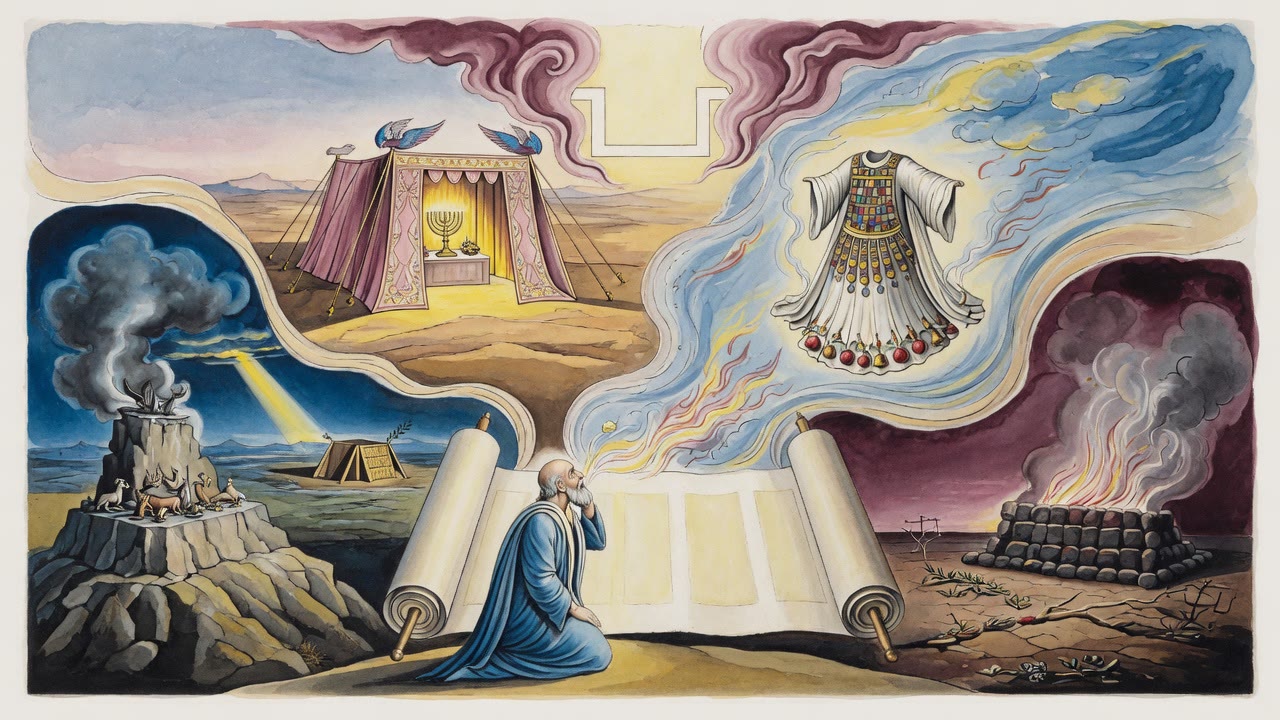
The vestments were the sharpest of the losses. Eight garments on the High Priest, four on an ordinary priest, and not one of them was decoration. The sash ran thirty-two cubits and he wound it around himself over and over, this way and that, and it stood in for the man whose intentions doubled back on themselves. The tunic answered for murderers. The breastplate answered for judges who bent a verdict.
The bells sewn along the hem of the robe rang whenever the priest took a step. No offering in the whole system covered slander, so the sound of the bells was assigned to it. Let a sound come and atone for the sound of an evil tongue. The gold plate strapped across his forehead answered for the brazen, and the sages who taught that turned to another forehead, the one David's stone went into. Goliath stood six cubits and a span. When the stone went in he fell forward onto his face instead of backward, so the boy would not have to walk the whole length of that body to reach the head.
All of it was gone. The mountain had been emptied, and the emptying had been left standing as a monument for the nations to look at.
The Samaritan Who Came Down to Meet Him
The road ran past a height the Samaritans held holy, and a man came down off it to cut him off.
"Where are you going?" he said.
"To pray in Jerusalem."
"Would it not be better to go up and pray on this blessed mountain, instead of praying in those ruins?"
Rabbi Yonatan asked him what made the mountain blessed. The answer came back without a pause, the way a rehearsed thing does. The Flood never touched it. Every other place on earth went under and this one stayed dry, and everybody says so.
Rabbi Yonatan sat on his animal in the sun and could not find the answer. It was somewhere in him and it would not come up. A man had just called the holiest ground in the world a pile of rubble and offered him a dry mountain instead, and the rabbi going up to pray had nothing in his mouth.
The Man Holding the Reins
His donkey driver spoke from the side of the road. "Rabbi. Allow me, and I will answer him."
"Answer him."
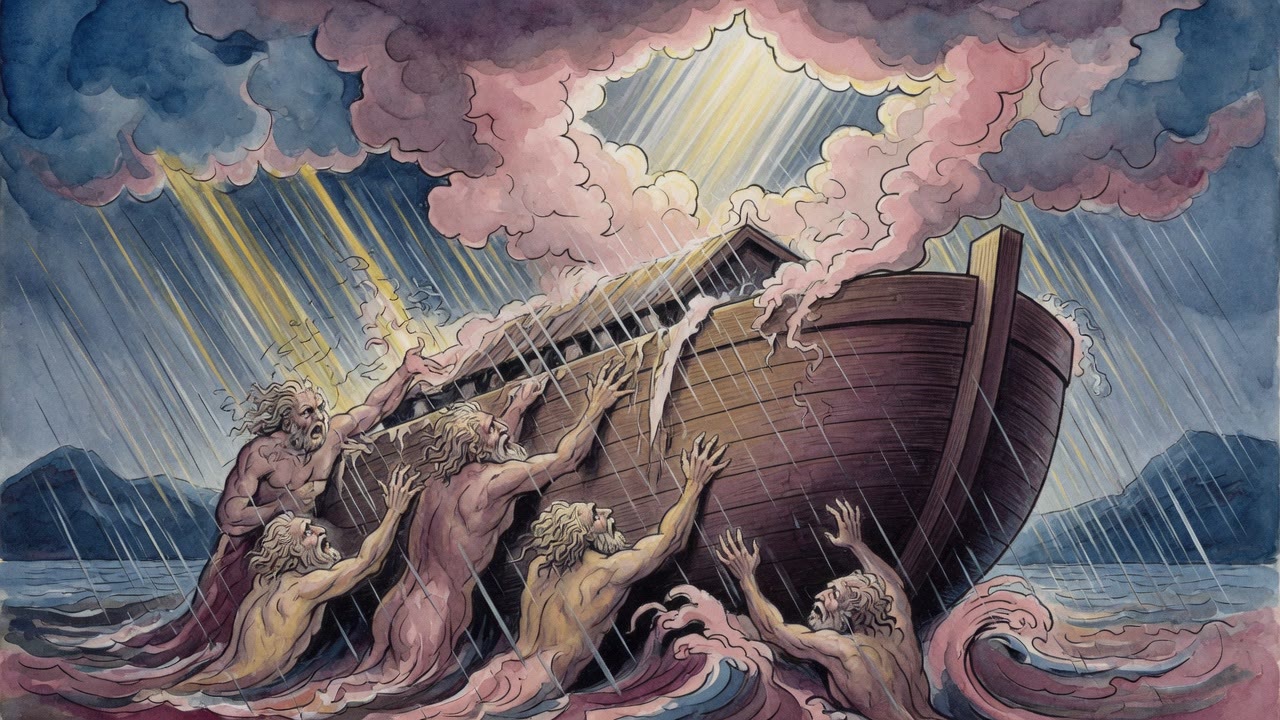
The driver turned to the Samaritan. "This mountain of yours. What do you take it for? If you call it one of the high mountains, it is written that all the high mountains were covered. If you call it one of the low ones, the water climbed fifteen cubits over the peaks, and the verse did not trouble itself to name the low mountains at all. If the high ones went under, how much more the low."
The Samaritan stood in the road and found nothing to say back.
Three Mil on Foot
Rabbi Yonatan climbed down off the donkey. He put his driver up on it, took the halter himself, and walked beside the animal for three mil while he said three verses over the man riding it.
You will be the most blessed of all the peoples, and there will be no barren male or female among you or among your cattle. Even among those of you who work with animals. Any weapon crafted against you will not succeed. Your temple is like a slice of pomegranate, and even the empty ones in Israel are packed with answers the way a pomegranate is packed with seed.
The sanctuary was still gone when the road ran out. The stones were still black. Somewhere north of all of it the messianic king was waiting to come down and build in the south, and until he came the mountain would go on being holy in its ruin, defended on the road by a man who drove a donkey for a living.
← All myths