The Giants Blocked the Deep and Still Could Not Enter the Ark
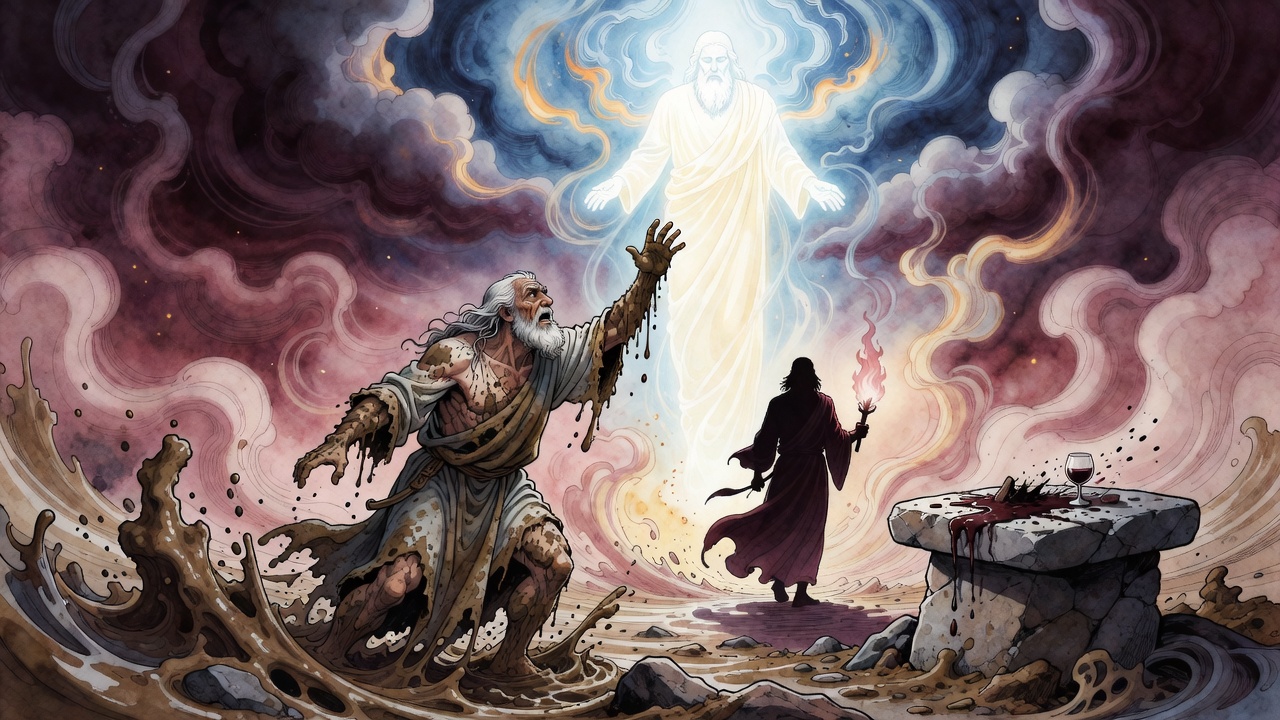
A man of that generation could cover the mouth of the deep with one foot. At the door of the ark his legs went out from under him.
Table of Contents
 Click for full size
The Rain Began as Ordinary Water
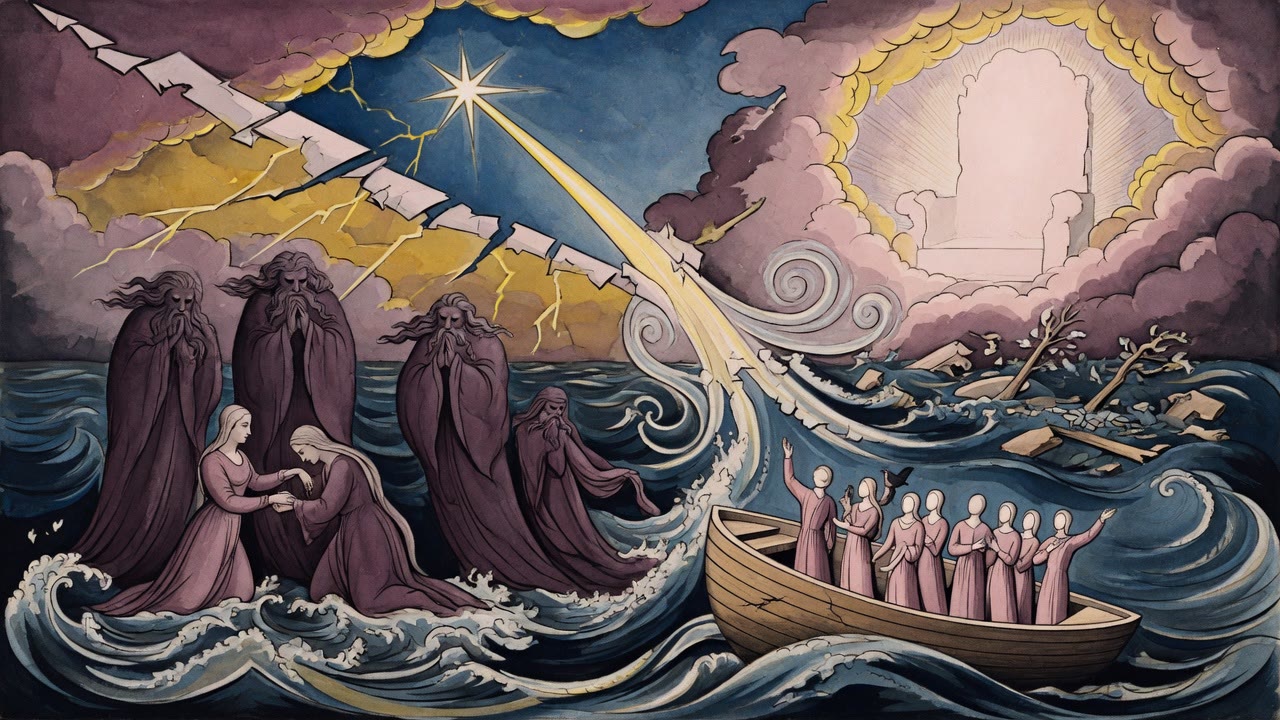
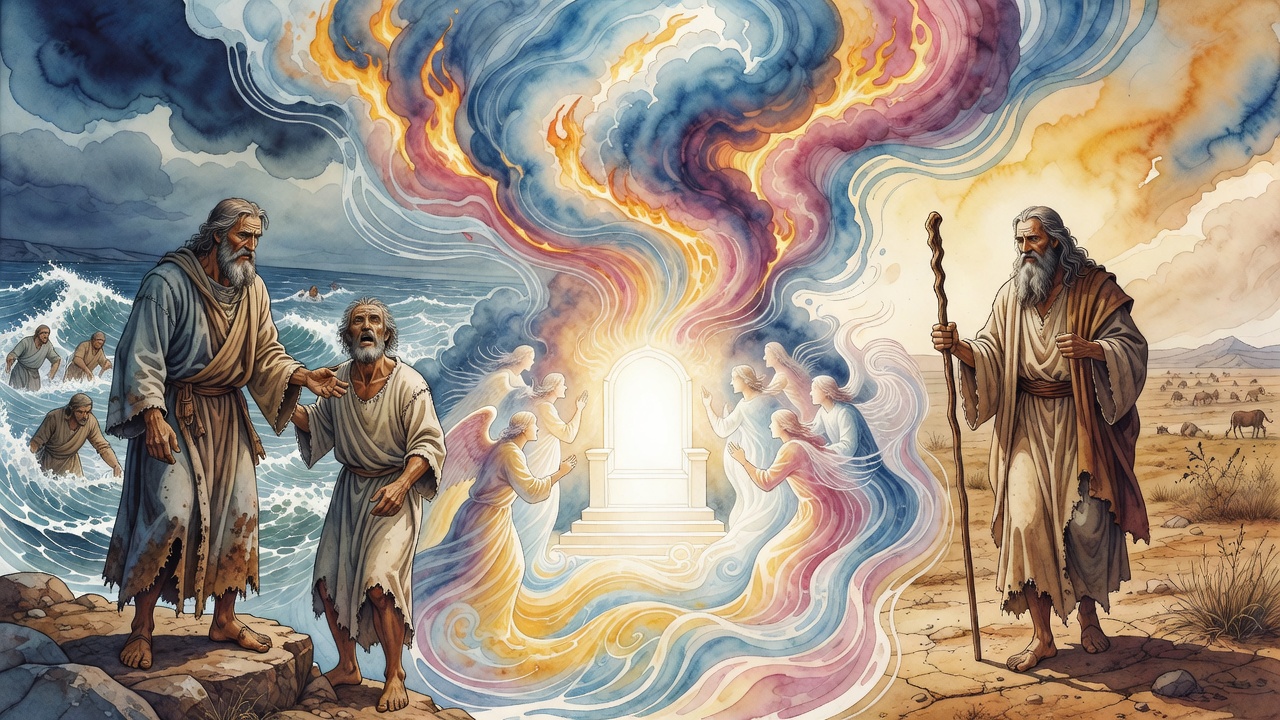
The angels had already asked it before the first drop. "What is man, that You remember him?"
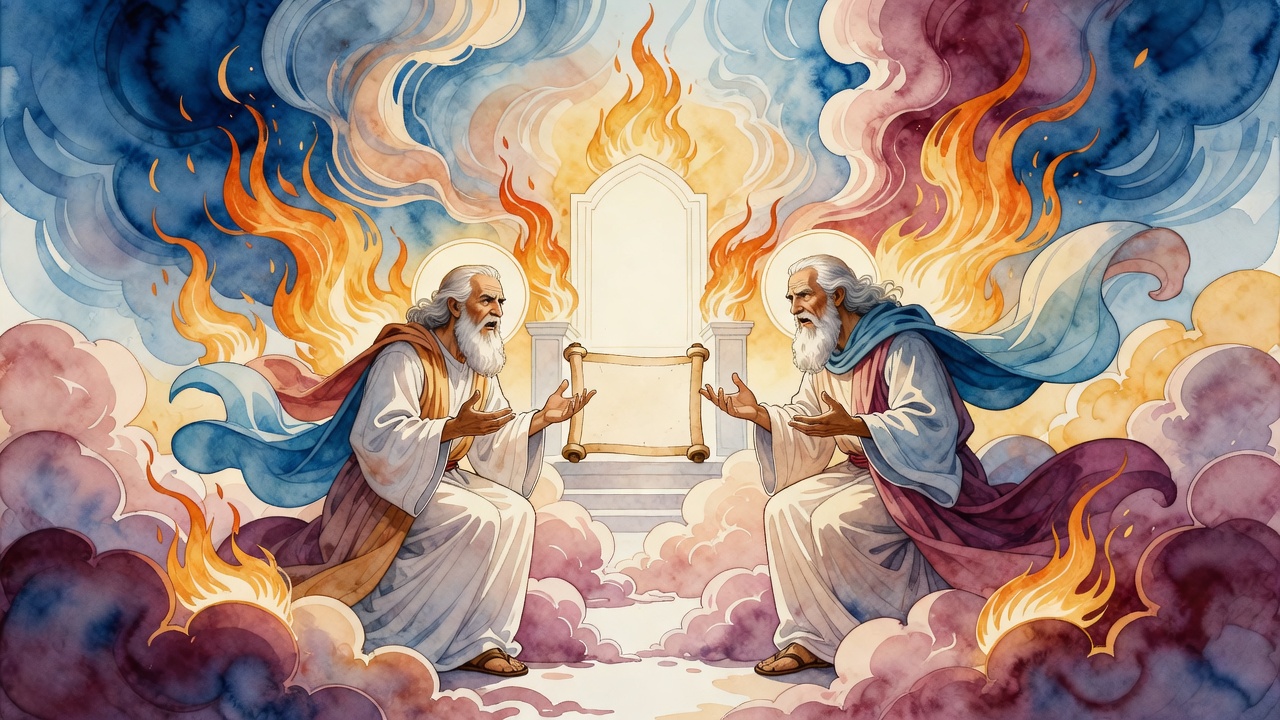
They had watched the same century God had watched. When God announced the flood He phrased it so the announcement leaned on somebody. "And behold, I am bringing the flood, water upon the earth." The extra word carried an agreement. He was concurring. The angels put the motion. The Holy One did not overrule them.
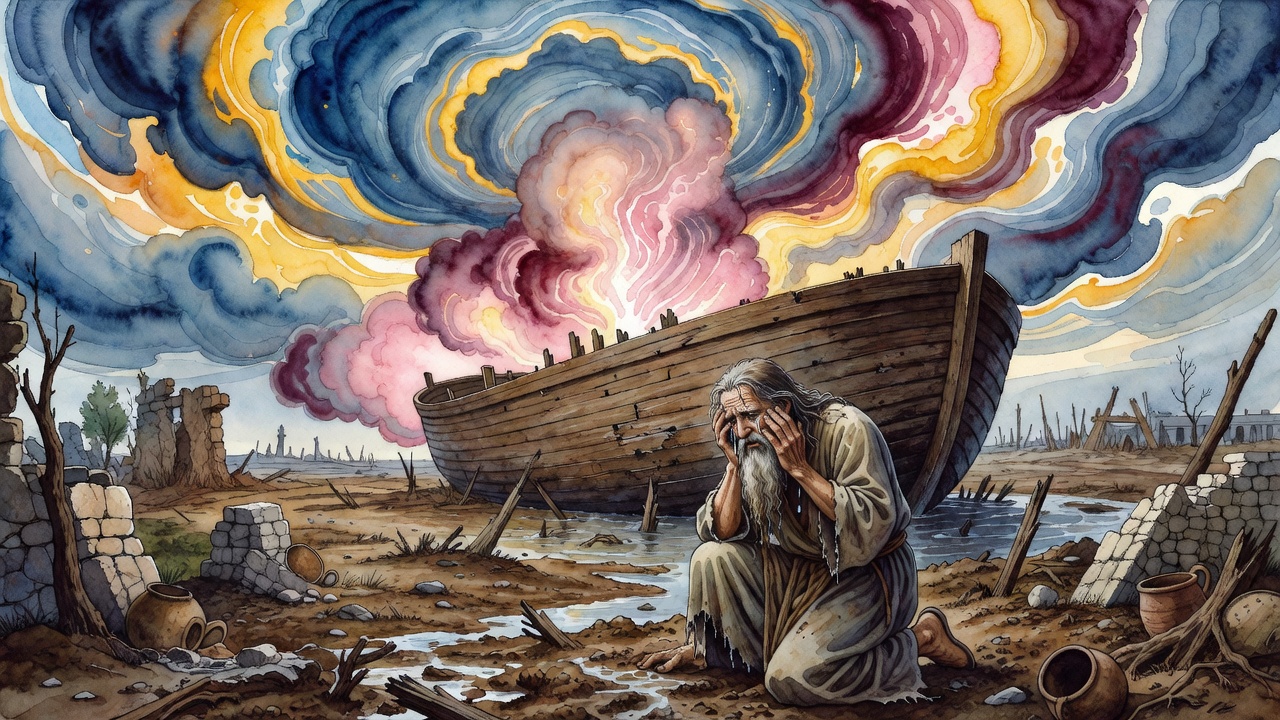
It came down as ordinary water. That was the first mercy, and nobody treated it as mercy. Water fell on a wicked country the way water falls. Only when it kept falling did it stop being weather and become the flood.
The Giants Could Stop the Deep With a Foot
The generation had men in it who were not worried.
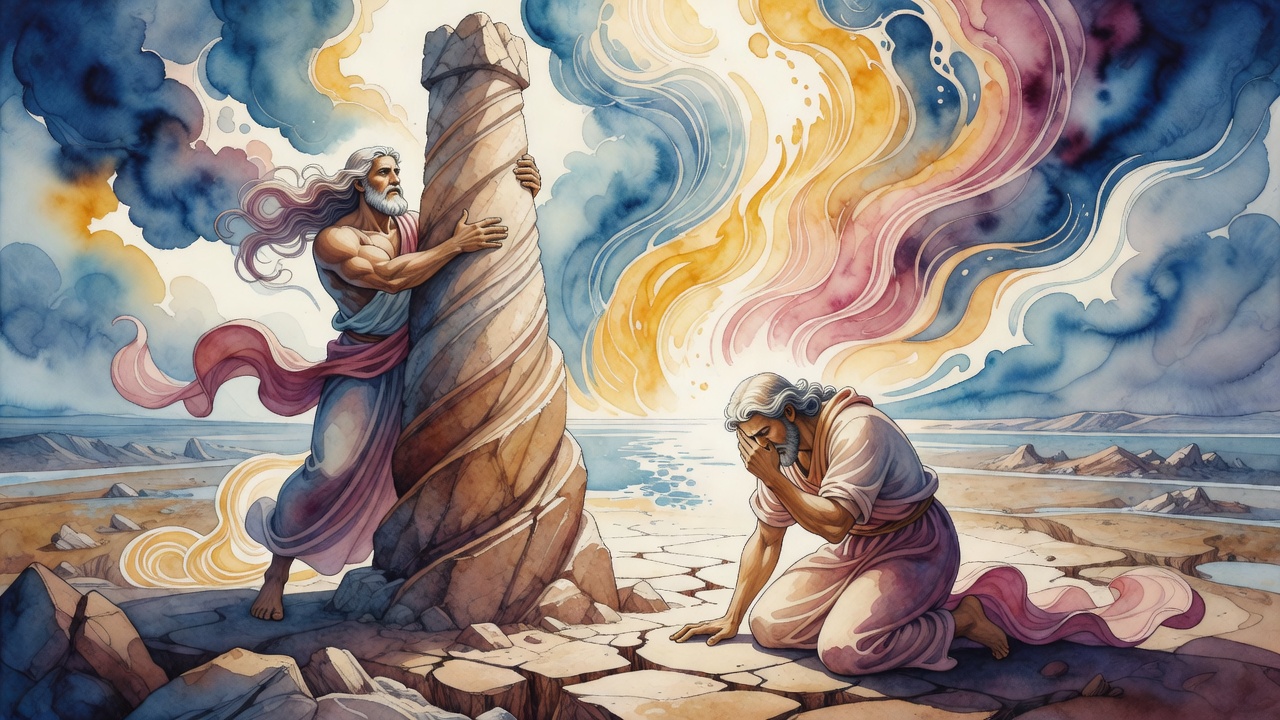
One of them could set his foot over the mouth of the deep and stop the springs. One of them could put a hand flat across the window of heaven and hold the sky shut. These were the mighty ones Genesis names and then walks away from. They had spent their lives learning that nothing on earth or above it could be pushed against them and stay standing.
So the rain was a nuisance. They blocked what they could block. When the water rose past blocking, they came for the boat.
The Door Would Not Take Them
Their legs went out from under them at the ramp.
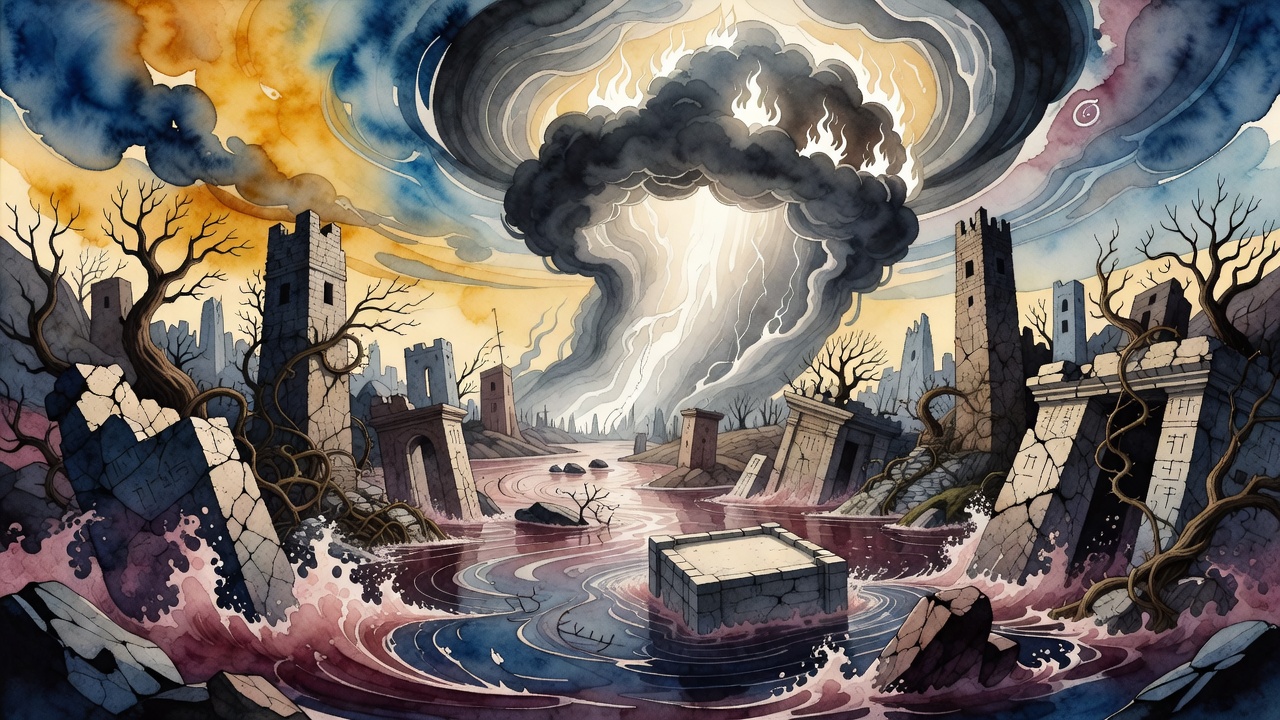
A man who could hold back the deep with one foot got to the threshold of a wooden box and could not make his own legs carry him up it. The water took him with the rest. "The giants will tremble under the water and its dwellers." A lion came at the door too. Its teeth dulled in its mouth before it reached the timber, and it turned around.
Nothing entered that hull that the covenant had not named. Rabbi Hiyya bar Abba said it straight to Noah's face across the years. "You were a carpenter. You cut every rib of that hull yourself and you fitted the pitch. And without My covenant you could not have gotten inside it either." Not with that weather coming down. Not with those men outside who had been promising for years to kill him. The covenant is also why the grain in the hold did not rot and did not go moldy through a year in the dark. A boat full of stored food and dung and animals should have gone bad in a month.
Noah Fed Them by the Hour in the Dark
Noah found favor. Rabbi Yohanan took two men meeting on a road, one attaching himself to the other, and said the meeting ended in friendship, the way Joseph found favor with Potiphar and ended up trusted in the house. Reish Lakish said it ended in authority, the way Esther found favor with everyone who looked at her and ended up wearing a crown, and Noah walked out of the ark with every living thing put under his hand. The rest of the sages said it ended in a marriage, that the man on the road gave the stranger his daughter, and the daughter in that reading is wisdom.
The wisdom was a timetable. He knew which creature had to be fed in the second hour of the day. He knew which one would not eat until the third hour of the night. He knew this for every animal on board, and he got up and did it, in the dark, on a schedule, for twelve months, while the world he had grown up in came apart under the hull. The love that kept him inside the flood was not a feeling. It was a feeding hour, kept while the deep tried the seams.
Famine Met Abraham at the Border
Generations later the pattern ran again on dry ground, faster and with less water.
Abraham had just been told he would be blessed and his name made great. He packed. He left his father's country. He crossed into the land he had been sent to, and the land was starving. There was famine there when he arrived. He had been walking toward it the whole time.
He did not complain. Rabbi Pinhas noticed the silence. "Blessed is the man whom You chastise, Lord," and if he chooses to be indignant, then "You instruct him from Your Torah" instead. Abraham skipped the indignation. The verse gives him one sentence and it is not a protest. Abram went down to Egypt to stay there.
Rabbi Yehoshua ben Levi heard disruption inside the word for food. He hands out disruption in this world to the ones who fear Him. In the world coming, He remembers, and the remembering does not stop. The same love that shut a door against giants opened a famine in front of a blessed man. Abraham walked toward Egypt with a promise in his pocket and nothing to eat, and he did not say a word about it.
← All myths