5 min read

Students Counted Bones Against the Torah Number

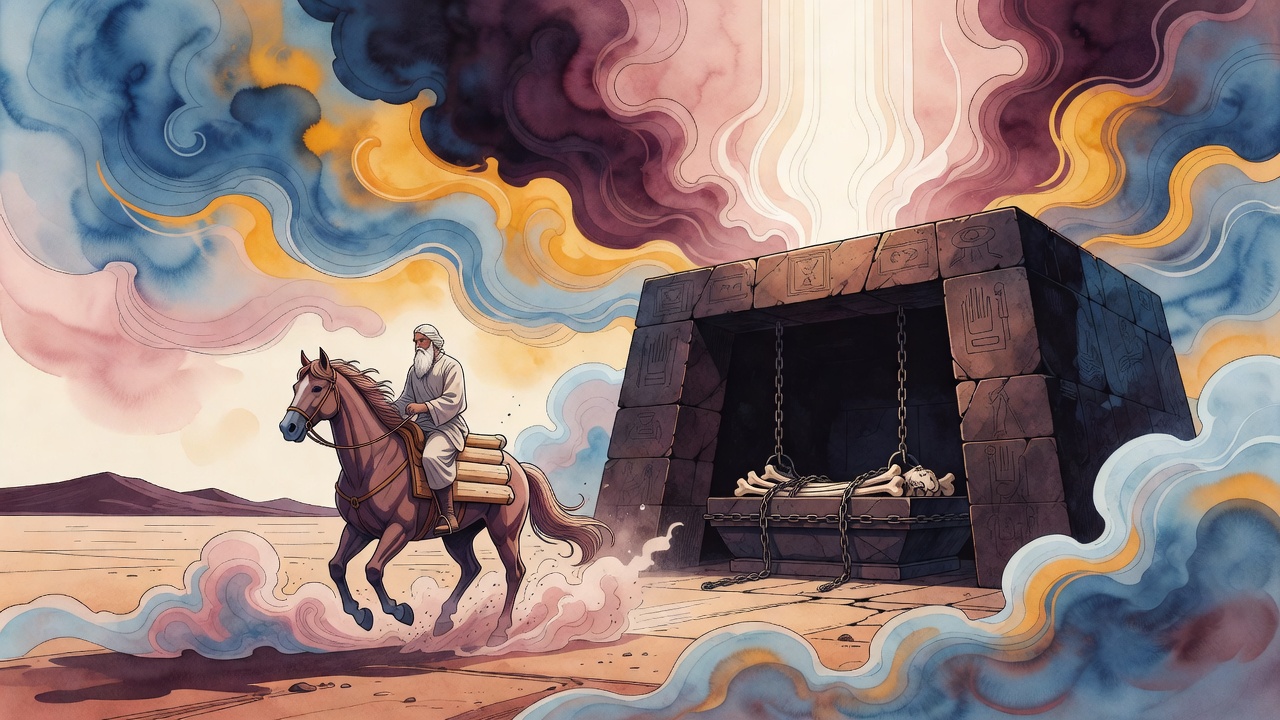
Rome left a woman's body on the table. Rabbi Ishmael's students counted every bone. The sacred number did not match.

Curated by Arthur · Told by Maggid ·
Table of Contents
  1. The Number That Would Not Match
  2. From a Drop to Dust
  3. When the Accuser Chooses the Hour
  4. They Carried Both Numbers Home

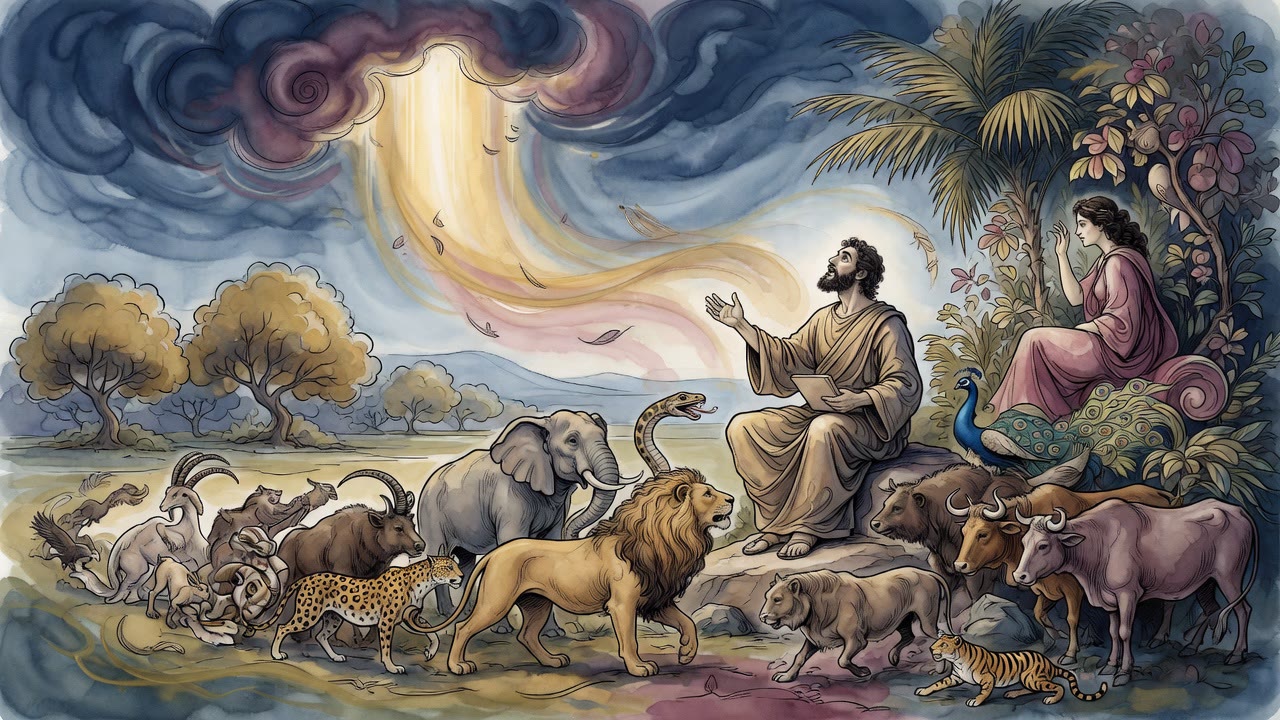
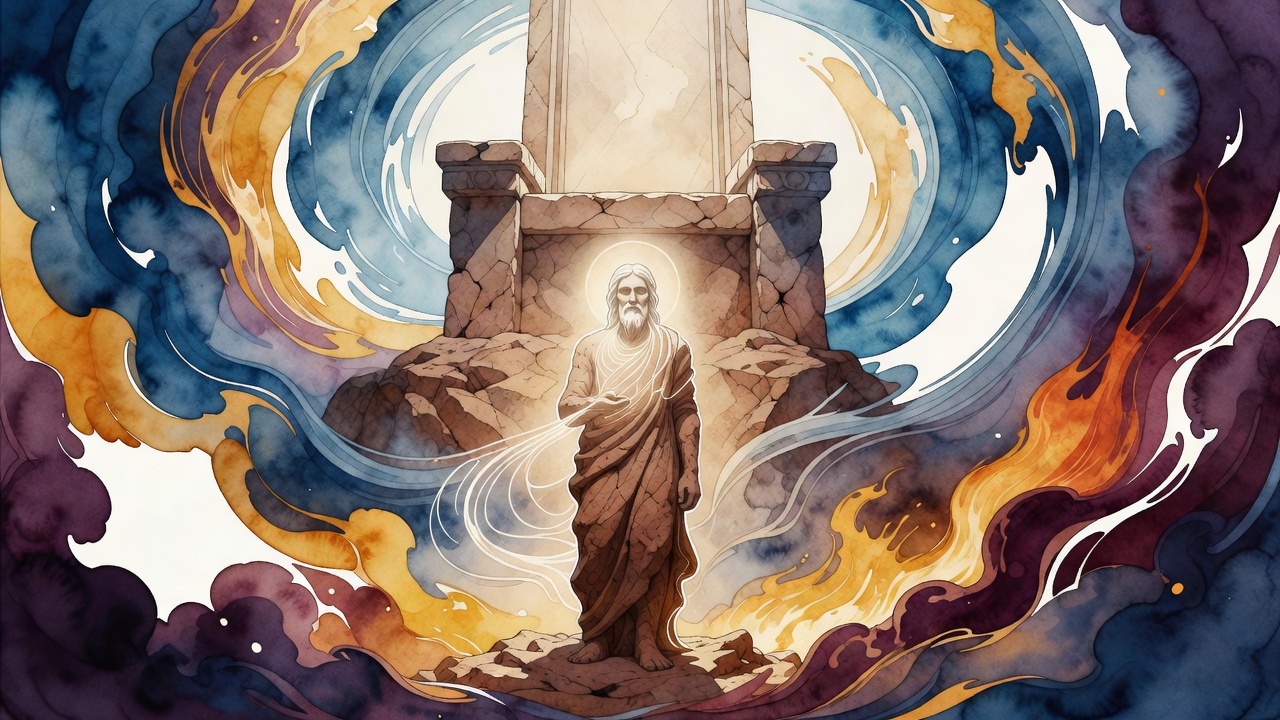
The students of Rabbi Ishmael stood over a woman Rome had finished with and did not look away. Condemned. Dead. Beyond any court of Israel. She still held a question their teachers had carried in words.

Students Counted Bones Against the Torah Number Click for full size

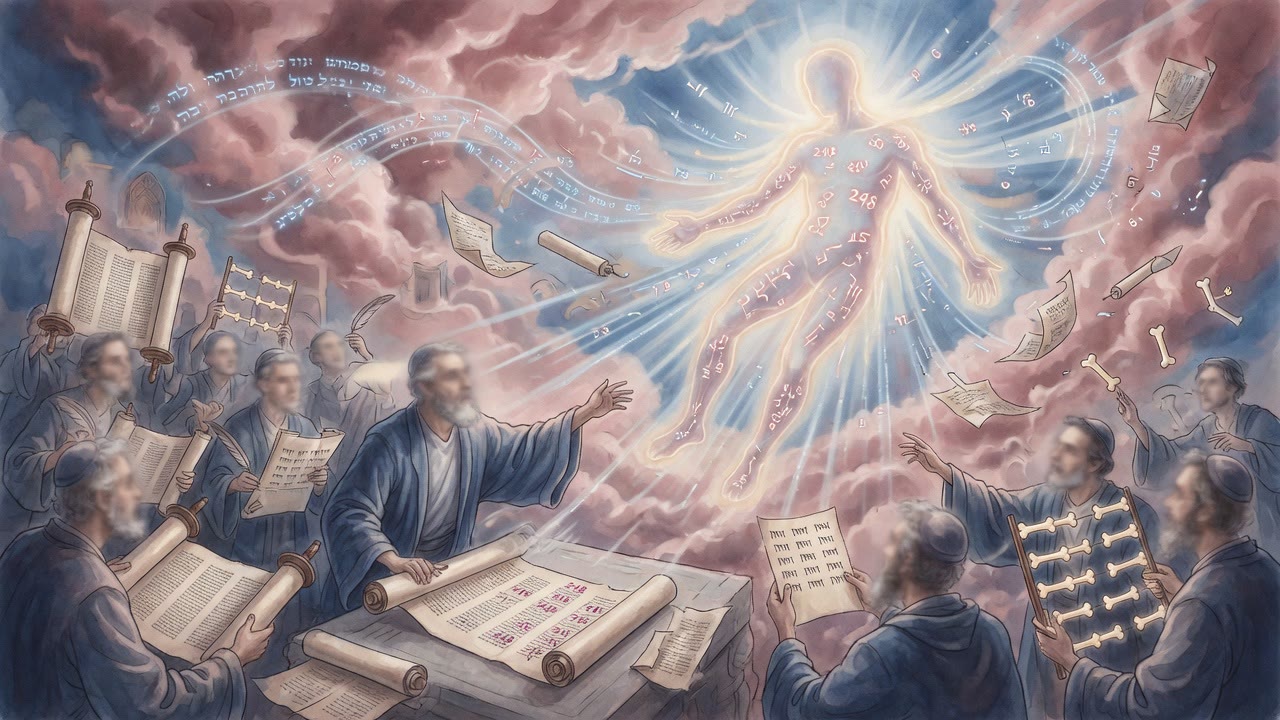
Tradition said the human body holds two hundred forty-eight bones, matching the two hundred forty-eight positive commandments. They opened the claim the only way left. They counted.

The Number That Would Not Match

Finger by finger, joint by joint, they worked through the corpse with a patience that was not cruelty. A knuckle. A rib. A small bone in the wrist that almost hid. The number that rose was two hundred fifty-two.

When they examined a man for comparison, they reached two hundred forty-three. The sacred figure and the flesh refused to agree on the first try. Women, by their count, carried extra bones, hips or the small bones of the hands in the reckoning they could see.

They did not burn the body to save the teaching. They wiped their hands and carried the discrepancy back as if discrepancy were also Torah.

From a Drop to Dust

Akavyah ben Mahalalel said, "Mark three things and you will not come into the power of sin. Know from where you come, from a putrid drop. Know where you are going, to a place of dust, worm, and maggot. Know before whom you are destined to give an account and reckoning. Before the King of the kings of kings."

The students counting bones were already standing in Akavyah's second gate. Dust was not a figure of speech on that table. It was a schedule. The third gate waited beyond their tally. Even a careful count answers before the One who knit the bones and also spoke the commandments those bones were said to mirror. If the numbers quarrel, the quarrel itself belongs to the reckoning.

When the Accuser Chooses the Hour

Other teachers counted the days of pregnancy, two hundred seventy-one, seventy-two, or seventy-three, and watched how danger invites charge. Ha-Satan (הַשָּׂטָן), the Accuser who prosecutes in Heaven's court, brings claims in hours of peril. War. A bridge. A dark house. A sea crossing.

A student once sat before his master and could not follow the lesson. His she-donkey was about to foal, and fear for her filled his head. The master asked why the words would not stick. The student told him. Rabbi Elazar said it is easier to grow a legion of olive trees than to raise one child in the Land of Israel. Bodies under pressure are where judgment leans close.

Rabbi Yannai stopped at a crossing and checked the path first. He would not plant himself in danger and wait for a miracle. The miracle may not come, and if it does, it is quietly subtracted from a store of merit. The condemned woman's body was pressure made still. Rome had chosen her hour. The students chose not to let the hour end only in spectacle. They turned a killing into a count.

They Carried Both Numbers Home

Two hundred forty-eight remains a teaching about limbs and laws, a way to say the whole body is recruited for mitzvot (commandments). Two hundred fifty-two remains a night's work with real joints. The tradition held both without calling either a lie.

Akavyah's three gates close the scene. From a drop. Toward dust. Before the King. In a world where Rome breaks bodies for theater, counting carefully is a kind of refusal. The empire used her death for fear. They used it for a number that still would not flatter itself.

Rome had used her death to say that Jewish and gentile flesh are equally breakable under imperial law. The students answered that learning still assigns meaning to flesh after empire is done making a show. They did not raise her. They did not avenge her. They refused to let her become only a number in a Roman ledger. Their ledger was bones and commandments, discrepancy and debate, dust and the King who will ask what they did with both.

Later lists stretch toward two hundred fifty-three names for parts, as if the teachers kept averaging, revising, arguing, unwilling to throw out either the body or the number. A people that maps commandments onto bones must also love bones enough to recount them when a dead woman disagrees.


← All myths

From the tradition

Sources

3 sources

The texts behind this telling. Some cards carry a translation of the source; others are our own retelling of it, and each card says which. Every card links out to the original.

Gaster, Exempla of the Rabbis, No. 231; Talmud, Bekhorot 45aThe Exempla of the Rabbis (1924)

Retold in our words. Read the original at the link below.The Exempla of the Rabbis, Moses Gaster (1924) · PD-US-pre-1929

When a condemned woman died under Roman sentence, the students of Rabbi Ishmael made an unusual decision. They performed one of the earliest recorded forensic examinations in Jewish tradition. They counted the bones.

Rabbinic medicine had inherited a teaching that the human body contained 248 bones, corresponding to the 248 positive commandments of the Torah. The students of Ishmael, working systematically through the corpse, came to a different number: 252.

When they examined the body of a man for comparison, they counted 243.

The difference intrigued them. Women, by their count, carried additional bones, perhaps those of the hips or the delicate bones of the hands. The textual tradition preserves a long enumeration of the 253 bones in the human body, suggesting the Rabbis later averaged or revised the count, trying to reconcile the observed anatomy with the theological number 248.

The Talmud (Bekhorot 45a) and Gaster's Exempla #231 preserve the episode. The Rabbis cared about facts. When the tradition said 248 and the body said 252, they did not throw out the body. They opened a long argument about how to read both, the text and the flesh. So that Torah and the created world could keep speaking to each other.

Full source
Pirkei Avot 3Pirkei Avot

Retold in our words. Read the original at the link below.Mishnah Yomit by Dr. Joshua Kulp · CC0

Akabyah ben Mahalalel said: mark well three things and you will not come into the power of sin: know from where you come, and where you are going, and before whom you are destined to give an account and reckoning. From where do you come? From a putrid drop. Where are you going? To a place of dust, of worm and of maggot. Before whom you are destined to give an account and reckoning? Before the King of the kings of kings, the Holy One, blessed be He.

Rabbi Hanina, the vice-high priest said: pray for the welfare of the government, for were it not for the fear it inspires, every man would swallow his neighbor alive. R. Hananiah ben Teradion said: if two sit together and there are no words of Torah [spoken] between them, then this is a session of scorners, as it is said: “nor sat he in the seat of the scornful…[rather, the teaching of the Lord is his delight]” (Psalms 1:1); but if two sit together and there are words of Torah [spoken] between them, then the Shekhinah (the Divine Presence) abides among them, as it is said: “then they that feared the Lord spoke one with another; and the Lord hearkened and heard, and a book of remembrance was written before Him, for them that feared the Lord and that thought upon His name” (Malachi 3:16). Now I have no [scriptural proof for the presence of the Shekhinah] except [among] two, how [do we know] that even one who sits and studies Torah the Holy One, blessed be He, fixes his reward? As it is said: “though he sit alone and [meditate] in stillness, yet he takes [a reward] unto himself” (Lamentations 3:28).

Rabbi Shimon said: if three have eaten at one table and have not spoken there words of Torah, [it is] as if they had eaten sacrifices [offered] to the dead, as it is said, “for all tables are full of filthy vomit, when the All-Present is absent” (Isaiah 28:8). But, if three have eaten at one table, and have spoken there words of Torah, [it is] as if they had eaten at the table of the All-Present, blessed be He, as it is said, “And He said unto me, ‘this is the table before the Lord’” (Ezekiel 41:22).

Rabbi Hananiah ben Hakinai said: one who wakes up at night, or walks on the way alone and turns his heart to idle matters, behold, this man is mortally guilty.

Rabbi Nehunia ben Hakkanah said: whoever takes upon himself the yoke of the Torah, they remove from him the yoke of government and the yoke of worldly concerns, and whoever breaks off from himself the yoke of the Torah, they place upon him the yoke of government and the yoke of worldly concerns.

Rabbi Halafta of Kefar Hanania said: when ten sit together and occupy themselves with Torah, the Shechinah abides among them, as it is said: “God stands in the congregation of God” (Psalm 82:1). How do we know that the same is true even of five? As it is said: “This band of His He has established on earth” (Amos 9:6). How do we know that the same is true even of three? As it is said: “In the midst of the judges He judges” (Psalm 82:1) How do we know that the same is true even of two? As it is said: “Then they that fear the Lord spoke one with another, and the Lord hearkened, and heard” (Malachi 3:16). How do we know that the same is true even of one? As it is said: “In every place where I cause my name to be mentioned I will come unto you and bless you” (Exodus 20:21).

Rabbi Elazar of Bartotha said: give to Him of that which is His, for you and that which is yours is His; and thus it says with regards to David: “for everything comes from You, and from Your own hand have we given you” (I (Chronicles 29:1)4). Rabbi Jacob said: if one is studying while walking on the road and interrupts his study and says, “how fine is this tree!” [or] “how fine is this newly ploughed field!” scripture accounts it to him as if he was mortally guilty.

Rabbi Dostai ben Rabbi Yannai said in the name of Rabbi Meir: whoever forgets one word of his study, scripture accounts it to him as if he were mortally guilty, as it is said, “But take utmost care and watch yourselves scrupulously, so that you do not forget the things that you saw with your own eyes” (Deuteronomy 4:9). One could [have inferred that this is the case] even when his study proved [too] hard for him, therefore scripture says, “that they do not fade from your mind as long as you live” (ibid.). Thus, he is not mortally guilty unless he deliberately removes them from his heart.

Rabbi Hanina ben Dosa said: anyone whose fear of sin precedes his wisdom, his wisdom is enduring, but anyone whose wisdom precedes his fear of sin, his wisdom is not enduring. He [also] used to say: anyone whose deeds exceed his wisdom, his wisdom is enduring, but anyone whose wisdom exceeds his deeds, his wisdom is not enduring.

He used to say: one with whom men are pleased, God is pleased. But anyone from whom men are displeased, God is displeased. Rabbi Dosa ben Harkinas said: morning sleep, midday wine, children’s talk and sitting in the assemblies of the ignorant put a man out of the world.

Rabbi Elazar of Modiin said: one who profanes sacred things, and one who despises the festivals, and one who causes his fellow’s face to blush in public, and one who annuls the covenant of our father Abraham, may he rest in peace, and he who is contemptuous towards the Torah, even though he has to his credit [knowledge of the] Torah and good deeds, he has not a share in the world to come.

Rabbi Ishmael said: be suppliant to a superior, submissive under compulsory service, and receive every man happily.

Rabbi Akiva said: Merriment and frivolity accustom one to sexual licentiousness; Tradition is a fence to the Torah; Tithes a fence to wealth, Vows a fence to abstinence; A fence to wisdom is silence.

He used to say: Beloved is man for he was created in the image [of God]. Especially beloved is he for it was made known to him that he had been created in the image [of God], as it is said: “for in the image of God He made man” (Genesis 9:6). Beloved are Israel in that they were called children to the All-Present. Especially beloved are they for it was made known to them that they are called children of the All-Present, as it is said: “you are children to the Lord your God” (Deuteronomy 14:1). Beloved are Israel in that a precious vessel was given to them. Especially beloved are they for it was made known to them that the desirable instrument, with which the world had been created, was given to them, as it is said: “for I give you good instruction; forsake not my teaching” (Proverbs 4:2).

Everything is foreseen yet freedom of choice is granted, And the world is judged with goodness; And everything is in accordance with the preponderance of works.

He used to say: everything is given against a pledge, and a net is spread out over all the living; the store is open and the storekeeper allows credit, but the ledger is open and the hand writes, and whoever wishes to borrow may come and borrow; but the collectors go round regularly every day and exact dues from man, either with his consent or without his consent, and they have that on which they [can] rely [in their claims], seeing that the judgment is a righteous judgment, and everything is prepared for the banquet.

Rabbi Elazar ben Azariah said: Where there is no Torah, there is no right conduct; where there is no right conduct, there is no Torah. Where there is no wisdom, there is no fear of God; where there is no fear of God, there is no wisdom. Where there is no understanding, there is no knowledge; where there is no knowledge, there is no understanding. Where there is no bread, there is no Torah; where there is no Torah, there is no bread. He used to say: one whose wisdom exceeds his deeds, to what may he be compared? To a tree whose branches are numerous but whose roots are few, so that when the wind comes, it uproots it and overturns it, as it is said, “He shall be like a bush in the desert, which does not sense the coming of good. It is set in the scorched places of the wilderness, in a barren land without inhabitant” (Jeremiah 17:6). But one whose deeds exceed his wisdom, to what may he be compared? To a tree whose branches are few but roots are many, so that even if all the winds in the world come and blow upon it, they cannot move it out of its place, as it is said, “He shall be like a tree planted by waters, sending forth its roots by a stream. It does not sense the coming of heat, its leaves are ever fresh. It has no care in a year of drought; it does not cease to yield fruit” (ibid, 17:8).

Rabbi Eliezer Hisma said: the laws of mixed bird offerings and the key to the calculations of menstruation days, these are the body of the halakhah (Jewish religious law). The calculation of the equinoxes and gematria are the desserts of wisdom.

Full source
Yalkut Shimoni on Torah 31:3Yalkut Shimoni on Torah

Translation of the source text.Torat Emet (Yalkut Shimoni) · CC-BY-NC

"I will greatly multiply your toil and your conception" (Genesis 3:16). Whatever is born at two hundred and twelve days lives. Rabbi Chanina said: that which is formed in nine and born in seven, and so on, as above. A woman never gives birth except at two hundred and seventy-one, or two hundred and seventy-two, or two hundred and seventy-three days, or at nine months they and their gestation.

Chiyya bar Adda was sitting before Rav, who explained a matter to him but he did not grasp it. He said to him: why do you not understand? He said: because my she-donkey is about to give birth and I am afraid she will catch cold and die. He said to him: what concern is it of yours? Sometimes she falls short [of the term] and sometimes she goes over; she does not fall short of the days of the moon [twelve months] and does not exceed the days of the sun [a full solar year]. He said to him: but is it not written, "Do you know the time when the wild goats of the rock give birth? Can you count the months they complete?" (Job 39:1-2). He said to him: there it speaks of a small animal, here of a large one. He said to him: but in the herd of Antoninus a cow was bred, and they bred from it for the herd of the house of Rabbi, and some of them gave birth at once and some gave birth after a time. He said to him: there it was a clean animal, here an unclean one.

"Your toil," this is the trouble of pregnancy; "and your conception," this is the trouble of the delay [in conceiving]; "in pain," this is the trouble of miscarriages; "you shall bear," this is the trouble of the birth itself; "children," this is the trouble of raising children. Rabbi Elazar son of Rabbi Shimon said: it is easier for a person to raise a whole legion of olive trees in the Galilee than to raise one child in the Land of Israel. Rabbi Yochanan said: a person's sustenance is twice as hard as childbirth, for of childbirth it is written, "in pain you shall bear children," while of sustenance it is written, "in toil you shall eat of it" (Genesis 3:17). Rabbi Levi said: a person's sustenance is harder than redemption, for of redemption it is written, "the angel who redeems me" (Genesis 48:16), a mere angel, while of sustenance it is written, "the God who shepherds me" (Genesis 48:15).

For three transgressions women die at the hour of their childbirth. From here we learn that the Accuser brings charges only at the hour of danger. Rabbi Pinchas and Rabbi Yirmiyah in the name of Rabbi Chiyya bar Abba: "and he shall stand before Elazar the priest, who shall inquire for him" (Numbers 27:21). "By the order of the Urim" is not written here, but "by the judgment of the Urim," teaching that at the hour Israel goes out to war, the heavenly court sits in judgment over them whether to conquer or to be conquered. Rabbi Chiyya bar Abba said: it is written, "When a camp goes out against your enemies, then you shall keep yourself from every evil thing" (Deuteronomy 23:10), implying that if one does not go out, he needs no such guarding; from here that the Accuser charges only at the hour of danger. Rabbi Shimon bar Bisna in the name of Rabbi La: it is written, "a day of trouble, and rebuke, and contempt is this day" (Isaiah 37:3), implying this day and not another day; from here that the Accuser, and so on. Rabbi Acha bar Yaakov said: "and harm should befall him on the way" (Genesis 42:38), implying on the way and not at home; from here, and so on. Aibo bar Nagri said: "when he is judged, let the wicked go forth" is what is written there (Psalms 109:7), not "the righteous go forth"; from here, and so on.

Rav said: one who dwells in a ramshackle house makes the Angel of Death his bandit-creditor, as it is said, "let death lend out upon them" (Psalms 55:16), like the expression, "when you lend your fellow any loan" (Deuteronomy 24:10). Rabbi Abba bar Kahana said: a plank stretched from roof to roof, however wide, it is forbidden to walk upon it; why? because the Accuser, and so on. Rabbi Levi said: in three places the Accuser is present to bring charges: against one who walks the road alone, against one who sleeps alone in a dark house, and against one who sails the great sea. Our Rabbis taught: for three transgressions women die in the hour of their childbirth, for not being careful in menstrual law, in separating challah, and in kindling the lamp.

As that Galilean expounded before Rav Chisda: the Holy One, blessed be He, said: a measure of blood I placed in you, concerning matters of blood I warned you; "first" I called you [the dough-offering being called the first], concerning matters of the first I warned you; the soul I placed in you is called a lamp, concerning matters of the lamp I warned you. If you fulfill these, well and good; if not, I take your souls. And why specifically at the hour of childbirth? Rava said: when the ox has fallen, sharpen the knife. Abaye said: let the rebellious maidservant be struck with one blow. Rav Chisda said: leave the drunkard, he falls of himself. Mar Ukva said: the shepherd is lame and the goats run fast; at the gate of the pen come the words, and in the fold comes the reckoning. Rav Pappa said: at the door of the shops there are many brothers and many friends, at the door of disgrace there are neither brothers nor friends. And where are men examined? Reish Lakish said: at the hour they cross a bridge. Rava would not cross on a ferry that had a Samaritan in it; he said: perhaps judgment is decreed upon him and I would be caught up with him. Shmuel would cross only on a ferry that had a gentile in it; he said: the Accuser has no power over two nations at once. Rabbi Yannai would examine [the way] and then cross, for Rabbi Yannai said: a person should never stand in a place of danger and say a miracle will be done for him, lest no miracle be done for him; and if a miracle is done for him, it is deducted from his merits.

Full source