5 min read

The Ark Thinned Kehat's Sons Before They Reached Thirty

Counted from a month old, Kehat's sons came to eight thousand six hundred. Counted at thirty, the age of strength, two thousand seven hundred fifty.

Curated by Arthur · Told by Maggid ·
Table of Contents
  1. Two Rolls That Did Not Agree
  2. Who Could Go Near the Ark and Live
  3. The Wolf Came Into the Flock
  4. The Shepherd Gives the Flock Back by Number
  5. The Vestments Came Off on Hor
The Ark Thinned Kehat's Sons Before They Reached Thirty Click for full size

Two Rolls That Did Not Agree

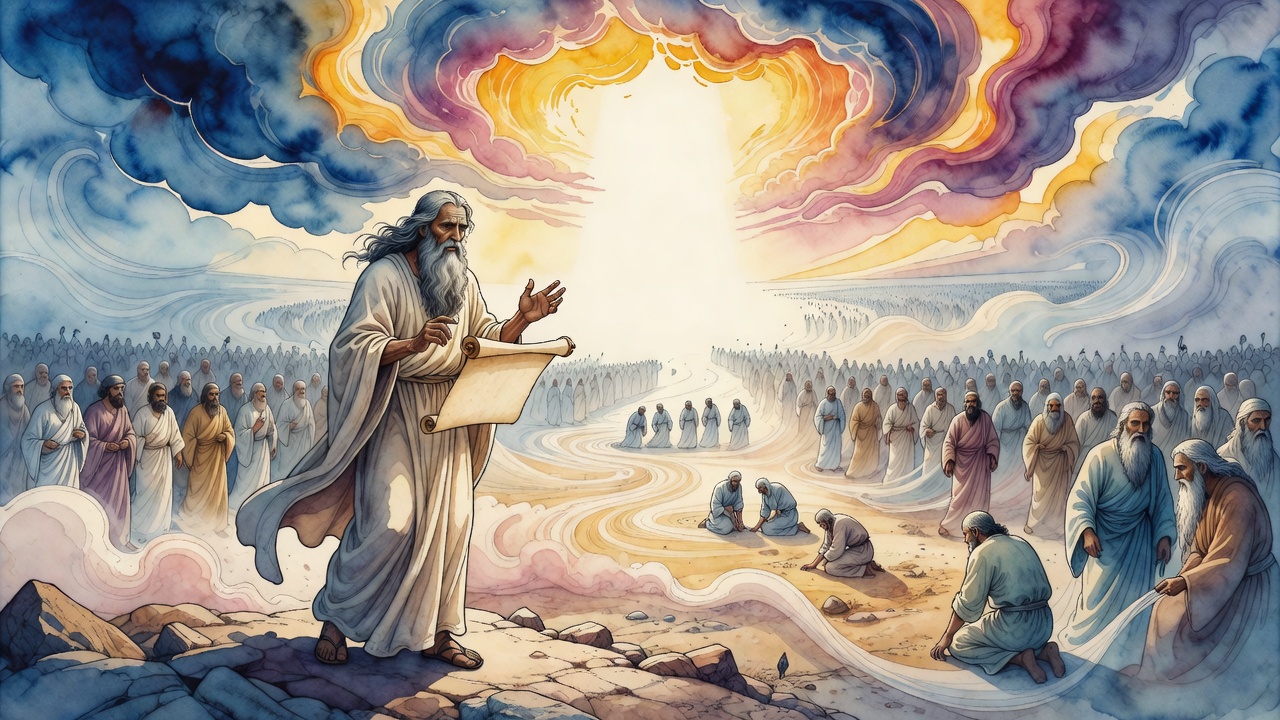
Moses and Aaron walked the tents of Kehat with a tally and came back with a number that did not make sense.

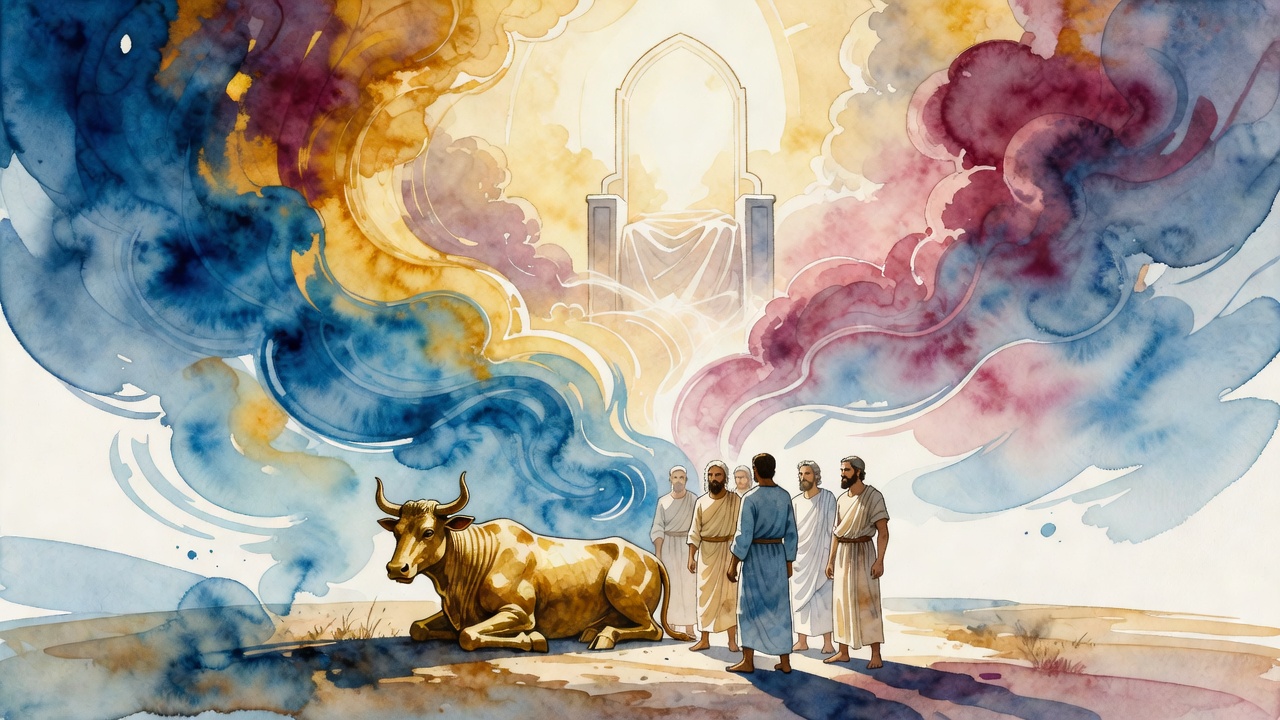
The first count had taken every male from a month old, infants at the breast included, and the sons of Kehat came to eight thousand six hundred. The second count took only the men fit for the work, from thirty years old and up, because thirty is the age of strength. Two thousand seven hundred fifty answered (Numbers 4:35-36). Not a third of those boys had reached the job.

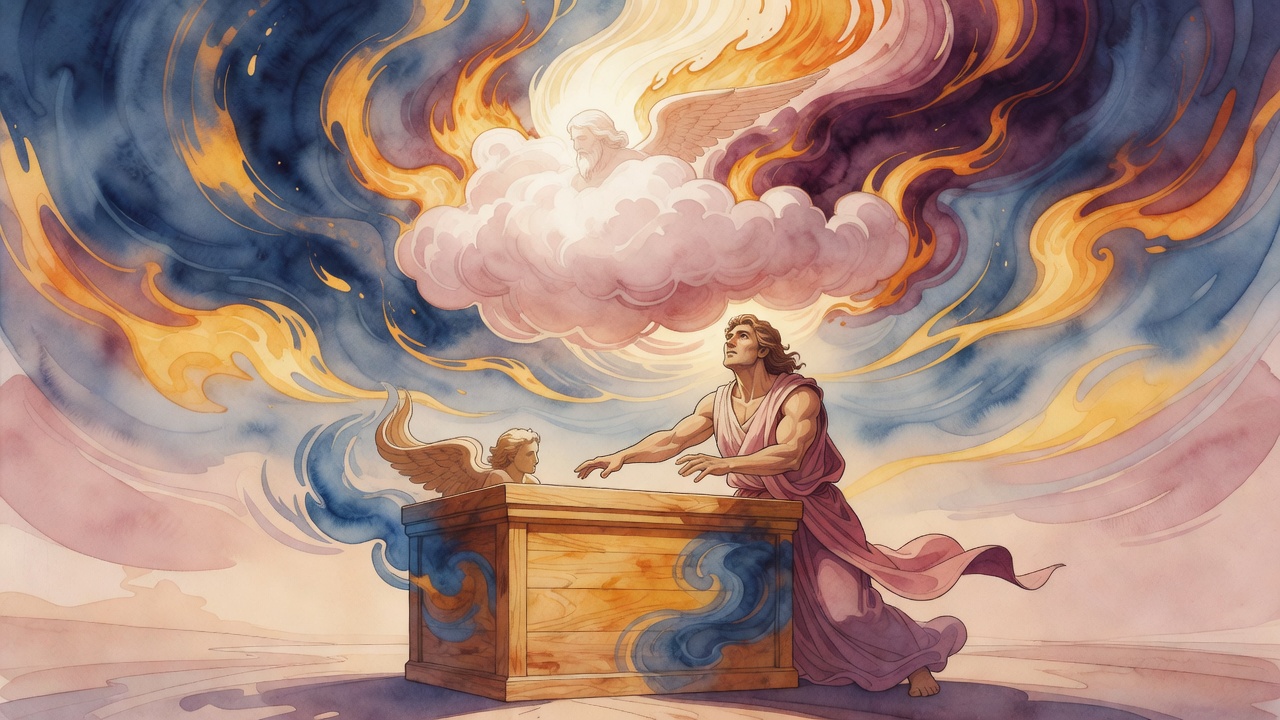
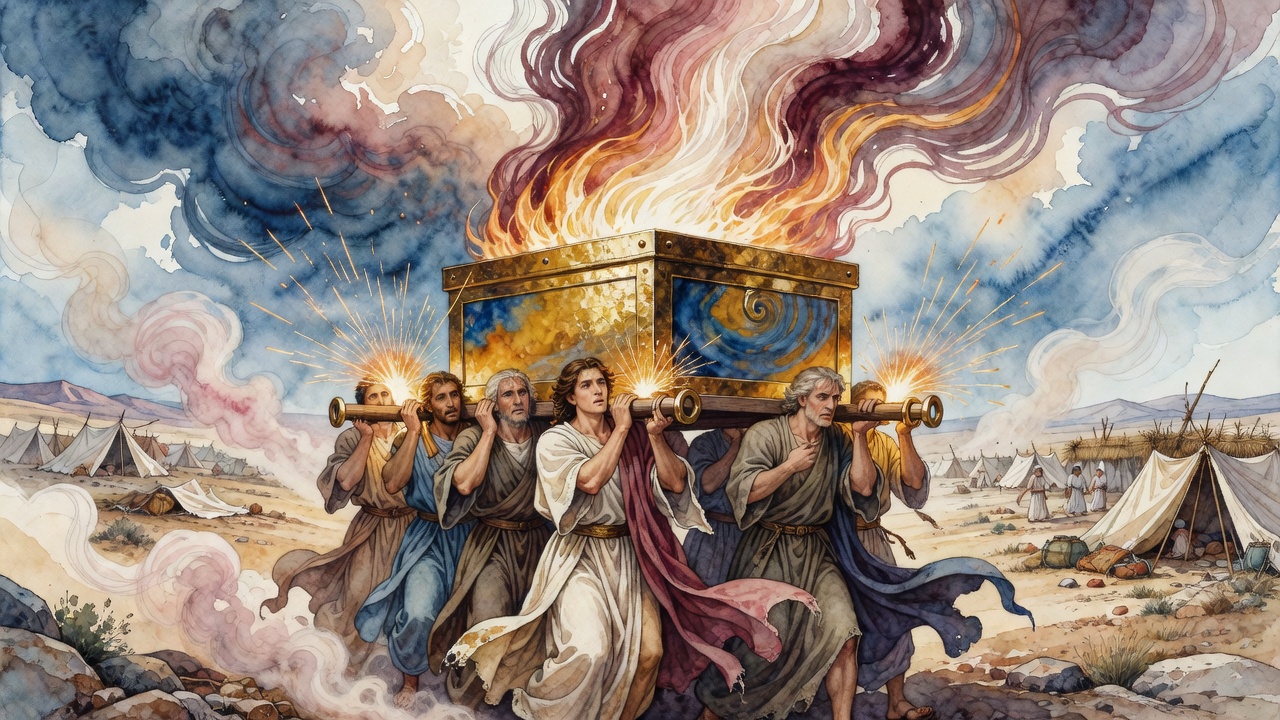
No plague had gone through the clan. No war had touched it. The Ark had thinned them, quietly, one carrier at a time.

Who Could Go Near the Ark and Live

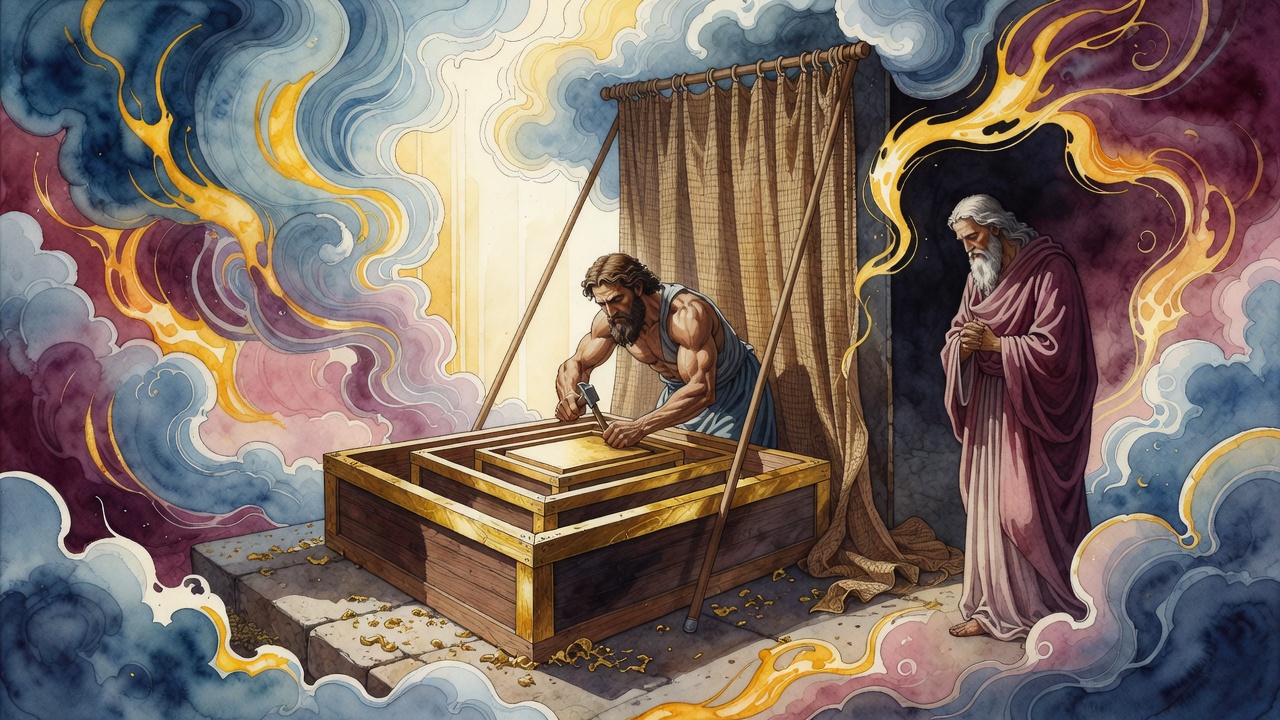
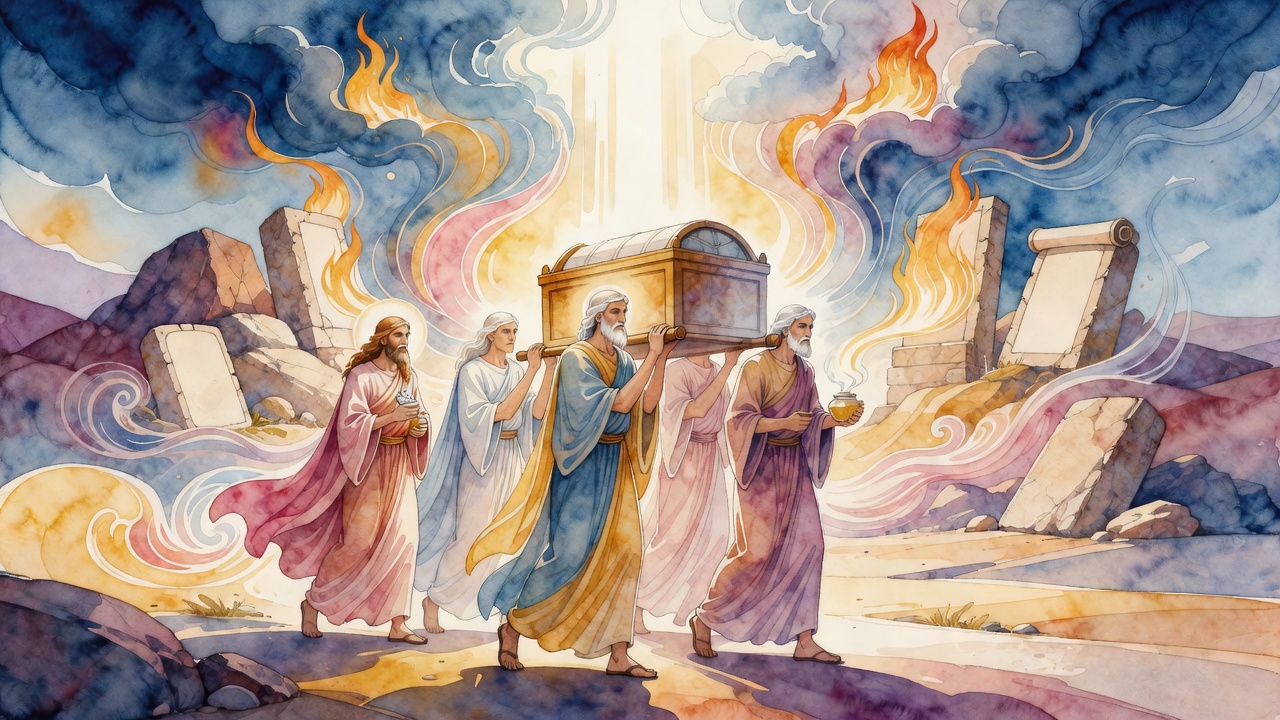
Kehat's families carried the holy things. Not the boards, not the sockets, not the goat-hair curtains, which went to their cousins on wagons. The Ark itself, the table, the lampstand, the altars. Aaron and his sons covered every one of them before a Kehatite was allowed to look, and then the poles went up on shoulders and the clan walked.

The men who did that walking went into the wilderness counted in the thousands, and when the working roll was called, a village answered.

The princes stayed out of this census. Every other tally in the camp had them standing beside the counters; this one ran through Moses and Aaron alone, at the mouth of God, and it was not a civic exercise. It was a list of who could come near the Tent of Meeting and walk home afterward. Fathers in that clan taught their sons to cover a vessel the way other fathers taught a trade, and they spoke less about the honor than about the cousins who were not at the count.

The Wolf Came Into the Flock

Years on, a plague tore through the camp and took twenty-four thousand people, and the first order after the dying stopped was to count.

"Take a census of the whole congregation of the children of Israel, from twenty years old and upward, by their fathers' houses, all who go out to the army" (Numbers 26:2). Every place they fell, they were counted.

A wolf gets into the flock. The owner does not stand at the fence and estimate. He goes down among the bodies and counts what is left, because until he counts he does not know what he has lost. Moses went down among them with Elazar.

The Shepherd Gives the Flock Back by Number

There was a second reason for counting, and it weighed more.

A man hands his flock to a shepherd at the gate and counts them out loud as they pass. When the shepherd's term ends he brings them back and counts them in again, one by one, in front of the owner.

Israel had been handed over by number. Six hundred thousand men on foot went out of Rameses (Exodus 12:37), and before a single one of them moved, God had said, "Take a census of the whole congregation of the children of Israel" (Numbers 1:1-2). Now Moses stood in the plains of Moab with his own death close enough to see, and the receipt had to balance.

He had counted them out of Egypt. He was counting them back in.

The Vestments Came Off on Hor

"Take Aaron and Elazar his son, and bring them up to Mount Hor. Strip Aaron of his garments and dress Elazar his son in them, and Aaron will be gathered and will die there" (Numbers 20:25-26).

God said one more thing before the climb and it had a blade in it. "You will comfort him while he hands his crown to his son. You are not handing yours to yours."

Moses did not argue and did not stall. The three of them went up in front of the whole congregation, in daylight, so that nobody below could later say something had been arranged out of sight. On the summit Moses unfastened his older brother's vestments one at a time, the breastplate, the robe, the turban, the gold plate, and fastened each one onto the nephew standing beside him. Aaron stood there in a plain undergarment, an old man in the wind, watching his son become what he had been. Then he lay down.

Moses and Elazar came down the mountain. The camp below watched the path and counted two.


← All myths
From the tradition

Sources

3 sources

The texts behind this telling. Some cards carry a translation of the source; others are our own retelling of it, and each card says which. Every card links out to the original.

Bamidbar Rabbah 6:7Bamidbar Rabbah

Retold in our words. Read the original at the link below.The Sefaria Midrash Rabbah, 2022 · CC-BY

It seems like a simple detail, but the Rabbis find layers of meaning even in the numbers themselves.

In the Book of Numbers, Bamidbar, we read about the counting of the Levites, specifically the sons of Kehat. (Numbers 4:35) tells us that those counted were "from thirty years old and above." And from this, the Mishnah (the earliest code of rabbinic law) in Avot (5:21) derives a crucial point: thirty years old is the age "for strength."

Bamidbar Rabbah 6 asks a compelling question about the census of the Kehatites. The verse states, "Their counted, by their families, was two thousand seven hundred and fifty" (Numbers 4:36). But why this number?

The Rabbis suggest a poignant explanation. They say that the Ark, with its immense holiness, had a powerful effect on the sons of Kehat. It's said that when they were counted from one month old, their numbers were far greater, eight thousand six hundred! Yet, when counted from thirty years old, less than a third of that number remained. What happened? The text implies that the intense spiritual power associated with the Ark led to the death of many who were not prepared for such a sacred responsibility.

This idea emphasizes the immense reverence and preparation required for those who served in the Mishkan. It wasn't just a job; it was a sacred calling with profound consequences.

Then, Bamidbar Rabbah focuses on (Numbers 4:37): "These are the counted of the Kehatite families, all who served in the Tent of Meeting, whom Moses and Aaron counted according to the directive of the Lord at the hand of Moses."

Notice anything missing? Where are the princes? The text points out that the princes didn’t participate in this particular counting. Why? Because, according to the Rabbis, the princes weren't included in this specific divine command.

The phrase "According to the directive of the Lord at the hand of Moses" is also significant. It highlights the precise and divinely ordained nature of the census. God instructed Moses, who then instructed Aaron. The text emphasizes that they acted exactly as God commanded. As we find in (Numbers 4:1-2), "The Lord spoke to Moses and Aaron saying: Take a census of [the sons of Kehat]." The Rabbis emphasize that Moses relayed these instructions to Aaron, especially because, as the text underlines, Aaron was often excluded from direct communication from God as compared to Moses.

It's more than just a list of names and numbers. It reveals the importance of preparation, the power of holiness, and the precise execution of divine commands.

Full source
Bamidbar Rabbah 21:7Bamidbar Rabbah

Retold in our words. Read the original at the link below.The Sefaria Midrash Rabbah, 2022 · CC-BY

Counting, specifically, the census in the Book of Numbers, Bamidbar in Hebrew.

We find ourselves in Numbers 26, right after a devastating plague. God tells Moses and Elazar, the son of Aaron the priest, to take a census of the people. "Take a census of the entire congregation of the children of Israel, from twenty years old and above, by their patrilineal house, all those fit for military service in Israel" (Numbers 26:2).

Why now? Why, after such a tragedy, is the first order of business to count everyone?

Bamidbar Rabbah, a collection of rabbinic teachings on the Book of Numbers, offers some powerful explanations. It poses the question: “It was, after the plague.… Take a census” – why is it that “every place that they fell, they required a census?" The answer lies in analogy, in stories that help us grasp the bigger picture.

What's the first thing the shepherd does? He checks the damage. He counts the remaining sheep to see who's missing. In this analogy, the plague is the wolf, and the census is the shepherd's grim task of assessing the loss.

But there's another, more comforting way to look at it. The Midrash (rabbinic interpretive commentary), specifically Bamidbar Rabbah, also compares Moses to a shepherd entrusted with a flock.: When Israel left Egypt, God entrusted them to Moses "by number," as it is written in (Numbers 1:1)–2. The children of Israel traveled from Rameses to Sukkot (the Festival of Tabernacles), "some six hundred thousand [men] on foot" (Exodus 12:37). Moses received them in Egypt, each one accounted for.

Now, as Moses is nearing the end of his leadership, about to "take his leave of the world in the plains of Moav," (the land of Moab), he needs to return them, again, by number. It's a matter of responsibility, of fulfilling a sacred trust. He’s saying, “Here’s the flock You gave me, safe and sound, accounted for.”

So, which is it? Is the census a somber accounting of loss, or a triumphant declaration of responsibility fulfilled? Perhaps it's both. Perhaps, in the act of counting, we acknowledge the pain of what's been lost, but also celebrate the resilience of what remains. We recognize that each individual life matters, each one is precious, and each one is part of something larger than themselves.

In what ways are we being counted today? And what story will our numbers tell?

Full source
Bamidbar Rabbah 19:19Bamidbar Rabbah

Retold in our words. Read the original at the link below.The Sefaria Midrash Rabbah, 2022 · CC-BY

Our story centers around the verses in (Numbers 20:25-28): "Take Aaron and Elazar his son, and take them up Hor Mountain… Strip Aaron of his vestments, and dress Elazar his son in them; and Aaron will be gathered, and die there… Moses did as the Lord commanded… Moses stripped Aaron of his vestments and dressed Elazar his son in them, and Aaron died there at the top of the mountain; and Moses and Elazar descended from the mountain."

These verses, so simple The first reading, conceal layers of profound emotion and divine instruction.

Bamidbar Rabbah 19 explores the heart of this poignant moment. The Holy One, blessed be He, says to Moses, regarding Aaron, "You comfort him as he is bequeathing his crown to his sons, while you are not bequeathing [your crown] to your sons." Can you imagine the weight of those words? Moses, tasked with leading his people, yet denied the comfort of passing on his legacy within his own family. It's a striking contrast, highlighting the unique bond between Aaron and Elazar as Aaron prepares to leave this world.

The text emphasizes the phrase “Take Aaron… Strip.” God is telling Moses to comfort Aaron as he bestows his priesthood upon his son, especially since Moses will not be passing on his own leadership role to his sons.

But here's a fascinating detail. According to the Talmud (Zevachim 116b), doing so would warrant forty lashes, because the garments contain both wool and linen, violating the prohibition of shatnez. The camp of the Levites in the desert was considered the equivalent of the Temple Mount for these purposes.

So why was Aaron allowed to wear them up Mount Hor?

The Bamidbar Rabbah offers a beautiful explanation. It tells us that just as the expression "Take Aaron" initiated him into the priesthood (Leviticus 8:2), that same expression authorized his ascent up the mountain in those very vestments. There was a special dispensation in this case allowing Aaron to wear the clothing of the High Priest outside of the Temple Mount. It’s as if the initial divine command created a sacred space around Aaron, allowing him to fulfill his final priestly act.

Finally, and perhaps most powerfully, the text concludes with: “Moses did as the Lord commanded” – to teach you that even though he said to him an evil decree against Aaron, he did not delay. Even knowing Aaron was going to die, and perhaps feeling the sting of not passing on his own leadership, Moses obeyed without hesitation. Despite the personal pain, despite the potential questions swirling in his mind, Moses acted with unwavering faith and obedience. It's evidence of his character, a reminder that even in the face of loss and difficult commands, we are called to fulfill our duties with grace and resolve. What would we do in that situation? Could we act with such unwavering faith?

Full source