Kohathites Walked Backward With the Holy Ark
Gershon was Levi's firstborn, but Kohath's sons were counted first. They had the Ark. Eleazar, chief of the Levites, carried the lamp oil in his own hands.
Table of Contents
 Click for full size
The Clan That Carried What Could Kill
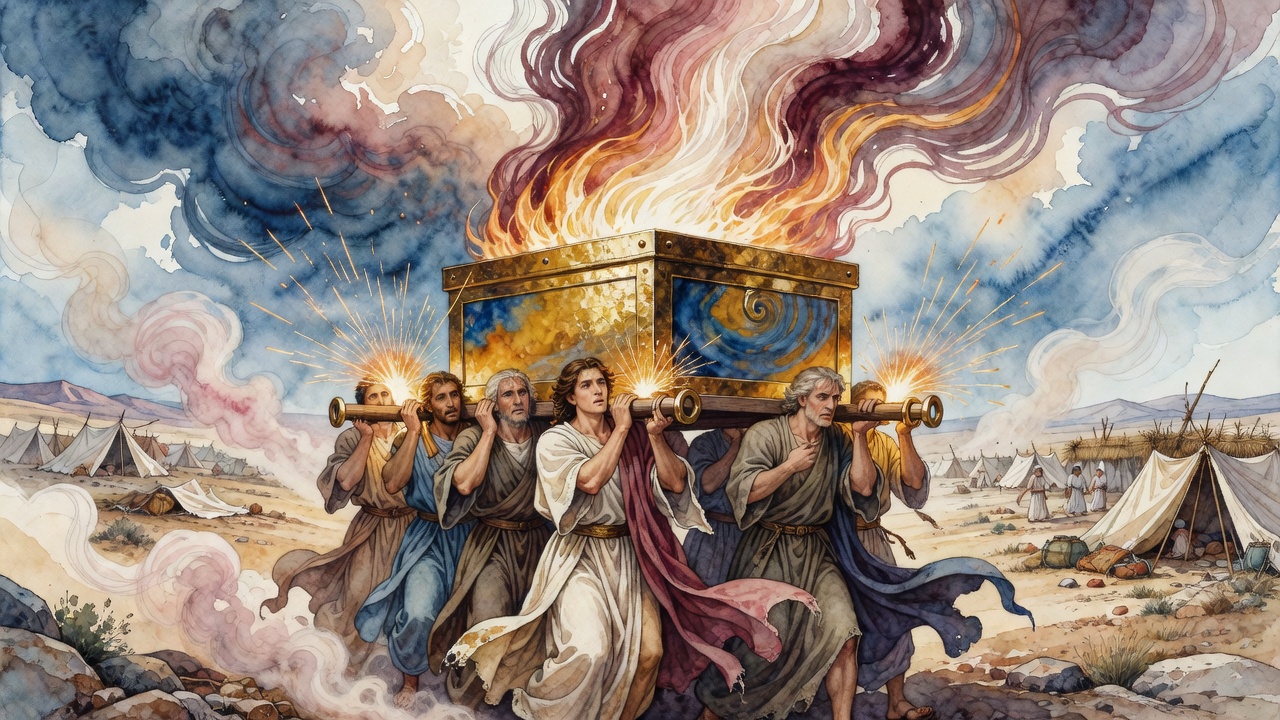
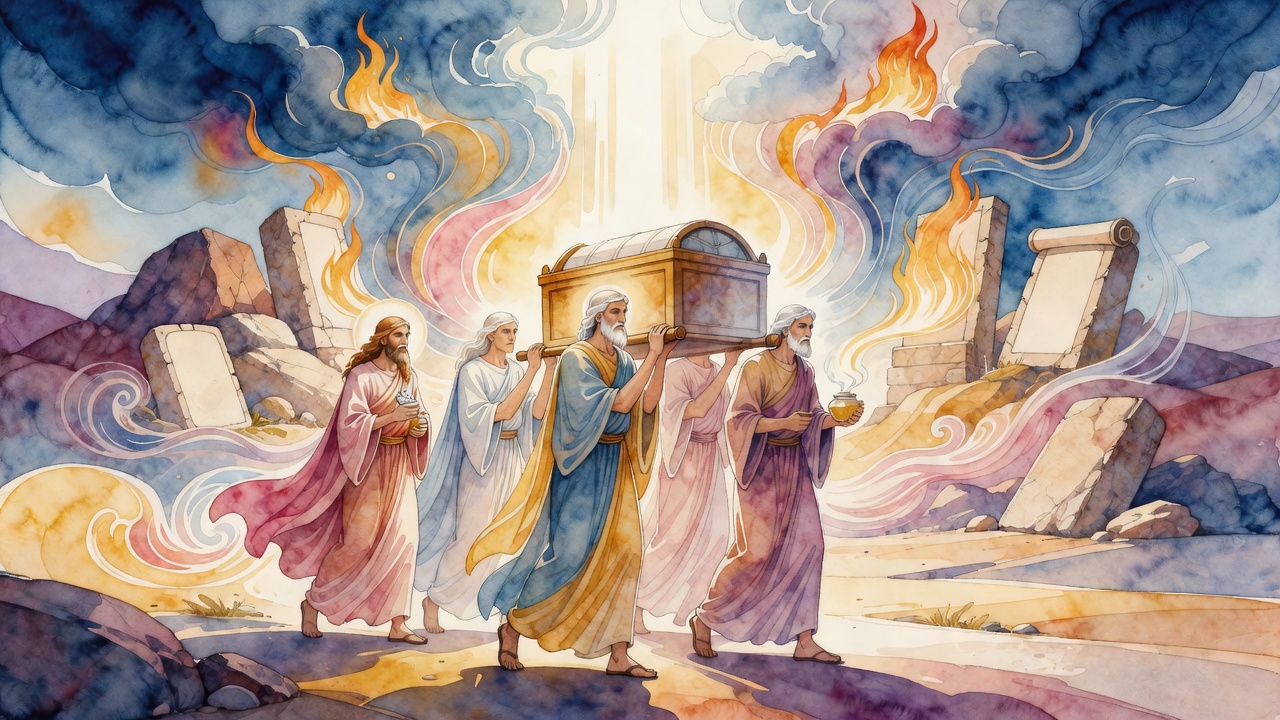
When the camp of Israel broke and moved, the Levites did not travel like other tribes. Their load was the Tabernacle itself, poles and curtains and holy vessels, each family under a charge that was also a danger. Among them the sons of Kohath took the heaviest honor. They carried the Holy Ark. Tradition adds a detail that turns the march into theater of reverence: they walked backward so they would never turn their backs on the Ark. Forward motion, eyes on what they bore. The desert road ran behind them. The Presence stayed in front of their faces.
Rank followed the burden. Though Gershon was Levi's firstborn, the Kohathites were counted first among the Levites, because proximity to the Ark outranked birth order. Sacred weight rewrote genealogy on the census tablets.
Moses, Aaron, and a Census of Care
God told Moses to number the Kohathites with Aaron. When the order for the Gershonites came, Aaron's name was not spoken in the same way. Moses still brought his brother into the work, careful of dignity even when the command was thin. Later, when the sons of Merari were counted, God named Aaron again. The midrash reads a lesson in humility and in how heaven trains a leader who will not slight his partner.
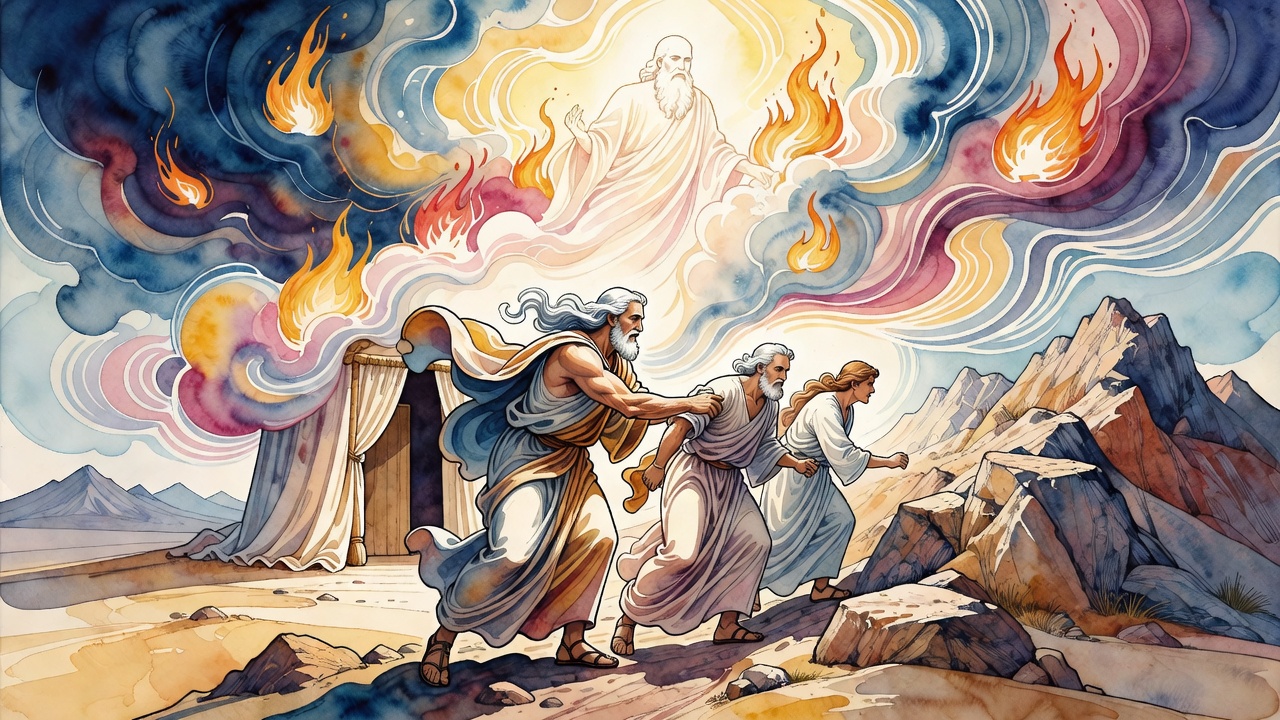
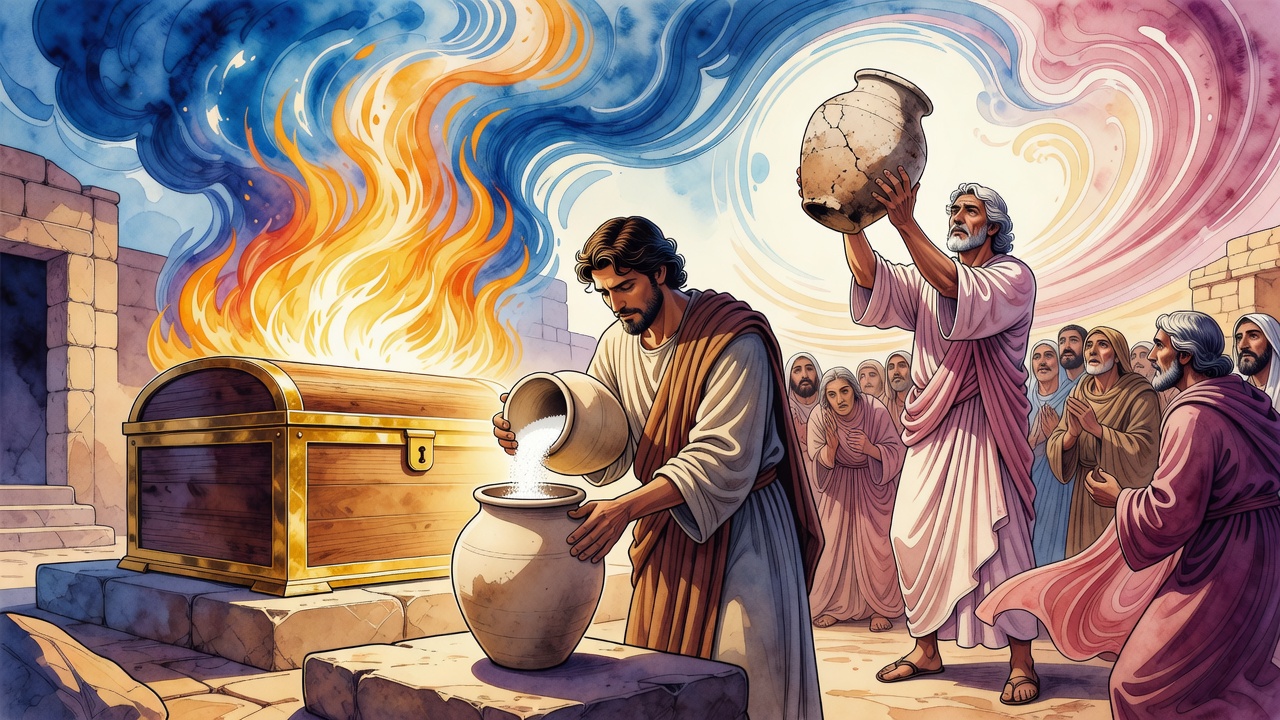
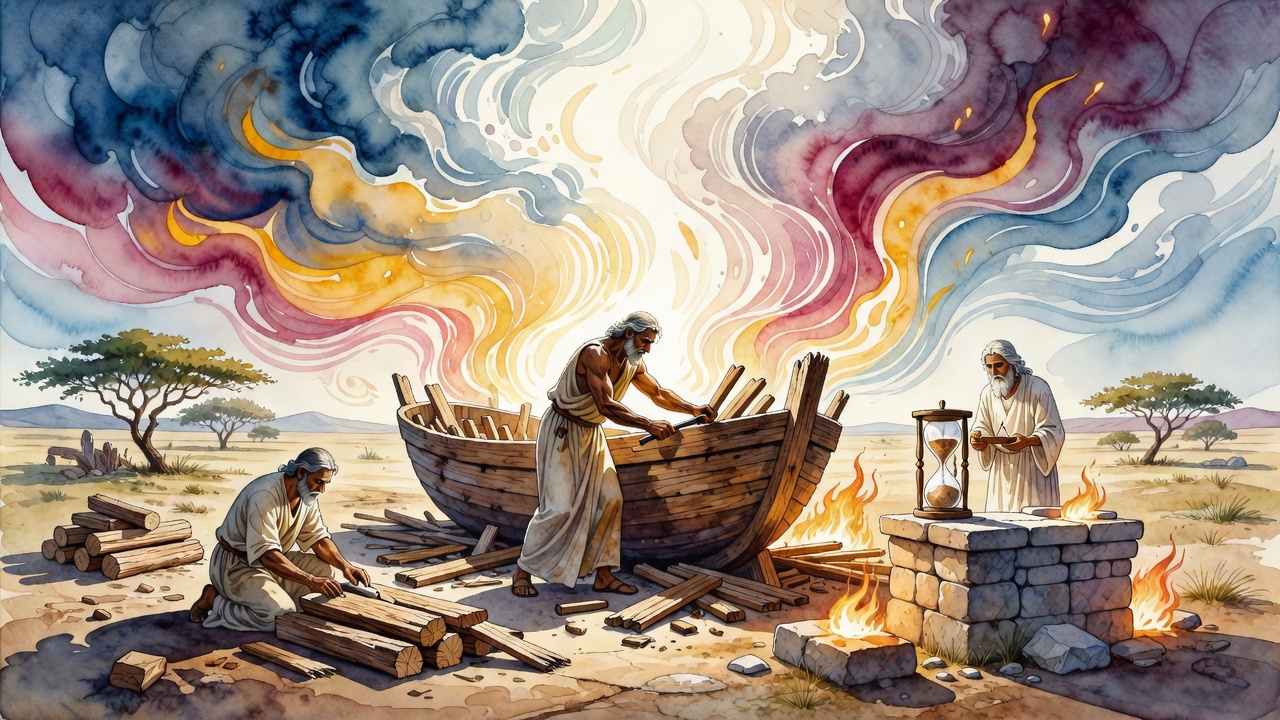
Aaron assigned the Kohathites their individual loads. Moses organized Gershon and Merari. Over all stood Eleazar, chief of the Levites, charged with those who kept the sanctuary. High rank did not empty his hands. He personally carried the oil for the candlestick, the incense, and the anointing oil. Ithamar watched Gershon and Merari. No man crossed into another's labor. A Gershonite did not take a Merarite's poles. Order was part of holiness. Confusion around holy things was not a small fault. It was a path toward death.
Twelve Stones Waiting for Solomon
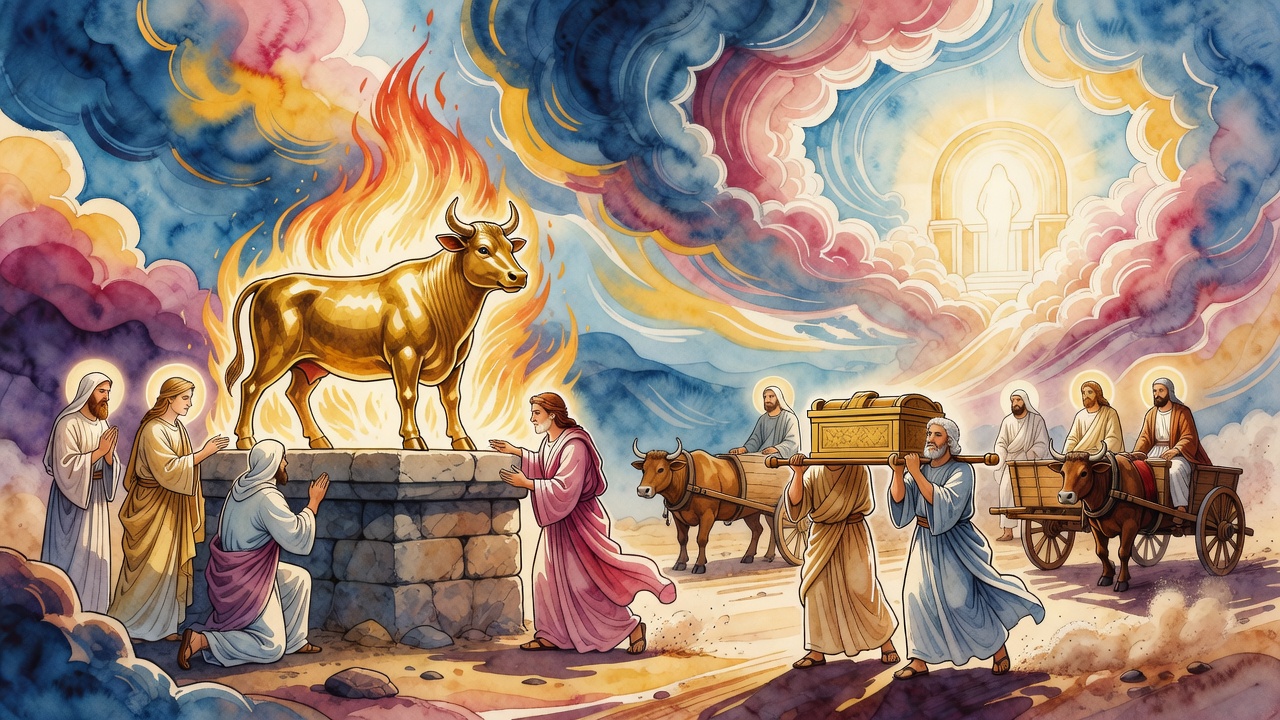
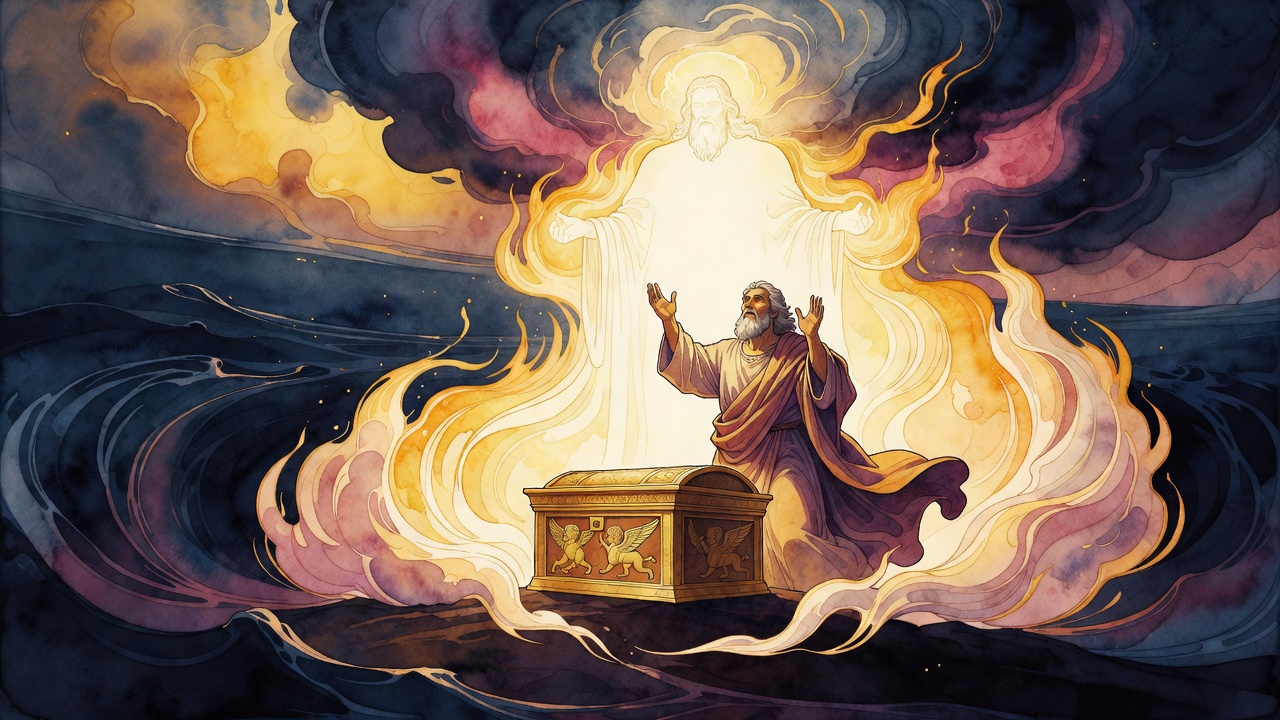
The Ark was not only a box on poles. Legend places another deposit inside its long story. God commanded Kenaz to set twelve stones into the Ark, stones meant to remain until Solomon built the Temple and those stones joined the work of the Cherubim. The desert carriers of Kohath moved through dust with a future already sealed in wood and gold: not only tablets of law, but a hidden architecture of the later House.
Then the voice to Kenaz turned dark and bright at once. When the sin of the children of men would be completed by defiling the Temple they themselves would build, God would take those stones together with the tables of the law and return them to the place from which they were removed of old. There they would remain until the end of time, when God would visit the inhabitants of the earth. Then the stones would rise again as an everlasting light for those who love Him and keep His commandments.
March Discipline as Theology
Set the backward walk beside that prophecy and the desert becomes a school. The Kohathites protect the Ark with their faces. Kenaz's stones wait inside history for a Temple that will one day be defiled and then, beyond defilement, for a light that outlasts every siege. The same tradition that micromanages who carries oil also dares to hide the tablets beyond empire and ruin.
A child watching the column would see only men walking strangely, steps careful, poles on shoulders. The tradition sees a refusal to show the Ark a human back, a refusal to let holy labor become casual. Eleazar's oil-stained hands answer any courtier who thinks rank is only a seat. The chief carries what the sanctuary needs because leadership in this camp is service measured in weight.
What the Carriers Still Teach
So the story of Kohath is not a footnote on logistics. It is drama of nearness. Too near the Ark without order is death. Ordered nearness is the life of the camp. The census that puts Kohath before Gershon says that some firstborn rights yield to the burden of the Presence. The prophecy of hidden stones says that even when a built Temple fails, God keeps a reserve of light that no defiler can finally erase.
Walk between those poles in the mind. Feel the strap cut the shoulder. Keep your face toward what you carry and let the road be the thing you do not watch. That is the Kohathite craft. Far ahead in the legend, Solomon will raise walls. Farther still, stones and tablets will vanish into the place of old until the end. Between first march and last light stand men who never turned their backs on the Ark, and a chief who would not let others carry all the oil alone.
The desert kept that order in names and assignments. Gershon, Kohath, Merari. Eleazar, Ithamar. Poles, boards, vessels, Ark. Each line was a wall against chaos. When the cloud lifted and the trumpets sounded, the first motion of holiness was not speech. It was men taking up weight without turning away from what they bore.
← All myths