6 min read

The Bad Dream Obeyed the Three Who Heard It

A man wakes from a nightmare, tells it to three listeners, and watches their spoken reading bend the night's threat into a road he can walk by day.

Curated by Arthur · Told by Maggid ·
Table of Contents
  1. Thoughts That Wear a Night Face
  2. Three Listeners, One Force
  3. The Dictionary That Sleep Uses
  4. When Morning Took the New Shape

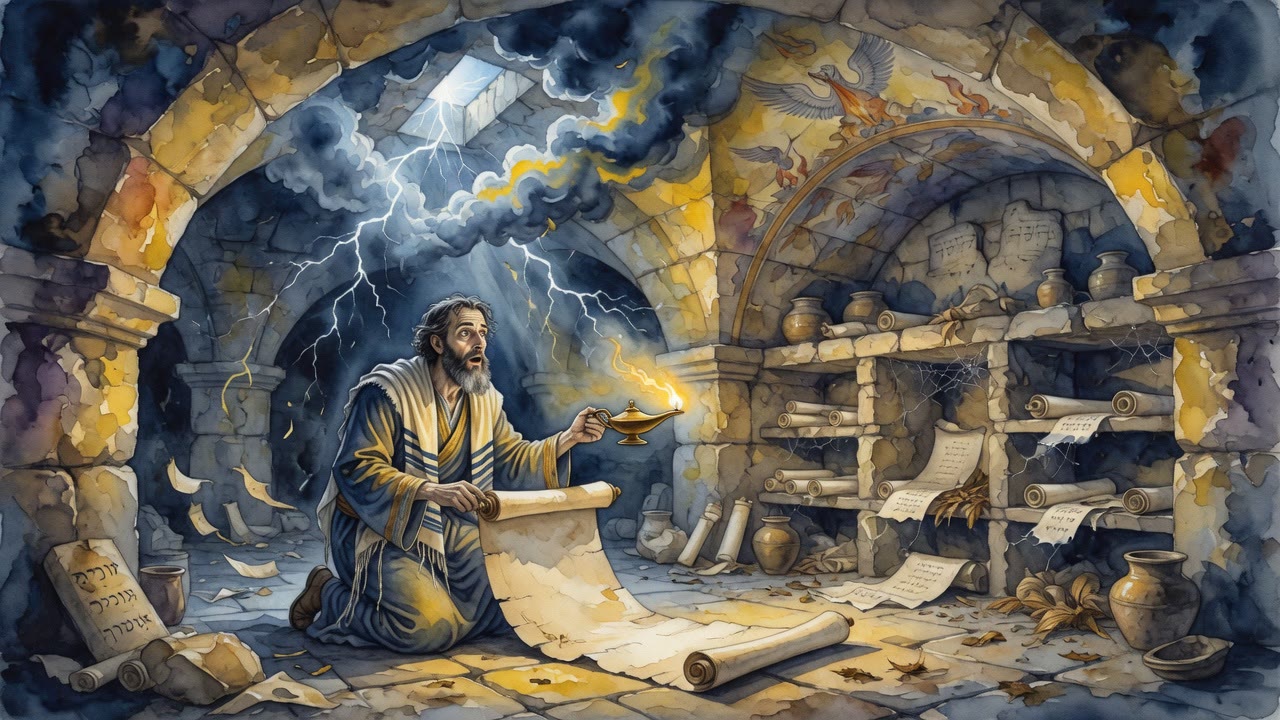
He woke with his shirt stuck to his back and the taste of iron in his mouth. The lamp had burned down to a stub. Outside, a dog walked the alley once and went quiet. In the dream a river had risen through his house, a bird had torn bread from his hand, and a pot had cracked on a cold hearth while someone named Ahab stood in the doorway without speaking.

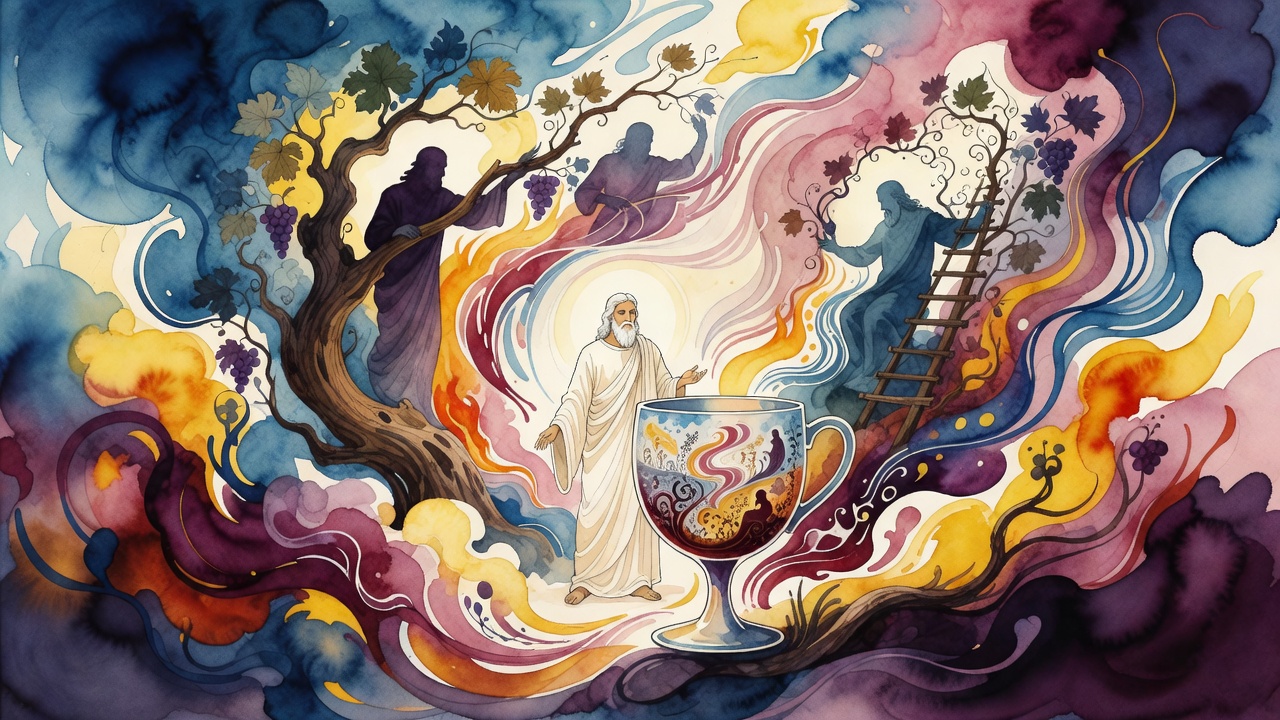
The Bad Dream Obeyed the Three Who Heard It Click for full size

He sat until the shaking left his hands. Bad dreams do not end when the eyes open. They follow a man to the water jar and into the first words he speaks. He needed mouths other than his own before the day hardened the night into fate.

Thoughts That Wear a Night Face

Rabbi Shmuel bar Nahmani taught in the name of Rabbi Yonatan that a person is shown in a dream only the thoughts of his own heart. "For a dream comes through a multitude of business," says Ecclesiastes (Ecclesiastes 5:2). The river was his unpaid debt. The bird was the message he feared. The cracked pot was the household he could not keep warm. The silent Ahab was calamity his mind already named.

Still the sages refuse to call a dream only private weather. Rabbi Yohanan taught that a dream holds one-sixtieth of prophecy. Not a prophet's full load. A trace. Signal in static. The man on the mat could not sort the fractions alone. He wiped his face, tied his belt, and went out before heat filled the street.

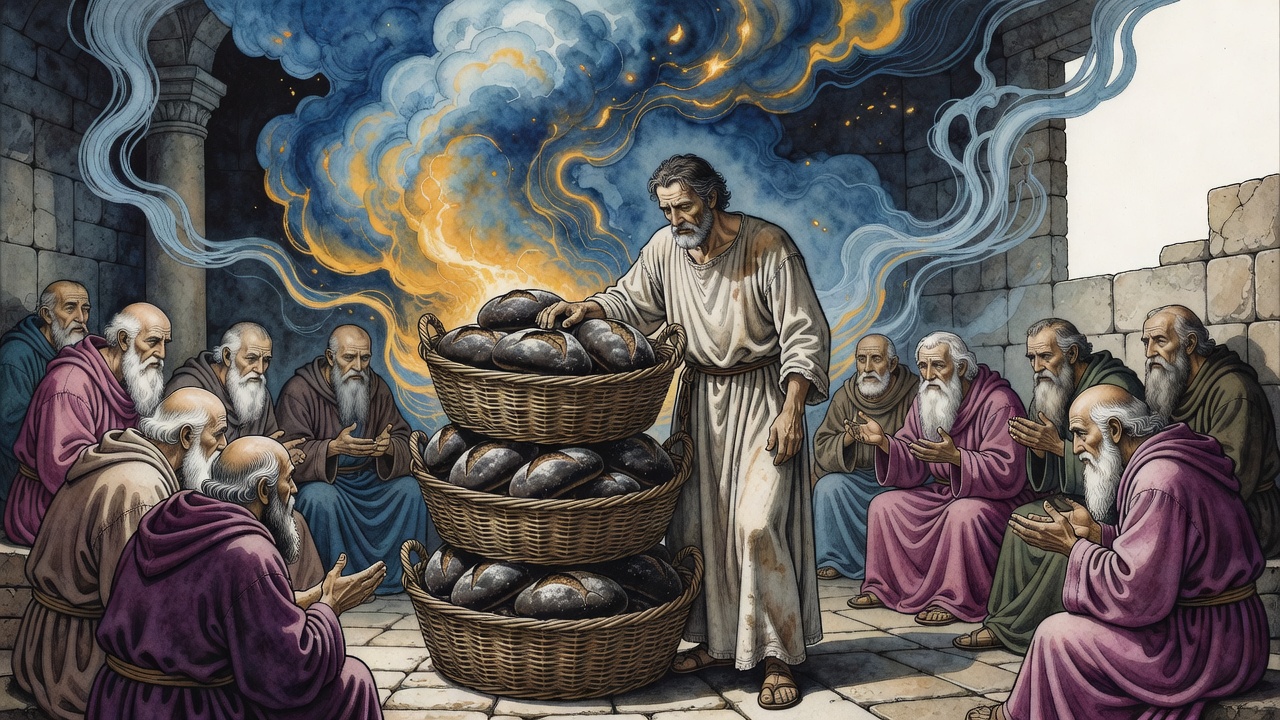
Three men already sat near the study doorway with bread and a shared cup. He stopped in front of them with dust on his ankles and the dream still wet behind his eyes.

Three Listeners, One Force

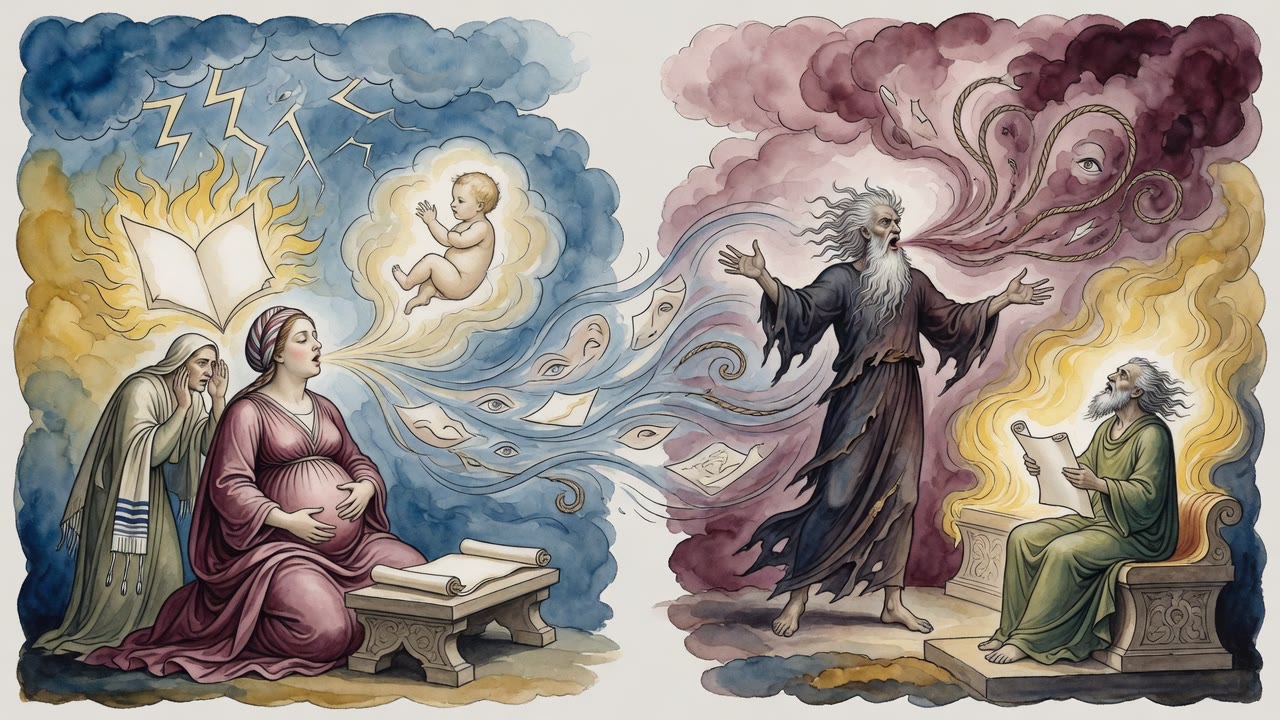
Rav Huna bar Ami said, citing Rabbi Pedat in the name of Rabbi Yohanan: if a dream disturbs you, go and have it interpreted before three people. Not one whisperer in a corner. Three. The number makes a small court. Words spoken in that ring do not merely describe. A dream follows its interpretation. The reading is not a label slapped on finished paint. It is a hand still moving on wet clay.

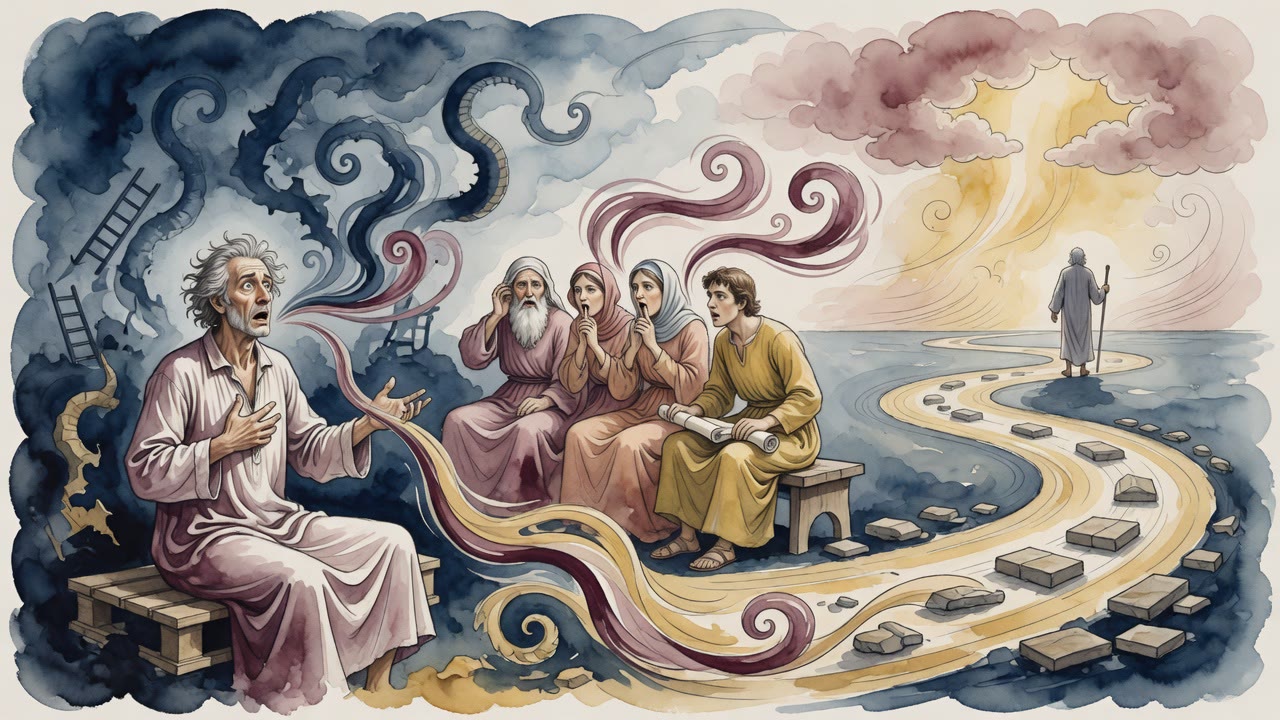
He told them everything. River. Bird. Pot. The name Ahab like a stone in the threshold. He did not pretty it. He did not ask for comfort first. He asked for a reading that would not leave him under the night's weight.

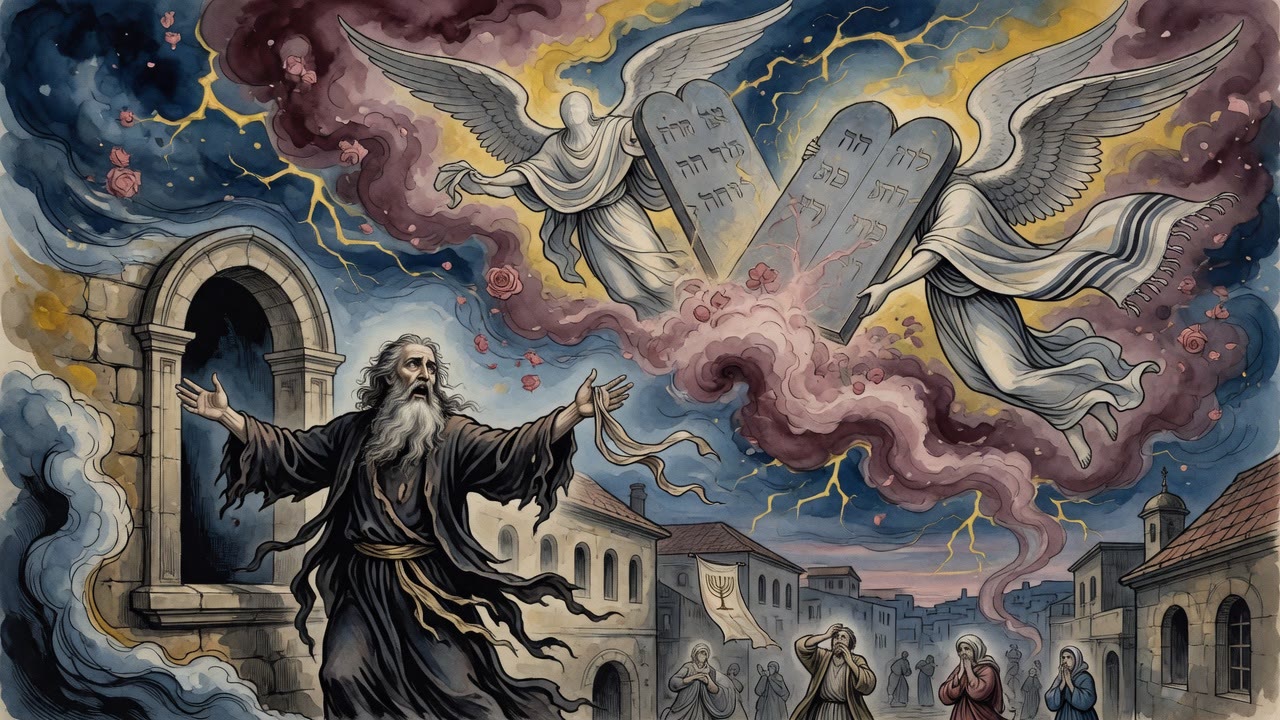
The first man spoke of water as Torah that would rise in his house if he opened the jar of study he had left sealed. The second took the bird as a portion of livelihood that would be torn away only to be replaced from a higher hand. The third refused Ahab as final weather. "You saw a name of calamity," he said. "We read you toward the scroll of Esther, where a name of death becomes a road of miracle. Say it with us."

They spoke the better frame until the man's shoulders dropped. He repeated their words. The second put a crust of bread in his palm and closed the fingers over it. The third would not let him leave until he named Esther as the road out of Ahab's doorway. The alley sounded the same. Somewhere a shutter banged. Inside his chest the dream shifted seat.

The Dictionary That Sleep Uses

Sleep keeps a whole map for nights like his. A saddled elephant is a miracle coming. An unsaddled elephant is trouble. Names with the letter nun lean toward nes, miracle: Huna, Hanina, Hananya, Yohanan. Tefillin (the leather prayer boxes bound to arm and head) in a dream point to greatness, for the peoples of the earth shall see that the name of the Lord is called upon you (Deuteronomy 28:10). Reciting the Shema (Hear O Israel) in sleep marks a soul worthy of the Shechinah (שכינה), the Divine Presence, even when the generation cannot hold that weight in waking air.

Kings arrive with fixed weather. David means piety. Solomon means wisdom. Ahab means calamity. Books arrive the same way. Isaiah consoles. Jeremiah wounds. Job bruises. Esther opens a door for miracle. Even sages walk through sleep as signs: Rabbi Yehuda HaNasi for wisdom, Ben Azzai for piety, Aher for the calamity of a mind that left the path.

The three did not dump the whole map on the shaken man. They took what he brought and bent it. That is the craft. The dictionary serves the living mouth, not the other way around.

When Morning Took the New Shape

He went home and found the water jar full. No river had climbed the step. He broke bread and no bird struck his hand. The pot on the hearth held together over a new fire. None of that proved the interpreters were magicians. It proved that a night told in fear and retold in law does not weigh the same.

By afternoon he opened a scroll he had avoided for months. Debt still waited. Work still waited. The one-sixtieth of prophecy, if it had been there at all, now sat inside words three men had chosen in daylight. God told Moses that a prophet may be known in vision and spoken to in a dream (Numbers 12:6). Most sleepers are not prophets. Most sleepers still walk under a sky that lets speech matter.

That evening he lay down without pretending courage. He set the water jar where he could see it from the mat. The dog walked the alley again. He slept. If a verse rose in his mouth at first light, Rabbi Yohanan would have called it a minor prophecy. What rose instead was simpler. He remembered the three voices and the way the name Ahab had been refused a final vote over his house.

He rose, washed, and broke the same bread the second listener had taught his hand to hold. Debt still waited. A creditor would still knock. None of that returned the night's full terror to the room. The dream had come from his heart's business. The dream had also come to a door where interpretation still works like a hinge. He opened the street door and faced the day the three had helped him name.


← All myths

From the tradition

Sources

3 sources

The texts behind this telling. Some cards carry a translation of the source; others are our own retelling of it, and each card says which. Every card links out to the original.

Berakhot 55aTalmud Bavli, Berakhot

Translation of the source text.William Davidson Edition - Vocalized Aramaic + William Davidson Edition - English · CC-BY-NC

Anyone who prolongs his prayer and expects it to be answered, will ultimately come to heartache, as it is stated: “Hope deferred makes the heart sick” (Proverbs 13:12). Similarly, Rabbi Yitzḥak said: Three matters evoke a person’s sins, and they are: Endangering oneself by sitting or standing next to an inclined wall that is about to collapse, expecting prayer to be accepted, as that leads to an assessment of his status and merit, and passing a case against another to Heaven, as praying for Heaven to pass judgment on another person causes one’s own deeds to be examined and compared with the deeds of that other person.

This proves that prolonging prayer is a fault. The Gemara resolves the apparent contradiction: This is not difficult. This, where we learned that prolonging prayer is undesirable, refers to a situation when one expects his prayer to be accepted, while this, where Rav Yehuda says that prolonging prayer prolongs one’s life, refers to a situation where one does not expect his prayer to be accepted. How does he prolong his prayer?

By increasing his supplication. As for the virtue of prolonging one’s mealtime at the table, which Rav Yehuda mentioned, the Gemara explains: Perhaps a poor person will come during the meal and the host will be in a position to give him food immediately, without forcing the poor person to wait. The Sages elsewhere praised a person who acts appropriately at a meal, as it is written: “The altar, three cubits high and the length thereof, two cubits, was of wood, and so the corners thereof; the length thereof, and the walls thereof, were also of wood” (Ezekiel 41:22), and it is written in the continuation of that verse: “And he said unto me: This is the table that is before the Lord.”

The language of this verse is difficult, as it begins with the altar and concludes with the table. Rather, Rabbi Yoḥanan and Rabbi Elazar both say: As long as the Temple stood, the altar atoned for Israel’s transgressions. Now that it is destroyed, a person’s table atones for his transgressions. With regard to what Rav Yehuda said in praise of one who prolongs his time in the bathroom, the Gemara asks: Is that a virtue?

Wasn’t it taught in a baraita: Ten things bring a person to suffer from hemorrhoids: One who eats the leaves of bulrushes, grape leaves, tendrils of grapevines, the palate and tongue of an animal, as well as any other part of the animal which is not smooth and which has protrusions, the spine of a fish, a salty fish that is not fully cooked, and one who drinks wine dregs, and one who wipes himself with lime and clay, the materials from which earthenware is made, and one who wipes himself with a stone with which another person wiped himself.

And some say: One who suspends himself too much in the bathroom as well. This proves that prolonging one’s time in the bathroom is harmful. The Gemara responds: This is not difficult. This baraita, which teaches that doing so is harmful, refers to where one prolongs his time there and suspends himself, while this statement of Rav Yehuda refers to where one prolongs his time there and does not suspend himself.

The Gemara relates the benefits of prolonging one’s time in the bathroom. Like that incident when a matron [matronita] said to Rabbi Yehuda son of Rabbi El’ai: Your face is fat and full, like the faces of pig farmers and usurers who do not work hard and who make a plentiful living. He said to her: Honestly, those two occupations are prohibited to me; rather, why is it that my face is nice? Because there are twenty-four bathrooms between my lodging and the study hall, and when I walk I stop and examine myself in all of them.

And Rav Yehuda said: Three things curtail a person’s days and years: One who is invited and given the Torah scroll to read and he does not read, one who is given a cup of blessing over which to recite a blessing and he does not recite a blessing, and one who conducts himself with an air of superiority. The Gemara details the biblical sources for these cases: One who is given the Torah scroll to read and he does not read, as it is written of the Torah: “It is your life and the length of your days” (Deuteronomy 30:20).

A cup of blessing over which to recite a blessing and he does not recite a blessing, as it is written: “I will bless them that bless you” (Genesis 12:3); one who blesses is blessed and one who does not bless does not merit a blessing. And with regard to one who conducts himself with an air of superiority, as Rabbi Ḥama, son of Rabbi Ḥanina, said: Why did Joseph die before his brothers, as evidenced by the order in the verse: “And Joseph died, and all his brethren, and all that generation” (Exodus 1:6)?

Because he conducted himself with an air of superiority, and those who did not serve in a leadership role lived on after he died. Rav Yehuda said in the name of Rav: Three matters require a plea for mercy to bring them about: A good king, a good year, and a good dream. These three, kings, years, and dreams, are all bestowed by God and one must pray that they should be positive and constructive. The Gemara enumerates the sources for these cases: A good king, as it is written: “The king’s heart is in the hand of the Lord as the watercourses: He turns it whithersoever He will” (Proverbs 21:1).

A good year, as it is written: “The eyes of the Lord, thy God, are always upon it, from the beginning of the year even unto the end of the year” (Deuteronomy 11:12). And a good dream, as it is written: “O Lord, by these things men live, and altogether therein is the life of my spirit; wherefore You will recover me [vataḥlimeni], and make me to live” (Isaiah 38:16). Due to their apparent etymological similarity, the word taḥlimeni is interpreted as deriving from the word ḥalom, dream.

Similarly, Rabbi Yoḥanan said: Three matters are proclaimed by the Holy One, Blessed be He, Himself: Famine, plenty, and a good leader. The Gemara enumerates the sources for these cases: Famine, as it is written: “For the Lord has called for a famine; and it shall also come upon the land seven years” (II Kings 8:1). Plenty, as it is written: “And I will call for the grain, and will increase it, and lay no famine upon you” (Ezekiel 36:29).

And a good leader, as it is written: “And the Lord spoke unto Moses, saying: See, I have called by name Bezalel, son of Uri, son of Hur, of the tribe of Judah” (Exodus 31:1–2). With regard to Bezalel’s appointment, Rabbi Yitzḥak said: One may only appoint a leader over a community if he consults with the community and they agree to the appointment, as it is stated: “And Moses said unto the children of Israel: See, the Lord has called by name Bezalel, son of Uri, son of Hur, of the tribe of Judah” (Exodus 35:30).

The Lord said to Moses: Moses, is Bezalel a suitable appointment in your eyes? Moses said to Him: Master of the universe, if he is a suitable appointment in Your eyes, then all the more so in my eyes. The Holy One, Blessed be He, said to him: Nevertheless, go and tell Israel and ask their opinion. Moses went and said to Israel: Is Bezalel suitable in your eyes?

They said to him: If he is suitable in the eyes of the Holy One, Blessed be He, and in your eyes, all the more so he is suitable in our eyes. Rabbi Shmuel bar Naḥmani said that Rabbi Yonatan said: Bezalel was called by that name on account of his wisdom. When the Holy One, Blessed be He, said to Moses: Go say to Bezalel, “Make a tabernacle, an ark, and vessels” (see Exodus 31:7–11), Moses went and reversed the order and told Bezalel: “Make an ark, and vessels, and a tabernacle” (see Exodus 25–26).

He said to Moses: Moses, our teacher, the standard practice throughout the world is that a person builds a house and only afterward places the vessels in the house, and you say to me: Make an ark, and vessels, and a tabernacle. If I do so in the order you have commanded, the vessels that I make, where shall I put them? Perhaps God told you the following: “Make a tabernacle, ark, and vessels” (see Exodus 36).

Moses said to Bezalel: Perhaps you were in God’s shadow [betzel El], and you knew precisely what He said. You intuited God’s commands just as He stated them, as if you were there. Rav Yehuda said that Rav said: Bezalel knew how to join the letters with which heaven and earth were created. From where do we derive this?

It is written here in praise of Bezalel: “And I have filled him with the spirit of God, in wisdom, and in understanding, and in knowledge, and in all manner of workmanship” (Exodus 31:3); and it is written there with regard to creation of heaven and earth: “The Lord, by wisdom, founded the earth; by understanding He established the heavens” (Proverbs 3:19), and it is written: “By His knowledge the depths were broken up and the skies drop down the dew” (Proverbs 3:20).

We see that wisdom, understanding, and knowledge, the qualities with which the heavens and earth were created, are all found in Bezalel. On a similar note, Rabbi Yoḥanan said: The Holy One, Blessed be He, only grants wisdom to one who already possesses wisdom, as it is stated: “He gives wisdom unto the wise, and knowledge to they who know understanding” (Daniel 2:21). Rav Taḥalifa, from the West, Eretz Yisrael, heard this and repeated it before Rabbi Abbahu.

Rabbi Abbahu said to him: You learned proof for this idea from there; we learn it from here: As it is written in praise of the builders of the Tabernacle: “And in the hearts of all who are wise-hearted I have placed wisdom” (Exodus 31:6). Related to what was stated above, that one should pray for a good dream, the Gemara cites additional maxims concerning dreams and their interpretation. Rav Ḥisda said: One should see any dream, and not a fast.

In other words, any dream is preferable to a dream during a fast. And Rav Ḥisda said: A dream not interpreted is like a letter not read. As long as it is not interpreted it cannot be fulfilled; the interpretation of a dream creates its meaning. And Rav Ḥisda said: A good dream is not entirely fulfilled and a bad dream is not entirely fulfilled.

And Rav Ḥisda said: A bad dream is preferable to a good dream, as a bad dream causes one to feel remorse and to repent. And Rav Ḥisda said: A bad dream, his sadness is enough for him; a good dream, his joy is enough for him. This means that the sadness or joy engendered by the dream renders the actual fulfillment of the dream superfluous. Similarly, Rav Yosef said: Even for me, the joy of a good dream negates it.

Even Rav Yosef, who was blind and ill, derived such pleasure from a good dream that it was never actually realized. And Rav Ḥisda said: A bad dream is worse than lashes, as it is stated: “God has so made it, that men should fear before Him” (Ecclesiastes 3:14), and Rabba bar bar Ḥana said that Rabbi Yoḥanan said: That is a bad dream that causes man to fear. With regard to the verse: “The prophet that has a dream, let him tell a dream; and he that has My word, let him speak My word faithfully.

What has the straw to do with the grain? says the Lord” (Jeremiah 23:28), the Gemara asks: What do straw and grain have to do with a dream? Rather, Rabbi Yoḥanan said in the name of Rabbi Shimon bar Yoḥai: Just as it is impossible for the grain to grow without straw, so too it is impossible to dream without idle matters. Even a dream that will be fulfilled in the future contains some element of nonsense.

On a similar note, Rabbi Berekhya said: Even though part of a dream is fulfilled, all of it is not fulfilled. From where do we derive this? From the story of Joseph’s dream, as it is written: “And he said: Behold, I have dreamed yet a dream: and, behold, the sun and the moon

Full source
Berakhot 57aTalmud Bavli, Berakhot

Translation of the source text.William Davidson Edition - Vocalized Aramaic + William Davidson Edition - English · CC-BY-NC

This opinion, that seeing an elephant is a good omen, refers to a case where one saw it saddled, while this opinion, that it is a bad omen, refers to a case where the elephant is not saddled. One who sees a man named Huna in a dream, it is a sign that a miracle will be performed for him, because the letter nun in the name Huna represents the word nes, miracle. One who sees a man named Ḥanina, Ḥananya, or Yoḥanan, it is a sign that many miracles will be performed for him, since the letter nun appears twice in those names.

One who sees a eulogy in a dream, it is a sign that the heavens had mercy upon him, and spared him from a divine death sentence and there will be no need to eulogize him in reality. The Gemara restricts this statement and says that this only applies if he saw the eulogy written and not yet delivered. One who answers in a dream: May His great name be blessed from kaddish is assured that he is one who has a place in the World-to-Come.

One who sees himself reciting Shema in a dream is worthy of having the Divine Presence rest upon him, but his generation is unworthy, and, therefore, the Divine Presence does not actually rest upon him. One who sees himself don phylacteries in a dream should anticipate greatness, as it is stated: “And all the peoples of the earth shall see that the name of the Lord is called upon you; and they shall be afraid of you” (Deuteronomy 28:10).

And it was taught in a baraita that Rabbi Eliezer the Great says: That the Name of the Lord is called upon you, refers to phylacteries of the head, as they represent God’s name upon man. One who sees himself pray in a dream, it is an auspicious omen. However, the Gemara adds a caveat and says: This only applies in a case where he saw in the dream that he had not yet finished his prayer and is therefore still close to God.

If, in the dream, he had already finished his prayer, it is not an omen. One who sees that he had relations with his mother [em] in a dream, he should anticipate attaining understanding, as it is stated: “Yea if [im] you call for understanding” (Proverbs 2:3), and in this homiletic interpretation im is considered to be the equivalent of em. One who sees that he had relations with a betrothed young woman in a dream, he should anticipate Torah, as it is stated: “Moses commanded us Torah, an inheritance [morasha] of the congregation of Jacob” (Deuteronomy 33:4).

Do not read it as morasha; rather, read it as me’orasa, betrothed. One who sees that he had relations with his sister in a dream, should anticipate wisdom, as it is stated: “Say unto wisdom: You are my sister” (Proverbs 7:4). One who sees that he had relations with a married woman in a dream is assured that he is one who has a place in the World-to-Come. He receives his place as well as that of another person in the Garden of Eden, as the married woman represents a portion belonging to someone else.

However, the Gemara adds a caveat and says: This only applies in a case where he did not know her and was not thinking about her that evening; rather, he saw an unidentified woman in his dream by chance. Rabbi Ḥiyya bar Abba said: One who sees wheat in a dream has seen peace, as it is stated: “He makes your borders peace; He gives you in plenty the fat of wheat” (Psalms 147:14). And one who sees barley [se’orim] in a dream has received a sign that his iniquities are taken away, as it is stated: “And your iniquity is taken away [vesar avonekh], and your sin expiated” (Isaiah 6:7); se’orim is an acronym for sar avon.

Rabbi Zeira said: I did not ascend from Babylonia to Eretz Yisrael until I saw barley in my dream. One who sees a vine laden with grapes in a dream, it is an omen that his wife will not miscarry, as it is stated: “Your wife shall be as a fruitful vine, in the innermost parts of your house” (Psalms 128:3). One who sees a planted vine branch in a dream should anticipate the Messiah, as it is stated: “Binding his foal unto the vine and his donkey’s colt unto the vine branch” (Genesis 49:11).

One who sees a fig tree in a dream, it is a sign that his Torah is preserved within him, as it is stated: “One who keeps the fig tree shall eat the fruit thereof” (Proverbs 27:18). One who sees pomegranates in a dream, if they were small, his business will flourish like the seeds of the pomegranate, which are numerous; and if they were large, his business will increase like a pomegranate. One who saw slices of pomegranates in his dream, if he is a Torah scholar, he should anticipate Torah, as it is stated: “I would cause you to drink of spiced wine, of the juice of my pomegranate” (Song of Songs 8:2), which is traditionally understood as an allusion to Torah.

And if the dreamer is an ignoramus, he should anticipate mitzvot, as it is stated: “Your temples are like a split pomegranate” (Song of Songs 4:3). As the Gemara previously interpreted homiletically: What is the meaning of the word “Your temples [rakatekh]”? Even the most ignorant [reikanin] among you, Israel, are full of mitzvot like a pomegranate. One who sees olives in a dream, and they were small, it is a sign that his business will flourish, increase and be durable like olives.

However, the Gemara adds a caveat, saying that this applies only when he sees the fruit of an olive tree; but, one who sees olive trees, it is a sign that he will have many children, as it is stated: “Your children like olive plants, round about your table” (Psalms 128:3). Some say that one who sees an olive tree in a dream, it is a sign that a good reputation will spread for him, as it is stated: “The Lord called your name a leafy olive tree, fair with goodly fruit” (Jeremiah 11:16).

One who sees olive oil in a dream should anticipate the light of Torah, as it is stated: “That they bring unto you pure olive oil beaten for the light” (Exodus 27:20). One who sees palm trees [temarim] in a dream has seen a sign that his transgressions have ceased, as it is stated: “Your iniquity is finished, O daughter of Zion” (Lamentations 4:22), as the Gemara likens temara, date, to tam ra, evil has ceased.

Rav Yosef says: One who sees a goat in a dream, it is a sign that his year will be blessed; one who sees goats, his years will be blessed, as it is stated: “And there will be goats’ milk enough for your food, for the food of your household; and sustenance for your maidens” (Proverbs 27:27). One who sees myrtle in a dream, it is a sign that his property will be successful. And if he does not own property, it is a sign that he will receive an inheritance.

Ulla said, and some say it was taught in a baraita: This applies exclusively to a case where he saw them on their stem. One who sees a citron [etrog] in a dream has seen a sign that he is honored [hadur] before his Creator, as it is stated with regard to the citron: “The fruit of goodly trees [hadar], branches of palm trees” (Leviticus 23:40). One who sees a palm branch [lulav] in a dream, it is a sign that he has but one heart for his Father in heaven.

Lulav is interpreted homiletically as lo lev, he has a heart. One who sees a goose in a dream should anticipate wisdom, as it is stated: “Wisdoms cry aloud in the streets, she utters her voice in the broad places” (Proverbs 1:20); geese tend to sound their voices. One who dreams that he has relations with the goose will become head of the yeshiva. Rav Ashi said: I saw a goose and had relations with it in my dream and I ascended to greatness and became head of the yeshiva.

One who sees a rooster in a dream should anticipate a male child. One who sees multiple roosters should expect male children. One who sees a hen [tarnegolet] should anticipate a beautiful garden and reason to rejoice [tarbitza na’a vegila], as tarnegolet is interpreted as an acronym for tarbitza na’a vegila. One who sees eggs in a dream, it is a sign that his request is pending, as egg in Aramaic is beya, which is similar to the term for request.

If one saw that the eggs broke, it is a sign that his request has already been granted, as that which was hidden inside the shell was revealed. The same is true of nuts, and the same is true of cucumbers, and the same is true of all glass vessels, and the same is true of anything similarly fragile that broke in his dream, it is a sign that his request was granted. One who dreams that he entered a city, it is a sign that his desires will be fulfilled, as it is stated: “And He led them unto their desired haven” (Psalms 107:30).

One who shaves his head in a dream, it is a good omen for him, as the removal of undesired hairs is a sign of renewal and greatness. If he shaved his head and his beard in a dream, it is a good omen for him and his entire family. One who sits in a small boat in a dream, it is a sign that a good reputation will spread for him. If he sees himself sitting in a large boat in a dream, a good reputation will spread for him and his entire family.

The Gemara notes that this only applies where the boat was floating high on the waves. One who defecates in a dream, it is a good omen for him, as it is stated: “He that is bent down shall speedily be loosed; and he shall not go down dying into the pit, neither shall his bread fail” (Isaiah 51:14). The Gemara notes that this only applies where he does not wipe and get his hands dirty. One who climbs up to the roof in a dream, it is a sign that he will ascend to greatness.

If, after he climbed up, he climbed back down, it is a sign that he will descend from the greatness he achieved. Abaye and Rava both said: Once one ascended to the roof in his dream, he ascended, and even if he dreams that he descended, it remains a good omen for him. One who rips his clothing in a dream, it is a sign that they rip up his sentence. One who stands naked in Babylonia in a dream, it is a sign that he stands free of transgression.

Although living outside Israel is itself a transgression, his nakedness symbolizes that he has been absolved of that sin. If one dreamed that he stood naked in Eretz Yisrael, it is a sign that he is naked without mitzvot. One who dreams that he was apprehended and guarded by a soldier [sardeyot], it is a sign that protection was provided him by heaven. If he sees that he is wearing a neck chain [kolar], it is a sign that they have increased his level of protection.

However, the Gemara notes that this only applies to a case where his neck was placed in a neck chain; if his neck was simply placed in a noose, it does not indicate heavenly protection. One who enters a marsh in a dream, it is a sign that he will become head of a yeshiva, as he appears to be standing alone with all the bulrushes, large and small, surrounding him like the head of a yeshiva, around whom all the students gather.

One who dreams that he entered a forest and sees only large trees around him, it is a sign that he will be made head of only the advanced students [kalla], where he will explain the lessons only to the outstanding students in the yeshiva, each of whom is himself a great tree, set apart from the others. The Gemara relates: Rav Pappa and Rav Huna, son of Rav Yehoshua, each saw a dream: Rav Pappa, who saw that he entered a marsh in his dream, was appointed head of a yeshiva.

Rav Huna, son of Rav Yehoshua, who saw that he entered a forest in his dream, was appointed head of the advanced students. Some say that both of them dreamed that they entered a marsh, but Rav Pappa, who dreamed that a drum hung from his neck, was appointed head of the yeshiva, as banging a drum symbolizes the head of a yeshiva who sounds his voice in public. Rav Huna, son of Rav Yehoshua, who did not dream that a drum hung around his neck, was only appointed head of the advanced students.

Rav Ashi said: I dreamed that I entered a marsh and hung a drum and beat it, and Rav Ashi became head of the yeshiva. The tanna who recited mishnayot before Rav Naḥman bar Yitzḥak taught: One who lets blood in a dream, it is a sign that his transgressions have been forgiven, because red, the color of blood, is a metaphor for sin: “Though your sins be as scarlet…though they be red like crimson” (Isaiah 1:18).

Consequently, bloodletting can symbolize transgressions leaving him. The Gemara asks: Was it not taught in a baraita: One who sees that he is letting-blood in a dream, it is a sign that his transgressions are enumerated before him? The Gemara answers: What is meant by enumerated? This means that they are enumerated to be forgiven.

The tanna who recited mishnayot before Rav Sheshet taught: One who sees a snake in a dream, it is a sign that his livelihood is accessible to him just as dust is readily accessible to a snake. If one saw that the snake bit him in his dream, it is a sign that his livelihood will double. If he killed the snake, it is a sign that he will lose his livelihood. Rav Sheshet said to the tanna: On the contrary, if one dreamed that he killed the snake it is a sign that all the more so his livelihood will double.

The Gemara remarks: But that is not so. Rav Sheshet saw a snake in his dream and killed it, so he sought to interpret his dream positively. The tanna who recited mishnayot before Rabbi Yoḥanan taught: One who sees any kind of drink in a dream it is a good omen, except for wine, as there is one who drinks it in a dream and it is a good omen for him, and there is one who drinks it in a dream and it is a bad omen for him.

The Gemara elaborates: There is one who drinks wine and it is a good omen for him, as it is stated: “And wine that makes glad the heart of man” (Psalms 104:15), and there is one who drinks it in a dream and it is a bad omen for him, as it is stated: “Give strong drink unto him that is ready to perish and wine unto the bitter in soul” (Proverbs 31:6). Rabbi Yoḥanan said to the tanna: You should teach that for a Torah scholar, a dream of wine is always a good omen, as it is stated: “Come, eat of my bread and drink of the wine which I have mingled” (Proverbs 9:5).

Full source
Berakhot 57bTalmud Bavli, Berakhot

Translation of the source text.William Davidson Edition - Vocalized Aramaic + William Davidson Edition - English · CC-BY-NC

Rabbi Yoḥanan said: One who awakened in the morning and a verse immediately falls into his mouth, it is a minor prophecy. The Sages taught: There are three kings whose appearance in a dream is significant. One who sees David in a dream should expect piety; one who sees Solomon should expect wisdom; and one who sees Ahab should be concerned about calamity. There are also three books of Prophets whose appearance in a dream is meaningful: One who sees the book of Kings should anticipate greatness, royalty; one who sees the book of Ezekiel should anticipate wisdom, as the configuration of the Divine Chariot is described therein; one who sees the book of Isaiah should anticipate consolation; and one who sees the book of Jeremiah should be concerned about calamity, because Jeremiah prophesied extensively of impending calamity.

Similarly, there are three great books of Writings whose appearance in a dream has particular significance: One who sees the book of Psalms should anticipate piety; one who sees the book of Proverbs should anticipate wisdom; one who sees the book of Job should be concerned about calamity. There are also three minor books of Writings whose appearance in a dream is significant: One who sees Song of Songs in a dream should anticipate piety, as it describes God’s love for Israel; one who sees Ecclesiastes should anticipate wisdom; one who sees Lamentations should be concerned about calamity; and one who sees the scroll of Esther, it is a sign that a miracle will be performed on his behalf.

There are three Sages whose appearance in a dream is significant: One who sees Rabbi Yehuda HaNasi in a dream should anticipate wisdom; one who sees Rabbi Elazar ben Azarya should anticipate wealth, as he was particularly wealthy; and one who sees Rabbi Yishmael ben Elisha should be concerned about calamity, as he was one of the ten martyrs executed by the Romans. There are three Torah scholars who, despite their greatness in Torah, were never given the title Rabbi, and whose appearance in a dream is significant: One who sees Ben Azzai in a dream should anticipate piety; one who sees Ben Zoma should anticipate wisdom; and one who sees Aḥer, Elisha ben Avuya, should be concerned about calamity, as he strayed from the path of righteousness.

The Gemara says: All types of animals are auspicious signs for a dream except for an elephant, a monkey and a long-tailed ape. The Gemara asks: Didn’t the Master say: A miracle will be performed for one who sees an elephant in a dream? The Gemara answers: This is not difficult. This statement that a vision of an elephant is a good omen refers to a case where it is saddled, while this statement that it is not a good omen refers to a case where it is not saddled.

Similarly, the Gemara says: All types of metal utensils are auspicious signs for a dream, except for a hoe, a chisel, and an axe, as these are instruments of destruction. The Gemara notes that this applies specifically when they are seen on their handles. On a similar note, the Gemara says: All kinds of fruit are auspicious signs for a dream except for unripe dates. All kinds of vegetables are auspicious signs for a dream except for turnip heads.

The Gemara challenges: Didn’t Rav say: I did not become wealthy until I saw turnip heads in my dream? Apparently turnip heads are a good omen. The Gemara responds: When Rav saw them, he saw them on their stems; if one sees turnip heads already picked, it is a bad omen. Similarly, all kinds of colors are auspicious signs for a dream, except for sky-blue [tekhelet].

All kinds of birds are auspicious signs in a dream except for an eagle-owl, and an owl, and a kurferai, all of which are nocturnal and have strange and frightening appearances. The words: The body, the body, microcosm, ease, and comfort are mnemonics for matters that the Gemara will discuss, each of which represents a list with shared qualities, similar to the lists cited above. The Gemara says: Three food items enter the body yet the body does not benefit from them: Cherries, bad dates, and unripe dates.

In contrast: Three matters do not enter the body yet the body benefits from them, and they are: Washing, anointing, and usage [tashmish], commonly used as a euphemism for conjugal relations. Three matters are microcosms of the World-to-Come, and they are: Sabbath, the sun and usage. The Gemara asks: Usage of what benefits the body and is a microcosm of the World-to-Come? If you say that it refers to conjugal relations, doesn’t that weaken the body?

Rather, it refers to usage of his orifices, relieving oneself. Three matters ease one’s mind, and they are: Voice, sight, and smell, when they are pleasant and aesthetic. Three matters give a person comfort, and they are: A beautiful abode, a beautiful wife, and beautiful vessels. The numbers five, six, and ten are mnemonics for the categories to follow.

The Gemara says: There are five matters in our world which are one-sixtieth of their most extreme manifestations. They are: Fire, honey, Shabbat, sleep, and a dream. The Gemara elaborates: Our fire is one-sixtieth of the fire of Gehenna; honey is one-sixtieth of manna; Shabbat is one-sixtieth of the World-to-Come; sleep is one-sixtieth of death; and a dream is one-sixtieth of prophecy. Similarly: Six matters are good omens for the sick: Sneezing, sweating, diarrhea, a seminal emission, sleep, and a dream.

These are all alluded to in Scripture: Sneezing, as it is written: “His sneezes flash forth light” (Job 41:10), indicating that by means of a sneeze one comes to see the light of the world. Sweat, as it is written: “In the sweat of your face shall you eat bread” (Genesis 3:19). Diarrhea, as it is written: “He that is bent down shall speedily be loosed; and he shall not go down dying into the pit” (Isaiah 51:14).

A seminal emission, as it is written: “That he might see his seed, prolong his days” (Isaiah 53:10). Sleep, as it is written: “I should have slept; then had I been at rest” (Job 3:13). A dream, as it is written: “Wherefore You recover me [vataḥalimeni], and make me to live” (Isaiah 38:16); vataḥalimeni is interpreted as etymologically similar to ḥalom, dream. Similarly: Six matters cure a sick person from his illness, and their cure is an effective cure.

They are: Cabbage, beets, dried foley, a medicinal plant, the stomach, the placenta, and the diaphragm of an animal. Some say that small fish also possess these qualities. Furthermore, small fish cause one’s entire body to flourish and become healthy. In contrast, there are ten matters that cause a sick person who has recovered to suffer a relapse of his illness, and his illness is even more severe, and they are: Eating ox meat, eating fatty meat in general, eating roasted meat, eating poultry, eating a roasted egg, shaving, eating cress, drinking milk, eating cheese, and bathing in a bathhouse.

And some say eating nuts, and some say even eating cucumbers. It was taught in the school of Rabbi Yishmael: Why are they called cucumbers [kishu’im]? Because they are as harmful [kashim] to the body as swords. The Gemara asks: Is that really so?

Is it not written: “And the Lord said unto her: Two nations [goyim] are in your womb” (Genesis 25:23) and the Gemara says: Do not read it as goyim, rather read it as gayim, proud ones. And Rav Yehuda said that Rav said: This verse was fulfilled in these two great individuals who descended from Rebecca: Antoninus and Rabbi Yehuda HaNasi, whose tables, because of their wealth, never lacked for radish, lettuce or cucumbers, neither in summer nor in the rainy season.

Apparently, cucumbers are good and are even a delicacy of kings. The Gemara resolves: This is not difficult. This that says they are harmful to the body refers to large ones, while this that says they were always served on the table of Rabbi Yehuda HaNasi and Antoninus refers to small ones. With regard to dreams, the Sages taught: One who dreams that he sees a corpse in his house, it is a sign of peace in his house.

If the corpse ate and drank in the house, it is good omen for the house. If the corpse removed vessels from the house, it is a bad omen for the house, as it suggests that the corpse is taking someone from the house with him. Rav Pappa explained this only if the dream was with regard to a shoe and a sandal, as that indicates that someone from the house is going to embark on a long journey. As the Sages said: Everything that a corpse takes in a dream is a good omen except a shoe and a sandal; everything that a corpse gives in a dream is a good omen except dust and mustard, which looks like dust, as they portend burial.

We learned in the mishna that one who sees a place from which idolatry was eradicated should recite the blessing: Blessed…Who eradicated idolatry from our land. On this topic the Sages taught in the Tosefta: One who sees the idol called Mercury [Markulis] recites: Blessed…who has shown patience to those who violate His will, as each day new rocks would be thrown upon the pile constructed in Mercury’ honor (Tosafot).

One who sees a place from which idolatry was eradicated should recite: Blessed…Who eradicated idolatry from our land. And just as it was eradicated from this place, so too may it be eradicated from all places of Israel, and restore the hearts of their worshippers to worship You. Outside of Eretz Yisrael, one need not recite: And restore the hearts of their worshippers to worship You, since it is predominantly populated by gentiles.

Rabbi Shimon ben Elazar says: Even outside of Eretz Yisrael one is required to recite that formula because in the end of days all nations will convert, as it is stated: “For then will I turn to the peoples a pure language, that they may all call upon the Name of the Lord, to serve Him with one consent” (Zephaniah 3:9). The Gemara goes on to discuss special blessings instituted by the Sages to be recited upon seeing extraordinary sights.

Rav Hamnuna taught: One who sees the wicked Babylonia must recite five blessings. The Gemara elaborates: One who saw the ruins of Babylonia, recites: Blessed…Who destroyed the wicked Babylonia.One who saw the ruins of Nebuchadnezzar’s house, recites: Blessed…Who destroyed the house of wicked Nebuchadnezzar.One who saw the lion’s den into which Daniel was thrown (see Daniel ch. 6) or the furnace into which Hananiah, Mishael, and Azariah were thrown (see Daniel ch. 3), recites: Blessed…Who performed miracles for our ancestors in this place.One who saw Mercury, recites: Blessed…Who has shown patience to those who violate His will.One who saw a place from which earth is taken, as over the generations earth was taken from certain places and used as fertilizer or for construction in the surrounding areas, recites: Blessed…Who speaks and acts, decrees and fulfills.

The Gemara relates that when Rava would see donkeys carrying earth from Babylonia, he would slap their backs with his hand and say to them: Run, righteous ones, and fulfill the will of your Master. When Mar, son of Ravina, would arrive in Babylonia he would take earth in his kerchief and throw it outside, to fulfill that which is said: “And I will sweep it with the broom of destruction” (Isaiah 14:23).

Rav Ashi said: I never heard the statement of Rav Hamnuna, that one who sees Babylonia the wicked must recite five blessings. However, based on my independent reasoning, I recited all of the blessings.

Full source