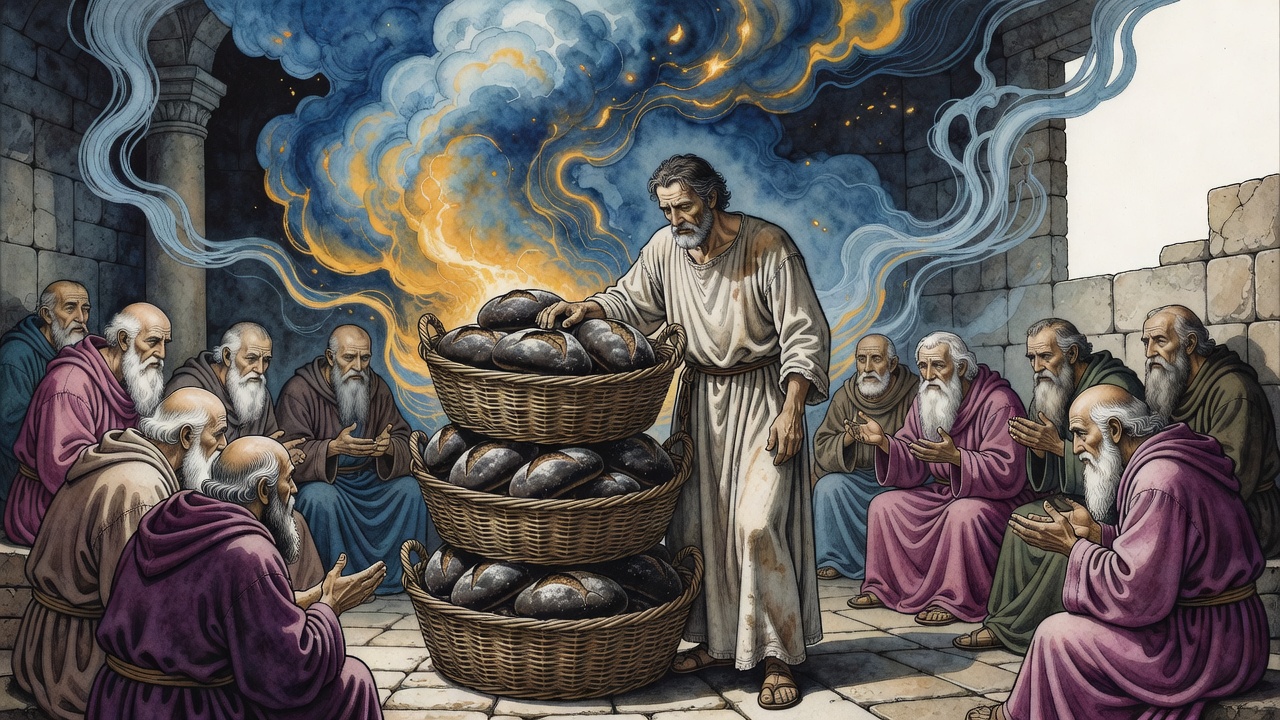
The Dream Follows the Mouth of the One Who Reads It
A woman brought her dream to one sage and bore a son, then a heretic brought his to another and was read aloud as a confession.
Table of Contents
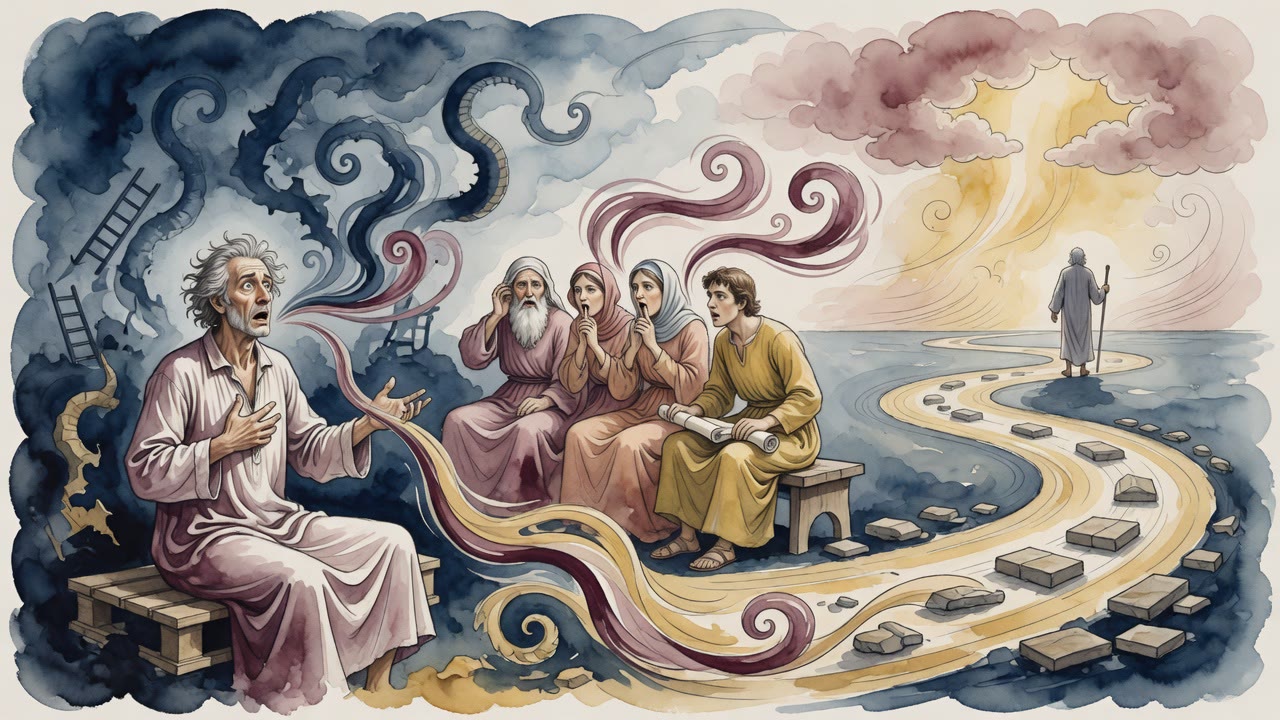
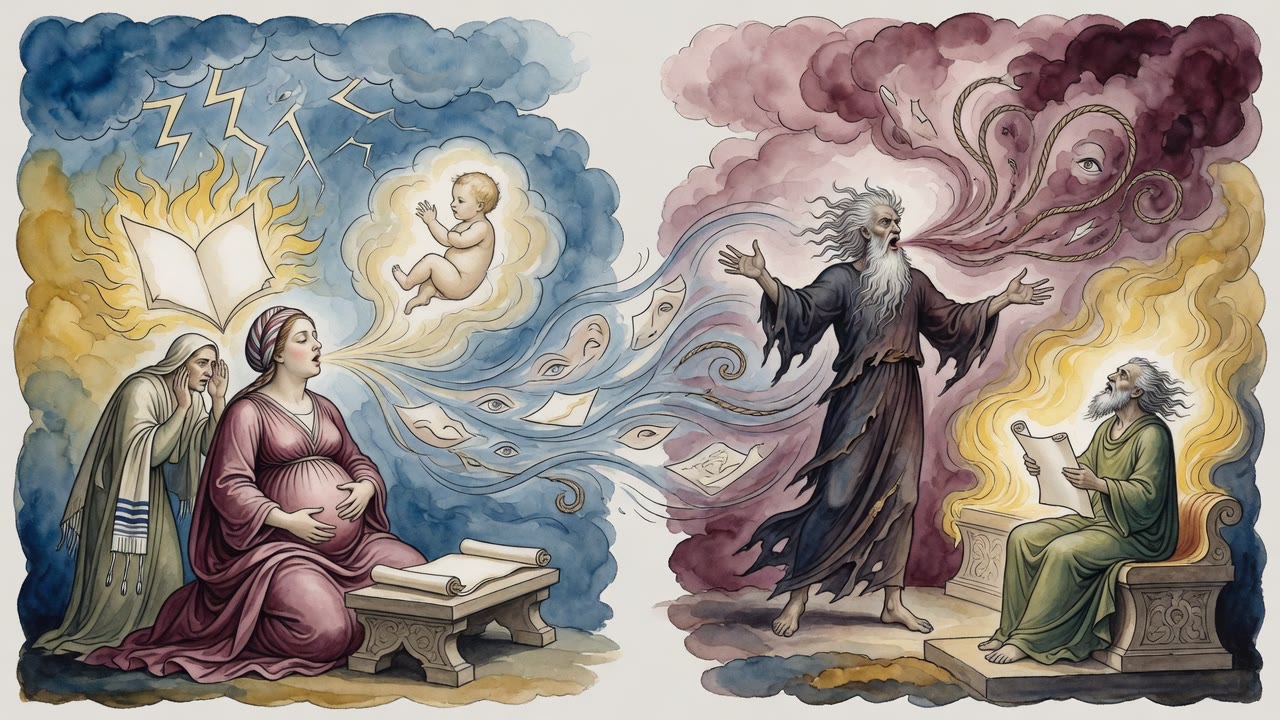
A woman walked into the study house with a dream stuck in her like a splinter. She had carried it for days, turning it over until the images frayed. She found Rabbi Eliezer among his students and laid the whole thing out for him, the sequence, the colors, the cold feeling at the end of it that she could not name.
 Click for full size
He listened the way a physician listens to a cough. He did not interrupt. When she finished he was quiet for a moment, and then he told her what it meant. "You will bear a son," he said. Nothing more. She walked out lighter than she came in. And in time, exactly along the line he had drawn, a boy was born.
The Sage Spoke and the World Obeyed
Word of it traveled the way good news travels, fast and crooked. People began arriving with dreams of their own, hoping for the same verdict from the same mouth. They wanted the sage to tell them sons, harvests, safe roads, recovered debts. They had decided that a dream was a sealed letter and Rabbi Eliezer was the only man who could read the address.
One of them, on a day the master was occupied, brought his dream to the students instead. The young men leaned in, conferred, and gave their reading. It was a dark one. Whether they were careless or simply honest about what they heard, they spoke a bad outcome over the man. And the bad outcome came, just as faithfully as the woman's son had come. The same kind of raw material, poured into two different mouths, had hardened into two opposite fates.
A Splinter in the House of Sages
This did not comfort the rabbis. It frightened them. If the woman's joy had been earned by the dream itself, fine, that was prophecy, and prophecy belongs to God. But the woman and the unlucky man had each handed over ambiguous things, smoke and shapes, and walked away with destinies that matched only the words spoken back to them. The dream had not decided. The interpreter had decided.
So they said it plainly to one another, and the saying outlived them. A dream follows the mouth. Not the mouth of the dreamer. The mouth of the one who reads it. The vision in the night is unfinished, a wall waiting for a hand. Whoever speaks first paints the wall, and the paint does not wash off. Choose the hand that paints, the sages warned, because that hand is not describing your future. It is making it.
The Heretic Came Carrying a Trap
Years moved, and a different kind of visitor came to a different sage. A min, a heretic, a man who held the rabbis' whole tradition in contempt, walked in to see Rabbi Yishmael with a sheaf of dreams folded under his arm. He had a stack of them, strange ones, rivers and animals and the long unease of wandering through houses he did not know.
His plan was simple and unkind. He would play the customer and make the rabbi play the fortune teller. Let the famous sage perform, guess, reach for mystical meanings, and miss. Let him be wrong in front of witnesses, so the whole proud edifice of rabbinic wisdom could be shown to rest on parlor tricks. The heretic spread his dreams out like a hand of cards and waited to win.
Every Dream Read Back as a Confession
Rabbi Yishmael took them one at a time. He did not rush, and he did not perform. He listened to the rivers, the animals, the unfamiliar rooms, and then he gave his readings, and the readings were all the same. Every dream, he said, pointed to a particular sin the heretic had been committing in the dark, a sin of the body he had told no one. One dream after another. Nine strange pictures, nine quiet verdicts, each one closing on the same secret.
The man went white. He had come to expose a fraud and instead had handed a sharp stranger a map of where he had actually walked. The dreams on their faces were about water and beasts and wandering. Rabbi Yishmael had heard underneath them. A dream, in his mouth, was no fixed code to be cracked. It was a blank surface, and what was already living inside the dreamer rose to the surface the instant someone spoke. The heretic had brought his secrets into the room himself, sealed in pictures, and asked a sage to open them aloud.
Do Not Bring Your Dreams to a Sage You Cannot Bear
The rabbis believed dreams could reveal hidden things. They never believed dreams were innocent. To carry a dream to a sage was to carry a confession you had not yet made and ask another person to finish the sentence. The woman with the splinter had been lucky in her reader. The man who went to the students had not. The heretic had been the unluckiest of all, because the mouth he chose belonged to someone sharp enough to read the rivers as a route, and honest enough to say where they led.
So the warning stood, passed from sage to sage, plain as a closed door. A dream follows the mouth. Be careful whose mouth you put it in. Do not bring your dream to a sage you cannot bear to be known by, because by the time he stops speaking, the dream will be true, and so will you.
← All myths