The Maidservant at the Sea Who Out-Saw Ezekiel and Isaiah
She had been told to look at the floor. Between two walls of standing water she pointed at the glory and named God as hers.
Table of Contents
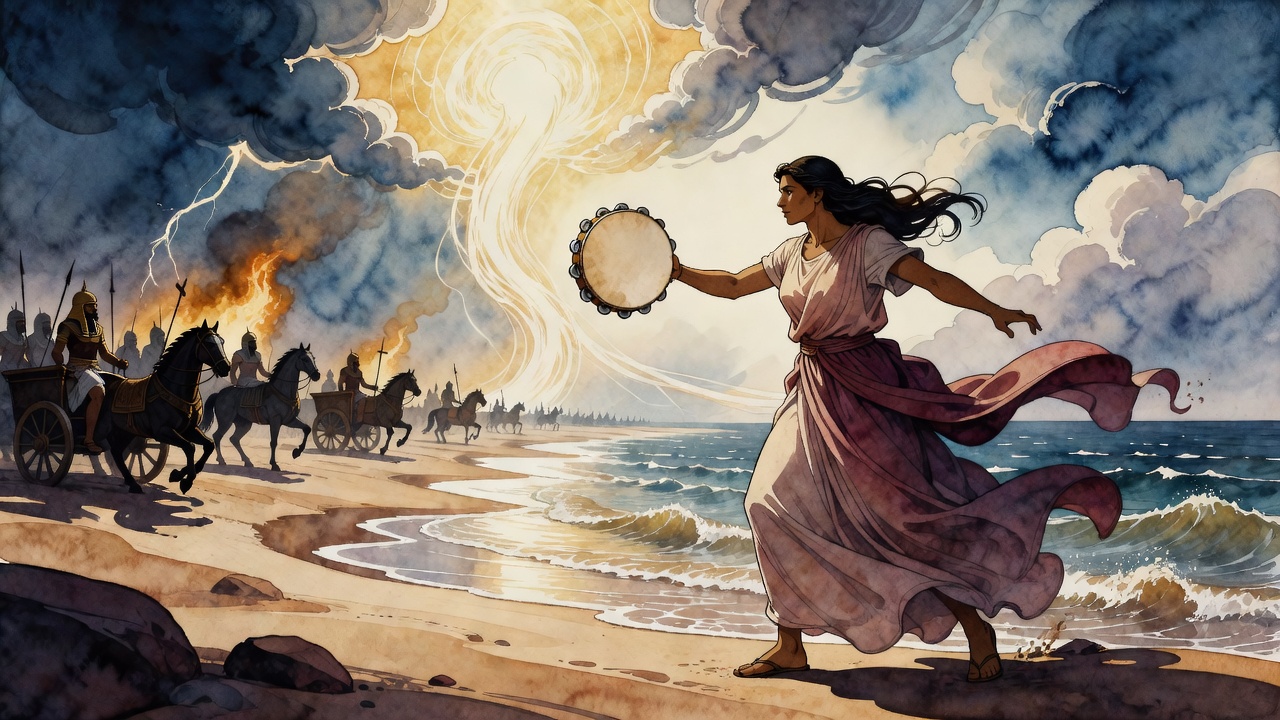
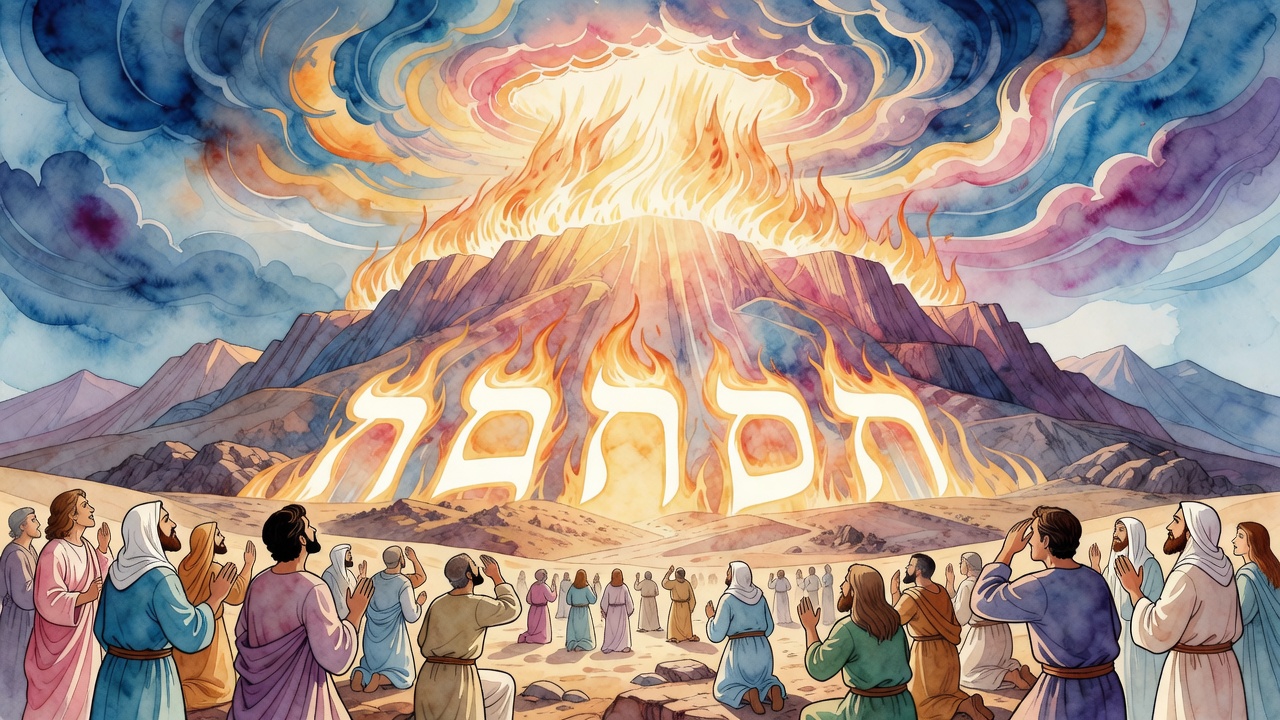
The water did not lie flat. It stood in two cliffs on the right hand and on the left, trembling and upright and not falling. Between them ran a road of bare seabed where there had been a drowning depth a breath before.
 Click for full size
Fish hung in the green walls. The morning came through the water in long bent shafts. The whole fleeing camp poured into the gap: the elders, the children on their fathers' shoulders, the cattle, the old men who had carried Egypt's bricks on their backs for eighty years.
She Looked Up From the Floor
Among them walked a maidservant. The least person in the procession. She had no name anyone later bothered to keep. She owned nothing, not even herself. Behind her, somewhere, the dust of Pharaoh's chariots still hung in the air. Ahead of her the water stood like glass. She had spent her life being told to look at the floor.
She looked up, because the floor was wet sand, and the walls were sea, and there was nowhere else for the eye to go. The glory did not hide in a retinue. It filled the channel the way the sea itself had filled it a moment before.
When a king of flesh and blood enters a province, he rides in surrounded by a circle of guards. His strongest men stand to his right and his left. Troops march before him and behind. The crowd presses against the road and asks the same question down the whole length of the street. "Which one is the king." They cannot tell. He has two arms and two eyes like every soldier around him. He bleeds when he is cut. The crown could sit on any of those heads.
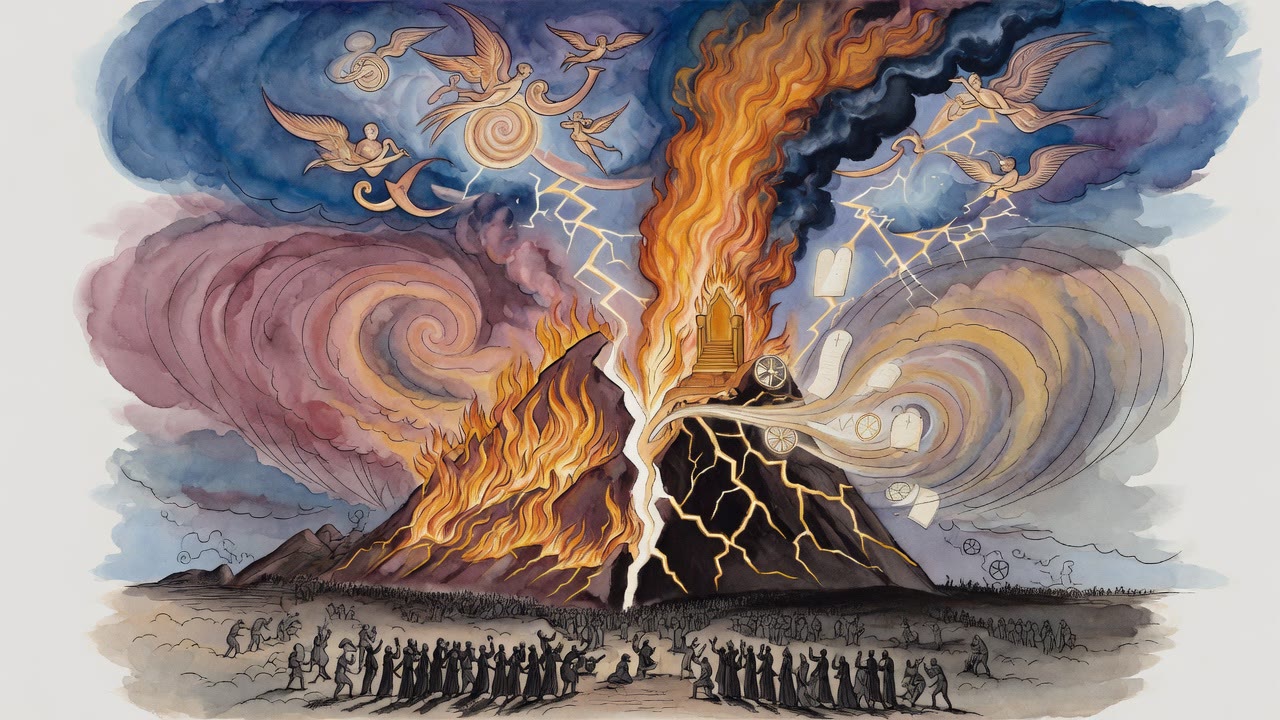
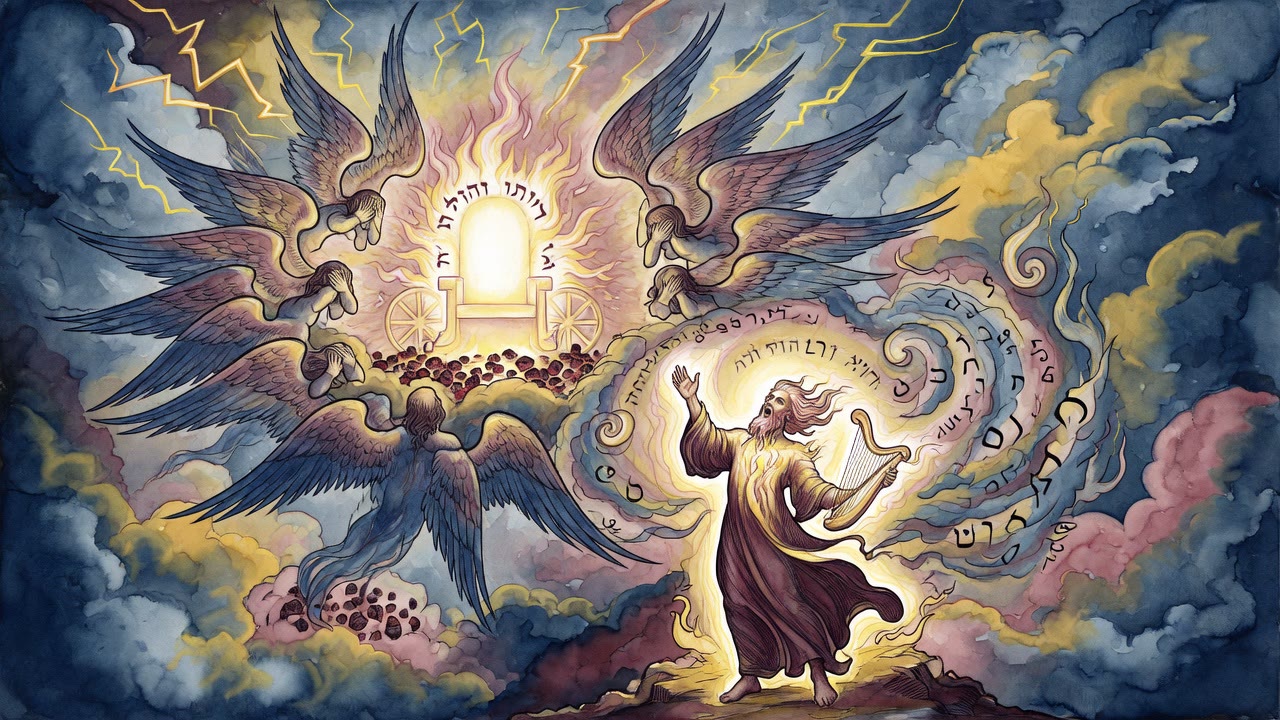
That is how Ezekiel saw, by the Chebar canal, straining to name wheels and storm and a brightness he could only call the appearance of the likeness of the glory. That is how Isaiah saw, counting the wings of the burning ones above the throne. Always one more word of distance, and always a veil, then another veil. A likeness is a borrowed thing, a curtain hung between the eye and the fire.
No One Asked Which One Was the King
At the sea the rule changed. When the Holy One revealed Himself between those walls of standing water, not one soul in that whole crossing turned to a neighbor and asked which one was the king. There was no guessing. There was no veil to peer through. Every slave and every child and every trembling grandmother knew Him at once, the way a body knows the sun is up before the eyes are open.
The maidservant lifted her hand. She did not need a prophet to interpret the vision for her, because there was no interpreting left to do. She pointed straight at the glory with her finger, the way a child points at something close enough to touch. Out of her mouth came the sentence the great seers had spent their whole lives circling and never quite reached.
"This is my God, and I will glorify Him."
This one. Not the likeness of Him. Not the appearance of the brightness of Him. This one, here, now, mine. Eli (אלי), my God. The word itself is a word of mercy.
The Presence Had Walked the Mud With Her
It was not the first time He had come down to where they were. When the family had gone down into Egypt, hungry and small, the presence had gone down with them. "I will go down with you to Egypt," He had told Jacob, and He kept the word. When they were dragged into slavery, the presence stayed in the slavery. When they fled toward the water with the army at their heels, the angel of God shifted from the front of the camp to the rear and stood between them and the spears. The pillar went before them by day.
The king had been walking the province in his guard all that time, unrecognized, beside the maidservant through every hour of the mud and the lash. Now, in the channel of the standing sea, the guard fell away. The province saw the king bare-faced. And the lowest among them saw Him most clearly of all, because she had nothing to lose by looking. She had no throne to protect, no reputation, and no learned caution about how much of the glory a person was permitted to claim, so she simply claimed it.
Rabbi Eliezer Would Not Take It Back
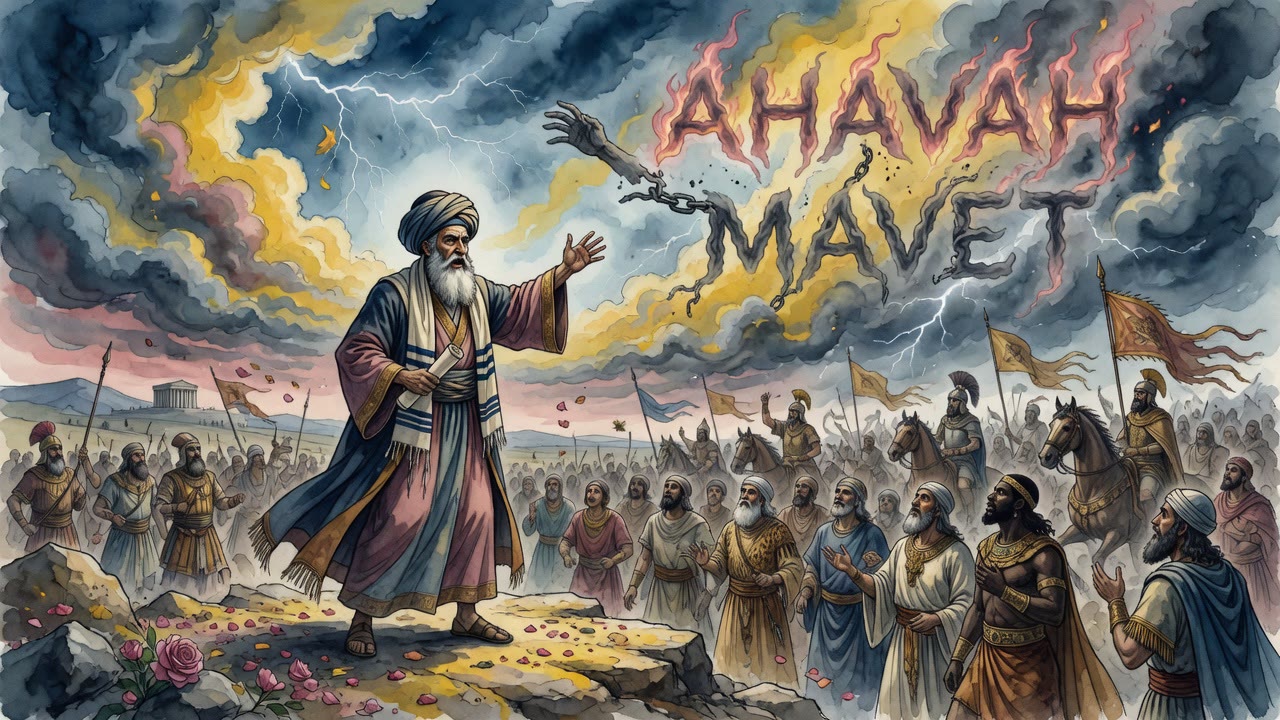
Years later, in a study hall far from any sea, Rabbi Eliezer said it and would not unsay it. The other sages leaned in across the benches, certain he had misspoken, and he said it again, louder, so the words could not be mistaken. A maidservant standing at the shore of the split sea saw more of God than Ezekiel ever saw by the river, more than Isaiah glimpsed above the smoking altar.
To prove it he reached for Hosea. "By the hand of the prophets I gave likenesses." A likeness is not the thing. Ezekiel had written, "The heavens opened and I saw," and even that opening came wrapped in wheels. Hosea called it a likeness because a prophet is still a man, and a man is still kept one step back.
At the sea the distance collapsed. The veils that protected even the greatest prophets from the full weight of the glory were pulled aside for everyone at once. In that unguarded moment the person the world had counted as nothing saw through no curtain. The world's tallest souls, in all their grand and terrible visions, had only ever seen a likeness.
The sea held its walls a little longer. The maidservant kept her arm raised, her finger fixed on the glory, naming what the prophets could not. Around her the camp found the rest of the song and sang it, half a verse from Moses and the answering half from the people, because seeing and singing arrived in the same breath.
← All myths